
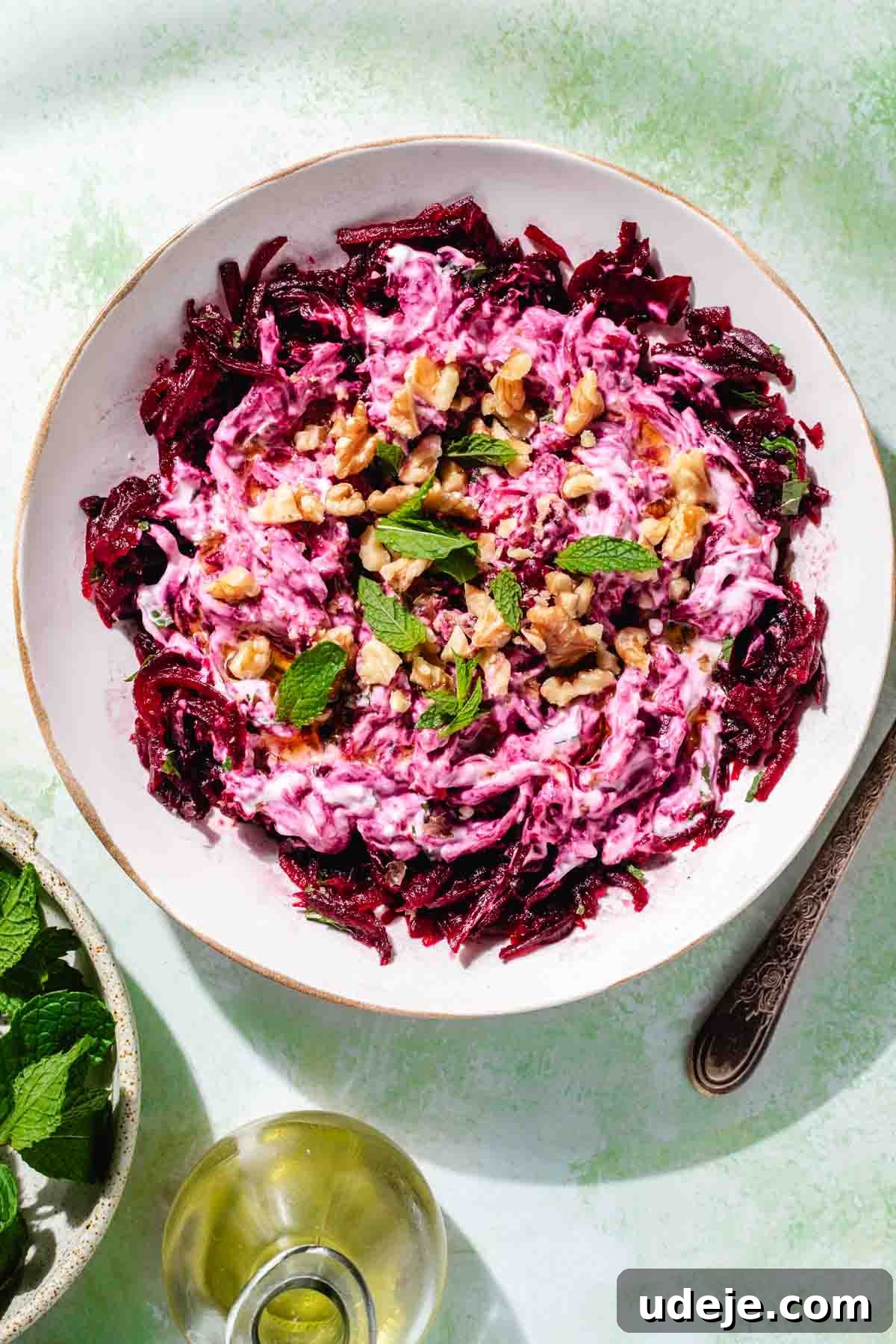
Discover the vibrant flavors of Pancar Salatasi, a beloved Turkish beetroot salad that stands out as a dazzling appetizer or a refreshing side dish. This unique salad masterfully blends the earthy sweetness of roasted beets with the cool, tangy creaminess of yogurt. Elevated by bright lemon, pungent garlic, and aromatic fresh mint, it’s finished with the satisfying crunch of walnuts. Pancar Salatasi offers a harmonious balance of tastes and textures, making it a truly unforgettable culinary experience you’ll want to recreate time and again.
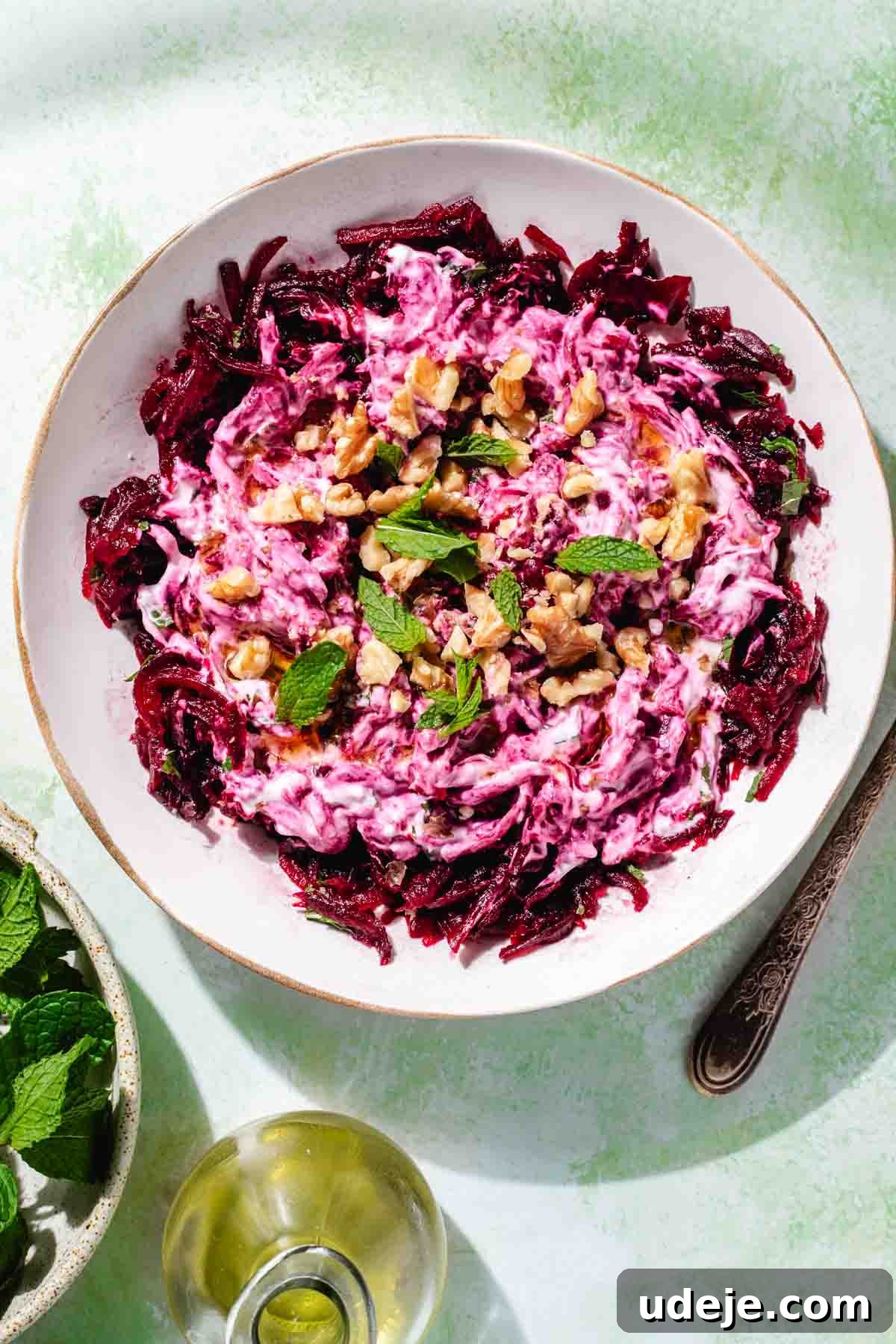
Pancar Salatasi: A Deep Dive into Turkish Beetroot Salad
The name “Pancar Salatasi” itself is straightforward, with “pancar” translating to beets and “salatasi” meaning salad in Turkish. This simple yet elegant dish is a staple in Turkish cuisine, celebrated for its striking color and refreshing taste. While beets are always the star, the preparation of Pancar Salatasi can vary significantly across different regions and households.
Some interpretations lean heavily on yogurt, featuring finely shredded beets that result in a consistency closer to a creamy dip. These versions are often served as part of a larger mezze spread, perfect for scooping with fresh bread. On the other other end of the spectrum, you might encounter variations that omit yogurt entirely, focusing instead on the beets’ natural sweetness and earthiness, perhaps with a drizzle of olive oil and a squeeze of lemon. Each variation offers a unique culinary journey, showcasing the versatility of this humble root vegetable.
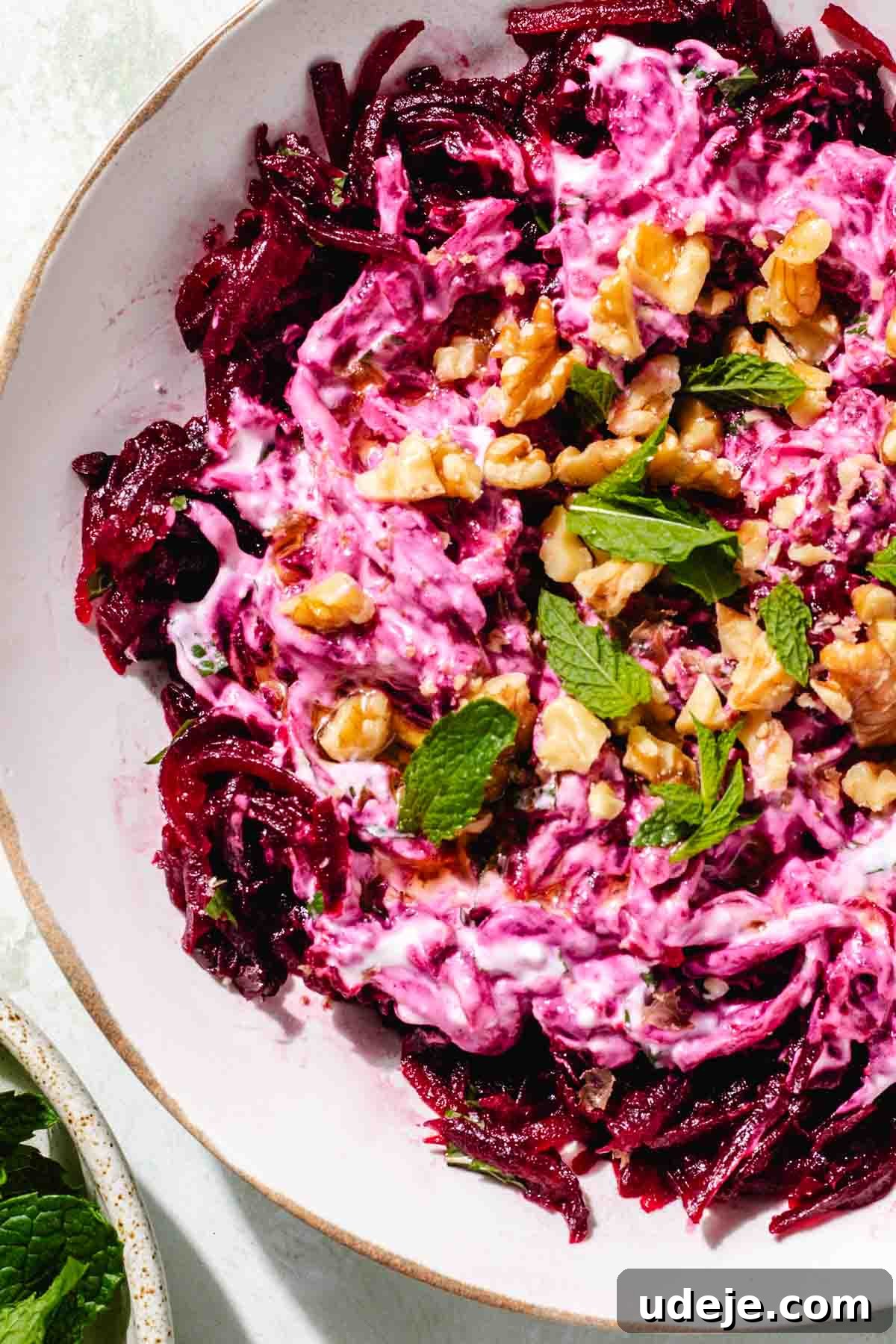
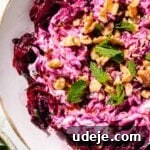
My preferred method, and the one I share here, involves roasting the beets rather than boiling them. Roasting concentrates their natural sugars, intensifying their flavor and giving them a delightful tenderness. The beets are then coarsely shredded, offering a satisfying texture that holds its own within the salad. This is complemented by just the right amount of tangy yogurt, bright lemon juice, a hint of pungent garlic, fragrant fresh mint, and the essential crunch of walnuts. This combination creates a salad that is both visually stunning and incredibly flavorful, a true testament to the simple elegance of Turkish cooking. The vibrant contrast between the deep ruby red of the beets and the creamy white of the yogurt makes it a feast for the eyes as well as the palate, adding an extra layer of enjoyment to every serving.
I’ve experimented with Pancar Salatasi both with and without garlic, and I find that a small amount of crushed garlic provides a crucial flavor boost that elevates the entire dish. It adds a subtle sharpness that beautifully cuts through the sweetness of the beets and the richness of the yogurt. However, if you prefer a milder taste or find fresh garlic too intense—though I’m clearly not one to shy away from it, given my love for Toum—feel free to adjust or omit it according to your preference. This flexibility makes the recipe adaptable to various palates.
For those familiar with Mediterranean and Middle Eastern flavors, you might notice similarities between Pancar Salatasi and other yogurt-based salads like Jajik or Greek tzatziki. Imagine the cooling creaminess of those dishes, but instead of cucumbers, you have the vibrant, robust flavor of beets. If you’re captivated by the rich and diverse world of Turkish cuisine as much as I am, I wholeheartedly recommend exploring other delightful dishes. Don’t miss out on Kisir, a fantastic bulgur salad that makes the best use of bulgur wheat, or this quick and refreshing Ayran, a savory yogurt drink that’s perfect for hot days.
Essential Ingredients for Your Turkish Beetroot Salad
One of the beauties of Pancar Salatasi is its flexibility. While the core ingredients create its signature flavor, there’s room for personalization through substitutions. Let’s delve into what you’ll need and how you can adapt the recipe to your taste.
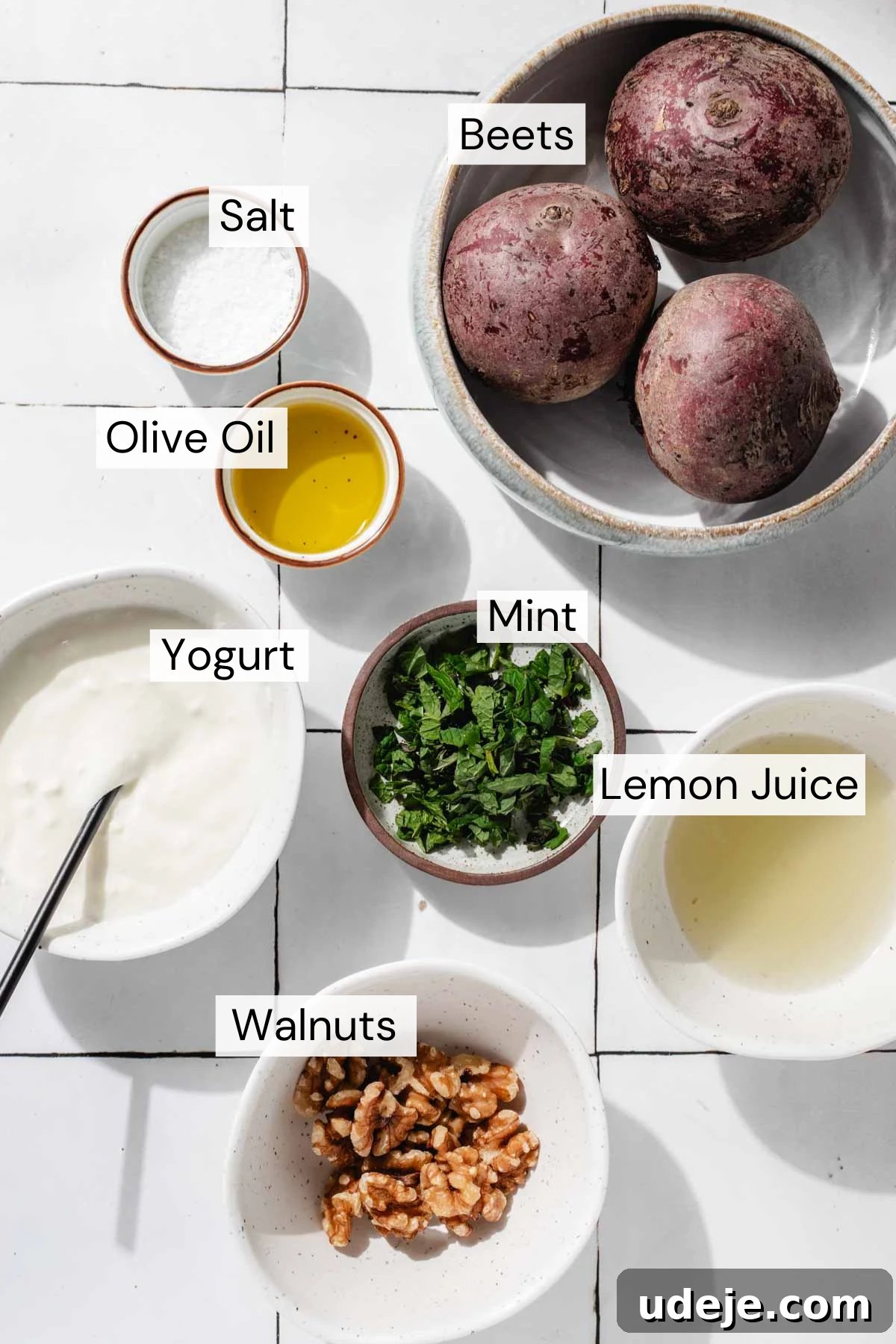
- Beets / Beetroot: You’ll need three small to medium-sized beets. Choose fresh, firm beets with vibrant color. Ensure they are scrubbed thoroughly to remove any dirt before roasting. Their natural sweetness and earthy notes are the foundation of this salad.
- Yogurt: The creamy backbone of Pancar Salatasi. Both regular whole milk yogurt and thicker Greek yogurt work wonderfully. Greek yogurt will result in a denser, richer salad, while regular yogurt will yield a slightly lighter consistency. Opt for plain, unsweetened varieties to maintain the savory balance.
- Fresh Mint: A handful of finely chopped fresh mint leaves is crucial. Mint provides a bright, refreshing counterpoint to the rich beets and yogurt. You can also experiment with adding a touch of fresh parsley for an extra layer of herbal freshness, which complements the mint beautifully.
- Olive Oil, Salt, Lemon Juice, and Garlic: These are the essential flavor enhancers that bring the salad to life.
- Olive Oil: A good quality extra virgin olive oil not only helps the beets roast beautifully but also adds a fruity, peppery depth to the dressing.
- Salt: Kosher salt is recommended for its pure flavor, used for seasoning both the beets during roasting and the final salad. Adjust to taste.
- Lemon Juice: Freshly squeezed lemon juice is paramount. Its tartness cuts through the richness of the yogurt and sweetness of the beets, adding a zesty brightness.
- Garlic: A small clove of crushed fresh garlic offers a subtle, piquant kick. While optional, it adds an incredible depth of flavor that many find indispensable. If you prefer a milder garlic note, consider using garlic powder or omitting it altogether.
- Walnuts: These provide the much-needed textural contrast, adding a delightful crunch to the creamy salad. Lightly toasted walnuts can further enhance their nutty flavor. If walnuts aren’t available, other nuts like pistachios or even almonds can be a suitable substitute, offering a similar crunch and richness.
Crafting Your Turkish Beet Salad: A Step-by-Step Guide
Creating Pancar Salatasi is a straightforward process that yields incredibly rewarding results. The key lies in the preparation of the beets and the careful layering of flavors. Follow these steps to achieve a perfectly balanced and visually appealing Turkish beetroot salad.
Step 1: Roasting the Beets for Maximum Flavor
The foundation of a truly exceptional Pancar Salatasi is perfectly roasted beets. Begin by thoroughly washing and scrubbing your beets to remove any soil. Resist the urge to peel them before roasting, as the skin helps to retain moisture and flavor. Drizzle each beet with a generous amount of olive oil and a sprinkle of salt. Individually wrap each beet tightly in aluminum foil. This creates a steamy environment that ensures the beets become wonderfully tender and deeply flavorful.
Place the foil-wrapped beets on an oven-safe tray and roast them in a preheated oven at 400°F (200°C) for approximately 1 hour. The cooking time can vary depending on the size of your beets, so check for doneness by piercing one with a fork; it should feel very soft with little resistance. Roasting, as opposed to boiling, caramelizes the natural sugars within the beets, yielding a more intense, sweet, and earthy flavor profile that truly makes this salad sing.
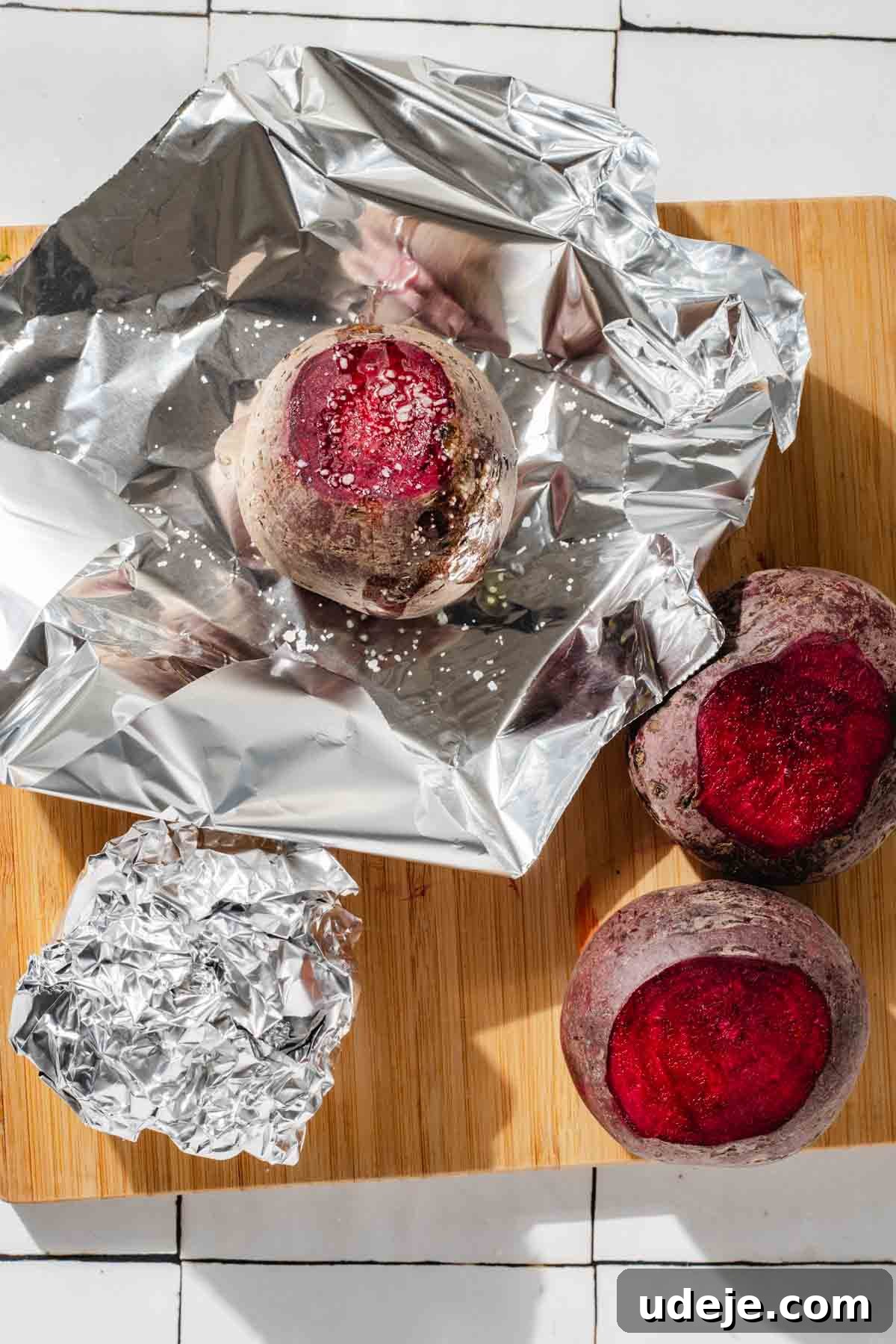
Once roasted, remove the beets from the oven and allow them to cool completely while still wrapped in their foil. This resting period further tenderizes them and makes peeling much easier. A fantastic tip for meal prep: you can roast your beets a few days in advance and store them wrapped in foil in the refrigerator until you’re ready to assemble your salad. This saves time and ensures a quick preparation when needed.
Step 2: Peeling and Shredding the Beets
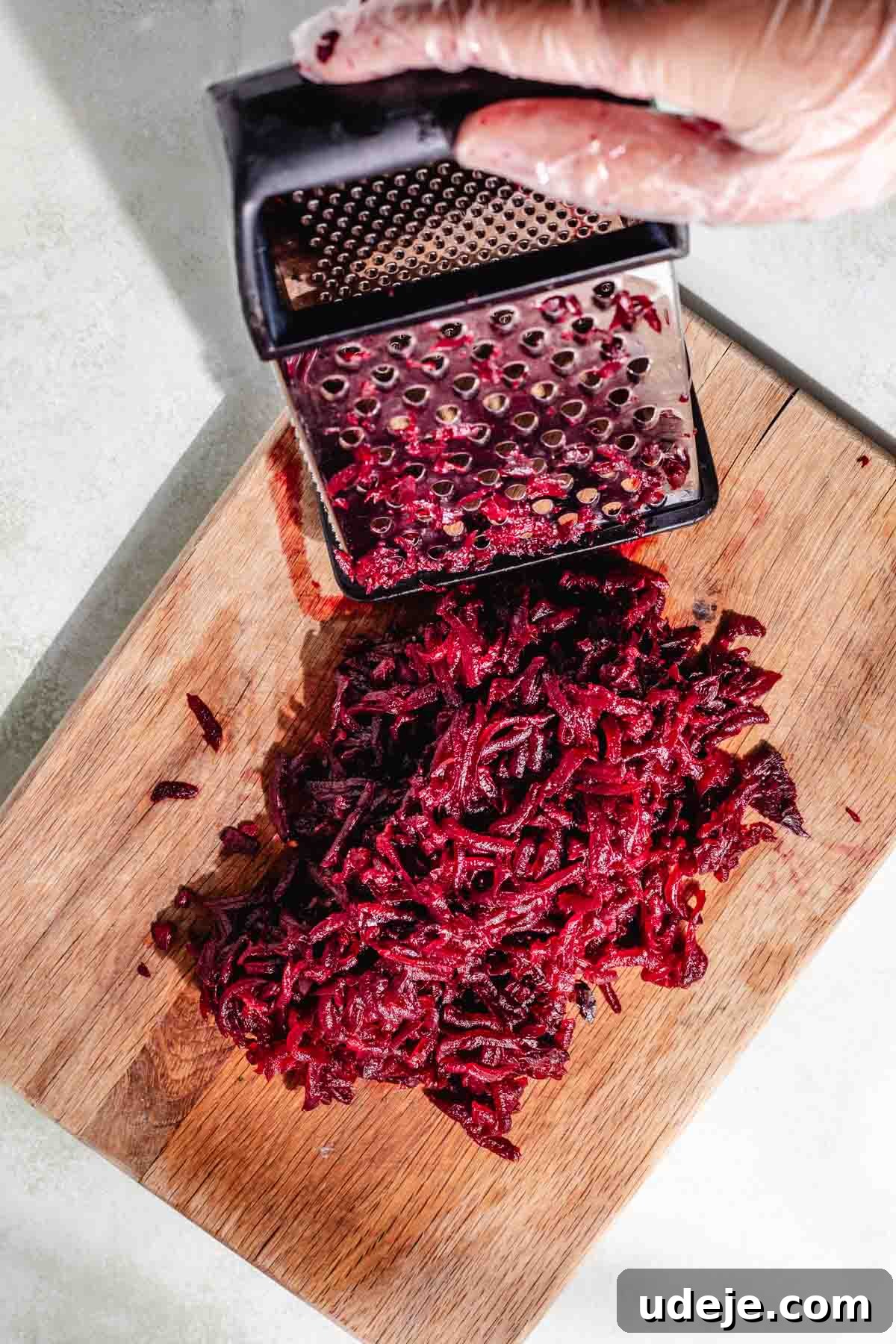
After the beets have cooled, the peels should slip off effortlessly using just your fingers. If you find any stubborn spots, a small paring knife can help. Be cautious, as beets can stain! To avoid coloring your hands and countertop, I highly recommend wearing disposable gloves and placing a few layers of paper towels or a dedicated cutting mat under your cutting board. This simple precaution will save you from a colorful clean-up operation.
Next, use a box grater to coarsely shred the peeled beets. The coarse shred offers a delightful texture that prevents the salad from becoming overly mushy, allowing the individual beet strands to contribute to the overall mouthfeel. If a box grater isn’t available, you can finely chop the beets into small, uniform cubes. The goal is to create pieces that blend well with the yogurt but still retain their structural integrity.
Step 3: Combining Flavors
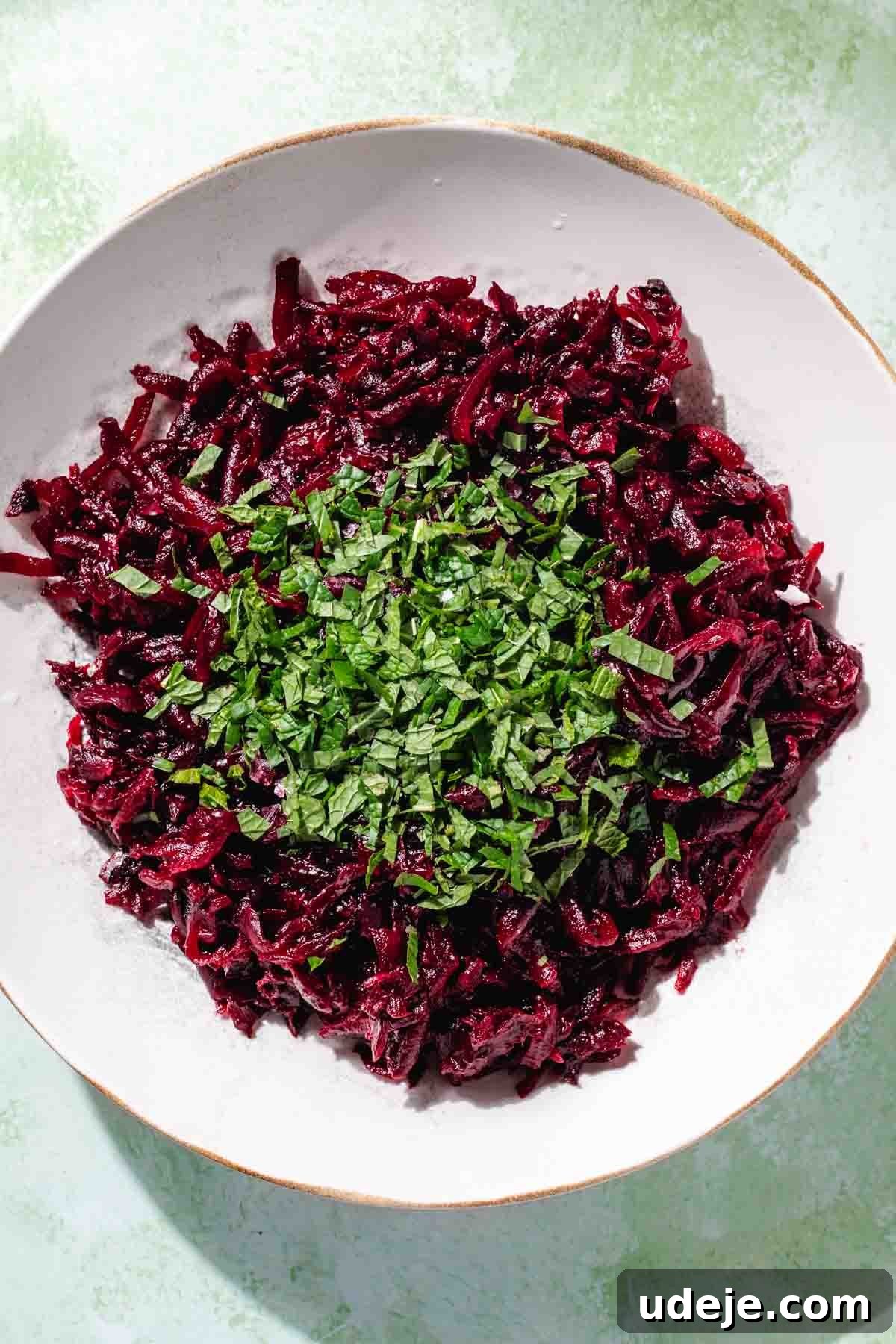
Transfer the vibrant, shredded beets into a large mixing bowl. Now it’s time to introduce the other key flavor components. Add the finely chopped fresh mint, the bright lemon juice, the remaining salt, a drizzle of fresh olive oil, and the crushed garlic (if using). Gently mix all these ingredients together until the beets are evenly coated and the flavors begin to meld. Take a moment to appreciate the incredible aroma that begins to fill your kitchen at this stage.
Step 4: Incorporating the Yogurt and Final Assembly
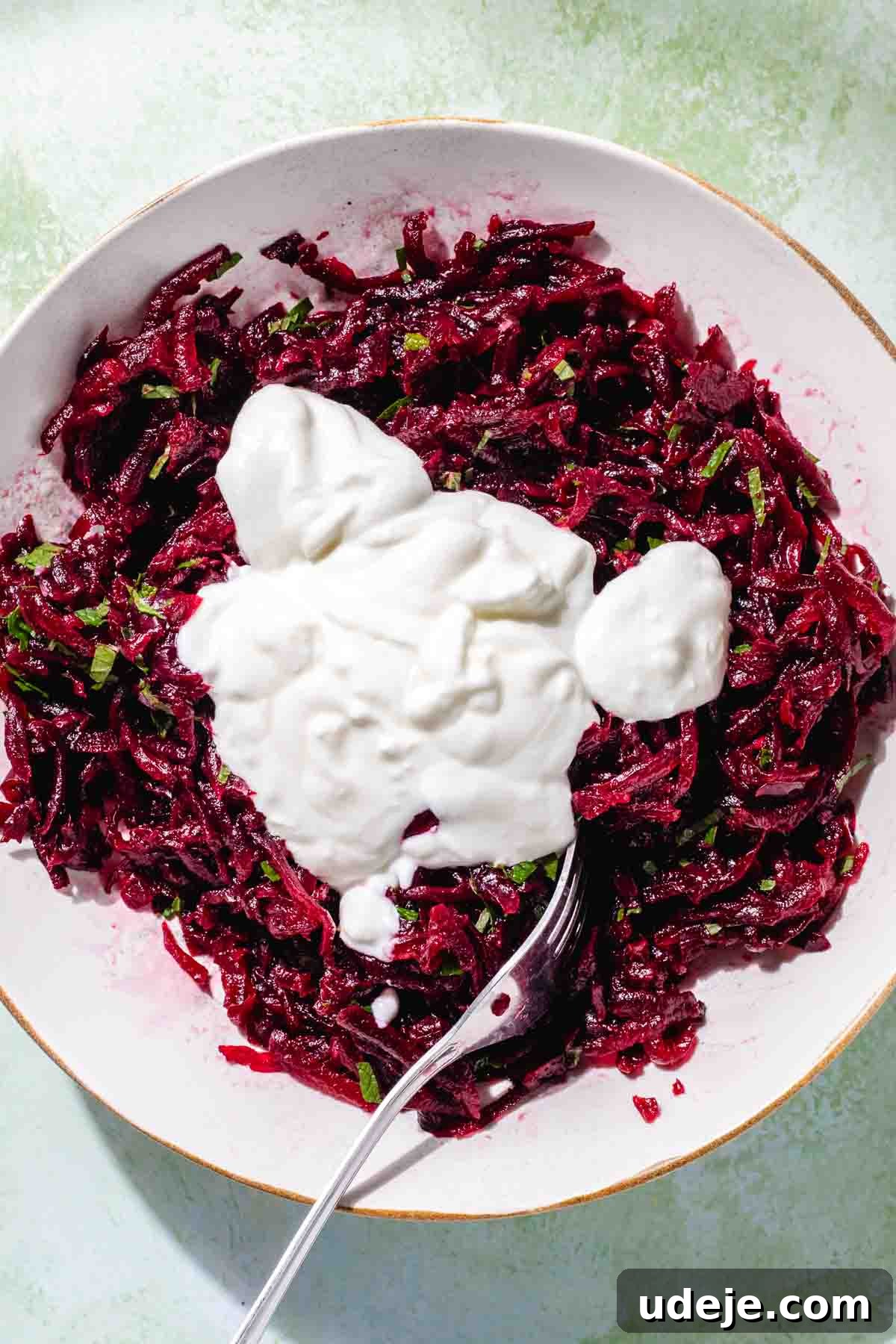
Once the beets are seasoned, spoon the plain yogurt over the mixture. Now, comes a crucial step for both flavor and presentation: gently mix the yogurt in. I prefer to incorporate most of the yogurt, ensuring a creamy consistency, but intentionally leave a few streaks of the darker beet color peeking through. This creates a beautiful, marbled effect that highlights the salad’s natural allure and makes it even more appetizing. The contrast of the deep red with the creamy white is visually stunning.
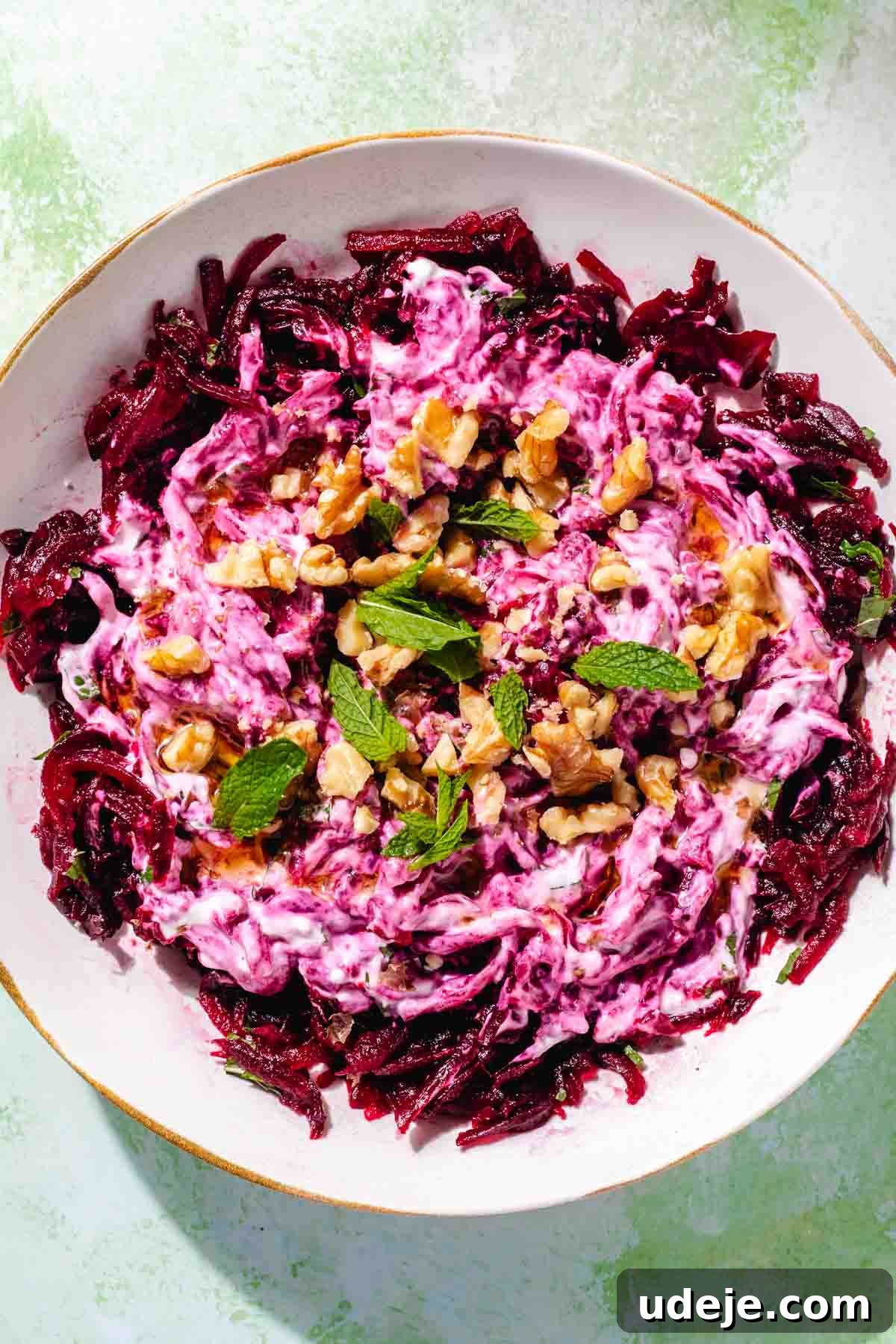
Finally, transfer the Pancar Salatasi to your serving dish. Generously sprinkle the chopped walnuts over the top, adding that essential textural crunch. Garnish with a few fresh mint leaves for an aromatic flourish and an extra splash of color. If desired, a final drizzle of olive oil can add richness, and a quick taste test will let you know if a little more salt or lemon juice is needed to achieve your perfect balance. Your exquisite Turkish beetroot salad is now ready to be served and enjoyed!
Serving Suggestions & Storage for Pancar Salatasi
Pancar Salatasi is incredibly versatile, making it a perfect addition to a variety of meals. Its refreshing qualities shine whether served as a vibrant appetizer, a light lunch, or a colorful side dish.
Optimal Serving Suggestions
This exquisite Turkish beetroot salad is an ideal component of a traditional mezze platter, offering a burst of color and flavor alongside other Middle Eastern and Mediterranean delights. Consider serving it with:
- Dips and Spreads: Pair it with creamy Mutabal or smoky Baba Ghanoush for a textural feast.
- Hummus: The classic creamy Hummus provides a wonderful contrast to the tangy beet salad.
- Other Salads: Complement its freshness with a zesty Turkish Kisir salad, made with fine bulgur and fresh herbs.
- Pastries and Breads: Serve with crispy Turkish Sigara Boregi (feta rolls) or warm pita bread for dipping.
- Main Courses: It also makes a fantastic accompaniment to grilled meats, chicken, or fish, providing a light and flavorful counterpoint to richer dishes. Its bright flavors are particularly welcome during warmer months, making it a staple for summertime gatherings and barbecues.
Storage Tips for Freshness
- Making Ahead: One of the great advantages of Pancar Salatasi is its make-ahead potential. You can roast the beets up to 3-4 days in advance. Once cooled, keep them wrapped individually in their foil and store them in the refrigerator. This allows for quick assembly when you’re ready to serve. For the complete salad, it’s best to mix it no more than 24 hours before serving. Beyond this, the yogurt may start to release moisture, potentially making the salad watery or soggy.
- Leftovers: Store any leftover Pancar Salatasi in an airtight container in the refrigerator. It’s best consumed the next day to enjoy its optimal texture and flavor. While still edible for up to 2 days, the quality might diminish slightly over time due to the moisture release from the yogurt and beets.
More Turkish Recipes You Will Love
If you tried these recipes, please consider leaving a star ⭐️⭐️⭐️⭐️⭐️ rating in the recipe card below and/or a review in the comments section further down the page – I’d love to hear from you! You can also hop on over to Instagram and say hello!
Pancar Salatasi (Beetroot & Yogurt Salad)
4
Servings
10
mins
1
hr
1
hr
10
mins
Amina Al-Saigh
Leave a Review
Pin Recipe
Ingredients
- 3 small red beets, scrubbed clean
- 3 tablespoons olive oil, plus more for drizzling
- 1 1/2 teaspoon kosher salt, divided, plus more to taste
- 1 lemon, juiced
- 1/4 cup fresh mint, finely chopped, plus more for garnish
- 1 small garlic clove, crushed (optional)
- 1/2 cup whole yogurt, or Greek yogurt
- 1/2 cup chopped walnuts
Instructions
-
 To roast the beets: Wash and scrub the beets thoroughly. Drizzle each one with olive oil (use roughly 1-2 tablespoons total) and sprinkle with half of the salt. Wrap each beet individually in aluminum foil. Place them in an oven-safe tray and bake at 400°F (200°C) for 1 hour, or until a knife can easily pierce through. Remove from the oven and allow them to cool completely.
 -
Once the beets are cool, use your fingers to easily remove the peels. Shred them coarsely using a box grater. For a cleaner process, wear gloves and place paper towels under your cutting board to prevent beet juice from staining your hands and counters.
-
Place the shredded beets in a bowl. Dress them with the remaining salt, a fresh drizzle of olive oil, all the lemon juice, finely chopped fresh mint, and the crushed garlic (if using). Stir well to combine all the ingredients.
-
Spoon the yogurt on top of the beet mixture and gently stir it in, leaving some of the dark beet color to peek through for a beautiful marbled effect. Top with the chopped walnuts and garnish with more fresh mint, a drizzle of olive oil, and adjust salt or lemon juice to taste before serving.

Notes
- You can roast the beets and store them in the fridge, wrapped in foil, for several days until ready to use.
- If you find fresh garlic too strong, feel free to omit it from the recipe.
- For an added herbaceous note, consider adding finely chopped parsley along with the mint.
Serving:
-1
g
,
Calories:
242
kcal
,
Carbohydrates:
12
g
,
Protein:
5
g
,
Fat:
21
g
,
Saturated Fat:
3
g
,
Polyunsaturated Fat:
8
g
,
Monounsaturated Fat:
9
g
,
Cholesterol:
4
mg
,
Sodium:
932
mg
,
Potassium:
351
mg
,
Fiber:
4
g
,
Sugar:
6
g
,
Vitamin A:
177
IU
,
Vitamin C:
19
mg
,
Calcium:
76
mg
,
Iron:
1
mg
Did you make this recipe?
Please leave a star rating and review below!