
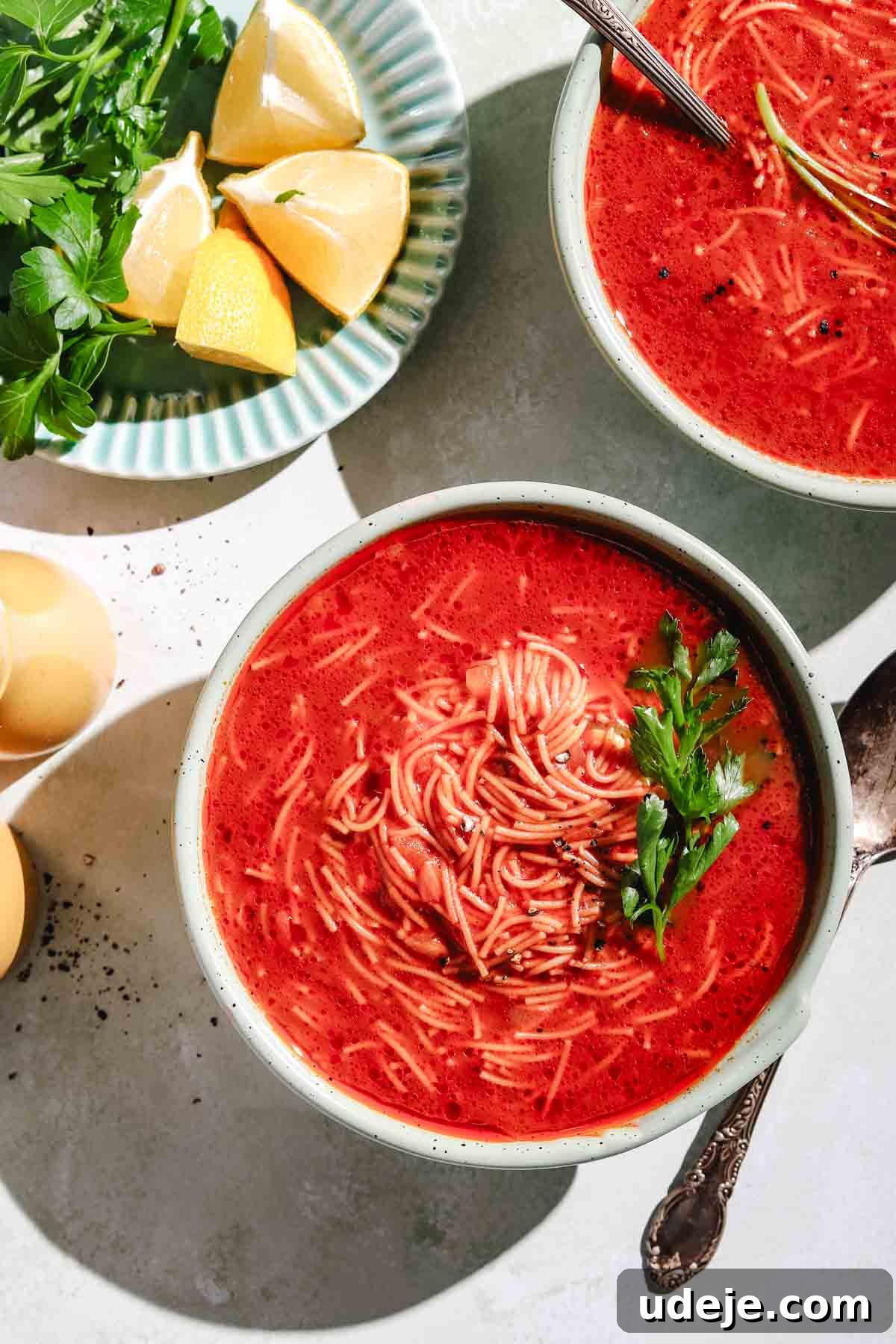
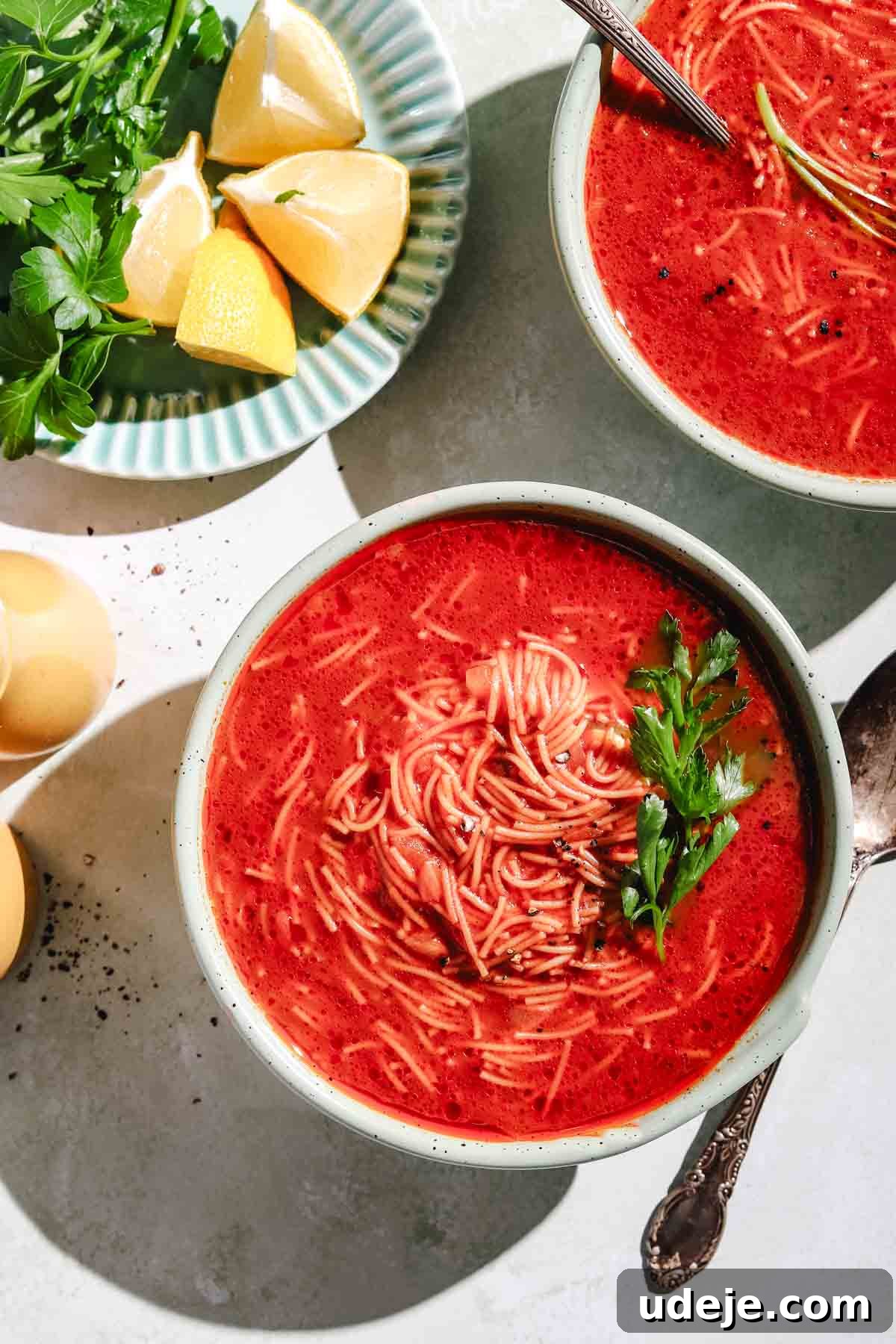
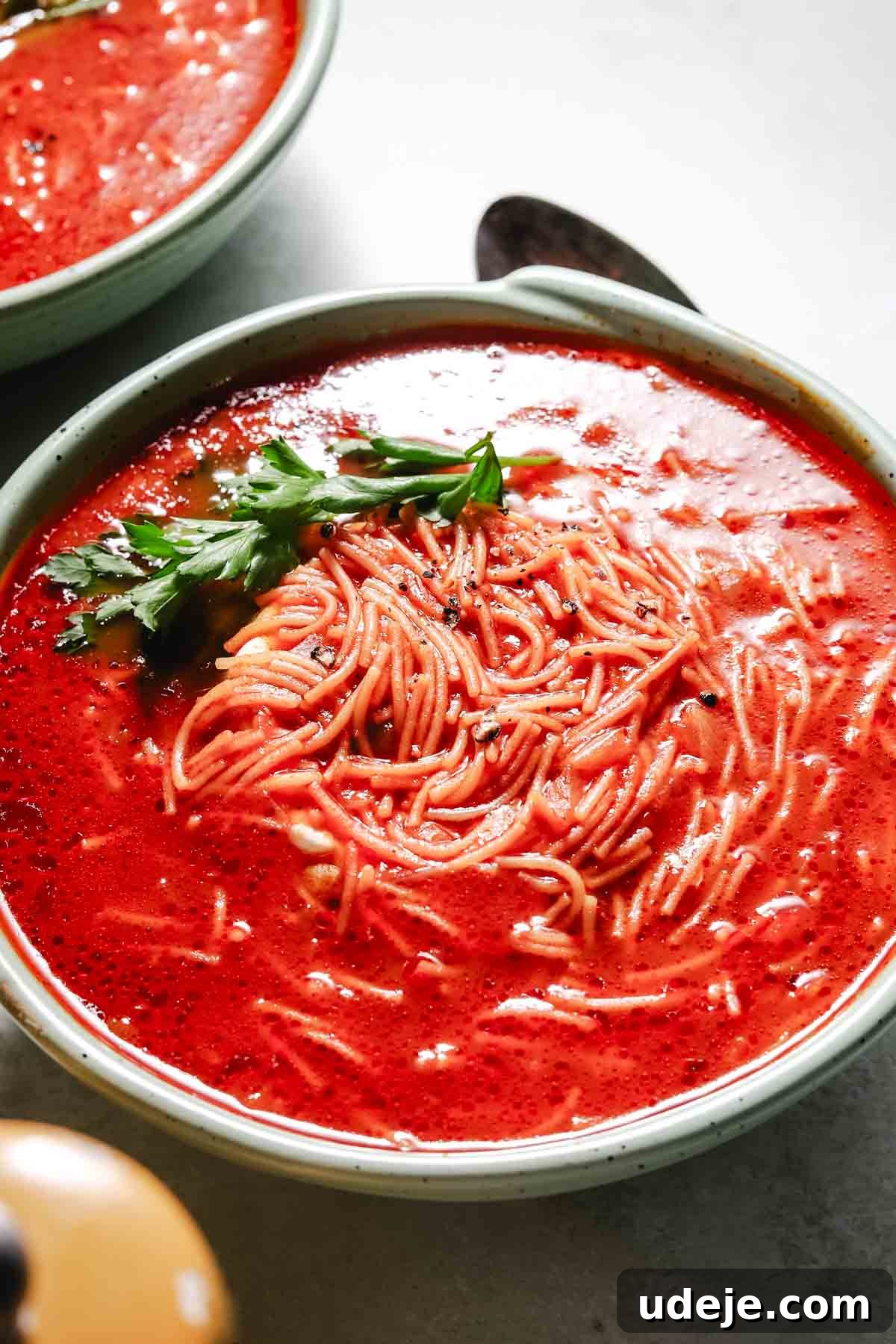
Step into a world of warmth and flavor with this incredibly comforting Tomato Vermicelli Soup, a beloved staple across the Middle East. More than just a simple dish, this soup is a universal symbol of home, nourishment, and quick culinary satisfaction. Imagine a steaming bowl, rich with vibrant tomato, silken vermicelli noodles, and a depth of flavor that belies its remarkably simple preparation. What if we told you that this heartwarming experience could be yours in under 30 minutes, using only a handful of readily available ingredients? It’s true! Whether you’re seeking a nostalgic taste, a speedy weeknight meal, or a comforting embrace on a chilly day, this recipe promises to deliver. Join us as we explore the secrets to crafting the perfect Middle Eastern Tomato Vermicelli Soup, a truly delicious and effortlessly easy culinary delight.
The Universal Appeal of Middle Eastern Tomato Vermicelli Soup
The essence of comfort food often lies in its simplicity and widespread recognition, and this Tomato Vermicelli Soup perfectly embodies that spirit. Throughout the Middle East, it’s not just a dish; it’s a culinary hug, a childhood memory, and a testament to the versatility of humble ingredients. This soup is a shining example of how a few core components can be transformed into something truly special and deeply satisfying.
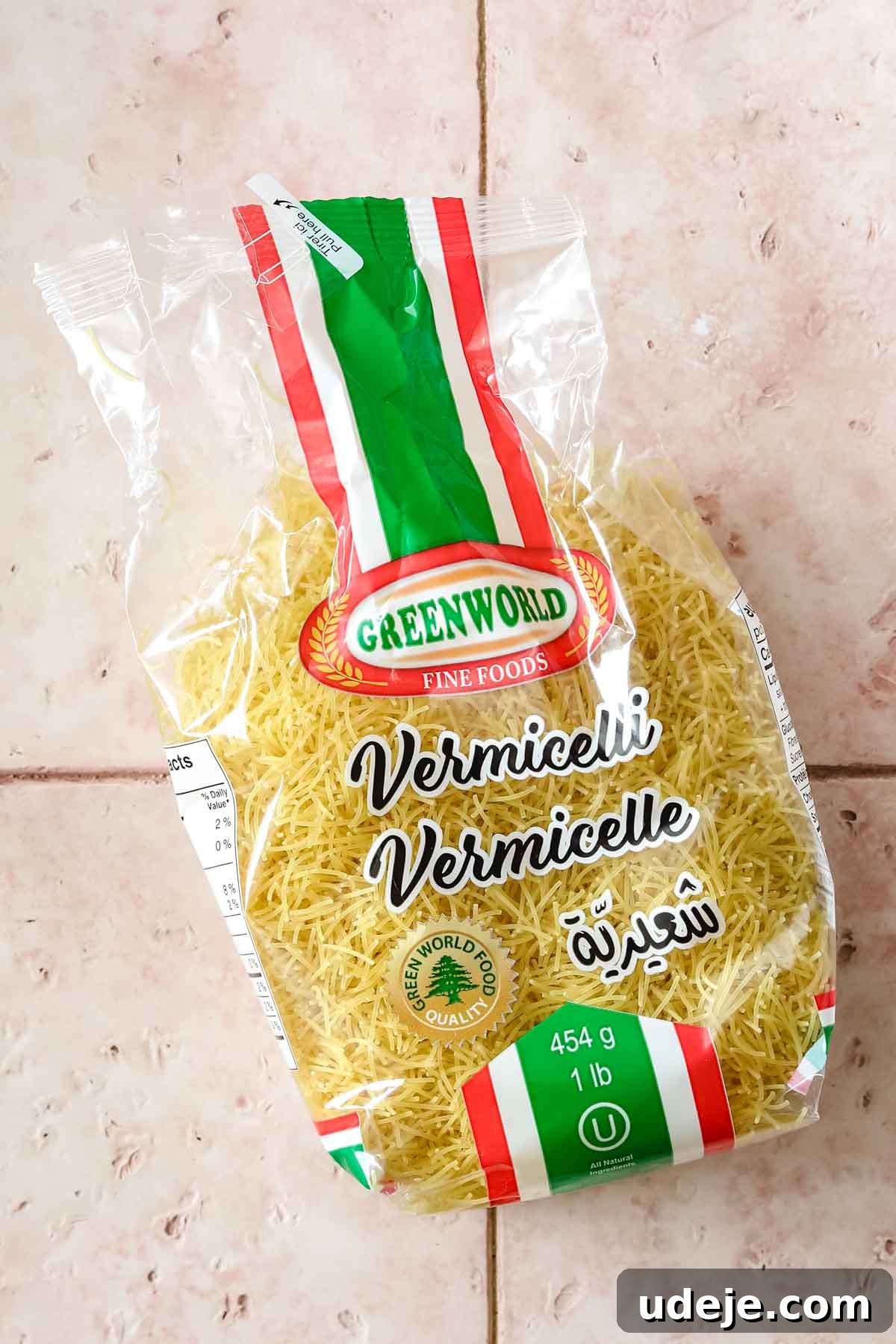
At the heart of this soup are vermicelli noodles, a cornerstone of Middle Eastern cuisine. It’s crucial to distinguish these from their Asian counterparts, which are typically made from rice flour. The vermicelli we use in this recipe, and indeed across the Middle East, are fine wheat noodles, or a type of pasta, usually broken into short, manageable pieces of about half an inch. These delicate strands are incredibly adaptable, frequently found alongside rice in the quintessential Arabic vermicelli rice (or Egyptian rice, often prepared with medium-grain rice), or, as in this delightful recipe, transformed into a luscious tomato and noodle soup.
The widespread popularity of this soup likely stems from its inherent practicality. Many home cooks, particularly busy mothers throughout the Arab world, discovered the ultimate quick and easy soup solution, requiring little more than noodles, chicken stock, and tomato paste. It’s a culinary shortcut that doesn’t compromise on flavor or satiety. For many, including my own family, this soup was a frequent visitor to the dinner table, often alternating with a very similar tomato oatmeal soup (where oats ingeniously replace the noodles, offering another comforting variation). Its rapid preparation time sets it apart from more elaborate Middle Eastern classics like the hearty lentil soup or the rich and complex Harira soup, making it a go-to for quick comfort.
Virtually everyone who grew up in the region cherishes fond memories of sipping on this soup. My personal favorite way to enjoy it was when my mother generously added extra noodles, transforming it into a wonderfully “soupy noodles” experience rather than a thin broth. Each spoonful would simply glide down, offering pure, unadulterated comfort. This simple dish truly holds a special place in the hearts and homes of countless families, a testament to its enduring appeal and delicious versatility.
Unlocking the Secret to a Flavorful and Speedy Soup!
While this Tomato Vermicelli Soup is known for its quick preparation, achieving truly exceptional flavor requires a couple of simple yet impactful techniques. These aren’t secrets to be guarded but rather essential steps that elevate a good soup to a great one, ensuring it’s not only fast but also incredibly delicious.
The first “not-so-secret” ingredient, and arguably the most crucial for depth of flavor, is the quality of your stock. Homemade chicken stock is a game-changer. It provides a richness and nuance that store-bought varieties often lack, transforming the soup from merely good to truly spectacular. While convenient, store-bought broths can sometimes be overly salty or thin, so if you opt for them, choose a high-quality, low-sodium option. For vegetarians, a robust homemade vegetable stock will yield similar excellent results, imparting a savory foundation without meat.
Building a strong flavor base is also paramount. I typically begin by gently softening diced onions. This step, though sometimes skipped in a rush, is highly recommended. As the onions slowly cook in olive oil, they caramelize slightly, releasing their natural sugars and creating an aromatic foundation that adds a subtle sweetness and a complex layer of flavor to the entire soup.
The second critical step, vital for both flavor and texture, is to toast the vermicelli noodles before adding them to the liquid. This seemingly small detail makes a significant difference. As the noodles toast in a touch of olive oil, they undergo a Maillard reaction, developing a beautiful golden hue and an enticing nutty aroma that deeply enhances the soup’s overall character. Beyond flavor, toasting serves a crucial practical purpose: it helps to seal the noodles, preventing them from absorbing too much liquid and becoming overly soft or mushy as they simmer and sit. This results in a much better texture, ensuring your soup maintains a perfect noodle-to-broth ratio, even after reheating.
Trust me, I speak from experience! If you neglect to toast the noodles, be prepared for a denser, more cohesive “noodle lump” than a silky soup, especially if you store leftovers overnight in the fridge. While still edible, it won’t be the light, perfectly textured soup promised by this recipe. Taking these few extra minutes to toast the vermicelli ensures a superior culinary experience every time.
Essential Ingredients for Your Comforting Bowl
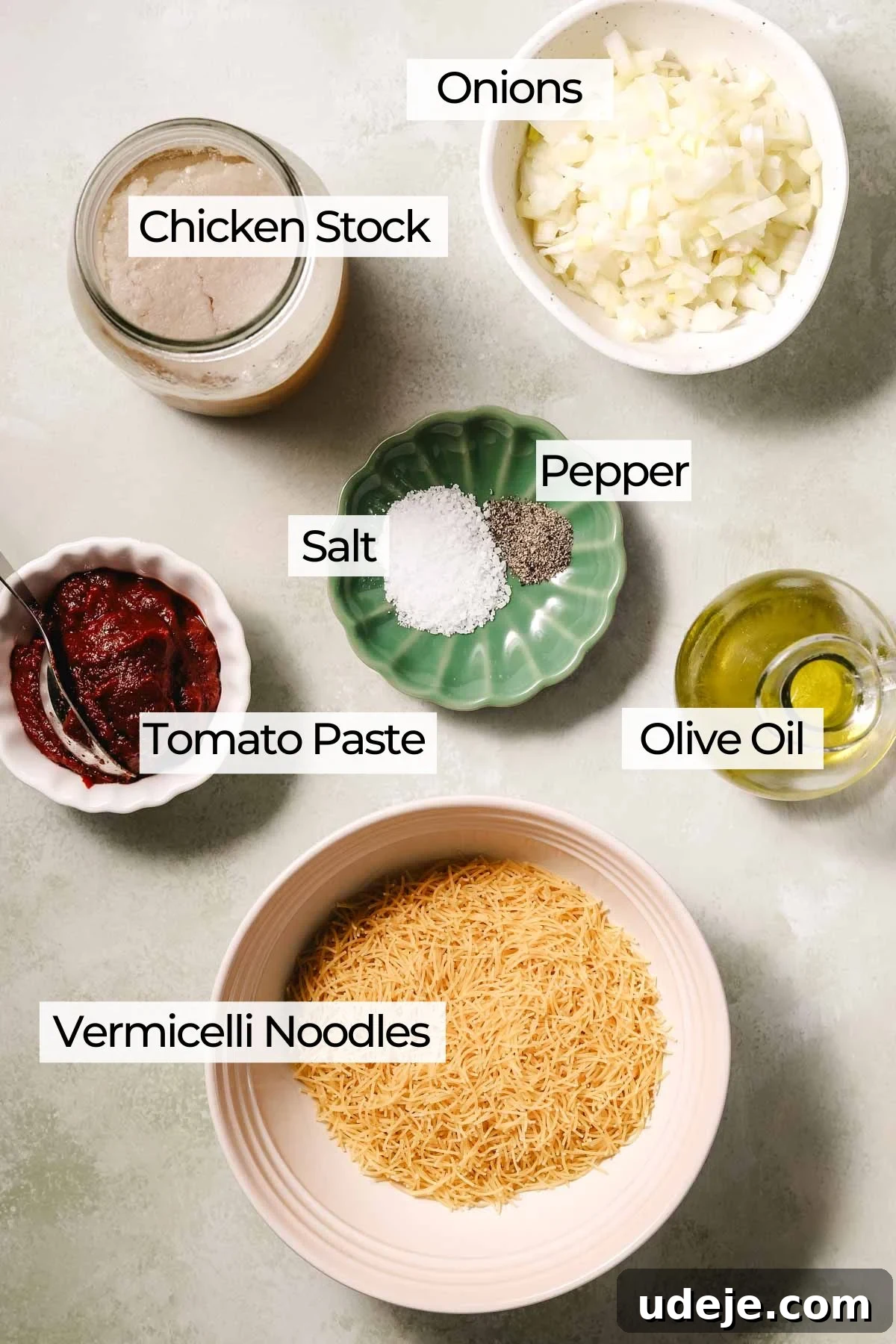
True to its reputation, this soup relies on a straightforward list of ingredients, most of which you likely already have in your pantry. Simplicity is key to its charm and ease of preparation:
- Vermicelli Noodles: As discussed, these are fine, broken wheat pasta noodles, not to be confused with translucent rice vermicelli. They are commonly found in the pasta aisle of most supermarkets or at Middle Eastern specialty stores. Any brand offering short-cut wheat vermicelli will work perfectly.
- Diced Onions: A small yellow or white onion, finely diced, provides the foundational aromatics and a subtle sweetness when softened. Fine dicing ensures the onions cook down quickly and seamlessly blend into the soup’s texture.
- Chicken Stock: Preferably homemade for the best flavor, but a good quality, low-sodium store-bought chicken broth is a convenient alternative. If you’re preparing a vegetarian or vegan version, simply substitute with an equally flavorful vegetable stock.
- Salt, Black Pepper, and Olive Oil: These are the essential flavor enhancers and cooking agents. Use a good quality extra virgin olive oil for both sautéing and a final drizzle, and adjust salt and pepper to taste, keeping in mind the sodium content of your chosen stock. Kosher salt is often preferred for its clean taste and control.
- Tomato Paste: This concentrated ingredient is vital for the soup’s signature robust tomato flavor and rich color. Opt for a high-quality tomato paste, as it makes a noticeable difference. For an even fresher, brighter tomato flavor, especially during peak tomato season, you can blend fresh ripe tomatoes into a puree and use that as a partial or full substitute, adjusting consistency as needed.
No Vermicelli on Hand? No Problem! While vermicelli noodles offer the most authentic texture, you can easily substitute them with other small pasta shapes. Angel hair pasta, broken into 1/2-inch pieces, is an excellent alternative due to its similar thinness. Orzo pasta, with its rice-like shape, or ditalini pasta, small tubes, also make fantastic substitutes. The texture will vary slightly, but the delicious flavor profile of the soup will remain intact.
Crafting Your Delicious Tomato Vermicelli Soup: A Step-by-Step Guide
Creating this comforting Middle Eastern Tomato Vermicelli Soup is a straightforward process, built on foundational cooking techniques that ensure maximum flavor in minimal time. Follow these steps for a perfect bowl every time.
1. Toasting the Vermicelli Noodles: The Flavor Foundation
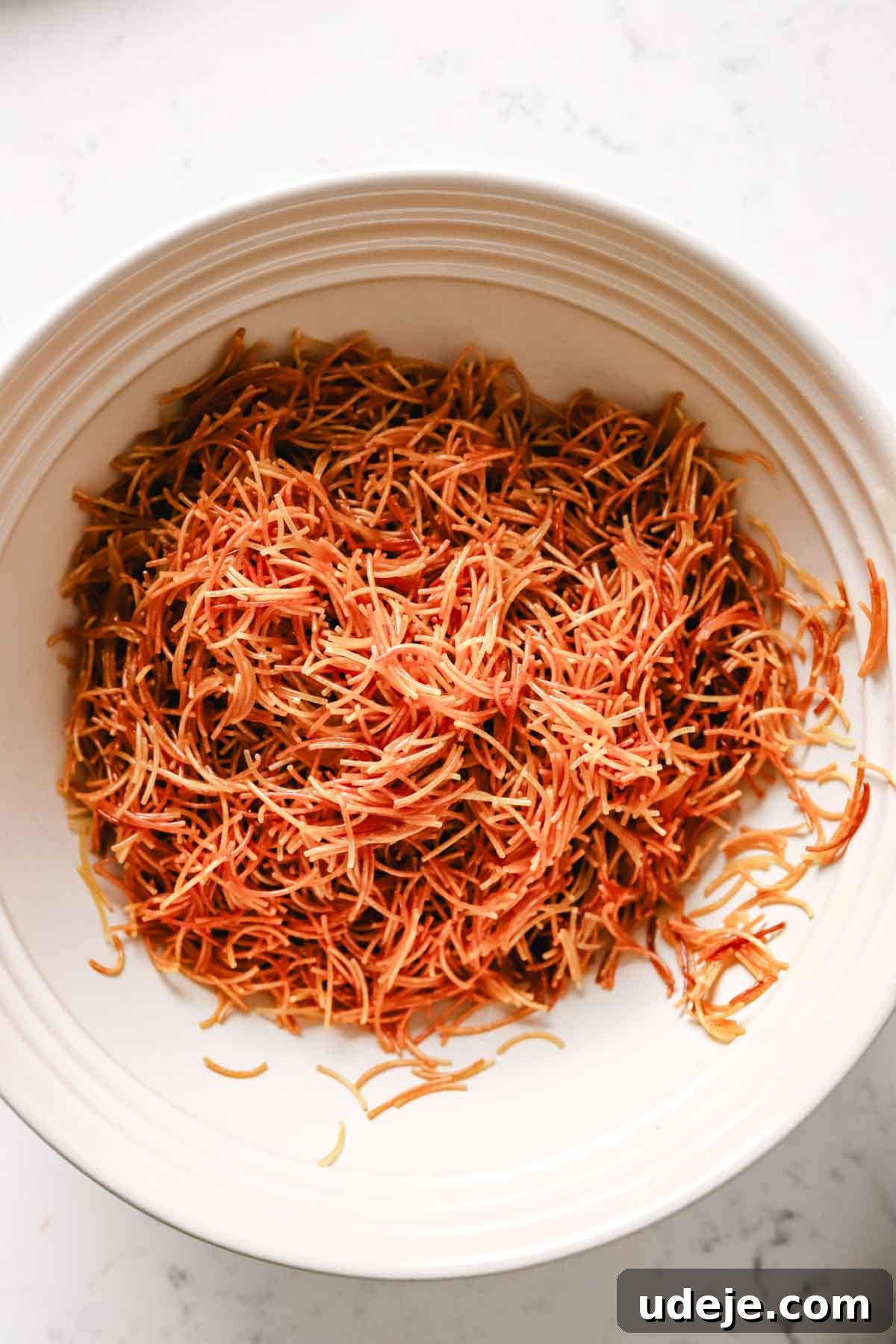
Begin by heating 2 tablespoons of olive oil in a small skillet or directly in the soup pot if you prefer to minimize dishes (though be mindful of the next step). Once the oil shimmers, add the vermicelli noodles. This is a critical step for both flavor and texture. You must stir the noodles continuously as they toast. Vermicelli are very fine and can burn quickly, turning from golden to bitter in a matter of seconds. Keep them moving in the pan until they achieve a beautiful, even golden-brown color, which typically takes between 3 to 5 minutes. The nutty aroma you’ll notice is a wonderful sign of flavor development.
Once perfectly toasted, immediately remove the noodles from the skillet and transfer them to a bowl. Set them aside. If you chose to toast them in your soup pot, try to remove as many as possible with a rubber spatula to prevent any lingering strands from burning while you cook the onions in the next step.
2. Building the Aromatic Base: Sautéing Onions and Tomato Paste
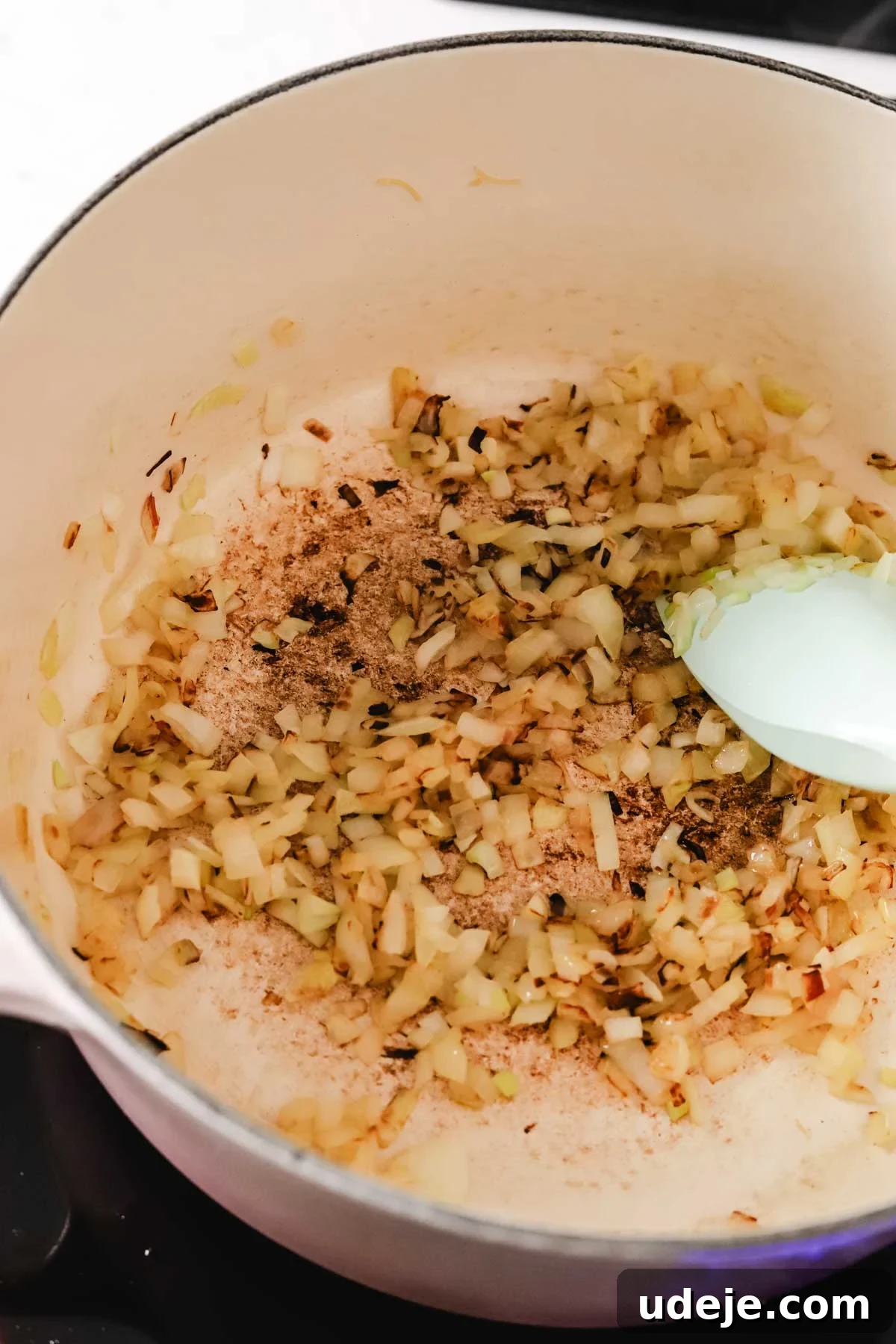
Using the same pot you plan to make the soup in (or a clean one if you used a separate skillet for the noodles), add the remaining 1 tablespoon of olive oil. Once warm, add the finely diced onions. Sauté the onions over medium heat, stirring occasionally, for 5 to 7 minutes. Your goal here is to soften them until they become translucent and develop a light golden hue, coaxing out their natural sweetness and building a fragrant base for the soup.
Once the onions are perfectly softened, add the tomato paste, along with a pinch of salt and pepper. Cook the tomato paste for about 30 seconds to 1 minute, stirring it into the onions at the bottom of the pot. This crucial step, often called “cooking out” the tomato paste, helps to deepen its flavor, enhance its color, and remove any raw, metallic taste, resulting in a richer, more complex tomato base.
3. Simmering to Perfection: Combining Flavors and Cooking Noodles
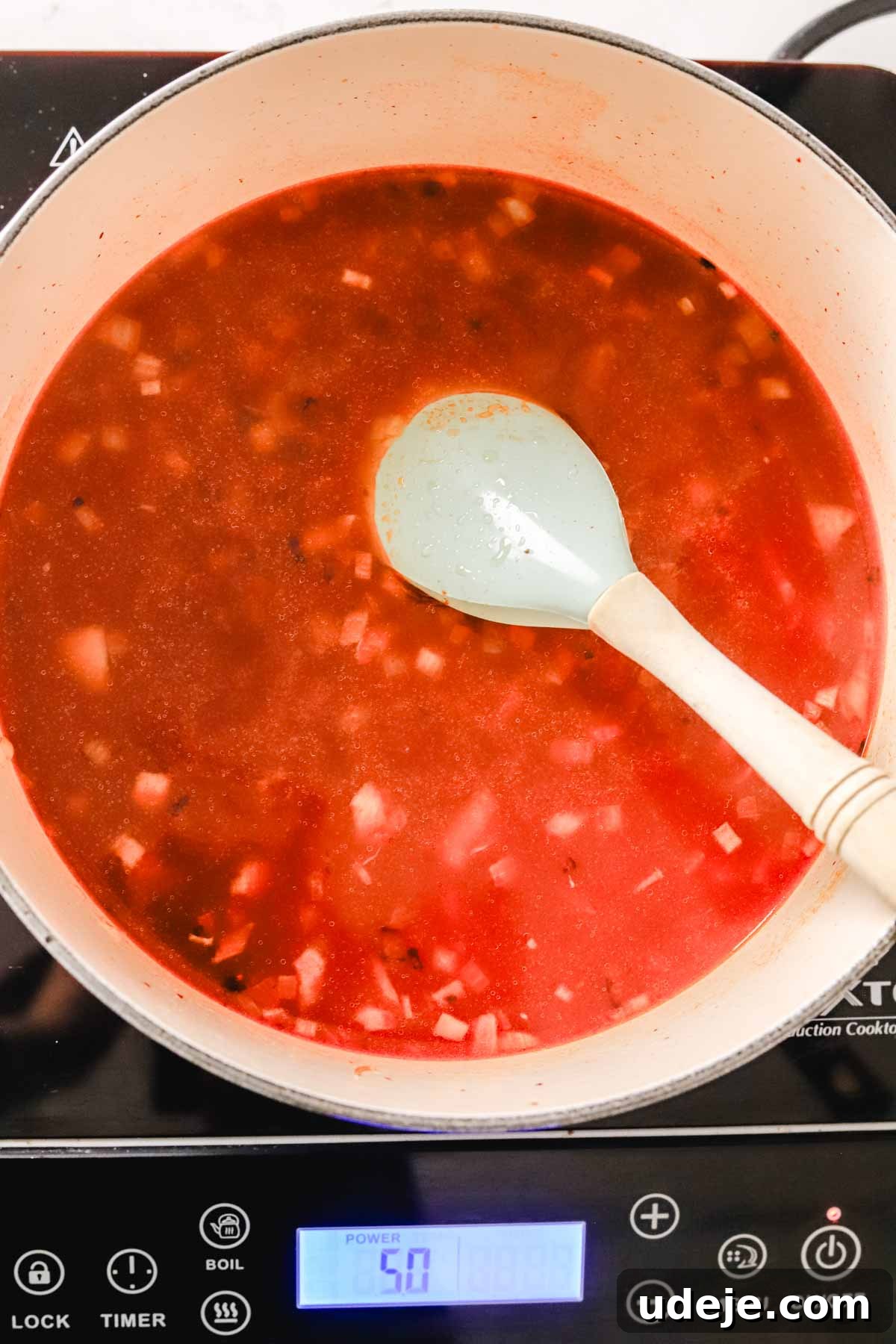
Once the tomato paste has been cooked out, pour in all of the chicken broth. Bring the mixture to a rolling boil over medium-high heat. Once boiling, reduce the heat to medium-low, cover the pot with a lid, and allow it to gently boil for 10-15 minutes. This simmering period is essential for the ingredients to meld together, allowing the flavors to deepen and fully develop.
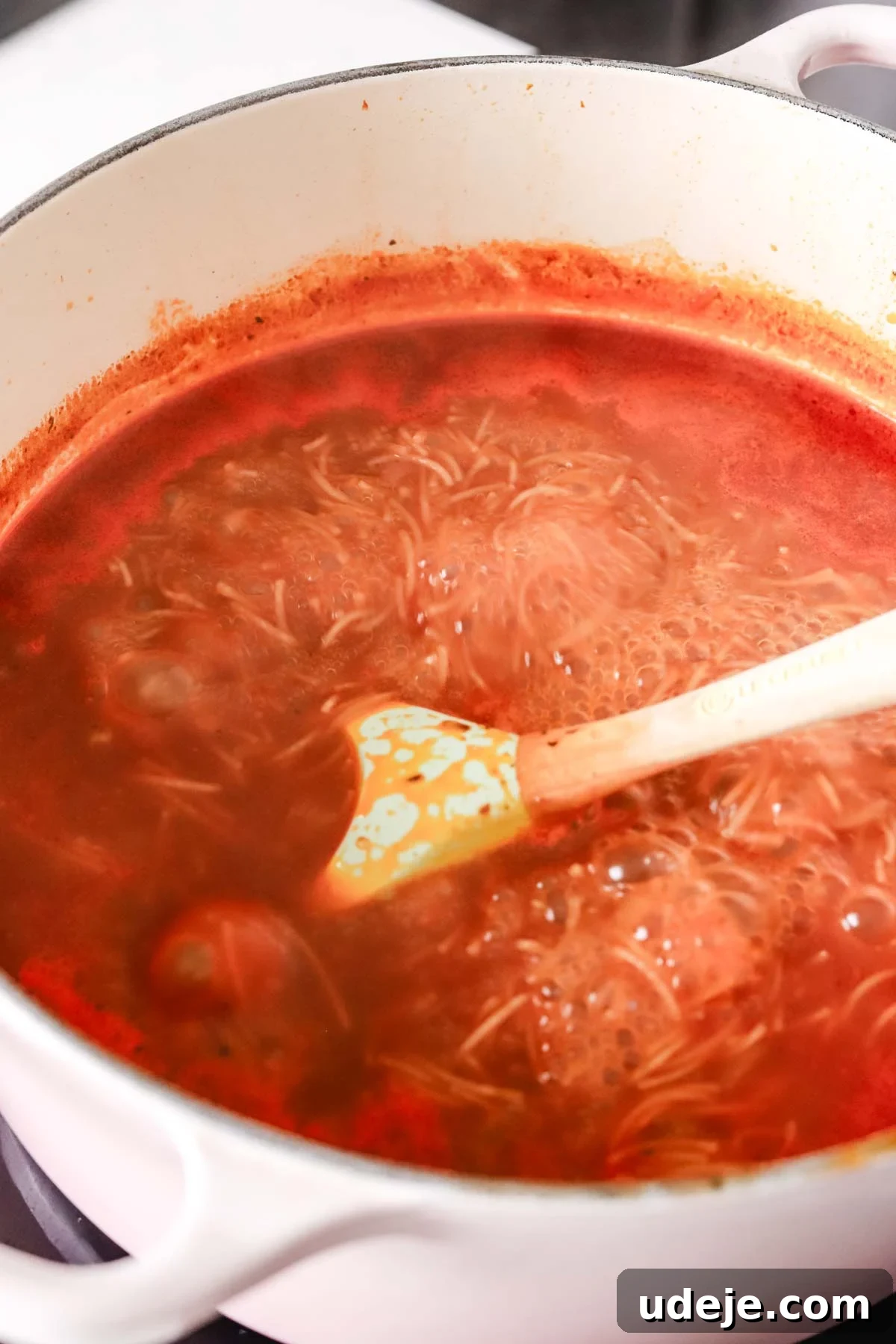
After this initial simmer, lift the lid and taste the broth. This is your opportunity to adjust the seasoning. Add more salt and pepper as needed, remembering that the salt content in your chicken stock can vary. Once seasoned to your liking, add the reserved toasted vermicelli noodles to the pot. Stir everything gently to combine, ensuring the noodles are fully submerged in the flavorful broth.
Now, allow the soup to simmer on medium-low heat for another 10-15 minutes, or until the vermicelli noodles are tender and perfectly cooked. They should be soft but still retain a pleasant bite. Once cooked, give the soup one final taste test and make any last-minute adjustments to salt or pepper. The soup should be vibrant, savory, and utterly comforting.
And there you have it! Your rich and comforting Tomato Vermicelli Soup is ready to be enjoyed. While it’s perfect as is, a simple garnish can enhance the experience. Feel free to remove the pot from the heat and ladle the steaming soup into individual bowls. A sprinkle of fresh, finely chopped parsley adds a bright, herbaceous note and a pop of color. For those who enjoy a little extra kick, a dash of freshly cracked black pepper is always welcome. Serve immediately and savor every spoonful of this homemade delight.
Storage and Reheating Tips
This Tomato Vermicelli Soup is best enjoyed fresh, but leftovers can certainly be saved for another delicious meal with proper storage. If you find yourself with extra, transfer the cooled soup to an airtight container and store it in the refrigerator. It will keep well for 3 to 4 days.
When reheating, gently warm the soup on the stovetop over medium-low heat, stirring occasionally, until it’s heated through. You might find that the noodles have absorbed some of the broth overnight, making the soup a bit thicker. If this happens, simply add a splash of extra chicken or vegetable broth (or even a little water) to reach your desired consistency, tasting and adjusting seasoning as needed.
It’s important to note that we do not recommend freezing this soup. Soups containing delicate pasta or noodles, like vermicelli, do not tend to freeze well. The freezing and thawing process can cause the noodles to become overly soft, mushy, and even disintegrate, significantly affecting the texture of the soup. While the flavor might remain, the delightful mouthfeel that makes this soup so appealing would be lost.
For the best experience, plan to make enough soup to consume within a few days, rather than batch cooking for long-term freezing. This ensures that every bowl maintains its perfect texture and fresh, vibrant flavor.
Other Comforting Soup Recipes You Will Love
If you tried these recipes, please consider leaving a star ★★★★★ rating in the recipe card below and/or a review in the comments section further down the page – I’d love to hear from you! You can also hop on over to Instagram and say hello!
30-Minute Tomato Vermicelli Soup
Leave a Review
Pin Recipe
Ingredients
- 1 cup vermicelli noodles , 95g (pasta noodles not rice noodles)
- 3 tablespoons olive oil
- 1 small yellow onion, finely diced
- 5 tablespoons tomato paste
- 5 cups chicken broth, *see notes
- 1 teaspoon kosher salt, *see notes
- 1/2 teaspoon black pepper
Instructions
-
Start by heating 2 tablespoons of the olive oil in a small skillet. Once hot, add the vermicelli noodles and toast them for 2-3 minutes, stirring continuously. Don’t stop stirring as they will burn easily.
-
Once the noodles are a golden brown, remove them from the skillet and set aside in a bowl.
-
In a soup pot, add the remaining 1 tablespoon of olive oil and the finely diced onions. Soften the onions for 5-7 minutes until translucent and lightly golden.
-
Add the tomato paste over the onions and cook it for 30 seconds, stirring it around on the bottom of the pot.
-
Pour all of the chicken stock into the pot and bring to a boil on medium heat. Cover the pot and allow the soup to boil for 10-15 minutes.
-
Open the lid of the pot and taste and adjust for salt. Add the salt and pepper at this point, along with the toasted noodles. Stir everything one more time then allow the soup to simmer on medium low for 10 minutes until the noodles are soft.
-
Taste and adjust for any more seasoning. Remove from the heat and serve in bowls, garnish with parsley and fresh cracked black pepper if desired.
Notes
- The type of noodles used are pasta or wheat noodles, not rice noodles. Check your local Middle Eastern store or the pasta aisle for this variety. You can also substitute with broken up angel hair pasta, orzo, or ditalini pasta.
- The amount of salt you should add to the soup depends on the salt content in the chicken broth you are using. I used lightly salted homemade broth and only needed 1 teaspoon. Before you add the salt, taste the soup then adjust accordingly. Some store-bought stocks can be very salty!