
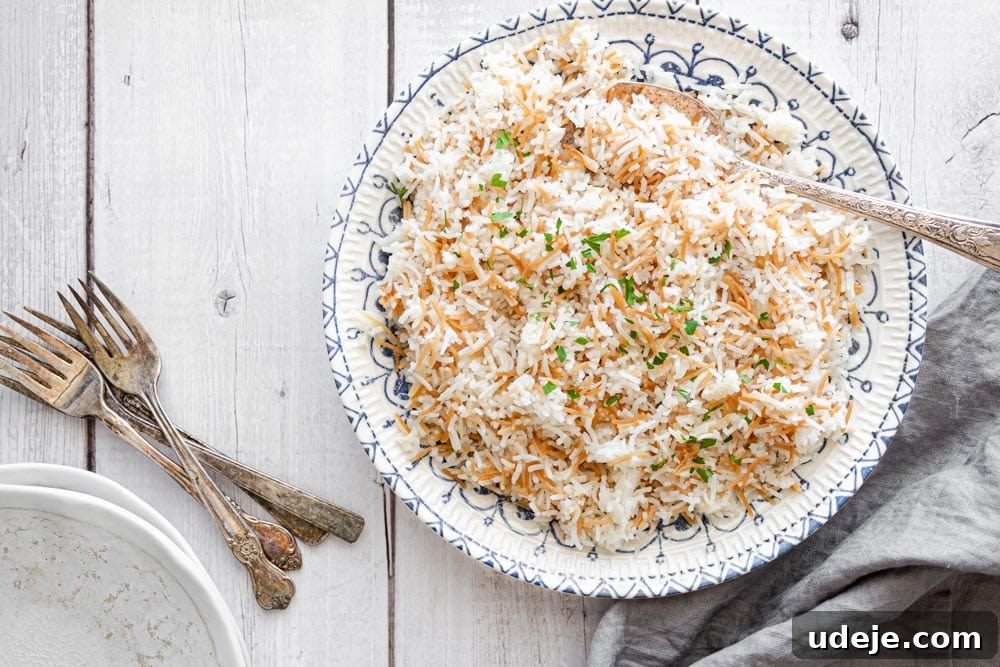
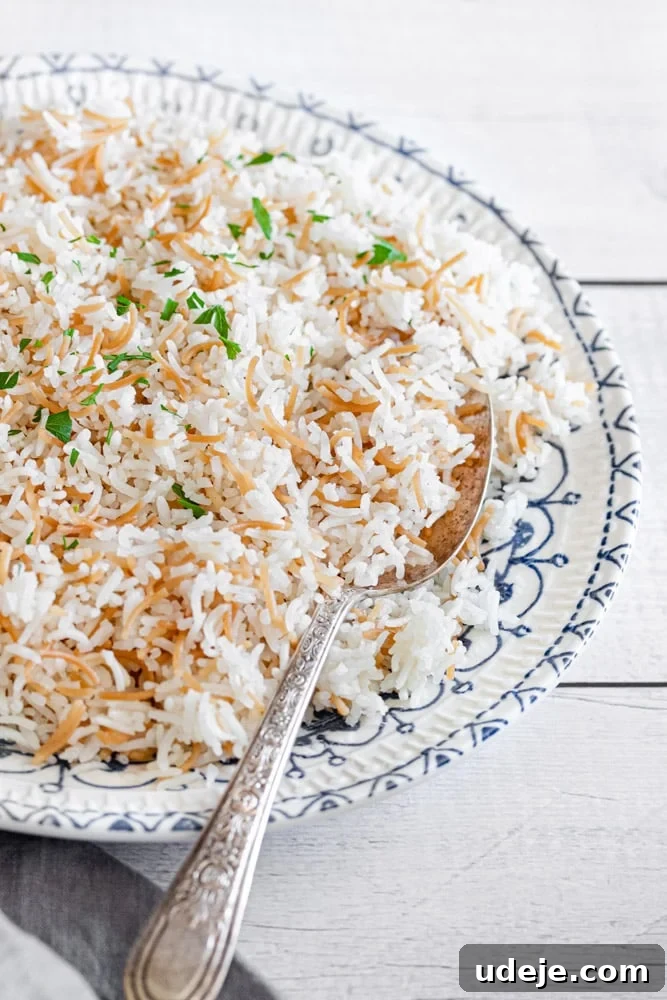
In the vibrant tapestry of Middle Eastern cuisine, few side dishes hold as cherished a place as Arabic Rice with Vermicelli. This seemingly simple concoction of fluffy rice and golden, toasted vermicelli noodles is more than just a staple; it’s an essential accompaniment, gracing tables alongside a myriad of savory stews, succulent meats, and flavorful grilled dishes. Its widespread popularity isn’t hard to understand: it’s incredibly easy to prepare, requires only a handful of readily available ingredients, and boasts an irresistible, subtly nutty flavor that makes it delightfully addictive. Indeed, many find it hard to stop at just one serving! This foolproof recipe promises perfectly cooked, separate grains of rice every time, infused with a depth of flavor that will transport your taste buds straight to the heart of the Middle East.
Unveiling the Charm of Vermicelli Rice: A Middle Eastern Culinary Gem
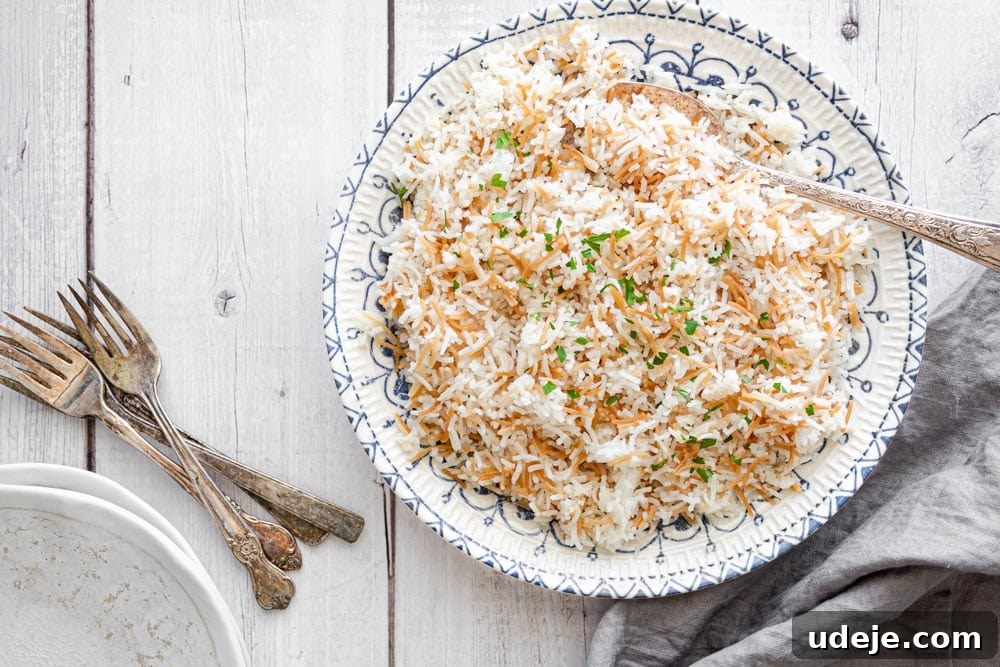
If you’ve ever dined in a Middle Eastern household or restaurant, you’ve likely noticed that plain, unadorned rice is a rarity. Instead, you’re usually presented with a delicious rice dish intertwined with fine, golden noodles – this is Arabic Vermicelli Rice. But don’t confuse these delicate strands with the thin white rice noodles found in Asian cuisine. The vermicelli used in this dish is distinctly different: it resembles very thin, short strands of yellow pasta, often broken into small, manageable pieces. Its unique texture and flavor are integral to the dish’s character.
The magic of vermicelli in rice lies in its transformation when toasted. When sautéed in oil until golden brown, these noodles develop a wonderful nutty aroma and a slightly crisp texture that adds a delightful contrast to the soft rice grains. This simple step elevates the entire dish, contributing a layer of complexity that plain rice simply can’t achieve. Beyond the vermicelli, the core ingredients for this authentic side are simple: quality long-grain rice, a good vegetable oil, and salt. For an extra boost of savory flavor, a chicken stock cube is often incorporated, a trick many home cooks, including my mother, swear by. While optional, it adds an umami richness that deepens the overall taste profile, making each bite even more satisfying.
Finding the right vermicelli noodles is key. While readily available at a much more affordable price in local Middle Eastern grocery stores, you can also conveniently find them online. If, for some reason, vermicelli is unavailable, the good news is that the Middle East offers a treasure trove of other delightful rice dishes. Consider alternatives like Hashweh Rice, a flavorful rice dish often mixed with ground meat and spices, or Carrot Rice, a vibrant and aromatic option. These can serve as excellent substitutes, providing a hearty and delicious side dish. For those who appreciate modern convenience, mastering fluffy Instant Pot Basmati rice is another fantastic skill to have. Ultimately, sometimes all it takes to make a perfect meal is a generous plate of this classic vermicelli rice alongside a fresh, simple chopped Arabic salad. It’s a comforting combination that rarely disappoints.
Why You’ll Love This Authentic Arabic Rice Recipe
This Arabic Rice with Vermicelli isn’t just a recipe; it’s an invitation to experience a cornerstone of Middle Eastern home cooking. Here’s why it’s bound to become a favorite in your kitchen:
- **Effortless Elegance:** Despite its impressive appearance and rich flavor, this dish is remarkably simple to prepare, making it perfect for both weeknight dinners and special occasions.
- **Versatile Companion:** It pairs beautifully with almost any main course, from hearty stews to delicate grilled fish, always complementing without overpowering.
- **Comfort Food Classic:** There’s something inherently comforting about a warm, fluffy plate of rice. This version, with its added nutty vermicelli, takes comfort to another level.
- **Minimal Ingredients:** You only need rice, vermicelli, and oil as core components, making it a budget-friendly and accessible dish.
- **Foolproof Method:** With the right techniques, achieving perfectly separated, tender rice grains is consistently easy, even for novice cooks.
- **Culturally Rich:** Eating this dish connects you to centuries of culinary tradition and hospitality, offering a taste of authentic Middle Eastern home cooking.
Mastering Fluffy Perfection: Expert Tips for the Best Arabic Rice
Achieving that coveted fluffy, distinct grain texture in Arabic vermicelli rice is an art, but it’s an art that’s surprisingly easy to master with a few key techniques. Follow these expert tips for a truly unforgettable rice dish:
- Opt for Long Grain Rice: When it comes to cooking rice, especially for this recipe, long-grain varieties like Basmati or Jasmine are your best friends. They are much more forgiving when it comes to the water-to-rice ratio compared to medium or short-grain rice, which tend to become sticky or mushy more easily. Their elongated shape ensures individual grains remain separate and light.
- Rinse the Rice Thoroughly: This step is non-negotiable for achieving perfectly separate grains. Rinse the rice in a bowl under cold running water, swirling it with your hand, until the water runs completely clear. This process effectively washes away excess surface starch, which is the primary culprit behind sticky, clumpy rice. Proper rinsing allows each grain to cook independently, resulting in a light and airy texture.
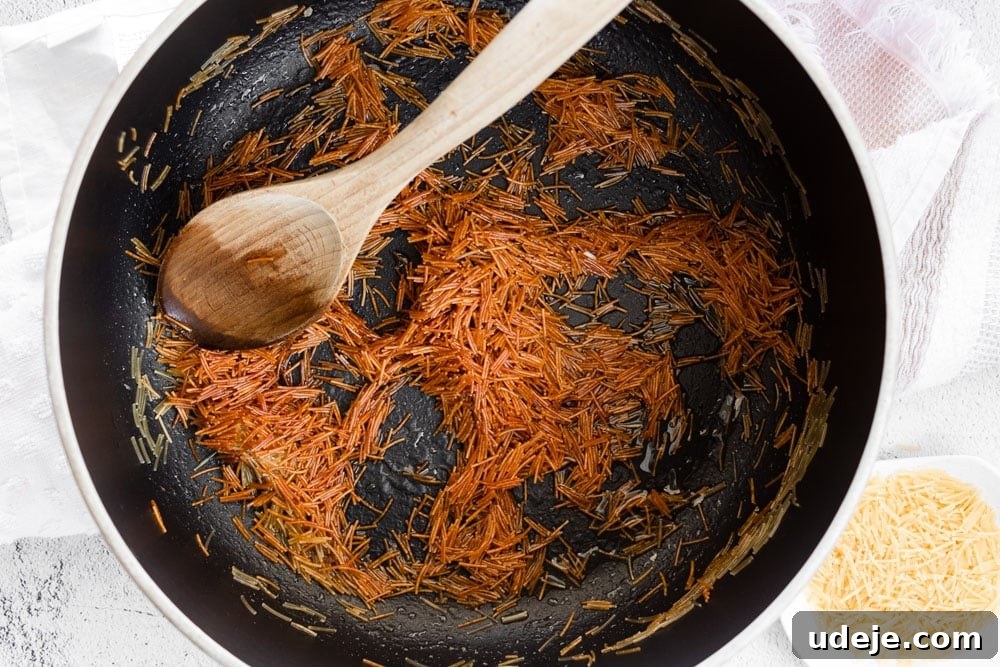
- Toast the Vermicelli to Golden Perfection: The vermicelli noodles are what give this dish its distinctive flavor and beautiful color. Heat the vegetable oil in a non-stick pot over medium heat. Add the vermicelli and stir constantly. These fine noodles burn very quickly, so vigilance is key. Continue stirring until they achieve a rich, golden-brown hue, indicating they’ve developed their nutty flavor. This typically takes about 5-7 minutes.
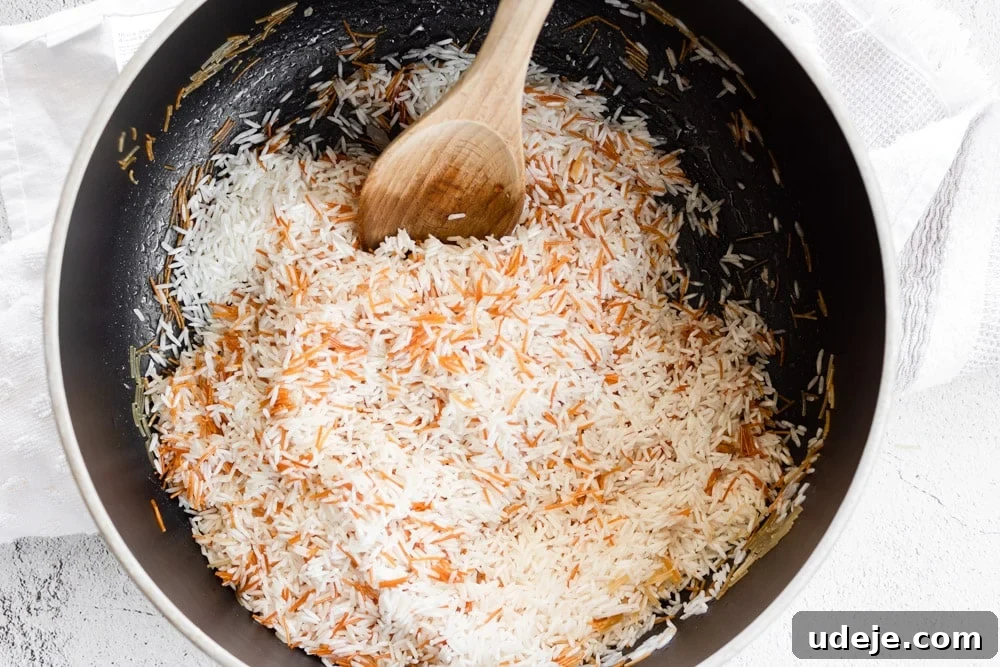
- Coat the Rice Grains with Oil: After the vermicelli is toasted, add the drained, rinsed rice to the pot. Stir it gently with the oil and toasted vermicelli for a few minutes. This crucial step ensures that each individual rice grain is lightly coated in oil, creating a protective barrier that prevents them from sticking together during cooking. This is a secret to achieving those beautifully separate grains.
- Infuse Flavor with Chicken Stock: While water works perfectly fine, incorporating a chicken stock cube (or even vegetable stock for a vegetarian option) truly elevates the flavor profile of the rice. My mother always taught me this trick, and it adds an incredible depth and savory richness that transforms the dish from good to outstanding. It’s an optional but highly recommended step.
- Resist the Urge to Peek: Once the water has come to a boil and you’ve covered the pot and reduced the heat to low, leave the rice completely undisturbed for the full 20 minutes. Do not lift the lid, and do not peek! The steam trapped inside the pot is essential for evenly cooking the rice. Opening the lid allows this precious steam to escape, compromising the cooking process and potentially leading to undercooked or unevenly cooked rice. Trust the process and let the rice cook in its own steamy environment.
- Allow for Resting Time: Once the 20 minutes of cooking on low heat are complete, turn off the heat but keep the pot covered for another 5-10 minutes. This resting period allows the remaining steam to absorb fully into the rice grains, making them even fluffier and perfectly tender. It’s the final touch for optimal texture.
- Fluff, Don’t Stir: After the resting period, gently fluff the rice with a fork, rather than stirring it with a spoon. This helps to separate the grains without crushing them, maintaining their integrity and airy texture.
Perfect Pairings: What to Serve with Arabic Vermicelli Rice
Arabic Rice with Vermicelli is the ultimate canvas for a wide array of Middle Eastern dishes. Its neutral yet flavorful profile makes it the ideal companion, absorbing the rich sauces and juices of main courses without competing for attention. Here are some classic pairings you absolutely must try:
- Hearty Middle Eastern Stews: This rice is practically synonymous with stews. Think Fasolia, a comforting white bean stew in a rich tomato sauce, or any number of vegetable and meat stews popular across the region. The rice beautifully soaks up the flavorful broth.
- Shawarma Plates: Instead of plain rice, a chicken shawarma plate, laden with tender marinated chicken, pickles, and tahini, is often served with a generous portion of vermicelli rice, offering a balanced and satisfying meal.
- Eggplant Casseroles: Dishes like Mediterranean eggplant casserole, with its layers of tender eggplant, ground meat, and aromatic tomato sauce, find their perfect match in this fluffy rice.
- Kafta and Kofta Dishes: Whether grilled, baked, or stewed, Middle Eastern meat patties (like kafta or kofta) are incredibly popular alongside this rice. The rice’s lightness beautifully balances the rich, spiced meat.
- Roasted Chicken: A classic Mediterranean roasted chicken, infused with herbs and lemon, becomes a complete feast when served with vermicelli rice, allowing the juices to mingle and create an even more delectable experience.
- Fresh Arabic Salads: Almost without exception, this rice is accompanied by a crisp, simple Arabic chopped salad. The freshness of cucumbers, tomatoes, and herbs provides a refreshing contrast to the warm, comforting rice.
- Grilled Meats and Kebabs: From succulent lamb chops to various kebabs, the rice serves as an excellent foundation, allowing the flavors of the grilled meats to truly shine.
Other Rice Recipes You Will Love
Variations and Customizations for Your Vermicelli Rice
While the classic Arabic Vermicelli Rice is perfect in its simplicity, there are many ways to personalize this dish to suit your taste or occasion:
- **Aromatic Enhancements:** A pinch of ground cardamom, a bay leaf, or a few whole cloves can be added to the oil while toasting the vermicelli for an extra layer of fragrance.
- **Herbal Touches:** Freshly chopped parsley or cilantro can be stirred in just before serving for a burst of color and herbaceous flavor.
- **Nutty Toppings:** Toasted slivered almonds, pine nuts, or even pistachios can be sprinkled over the finished rice for added crunch and richness. Simply toast them in a dry pan for a few minutes until golden.
- **Vegetable Boost:** For a heartier side, you can gently sauté some finely diced carrots or peas with the rice before adding water.
- **Spice it Up (Mildly):** A very small amount of white pepper or a tiny dash of allspice can be added for a subtle warmth, though traditionally, the focus is on the rice and vermicelli.
- **Lemon Zest:** A hint of lemon zest stirred in at the end can brighten the flavor profile beautifully, especially if serving with fish or chicken.
Troubleshooting Common Rice Cooking Issues
Even with the most straightforward recipes, things can sometimes go awry. Here’s how to address a few common issues you might encounter while making Arabic Vermicelli Rice:
- **Mushy Rice:** This usually happens due to too much water or not enough rinsing. If your rice turns out mushy, try reducing the water slightly next time, or ensure you’re thoroughly rinsing the starch off. For the current batch, you can spread it out on a baking sheet to cool and dry slightly, then gently fluff it. It might not be perfectly separate, but it will be less clumpy.
- **Undercooked/Hard Rice:** If the rice is still hard after the cooking and resting time, it often means there wasn’t enough liquid, the heat was too high, or the lid wasn’t sealed properly (allowing steam to escape). To fix it, add a quarter cup of hot water, re-cover the pot tightly, and cook on the lowest heat for another 5-10 minutes.
- **Burnt Bottom:** A burnt bottom indicates the heat was too high during the simmering phase or there wasn’t enough liquid. Always use a low flame once the rice comes to a boil. If it burns, simply scoop out the unburnt rice from the top and sides, avoiding the charred bottom. You might lose a small portion, but the rest will still be delicious.
- **Sticky Rice:** This is typically a result of insufficient rinsing or lifting the lid too often during cooking. Remember to rinse until the water is clear and resist the urge to peek during the cooking process. Coating the grains in oil also helps prevent stickiness.
If you tried this classic recipe, please consider leaving a star ⭐⭐⭐⭐⭐ rating in the recipe card below and/or a review in the comments section further down the page – I’d love to hear from you! You can also hop on over to Instagram and say hello!
Arabic Rice with Vermicelli
Leave a Review
Pin Recipe
Ingredients
- 1 cup vermicelli noodles
- 3 cups long grain rice, basmati preferred
- 5 tablespoons vegetable oil
- 1 chicken stock cube, optional (can replace with vegetable stock)
- 2 teaspoons salt
- 5 cups water
Instructions
- Start by washing the rice several times until the water runs clear. Drain and set aside.
- In a non-stick pot, heat the vegetable oil on medium heat. Then add the vermicelli noodles and cook until golden brown. Ensure you stir constantly as they tend to burn quickly. This should take 5-7 minutes.
- Once they are a golden brown, add the drained rice, the salt, and the stock cube. Stir together for a few minutes so the rice grains are coated in the oil.
- Add the water, mix well, and allow it to come to a boil for a few minutes.
- Once it starts to boil, cover the pot and reduce the heat to low. Leave it undisturbed for 20 minutes.
- Once 20 minutes is up, turn off the heat and keep the pot covered for another 5 minutes.
- Fluff with a fork and serve with some fresh parsley and toasted nuts if desired.
Notes
- The water ratio specified in this recipe is for long grain rice. For medium or short grain rice, use slightly less water. Long grain rice is the most forgiving, so I recommend using it.
- The chicken stock is completely optional but it takes the flavor to another level.
Nutrition Information
Serving: 1 Serving, Calories: 583kcal, Carbohydrates: 107g, Protein: 8g, Fat: 12g, Saturated Fat: 2g, Polyunsaturated Fat: 7g, Monounsaturated Fat: 3g, Trans Fat: 0.1g, Cholesterol: 0.1mg, Sodium: 1021mg, Potassium: 120mg, Fiber: 2g, Sugar: 0.2g, Vitamin A: 0.01IU, Vitamin C: 0.01mg, Calcium: 41mg, Iron: 1mg
Did you make this recipe?
Please leave a star rating and review below!