
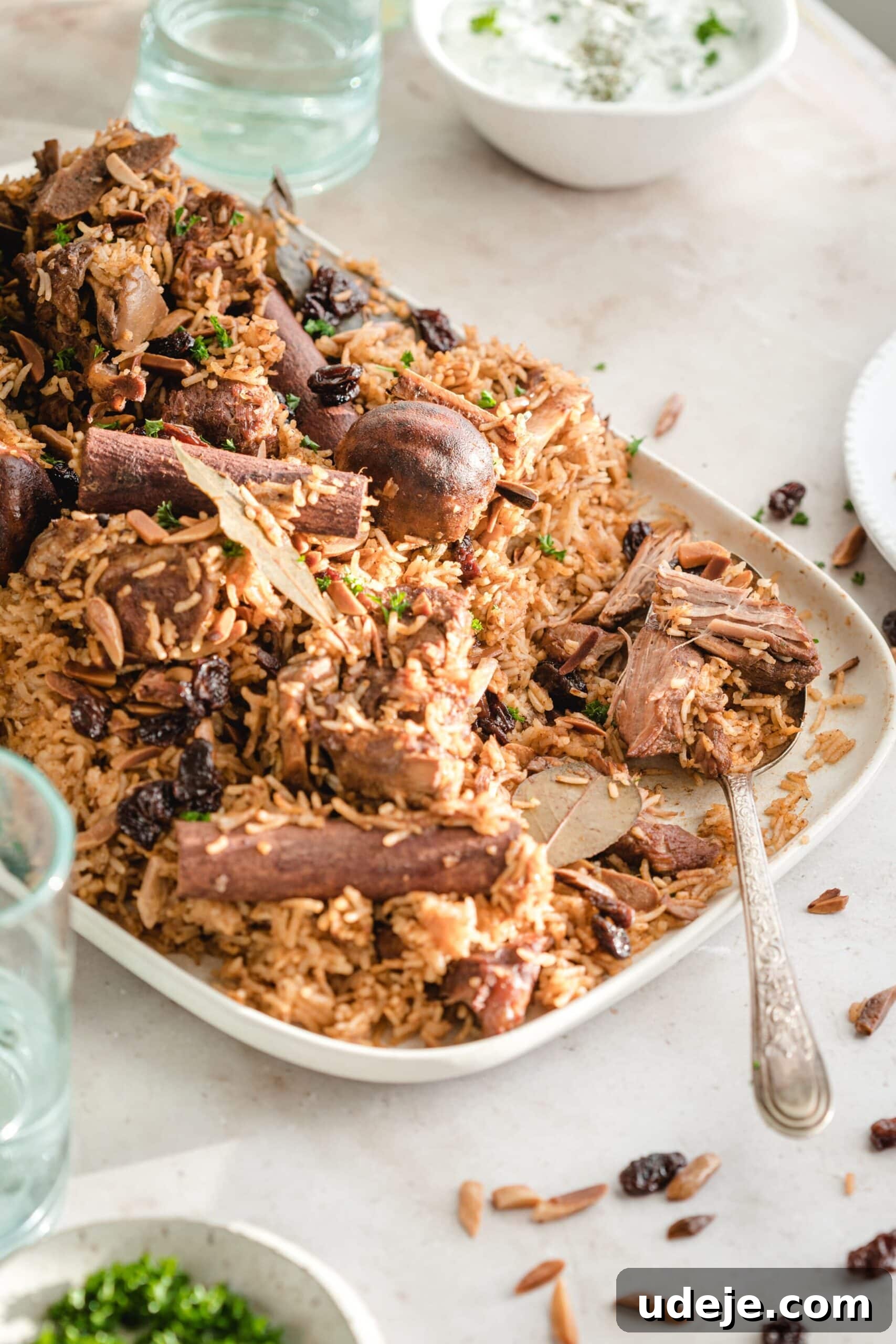
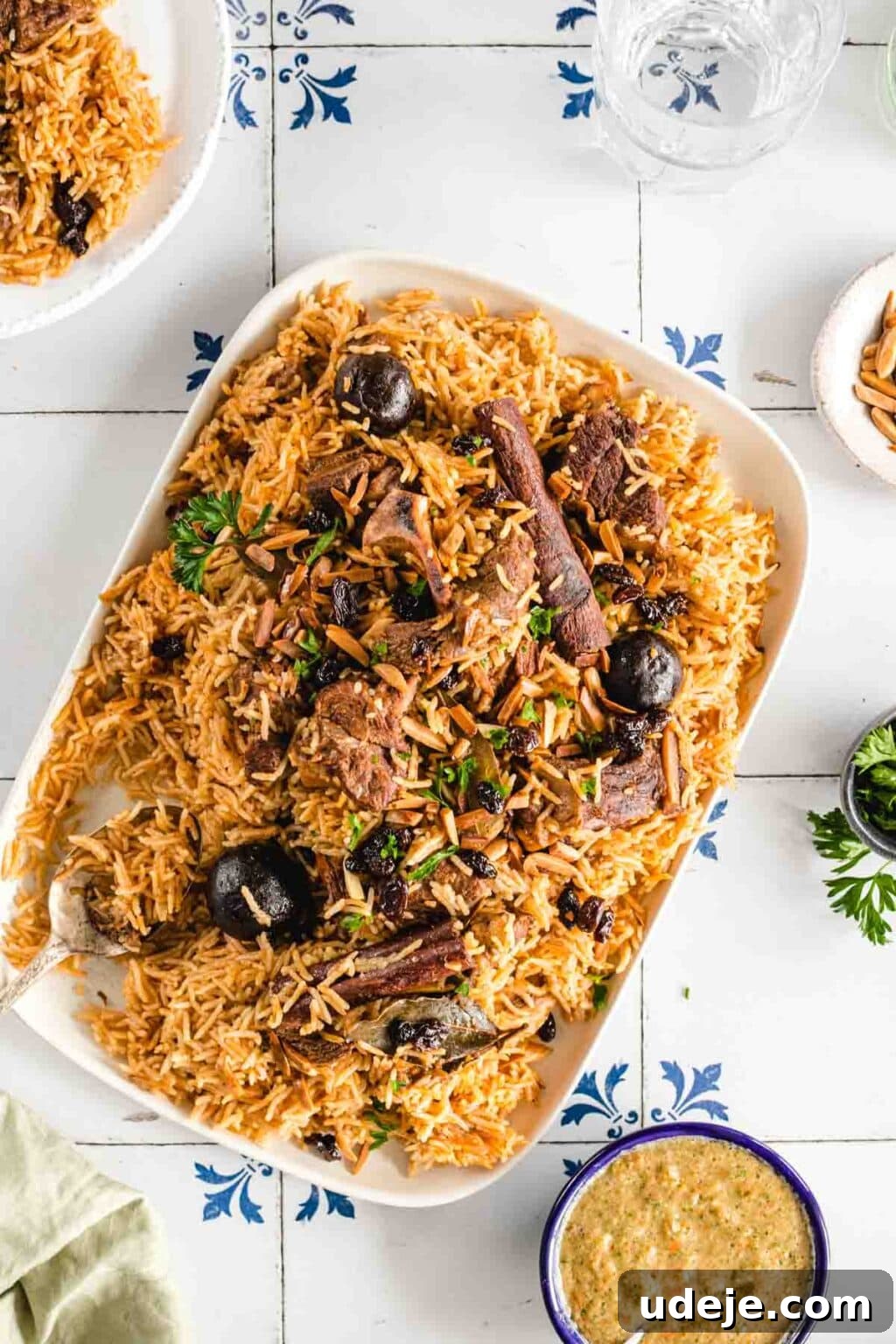
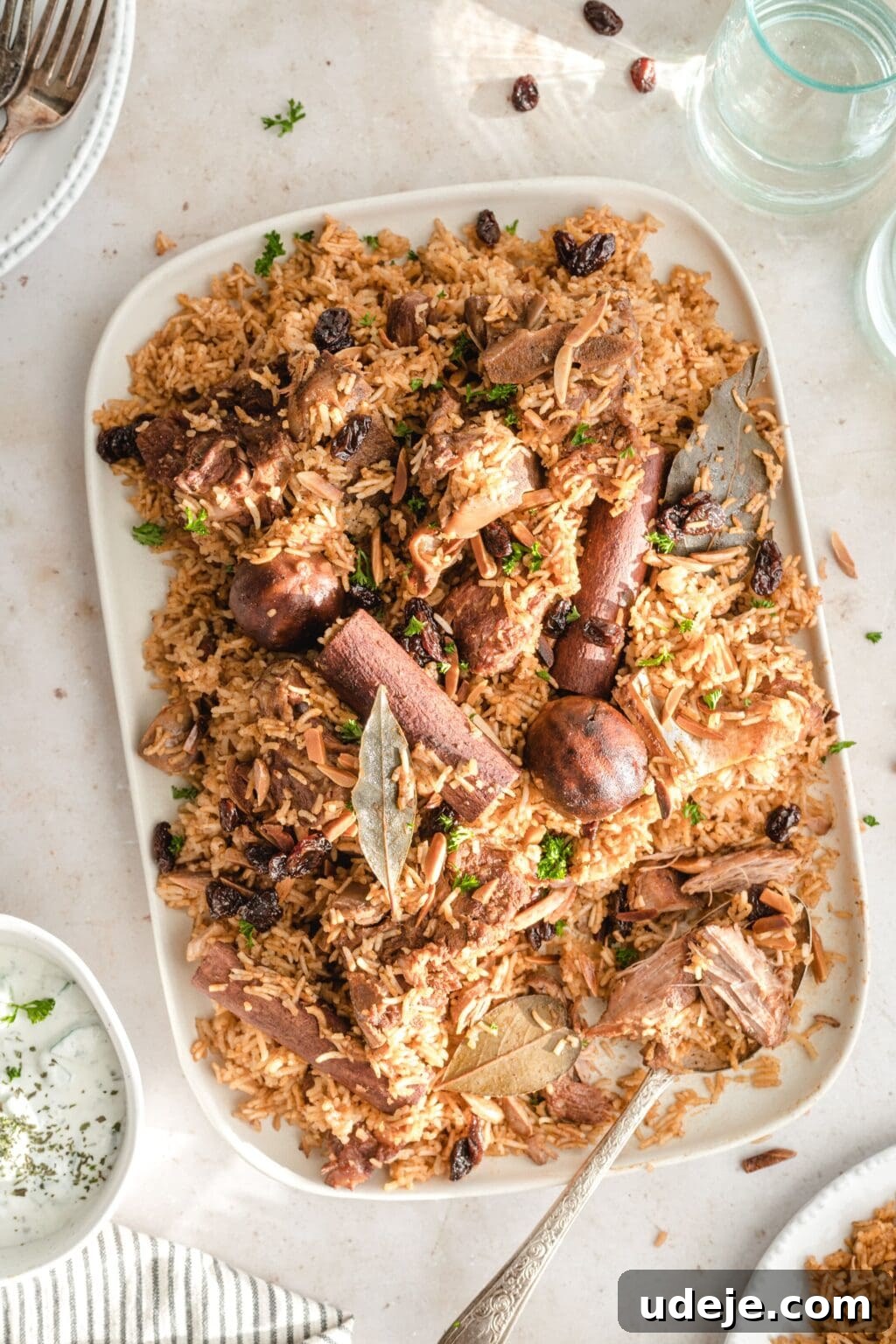
Embark on a culinary journey to the heart of Arabia with this exquisite Lamb Kabsa recipe. This beloved traditional Arabian rice dish showcases tender, succulent lamb, perfectly cooked with fragrant basmati rice, all infused with a captivating blend of warm, aromatic spices. Each serving is elegantly garnished with golden-toasted nuts and sweet raisins, creating a harmonious balance of flavors and delightful textures. Despite its rich, slow-cooked depth, this easy lamb kabsa recipe is surprisingly accessible, requiring minimal active preparation time and promising a truly authentic dining experience that will impress your guests and satisfy your cravings. Prepare to discover your new favorite one-pot meal.
5-STAR READER REVIEW
“This recipe is so easy my thirteen-year-old daughter can prep it in less than half an hour and make it herself and have it coming out tasting like we got it from a restaurant. Love it so much we will make it for guests next time we have a gathering at our home.”
—Nicole
Discovering the Allure of Lamb Kabsa: A Rice Lover’s Dream
For those who cherish rice-based dishes, Kabsa is nothing short of a revelation. As an ardent enthusiast of Middle Eastern cuisine, I’ve had the pleasure of perfecting numerous Middle Eastern rice recipes, each one a testament to the region’s rich culinary heritage. My passion for rice drives my meticulous approach to every grain, ensuring a dish that is both flavorful and perfectly textured. While my repertoire already includes popular recipes like Chicken Machboos, it’s time to introduce the magnificent lamb version that truly stands out.
My annual visits to Kuwait have provided me with invaluable experiences, allowing me to savor some of the finest Kabsa across the region. This particular recipe is a culmination of extensive testing and optimization, focusing on achieving not just authentic flavor, but also remarkable simplicity. Kabsa holds a place of honor among Arabic rice dishes, alongside other celebrated meals like Mandi and Maqluba. Many find these traditional recipes intimidating, but my aim with this guide is to demystify the process, empowering you to confidently prepare and serve this incredible dish even on a weeknight. Get ready to transform your dinner table into a feast of Arabian delights!
Crafting Authentic Lamb Kabsa: Your Essential Guide
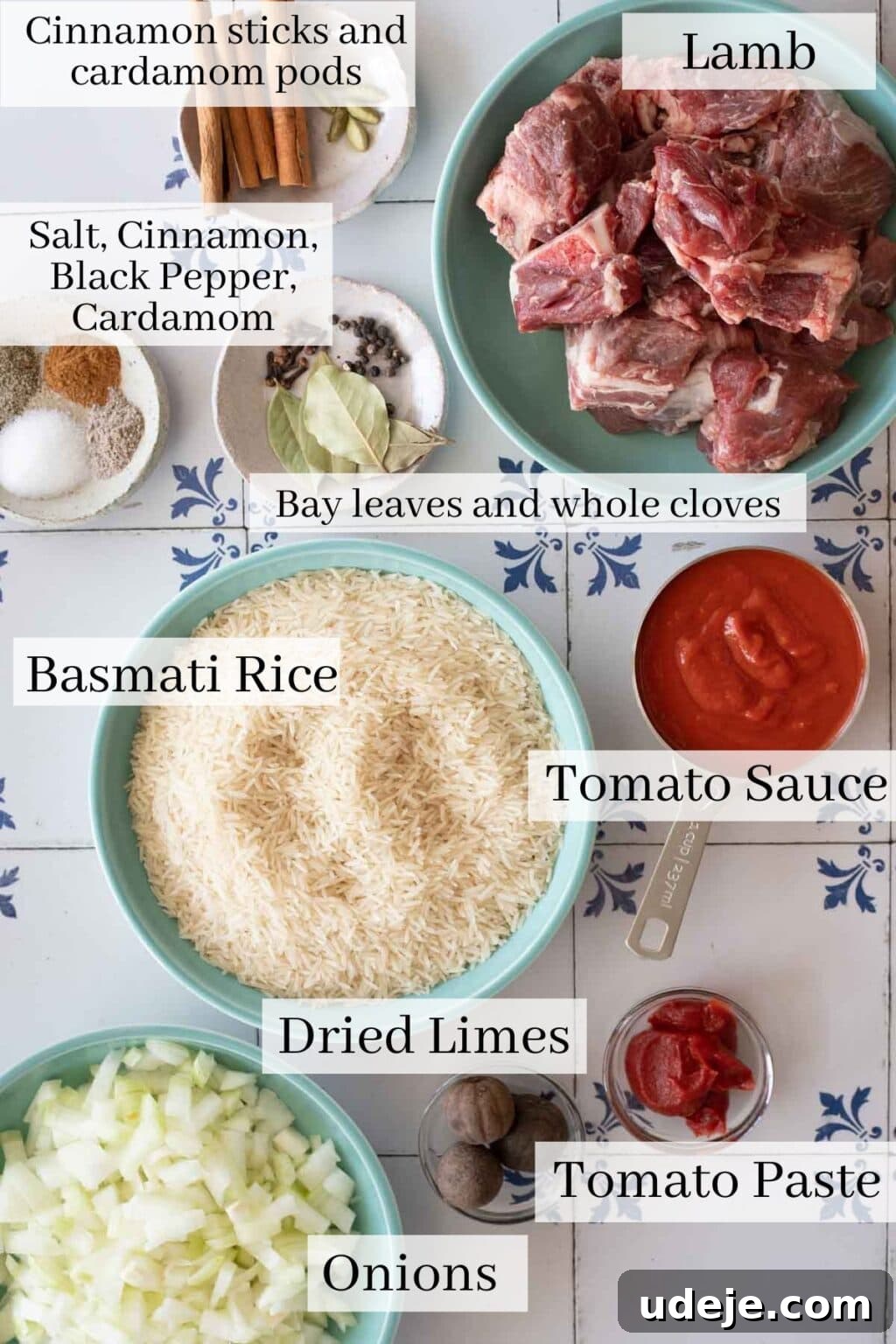
Creating a truly memorable Lamb Kabsa begins with selecting the finest ingredients and understanding their roles in developing its signature flavor. Let’s gather everything you’ll need to prepare this aromatic masterpiece.
Choosing Your Lamb Cut
While various cuts of lamb can be used, I highly recommend bone-in lamb shoulder. The bones impart a deeper, richer flavor to the broth during the slow cooking process, which is absolutely essential for an authentic Kabsa. If lamb shoulder isn’t readily available, bone-in lamb leg or even veal can serve as excellent alternatives, each contributing its own subtle nuance to the dish.
The Magic of Dried Limes (Loomi)
Many of the ingredients for Kabsa are straightforward pantry staples, but one special item that truly elevates the dish is dried limes, often known as “loomi” in Middle Eastern cuisine. These small, dark limes offer a unique sour, earthy, and slightly smoky flavor that is characteristic of traditional Arabian cooking. I strongly encourage seeking them out at your local Middle Eastern grocery store; they are incredibly worth the effort. However, if they are impossible to find, you can still make a delicious Kabsa, but the loomi adds an authentic layer of complexity that is hard to replicate.
Cooking Vessel Options
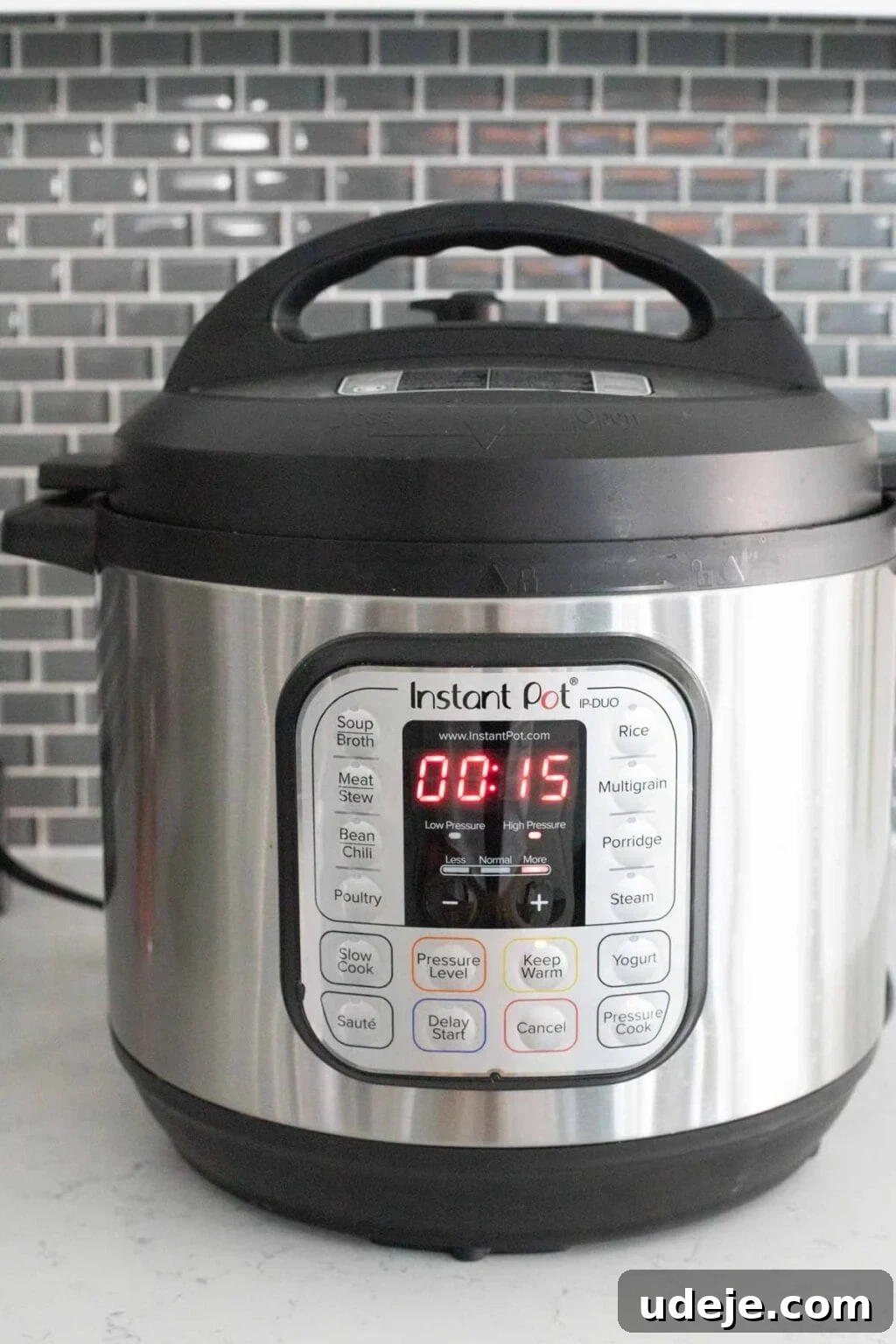
You have flexibility in how you cook your Kabsa. A heavy-bottomed, non-stick pot is ideal if you plan to cook the lamb on the stovetop. Alternatively, an Instant Pot or pressure cooker is a fantastic option for tenderizing the lamb quickly, significantly reducing cooking time without sacrificing flavor.
If you’re cooking on the stovetop, remember to monitor the liquid level and add more water as needed to keep the lamb simmering properly. Meanwhile, ensure you wash your basmati rice thoroughly until the water runs clear, then soak it for 30 minutes. Soaking is a crucial step for achieving perfectly fluffy grains.
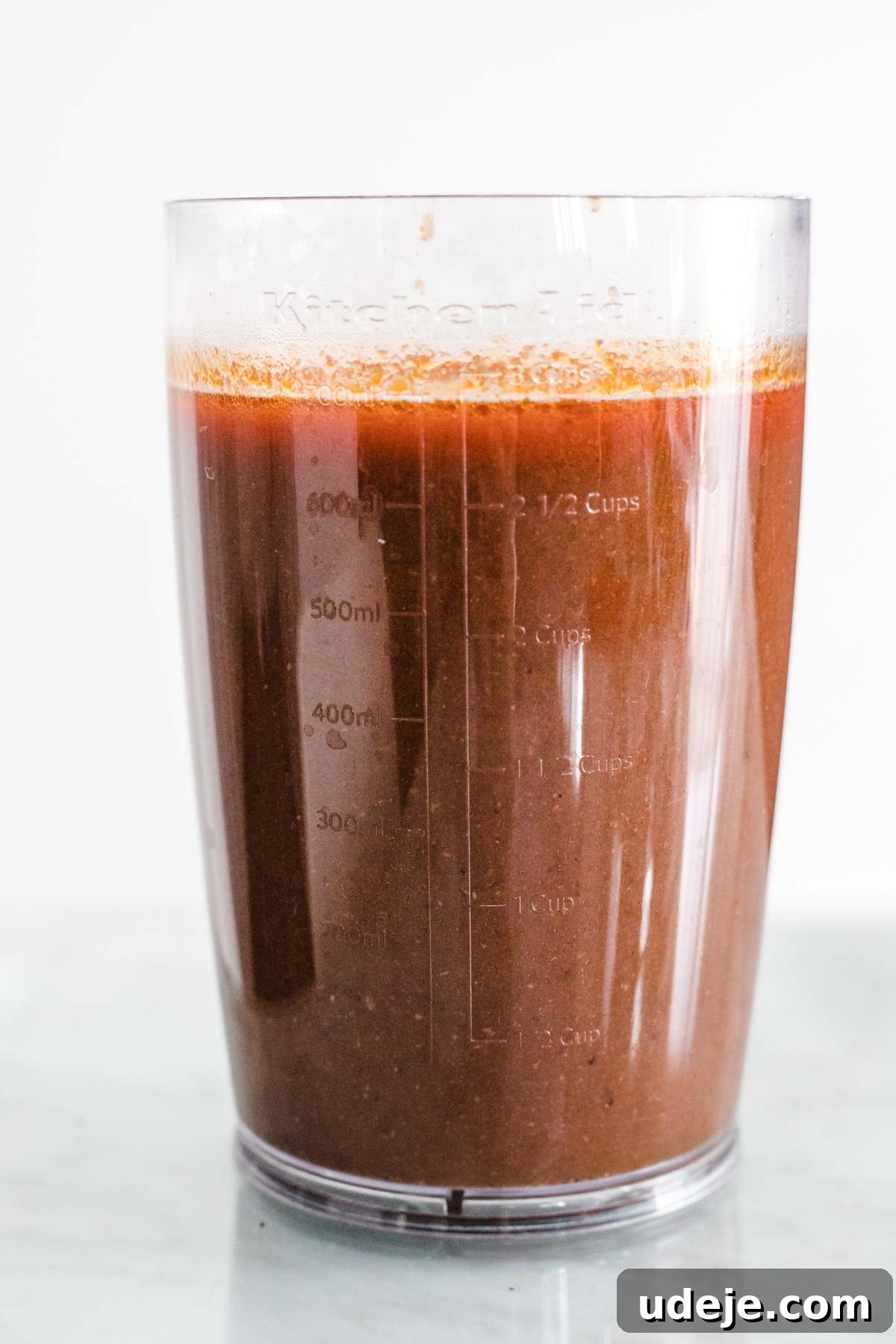
Once the lamb is tender, carefully measure out the broth according to the recipe’s specifications. Precision here is key for perfect rice. If you find yourself with less broth than required, simply top it up with water. Conversely, if you have extra broth, it can be saved for future use in soups or other dishes, ensuring no flavor goes to waste.
While the rice is gently simmering, take a few minutes to prepare your garnishes. In a dry skillet, lightly toast the slivered almonds until they turn golden brown and fragrant. Then, add the raisins to the same skillet and warm them through for just a minute or two until they plump up slightly. These simple steps add a wonderful layer of texture and sweetness that perfectly complements the savory Kabsa.
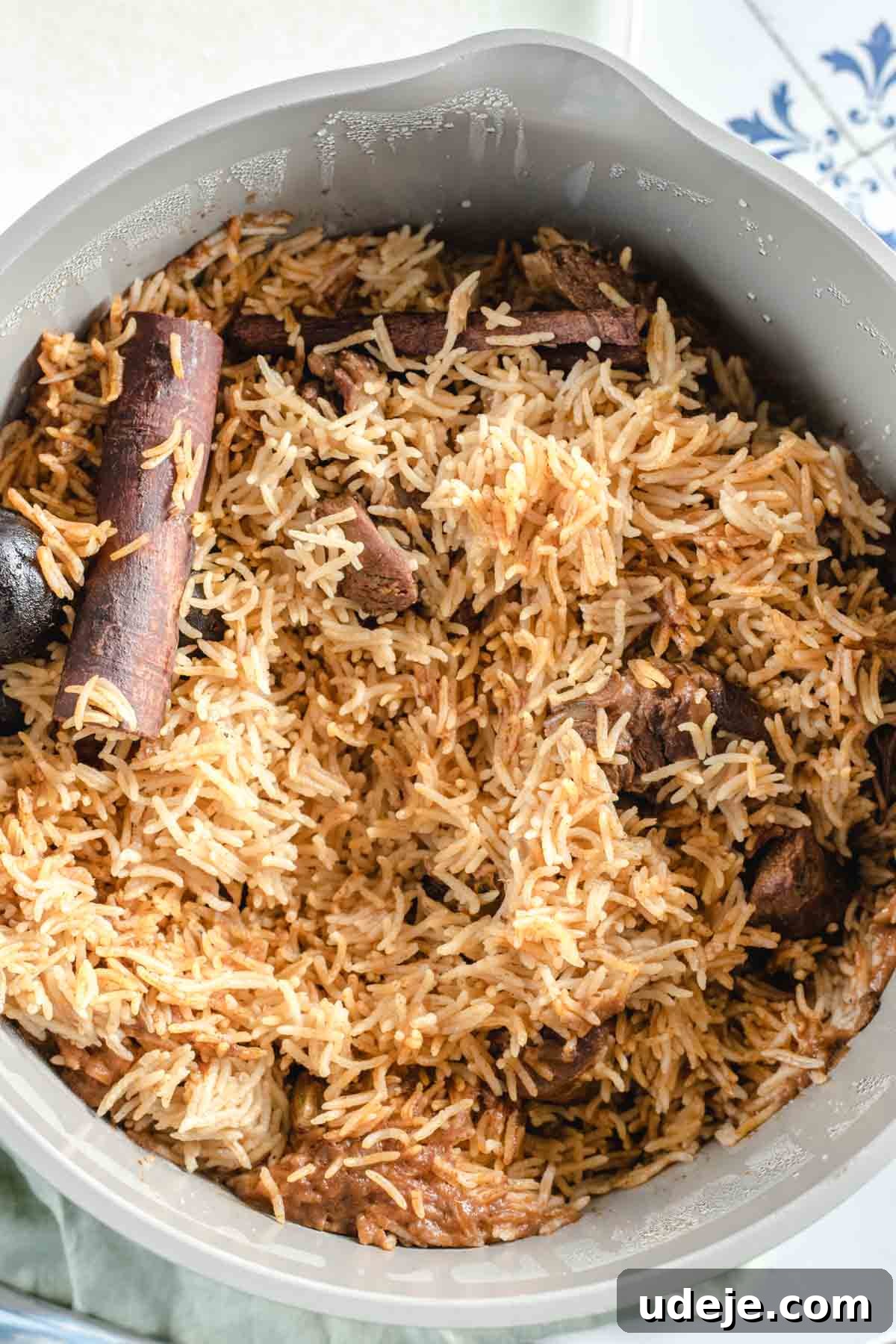
Serve your steaming hot Lamb Kabsa with a refreshing bowl of jajik (cucumber yogurt salad) or a vibrant finely chopped Arabic salad. These accompaniments provide a cooling contrast to the rich, spiced rice and lamb, making for a perfectly balanced and unforgettable meal. Enjoy the fruits of your labor and the authentic tastes of the Middle East!
Mastering the Art of Fluffy Basmati Rice for Kabsa
Achieving perfectly fluffy, separate grains of rice is paramount for an authentic Kabsa. Here are essential tips to ensure your basmati rice turns out light and airy every time:
- Precision is Key for Rice-to-Liquid Ratio: Always adhere strictly to the specified rice-to-liquid ratio in the recipe, which is typically 1 cup of rice to 1.5 cups of liquid. This is why it’s critical to strain and accurately measure your lamb broth before adding the rice. Too much liquid leads to mushy rice, while too little can result in uncooked grains.
- Strain for Superior Texture: Straining the cooked onions and whole spices out of the broth before adding the rice is a game-changer. I’ve tested this recipe extensively, and consistently, straining the broth yields significantly fluffier and more distinct rice grains. The solid bits can interfere with even cooking and moisture absorption.
- Mind the Broth Consistency: It’s crucial to prevent the broth from becoming too thick due to excessive tomato paste or sauce. A thick, heavy broth can hinder the proper cooking of the rice grains, leading to a frustrating outcome where the outside of the grains is mushy while the inside remains hard. Aim for a broth consistency that is similar to water, or perhaps just a tiny bit thicker, to ensure the rice cooks evenly and perfectly.
- Rinse and Soak Basmati: Never skip rinsing your basmati rice until the water runs completely clear. This removes excess starch, which is a common culprit for sticky rice. Follow this with a 30-minute soak to allow the grains to absorb some water, ensuring they cook through evenly and prevent breakage.
- Gentle Fluffing: Once the rice is cooked, resist the urge to stir vigorously. Instead, gently fluff it with a fork. This helps separate the grains without crushing them and releases any trapped steam, preventing further cooking and maintaining that coveted fluffy texture.
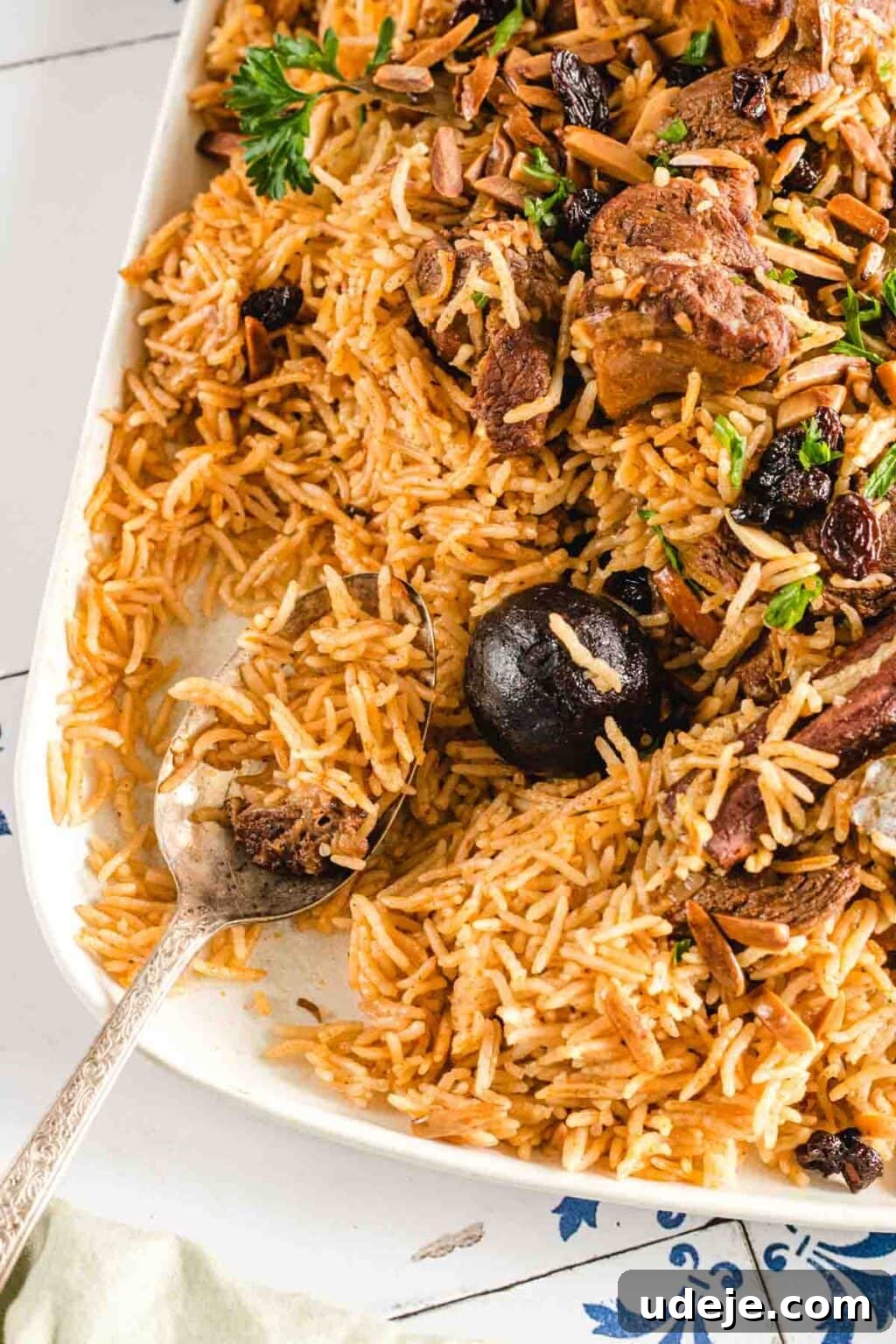
If you tried this delicious recipe, please consider leaving a star ⭐️⭐️⭐️⭐️⭐️ rating in the recipe card below and/or a review in the comments section further down the page – I’d love to hear from you! You can also hop on over to Instagram and say hello!
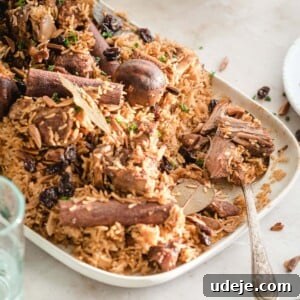
Fragrant Lamb Kabsa (Restaurant Style)
8
servings
10
mins
50
mins
1
hr
Amina Al-Saigh
Leave a Review
Pin Recipe
Ingredients
For the meat
- 1.5 kilogram bone-in lamb shoulder or leg, medium pieces, (veal is also a good option)
- 2 tablespoons vegetable oil
- 3 medium onions, diced
- 3 dried limes, (optional)
- 3 cinnamon sticks
- 3 bay leaves
- 6 green cardamom pods
- 5 whole cloves
- 1.5 teaspoon salt
- 1/2 teaspoon ground cinnamon
- 1/2 teaspoon ground cardamom
- 1/2 teaspoon ground black pepper
- 1/2 cup tomato sauce
- 2 tablespoons tomato paste
- 4 cups water
For the rice
- 3 cups basmati rice
- 1 teaspoon salt
- 4.5 cups broth, chicken, beef or vegetable
For the Garnish
- 1/2 cup slivered almonds
- 2 tablespoons olive oil
- 1/2 cup raisins
Equipment
-
1 Instant Pot optional (you can also use stovetop method)
Instructions
For the meat:
-
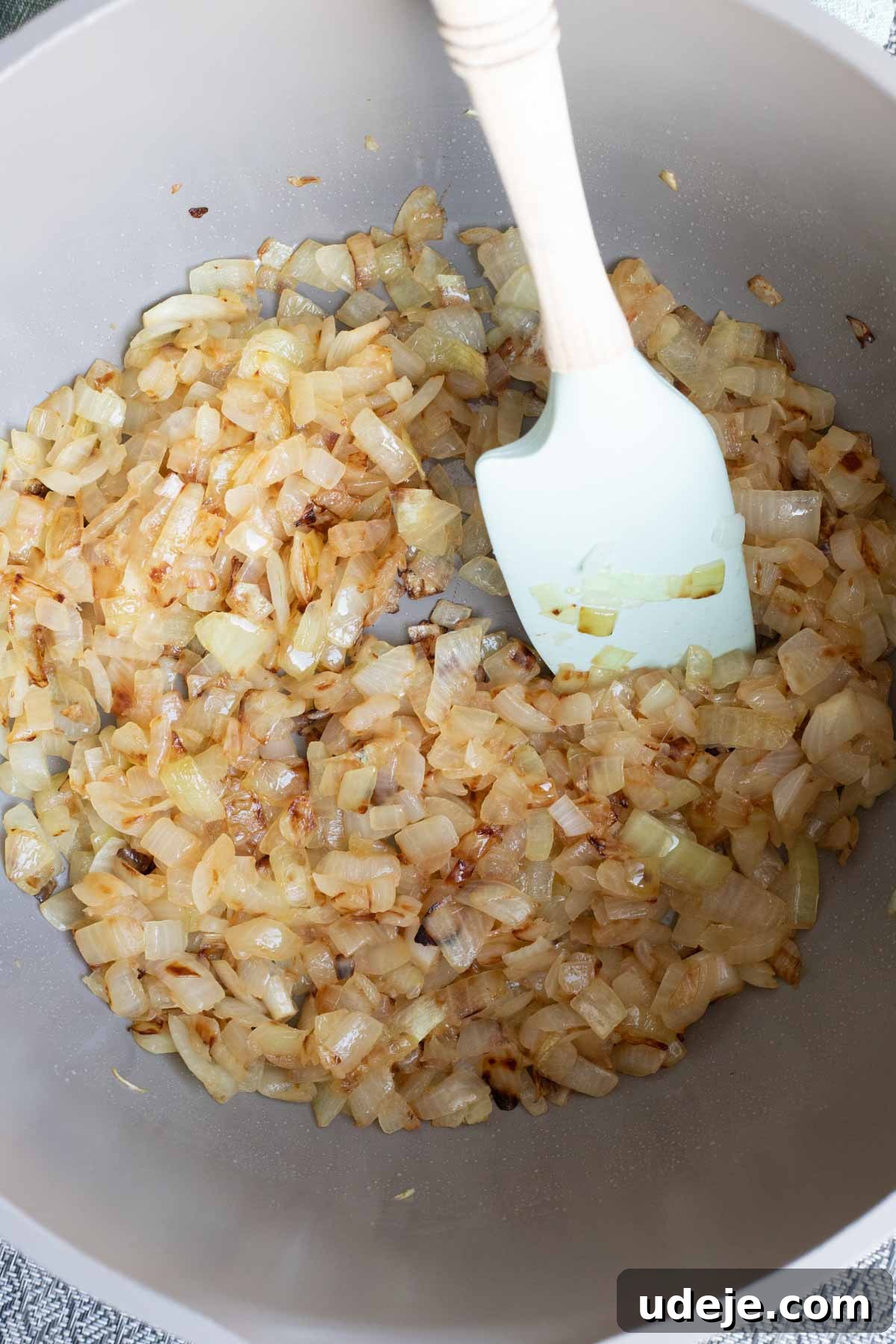
Start by peeling, washing and dicing the onions.
-
Next, in a non-stick pot (or in the instant pot), sauté the onions until soft and lightly brown, for about 7 minutes, on medium heat.
-
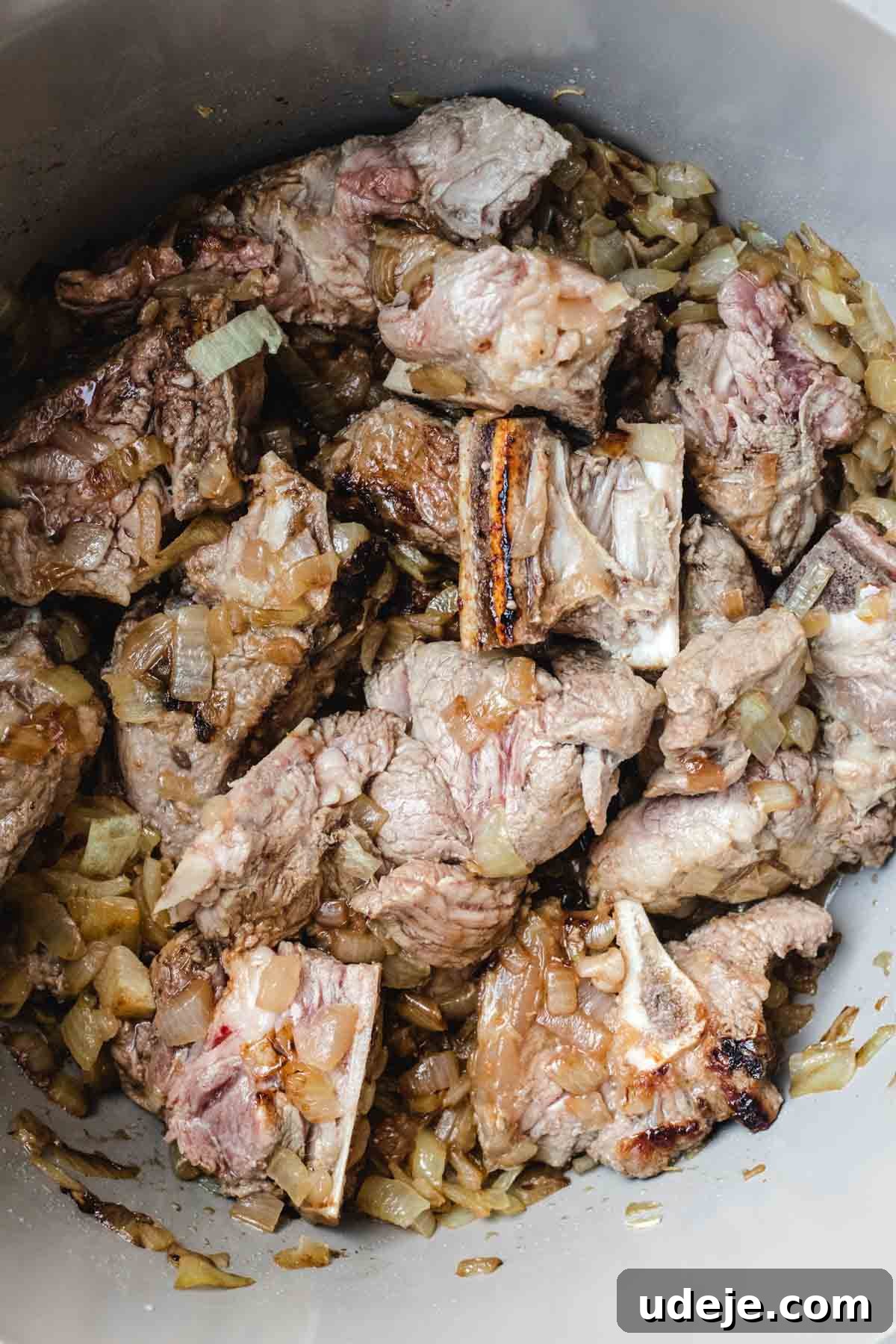
Next, in the same pot with the onions inside, sear the lamb pieces for a few minutes on each side. Don’t worry if the pot is crowded, aim to get some color on the meat.
-
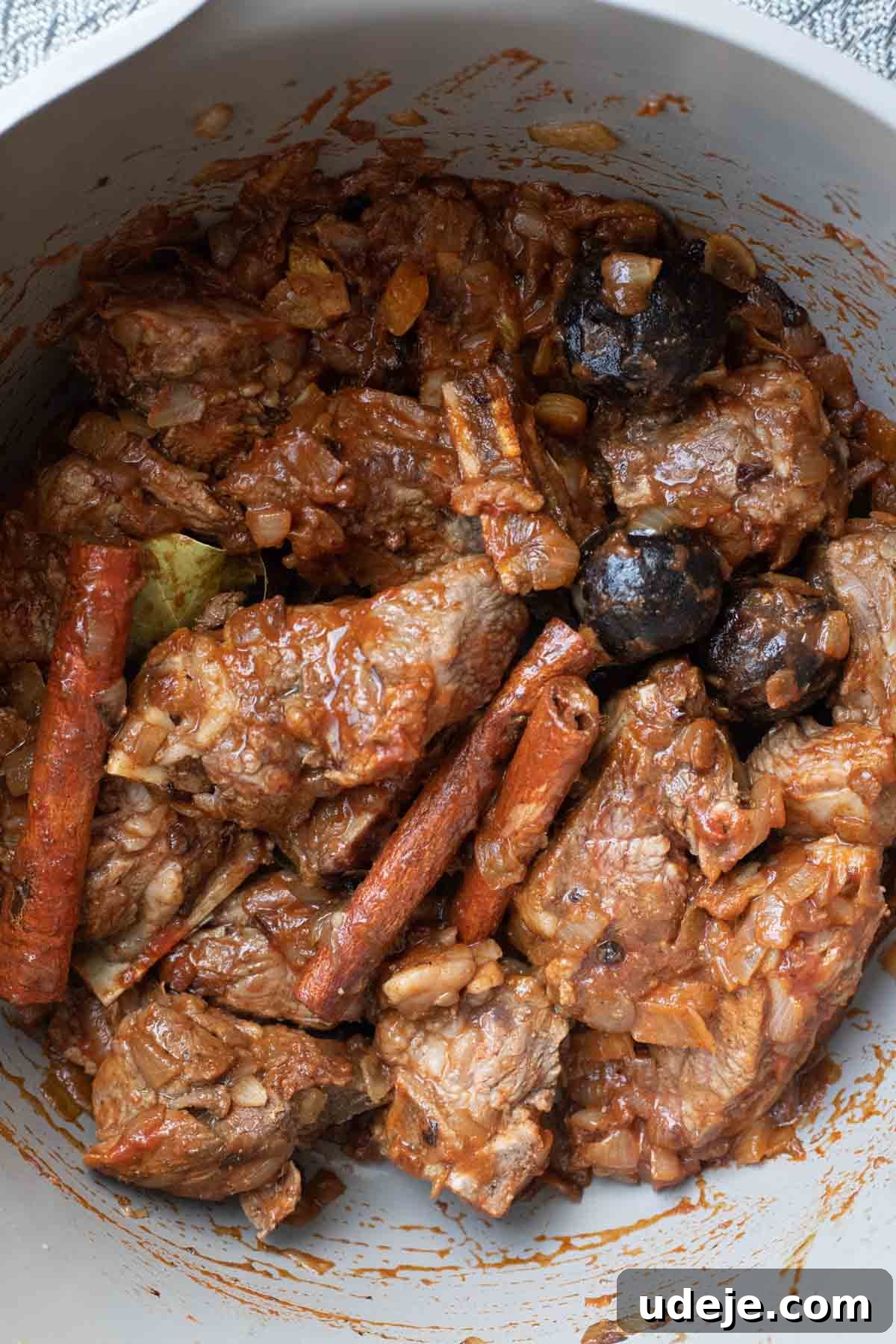
Next, add the whole spices and the ground spices to the pot with the meat and onions and cook for a few minutes.
-
Next, add the tomato paste and cook for a few minutes.
-
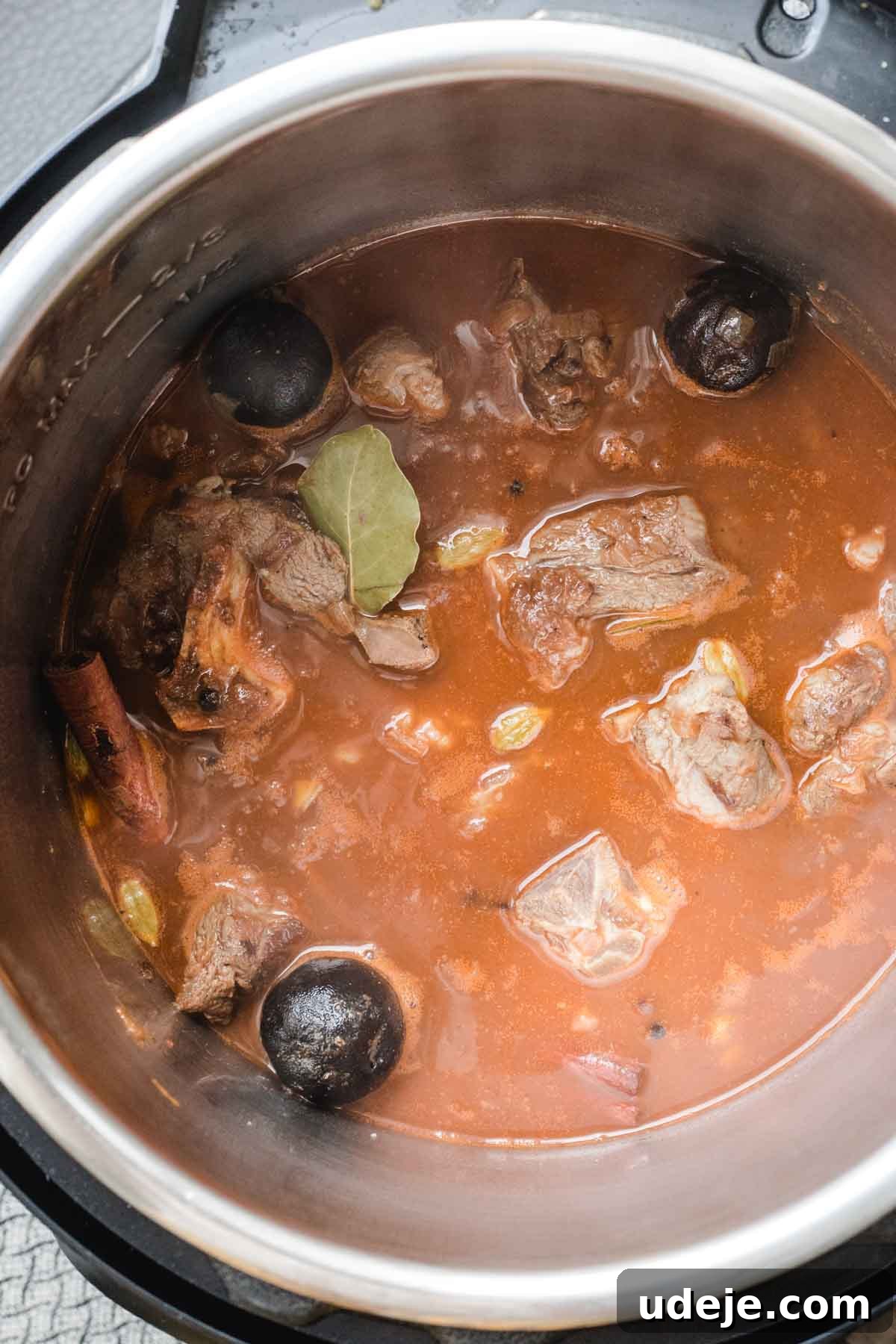
Add the tomato sauce and the water to the pot, and now you have the option to cook the meat on the stovetop or in a pressure cooker.
-
For the pressure cooker (or instant pot), pressure cook for 20 minutes. Manually release the pressure and move on to the next step.
-
For the stovetop, cook on medium-high heat for approximately 60 minutes until the meat is very tender, making sure to replenish the water as required.
-
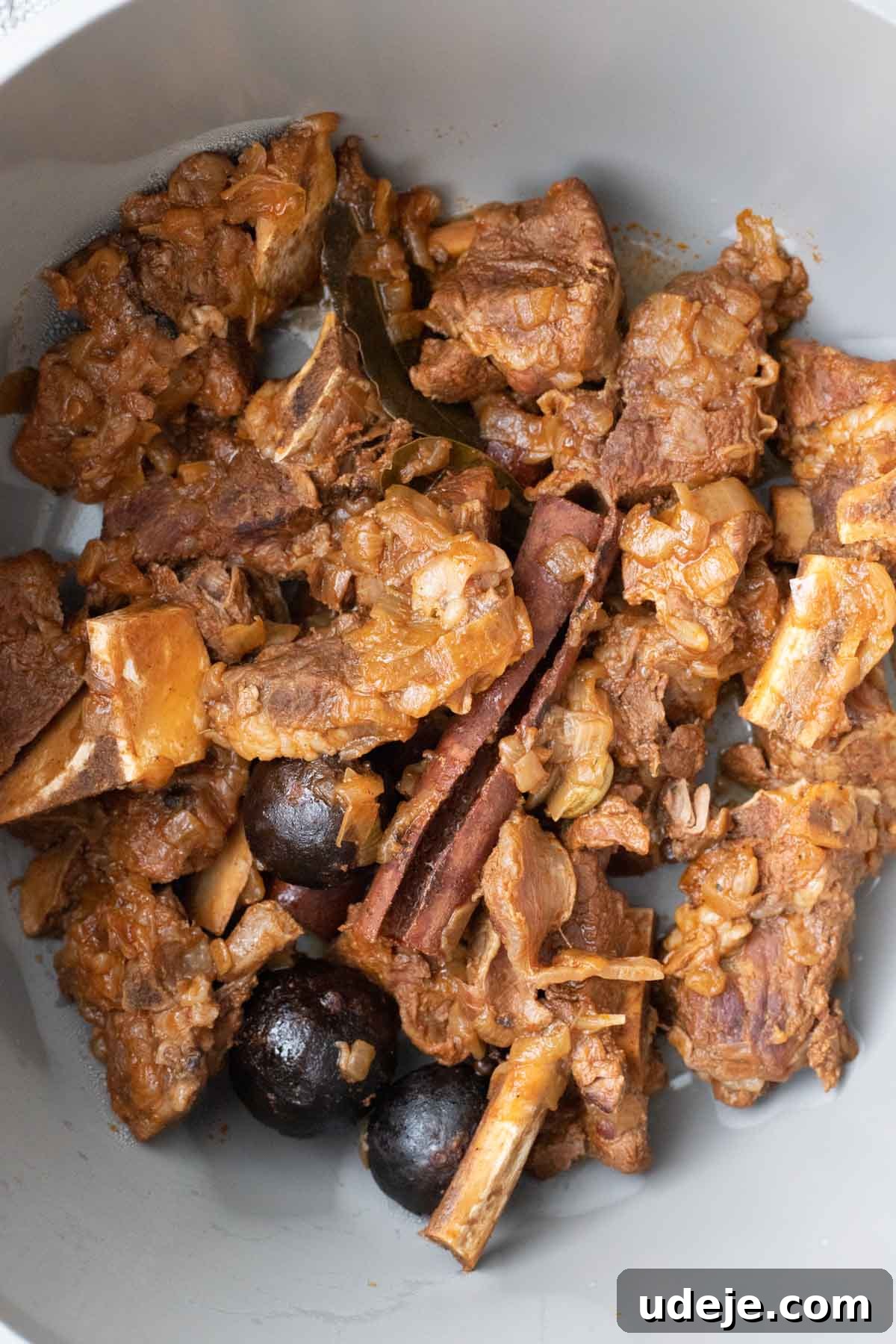
Once the meat is soft, remove it from the broth and place it on a plate to the side. Strain the broth from the onions and whole spices.
For the rice
-
While the meat is cooking, wash the rice until the liquid runs clear, then soak it for 30 minutes.
-
Layer the meat at the bottom of the pot that you will cook the rice in (this can be the same pot you used for the meat if you cooked it on the stovetop).
-
Then, pour over the strained meat broth, making sure that you use exactly 4.5 cups (for 3 cups of rice). If you don’t have enough broth, just top it up with water. If you have too much broth, save it for future use.
-
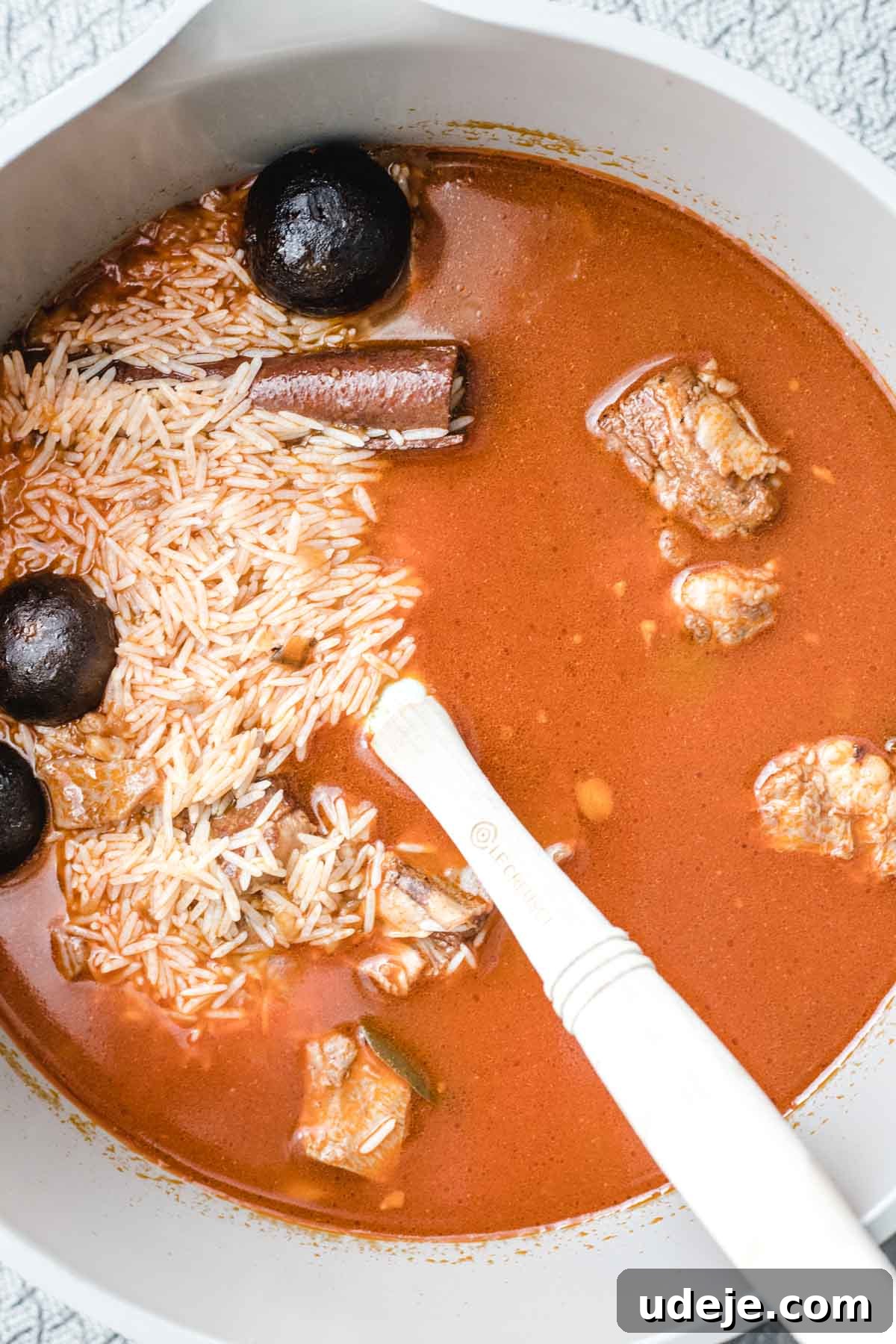
Add all of the rice to the pot. Place the pot onto high heat for 5 minutes until the liquid is bubbling.
-
Place a paper towel over the pot, then cover it with a tight-fitting lid and simmer on low heat for 25 minutes.
-
After 25 minutes, turn the heat off and fluff it with a fork.
-
Toast the almonds on medium heat in the olive oil, stirring frequently until lightly golden. Remove and add the raisins in the same skillet for 1-2 minutes until warmed through.
-
Serve in a large platter by adding a layer of the rice and meat, then garnishing with almonds, raisins, and finely chopped parsley if desired. Enjoy!
Notes
- You can use veal in this recipe as a substitute for lamb.
- Make sure you use long-grain rice, preferably Basmati.
- Ensure you follow the exact rice-to-liquid ratio specified in the recipe to ensure you succeed.
- You have the option to cook the meat in the pressure cooker, which is my preferred and much faster method. But if you don’t have one, you can cook on the stovetop until tender, which takes roughly 60 minutes.
Carbohydrates: 87g,
Protein: 51g,
Fat: 22g,
Saturated Fat: 9g,
Polyunsaturated Fat: 3g,
Monounsaturated Fat: 8g,
Trans Fat: 0.02g,
Cholesterol: 89mg,
Sodium: 35525mg,
Potassium: 1186mg,
Fiber: 3g,
Sugar: 25g,
Vitamin A: 136IU,
Vitamin C: 5mg,
Calcium: 153mg,
Iron: 5mg
Did you make this recipe?
Please leave a star rating and review below!