
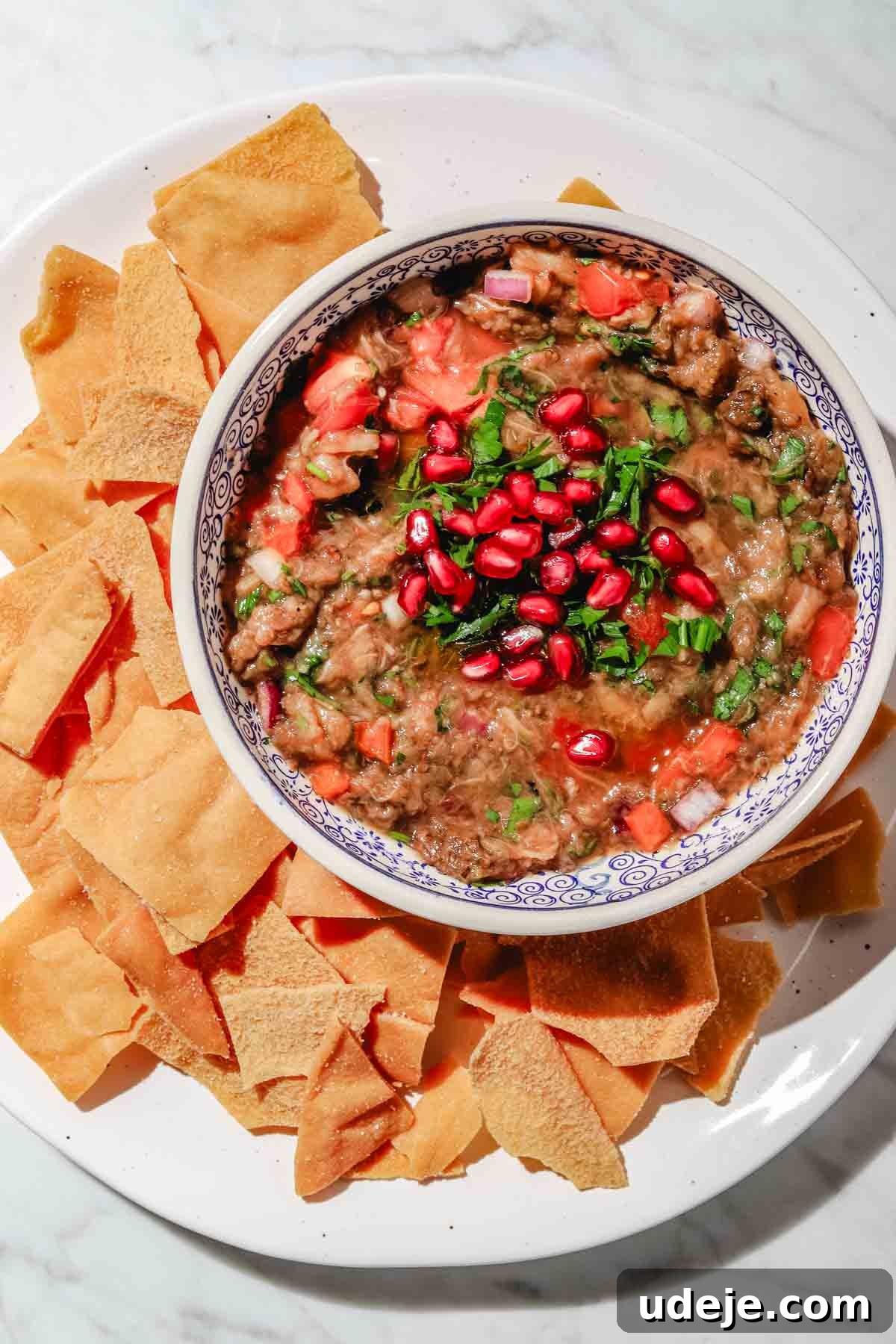
Welcome to the authentic world of Baba Ghanoush, a culinary journey that promises to redefine your expectations of this beloved Middle Eastern dip. Far from the creamy, tahini-laden versions often found in Western establishments, true Baba Ghanoush is a vibrant, tangy, and refreshingly chunky dip, showcasing the pure essence of roasted eggplant combined with fresh, finely chopped vegetables. Imagine the smoky depth of perfectly roasted eggplant mingling with the crisp brightness of diced onions, juicy tomatoes, and fragrant parsley. A delicate drizzle of rich pomegranate molasses, a swirl of extra virgin olive oil, and the pungent kick of freshly crushed garlic unite to create a unique flavor profile that is both invigorating and deeply satisfying. This is a dip for eggplant enthusiasts, a celebration of fresh produce, and a testament to the diverse and nuanced flavors of the Levant. Get ready to experience Baba Ghanoush as it was truly meant to be, a sensational appetizer or side dish that stands out on any table.
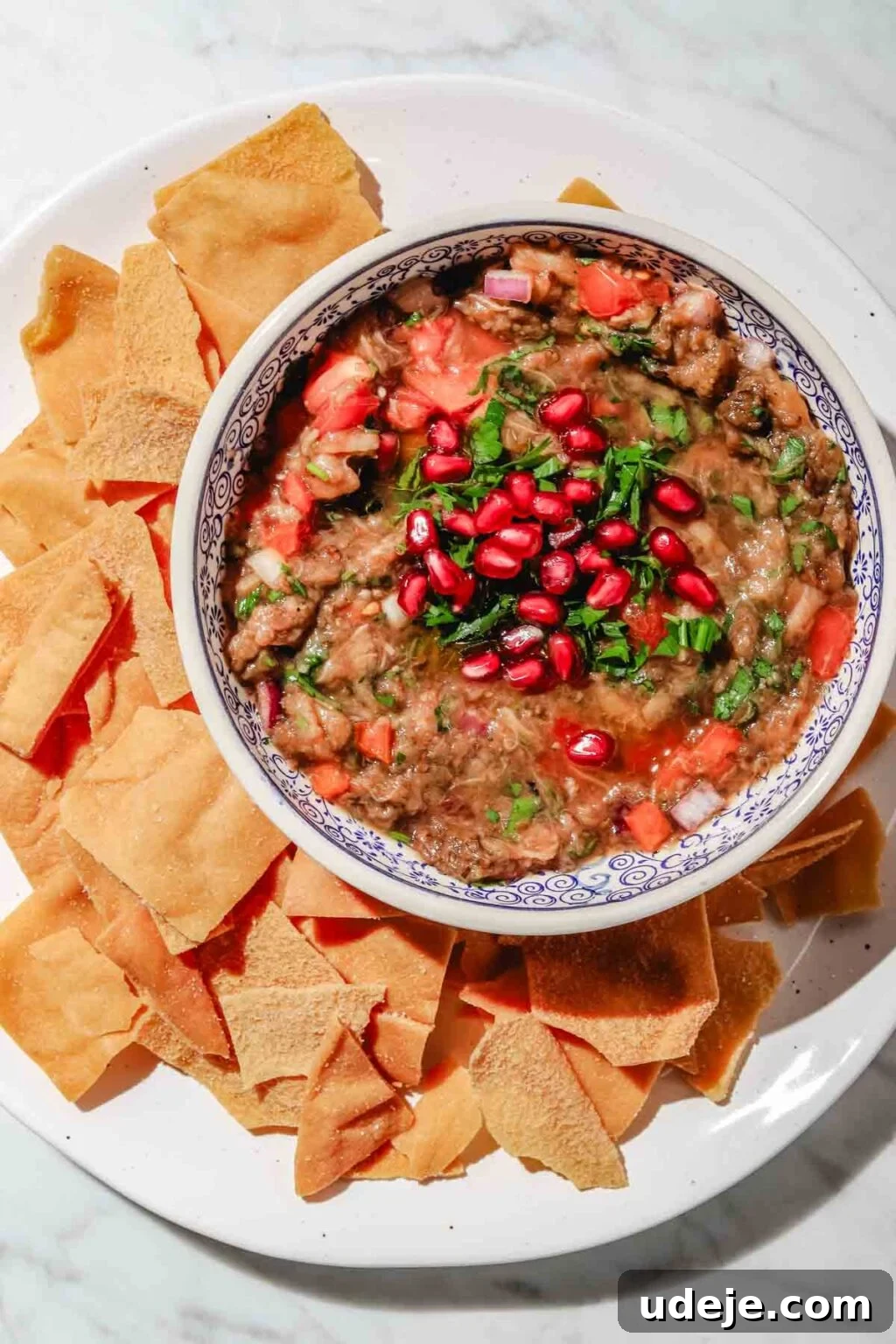
Baba Ghanoush vs. Mutabal: Unveiling the True Identity of Middle Eastern Eggplant Dips
The world of Middle Eastern cuisine is rich with tradition and often, delightful complexities. One of the most common points of confusion for many food lovers revolves around two iconic eggplant dips: Baba Ghanoush and Mutabal. What you typically encounter in many restaurants and grocery stores, a smooth and creamy eggplant dip with tahini, is often mislabeled. In its authentic form within the Levant region (Lebanon, Palestine, Syria, and Jordan), this creamy rendition is actually known as Mutabal.
Understanding the distinction is key to appreciating the unique characteristics of each dip. While both share a foundation of smoky roasted eggplant, zesty lemon juice, and pungent garlic, their paths diverge significantly, leading to distinct textures and flavor profiles:
- Authentic Baba Ghanoush: This version emphasizes freshness and vibrancy. It combines mashed roasted eggplant with salt, pepper, garlic, and lemon juice. The defining elements are the generous additions of finely diced fresh vegetables like onion, tomato, and parsley, often complemented by bell peppers for extra crunch. A crucial ingredient for its signature tangy and slightly sweet notes is pomegranate molasses, which elevates it beyond a simple dip into a bright, salad-like consistency.
- Mutabal: This is the creamy eggplant dip many are familiar with. Starting with roasted eggplant, salt, pepper, garlic, and lemon juice, Mutabal’s distinguishing features are the inclusion of tahini (sesame paste) and sometimes a touch of yogurt. These additions transform the dip into a smooth, velvety texture with a rich, nutty undertone, offering a distinctly different culinary experience.
Essentially, Baba Ghanoush, with its medley of finely chopped raw vegetables and the sharp sweetness of pomegranate molasses, offers a vibrant, almost salad-like texture and a pronounced tangy zest. Mutabal, on the other hand, provides a silkier, creamier texture with a deeper, more savory flavor profile due to the tahini. It’s a matter of preference, but knowing the difference allows you to seek out the specific experience you crave.
While the above explanation holds true for much of the Levant, regional culinary terms can sometimes add layers of complexity. For instance, in parts of Lebanon, the version we call Baba Ghanoush here might be referred to as Salatat El Raheb (Monk’s Salad), further illustrating the rich tapestry of Middle Eastern food traditions. To add to the confusion, some countries like Iraq and Egypt do indeed call their tahini-infused eggplant dip “Baba Ghanoush.” This linguistic overlap likely occurred as these delicious Levantine dips traveled and were adapted across the wider Middle East and beyond, leading to a blending of terminology. Regardless of the name, savoring the distinct flavors of each dip is a delightful adventure.
These two eggplant variations are integral components of a traditional Middle Eastern mezze spread, joining other beloved dips and appetizers such as Muhammara (roasted red pepper and walnut dip), classic Hummus, and creamy Labneh. If your love for eggplant dips knows no bounds, be sure to also explore the robust flavors of Moroccan Zaalouk and a comforting Baked Eggplant Dip.
Essential Ingredients for Authentic Baba Ghanoush
Creating an exceptional Baba Ghanoush starts with selecting the finest ingredients. Each component plays a vital role in building the layered flavors and unique texture of this traditional dip. Here’s a closer look at what you’ll need:
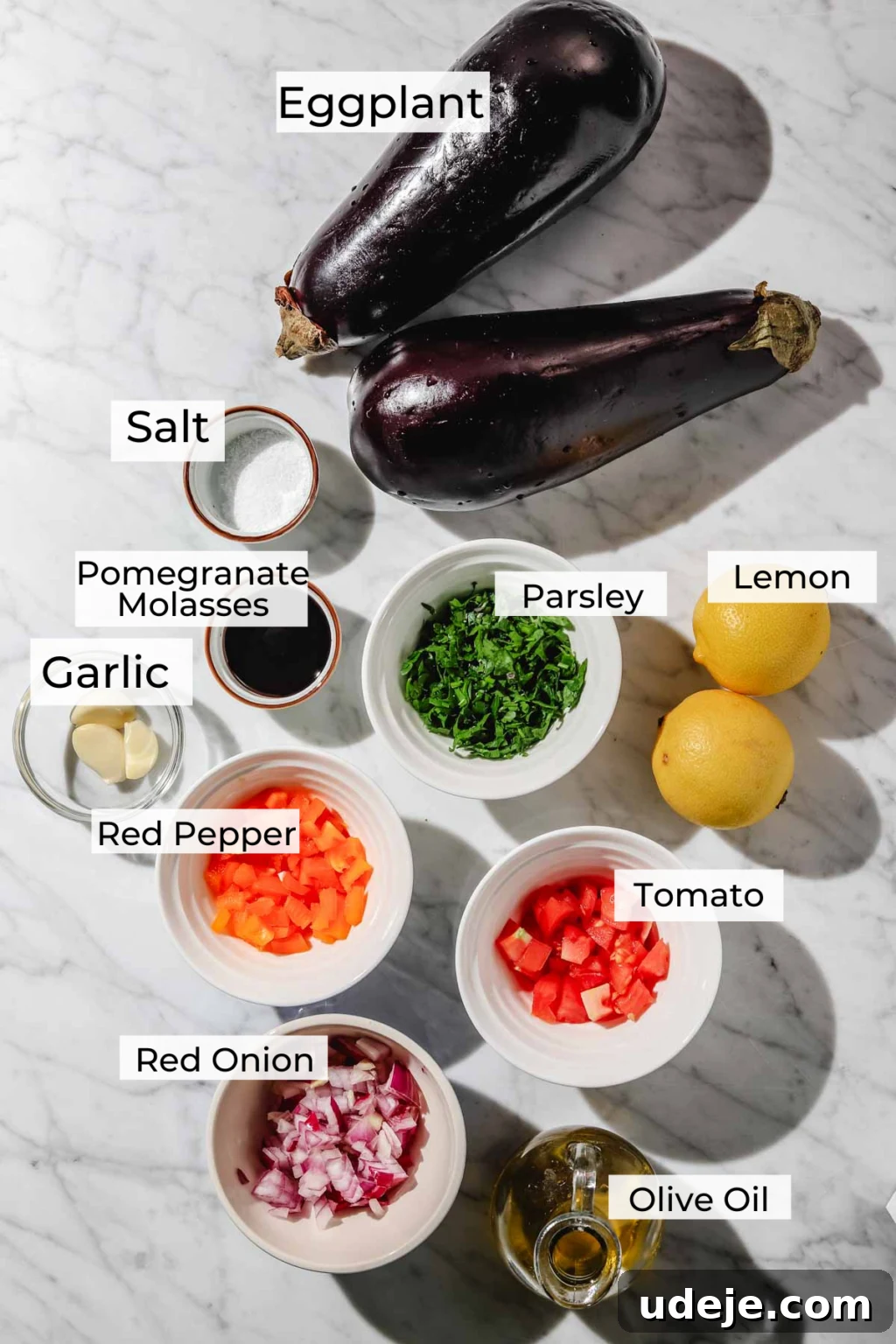
- Eggplant: The undisputed star of the show. For the best flavor and texture, choose large, firm eggplants with glossy skins. Traditionally, eggplants are roasted over an open flame—be it a gas stove burner or a BBQ grill—until the skin is thoroughly charred and the flesh inside becomes incredibly soft and smoky. This charring imparts a deep, irresistible smokiness that is characteristic of authentic Baba Ghanoush. If an open flame isn’t an option, don’t worry! Roasting them in the oven, as detailed in our method, still yields delicious results, especially if you aim for a slight char.
- Pomegranate Molasses: This is a non-negotiable ingredient that sets authentic Baba Ghanoush apart. Made from reduced pomegranate juice, it offers a distinctive sweet-tartness that cuts through the richness of the eggplant and brightens the entire dip. Its unique flavor cannot be easily substituted, so ensure you have this on hand.
- Lemon Juice: Freshly squeezed lemon juice is paramount. It provides essential acidity, balancing the flavors and adding a refreshing tang. Adjust the amount to your personal preference; some like it brighter, others more subtle.
- Crushed Garlic: We use fresh garlic for its potent, aromatic qualities. Since it’s raw, a little goes a long way. Start with a small amount and adjust to taste, as its sharp flavor can quickly dominate if overused.
- Salt: Essential for seasoning, salt brings out all the flavors. Remember that eggplant readily absorbs salt, so don’t be shy, but always taste and adjust towards the end to reach perfect seasoning.
- Onions, Tomatoes, and Parsley: These fresh vegetables are crucial for both flavor and texture. They must be finely diced to integrate well into the dip, providing a delightful crunch and burst of freshness that contrasts beautifully with the soft eggplant. Red onions are often preferred for their mild sweetness and vibrant color. Occasionally, finely diced bell peppers (red or green) are also added for an extra layer of crunch and flavor.
- Olive Oil: A generous drizzle of good quality extra virgin olive oil is used both within the dip and as a garnish. It adds a fruity richness and a beautiful sheen, enhancing the overall experience.
- Optional Garnishes: For an extra touch of elegance and flavor, consider topping your Baba Ghanoush with additional finely chopped parsley, vibrant pomegranate seeds for a burst of color and juiciness, and toasted pine nuts for a delicate crunch and nutty aroma.
Step-by-Step Guide to Crafting the Perfect Baba Ghanoush
Making authentic Baba Ghanoush at home is surprisingly simple, primarily involving roasting eggplant and then combining it with fresh, flavorful ingredients. Here’s how you can create this delectable dip:
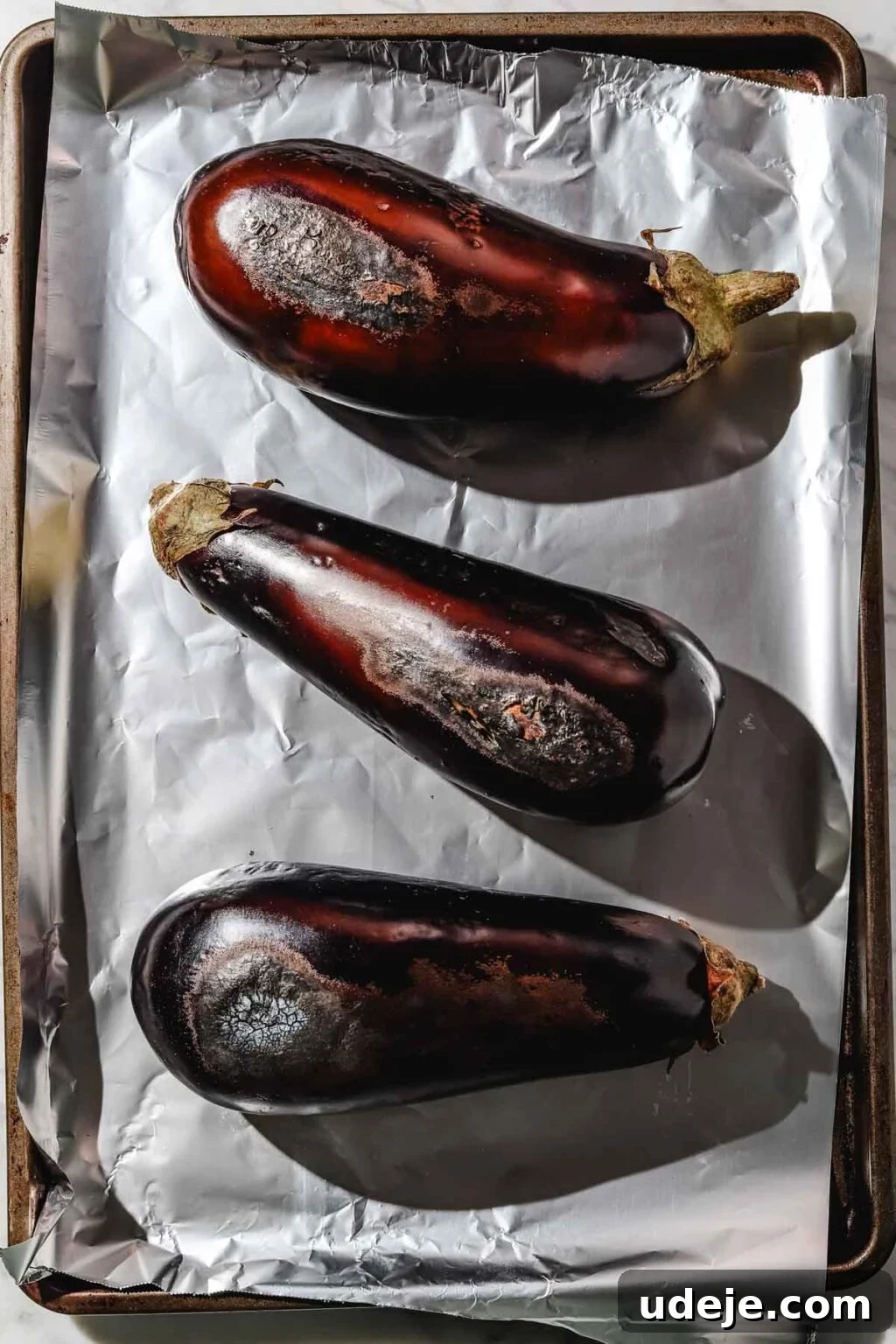
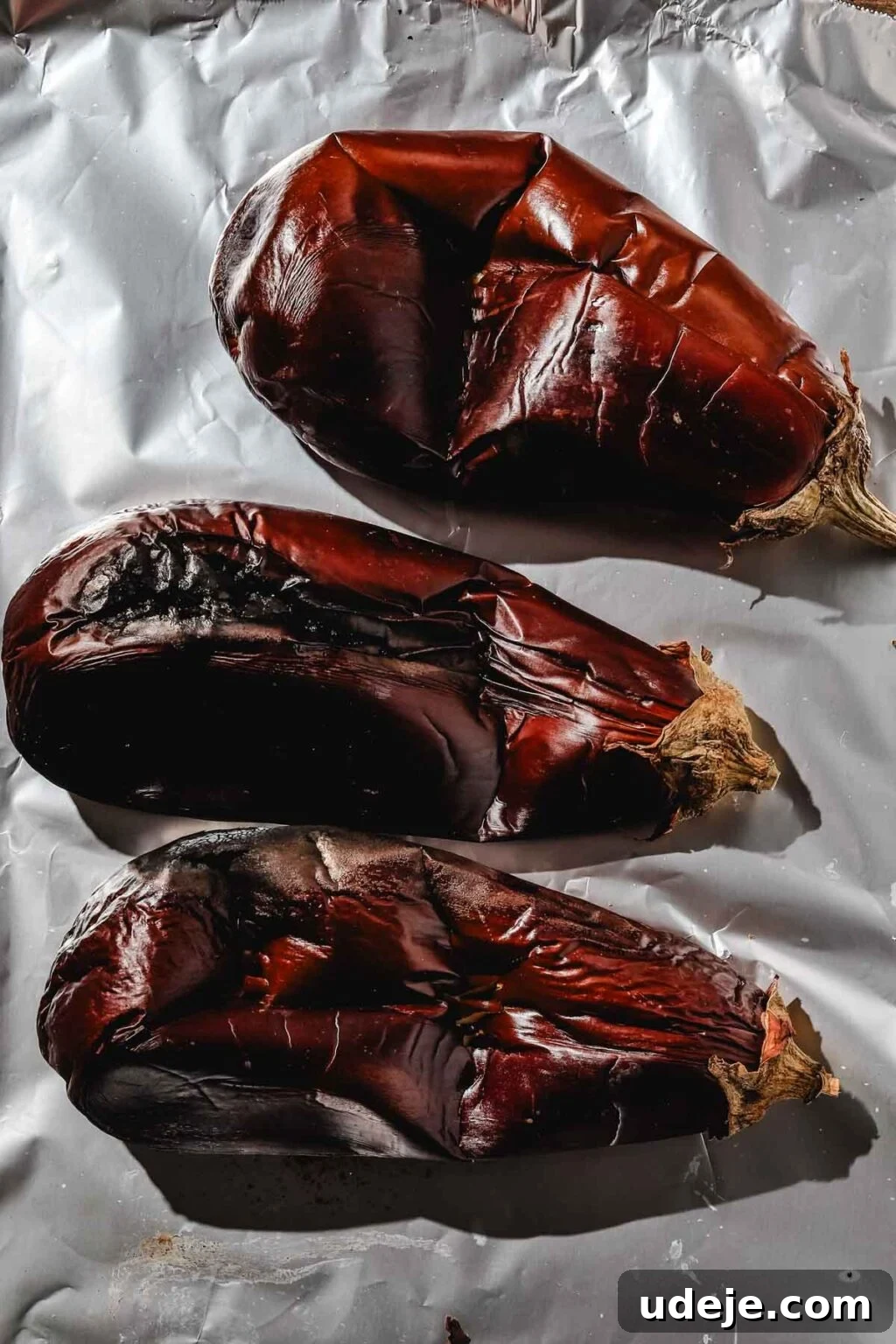
Begin by preheating your oven to a high temperature, typically 450°F (230°C). While the oven heats, prepare your eggplants. Wash them thoroughly and pat them dry. Using a sharp knife, make several slits all around each eggplant, about 4-5 times. These slits are important as they allow steam to escape during roasting, preventing the eggplant from exploding and ensuring even cooking. Place the prepared eggplants on a foil-covered baking sheet. This makes for easy cleanup and helps contain any juices. Roast the eggplants for approximately 1 hour, or until they are incredibly soft to the touch and can be easily pierced with a fork. You’ll notice the skin becoming wrinkled and possibly a little charred in places, which is a good sign of developing smoky flavor.
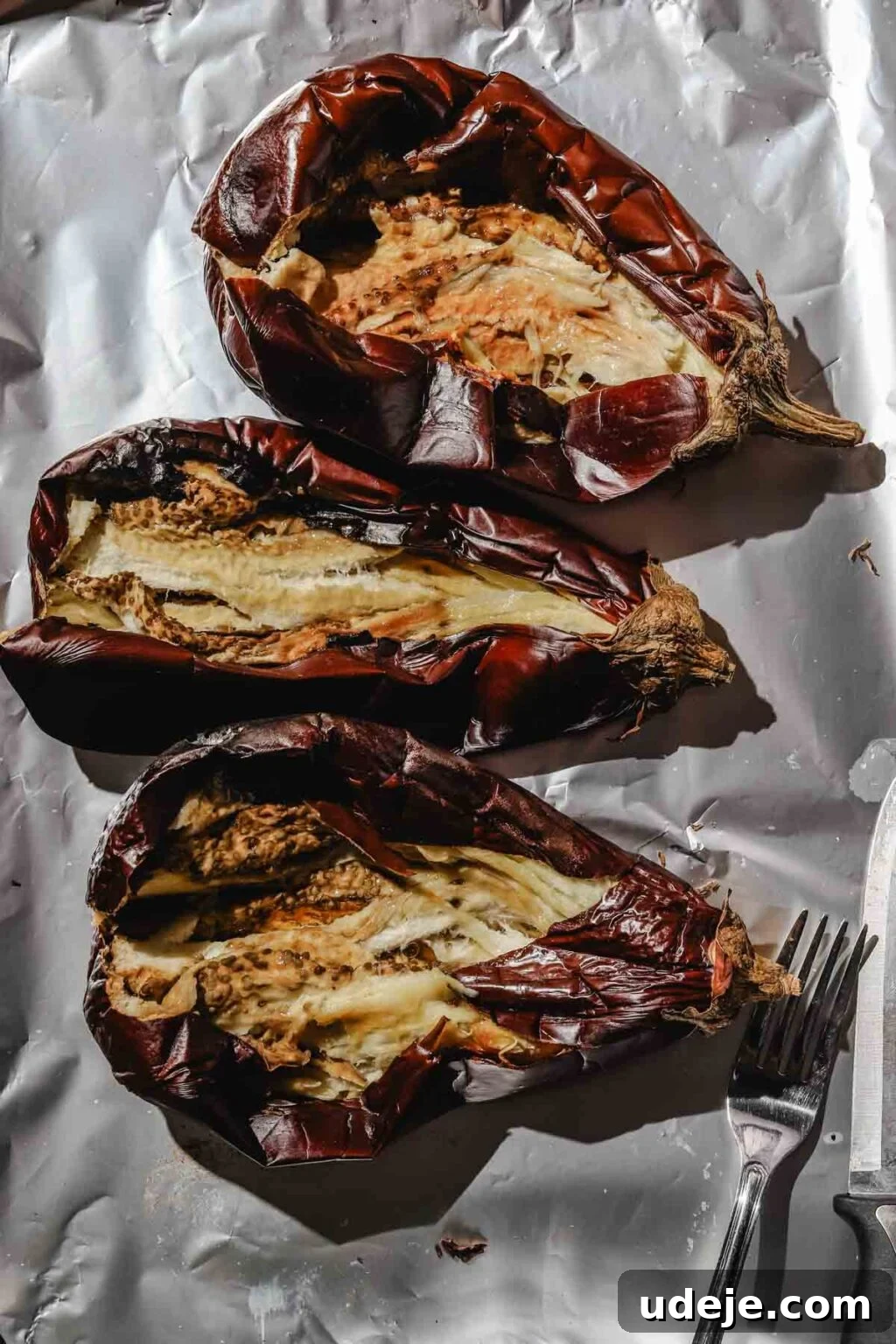
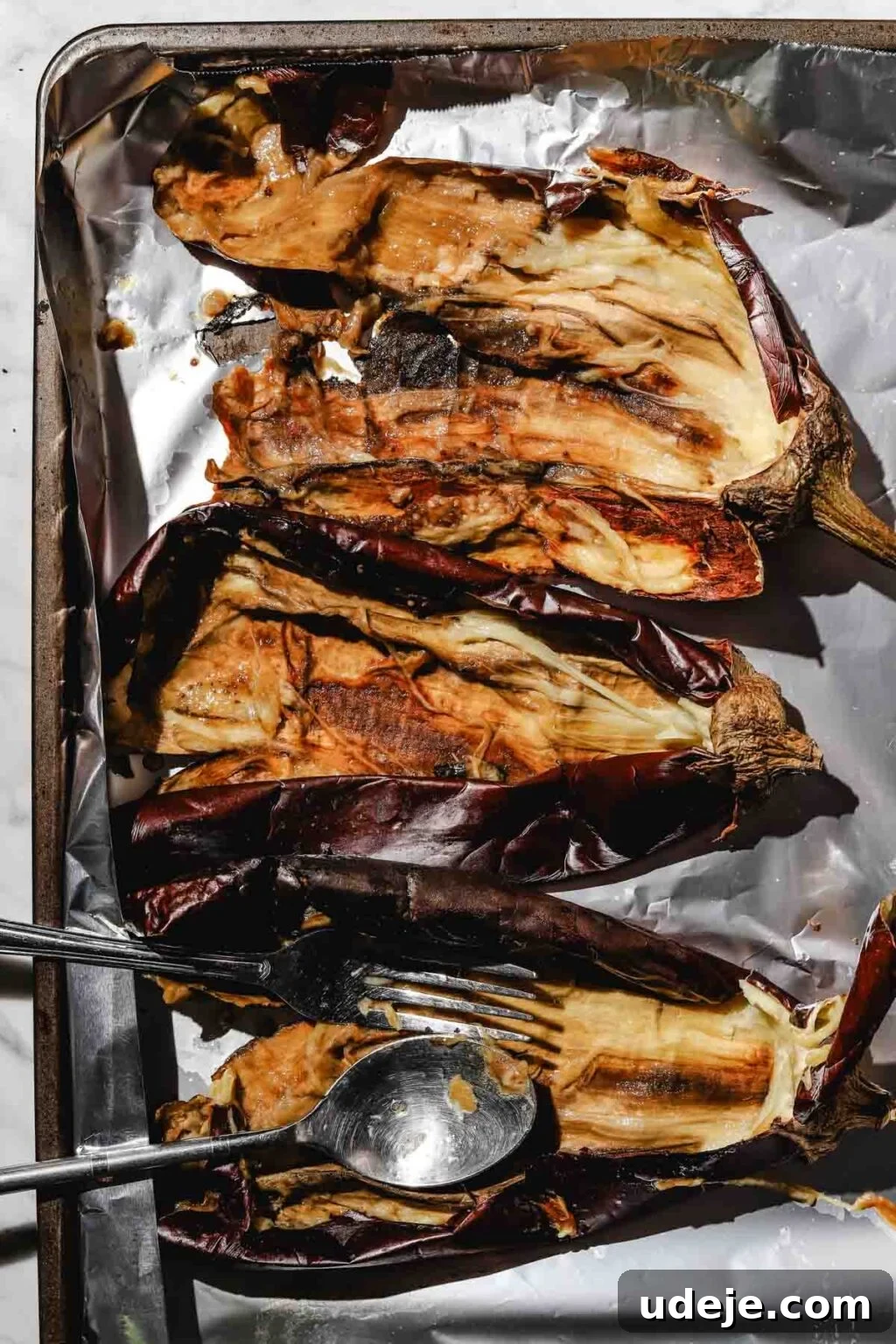
Once roasted, allow the eggplants to cool slightly until they are comfortable enough to handle. Cut each eggplant in half lengthwise. Using a fork or a spoon, carefully scoop out the tender, smoky flesh, leaving the charred skin behind. Transfer the scooped eggplant flesh to a fine-mesh sieve placed over a bowl. This crucial step allows any excess liquid from the eggplant to drain away, preventing your Baba Ghanoush from becoming watery and ensuring a more concentrated flavor and desirable texture. Let it drain for a few minutes while you prepare the other ingredients.
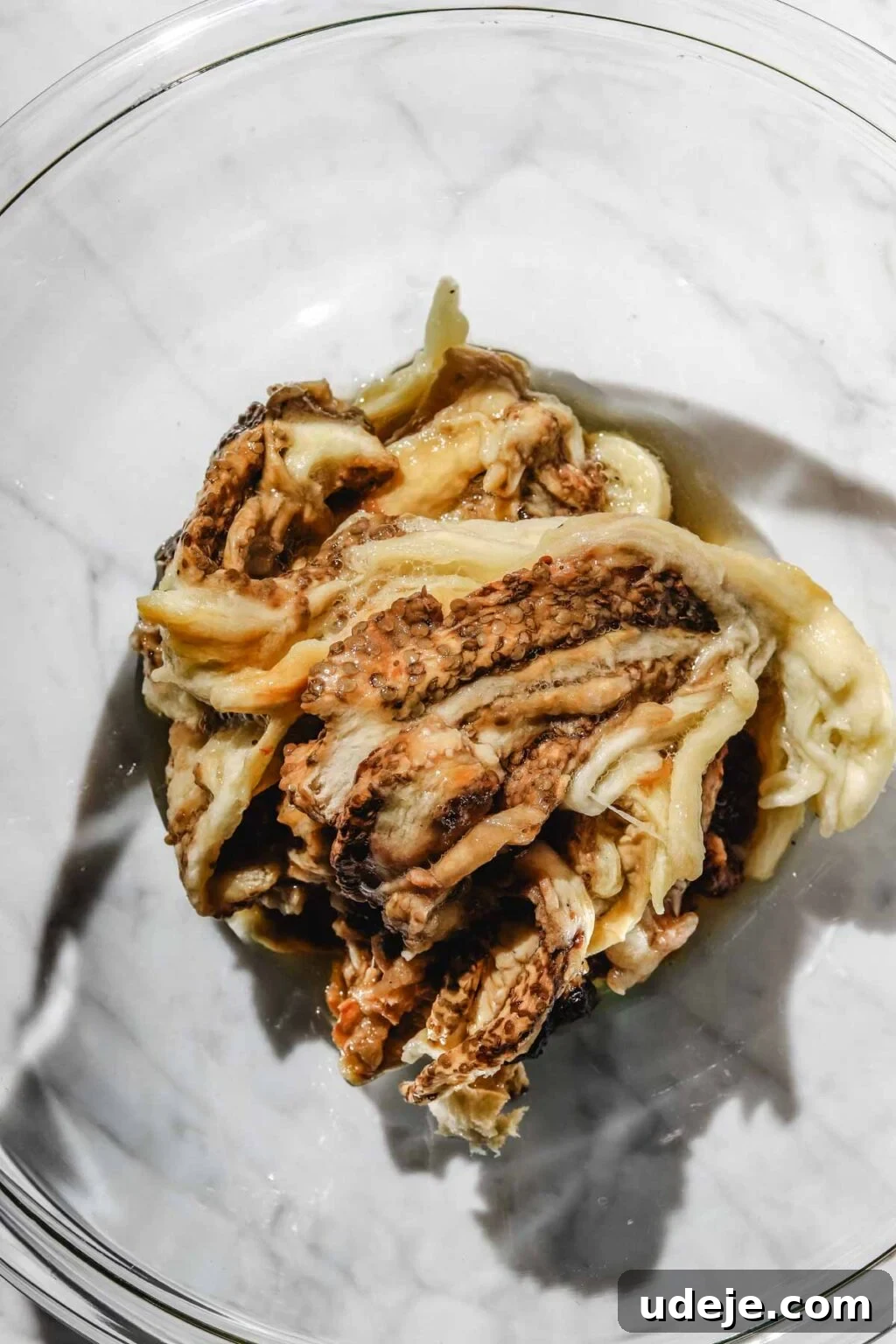
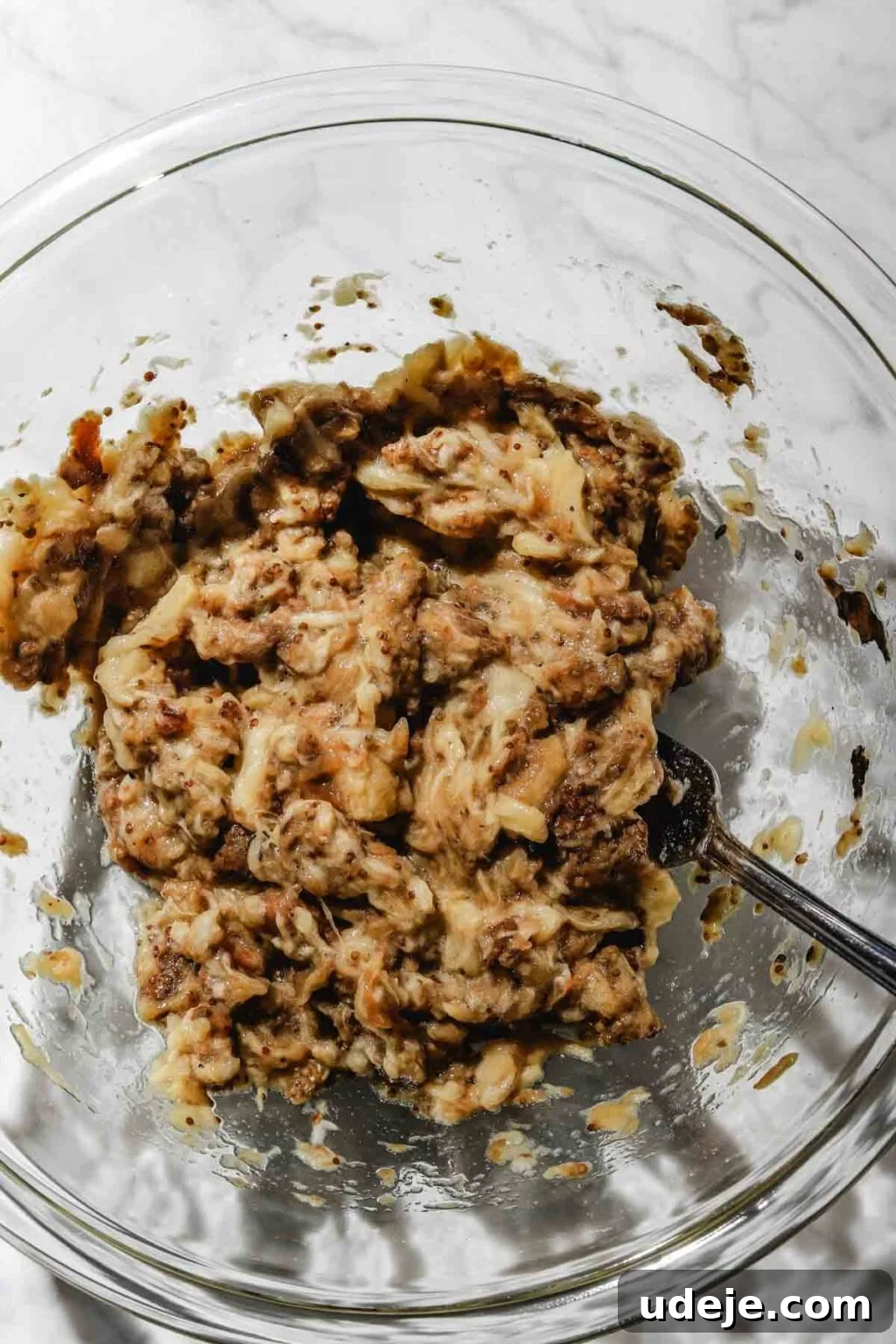
Once drained, transfer the eggplant flesh to a large mixing bowl. Using a fork or a potato masher, mash the eggplant until you achieve a chunky, rustic consistency. Unlike mutabal, Baba Ghanoush is not meant to be perfectly smooth; its texture should retain some integrity from the eggplant, offering a more satisfying mouthfeel.
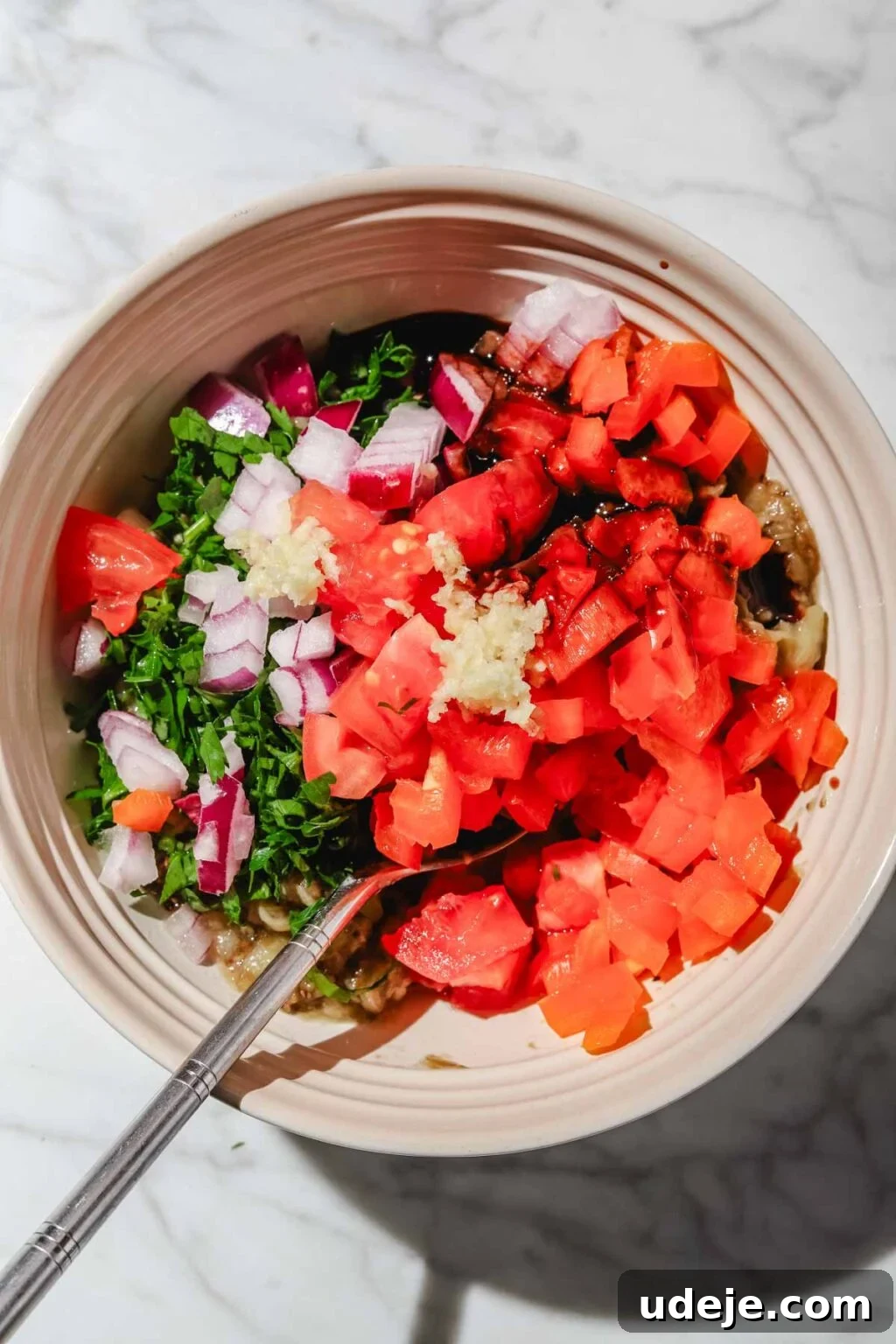
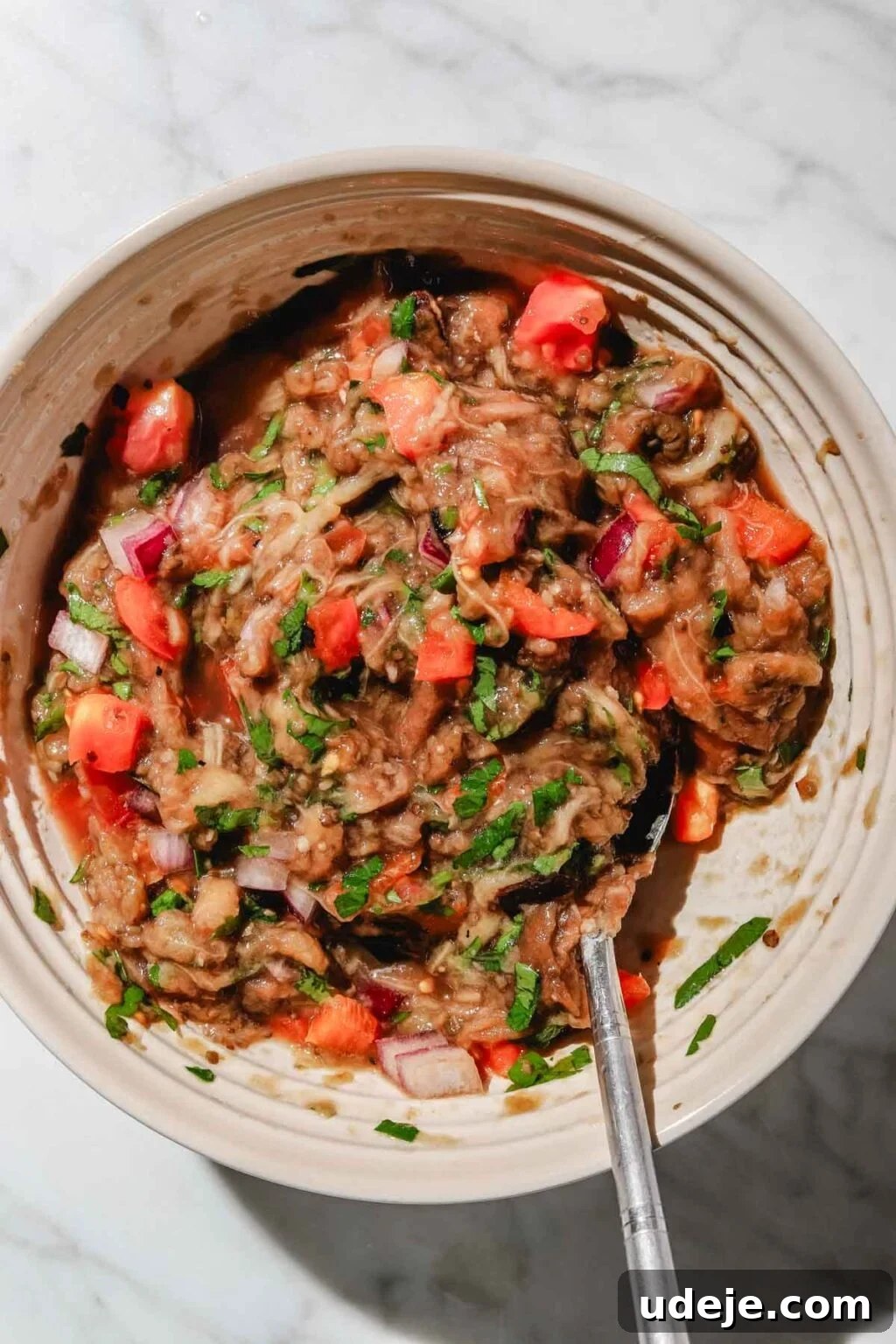
Now it’s time to bring all the flavors together. To your mashed eggplant, add the finely chopped onions, tomatoes, and parsley. Incorporate the crushed garlic, pomegranate molasses, freshly squeezed lemon juice, and a good pinch of salt. Mix everything thoroughly with a spoon or fork, ensuring the vegetables are evenly distributed and the liquids are well combined with the eggplant. The goal is a vibrant, well-integrated mixture that highlights all the fresh components.
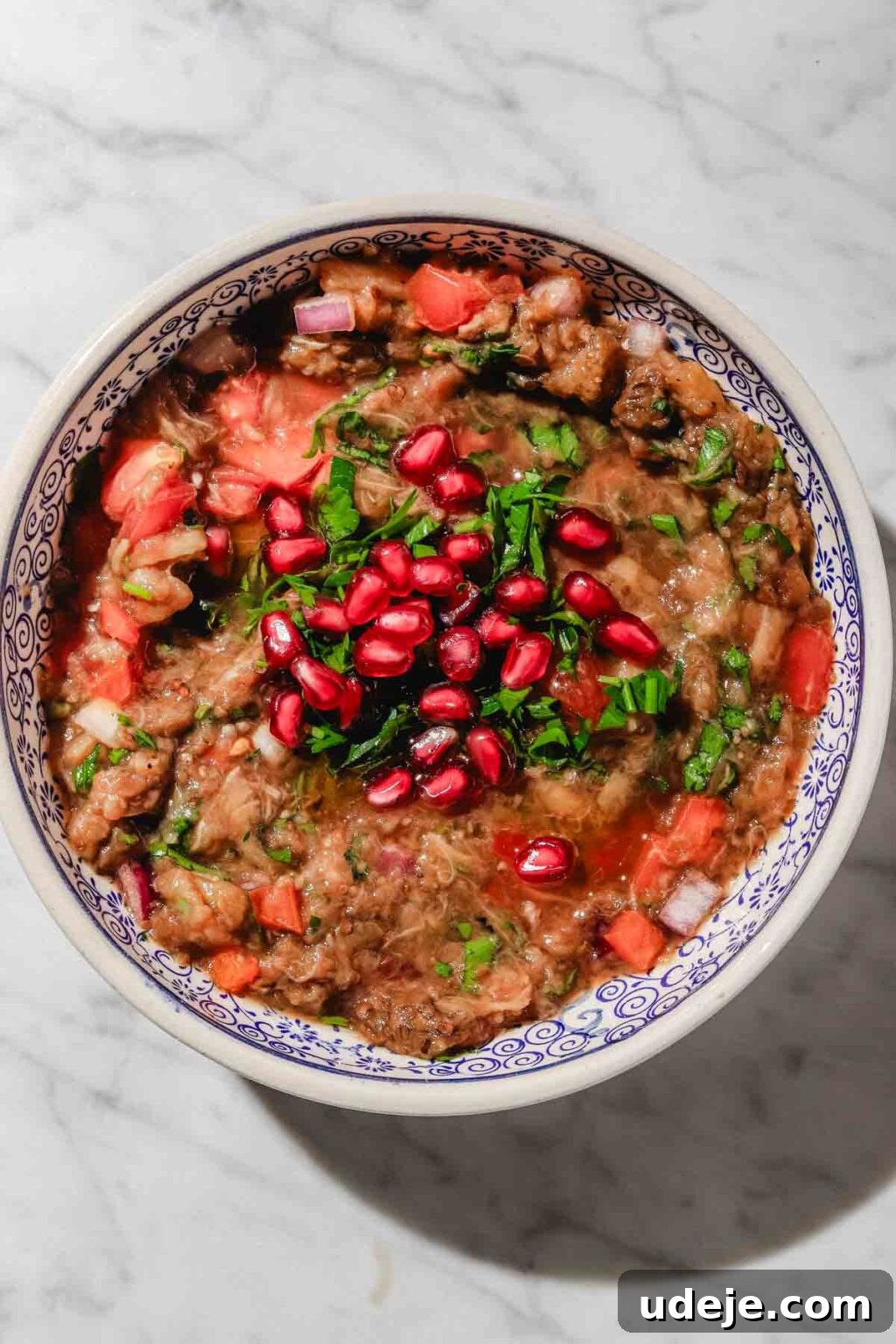
Before serving, always taste your Baba Ghanoush and adjust the seasonings to your liking. You might want a little more lemon juice for extra tang, more salt to enhance the flavors, or another dash of pomegranate molasses for added depth. Once perfectly seasoned, transfer the dip to a serving bowl and make it look as pretty as it tastes! I love to garnish mine with a generous swirl of olive oil, a sprinkle of fresh pomegranate seeds for a burst of color and sweetness, and an extra scattering of finely chopped parsley. Toasted pine nuts also add a wonderful textural contrast and nutty flavor.
Creative Ways to Serve Your Homemade Baba Ghanoush
Once you’ve mastered the art of making this vibrant Baba Ghanoush, the possibilities for enjoying it are endless. Its versatility makes it a perfect addition to almost any meal or snack. My absolute favorite way to savor its tangy goodness is with warm, crispy pita chips. I simply bake pita bread in the oven for a few minutes with a drizzle of olive oil until golden and crunchy – it’s an irresistible combination. But the delights don’t stop there! Here are several other fantastic ways you can enjoy this authentic Middle Eastern eggplant dip:
- Classic Dipping Companion: Serve it alongside any type of warm flatbread, soft pita, or crunchy pita chips for a quintessential mezze experience. The contrasting textures are simply divine.
- Elevate Your Mezze Platter: Incorporate Baba Ghanoush into a diverse mezze spread. It pairs beautifully with other staples like creamy Hummus, refreshing Jajik (Cucumber Yogurt Salad), crispy Falafel, vibrant Tabouli Salad, and even a contrasting roasted eggplant dip (perhaps the tahini-rich Mutabal, if you want both!).
- Fresh Vegetable Delight: Offer it with an assortment of fresh-cut vegetables like crisp cucumber slices, juicy cherry tomatoes, crunchy carrot sticks, colorful bell pepper strips, and crisp celery stalks for a healthy and satisfying snack.
- Salad Topping or Lunch Bowl Base: Spoon a generous dollop of Baba Ghanoush over your favorite green salads or use it as a flavorful base for a wholesome lunch bowl. Its robust flavors can transform a simple meal into something extraordinary.
- Part of a Shawarma Plate: Enhance your Chicken Shawarma Plate by adding a side of Baba Ghanoush. Its fresh and tangy notes cut through the richness of the meat, creating a perfectly balanced meal.
- Gourmet Toast Topper: Spread it generously on toasted artisan bread or a crusty baguette. Top with additional fresh vegetables, a sprinkle of feta cheese, or a dash of chili flakes for an easy yet sophisticated appetizer or light meal.
As you can see, Baba Ghanoush is incredibly versatile. Whether you’re serving it as a simple dip or integrating it into a more elaborate dish, its distinct flavor and delightful texture are sure to impress. It’s truly that good, and once you try this authentic version, it might just become your new favorite!
For More Easy Dips and Sides, Explore These Delights:
If you loved the simplicity and flavor of this Baba Ghanoush, you’re in for a treat! The world of Middle Eastern appetizers and side dishes is vast and incredibly rewarding to explore. Many of these recipes are not only easy to prepare but also packed with fresh, wholesome ingredients. Here are some more of our favorite dips and sides that are perfect for any occasion:
- Traditional Creamy Hummus: The ultimate classic, a smooth and rich chickpea dip that’s a staple on every mezze platter.
- Roasted Eggplant Dip: A different take on eggplant, often creamier and without the fresh vegetable mix, perfect for comparing and contrasting.
- Jajik (Cucumber Yogurt Salad): A refreshing and cooling yogurt-based dip or salad, ideal for hot days or as a counterpoint to richer dishes.
- Batata Harra: Spicy Lebanese potatoes, crispy on the outside and fluffy on the inside, seasoned with garlic, cilantro, and chili.
These recipes promise to expand your culinary repertoire and bring the delicious flavors of the Middle East right into your kitchen. Enjoy experimenting and creating your own vibrant spreads!
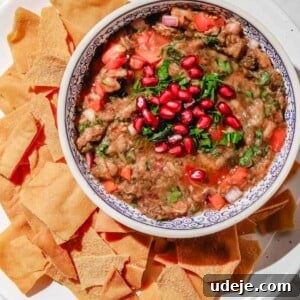
Baba Ganoush (Middle Eastern Eggplant Dip)
Baba Ghanoush is a traditional Middle Eastern eggplant dip made with roasted eggplant, vibrant pomegranate molasses, and finely chopped fresh vegetables. I believe it deserves just as much recognition and buzz as hummus! This authentic recipe is incredibly easy to make at home and can be enjoyed in a variety of delicious ways. Give it a try, and you’ll discover a new favorite dip.
Leave a Review
Pin Recipe
Ingredients
- 2 large eggplants, approx. 800g
- 2 tablespoons pomegranate molasses
- 2 1/2 tablespoons lemon juice (freshly squeezed)
- 1/2 tsp salt, or to taste
- 2 small garlic cloves, crushed
- 1/4 cup onions, finely chopped (preferably red onion)
- 1/4 cup tomatoes, finely chopped
- 1/4 cup parsley, finely chopped, plus more for garnish
- Extra virgin olive oil, for drizzling
- Optional garnishes: pomegranate seeds, toasted pine nuts
Instructions
- Start by preheating your oven to 450°F (230°C).
- Wash and dry your eggplants thoroughly. Using a knife, pierce each eggplant 4-5 times all around. This allows steam to escape during roasting and prevents them from bursting.
- Place the pierced eggplants on a foil-lined baking sheet. Bake for 1 hour, or until they are very soft and the skin is visibly wrinkled and slightly charred. The flesh should be easily pierced with a fork.
- Once cooked, allow the eggplants to cool slightly so they are safe to handle. Cut each eggplant in half lengthwise and carefully scoop out the soft flesh using a fork or spoon. Discard the skin. Place the eggplant flesh in a fine-mesh sieve set over a bowl to drain any excess liquid for a few minutes. This prevents the dip from becoming watery.
- Transfer the drained eggplant flesh to a mixing bowl. Add the pomegranate molasses, lemon juice, salt, crushed garlic, finely chopped onions, tomatoes, and parsley. Mash the mixture well with a fork until you achieve a chunky consistency. Authentic Baba Ghanoush is not meant to be completely smooth.
- Taste the Baba Ghanoush and adjust the seasoning as needed. You may want to add more lemon juice, salt, or pomegranate molasses to suit your preference.
- Serve the Baba Ghanoush in a shallow dish, topped with a generous drizzle of extra virgin olive oil. Garnish with additional fresh parsley and/or pomegranate seeds for a beautiful presentation and added texture.
Notes
- This recipe yields 4 servings when served as an appetizer or dip. If intended as a main meal component, it would typically serve 2 people.
- Fresh raw garlic has a potent flavor. It’s advisable to add it incrementally and taste as you go, especially if you are sensitive to a strong garlic taste. This allows you to achieve the perfect balance of flavor.