Ten Irish cybersecurity figures shaping research, industry and national defence
From quantum-resistant research to national incident response, these ten Irish cybersecurity leaders are worth knowing for anyone tracking the field.

Security work runs on people as much as tooling, and Ireland has built a dense bench of researchers, educators and operators who shape how threats are handled across Europe. 2026 has put that bench under pressure. Attacks are landing on critical infrastructure, schools and blood banks, and in one case a crypto exchange lost $6.3bn in a heist widely considered the largest bank theft on record. Here are ten Irish names worth knowing, grouped by where they're making the most difference.

Research at the edge of security
Anca Jurcut is an associate professor in the School of Computer Science at University College Dublin. Stanford University has recognised her as one of the world's top 2pc of scientists. Before joining UCD, she worked in data security and formal verification as a postdoctoral researcher at the University of Limerick and as a software engineer at IBM in Dublin. She holds a PhD in security engineering from Limerick. Nearly two decades into her career, she reviews cybersecurity funding proposals for the European Commission and has edited journals including Elsevier's Journal of Information Security and Applications.

Indrakshi Dey heads the Programmable Autonomous Systems Division at the Walton Institute at the South East Technological University. She is also an adjunct assistant professor at Trinity College Dublin and a funded investigator at the Research Ireland Connect Centre for Future Communication Networks. Her most consequential work may be Q-Fence, a €5.3m Horizon Europe project she leads to develop quantum-resistant cybersecurity for critical sectors. Post-quantum migration is one of those problems that looks distant until a sector has to start planning for it, and projects like this are where the groundwork gets done.
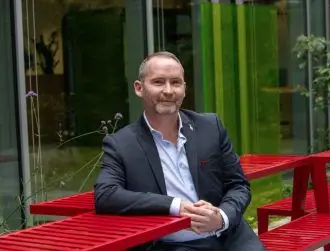
Muzaffar Rao is an associate professor in electronic and computer engineering at UL and an associate investigator with Lero, the Research Ireland Centre for Software. He started at UL in 2013 as a PhD student researching reconfigurable hardware for security. He now heads the university's professional diploma in operational technology security, a Level 9 programme designed to give practitioners the hands-on skills needed for emerging cyber risks in OT environments. That matters for anyone running plants, utilities or building systems that were never designed to sit on a network.

Hazel Murray chairs cybersecurity at Munster Technological University, where she also earned her PhD in mathematics. Her research spans password security and authentication, quantum cryptography and computing, cyber risk assessment, cybersecurity education and computational methods. During her PhD she spent time as a visiting researcher at the University of Chicago, investigating practical implementations and limitations of local differential privacy.

Building the industry and its people
Brian Honan is a veteran of the Irish cyber sector and founder of Dublin-based BH Consulting. He also founded IRISS-CERT, Ireland's first Computer Security Incident Response Team. He has acted as a special adviser to Europol's Cybercrime Centre, has been inducted into the Infosecurity Europe Hall of Fame, chairs Cyber Ireland, and lectures at UCD and the European Centre on Privacy and Security. He's also a prolific author and regular commentator.

Eoin Byrne, a University College Cork graduate, has managed the Cyber Ireland cluster since 2018. He sits on the board of the European Cyber Security Organisation and on the European Commission's Expert Group on Cluster Policy. Speaking at the Cyber Ireland National Conference in Kilkenny earlier this year, he argued that Ireland has a "critical role to play in securing Europe's digital economy". His reasons: the country hosts numerous multinational tech and pharma companies, transatlantic data cables run through its waters, and it hosts an estimated 30pc of the EU's data.
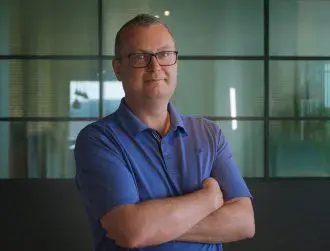
Donna O'Shea chairs digital engineering at UL, specialising in cybersecurity. She has led several initiatives, including the Cyber Ireland cluster and Enterprise Ireland's Cyber-Innovate programme, which aimed to grow the number of cybersecurity SMEs and high-potential start-ups. She also works with the National Cyber Security Centre on policy development, and co-leads CyberUnite, a project aimed at strengthening cross-border critical infrastructure across the island of Ireland. Her teaching sits where digital engineering, cybersecurity and regulatory frameworks meet, with a particular interest in AI and data protection challenges.
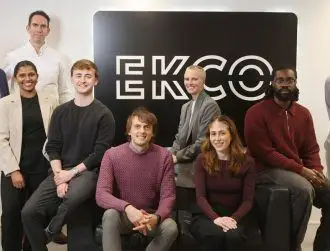
Jacqueline Kehoe manages cyber skills at MTU. She spent more than two decades in software development roles across transportation, lottery systems and telecoms, and holds a bachelor's degree in applied mathematics from UL. Her research focuses on helping organisations through digital transformation, which means both the technology and the harder part: bringing staff along through upskilling and mentoring.
Her view on where the discipline is heading is blunt. "Cybersecurity has now become a lot more about resilience and the ability to recover from an attack than about prevention," she said in an interview with Silicon Republic last year. "While we still need to put a lot of work into defence, we need to ensure we have a backup in the event of an incident. As they say, the attacker only has to be right once, the defender has to be right all the time."
Teaching security to the people who need it most
Christina Thorpe heads cybersecurity at Technological University Dublin. She's developing GroSafe, a gamified safeguarding platform designed to build resilience against child grooming through education, support and reporting. The platform is still in development and draws direct input from schoolchildren. Co-creation workshops and trials are running with schools including Stepaside ETSS in Dublin and Archbishop McHale in Galway, and children's feedback is feeding into both the design and the assessment of impact. Thorpe leads the project with TUD senior lecturer Dr Matt Bowden, which received a €1.3m award under the National Challenge Fund.
It's a useful reminder that cyber skills work isn't confined to enterprise networks. Designing tools that actually get used by teenagers is its own discipline, and it's one most security programmes underinvest in.
Setting the national response
Richard Browne directs the National Cyber Security Centre. He leads the centre's operations, including managing Ireland's response to cybersecurity incidents, sets its strategic direction and oversees its corporate governance functions. The timing of his role is significant. Vulnerabilities are being exploited at a scale the sector hasn't seen before, and attackers are increasingly using AI to do it.
Browne made the point sharply when he addressed a joint committee on artificial intelligence earlier this year, shortly after Anthropic launched its Mythos model. "Governance is great, very important, but it doesn't stop criminal actors," he said. My read is that this is the central tension for every security leader right now. Policy frameworks and audit cycles matter, but they don't patch a hospital's exposed systems on a Friday night. The organisations that do best tend to pair governance with operational muscle, and the NCSC's position puts Browne in a good spot to push for both.
What to watch
Taken together, these ten people cover the full pipeline: quantum and hardware research, operational technology security, incident response, skills development and national coordination. For IT leaders, the practical signal is where Irish expertise is concentrating. Post-quantum work, OT security training and cross-border infrastructure projects are all moving from research into deployment. Keep an eye on the Q-Fence and CyberUnite outputs, the first GroSafe trials, and whatever comes out of the next Cyber Ireland conference. Those will show which of these threads turn into tools and standards your team actually needs to plan around.


