Tristar AI raises $12.4M to catch factory defects while the line is still running
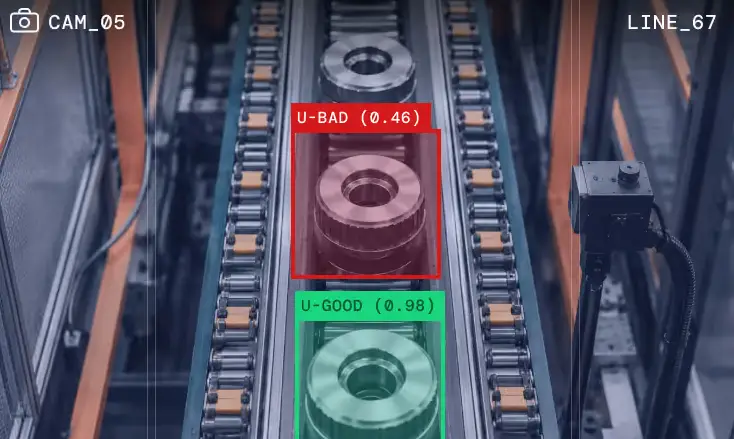
Tristar AI raises $12.4M to run computer vision across 500+ production lines, catching defects as they happen rather than after the fact.
Why this round matters to plant operations teams
Most manufacturing quality problems aren't hard to see once they've happened. The trouble is that they're usually found after a batch has already shipped, a line has already stopped, or a customer has already filed a claim. Tristar AI Inc. has raised $12.4 million in a Series A round aimed squarely at that gap, betting that defects can be flagged while the production run is still in progress.
The round was led by Isogon Ventures, with participation from Blackhorn Ventures, Ford Street Ventures, NextView Ventures, TenOneTen and the ISAI Cap Venture Fund run by Capgemini. For a company selling into factory floors, the presence of an industrial services firm's venture arm is worth noting. It suggests the investors see a path into large manufacturing accounts, not just a software pilot.
The pressure squeezing manufacturers
Tristar's pitch lands on a tough combination of problems. Manufacturers are dealing with rising raw material costs and a shortage of labour, and reshoring projects are adding load on top of both. Capgemini Research Institute data cited in the announcement says 48% of U.S. companies have invested in reshoring projects this year, while 83% say they're worried about not having enough skilled industrial workers to deliver them.
That's the context where quality inspection becomes a bottleneck. Many plants still depend on manual checks or on rigid, rule-based machine vision systems that are good at spotting the defects someone predicted and poor at everything else. Skilled people get pulled off production lines to inspect, lines sometimes stop entirely, and subtle flaws still slip through. The cost shows up as scrap, downtime, missed deadlines and occasionally expensive customer claims.
Where the founder's story fits in
Founder and CEO Salem Karani has a direct stake in the problem. He told SiliconANGLE that as a child he regularly went with his father to the family's plastic film plant in Houston, showing up at all hours to troubleshoot production faults. Margins were thin, so extended downtime could threaten the business, and he spent long stretches with his father chasing line errors.
That experience led Karani, who studied computer vision at Harvard and MIT, to build an automated inspection system meant to run continuously without slowing production. His framing is blunt. "The problem was never that people didn't care about quality," he said. "It's that people catch problems after the fact, once they've already cost time, materials and customers. Tristar gives every production line a live record so teams can act when it matters most."
What's different about the platform
Computer vision on factory lines isn't new, and plenty of vendors already offer it. Tristar's argument is that its models are more adaptable. The company says they can adjust to changing conditions, materials and defect types, which matters because a rule-based system typically needs reconfiguration each time a product or material changes.
The platform doesn't look only at camera images. According to the company, it also takes in machine telemetry, the quality data for products coming off the line, and the activity of human operators. The idea is that when an issue appears, the system can show both that it's happening and where in the process it started. That's the difference between a defect alert and a root-cause trail, and it's the part plant engineers will want to test hardest.
Integration is the other practical point. Tristar says the system connects to existing equipment and software, including cameras, sensors, programmable logic controllers and enterprise resource planning systems. For plants that can't justify a rip-and-replace project, that matters more than any model benchmark. My read is that this is the feature that will decide whether a pilot turns into a rollout.
Early traction and the numbers to check
Tristar says its system already monitors more than 500 production lines across North America and Europe. Named customers include packaging groups Amcor, DuPont and Klöckner Pentaplast, along with some of the larger suppliers to automakers such as Toyota, Honda and Mercedes, according to Karani.
The performance claims come from the company and its customers, so they should be read that way. Customers report defect detection accuracy between 95% and 99%, and say the platform pays for itself in an average of about four months. Those are useful headline figures, but a plant evaluating the product should ask how accuracy was measured, on which defect types and at what line speeds, and what the baseline was before deployment.
Where the company goes next
Karani says the immediate goals are to expand the platform into new manufacturing sectors and to push accuracy higher through further work on the computer vision models. Over the longer term, he describes Tristar as the operational system of record for the factory floor, with visibility that runs from raw materials through to the finished product. That's an ambitious scope, and it moves the company from quality inspection toward a broader plant data layer, which is a more crowded and more contested space.
Capgemini Ventures' Matthieu Eyriès framed the investment in terms of what he sees as a shift in industrial AI. "Physical AI will play a critical role in the future of manufacturing," he said. "Tristar combines advanced AI capabilities with a strong understanding of industrial environments, addressing concrete manufacturing challenges with measurable impact."
Isogon Ventures General Partner Paco Riberas made the case from the cost side. He said manufacturers are losing too much money to defects that could have been avoided, and that Tristar's system catches defects in real time on existing lines. "Salem and his team are building the quality standard for modern manufacturing," he said.
For IT and operations teams, the question to watch is whether Tristar's integration claims hold up across messy, mixed-vintage plant environments. If they do, quality inspection could move from a periodic manual check to a continuous data stream that engineers and IT staff have to support. That would be a bigger operational change than the funding headline suggests.


