
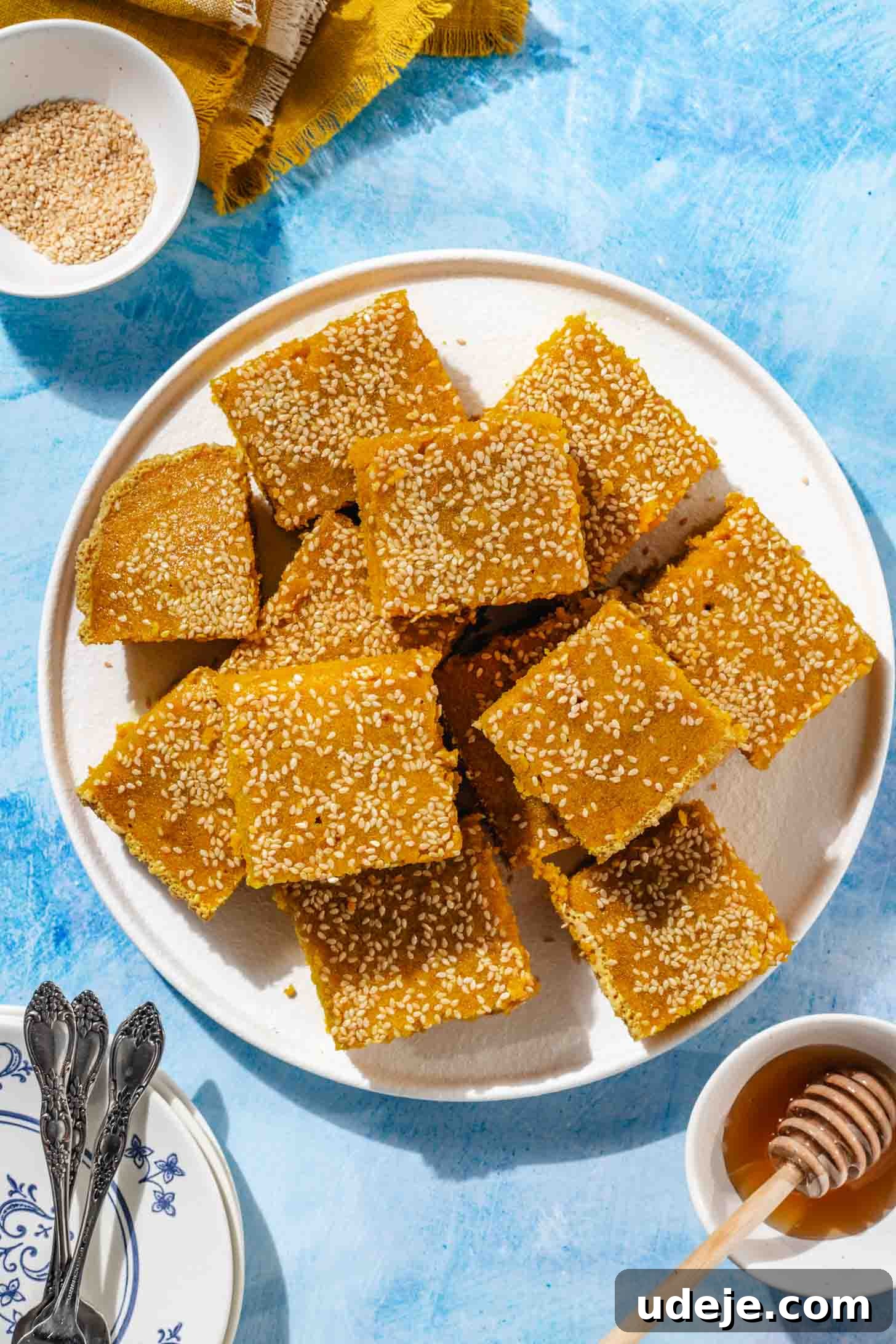
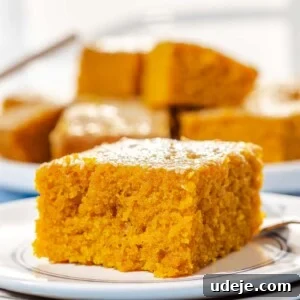
If you’ve ever savored the comforting warmth of golden milk or a fragrant turmeric latte, prepare for a delightful culinary revelation. This traditional Sfouf recipe delivers that familiar, subtly spiced essence, but in the irresistible form of a moist, tender cake. This authentic Lebanese turmeric cake is a masterpiece of simple ingredients and profound flavor, built upon a harmonious blend of fine semolina and all-purpose flour. Best of all, it’s incredibly easy to make, coming together in as little as 10 minutes without the need for a stand mixer. The first time I experienced its unique taste and texture, I was utterly captivated – a truly delicious and distinctive dessert.
Lebanese Sfouf: A Golden Culinary Treasure
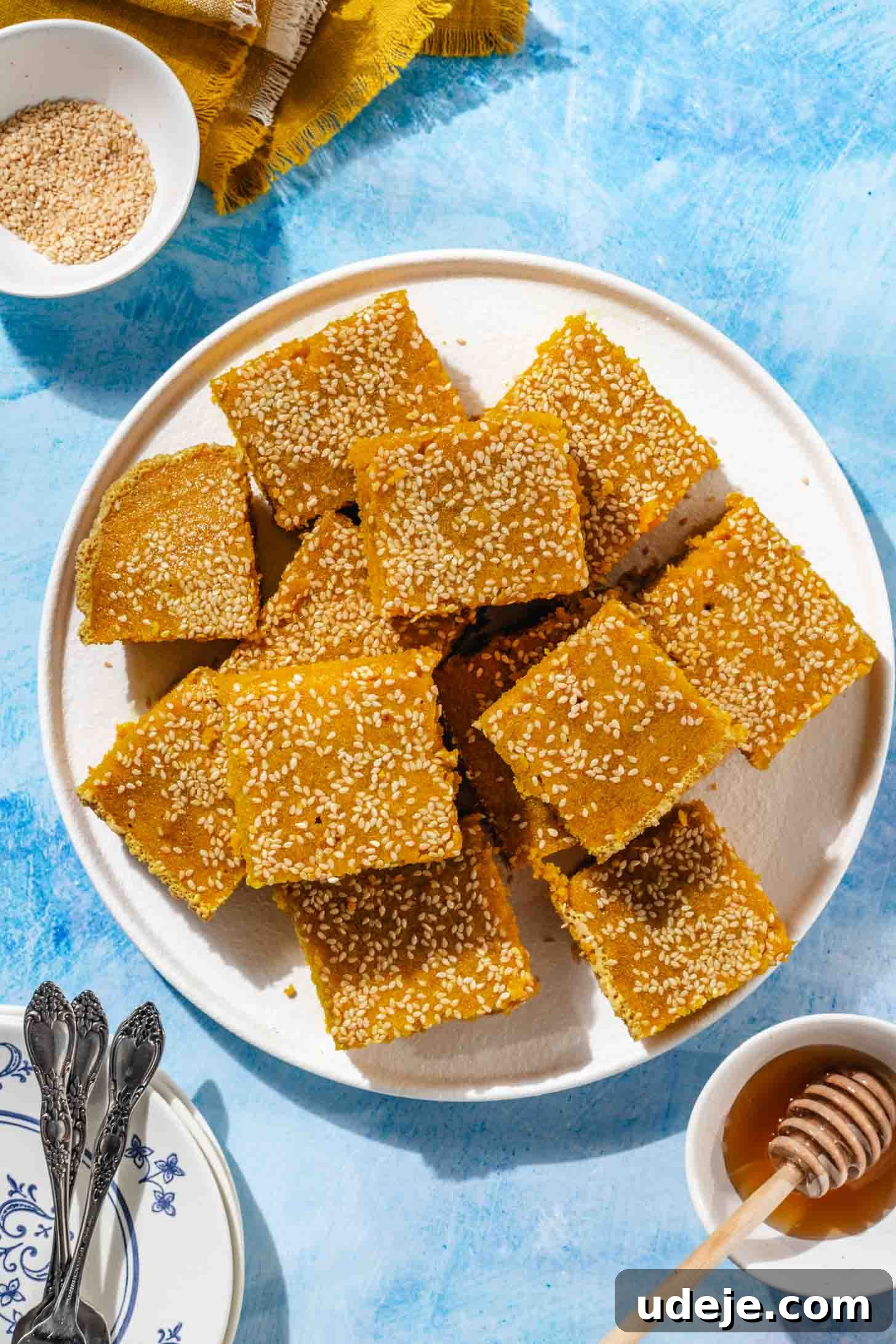
Sfouf is more than just a cake; it’s a cherished Lebanese culinary tradition, celebrated for its unique flavor and vibrant golden color derived from turmeric. While there’s a lesser-known variation called “sfouf dibs” that uses carob molasses, the turmeric version remains the most iconic and beloved. This delectable treat shares a distant kinship with other semolina-based Middle Eastern desserts like Basbousa or Namoura, yet Sfouf distinctly carves its own niche.
What sets Sfouf apart from its semolina cousins is the inclusion of all-purpose flour alongside the semolina. This strategic combination results in a texture that is wonderfully “cakey” – less dense than a pure semolina cake like Basbousa, yet far from the light, airy crumb of a typical flour-based cake, such as this Tahini Banana Cake. The semolina imparts an extraordinary crumb texture that is both satisfyingly dense and incredibly tender, creating a unique mouthfeel that is truly addictive. This distinctive quality has inspired me to explore countless flavor variations using this versatile base recipe.
Sfouf holds a special place in Lebanese culture, often prepared for special occasions, family gatherings, or simply as a comforting everyday treat. It’s a testament to the beauty of simplicity in baking; its straightforward, one-bowl preparation embodies the heart and soul of Lebanese home baking. As far as research indicates, this particular turmeric-infused semolina cake is quintessentially Lebanese and not widely found in neighboring regions, making it a truly unique gem of Lebanese cuisine.
The Secret to Sfouf: Key Ingredients and Their Magic
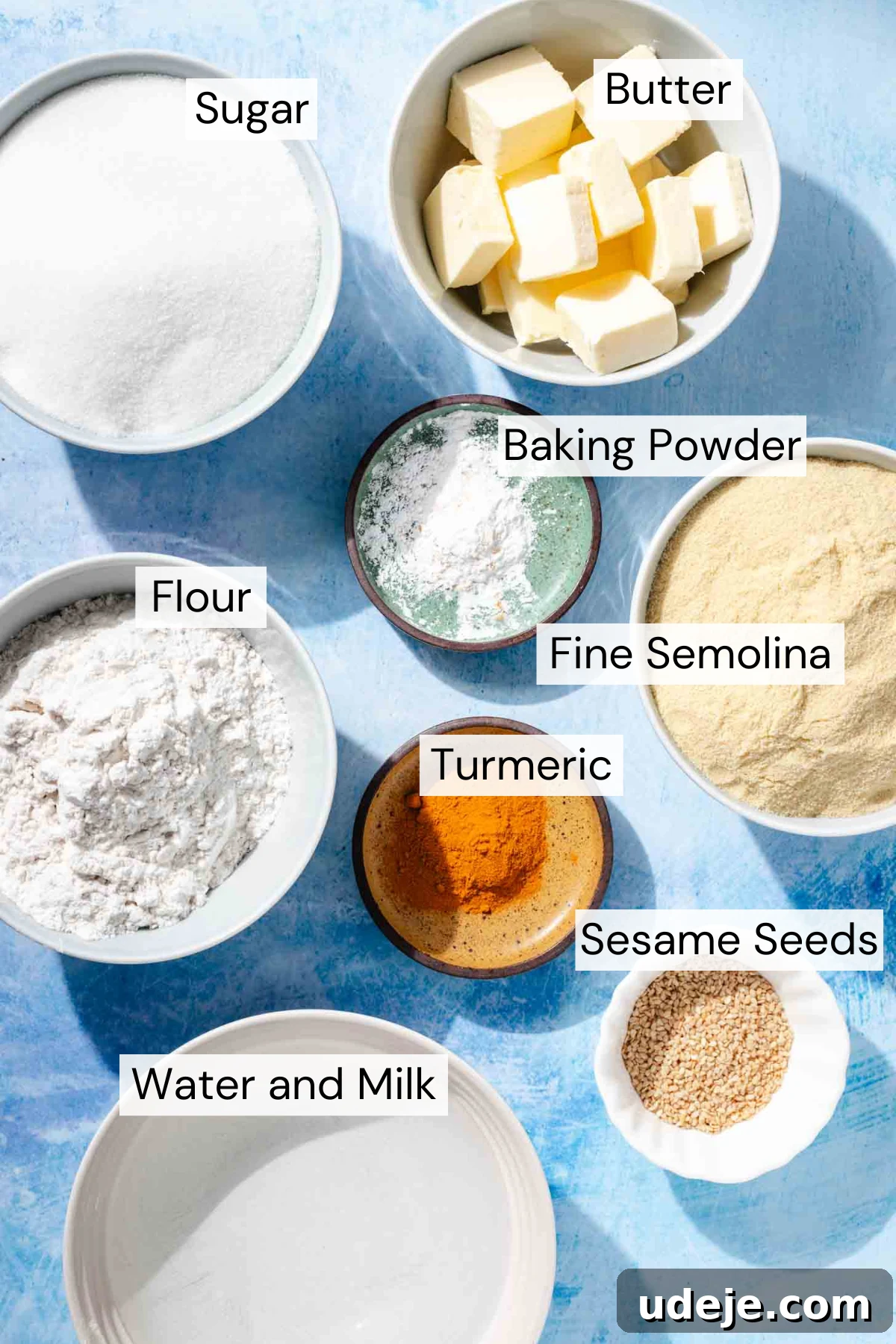
Crafting the perfect Sfouf requires a handful of simple pantry staples, but with a few crucial distinctions that make all the difference. Understanding these ingredients and their roles is key to achieving that authentic Lebanese flavor and texture.
Essential Ingredients:
- Fine Semolina Flour: This is arguably the most critical ingredient. Semolina, derived from durum wheat, typically comes in various grinds. For Sfouf, fine semolina is absolutely essential. Coarser varieties will yield a much different, grainy, and less tender texture. Always check the package carefully to ensure you’re purchasing fine semolina. Its fine texture contributes to the cake’s unique crumb, offering a slight chewiness without being heavy.
- All-Purpose Flour: The addition of all-purpose flour works in tandem with the semolina to create a balanced texture that is both moist and structured, giving the cake its delightful “cakey” feel.
- Granulated Sugar: Provides the perfect level of sweetness, allowing the subtle spice of turmeric to shine through without being overpowering.
- Baking Powder: The leavening agent that helps the Sfouf rise and achieve its tender crumb.
- Ground Turmeric: The star ingredient responsible for Sfouf’s iconic vibrant golden-yellow color and its distinct, earthy, subtly spiced flavor. Ensure your turmeric is fresh for maximum impact.
- Melted Ghee or Butter: Ghee (clarified butter) is traditionally preferred for its rich, nutty flavor, which complements the turmeric beautifully. However, unsalted butter works perfectly well. For a vegan option, you can easily substitute with a neutral-flavored oil like vegetable or canola oil.
- Water and Whole Milk: These liquids bind the dry ingredients, create the batter consistency, and contribute to the cake’s moisture. Whole milk adds richness, but plant-based milks can be used for a dairy-free version.
- Toasted Sesame Seeds: Used as a topping, these add a delightful nutty flavor and a delicate crunch, providing a pleasant textural contrast to the soft cake.
- Honey: A light drizzle of honey after baking adds an extra layer of sweetness and moisture, enhancing the overall flavor profile.
- Tahini (for greasing): A unique Lebanese secret! Using tahini to grease the baking pan not only prevents sticking but also imparts a subtle, nutty depth of flavor that perfectly complements the Sfouf.
You will also need toasted sesame seeds for the topping. If you only have raw sesame seeds, don’t worry – it’s simple to toast them at home. Just spread them in a dry pan over medium heat, stirring continuously for approximately 5 minutes, or until they turn a beautiful light golden color and become fragrant. For more detailed instructions on toasting sesame seeds, you can refer to my homemade tahini post.
The One-Bowl Wonder: Sfouf’s Effortless Preparation
One of the many charms of this Lebanese Sfouf recipe is its incredible simplicity, epitomized by the “one-bowl method.” This means minimal cleanup and maximum enjoyment. Follow these straightforward steps to create your perfect golden turmeric cake:
Step 1: Prepare Your Baking Environment
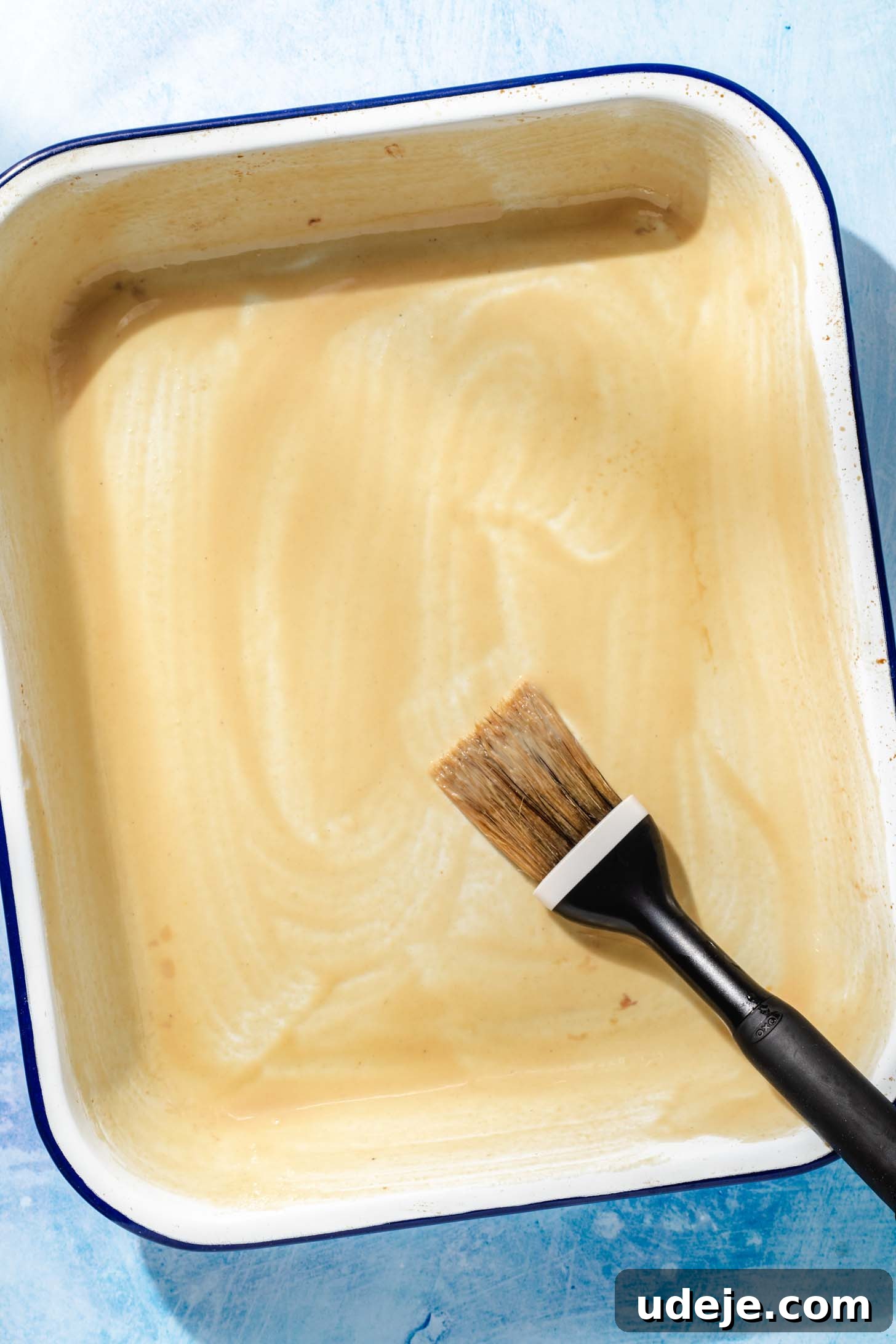
Begin by preheating your oven to a steady 350°F (175°C). This ensures your oven is at the optimal temperature when the batter is ready, promoting an even bake. Next, prepare a 13 by 9-inch rectangular baking pan by thoroughly greasing it with tahini. This not only prevents the cake from sticking but also infuses a delightful, subtle nutty flavor into the crust. Set the prepared pan aside.
Step 2: Combine the Dry Ingredients
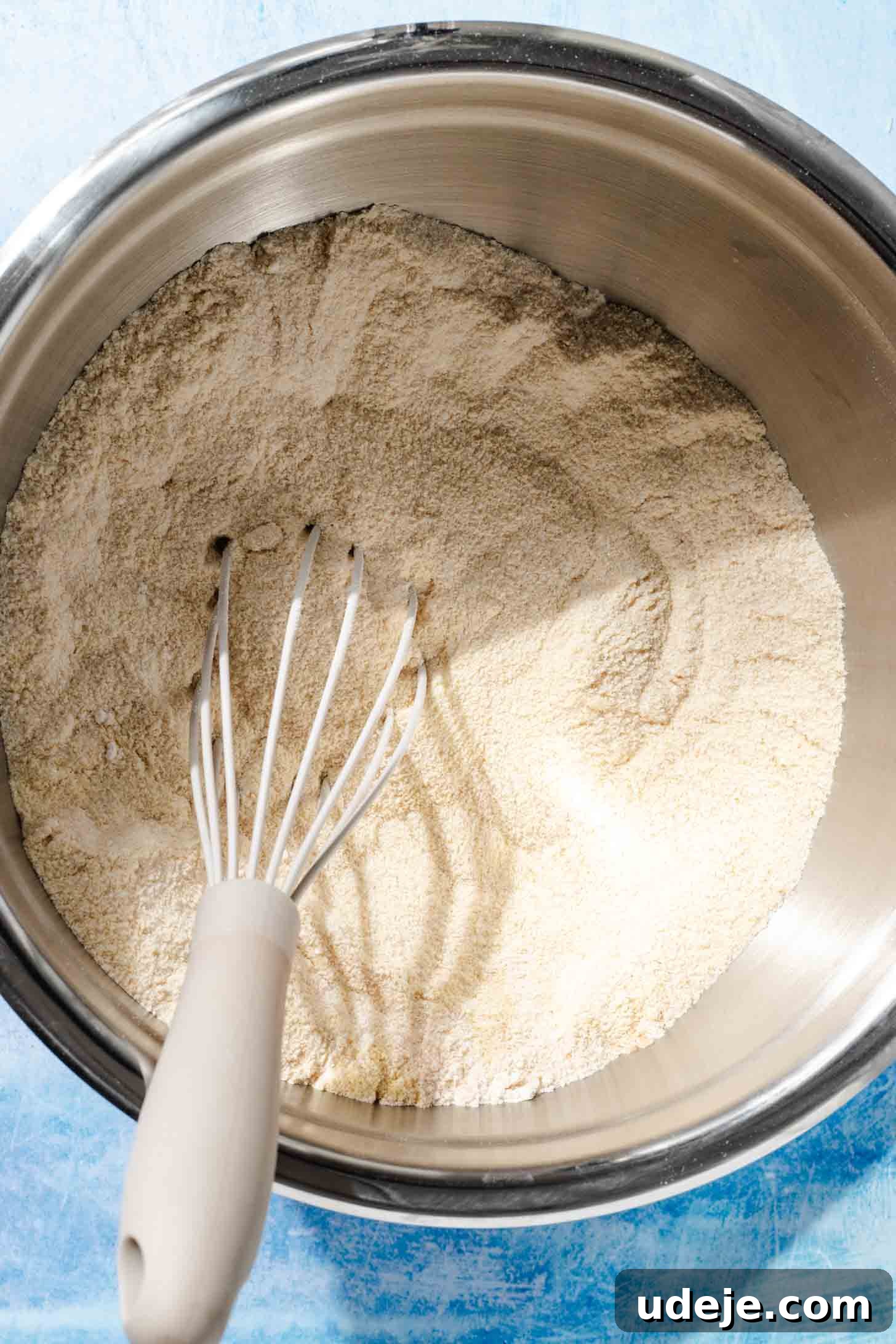
In a large mixing bowl, combine all the dry ingredients: the all-purpose flour, fine semolina flour, granulated sugar, baking powder, and turmeric. Using a whisk, thoroughly combine these ingredients until they are evenly distributed. This step is crucial for ensuring the leavening agents and flavorings are well integrated throughout the cake.
Step 3: Incorporate the Wet Ingredients
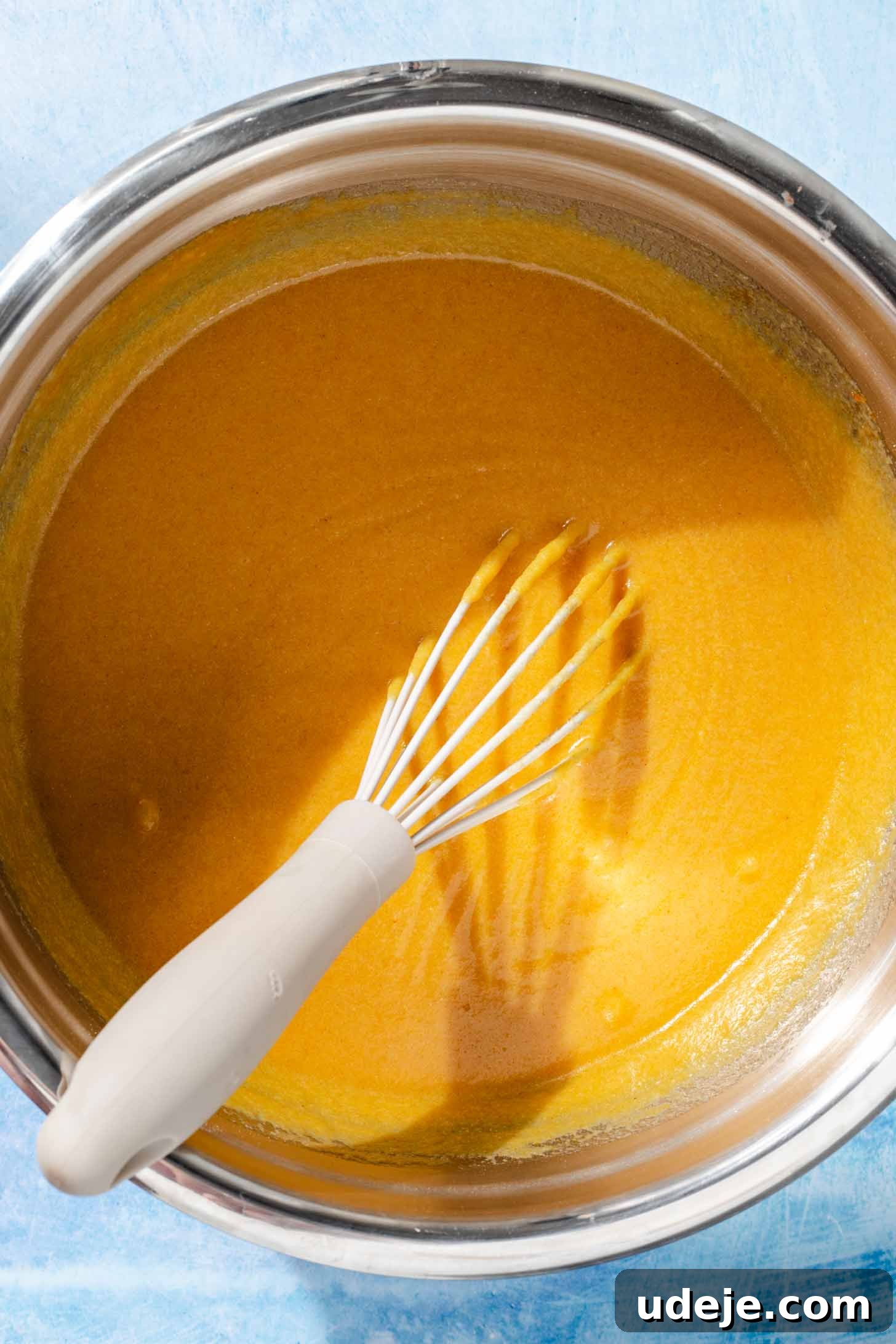
Now, add all the wet ingredients to the bowl with the dry mixture: the melted ghee (or butter), water, and whole milk. With your whisk, gently mix the wet and dry ingredients until they are just combined. Continue whisking only until no streaks of dry flour are visible. It is vital to avoid overmixing the batter, as this can develop the gluten in the flour too much, leading to a tough and dense cake rather than the desired tender crumb. The resulting batter should boast a beautiful, bright sunny yellow color from the turmeric.
Step 4: Pour and Top
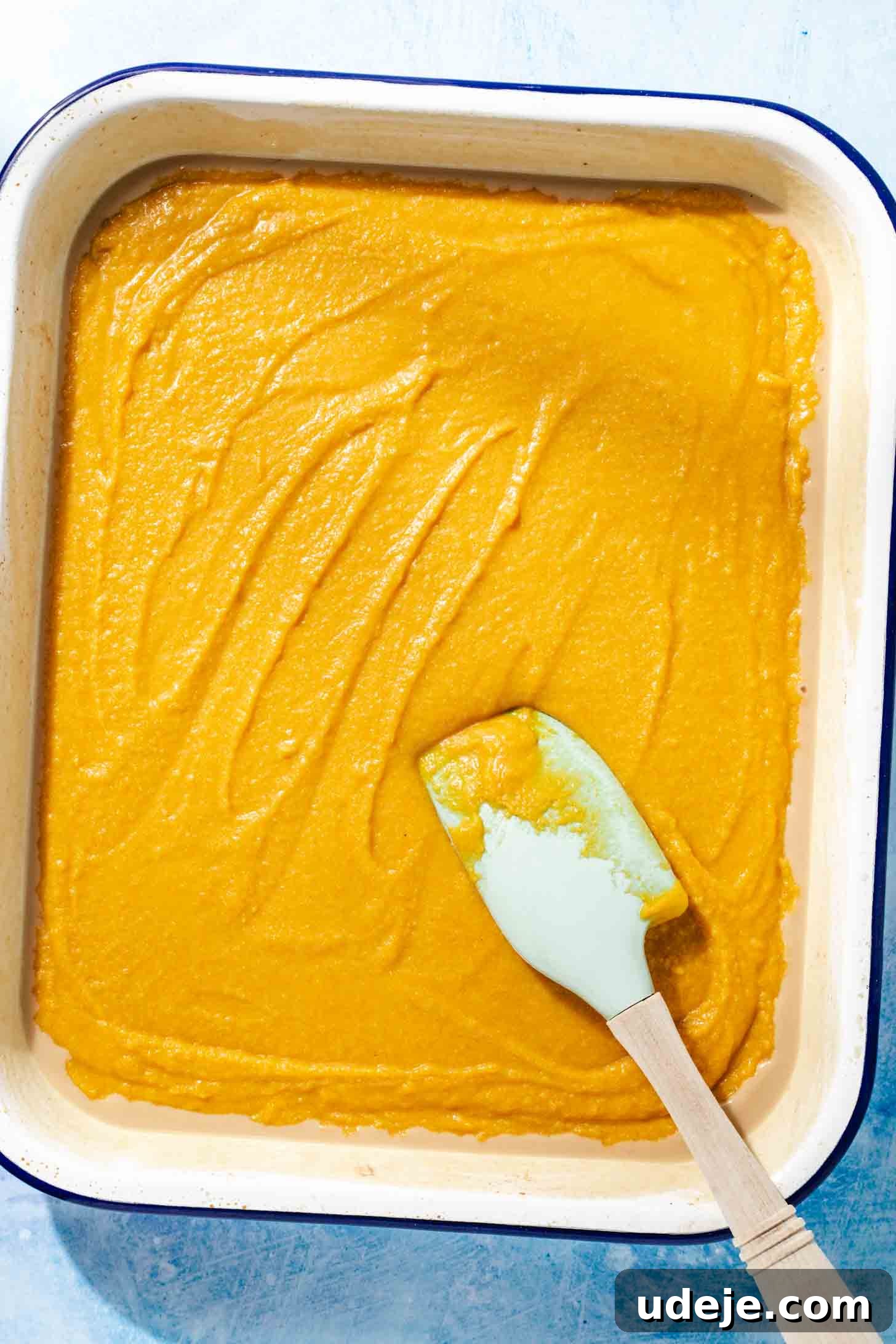
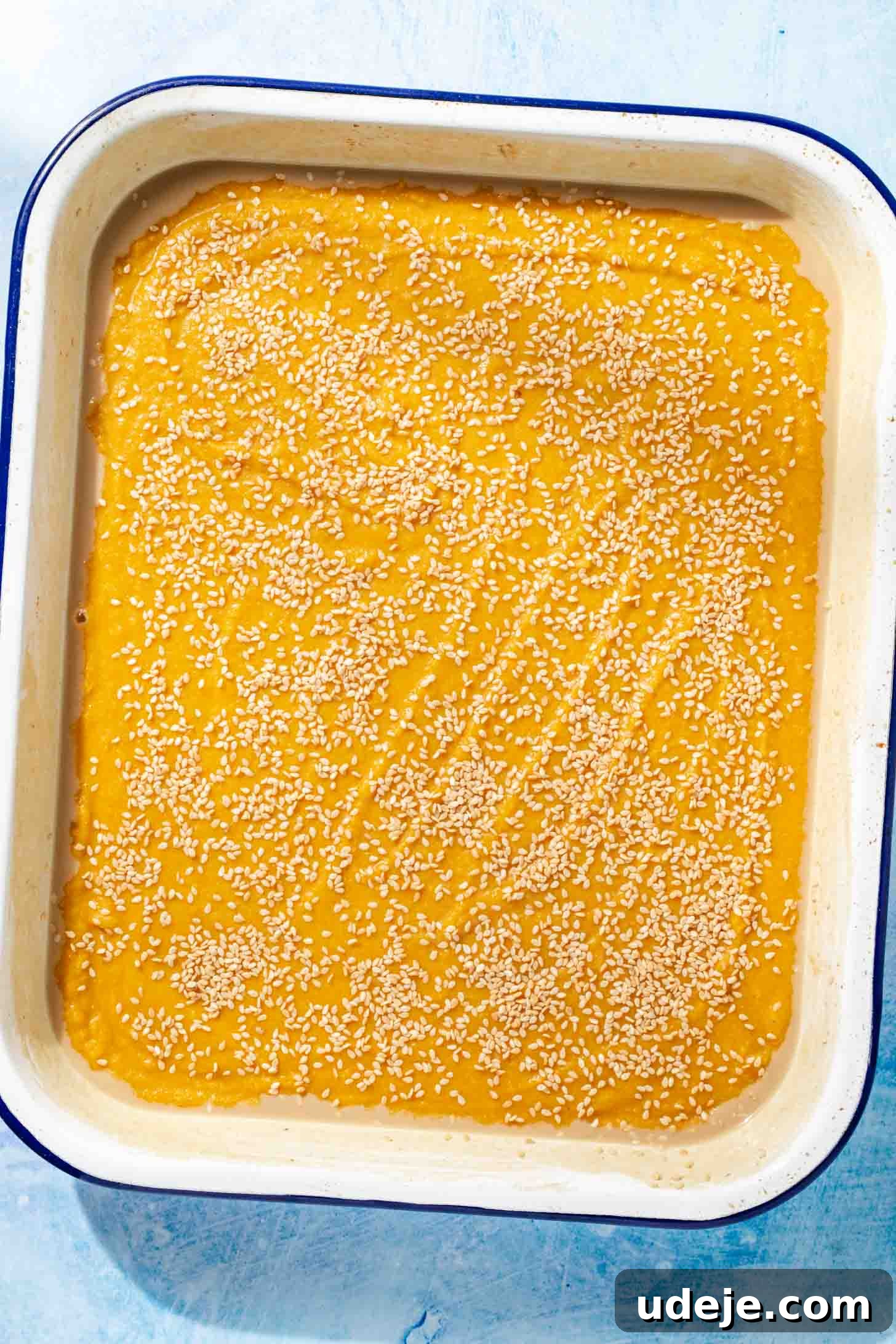
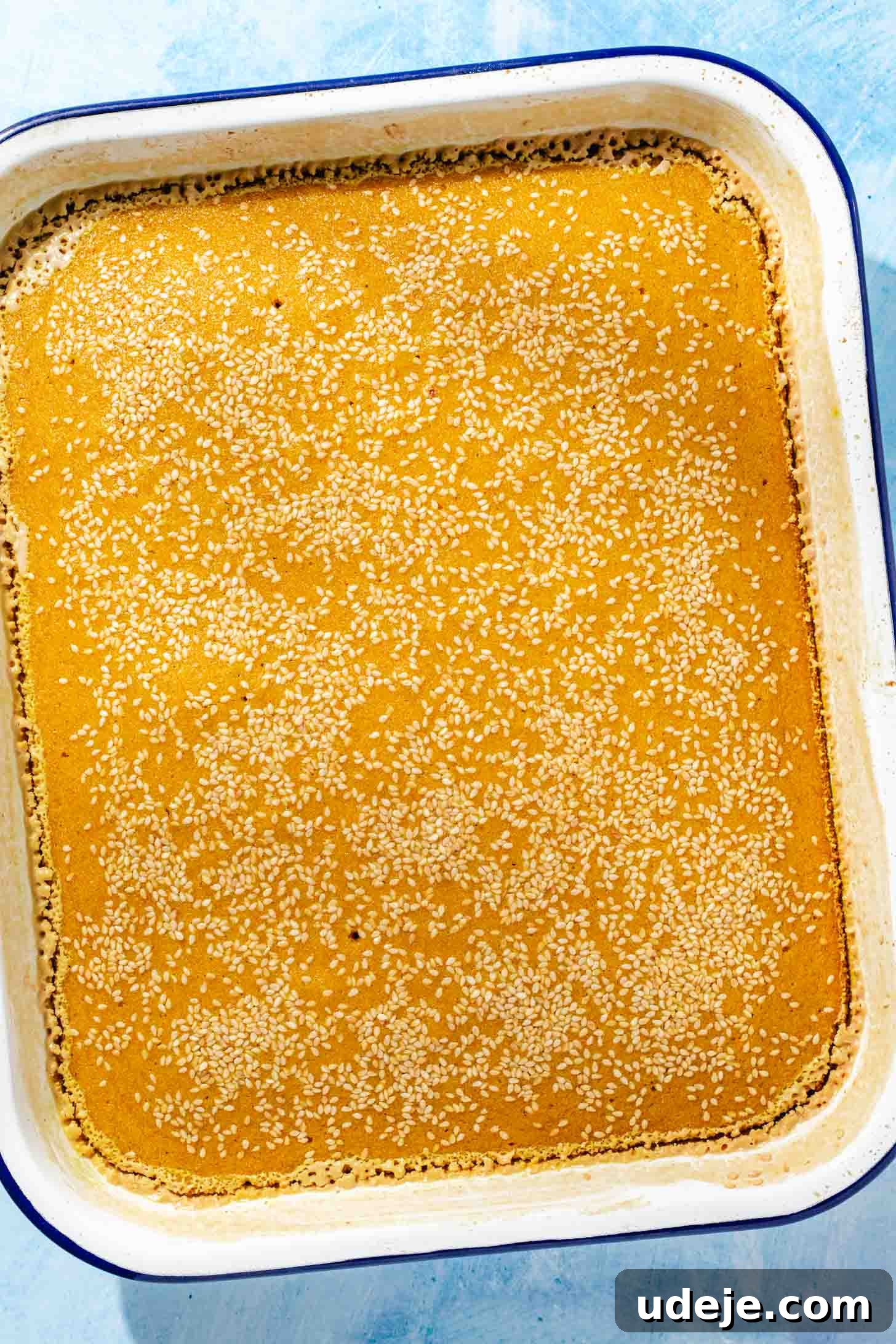
Carefully pour the vibrant yellow batter into your tahini-greased cake pan. Don’t be alarmed if you notice the tahini slightly pooling around the edges – this is perfectly normal and will contribute to the delicious, slightly crisp bottom crust. Next, evenly sprinkle the surface of the batter with the toasted sesame seeds. These tiny seeds will provide a wonderful aroma and texture once baked.
NOTE: While toasted sesame seeds are traditional, Sfouf can also be beautifully topped with toasted pine nuts for a richer flavor, or even slivered almonds for a different texture. Feel free to experiment with your favorite nuts!
Step 5: Bake to Golden Perfection
Place your pan in the preheated oven and bake for approximately 35-37 minutes. Baking times can vary slightly depending on your oven, so keep an eye on it. The cake is perfectly baked when a toothpick inserted into the center comes out clean, indicating that it is cooked through. The top should be beautifully golden and firm, having risen nicely and holding its shape.
Step 6: Cool, Drizzle, and Serve
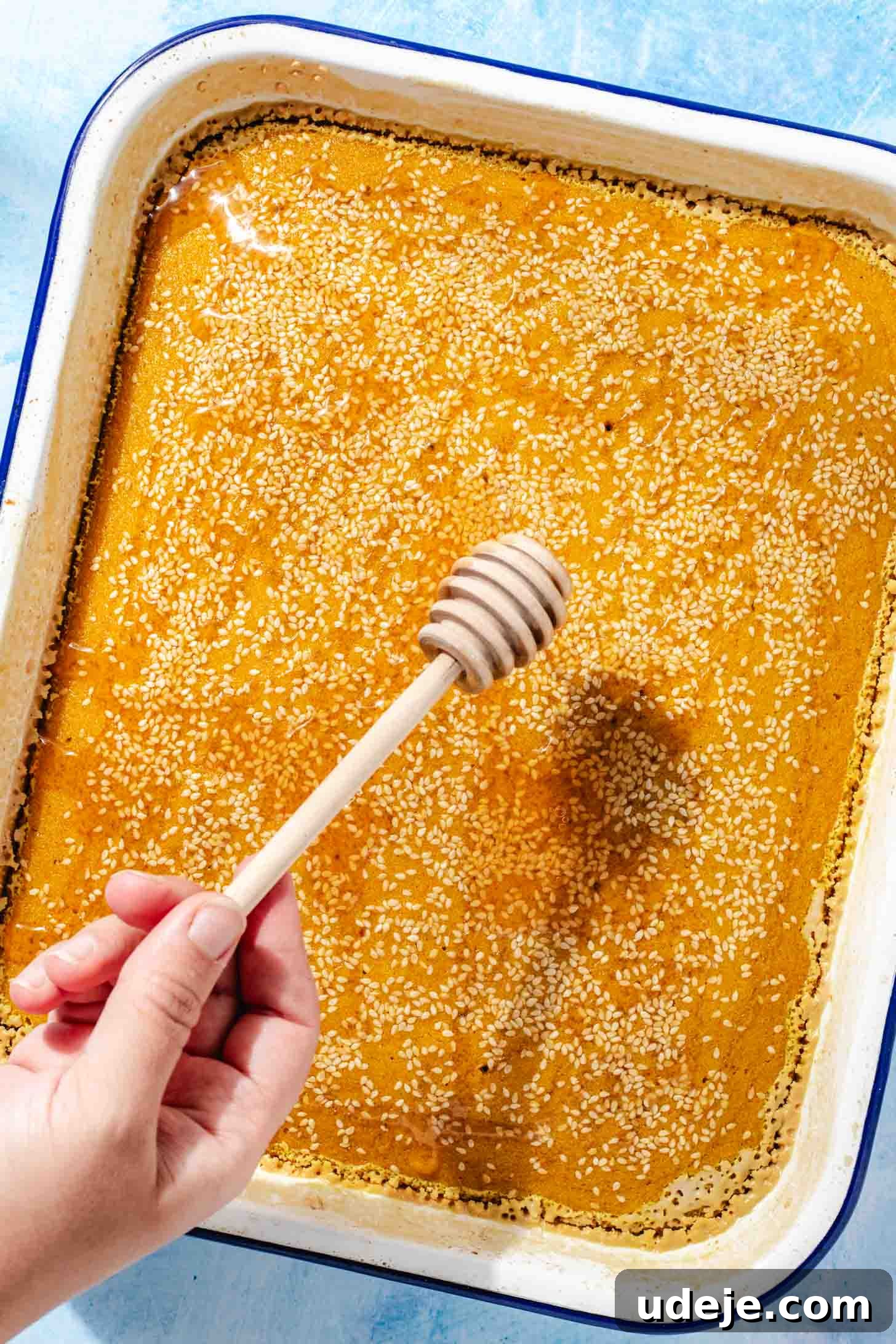
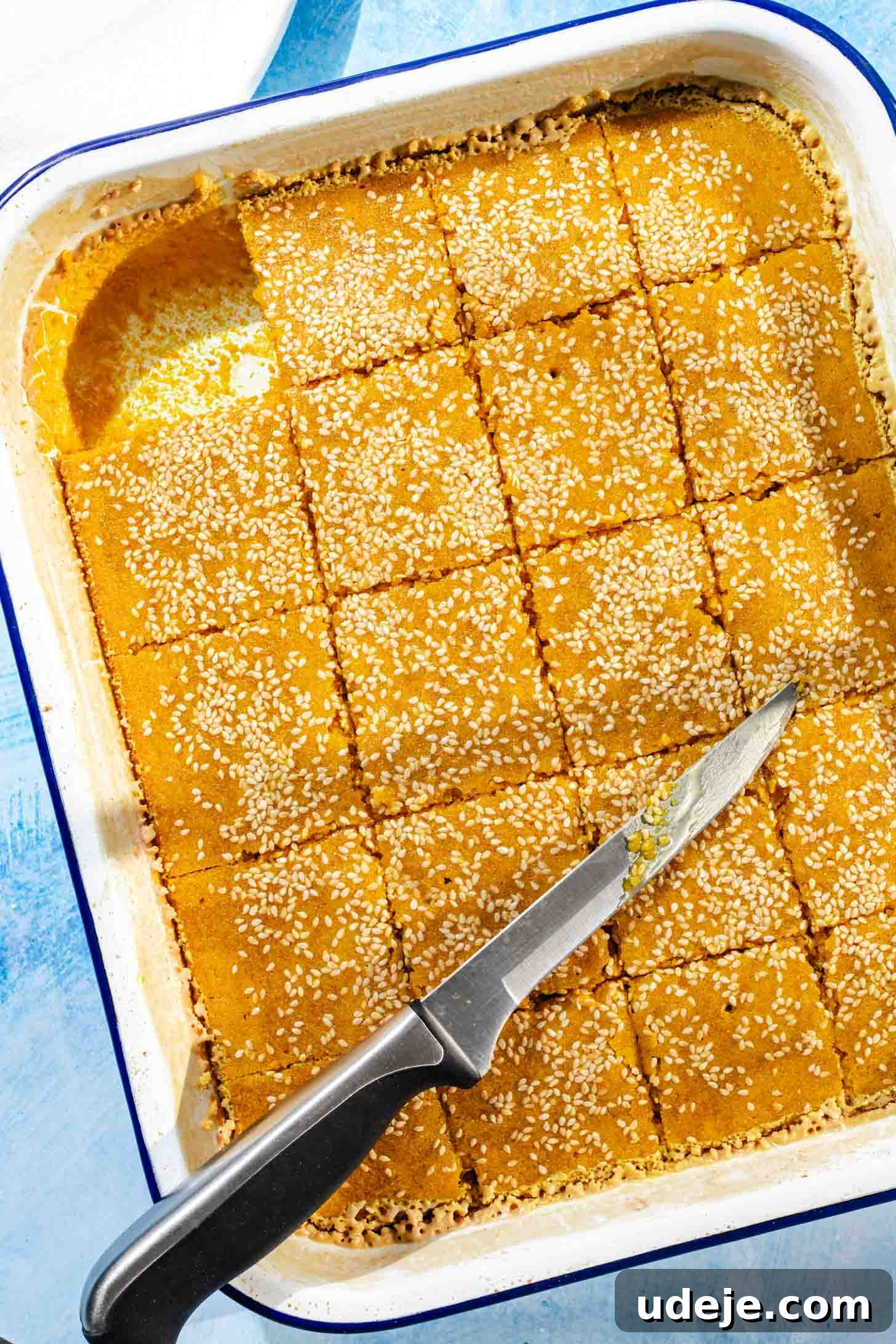
Once baked, carefully remove the Sfouf from the oven and allow it to cool in the pan for about 5 minutes. This short resting period helps the cake set. While still warm, generously drizzle the entire surface with honey. The honey will slightly melt and seep into the cake, adding moisture and a delicate sweetness. Finally, cut the Sfouf into even-sized square pieces. From a 13×9 inch pan, you should yield around 20 delightful pieces. Your authentic Lebanese Sfouf is now ready to be enjoyed! I wholeheartedly recommend brewing a fresh cup of coffee or a fragrant tea to complement your first unforgettable bite.
Sfouf Storage and Serving Tips
Ensuring your delicious Sfouf stays fresh and delightful for as long as possible is key to enjoying this traditional treat over several days. Here are the best practices for storage and serving:
Storage Instructions:
- Room Temperature: Sfouf will maintain its quality and flavor wonderfully in an airtight container at room temperature for 3 to 4 days. While it remains delicious, the texture can become slightly stale over time. For the best experience after a day or two, I highly recommend warming individual pieces slightly.
- Reheating: To restore its freshly baked warmth and tenderness, simply pop a piece of Sfouf in the microwave for about 30 seconds. This quick reheat makes it taste as good as new, bringing out its subtle spices and moist crumb.
- Freezing: Like many other cakes, Sfouf freezes exceptionally well, making it perfect for meal prep or enjoying later. To freeze, wrap individual slices tightly in plastic wrap first, then secure them further in aluminum foil. This double-layer protection helps prevent freezer burn. Frozen Sfouf can be stored for 2-3 months.
- Thawing: When you’re ready to enjoy a frozen piece, transfer it from the freezer to the refrigerator and allow it to thaw for 1-2 days. Once thawed, you can warm it gently in the microwave as described above for a comforting treat.
Serving Suggestions:
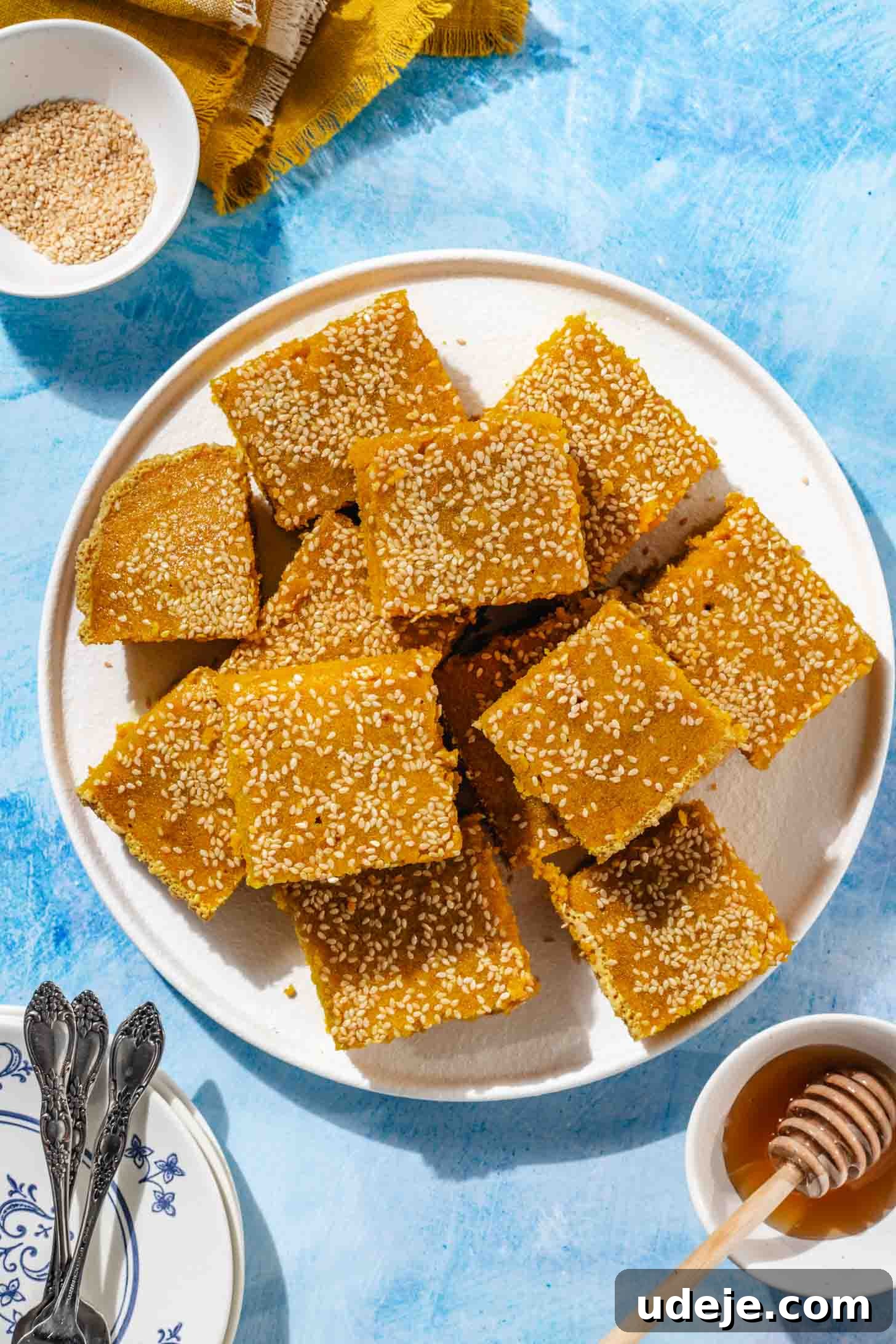
- With Coffee or Tea: Sfouf is traditionally served alongside a robust cup of Arabic coffee or a comforting hot tea. The rich, earthy notes of the cake beautifully complement these beverages.
- For Breakfast or Brunch: Its subtle sweetness and nourishing ingredients make it a wonderful addition to a breakfast spread or a leisurely brunch.
- Dessert: Serve it as a light and unique dessert, perhaps with a dollop of clotted cream or a sprinkle of additional toasted nuts for extra indulgence.
- Garnish: Don’t hesitate to add a fresh mint sprig or a light dusting of powdered sugar if you desire a touch more elegance.
Other Recipes You Will Love
If you tried these delightful recipes, please consider leaving a star ⭐⭐⭐⭐⭐ rating in the recipe card below and/or a review in the comments section further down the page – I’d absolutely love to hear from you! You can also hop on over to Instagram and say hello!
Sfouf (Turmeric Cake with Semolina)
20
pieces
10
35
45
Amina Al-Saigh
Leave a Review
Pin Recipe
Ingredients
For the Cake
-
2
tablespoons
tahini,
for greasing, see notes -
1 1/2
cups
all-purpose flour,
180g -
2 1/2
cups
fine semolina flour,
340g -
2
cups
sugar,
400g -
2
tablespoons
baking powder -
2
tablespoons
turmeric -
3/4
cup
ghee or butter (180g),
melted -
1
cup
water,
236ml -
1
cup
whole milk,
236ml
For the Topping
-
3
tablespoons
toasted sesame seeds,
see notes for using raw sesame seeds -
3
tablespoons
honey
Instructions
-
Preheat the oven to 350°F (175°C). Grease a 13 by 9 inch rectangular pan generously with tahini and set it aside.
-
In a large mixing bowl, whisk together all the dry ingredients (flour, semolina, sugar, baking powder, and turmeric) until thoroughly combined. Then, add the melted ghee or butter, milk, and water. Whisk everything together until the batter is smooth and no flour streaks are visible. Be careful not to overmix.
-
Pour the golden cake batter into the prepared pan. Evenly sprinkle the toasted sesame seeds over the top. Bake for 35-37 minutes, or until a toothpick inserted into the center of the cake comes out clean. The top should appear set and golden brown.
-
Once baked, remove the cake from the oven and let it cool in the pan for 5 minutes. After cooling slightly, drizzle the surface generously with honey. Cut the Sfouf into equal square pieces. This cake can be served immediately while warm or stored at room temperature in an airtight container for up to 3-4 days. To enjoy a warm slice later, simply reheat it in the microwave for about 30 seconds.
Recipe Video Guide

Notes
- The tahini used to grease the pan can be substituted with butter or a neutral oil if preferred, though tahini adds a unique flavor.
- Avoid overmixing the batter after adding wet ingredients, as this can lead to a dense and tough cake texture. Mix only until just combined.
- For a vegan version of Sfouf, ghee or butter can be replaced with a neutral-flavored vegetable oil.
- Similarly, plant-based milk (such as almond or soy milk) can be successfully substituted for dairy milk to make this recipe dairy-free.
- If you only have raw sesame seeds, toast them in a dry pan over medium heat for a few minutes, stirring continuously, until they turn a light golden color and become fragrant.
Nutrition Information
Serving:
1 piece
Calories:
284kcal
Carbohydrates:
47g
Protein:
5g
Fat:
9g
Saturated Fat:
5g
Polyunsaturated Fat:
1g
Monounsaturated Fat:
2g
Trans Fat:
0.3g
Cholesterol:
20mg
Sodium:
189mg
Potassium:
102mg
Fiber:
1g
Sugar:
23g
Vitamin A:
234IU
Vitamin C:
0.3mg
Calcium:
108mg
Iron:
2mg
*Nutrition information is an estimate and may vary depending on ingredients and preparation methods.
Did you make this recipe?
Please leave a star rating and review below!