
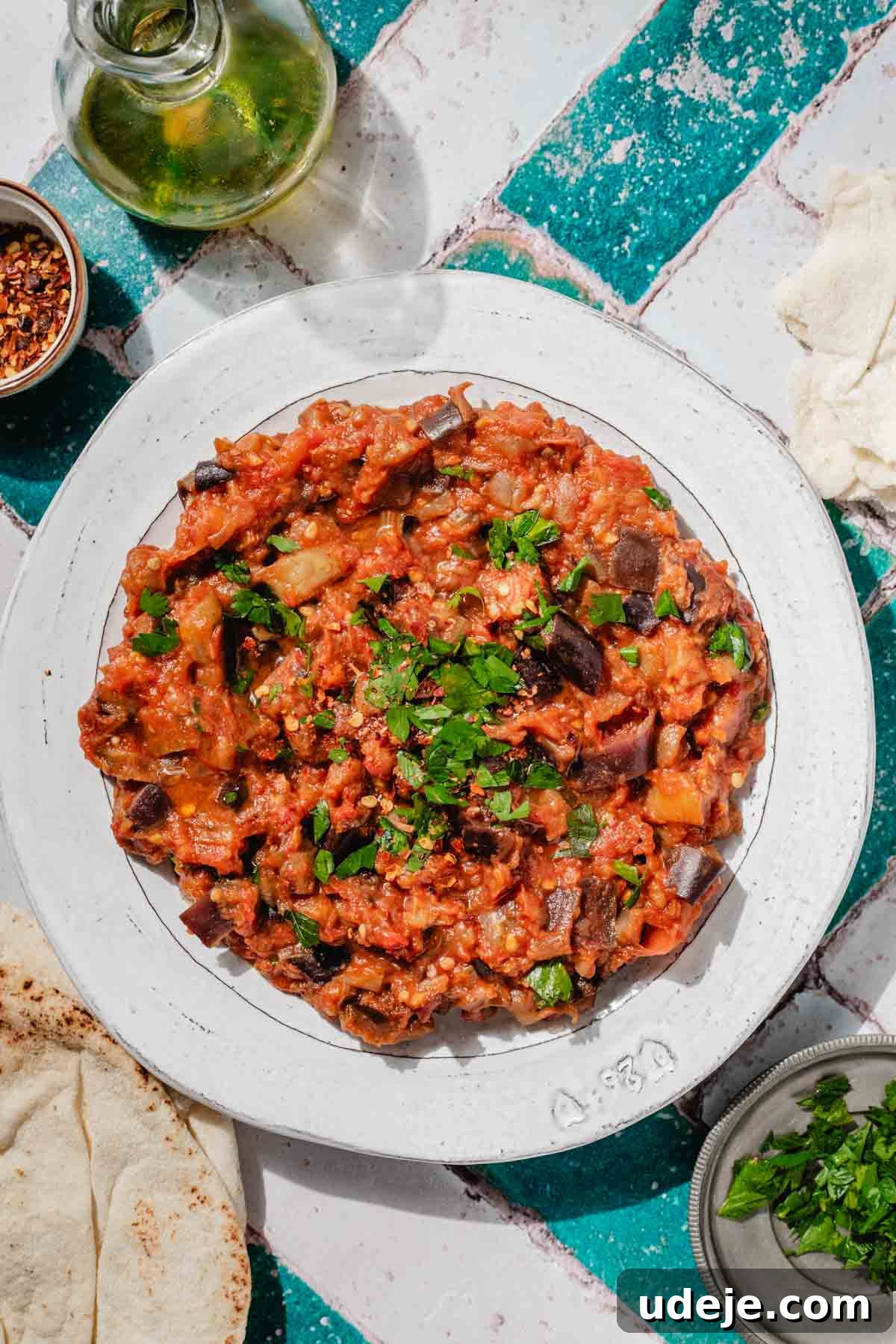
Welcome to the vibrant world of Moroccan cuisine, where flavors dance and aromas entice! Today, we’re diving deep into the heart of North African culinary traditions to explore Zaalouk, a lesser-known but incredibly captivating eggplant dish that promises a delightful journey for your taste buds. Often hailed as baba ghanoush’s distant yet equally delicious cousin, Zaalouk is far more than just an eggplant dip; it’s a rich, cooked salad brimming with warm, aromatic spices and fresh, vibrant ingredients.
Imagine tender eggplant, sautéed to perfection, then lovingly mashed and infused with the earthy notes of cumin and the sweet heat of paprika. Grated tomatoes melt into this medley, creating a luscious base, while a bright squeeze of lemon and a shower of fresh herbs awaken every flavor. The beauty of Zaalouk lies not only in its exquisite taste but also in its simplicity – typically prepared in a single pan, making it an accessible and rewarding culinary adventure for any home cook. Whether you’re a seasoned chef or just beginning your exploration of global flavors, this Moroccan staple is guaranteed to become a cherished addition to your recipe repertoire.
What is Moroccan Zaalouk? A Culinary Deep Dive
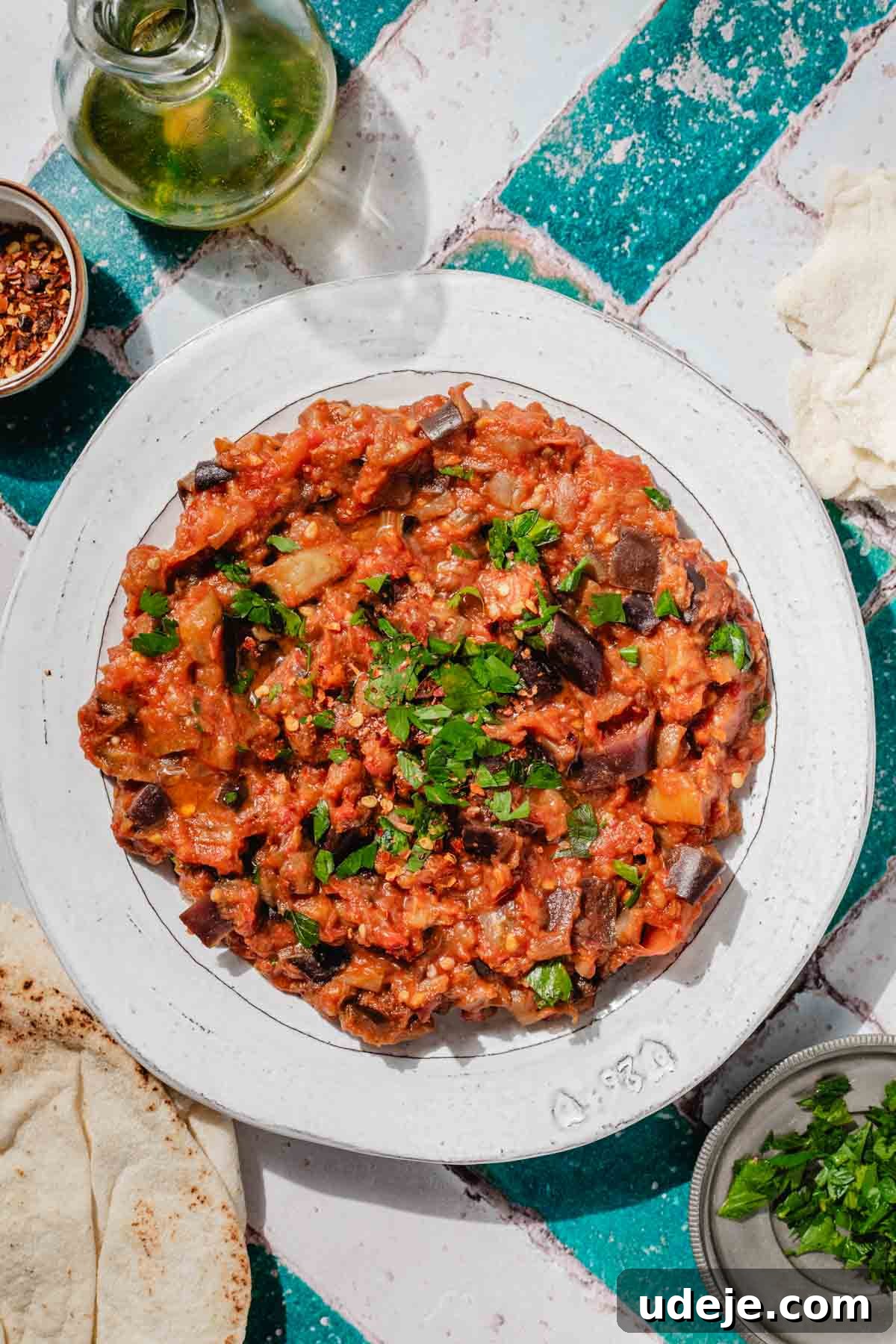
In Morocco, Zaalouk holds a special place at the table, primarily recognized as a cooked salad or a savory spread. It’s an essential component of a traditional mezze spread, a collection of small dishes served before or alongside main courses, much like tapas in Spain or appetizers in the West. You’ll often find it nestled among other beloved Moroccan and Middle Eastern dips and spreads, such as creamy hummus, smoky baba ghanoush, and nutty muhammara. Its customary companion is fresh Moroccan bread or warm pita, perfect for scooping up every last bit of its flavorful goodness.
The concept of “cooked salads” is a rich tradition in Morocco, where vegetables are often cooked down until tender, then seasoned to create hearty and flavorful side dishes. Zaalouk, with its robust texture and complex spice profile, perfectly embodies this tradition. While it might not fit the conventional Western idea of a fresh, leafy salad, its vibrant, warm, and deeply aromatic flavors shine through, making it an incredibly versatile dish that complements a wide array of main dishes. The name “Zaalouk” itself provides a clue to its nature, derived from the Arabic term “m’zaalak,” which aptly describes its characteristic mashed and spoonable consistency. Its flavor profile is a true testament to Moroccan cuisine, celebrating the natural sweetness of eggplant and tomato, enhanced by a symphony of warm spices that elevate the vegetable’s inherent flavors rather than overpowering them. This makes Zaalouk not just a delicious dish, but also a healthy and fulfilling option for any meal.
A Dish That Gets Better with Time: Some culinary creations truly improve with age, and Zaalouk is undoubtedly one of them! The flavors in this Moroccan eggplant salad deepen and meld beautifully when given time to rest. This makes it an ideal candidate for meal prepping. Whip up a batch ahead of time for easy weeknight dinners, delicious picnic additions, or even elegant potluck contributions. Its enhanced flavor profile the next day will surely impress!
The Art of Cooking Eggplant: Roasting, Pan-Frying, and Beyond
The preparation of eggplant in Zaalouk can vary, and each method imparts a distinct character to the final dish. Traditionally, Moroccan Zaalouk often begins by boiling the eggplant in salted water until it becomes incredibly soft. After boiling, the eggplant is typically squeezed to remove excess water before being added to the pan with the other ingredients. While this method ensures a very tender eggplant base, many modern cooks, myself included, find that sautéing or pan-frying the eggplant offers a superior flavor and a more streamlined process.
Cooking the eggplant directly in a pan allows it to caramelize slightly, developing a richer, more complex taste that boiling simply cannot achieve. This one-pan approach also simplifies cleanup, making it a favorite for busy cooks. For those who crave an extra layer of depth and a delightful smoky undertone in their Zaalouk, roasting the eggplant is an excellent alternative. Roasting eggplant in the oven or charring it over an open flame (as one might for Mutabal or Baba Ghanoush) infuses the flesh with an irresistible smoky aroma. To achieve this, simply halve the eggplant, brush with a little olive oil, and roast until deeply tender and slightly charred, then scoop out the softened flesh and proceed with the recipe instructions. If time or equipment for roasting isn’t available, a clever shortcut for introducing a smoky note is to substitute regular paprika with smoked paprika. This simple swap will impart a subtle yet noticeable smokiness, enhancing the overall Moroccan flavor profile of your Zaalouk without any extra steps.
Essential Ingredients for Perfect Zaalouk
One of the many charms of Zaalouk is its reliance on simple, wholesome ingredients that, when combined, create something truly magical. This eggplant dip is a testament to how humble vegetables and a judicious blend of spices can transform into a dish brimming with flavor. Let’s explore the key components that bring this Moroccan staple to life:
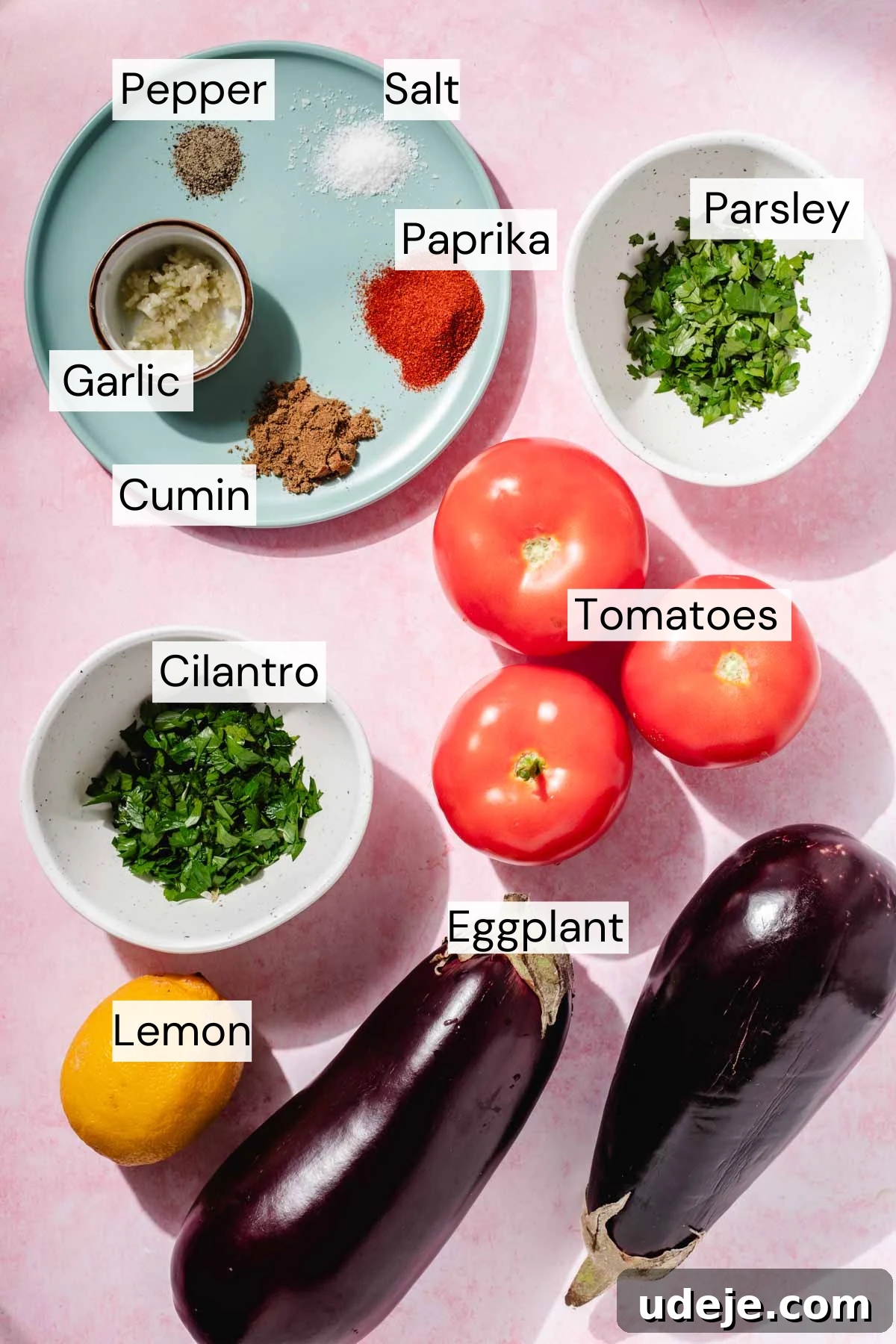
- Eggplant: The star of our show! For Zaalouk, a globe eggplant (also known as American or Western eggplant) is typically the best choice. These varieties boast a substantial amount of tender flesh and generally fewer seeds compared to other types. When selecting, opt for smaller globe eggplants, as they tend to be less bitter and contain even fewer seeds, ensuring a smoother, more palatable texture for your dip. Look for firm, shiny eggplants that feel heavy for their size.
To Peel or Not to Peel? A Matter of Preference: The decision to peel your eggplant for Zaalouk is entirely up to your personal preference. Some cooks prefer a completely smooth dip, opting to remove all the skin. Others enjoy the slight textural contrast and added nutrients that the skin provides. My preferred method is a “zebra pattern” peel, where I remove alternating strips of skin. This technique allows some of the skin to remain, adding a rustic touch and a subtle chewiness, without making the Zaalouk too fibrous. Feel free to experiment and find what you like best!
- Tomato: Fresh, ripe tomatoes are crucial for Zaalouk, providing sweetness, acidity, and a luscious base. I’ve found that grating the tomatoes is the most effective way to incorporate them. This method quickly breaks them down into a saucy consistency while preserving their fresh flavor, allowing them to meld seamlessly with the mashed eggplant. To further enhance the tomato flavor and add a touch of richness, especially if your fresh tomatoes aren’t as intensely flavored, a small amount of tomato paste works wonders, concentrating the umami notes.
- Garlic: A classic companion to eggplant, garlic is indispensable in Zaalouk. It introduces a pungent, aromatic depth that perfectly complements the earthy eggplant without overwhelming the dish. Freshly crushed garlic is always recommended for the most potent and vibrant flavor.
- Spices: The soul of Moroccan cuisine lies in its masterful blend of spices. For Zaalouk, a simple yet powerful quartet creates that quintessential Moroccan warmth:
- Salt: Essential for seasoning and bringing out all the other flavors.
- Black Pepper: Adds a gentle heat and aromatic complexity.
- Paprika: Provides a mild, sweet warmth and a beautiful reddish hue. You can use sweet paprika or, for a smoky twist, opt for smoked paprika.
- Cumin: The backbone of many Moroccan dishes, cumin lends its distinctive earthy, slightly bitter, and warm notes, tying all the flavors together.
- Lemon and Herbs: These fresh additions are critical for brightening and lifting the entire dish just before serving.
- Lemon: A generous squeeze of fresh lemon juice adds a zesty acidity that cuts through the richness of the eggplant and spices, providing a refreshing finish.
- Cilantro and Parsley: This dynamic duo of fresh herbs is a hallmark of Moroccan cooking. Finely chopped, they contribute a vibrant freshness, herbaceous aroma, and a beautiful green garnish that completes the Zaalouk.
Crafting Perfect Zaalouk: A Step-by-Step Guide
Creating this delightful Moroccan eggplant salad is a straightforward and rewarding process. Follow these detailed steps to bring the authentic flavors of Zaalouk into your kitchen:
Instructions
-
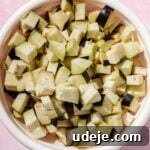
 Prepare the Eggplant: Start by washing your globe eggplant thoroughly. Using a vegetable peeler, carefully peel the eggplant in a “zebra pattern” – removing every other strip of the peel. This leaves some skin for texture and visual appeal. Once peeled, cut the eggplant into roughly 1-inch cubes. This size is ideal as it allows the eggplant to cook down quickly and evenly, ensuring a tender and mashable consistency.
 -
Grate the Tomatoes: Take your fresh, ripe tomatoes and slice them in half. Using the large holes of a box grater, grate the tomato halves directly into a bowl. Hold the tomato by its skin side and grate until only the skin remains in your hand; discard the skin. This method yields a wonderfully pulpy, saucy tomato base that incorporates perfectly into the eggplant. Set the grated tomatoes aside.
-
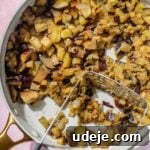
Sauté the Eggplant: In a large, heavy-bottomed sauté pan or Dutch oven, heat the olive oil over medium heat. Once shimmering, add the cubed eggplant. Stir the eggplant cubes to ensure they are coated in the oil. Cover the pan and allow the eggplant to cook, stirring occasionally, for approximately 20 minutes. During this time, the eggplant will soften completely, turning tender and translucent. This crucial step is key to developing its rich flavor and achieving the desired mashable consistency.
-
Mash the Eggplant: Once the eggplant is thoroughly softened, remove the lid. Using a wooden spoon or a potato masher, begin to mash the eggplant directly in the pan. The goal is a rustic, slightly chunky consistency – it’s perfectly fine to leave some smaller pieces intact for added texture, contributing to the “cooked salad” feel of Zaalouk.
-
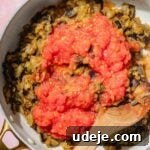
Infuse with Flavors: Now, it’s time to add the heart of Zaalouk’s flavor. Stir in the grated tomatoes along with the tomato paste, paprika, cumin, kosher salt, black pepper, and crushed garlic. Mix all the ingredients thoroughly until well combined. Continue to cook the mixture over medium heat for approximately 5 to 10 minutes, stirring frequently. This step allows the tomatoes to cook down, reduce, and concentrate their flavors, while the spices bloom and meld into the eggplant, creating a deeply aromatic and cohesive dish.
-
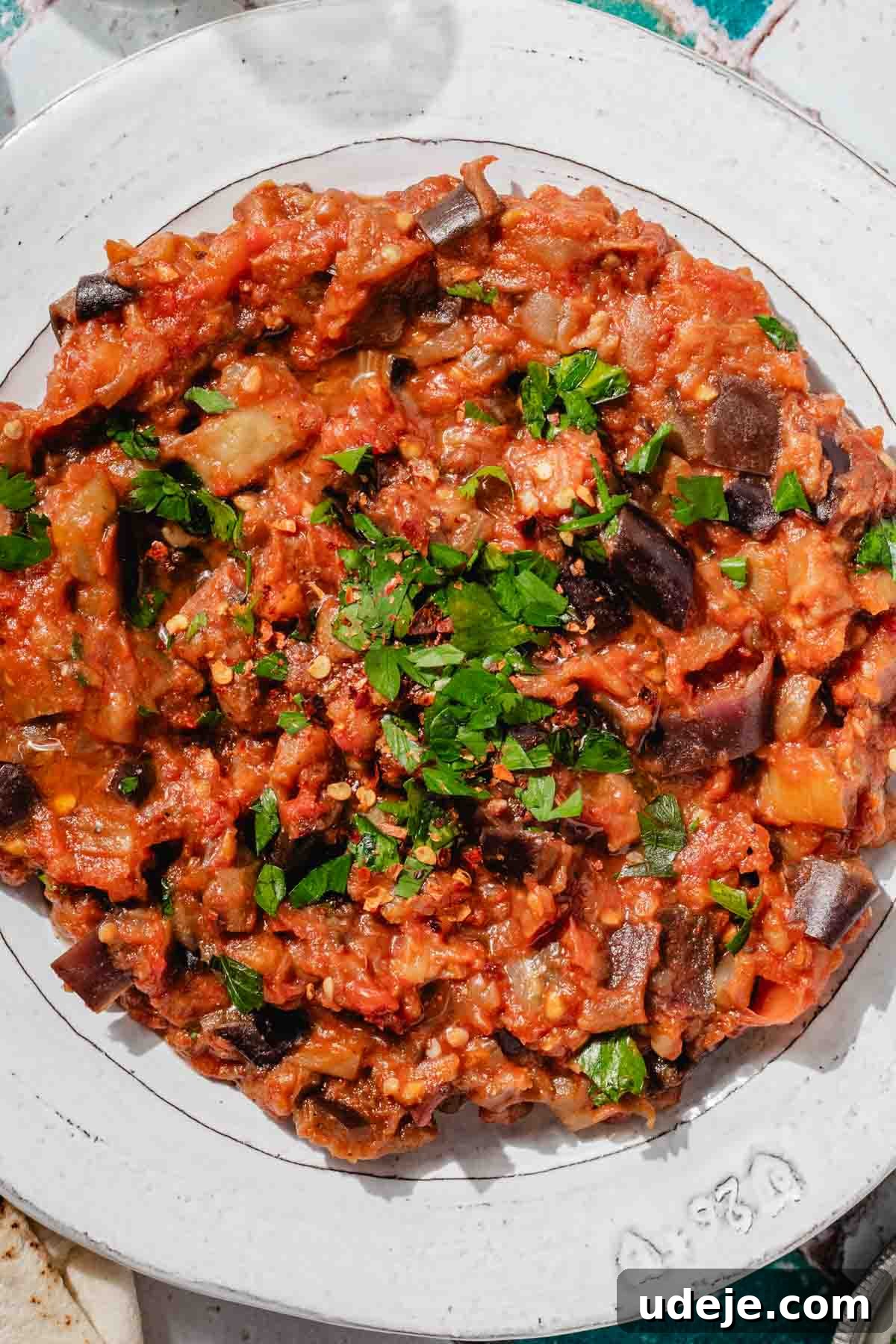
Finishing Touches: To complete your Zaalouk, remove the pan from the heat. Pour in the fresh lemon juice and generously sprinkle with the chopped cilantro and parsley. Toss everything together gently to combine. Taste the Zaalouk and adjust the seasoning as needed, adding more lemon juice for brightness or salt for balance, according to your preference. An optional drizzle of high-quality extra virgin olive oil just before serving adds a luxurious sheen and enhances the overall flavor.
-
Serve: Your Moroccan Zaalouk is now ready to be enjoyed! It’s wonderfully versatile and can be served warm straight from the pan, at comfortable room temperature, or even chilled like a traditional cold salad.



Delightful Ways to Serve Moroccan Zaalouk
Zaalouk’s incredible versatility means there are countless ways to enjoy this flavorful Moroccan eggplant dish. Its rich, savory profile and delightful texture make it a fantastic addition to almost any meal. Here are some inspiring ideas to get you started:
- Temperature Versatility: Zaalouk is truly adaptable. Enjoy it immediately while still warm and comforting, allow it to cool to room temperature for a more traditional “cooked salad” experience, or even chill it in the refrigerator. If serving cold, allow the flavors to meld overnight for an even deeper, more complex taste – it will last beautifully for up to 5 days in an airtight container.
- Classic Mezze Platter: Transform your table into a Moroccan feast by serving Zaalouk as part of a vibrant mezze platter. Arrange it alongside other popular dips and spreads like hummus, baba ghanoush, muhammara, and a selection of olives and pickled vegetables. Serve with plenty of warm pita bread, crusty baguette, or traditional Moroccan khobz for scooping.
- Accompaniment to Main Dishes: Zaalouk makes an exceptional side dish for a variety of main courses. Its robust flavor pairs wonderfully with grilled meats such as chicken skewers, lamb kabobs, or any roasted poultry. It’s an absolute dream alongside Moroccan baked chicken, where its earthy notes beautifully complement the poultry’s tender texture. For a vegetarian meal, serve it with couscous, rice pilaf, or alongside grilled halloumi.
- Elevated Sandwich Spread: Take your ordinary sandwich or wrap to extraordinary heights! Spread a generous layer of Zaalouk between your favorite bread slices, or use it as a base for a wrap. It adds an incredible depth of flavor and moisture, turning a simple meal into a gourmet experience. Pair it with grilled vegetables, feta cheese, or leftover roasted chicken for a truly satisfying lunch.
- A Healthy Base for Bowls: Use Zaalouk as the flavorful foundation for a Mediterranean or Moroccan-inspired grain bowl. Combine it with quinoa, farro, or brown rice, then top with fresh vegetables, chickpeas, a drizzle of tahini, and a sprinkle of nuts for a wholesome and delicious meal.
- Breakfast or Brunch Enhancement: Don’t limit Zaalouk to lunch or dinner! Serve it with scrambled eggs, alongside shakshuka, or as a flavorful spread on toast instead of avocado. It offers a unique and savory twist to your morning routine.
Other Eggplant Recipes You Will Love
If you tried these recipes, please consider leaving a star rating in the recipe card below and/or a review in the comments section further down the page – I’d love to hear from you! You can also hop on over to Instagram and say hello!
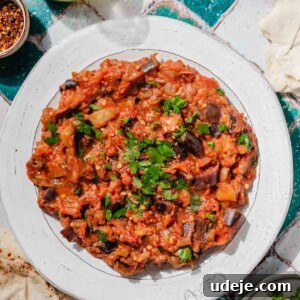
30-Min Zaalouk (Moroccan Eggplant Salad)
Pin Recipe
Ingredients
- 1 globe eggplant (approx. 450g), peeled in a zebra pattern and cut into 1 inch cubes
- 3 tablespoons olive oil
- 3 large tomatoes, grated
- 2 tablespoons tomato paste
- 3 cloves garlic, crushed
- 1 1/2 teaspoon paprika
- 1 teaspoon cumin
- 1 teaspoon kosher salt
- 1/4 teaspoon black pepper, more per preference
- 1/2 lemon, juiced, more per preference
- 1/4 cup parsley, chopped
- 1/4 cup cilantro, chopped
Notes
- Traditionally, eggplant for Zaalouk is boiled. However, cooking it down in a single pan offers richer flavor and simplifies the process.
- For an enhanced smoky flavor, you can roast the eggplant in the oven or over an open flame before adding it to the pan. Alternatively, swap regular paprika for smoked paprika.
- Zaalouk’s flavors deepen over time, making it an excellent dish for meal preparation. Feel free to make it ahead and refrigerate.