
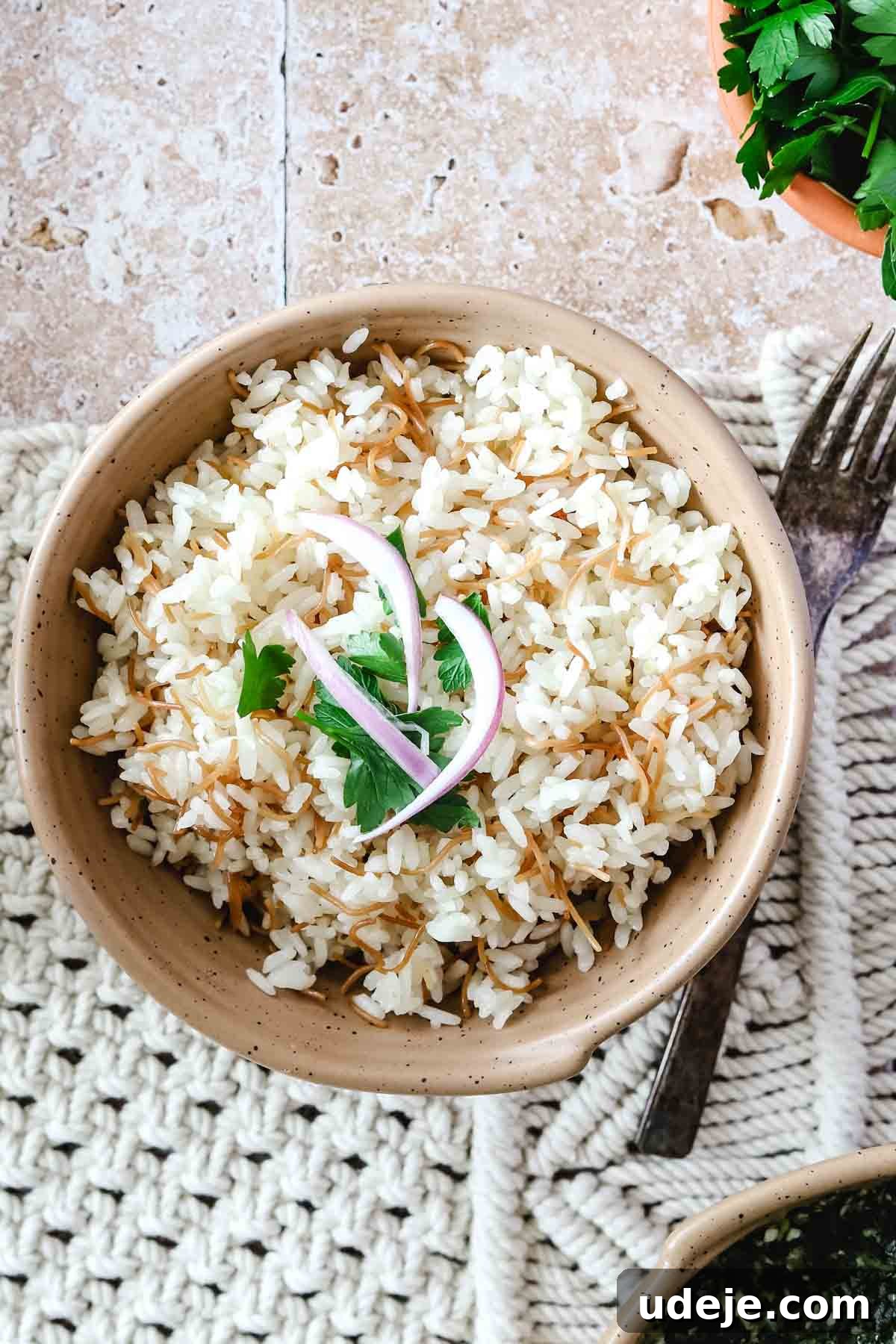
Embark on a culinary journey to the heart of the Middle East with a dish that stands as a testament to simplicity and flavor: Egyptian Rice. Known affectionately as “Roz Masri” in Arabic, this classic medium-grain rice preparation is more than just a side dish; it’s a foundational element of Egyptian and wider Middle Eastern cuisine. If you’ve ever struggled to achieve perfectly fluffy, non-sticky rice, especially with medium-grain varieties, then this comprehensive guide is tailored just for you. We’ll delve into the secrets of crafting a deeply flavorful, aromatic rice dish, infused with golden vermicelli noodles, luxurious fats, and savory broth. Get ready to elevate your rice-cooking skills and bring an authentic taste of Egypt to your table.
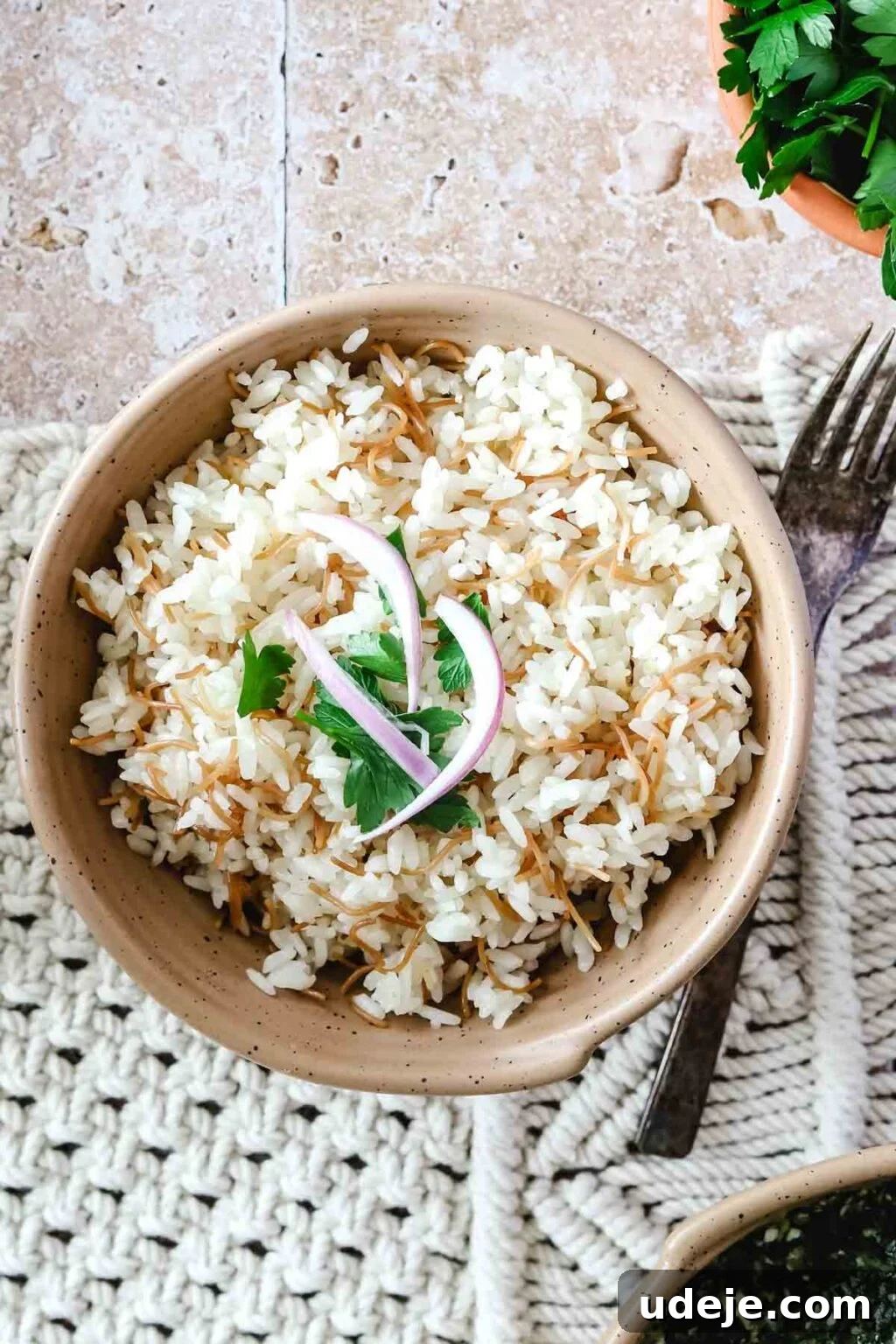
What Exactly is Egyptian Rice? Unveiling the Heart of Middle Eastern Cuisine
At its core, Egyptian rice, or “Roz Masri,” is a distinctive medium-grain rice variety that serves as a staple across Egypt and the broader Middle East. Unlike many Western rice preparations, authentic Egyptian rice isn’t merely boiled. It’s transformed through a unique cooking method that incorporates toasted vermicelli noodles, generous amounts of fat (such as butter or ghee), and flavorful broth. This combination yields a side dish that is rich, aromatic, and incredibly satisfying, a far cry from bland, sticky rice often encountered.
Culturally, Egyptian rice is much more than a simple carbohydrate. It forms the backbone of countless traditional meals, acting as the perfect canvas for robust, savory stews. Imagine tender molokhia, hearty okra stew (Bamya), or comforting white bean fasolia, all served atop a bed of warm, fluffy Egyptian rice. Its ability to absorb and complement the complex flavors of these stews makes it an indispensable part of daily dining and celebratory feasts alike.
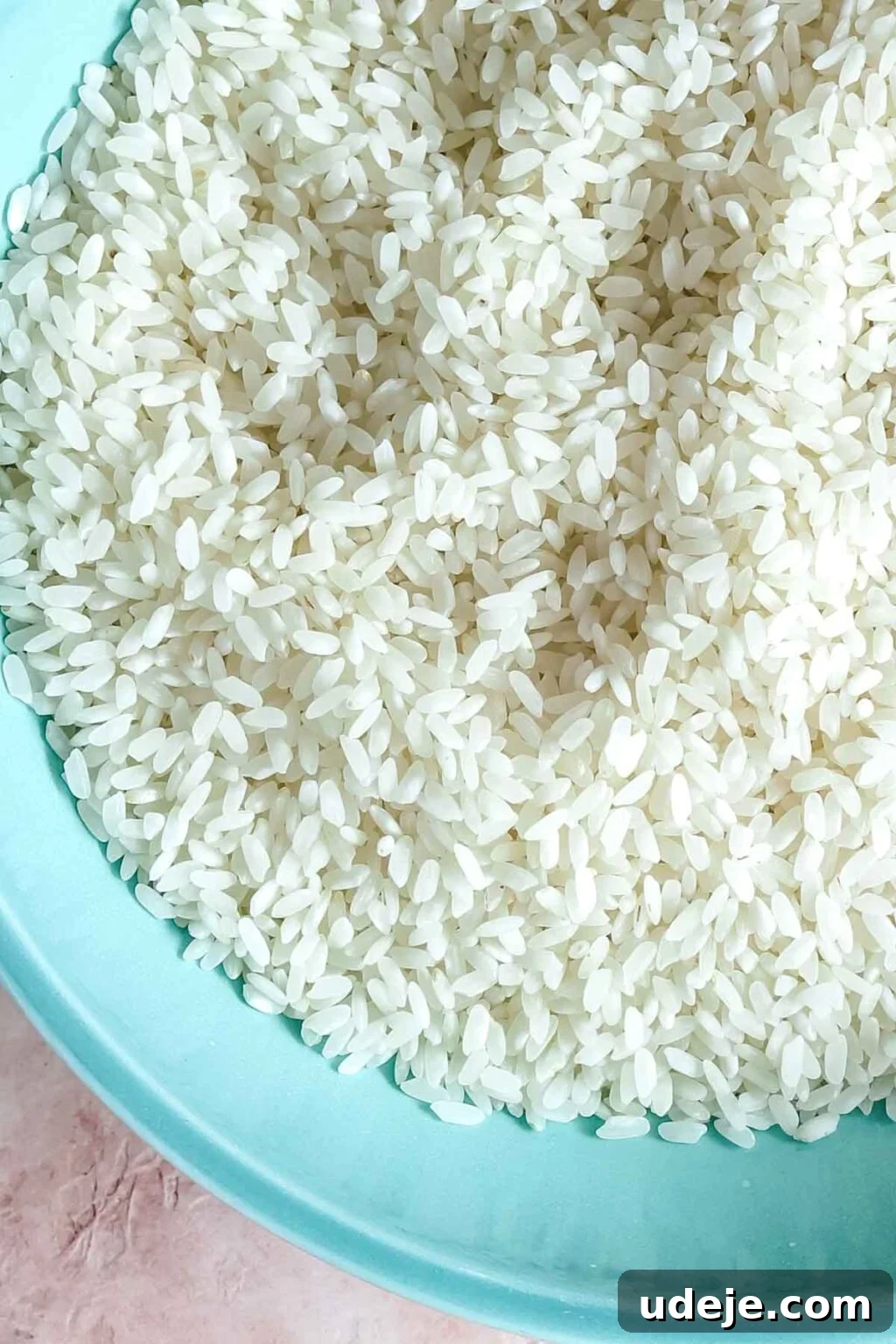
The choice of medium-grain rice is paramount to achieving the signature texture of Roz Masri. This variety of rice cooks differently from its long-grain counterparts, such as Basmati. Medium-grain rice possesses a higher starch content, which, if not handled correctly, can lead to a mushy result. However, when prepared with the traditional Egyptian method – involving precise water ratios, a crucial soaking step, and the inclusion of fat – it transforms into beautifully separate, yet tender and slightly chewy grains. This delicate balance is what gives Egyptian rice its beloved texture and sets it apart from other global rice dishes.
Furthermore, the liberal use of fat, whether it’s butter, ghee, or a high-quality vegetable oil, plays a dual role. Firstly, it infuses the rice with a profound depth of flavor, making each spoonful a delight. Secondly, and perhaps more importantly, the fat helps to coat the individual rice grains, preventing them from sticking together during cooking and contributing significantly to that desired fluffy, separate texture. The use of chicken or vegetable broth instead of plain water also dramatically enhances the overall savoriness, adding layers of umami that plain water simply cannot provide. This flavorful medium-grain rice also forms the foundation for other iconic Egyptian dishes, most notably Egyptian Koshari, a layered dish featuring lentils, pasta, and chickpeas.
While long-grain Basmati rice might be more common in other parts of the Middle East, the authentic Egyptian experience truly hinges on medium-grain rice. If your preference leans towards Basmati, you might enjoy exploring alternative recipes like this Arabic rice with vermicelli, specifically designed for long-grain varieties. However, for a truly traditional and incomparable Roz Masri, embracing the medium-grain is key.
The Essential Twist: Middle Eastern Vermicelli Noodles
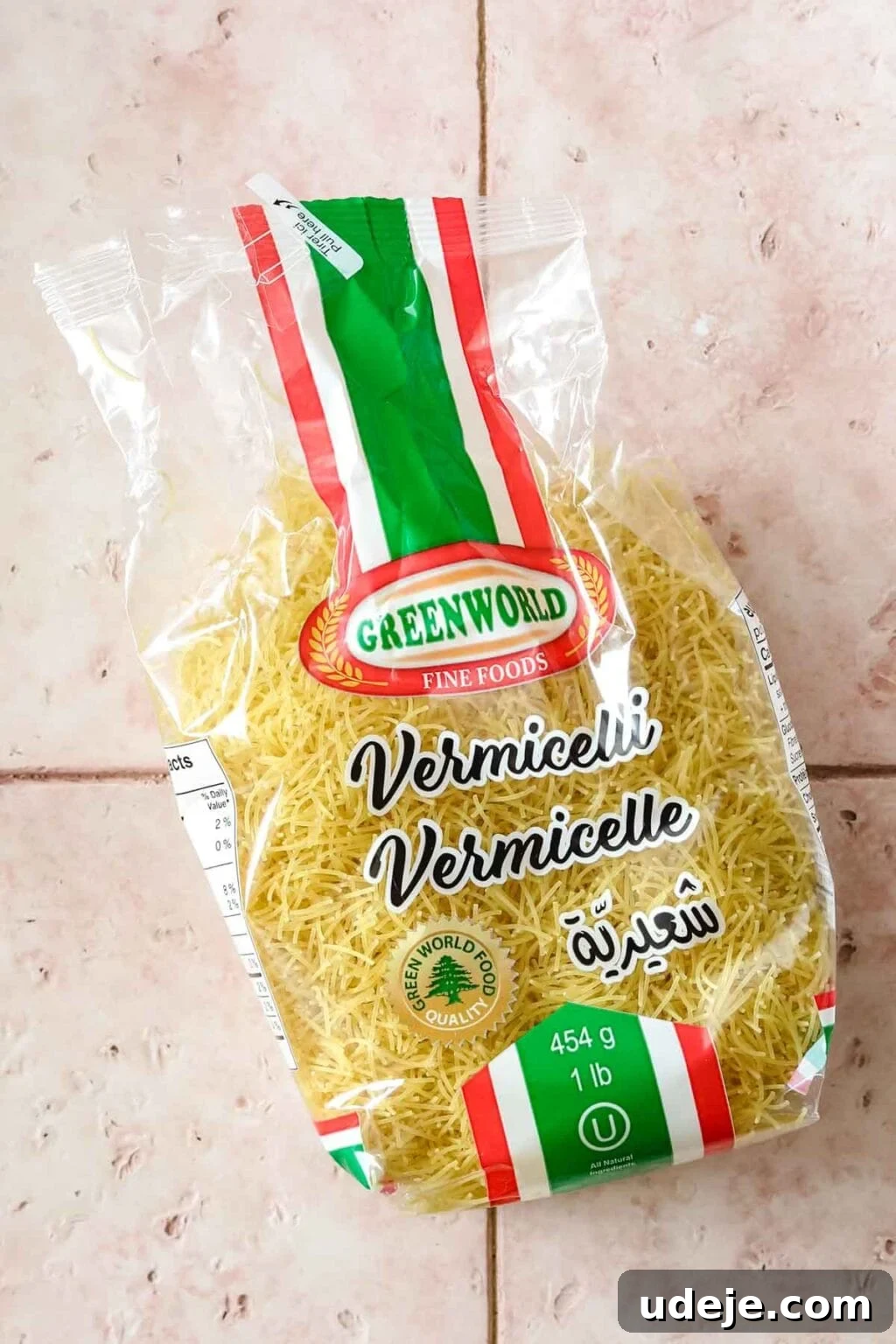
No discussion of authentic Egyptian rice would be complete without highlighting the indispensable role of vermicelli noodles. These aren’t just any noodles; they are a defining characteristic that gives Roz Masri its unique texture, visual appeal, and a subtle nutty flavor. However, it’s crucial to understand the distinction when sourcing them. In many Western markets, the term “vermicelli noodles” often refers to thin rice noodles, commonly used in Southeast Asian cuisine. For Egyptian rice, this is the incorrect type.
The vermicelli used in Middle Eastern cooking, as illustrated in the images, consists of very fine wheat-based pasta noodles. These are typically sold in packages, already broken into short, approximately half-inch pieces, making them convenient for quick toasting. When cooked, these golden pieces of pasta mingle with the white rice grains, creating an appealing contrast and adding a delightful, slightly chewy element to the dish. If you find yourself unable to locate these specific Middle Eastern vermicelli noodles, don’t despair! A readily available substitute is fine pasta like angel hair. Simply break the angel hair pasta into small, similar-sized pieces before proceeding with the recipe. This ensures you achieve a texture and appearance that closely mimics the traditional dish. The toasting process is key here; it transforms the pale noodles into a rich, golden brown, unlocking a depth of flavor that is essential to the final taste of the Egyptian rice.
Gather Your Essentials: Ingredients for Perfect Egyptian Rice
Crafting authentic Egyptian rice relies on a few straightforward ingredients, but the magic truly lies in understanding their roles and precise quantities. Each component contributes to the final fluffy, flavorful, and perfectly textured outcome. Here’s what you’ll need:
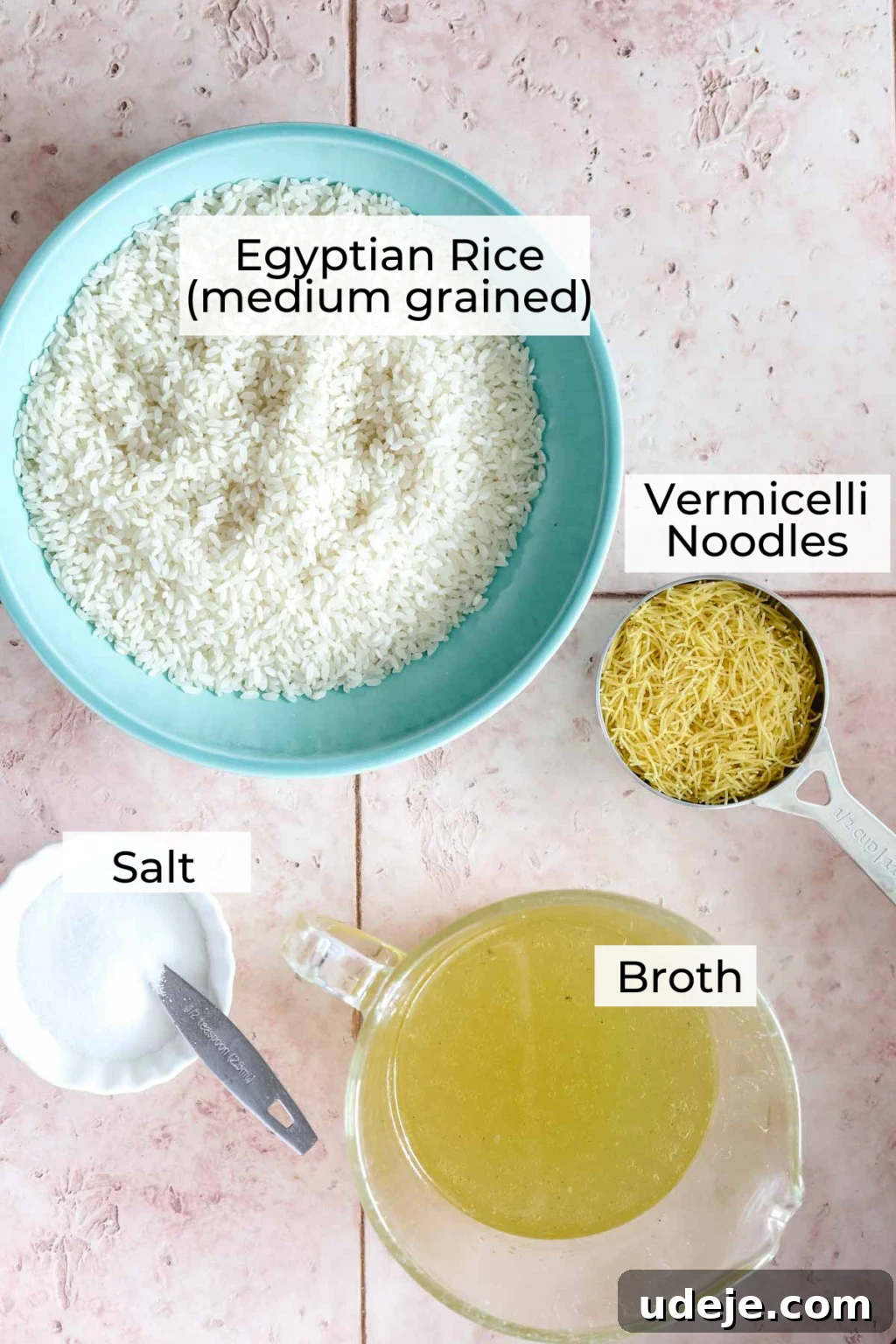
- Medium Grain Egyptian Rice: This is the star of our dish. Look for “Egyptian rice” specifically at Middle Eastern grocery stores. If unavailable, Calrose rice is an excellent and widely accessible substitute, often found in most supermarkets. The key is to select a medium-grain variety, as short-grain rice tends to become overly sticky and mushy, failing to deliver the desired fluffy texture.
- Vermicelli Noodles: As previously discussed, these are fine, wheat-based pasta noodles, typically pre-broken into small pieces. You can find them in the international aisle of larger supermarkets or, more reliably, at Middle Eastern specialty stores. If you’re struggling to find them, angel hair pasta, broken into half-inch pieces, makes a perfectly acceptable alternative. Avoid rice vermicelli.
- Vegetable Oil or Ghee: Fat is crucial for both flavor and preventing the rice grains from sticking together. While traditional recipes often call for clarified butter (ghee) for its rich, nutty aroma, high-quality vegetable oils like avocado oil are also excellent choices, offering a lighter flavor profile while still performing the essential function of coating the grains. You can also use unsalted butter for an even richer taste.
- Chicken Broth: This ingredient is vital for infusing the rice with deep, savory flavor. The broth adds a complexity that plain water simply cannot replicate. For a vegetarian version, a good quality vegetable broth works beautifully. If you don’t have access to broth, water can be used, but be aware that the final dish will be less flavorful. Adjust salt accordingly if using water.
- Salt: Proper seasoning is paramount for delicious rice. You’ll add salt to the broth mixture, and it’s important to taste and adjust before simmering. A well-seasoned broth ensures every grain of rice absorbs flavor as it cooks.
Mastering the Art: How to Make Fluffy Egyptian Rice, Step by Step
Achieving perfect, fluffy Egyptian rice is a remarkably simple process that typically takes about an hour from start to finish. Following these steps carefully will ensure a delicious and satisfying result every time.
Step 1: Rinse and Soak the Rice (The Secret to Fluffiness)
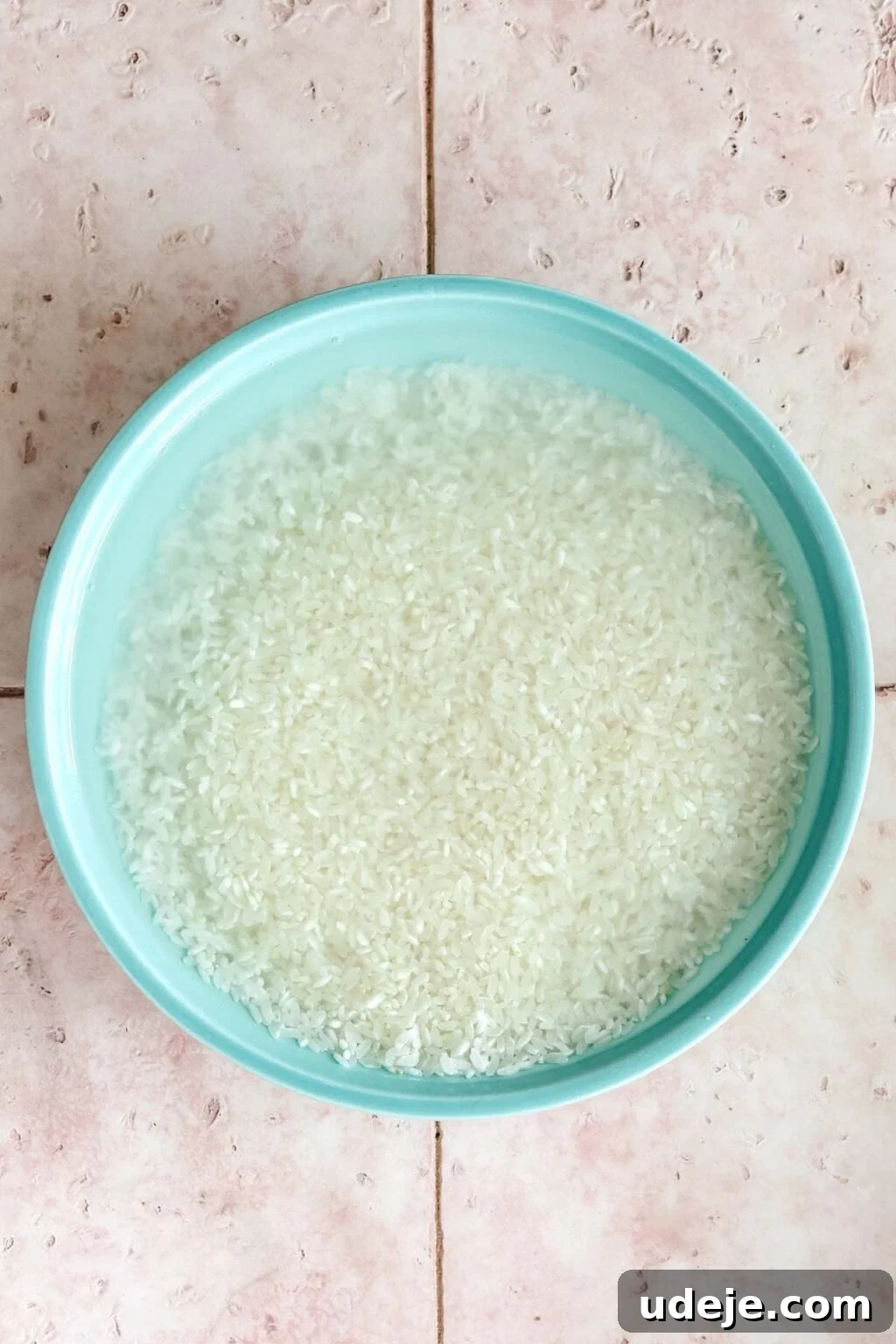
Begin by placing your medium-grain Egyptian rice (or Calrose rice) in a large bowl. Rinse the rice thoroughly under cold running water, swirling it with your hand, until the water poured off runs clear. This crucial step removes excess starch from the surface of the grains, which is key to preventing stickiness. After rinsing, cover the rice with fresh water and let it soak for 30 minutes.
I’ve rigorously tested this recipe with various soaking times – no soak, a 15-minute soak, and a 30-minute soak. The 30-minute soak consistently yields the best results for extra fluffy, perfectly cooked grains. Do not skip this essential step! Soaking medium-grain rice ensures that the grains absorb water evenly, allowing them to cook to the correct softness without becoming mushy or breaking apart. It’s the cornerstone of achieving that coveted fluffy texture.
Step 2: Toast the Vermicelli to Golden Perfection
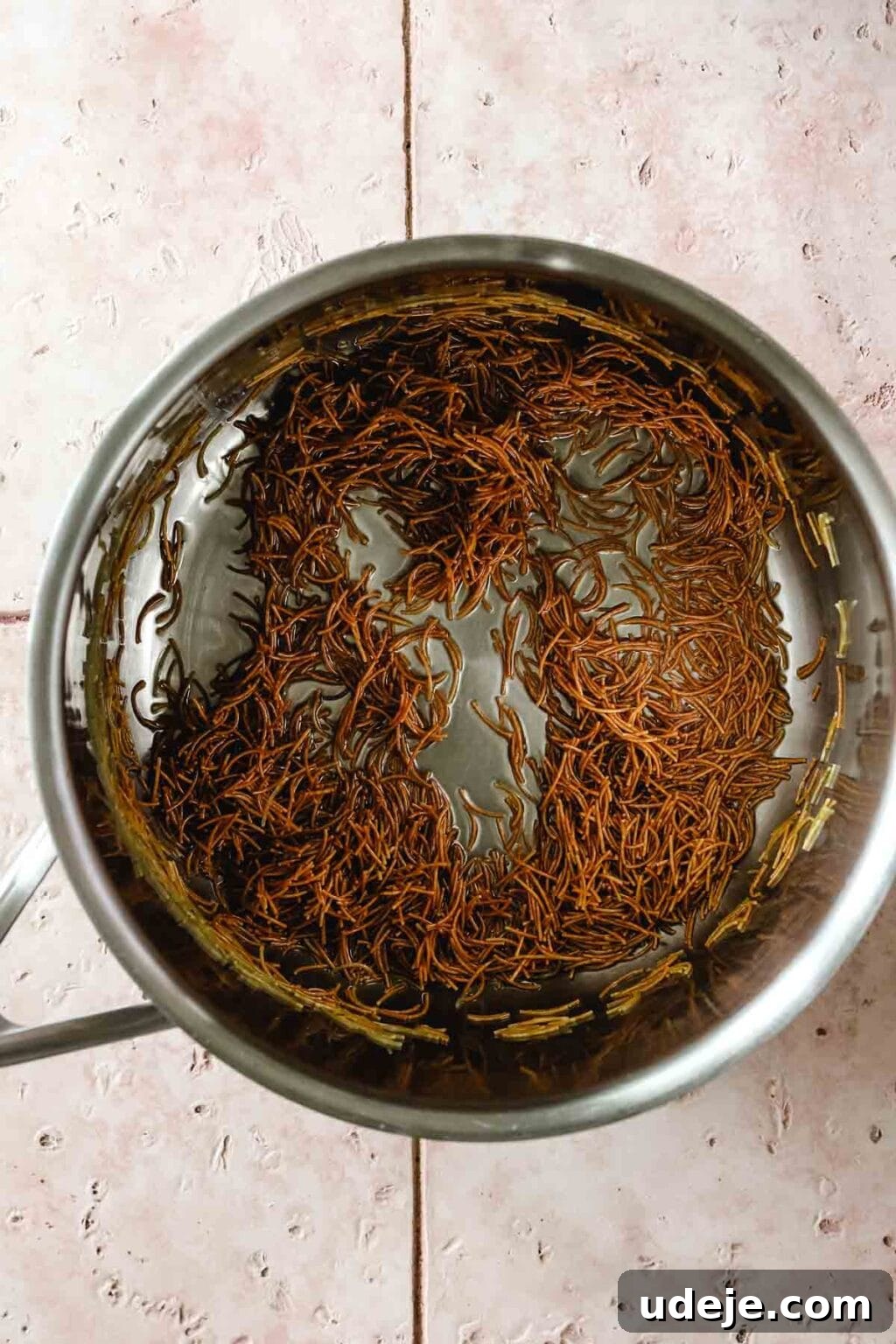
Once the rice has soaked for 30 minutes, it’s time to begin cooking. Heat the vegetable oil or ghee in a heavy-bottomed rice pot or a non-stick saucepan over medium heat. Once the fat is shimmering, add the vermicelli noodles to the pot.
Stir the vermicelli continuously with a wooden spoon or spatula. This step is vital for even browning and to prevent burning. Keep stirring for about 4-5 minutes, or until the noodles turn a beautiful, rich golden brown. Be vigilant, as vermicelli can go from perfectly toasted to burnt very quickly due to its delicate nature. A golden brown color indicates optimal flavor development, adding a lovely nutty dimension to the finished rice.
Step 3: Toast the Rice Gently
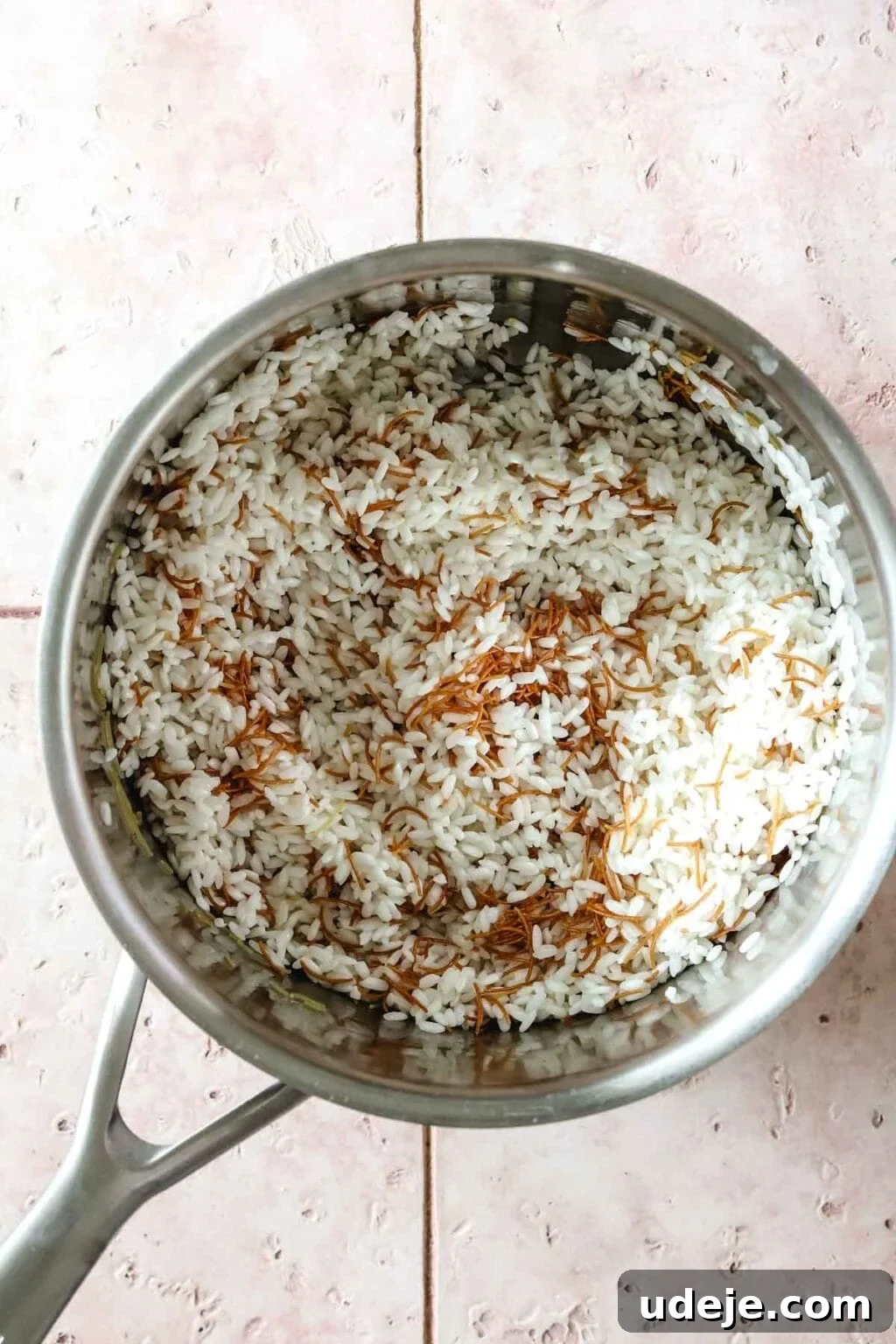
After the vermicelli has achieved its golden hue, drain the soaked rice thoroughly. Add the drained rice to the pot with the toasted vermicelli. Gently stir the rice and noodles together for another few minutes. This light toasting step allows the rice grains to become slightly translucent and helps to coat them with the fat, further preventing stickiness and enhancing flavor. It also creates a barrier that helps each grain cook individually. Handle the rice gently to avoid breaking the delicate soaked grains.
Step 4: Add Broth and Seasoning, Then Bring to a Boil
Pour in the chicken or vegetable broth and add the salt to the pot. Stir gently to combine all the ingredients. Increase the heat to medium-high and bring the mixture to a rolling boil.
Before covering, it’s highly recommended to taste the broth. It should taste distinctly salty – almost slightly oversalted – at this stage. This is because the rice grains will absorb much of the salt as they cook, resulting in perfectly seasoned rice. If it doesn’t taste salty enough, add a little more salt now to ensure your final dish is well-flavored.
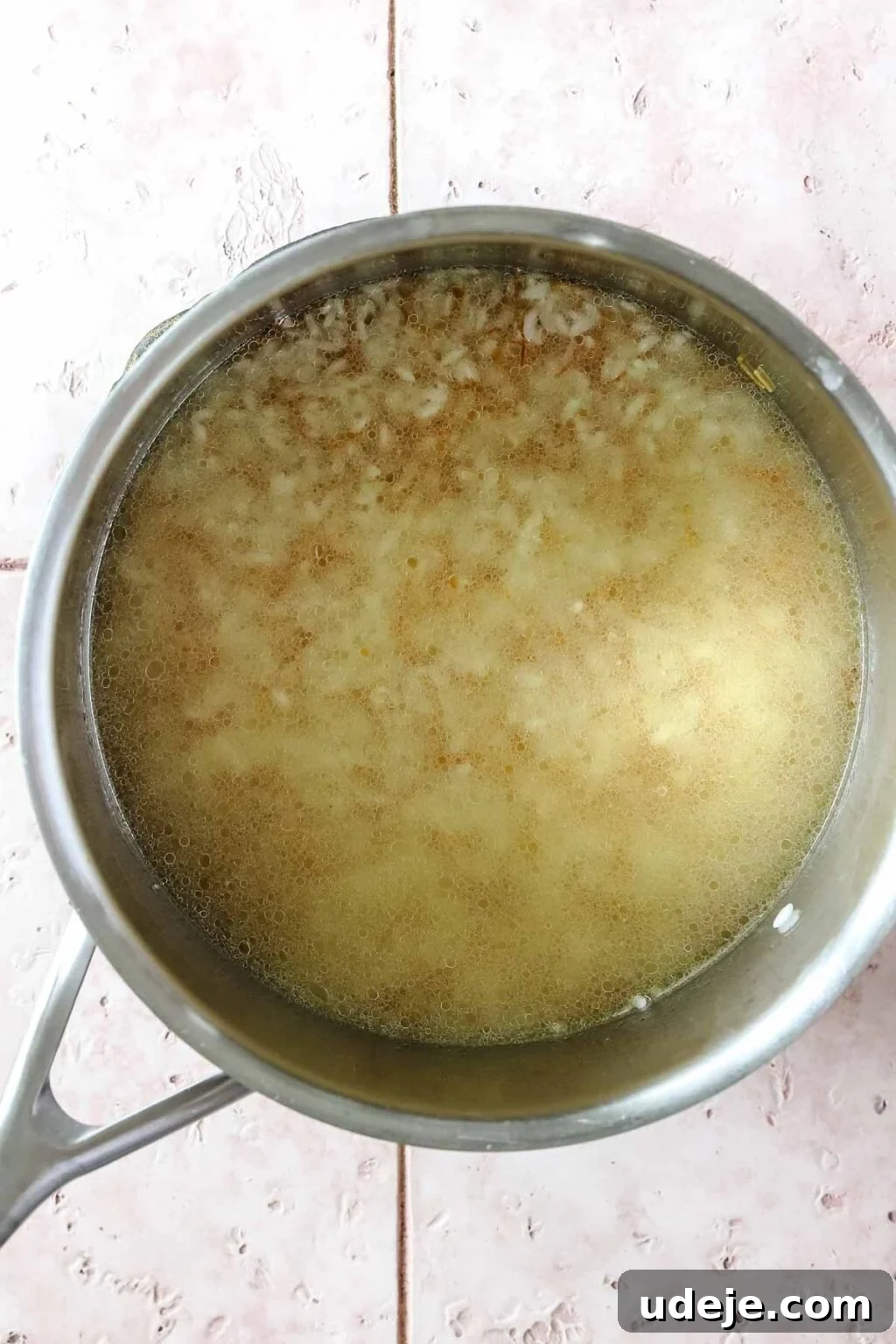
Step 5: Simmer to Perfection
Once the rice mixture is at a vigorous boil, reduce the heat to its lowest setting. Cover the pot with a tight-fitting lid. For an extra fluffy result, some cooks place a paper towel between the pot and the lid to absorb excess steam, but a good tight-fitting lid is often sufficient. Cook the rice undisturbed for 20 minutes. It is crucial not to lift the lid during this time, as escaping steam will disrupt the cooking process.
Step 6: Rest and Fluff Before Serving
After 20 minutes, turn off the heat completely. Keep the lid on and allow the rice to rest for an additional 10 minutes. This resting period is essential; it allows the remaining steam to redistribute evenly, ensuring all grains are fully cooked and firm up to their ideal texture. Finally, remove the lid, gently fluff the rice with a fork to separate the grains, and serve immediately.
Troubleshooting Common Rice Cooking Challenges
Even with the best recipes, rice can sometimes be a bit temperamental. Don’t worry if your first attempt isn’t absolutely perfect! Here’s how to address some common issues you might encounter:
- My rice is undercooked: If, after the initial cooking and resting time, you taste the rice and the grains still feel a bit firm or crunchy in the center, it simply needs more time to steam. To fix this, sprinkle approximately 1/2 cup of hot water evenly over the rice. Quickly cover the pot with its tight-fitting lid and allow it to steam on very low heat for an additional 10 minutes. Check again and repeat if necessary, adding small amounts of water as needed, until the rice is tender.
- My rice is too mushy: This is usually a result of either soaking the rice for too long (beyond the recommended 30 minutes) or, more commonly, using too much water. Unfortunately, mushy rice is difficult to fully recover to a perfectly fluffy state. While you can sometimes spread it out on a baking sheet to dry it slightly in a low oven, the best solution is to learn from the experience. For your next batch, ensure you measure ingredients precisely and adhere strictly to the soaking time.
- My rice is under-seasoned: If your cooked rice tastes bland, it means you didn’t add enough salt to the broth mixture initially. To rectify this, heat 1/2 cup of water until boiling, then dissolve a generous pinch of salt into it. Gently splash this salty hot water over your rice in the pot. Stir very carefully to distribute, then cover with the lid and steam on low heat for another 10 minutes. This method often helps to infuse some much-needed flavor. For future cooking, remember to taste the broth before simmering and ensure it tastes adequately salty.
- My rice has a burnt bottom: This often happens if the heat was too high during the simmering phase or if the pot wasn’t heavy-bottomed enough. While you can’t un-burn the bottom, carefully scoop out the top, unburnt layers of rice, avoiding the scorched parts. In the future, ensure your heat is truly on the lowest setting and consider using a diffuser if your stove runs hot.
- My rice is too sticky (not mushy, but clumping): If the rice isn’t mushy but still clumps together, it might be due to insufficient rinsing of the starch, or not enough fat added at the beginning, or perhaps you stirred it too much during simmering. Ensure you rinse until the water is crystal clear and don’t skimp on the oil or ghee. Resist the urge to lift the lid or stir once the rice is simmering.
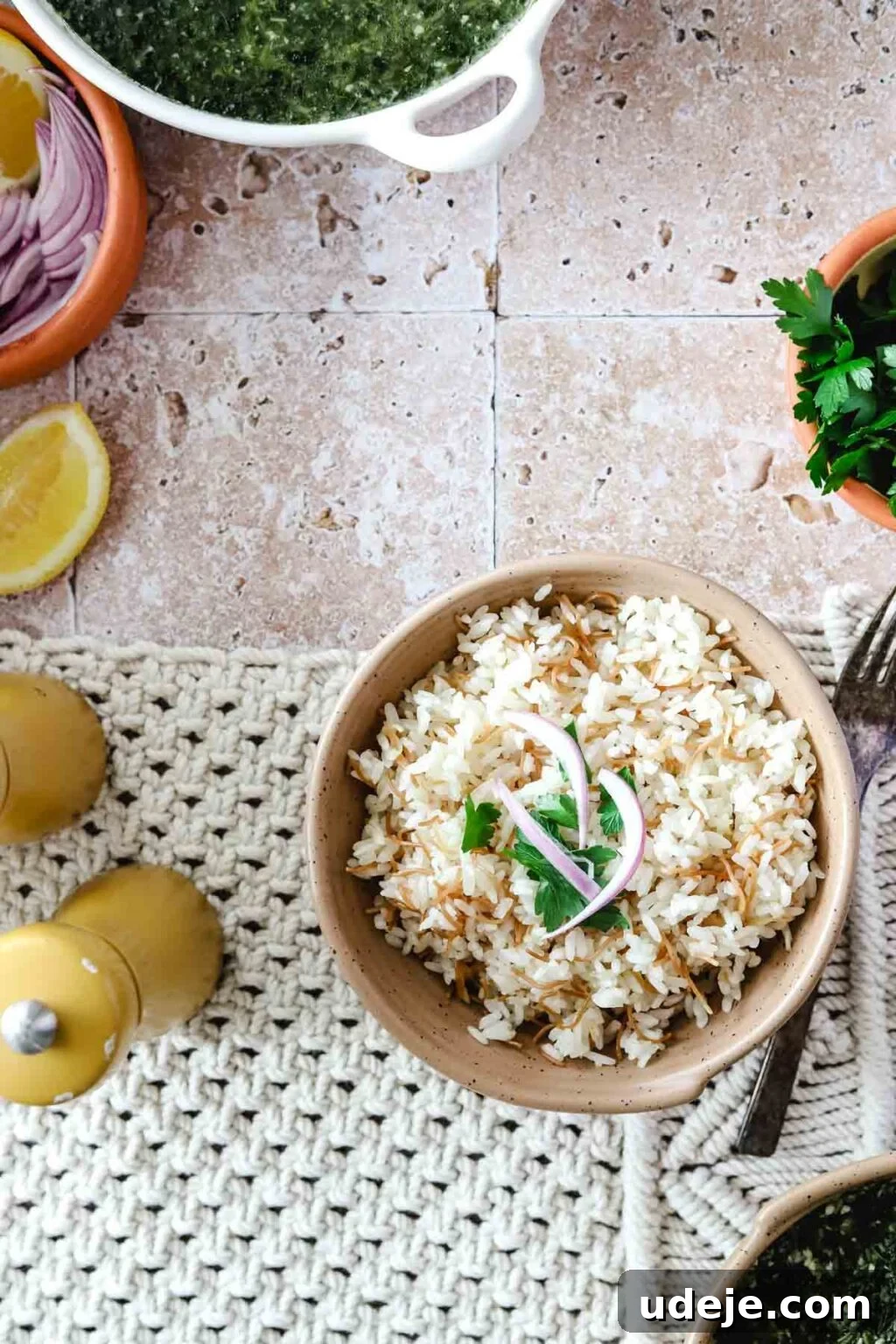
Perfect Pairings: What to Serve with Egyptian Rice
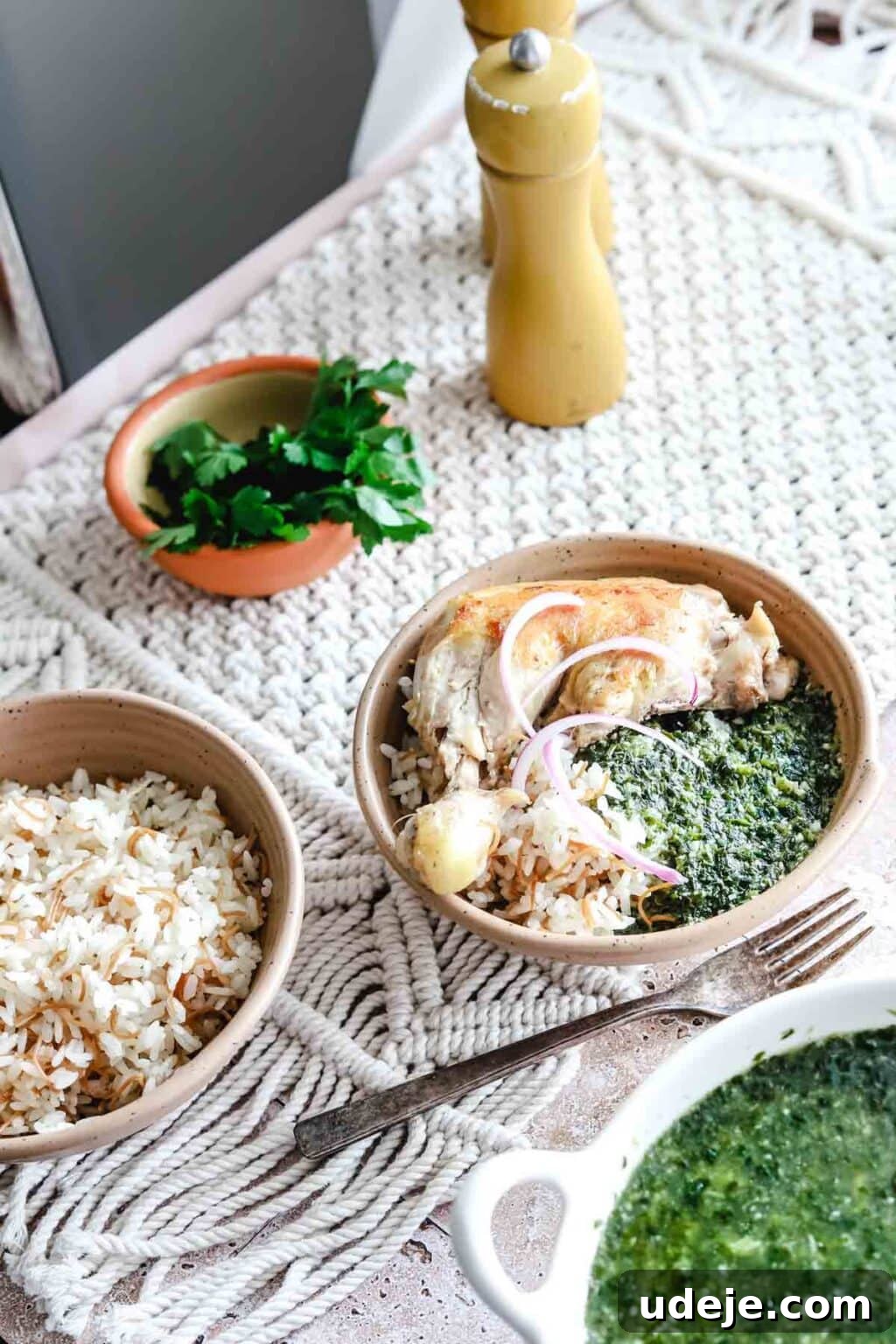
Egyptian rice is incredibly versatile, making it the ultimate staple side dish for an array of Middle Eastern and international meals. Its mild, savory flavor and fluffy texture allow it to beautifully complement hearty stews, rich proteins, and vibrant vegetable dishes. Here are some highly recommended pairings that will elevate your dining experience:
-
Hearty Middle Eastern Stews: This is perhaps its most traditional and beloved pairing.
- Fasolia Yabsa: A warming and satisfying white bean (or cannellini bean) stew. Its robust flavors, often featuring tomato and garlic, are perfectly absorbed by the rice, creating a comforting and complete meal.
- Okra Stew (Bamya): A classic Middle Eastern stew featuring tender okra and often lamb, slow-cooked in a tangy tomato and garlic broth. The sticky texture of okra is beautifully balanced by the fluffy rice.
- Molokhia: A signature Middle Eastern stew made from jute mallow leaves, typically cooked in a flavorful chicken broth with plenty of garlic and coriander. Its unique texture and intense herbaceous flavor are a match made in heaven with simple Egyptian rice.
-
Grilled and Roasted Meats: Egyptian rice serves as an excellent absorbent base for any protein, soaking up delicious juices and gravies.
- Chicken Shawarma: Serve your homemade chicken shawarma alongside a generous portion of Egyptian rice instead of just bread for a more substantial and satisfying meal.
- Roast Chicken or Lamb: The rice beautifully soaks up the savory drippings from roasted meats, making for an incredibly flavorful plate.
- Kofta or Kebabs: The simple, clean flavor of the rice provides a perfect counterpoint to spiced ground meat or marinated grilled skewers.
-
Vegetarian and Vegan Delights: Don’t limit Egyptian rice to meat dishes. It’s a fantastic accompaniment to many plant-based meals.
- Mediterranean Eggplant Casserole: A rich and savory baked dish featuring tender eggplant, often with tomatoes and other vegetables. The rice helps to balance the richness of the casserole.
- Lentil Soups or Dal: A bowl of spiced lentil soup or Indian-style dal can be made into a full meal with a side of fluffy Egyptian rice.
- Roasted Vegetables: A simple platter of roasted carrots, zucchini, or bell peppers drizzled with olive oil and herbs finds a wonderful partner in Egyptian rice.
-
Simple Garnishes: Enhance the presentation and flavor of your Egyptian rice with fresh garnishes.
- Fresh Herbs: A sprinkle of chopped fresh cilantro or parsley adds brightness and color.
- Toasted Nuts: A scattering of toasted slivered almonds or pine nuts can add a lovely crunch and nutty flavor.
- Crispy Onions: A garnish of fried or caramelized onions offers a delightful sweetness and texture contrast.
Other Rice Recipes You Will Love
If you tried these recipes, please consider leaving a star ★★★★★ rating in the recipe card below and/or a review in the comments section further down the page – I’d love to hear from you! You can also hop on over to Instagram and say hello!
Fluffy Egyptian Rice (Medium Grain Rice)
This Egyptian rice is a classic side dish with any Middle Eastern stew. It’s cooked with vermicelli noodles that are toasted in oil, along with chicken broth, to make a very flavorful pot of rice!
Yield: 6 servings
Prep time: 30 mins
Cook time: 25 mins
Total time: 55 mins
Author: Amina Al-Saigh
Leave a Review
Ingredients
- 2 cups Egyptian rice, medium grain (or Calrose rice)
- 1/2 cup vermicelli noodles (wheat-based pasta noodles, not rice noodles)
- 4 tablespoons vegetable oil or ghee
- 2 cups chicken or vegetable broth (substitute water for less flavor)
- 1.5 teaspoons salt
Instructions
- Rinse rice in a bowl of water until the water runs clear. Soak the rice in water for 30 minutes.
- Heat up the oil over medium heat in a non-stick rice pot.
- Add the vermicelli noodles and cook them, stirring continuously, until the noodles turn golden brown, about 4-5 minutes.
- Drain the rice and add it to the pot, continue to stir the rice in with the noodles for a few minutes.
- Add the salt and the broth and mix well a few times.
- Bring mixture to a boil before covering with a tight-fitting lid. Reduce heat to low and simmer for 20 minutes undisturbed.
- Remove lid, fluff rice with a fork, cover with a lid and let it rest 10 more minutes before serving.
Watch the video for a step-by-step guide on how to make Fluffy Egyptian Rice.
Notes
- If you can’t find Egyptian rice, use Calrose rice or any other brand of rice that is medium grain.
- I recommend using chicken or vegetable broth instead of water for more flavor.
- It’s important to soak the rice for 30 minutes. If you skip this step, the rice will not be soft enough, and cooking it longer will make it mushy.
- Make sure that you taste the broth after seasoning with salt to ensure it is visibly salty.
Nutrition Facts (estimated per serving)
- Serving: 1g
- Calories: 441 kcal
- Carbohydrates: 80g
- Protein: 6g
- Fat: 10g
- Saturated Fat: 1g
- Polyunsaturated Fat: 3g
- Monounsaturated Fat: 6g
- Trans Fat: 0.04g
- Sodium: 931mg
- Potassium: 66mg
- Fiber: 3g
- Sugar: 1g
- Vitamin A: 167 IU
- Calcium: 6mg
- Iron: 3mg
Did you make this recipe?
Please leave a star rating and review below!