

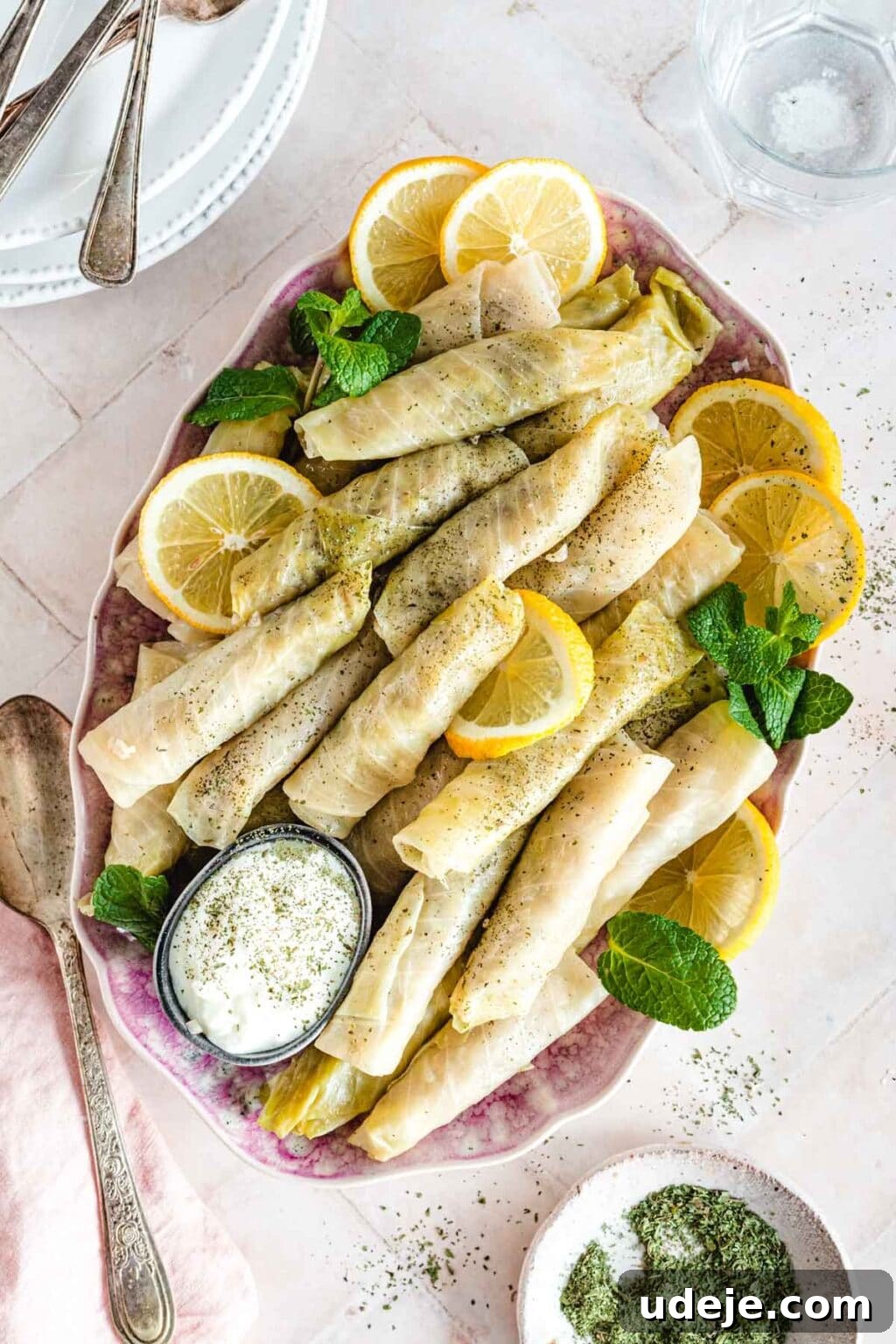
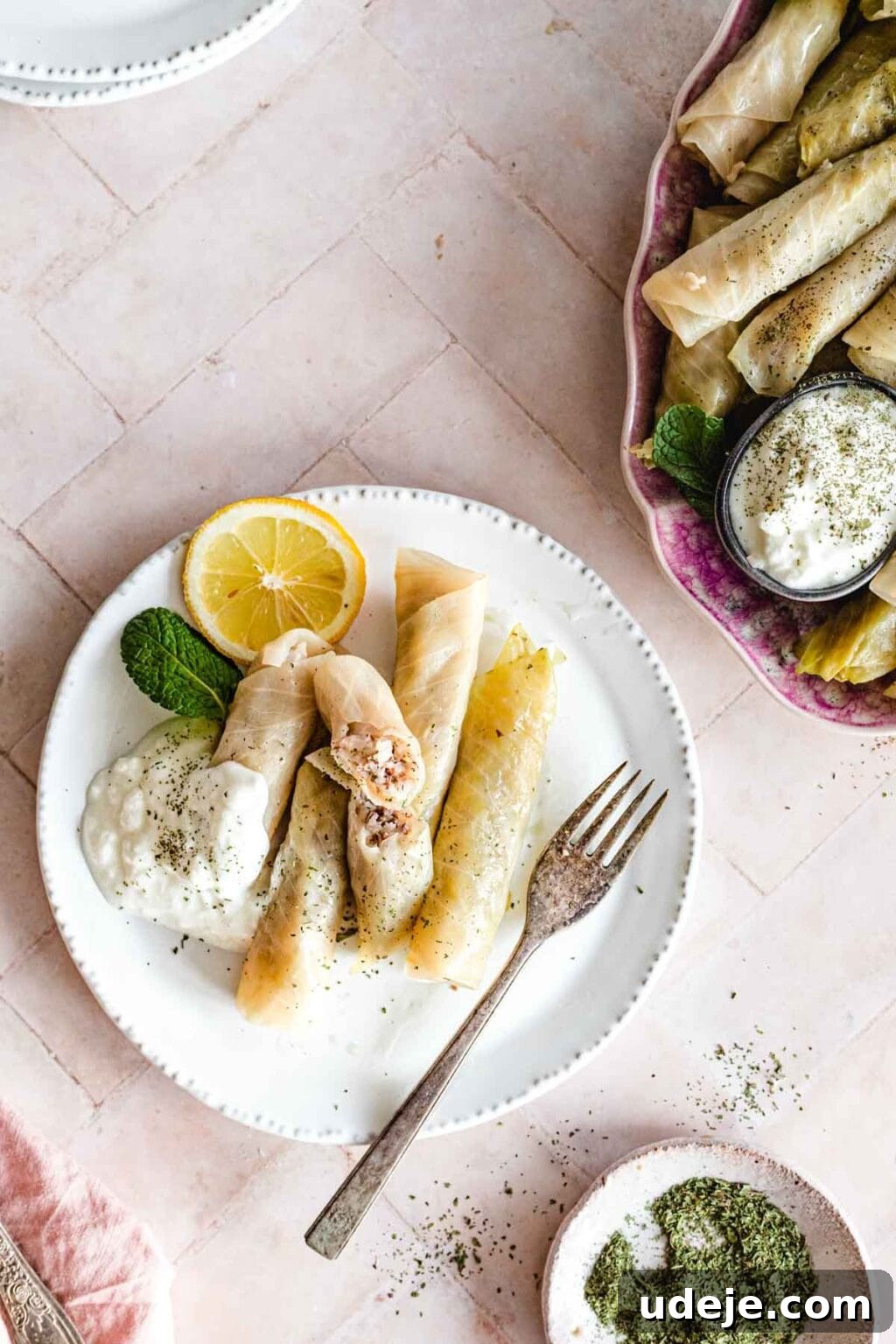
Embark on a culinary journey with Malfouf, the quintessential Lebanese dish that transforms humble cabbage into an exquisite feast. These tender cabbage rolls, meticulously stuffed with a savory blend of seasoned ground beef and fluffy rice, are simmered to perfection in a vibrant, zesty lemon-garlic broth. Malfouf is more than just a meal; it’s a labor of love, a cherished tradition, and a testament to the rich flavors of Middle Eastern cuisine. The moment you gently invert a pot of perfectly cooked Malfouf onto a serving platter, the aroma fills the air, promising a comforting and unforgettable dining experience. Each delicate roll offers a burst of tangy, garlicky goodness, making it impossible to stop at just one. Prepare this impressive dish for your loved ones, following our expertly crafted and perfected recipe to achieve truly outstanding results that will have everyone asking for more.
Discovering Malfouf: A Lebanese Culinary Treasure
Malfouf, a term that beautifully translates from Arabic to “cabbage” and “rolled,” perfectly describes this iconic dish. It is the Lebanese interpretation of stuffed cabbage, a culinary concept celebrated across diverse cultures worldwide. From the hearty, robust versions found in Eastern European nations like Ukraine, Serbia, Poland, Russia, and Croatia, to the unique preparations in Italy, Greece, and Germany, stuffed cabbage holds a special place in global gastronomy. However, Lebanese cabbage rolls distinguish themselves with their characteristic slender shape and an unparalleled bright, tangy, and aromatic lemon-garlic flavor profile.
Unlike their thicker, often larger European counterparts, Lebanese Malfouf are artfully rolled into more delicate parcels, ensuring a harmonious balance of filling to tender cabbage leaf in every bite. This specific recipe, while generally adored throughout Lebanon, can also feature regional nuances and is a staple in other Levant countries, including Syria, Jordan, and Palestine. In Iraq, a similar concept of stuffed vegetables, known as Dolma, frequently includes stuffed cabbage among its array of delightful vegetables.
One of the many reasons to adore Malfouf is its relative ease of preparation compared to other stuffed vegetable dishes. It often proves to be a more forgiving and quicker process than stuffing delicate grape leaves, such as those used in Yalanji (Vegetarian Stuffed Grape Leaves) or traditional Warak Enab (Stuffed Grape Leaves with Meat). For those who enjoy variety, there are also different approaches to stuffed cabbage. Another popular recipe for oven-baked cabbage rolls often incorporates a rich, tomato-based sauce, still retaining that beloved garlic kick, and is baked rather than simmered on the stovetop, offering a distinct flavor experience.
Why You’ll Fall in Love with This Authentic Malfouf Recipe
This Malfouf recipe isn’t just a set of instructions; it’s an invitation to experience authentic Lebanese comfort food at its finest. Here’s why this dish will quickly become a cherished favorite in your kitchen:
- **Unforgettable Flavor:** The vibrant combination of fresh lemon juice, abundant garlic, and aromatic allspice creates a broth that infuses every cabbage roll with an irresistible tangy and savory depth. It’s a flavor profile that stands apart.
- **Hearty & Satisfying:** Stuffed with a savory mixture of perfectly seasoned ground beef and rice, these rolls are incredibly filling and satisfying, making them a complete meal that nourishes both body and soul.
- **A Culinary Achievement:** While it involves several steps, the process of making Malfouf is incredibly rewarding. The presentation of these neatly rolled, tender parcels will impress any guest, making it perfect for special occasions or family gatherings.
- **Comfort Food Excellence:** There’s something inherently comforting about a dish that has been lovingly prepared and simmered until incredibly tender. Malfouf embodies warmth and homestyle goodness.
- **Tested and Perfected:** This recipe has been meticulously tested and refined to ensure consistent, excellent results, guiding you through each stage to achieve a dish that tastes truly authentic.
Embrace the joy of traditional Lebanese cooking and discover why Malfouf holds such a special place in the hearts and homes of many.
Essential Ingredients for Authentic Lebanese Malfouf
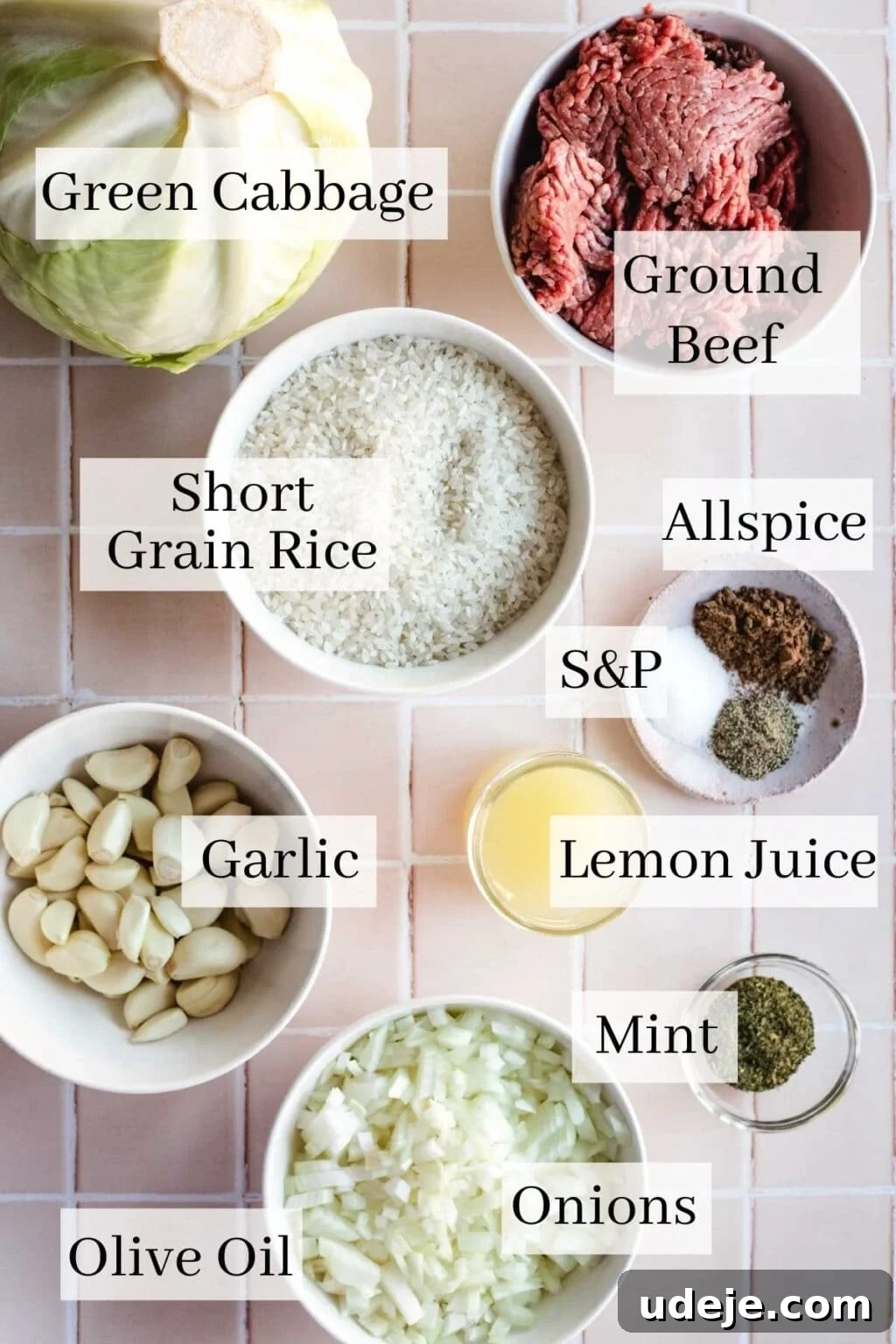
Crafting the perfect Malfouf begins with selecting the right ingredients. Each component plays a vital role in achieving that distinct Lebanese flavor:
For the star of the dish, you will, of course, need fresh cabbage. We highly recommend using green cabbage due to its smooth texture, which results in the most aesthetically pleasing and uniform rolls. If green cabbage is not readily available, Savoy cabbage can be a good alternative. It is notably softer and easier to handle, making the rolling process smoother. However, be aware that Savoy cabbage leaves tend to create rolls with a more wrinkled appearance, which is perfectly acceptable and doesn’t detract from the flavor.
The heart of these delectable rolls is the filling, for which you’ll need high-quality ground beef (lean or extra lean varieties work best), and a suitable short-grain rice. Varieties like Egyptian, Calroze, or Italian short-grain rice are ideal as they absorb flavors wonderfully and contribute to the tender texture of the stuffing. Finely chopped onions and a generous amount of fresh garlic are crucial for the aromatic base. Don’t be shy with the garlic – this recipe calls for at least 3 heads (or 8 cloves) to ensure that signature pungent flavor. The key spice is allspice, which imparts a warm, earthy, and slightly sweet note that is characteristic of Middle Eastern cuisine. If allspice is unavailable, a Lebanese seven-spice mixture makes an excellent substitute, offering a similar complex flavor profile. Finally, a significant amount of rich olive oil, freshly squeezed lemon juice, and fragrant dried mint are indispensable for both the filling and the distinctive cooking broth, tying all the flavors together.
Crafting Malfouf: A Detailed Step-by-Step Guide
Making Malfouf is a rewarding process that combines careful preparation with patient cooking. Follow these steps for perfect results:
Step 1: Preparing the Cabbage Leaves
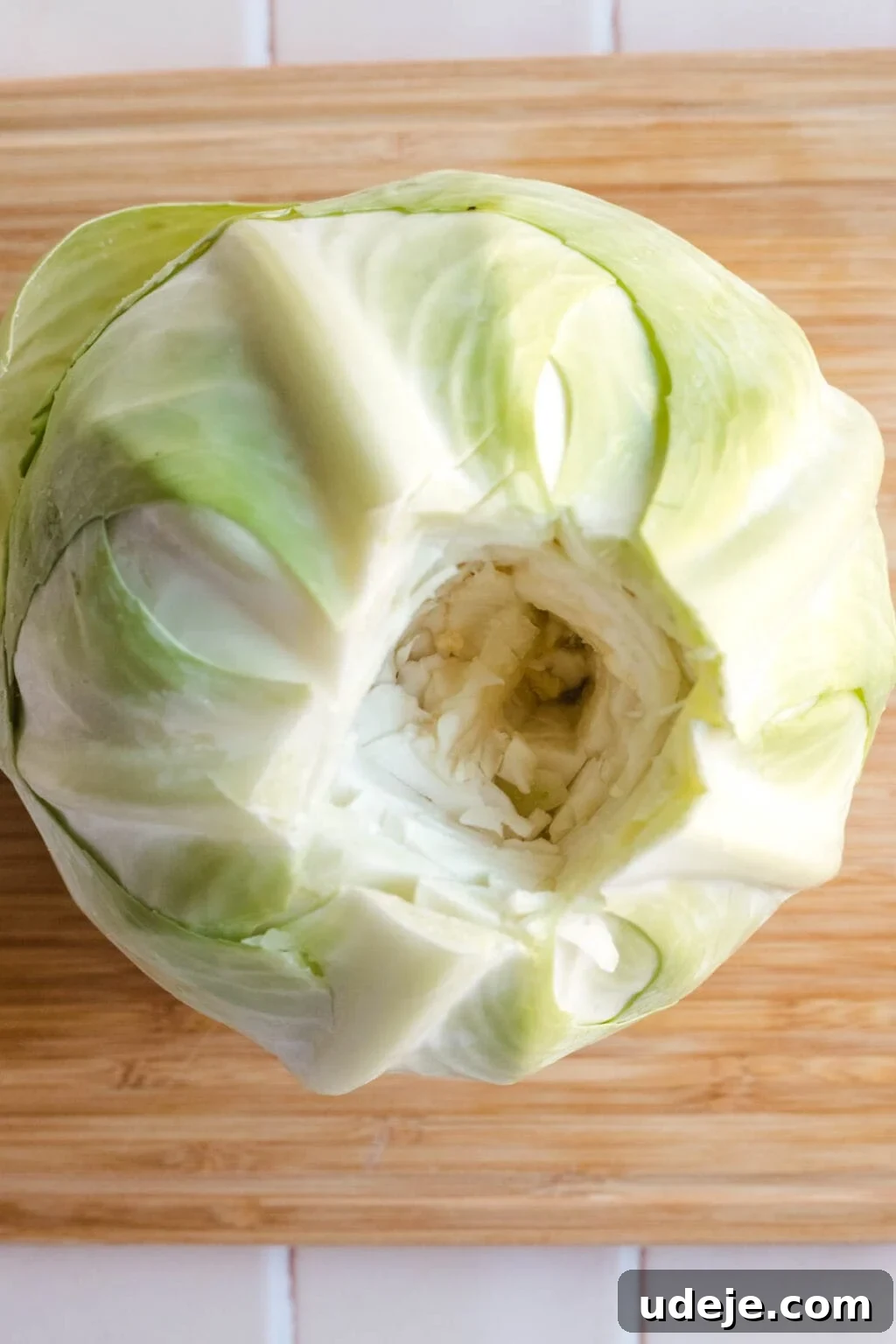
The initial step is critical for easy rolling. Begin by carefully carving around the core or root of the cabbage head. Go as deep as possible to effectively detach and loosen the cabbage leaves. This thoughtful preparation ensures that the leaves will separate effortlessly during the blanching process. Handle the knife with care as cabbage can be quite dense.
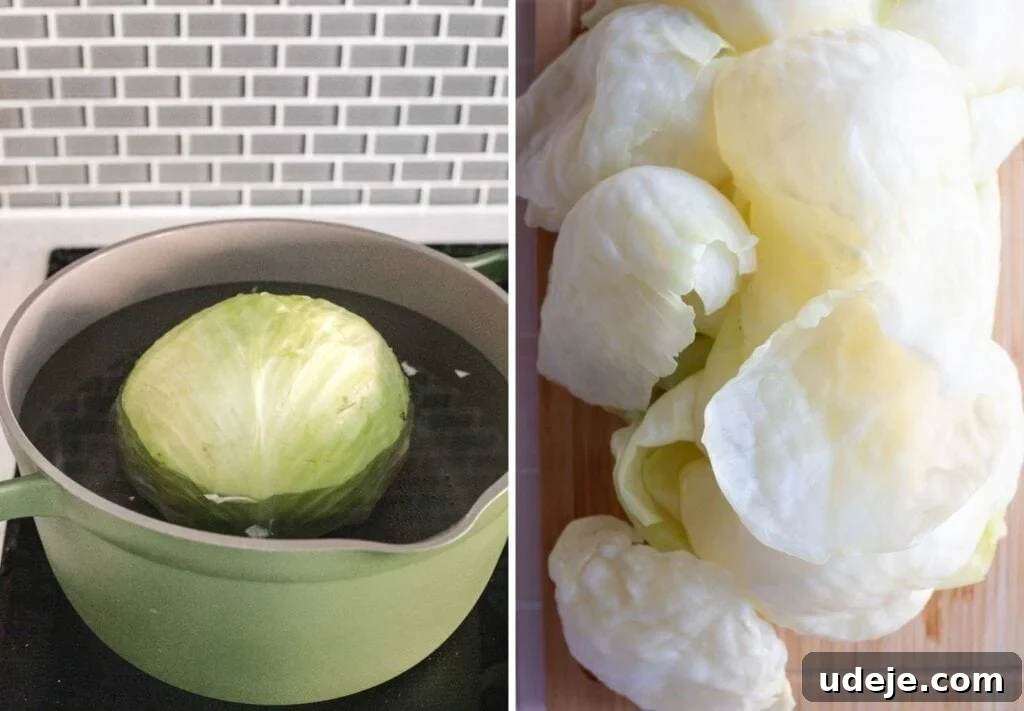
Next, bring a large pot of water to a rolling boil and add a teaspoon of salt. Carefully submerge the entire cored head of cabbage into the boiling water. Allow it to cook for approximately five minutes on each side. As the cabbage softens, use tongs to gently dislodge the outer leaves, peeling them away one by one. If you encounter any leaves that feel too firm or rigid, leave them in the hot water for a few additional minutes until they become pliable enough for rolling. Continue this process until you have separated all the usable leaves. The very center of the cabbage, which may be too small or tough to stuff, can be set aside for another dish or discarded. Drain the softened leaves on a paper towel-lined tray or in a colander and allow them to cool completely before proceeding.
Step 2: Preparing the Flavorful Filling
While the cabbage leaves are cooling, turn your attention to the aromatic filling. In a large mixing bowl, combine the washed short-grain rice, ground beef, finely diced onions, and the crushed garlic cloves designated for the stuffing. Add the allspice, black pepper, and salt. It’s highly recommended to use your hands (gloves optional) to thoroughly mix all the ingredients. This ensures that the meat, rice, and spices are uniformly incorporated, guaranteeing a burst of flavor in every bite.
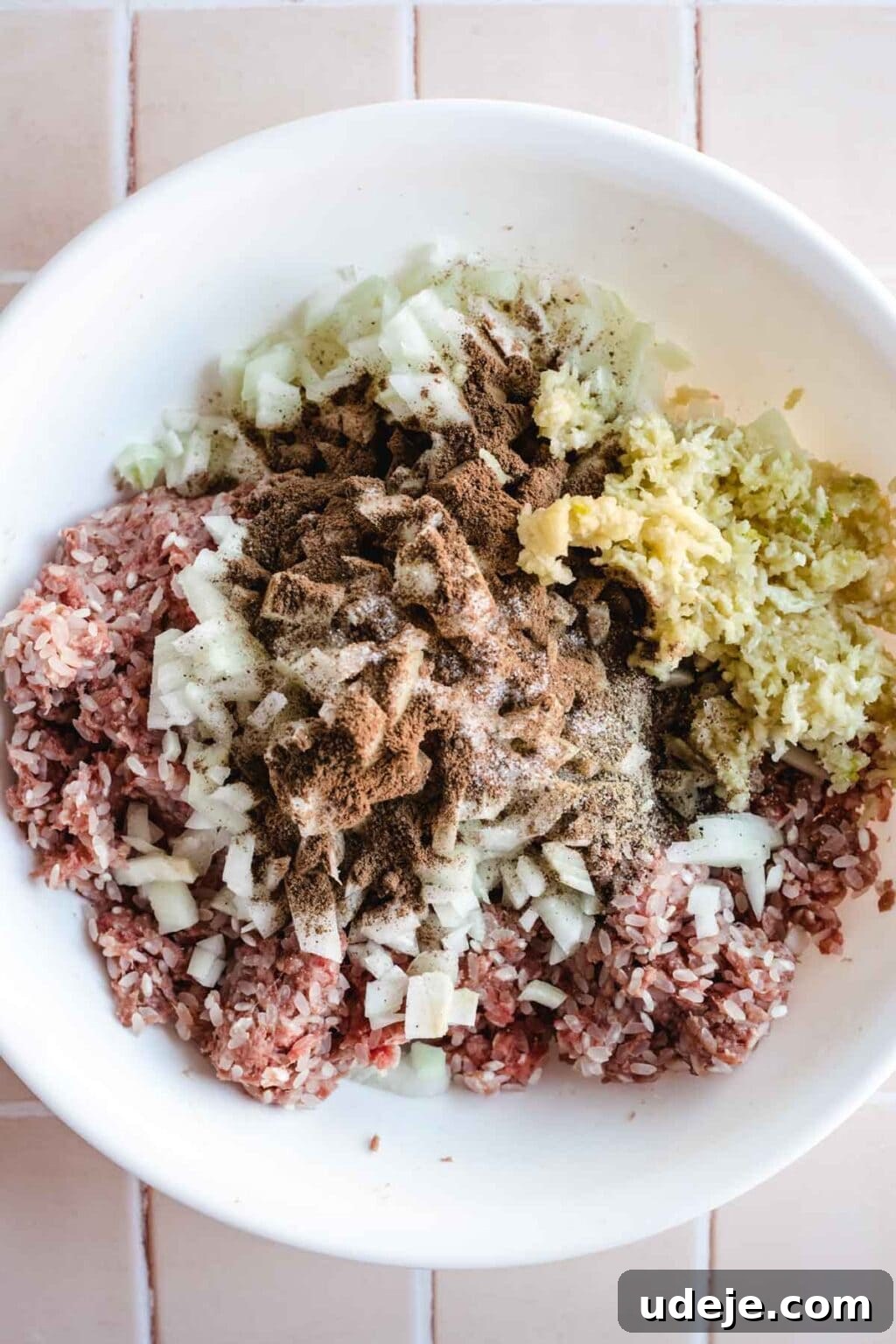
Step 3: Expertly Rolling the Cabbage
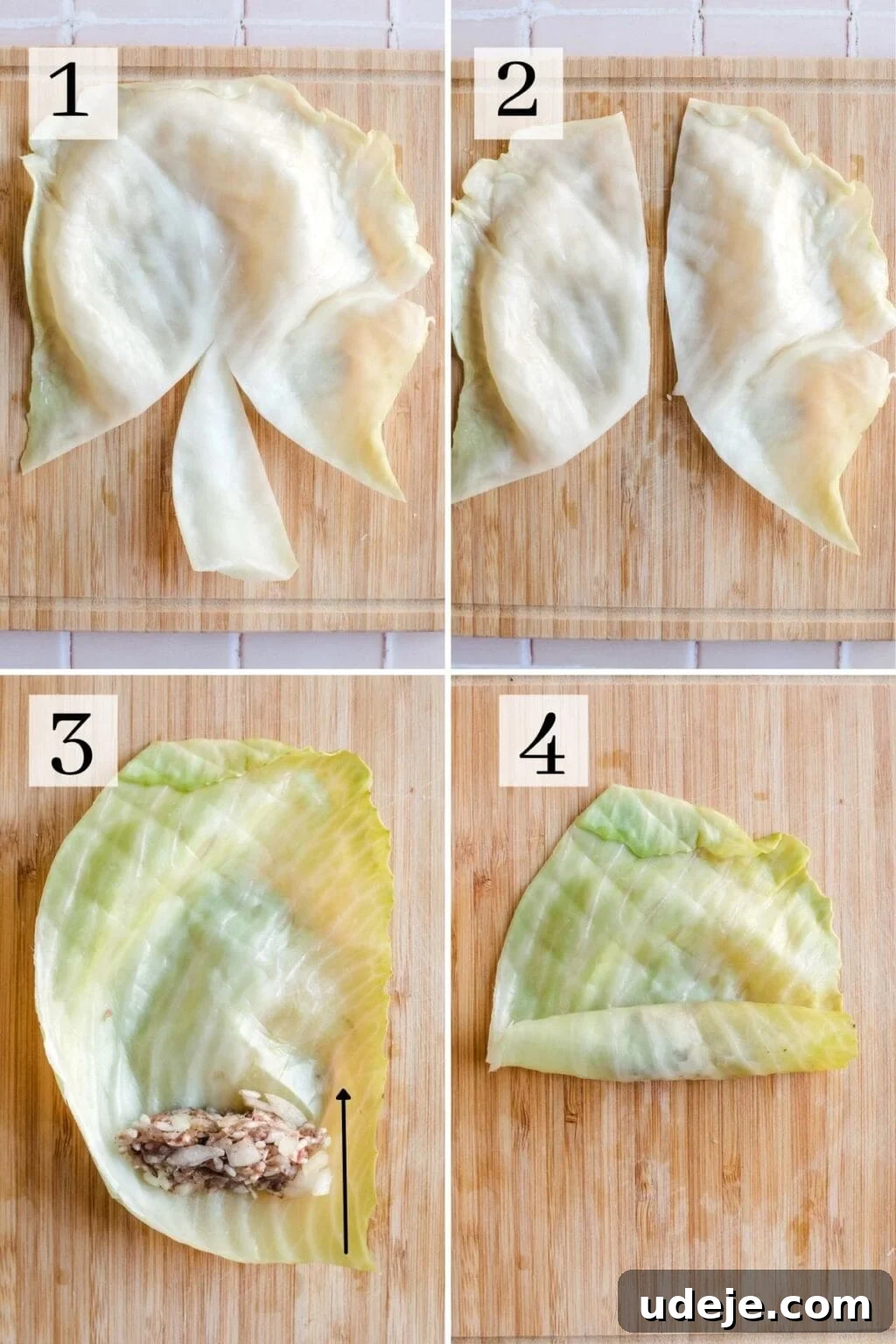
Once the cabbage leaves are cool enough to handle, it’s time for the rolling process. Lay one softened cabbage leaf flat on a clean cutting board. Using a sharp knife or kitchen scissors, carefully cut away the thick, fibrous rib running down the center of the leaf. Then, continue cutting upwards from where the rib was removed to create two roughly equal-sized halves from each leaf. These pieces are now ready for stuffing.
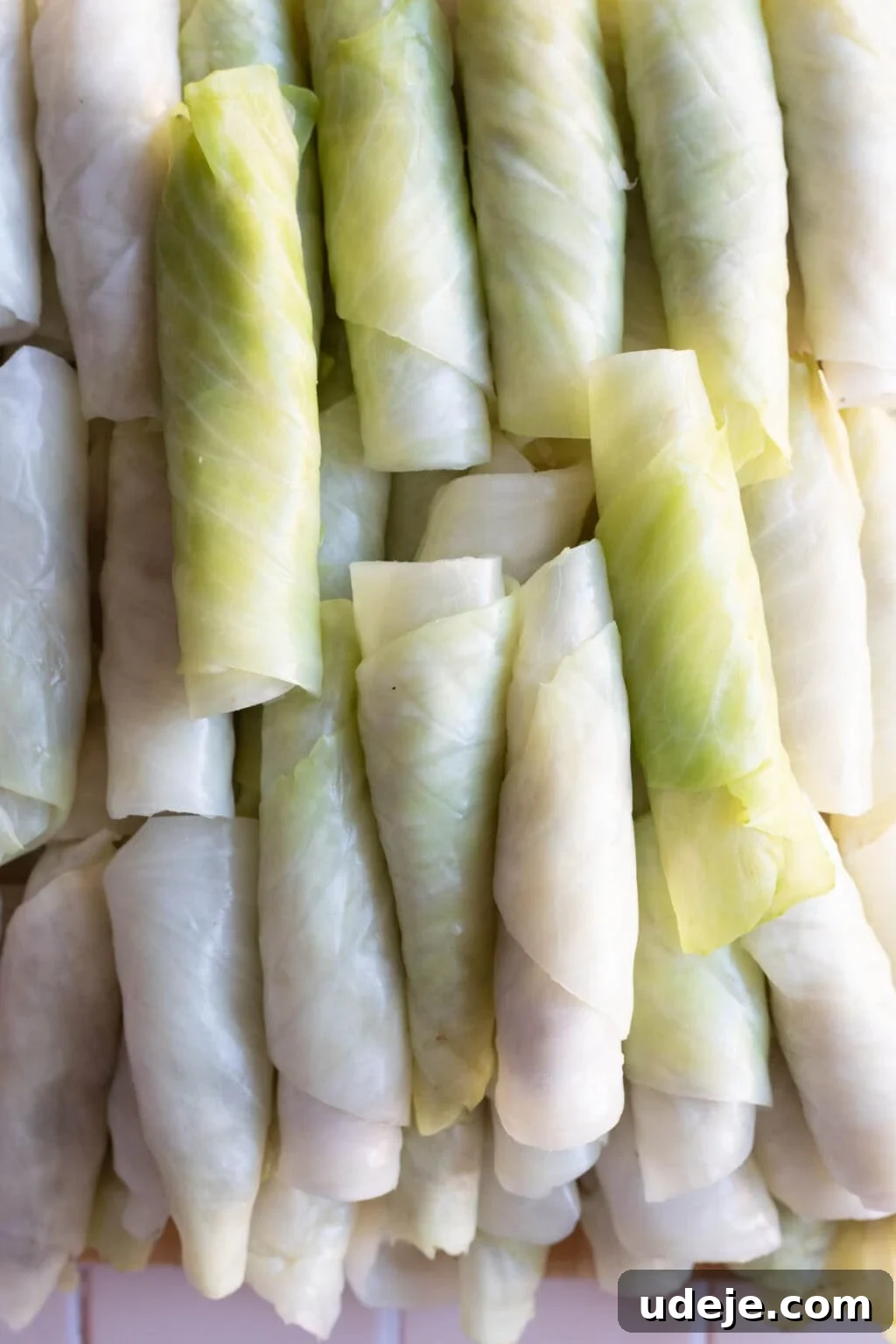
Place approximately 1 to 2 tablespoons of the meat and rice filling near the bottom edge of a cabbage leaf half. Gently flatten the filling slightly, leaving a small margin of about an inch on both sides. Begin rolling the cabbage leaf upwards, away from you, maintaining a firm but not overly tight grip. A unique advantage of cabbage leaves is their inherent rigidity, which means there’s no need to fold the sides inwards as you would with grape leaves. The natural structure of the cabbage will securely hold the filling during cooking. Continue this rolling technique with all the prepared cabbage leaves until you have used up all the filling. This recipe is designed to utilize both the leaves and the filling efficiently. If, by chance, you find yourself with leftover filling, it can be cooked separately as a delicious rice pilaf or used to stuff other vegetables.
Arrange your beautifully stuffed cabbage rolls in a neat pile as you finish them, ready for the next stage of cooking.
Step 4: Preparing the Aromatic Cooking Broth
The rich, tangy broth is essential for infusing the Malfouf with its characteristic flavor. In a bowl, combine the hot water, chicken stock cubes (or liquid stock), freshly squeezed lemon juice, olive oil, dried mint, and salt. Whisk everything together until the stock cubes are fully dissolved and all ingredients are well blended. While chicken stock provides a classic flavor, vegetable stock or even plain water can be used as alternatives, though they may require slight adjustments to seasoning to achieve desired depth.

Step 5: Layering and Simmering the Malfouf
To cook the Malfouf, select a large, heavy-bottomed non-stick pot. Drizzle a small amount of olive oil at the bottom, then arrange a few extra cabbage leaves to create a protective layer for the rolls. Begin carefully arranging the stuffed cabbage rolls in the pot, packing them tightly side-by-side in concentric circles or rows. This tight arrangement helps to keep the rolls intact during simmering.
Once all the rolls are snugly in place, pour the prepared cooking broth evenly over them. Add the whole garlic cloves (which will soften and become incredibly sweet and mild) and sprinkle additional dried mint over the top. The liquid should just barely cover the surface of the rolls. To ensure the rolls remain submerged and cook evenly, place a heavy, heat-proof plate directly on top of the stuffed cabbage rolls before covering the pot with its lid.
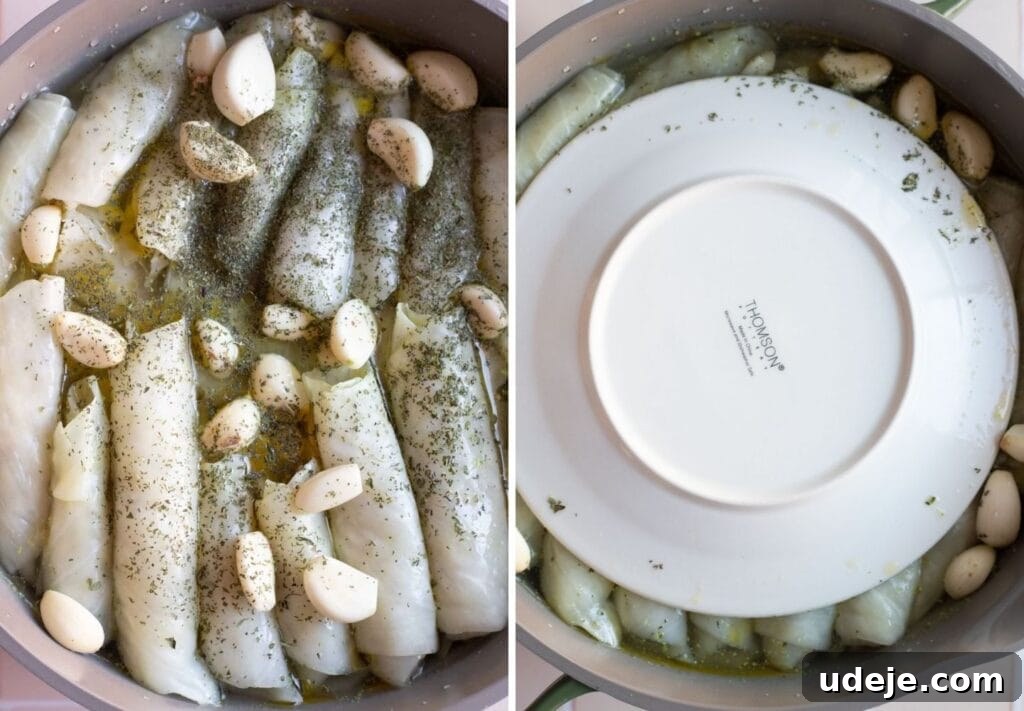
Bring the pot to a boil over medium-high heat and maintain a rolling boil for about 10 minutes. Then, reduce the heat to medium-low, allowing the Malfouf to gently simmer for approximately 1.5 hours, or until the cabbage leaves are exceptionally soft and the rice inside is perfectly cooked. Around the one-hour mark, you can carefully taste the broth and a small piece of cabbage. Adjust the seasoning as needed, adding more salt for taste or a generous squeeze of fresh lemon juice to enhance the tartness and brightness, depending on your preference. The goal is a deeply flavored, tender dish.
Serving Your Delicious Malfouf
Serving Malfouf is part of the tradition and excitement of this dish. Once the cabbage rolls are tender and infused with flavor, you have a couple of options for presentation. For a dramatic and impressive reveal, carefully drain any excess liquid from the pot (you can tilt the pot over the sink, holding the lid slightly ajar to prevent rolls from falling out). Then, with confidence, invert the entire pot onto a large serving tray. This creates a beautiful, rustic mound of perfectly arranged cabbage rolls. If you prefer a less daring approach, simply transfer the rolls one by one onto a serving platter using tongs or a spoon.
Malfouf is best enjoyed piping hot, immediately after cooking. The tangy, garlic-infused flavors are most pronounced when warm. Garnish the platter with extra fresh lemon wedges on the side, allowing diners to add a squeeze of additional brightness to their individual portions. A dollop of cool, plain yogurt, or a refreshing side of Jajik (Cucumber Yogurt Salad), offers a delightful contrast to the rich flavors of the Malfouf. For an extra touch of aroma and authenticity, a final light dusting of dried mint over the served dish is highly recommended.
Should you find yourself with an abundance of cabbage, consider preparing a crisp Malfouf Salad to complement your stuffed cabbage rolls, offering a fresh texture and flavor contrast to the hearty main course.
More Stuffed Vegetable Recipes You’ll Love
If you tried these recipes, we would love to hear from you! Please consider leaving a star ⭐⭐⭐⭐⭐ rating in the recipe card below and/or a review in the comments section further down the page. You can also hop on over to Instagram and say hello!

Malfouf (Lebanese Cabbage Rolls)
8
people
1 hour
1 hour
30 minutes
2 hours
30 minutes
Amina Al-Saigh
Leave a Review
Pin Recipe
Ingredients
For the Cabbage:
- 2 heads Green Cabbage, (small heads)
- Boiling Water
- 1 teaspoon salt
For the Stuffing:
- 2 cups short grain rice, (e.g., Calroze or Italian)
- 500 grams ground beef, (lean or extra lean)
- 1 onion, finely diced
- 8 cloves garlic, crushed
- 2 teaspoons allspice, (or Lebanese seven spice mixture)
- 1/2 teaspoon black pepper
- 2.5 teaspoons salt
For the Cooking Broth:
- 2 cubes chicken stock, (or vegetable stock)
- 6 cups hot water
- 6 lemons, juiced
- 1/4 cup olive oil
- 2 teaspoons dried mint
- 2 teaspoons salt
- 8 cloves garlic, (whole, for simmering)
Instructions
To prepare the cabbage:
-
Start by carving out the cabbage root all around, digging as deep as you can. This essential step helps detach and loosen the cabbage leaves easily in the next stage. Exercise caution when cutting, as cabbage can be quite firm.
-
Next, in a large pot of boiling water, add the teaspoon of salt and carefully submerge the cored head of cabbage. Allow it to boil for a few minutes, flipping it to ensure both sides soften.
-
Once the cabbage begins to soften, use a pair of tongs to gently start loosening and peeling off the outer leaves. They should come off quite easily. If you encounter any particularly thick or rigid leaves, leave them in the hot water for a few extra minutes to ensure they become pliable enough for rolling.
-
Continue separating the leaves until you reach the smaller, inner core, which may not yield leaves large enough for stuffing. This central part can be saved for another recipe (like a stir-fry) or discarded. Repeat the process with the second head of cabbage.
-
Remove all the softened leaves and place them on a paper towel-lined tray or in a colander to drain any excess water. Allow them to cool completely before you begin the stuffing process.
To prepare the filling:
-
Finely dice the onion and crush the garlic cloves that are specified for the stuffing mixture.
-
In a large bowl, combine the thoroughly washed short-grain rice, ground beef, diced onions, crushed garlic, allspice, black pepper, and salt. Use your hands to mix these ingredients together very well, ensuring the meat and rice are evenly blended with the spices for maximum flavor.
Rolling the cabbage:
-
To prepare each cabbage leaf for rolling, lay it flat on a cutting board. Using a knife or kitchen scissors, carefully cut away the thick central rib. Then, continue cutting upwards from where the rib was removed to create two equal-sized pieces from each leaf.
-
Place about 1 to 2 tablespoons of the prepared filling in the middle of a cabbage leaf piece. Gently pack it together and spread it out slightly, leaving approximately an inch of space clear near each of the edges.
-
Roll the cabbage leaf tightly upwards from the bottom, maintaining a firm grip. There is no need to fold the side edges inward, as the sturdy nature of cabbage leaves will securely contain the filling during the cooking process.
-
Continue rolling all of the prepared cabbage leaves until you have used up all the filling. This recipe should utilize both the leaves and the filling efficiently. (If you happen to have leftover filling, please refer to the notes section for creative suggestions.)
Cooking the Malfouf:
-
In a large non-stick pot, drizzle a bit of olive oil at the bottom. Lay a few spare cabbage leaves (from the smaller inner parts) to create a protective base. Begin meticulously stacking the rolled cabbage rolls in the pot, arranging them tightly next to each other in layers.
-
Mix together all the broth ingredients (except for the whole garlic cloves and dried mint, which will be added later). Pour this flavorful broth evenly over the stacked cabbage rolls in the pot. Then, sprinkle the whole garlic cloves and the dried mint over the top. Finally, place a heavy, heat-proof plate inverted on top of the rolls to keep them submerged during cooking.
-
Bring the pot to a vigorous boil over medium-high heat. Once it’s actively boiling, reduce the heat to medium-low, cover the pot, and let it simmer gently for 1.5 hours. Check the tenderness of the cabbage and the doneness of the rice after the first hour. You can adjust the seasoning of the broth at this point, adding more salt or extra lemon juice to suit your preferred level of tartness.
-
Remove the pot from the heat once you’ve tested a roll and confirmed that the cabbage is exquisitely soft and the filling is perfectly cooked. Serve your authentic Malfouf hot, ideally with additional fresh lemon juice on the side and a dollop of tangy yogurt for a refreshing contrast.
Notes
- For the most visually appealing and smooth rolls, green cabbage is recommended. Savoy cabbage offers a softer texture and is easier to work with, but the resulting rolls will have a more wrinkled appearance.
- Depending on how generously you stuff your cabbage rolls, you might have some filling leftover. This is a delightful bonus! You can cook the remaining filling as a simple rice pilaf with a bit of water and serve it as a delicious side dish (often a hit with children), or you can use it to stuff other vegetables like bell peppers or zucchini and cook them alongside the cabbage rolls in the same pot.
- The hallmark of an authentic Malfouf recipe is the generous use of both garlic and lemon juice. These ingredients are crucial for transforming the often-bland cabbage into a vibrant, deeply flavorful dish. Do not hesitate to use the specified amounts, as they are key to achieving the distinctive Lebanese taste.
Calories: 471kcal
,
Carbohydrates: 57g
,
Protein: 18g
,
Fat: 20g
,
Saturated Fat: 6g
,
Polyunsaturated Fat: 1g
,
Monounsaturated Fat: 11g
,
Trans Fat: 1g
,
Cholesterol: 44mg
,
Sodium: 1685mg
,
Potassium: 648mg
,
Fiber: 8g
,
Sugar: 8g
,
Vitamin A: 240IU
,
Vitamin C: 87mg
,
Calcium: 125mg
,
Iron: 5mg
Did you make this recipe?
Please leave a star rating and review below!