
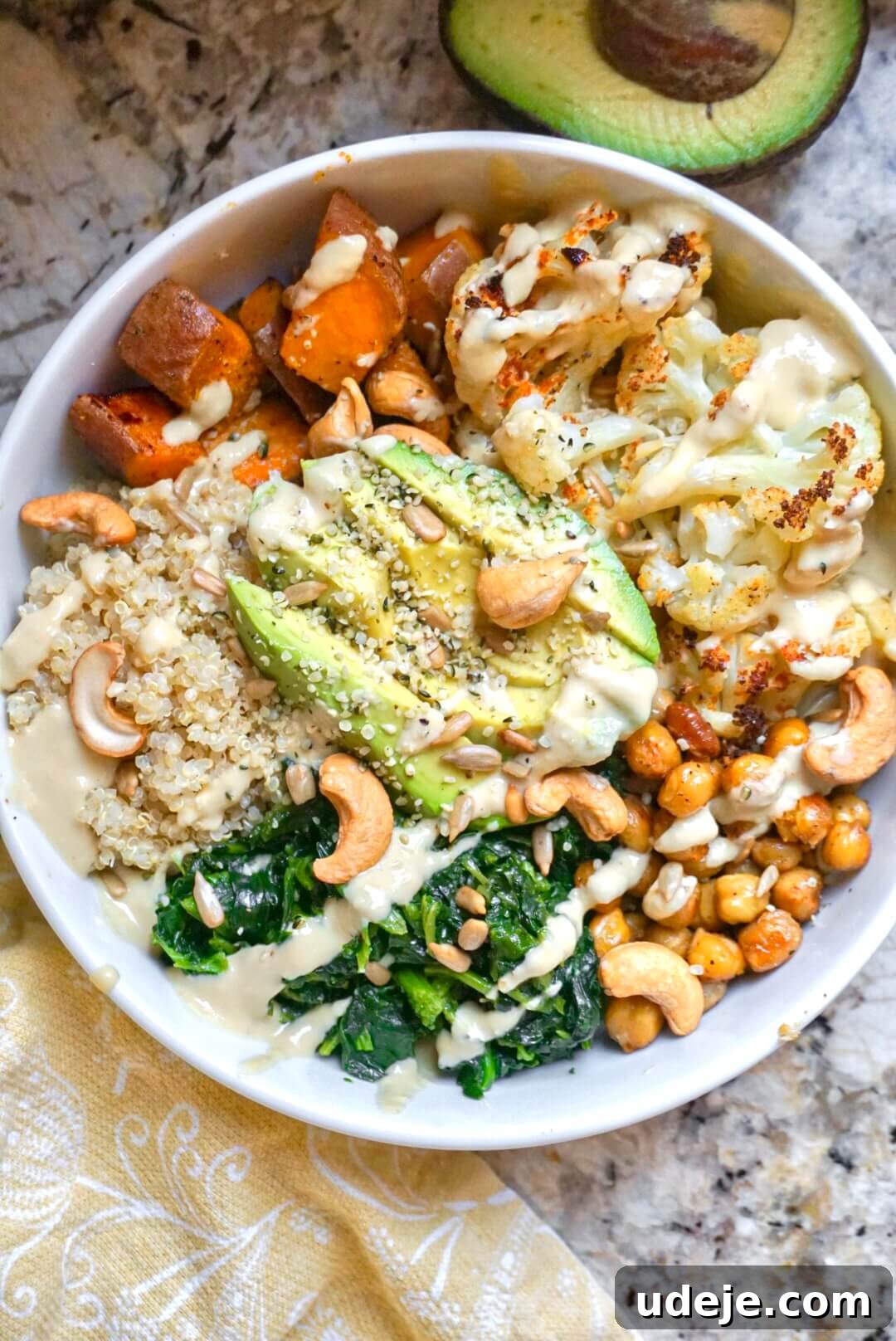
Ultimate Vegan Buddha Bowls: A Wholesome Plant-Based Feast
These hearty & delicious vegan buddha bowls are filled with quinoa, cauliflower, sweet potato, chickpeas, spinach & drizzled with an easy hummus dressing. Packed with plant-based protein & fiber, it’s a great weeknight meal or meal prep idea!
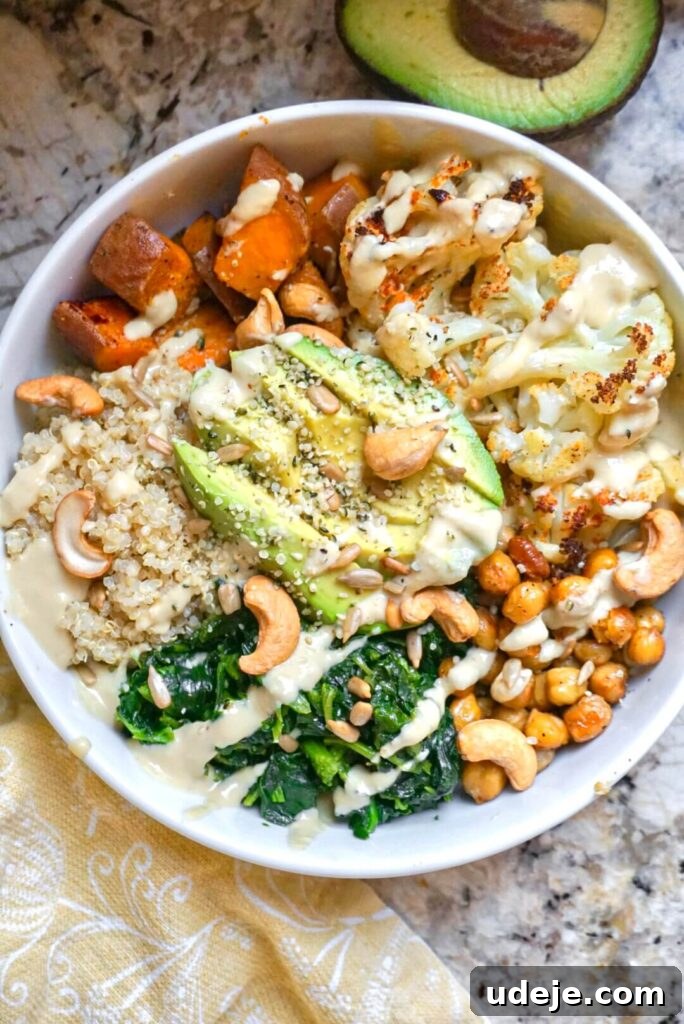
As the days grow longer and the weather warms, there’s a natural inclination to incorporate more vibrant, fresh produce into our diets. My body instinctively craves light yet satisfying meals bursting with garden-fresh goodness. This season, I find myself returning repeatedly to one particular dish that perfectly encapsulates healthy, delicious, and deeply nourishing eating: the vegan Buddha bowl. It’s an all-in-one culinary marvel that delights the senses and fuels the body.
For those new to the concept, a Buddha bowl is essentially a vibrant, wholesome meal served in a single bowl, designed to be visually appealing and nutritionally balanced. Typically, it features a base of whole grains like quinoa, brown rice, or farro, generously topped with a colorful array of roasted or steamed vegetables, a protein source (often plant-based), healthy fats from seeds or nuts, and finally, a luscious, flavorful dressing that ties all the elements together. Today, I’m thrilled to share one of my absolute favorite Buddha bowl recipes – a combination of flavors and textures that is nothing short of pure bliss.
This particular vegan Buddha bowl is a powerhouse of nutrition, crafted to leave you feeling completely satisfied and energized. It’s brimming with essential plant-based protein from chickpeas and quinoa, providing all nine essential amino acids. Complementing this protein is an abundance of dietary fiber from the sweet potatoes and cauliflower, which aids in digestion and promotes sustained fullness. Together, these ingredients deliver a wealth of vitamins, minerals, and antioxidants, making it a truly complete and beneficial meal for your body.
If you’re constantly on the hunt for quick yet healthy weeknight dinner ideas, then your search ends here. This recipe is the ideal solution for those evenings when time is scarce, but your desire for a wholesome, nourishing, and incredibly delicious meal is strong. It’s simple to prepare, requiring minimal fuss, and promises a delightful experience that will quickly become a staple in your culinary repertoire.
What Makes a Perfect Buddha Bowl?
The beauty of a Buddha bowl lies in its structure and versatility. It’s more than just a salad; it’s a meticulously assembled meal where each component plays a vital role in creating a harmonious blend of flavors, textures, and nutrients. Here’s a breakdown of the key elements that contribute to a truly exceptional Buddha bowl:
- Grain Base: This forms the foundation of your bowl, providing complex carbohydrates for sustained energy. Think quinoa, brown rice, farro, couscous, or even millet.
- Protein Power: Essential for satiety and muscle health. Plant-based options include chickpeas, black beans, lentils, tofu, tempeh, or edamame.
- Vibrant Vegetables: A colorful medley of veggies offers a wide range of vitamins, minerals, and fiber. Roasting often brings out their natural sweetness and creates a satisfying texture.
- Healthy Fats & Crunch: Avocado, nuts, and seeds (like sunflower, hemp, or pumpkin seeds) add beneficial fats and a delightful textural contrast.
- Flavorful Dressing: The dressing is the unifying element, bringing all the different components together with a burst of flavor and often a creamy texture.
This careful layering ensures every bite is interesting and every bowl is a nutritional masterpiece. It’s a testament to how simple, whole ingredients can come together to create something truly extraordinary.
Key Ingredients for Our Hearty Buddha Bowls
Each ingredient in this vegan Buddha bowl is chosen not just for its incredible flavor, but also for its nutritional prowess and ability to contribute to a balanced and satisfying meal. Let’s delve into the stars of this recipe:
- Quinoa: This ancient grain is a gluten-free marvel and a complete protein, meaning it contains all nine essential amino acids necessary for human health. It’s an exceptional choice for vegans, offering a hearty and nutritious base for your bowl. Quinoa also boasts a light, fluffy texture and a subtle, nutty flavor that complements the other ingredients beautifully. If quinoa isn’t available, brown rice or farro make excellent substitutes, though they may vary slightly in protein content.
- Cauliflower: A versatile cruciferous vegetable, cauliflower is rich in fiber, vitamin C, and various antioxidants. When roasted, its florets transform into tender, slightly caramelized bites with a depth of flavor that’s utterly delicious. Its mild taste makes it a fantastic canvas for absorbing the savory seasonings.
- Sweet Potato: These vibrant orange tubers are nutritional powerhouses, packed with beta-carotene (which converts to vitamin A), vitamin C, and dietary fiber. Roasting sweet potatoes brings out their natural sweetness, making them a comforting and satisfying component of the bowl. They add a lovely soft texture that contrasts nicely with the other elements.
- Chickpeas (Garbanzo Beans): Our primary protein source, chickpeas are incredibly versatile and nutritious. They are an excellent source of plant-based protein, fiber, and complex carbohydrates. When roasted, chickpeas become wonderfully crispy on the outside and tender on the inside, adding a delightful crunch and nutty flavor to the bowl. Opt for canned chickpeas for convenience, ensuring they are thoroughly rinsed and drained before seasoning.
- Spinach: For this recipe, we utilize frozen chopped spinach. It’s an economical and convenient choice, retaining most of its nutritional value and making it incredibly easy to cook down. Spinach is loaded with iron, vitamin K, vitamin A, and antioxidants. Sautéing it quickly adds a tender, leafy green element to the bowl that’s both healthy and flavorful, providing a gentle bitterness that balances the sweetness of the other components.
- Hummus: The star of our dressing! Hummus, whether store-bought for convenience or homemade using a simple recipe, provides a creamy, tangy, and rich base for our dressing. It’s made from chickpeas, tahini, lemon juice, and garlic, offering a delightful combination of healthy fats, fiber, and a velvety texture that perfectly coats the other ingredients. The homemade version allows for customization of flavor intensity.
- Nutritional Yeast: A secret weapon in vegan cooking, nutritional yeast adds a distinct savory, cheesy, umami flavor without any dairy. It’s also a great source of B vitamins, including B12 (often fortified). In our dressing, it elevates the flavor profile, making it richer and more satisfying.
- Seasonings: A blend of salt, black pepper, smoked paprika, garlic powder, onion powder, and red pepper flakes creates the robust, savory foundation for our roasted vegetables and sautéed spinach. Smoked paprika adds a wonderfully deep, smoky note, while red pepper flakes introduce a subtle warmth.
- Toppings: This is where you can truly make the bowl your own! Our recommended toppings – creamy avocado, crunchy roasted cashews, nutty sunflower seeds, and wholesome hemp seeds – add layers of flavor, texture, and essential healthy fats. Avocado provides creaminess, nuts and seeds offer crunch and omega-3s, elevating the overall experience of the bowl. Don’t hesitate to get creative with your favorite additions!
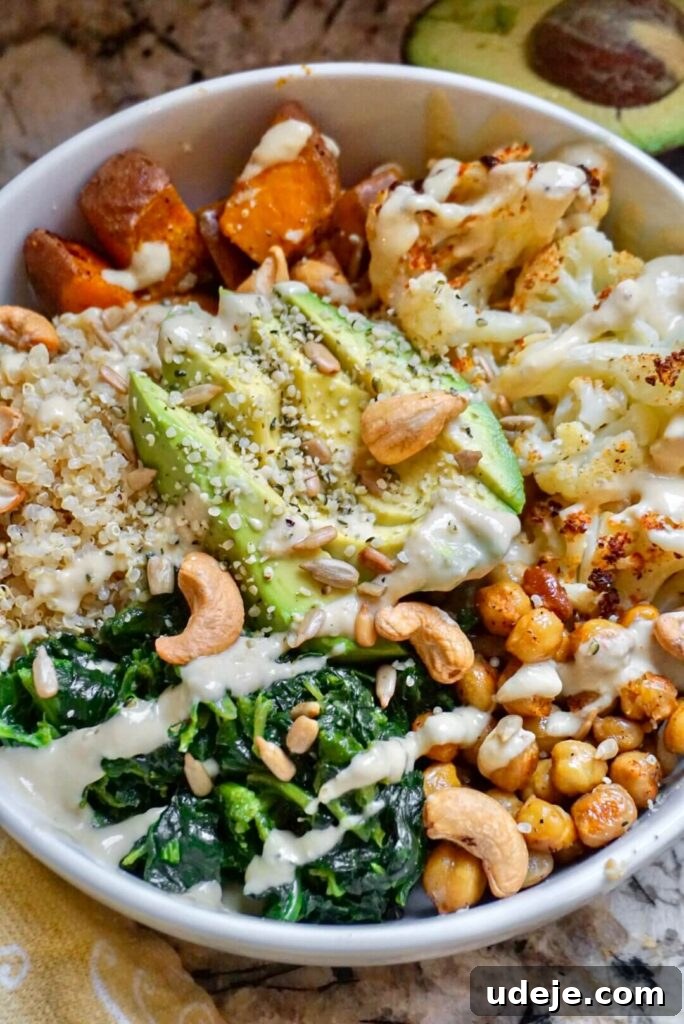
Crafting Your Perfect Vegan Buddha Bowl: Step-by-Step Guide
Creating these vibrant and nutritious Buddha bowls is surprisingly straightforward. The process involves a few simple cooking steps for each component, followed by the joyful assembly. Here’s how you can prepare this delicious meal in under an hour:
Cauliflower, Sweet Potato & Chickpea Buddha Bowls
Yield: 4 servings
Prep: 20 mins
Cook: 40 mins
Total: 1 hr
These hearty & delicious vegan buddha bowls are filled with quinoa, cauliflower, sweet potato, chickpeas, chopped spinach & drizzled with an easy hummus dressing. Packed with plant-based protein & fiber, it’s a great weeknight meal or meal prep idea!
Leave a Review
Pin Recipe
Ingredients
- 1 cup quinoa, cooked per package instructions
Roasted Vegetables
- 3 tablespoons olive oil
- 1 head of cauliflower, chopped into florets
- 1 sweet potato, chopped into 1” cubes
- 1 15oz can chickpeas, rinsed and drained
- ¾ teaspoon salt
- ½ teaspoon black pepper
- ½ teaspoon smoked paprika
- ½ teaspoon garlic powder
- ½ teaspoon onion powder
Chopped Spinach
- 2 tablespoons olive oil
- 1 16oz bag frozen chopped spinach, defrosted
- ½ teaspoon salt
- ¼ teaspoon garlic powder
- pinch red pepper flakes
Hummus Dressing
- ½ cup hummus
- ¼ cup water
- 2 tablespoons nutritional yeast
- ¼ teaspoon salt
- ¼ teaspoon black pepper
Toppings
- Avocado, sliced
- Roasted cashews
- Sunflower seeds
- Hemp seeds
Instructions
- Prepare for Roasting: Preheat your oven to 400℉ (200℃). Line a large baking sheet with parchment paper for easy cleanup.
- Season and Roast Vegetables: In a spacious bowl, combine the chopped cauliflower florets, 1-inch sweet potato cubes, and rinsed, drained chickpeas. Drizzle generously with 3 tablespoons of olive oil. Season with ¾ teaspoon salt, ½ teaspoon black pepper, ½ teaspoon smoked paprika, ½ teaspoon garlic powder, and ½ teaspoon onion powder. Toss everything together until the vegetables and chickpeas are thoroughly coated. Spread them out in a single layer on the prepared baking sheet. Roast for 35-40 minutes, or until the vegetables are tender and slightly caramelized, and the chickpeas are lightly crispy.
- Cook the Quinoa: While the vegetables are roasting, prepare the quinoa according to the package instructions. This usually involves rinsing the quinoa, then simmering it with water (or vegetable broth for extra flavor) until all the liquid is absorbed and the grains are fluffy.
- Sauté the Spinach: In a medium pan, heat 2 tablespoons of olive oil over medium heat. Add the defrosted chopped spinach, ½ teaspoon salt, ¼ teaspoon garlic powder, and a pinch of red pepper flakes. Sauté for 7-10 minutes, stirring occasionally, until the spinach is fully cooked down and any excess water has evaporated.
- Whip Up the Hummus Dressing: In a small bowl, combine ½ cup hummus, ¼ cup water, 2 tablespoons nutritional yeast, ¼ teaspoon salt, and ¼ teaspoon black pepper. Whisk vigorously until the dressing is smooth, creamy, and has a pourable consistency. Add a tiny bit more water if you prefer a thinner dressing.
- Assemble Your Buddha Bowls: Once all components are cooked and ready, it’s time for assembly! Divide the cooked quinoa among four bowls. Top each with a generous portion of the roasted sweet potatoes, cauliflower, chickpeas, and sautéed spinach.
- Garnish and Serve: Garnish your bowls with your desired toppings. I love adding slices of creamy avocado, a sprinkle of crunchy roasted cashews, sunflower seeds, and hemp seeds for extra flavor and texture. Finally, drizzle a generous amount of the creamy hummus dressing over everything. Serve immediately and enjoy your wholesome, homemade vegan Buddha bowl!
Equipment
- 1 baking sheet
- Large mixing bowl
- Medium saucepan (for quinoa)
- Frying pan (for spinach)
- Small bowl & whisk (for dressing)
Nutrition Information (per serving)
- Calories: 430kcal
- Carbohydrates: 46g
- Protein: 11g
- Fat: 23g
- Saturated Fat: 3g
- Polyunsaturated Fat: 4g
- Monounsaturated Fat: 15g
- Sodium: 1025mg
- Potassium: 606mg
- Fiber: 8g
- Sugar: 2g
- Vitamin A: 8185IU
- Vitamin C: 3mg
- Calcium: 55mg
- Iron: 4mg
*Nutritional information is an estimate and may vary based on specific ingredients and preparation methods.
Why These Vegan Buddha Bowls are a Weeknight Winner & Meal Prep Dream
Beyond their incredible taste and robust nutritional profile, these Buddha bowls shine brightly in two key areas: their speed for weeknight dinners and their adaptability for meal prepping. This recipe can be made from start to finish in just about an hour, making it a perfect fit for even the busiest schedules. You won’t have to sacrifice your evening for a healthy meal; instead, you’ll be enjoying a delicious, home-cooked dinner in record time.
For those who love to plan ahead, these bowls are a dream come true for meal prepping. All the components – the cooked quinoa, roasted vegetables, sautéed spinach, and hummus dressing – can be prepared in advance and stored separately in airtight containers in the refrigerator. When it’s time for lunch or dinner, simply assemble your bowl, add your fresh toppings, and drizzle with dressing. This approach ensures you have quick, healthy, and satisfying meals ready to go throughout the week, minimizing stress and maximizing healthy eating habits. They’re also wonderfully portable, making them ideal for bringing to work or school.
Customize Your Bowl: Variations & Substitutions
One of the most exciting aspects of Buddha bowls is their inherent flexibility. This recipe serves as an excellent foundation, but feel free to let your creativity flow and adapt it to your preferences, what’s in season, or what you have on hand:
- Grains: While quinoa is fantastic, feel free to swap it out for brown rice, farro, couscous, or even a blend of grains. Each offers a slightly different texture and flavor profile.
- Vegetables: Experiment with different roasted vegetables! Broccoli, zucchini, bell peppers, Brussels sprouts, or even asparagus would be delicious additions or substitutions. You can also add raw greens like kale or arugula for extra freshness.
- Protein Boosts: If you want to vary the protein, consider adding baked tofu, tempeh, black beans, or even a sprinkle of lentils. Roasted edamame also makes a great crunchy topping.
- Dressings: While our hummus dressing is a winner, you could try a tahini-lemon dressing, a spicy peanut sauce, a creamy avocado lime dressing, or even a simple vinaigrette made with apple cider vinegar and olive oil.
- Toppings Galore: Beyond avocado, cashews, sunflower, and hemp seeds, get creative! Try pumpkin seeds, sesame seeds, chopped fresh herbs (cilantro, parsley), a squeeze of fresh lime juice, a dash of sriracha for heat, or even some pickled onions for tang.
The possibilities are truly endless, ensuring you’ll never get bored with your Buddha bowls!
Tips for Building the Best Buddha Bowl
While the ingredients are important, the art of building a Buddha bowl lies in the thoughtful combination and presentation. Here are a few tips to elevate your bowl from good to extraordinary:
- Texture Contrast: Aim for a variety of textures – soft grains, tender roasted veggies, crispy chickpeas, and crunchy nuts/seeds. This keeps each bite interesting and satisfying.
- Flavor Balance: Combine different flavor profiles – savory, sweet, tangy, and sometimes spicy. The sweet potatoes offer sweetness, the dressing provides tang, and the seasonings bring savory depth.
- Color Pop: A visually appealing bowl is often more enjoyable. Choose ingredients with diverse colors to make your meal vibrant and appetizing.
- Proper Roasting: Don’t overcrowd your baking sheet when roasting vegetables. Give them space to brown and caramelize properly for the best flavor and texture.
- Dressing is Key: A delicious dressing unites all the ingredients. Make sure it’s flavorful and has a good consistency to coat everything evenly.
- Layering for Success: Start with your grain, then arrange your cooked veggies, protein, and fresh greens around it. Finish with toppings and dressing for a beautiful presentation.
Frequently Asked Questions About Vegan Buddha Bowls
- Can I make these bowls gluten-free?
- Yes, absolutely! Quinoa is naturally gluten-free, as are all the other ingredients in this recipe. Just ensure your seasonings and any store-bought hummus are certified gluten-free if you have severe sensitivities.
- How long do meal-prepped Buddha bowls last?
- When stored separately in airtight containers in the refrigerator, the cooked quinoa, roasted vegetables, sautéed spinach, and hummus dressing will stay fresh for 3-4 days. Assemble the bowls fresh each day for the best texture.
- Can I use fresh spinach instead of frozen?
- Yes, you can! You’ll need about 10-12 ounces of fresh spinach, as it cooks down significantly. Sauté it in the same manner until wilted and tender.
- Is nutritional yeast necessary for the dressing?
- While not strictly necessary, nutritional yeast adds a unique savory, “cheesy” depth to the hummus dressing, enhancing its flavor profile significantly. If you don’t have it, the dressing will still be delicious, but it will have a slightly different taste.
More Delicious Vegan Dinner Recipes:
If you loved these Buddha bowls and are looking for more plant-based inspiration, be sure to check out these other fantastic vegan dinner recipes:
- Black Bean & Sweet Potato Veggie Burgers
- Roasted Buffalo Cauliflower Bowl
- Raw Vegan Tacos
- Black Bean and Sweet Potato Rice Mixture
- Amazon
- YouTube
- TikTok
Did you make this recipe?
Tag @booboosbakeryy with hashtag #booboosbakery on Instagram. We love to see what you make!