
Sheikh El Mahshi: A Culinary Crown Jewel of Stuffed Eggplant and Onions
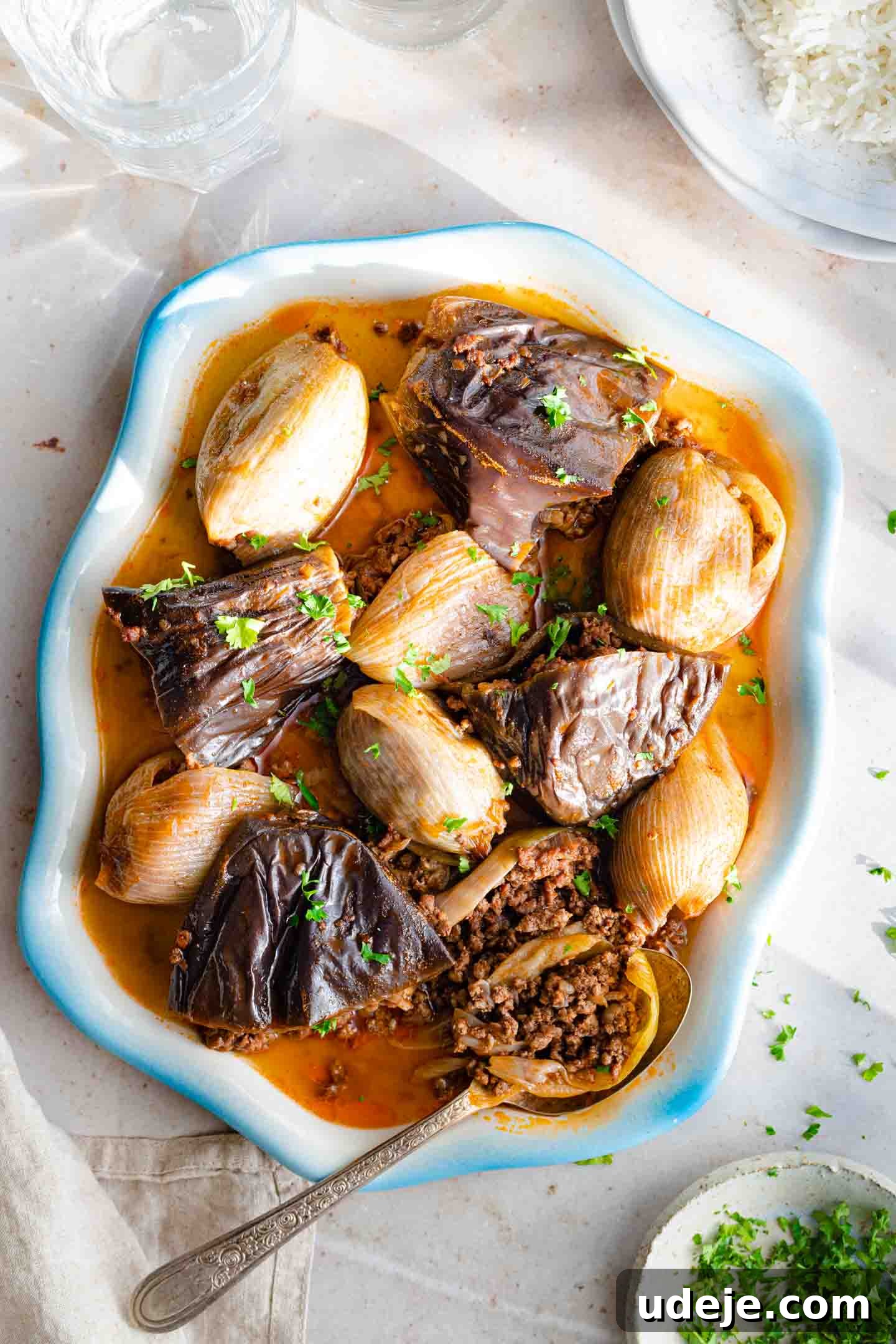
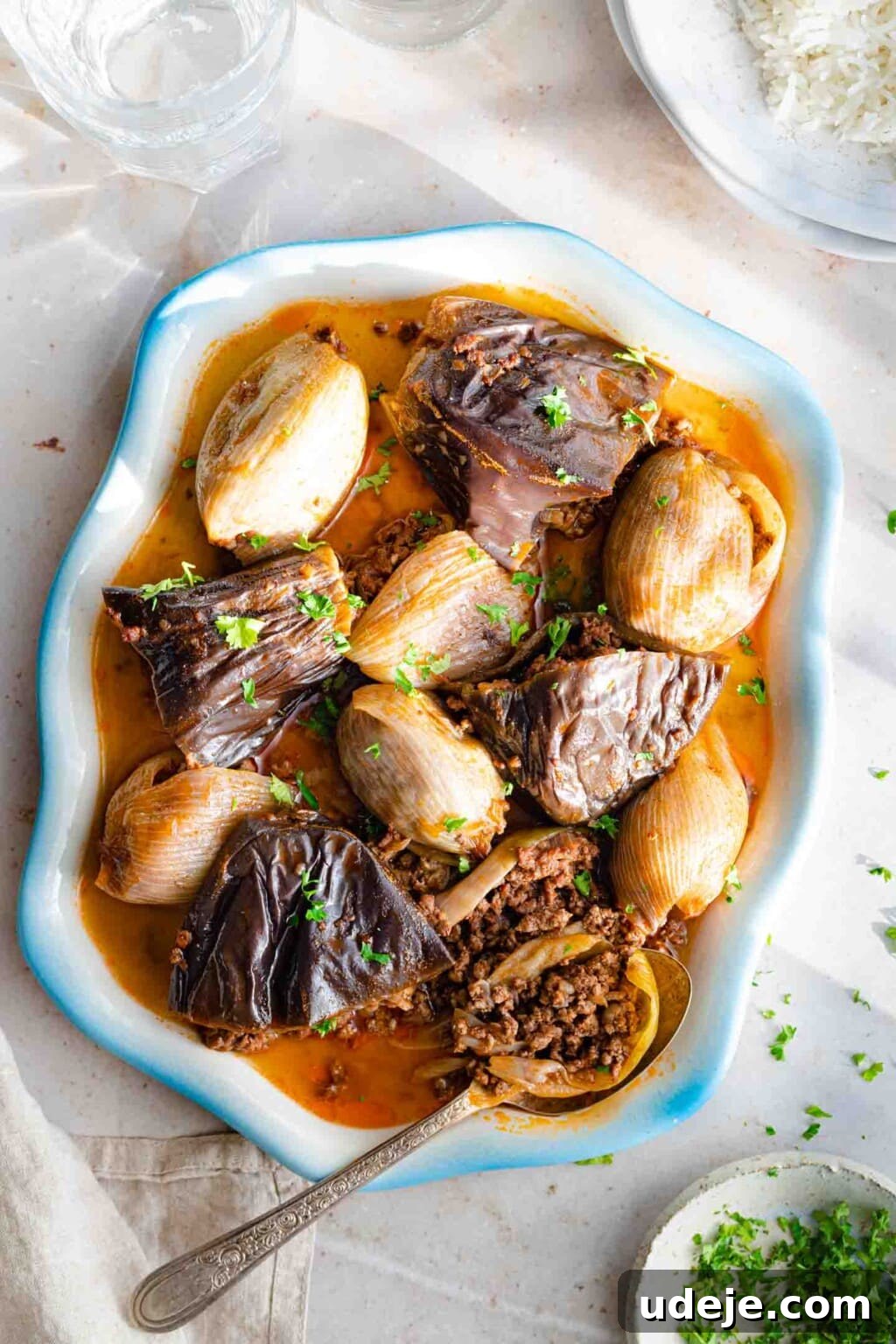
In the vibrant tapestry of Middle Eastern cuisine, where flavors tell tales of ancient traditions and heartwarming gatherings, one dish proudly wears the crown: Sheikh El Mahshi. Translating majestically to “king of stuffed dishes,” this exquisite creation is a testament to the region’s love affair with hearty, flavorful stuffed vegetables. Imagine tender eggplants and sweet onions, each meticulously filled with a spiced beef mixture, then slow-cooked to perfection in a rich, tangy tomato broth. Served alongside fluffy white rice, it’s a dish that not only satisfies the palate but also brings an unparalleled elegance to any dining table.
While its regal name might suggest complexity, Sheikh El Mahshi is surprisingly approachable. With a little care and attention to detail, you can master this beloved stovetop recipe and proudly present a truly impressive meal that will delight your guests and earn you endless compliments. Get ready to embark on a culinary journey that celebrates the rich flavors and comforting essence of this royal dish.
Unveiling Sheikh El Mahshi: The “King” of Stuffed Delicacies
The Middle East boasts an incredible variety of “mahshi,” or stuffed vegetables, a culinary art form deeply embedded in its cultural heritage. From grape leaves to zucchini, almost any hollowable vegetable can become a vessel for delicious fillings. These variations often fall into two main categories: those stuffed with a rice and meat mixture, designed to be a complete, stand-alone meal like classic Dolma or vegetarian stuffed peppers, and those, like Sheikh El Mahshi, which feature a luxurious meat-only filling.
Sheikh El Mahshi earns its “king” status for several reasons. Firstly, it prominently features eggplant, a revered vegetable in many Middle Eastern cuisines, known for its ability to soak up rich flavors. Secondly, its stuffing consists solely of ground meat, traditionally a more expensive ingredient, signifying a meal of opulence and generosity. Historically, serving a dish abundant in meat was a clear indicator of wealth and hospitality, making Sheikh El Mahshi a feast fit for royalty, or at least for cherished guests.
While the process of hollowing out the eggplant might seem daunting at first, it’s a skill easily acquired with a sharp paring knife and a little practice. For those seeking an equally delicious but slightly simpler alternative, particularly if you’re keen on the sweet tenderness of cooked onions, our stuffed onions recipe offers a fantastic starting point. And if you’re a fan of combining eggplant with ground beef, my husband’s favorite Mediterranean Eggplant Casserole is another must-try.
Essential Ingredients for Your Sheikh El Mahshi
Crafting the perfect Sheikh El Mahshi begins with selecting quality ingredients. Here are some key considerations to ensure the best results:
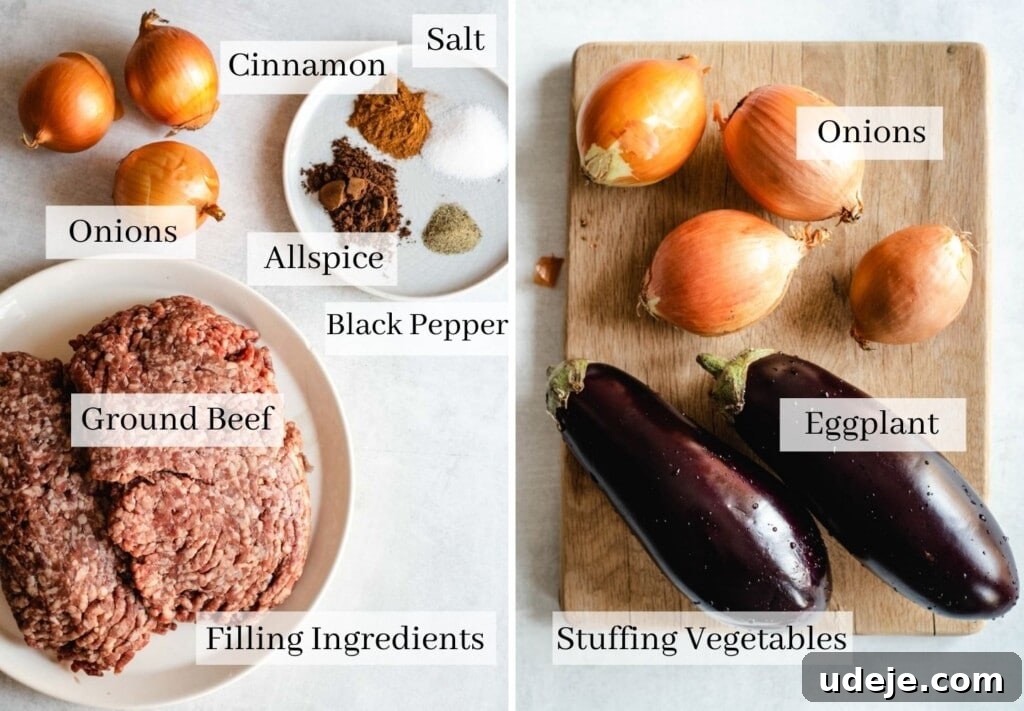
- Ground Beef: For a richer flavor and texture, opt for lean ground beef. If using extra-lean, you might want to add a touch more oil to the pan during cooking to prevent it from drying out, ensuring the stuffing remains succulent.
- Allspice: This essential Middle Eastern spice is crucial for the authentic flavor of Sheikh El Mahshi. It’s important to note that “allspice” here refers to the actual ground allspice berry, not a spice blend. You should easily find pure ground allspice in most grocery stores or international markets.
- Eggplants: Italian eggplants are often preferred due to their slender shape and slightly shorter length, making them easier to core and stuff after being cut in half. However, larger eggplants can certainly be used; you’ll simply need to adjust your cutting and coring technique to create manageable pieces.
- Onions for Stuffing: When choosing onions for stuffing, look for varieties that are narrower and longer rather than plump and round. This shape makes the crucial task of separating the layers much simpler, which is key to creating the perfect pockets for your meat filling.
Mastering the Art of Sheikh El Mahshi: Step-by-Step Guide
Creating this magnificent dish is a rewarding experience. Follow these detailed steps to prepare your own “king of stuffed dishes.”
Preparing the Flavorful Meat Stuffing
Begin by preparing the aromatic meat filling, a quick process that allows you to simultaneously work on your vegetables.
- Sauté the Onions: Finely chop your onions. In a large skillet or pot, heat a few tablespoons of vegetable oil over medium heat. Add the chopped onions and cook until they become soft and translucent, about 5-7 minutes.
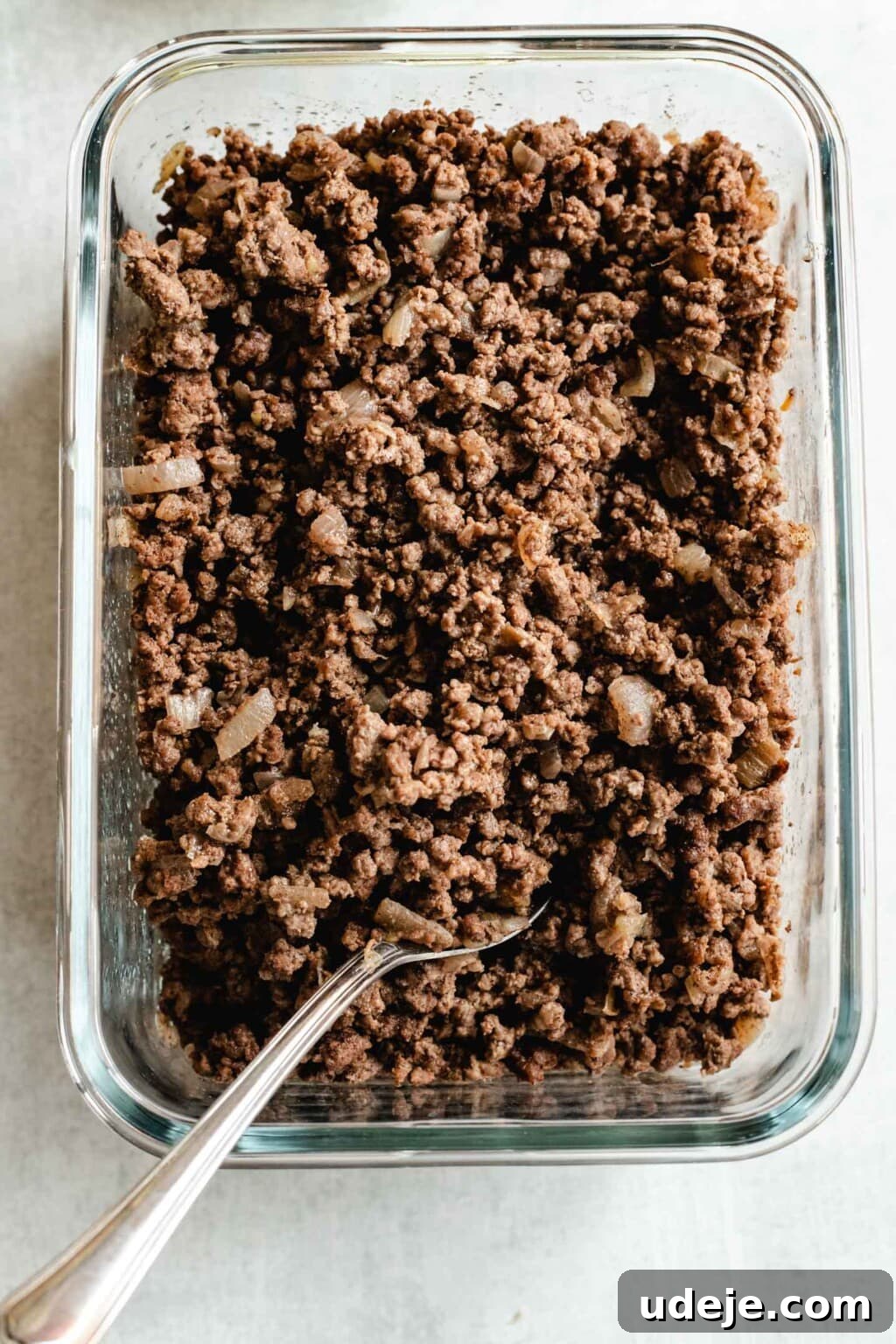
- Brown the Ground Beef: Add the ground beef to the softened onions. Break it up thoroughly with a spoon and brown it completely, ensuring no pink remains. This typically takes another 5-7 minutes, stirring occasionally.
- Season and Cool: Incorporate all the measured spices – allspice, salt, cinnamon, and pepper – into the browned meat mixture. Stir well, allowing the flavors to meld and any remaining moisture to evaporate. Taste and adjust for salt as needed. Once seasoned, remove the stuffing from the heat and set it aside to cool completely. Cooling is important to prevent the raw vegetables from wilting too quickly during stuffing.
Coring and Preparing the Vegetables with Precision
This is arguably the most intricate part, but with these tips, you’ll manage it like a pro.
- Prepare the Onions:
- Start by carefully trimming off both ends of each onion with a small, shallow cut, being sure to keep the onion mostly intact.
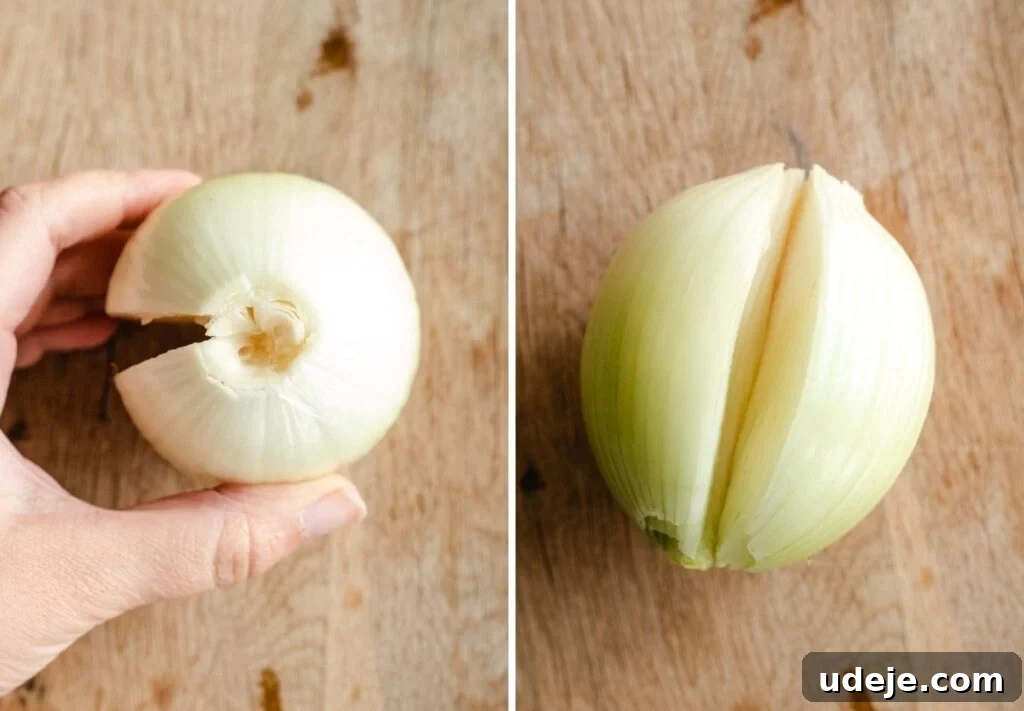
- Peel the onion layers. Then, using your knife, gently dig around the root end to carve it out slightly. This technique is key to loosening the layers.
- Make a single long cut lengthwise from one end of the onion, stopping just before the center. Do not cut completely through.
- Microwave the onions for about 1 minute. This softens the layers just enough to make them pliable. Allow them to cool slightly.
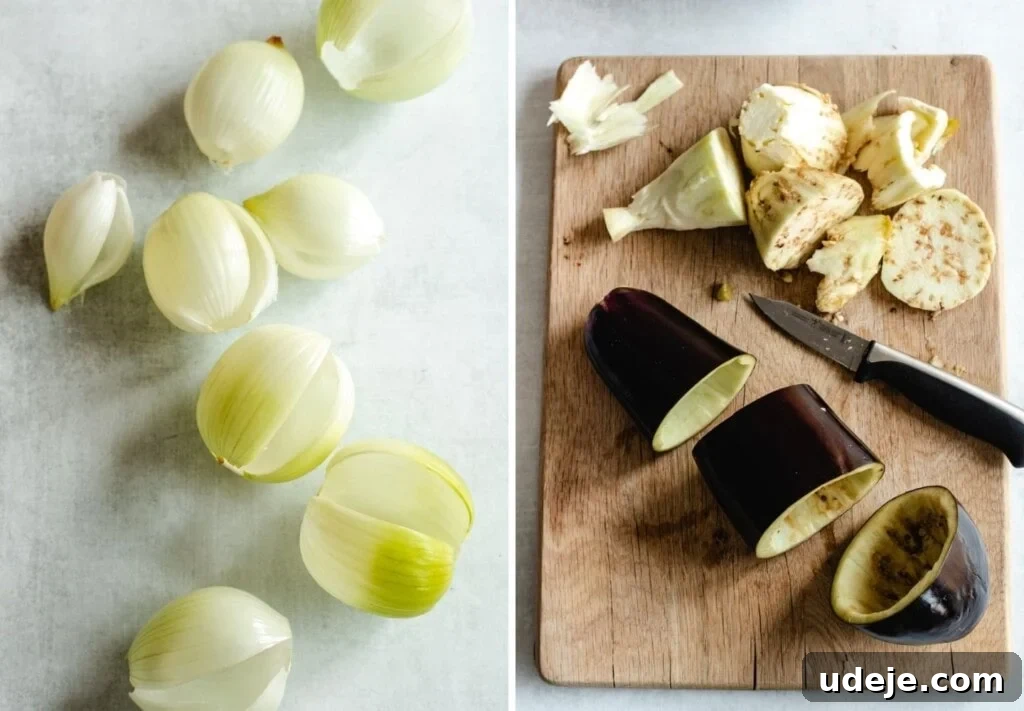
- Once cool enough to handle, use your fingers to carefully separate and dislodge each onion layer one by one. Gentleness is crucial to prevent tearing.
- Prepare the Eggplants:
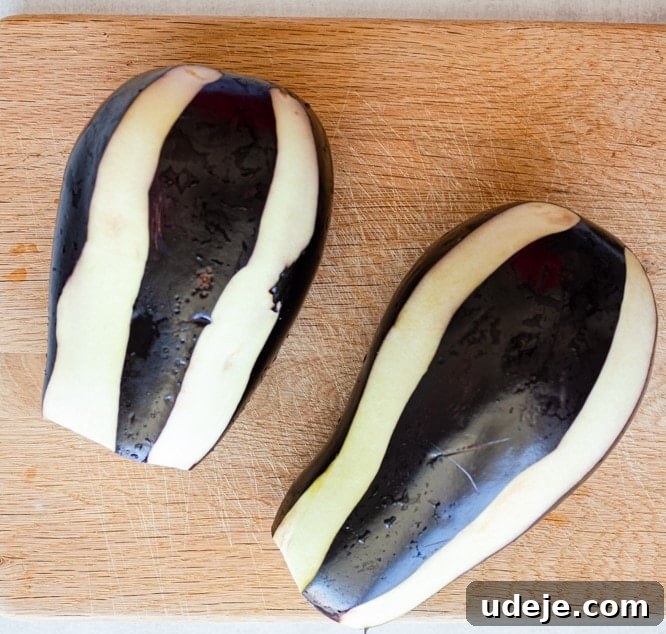
- For the eggplants, peel them in a distinctive “zebra pattern” – removing every other stripe of skin. This method not only adds visual appeal but also makes the eggplant easier to cut and eat after cooking.
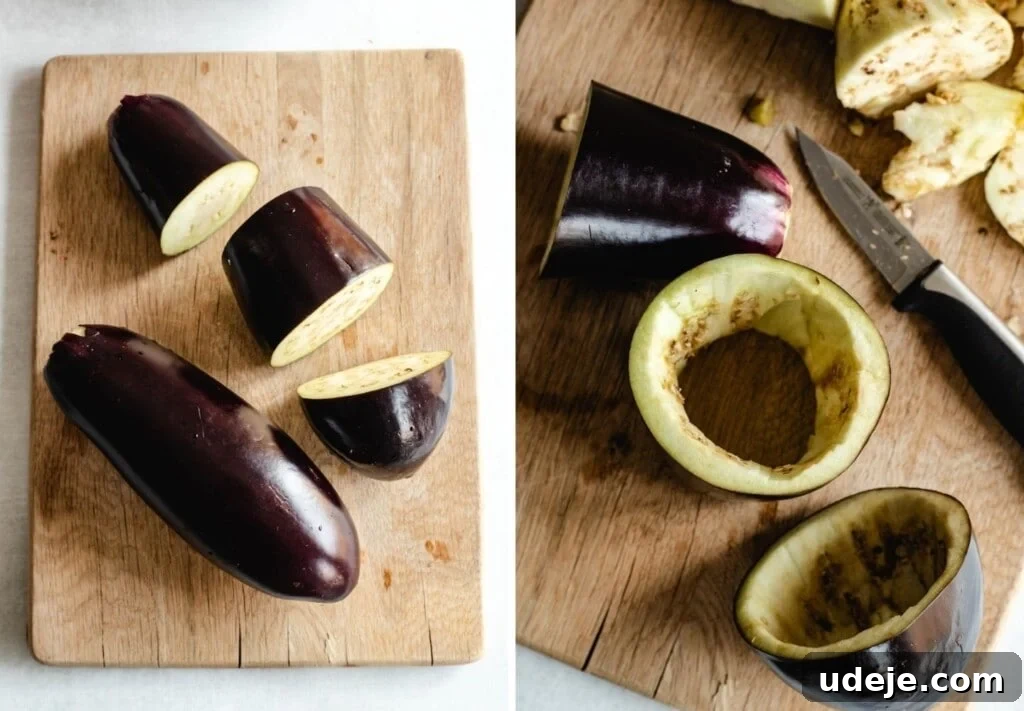
- Depending on the size of your eggplant, cut it crosswise into two or three evenly sized cylindrical pieces.
- Using a sharp paring knife, carefully core each eggplant piece, creating a cavity for the stuffing. Be sure to save the removed eggplant flesh; it will be used to line the pot later, adding another layer of flavor and preventing sticking.
- Shallow Fry the Eggplants (Highly Recommended): This step is often overlooked but adds immense depth of flavor. In a skillet, heat a few tablespoons of vegetable oil. Lightly shallow fry the cored eggplant pieces for 3-4 minutes on each side, just until they develop a light golden color and slightly soften, but are not cooked through. This process enhances their taste significantly. Remove and let them cool.
Stuffing and Arranging the Vegetables
With your meat stuffing cooled and vegetables prepared, it’s time to assemble your masterpiece.
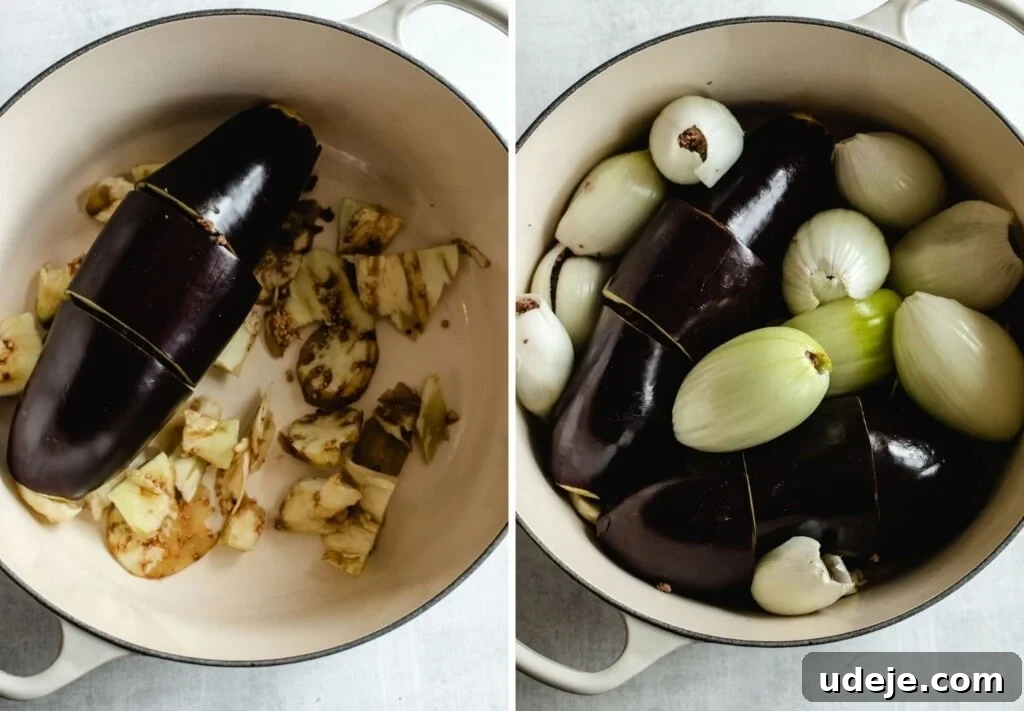
- Line the Pot: Drizzle a little olive oil at the bottom of a large heavy-bottomed pot. Arrange the reserved eggplant insides (from coring) on the bottom of the pot. This creates a protective layer, adds flavor, and prevents the stuffed vegetables from sticking.
- Stuff the Eggplant: Begin by stuffing the eggplant pieces generously with the cooled meat mixture. Once stuffed, arrange them in the pot so they “re-form” a whole eggplant. This clever technique helps to keep the filling securely inside during cooking.
- Stuff the Onions: Take the separated onion layers and stuff each one with the meat filling. Fold the edges over to enclose the stuffing, creating neat little bundles. Nestle these stuffed onions tightly into the pot alongside the eggplants. Packing everything in tightly is key to preventing the filling from escaping as the vegetables cook and soften.
Cooking the Sheikh El Mahshi to Perfection
The final stage brings all the flavors together in a luscious broth.
- Prepare the Broth: In a separate bowl, whisk together the tomato sauce, boiling water, salt, pomegranate molasses, and ground black pepper. Pomegranate molasses adds a wonderful tangy depth; if you don’t have it, a squeeze of lemon juice and a pinch of sugar can offer a similar sweet-sour balance.
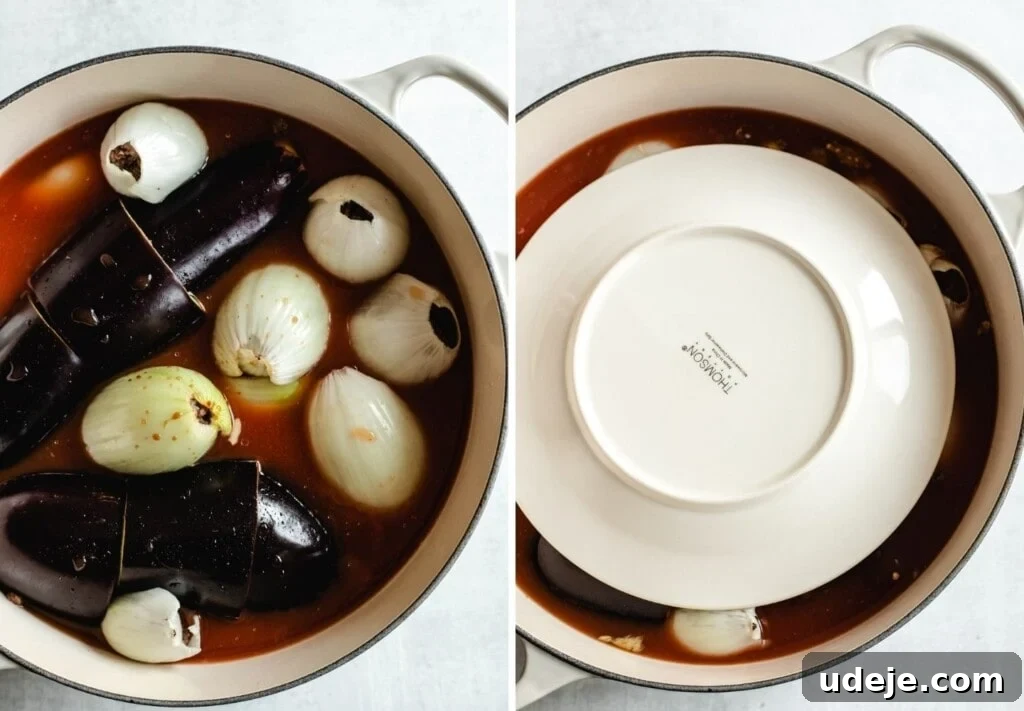
- Add the Broth: Place a heat-proof plate directly on top of the stuffed vegetables in the pot. This helps to keep them submerged and prevents them from floating and losing their filling. Slowly pour the prepared tomato broth over the plate and into the pot, ensuring it almost covers all the vegetables.
- Simmer: Cover the pot and bring the broth to a rolling boil over high heat. Once boiling vigorously, reduce the heat to medium-low and allow the Sheikh El Mahshi to simmer gently for approximately 1 hour and 20 minutes, or until the onions are incredibly soft and translucent, and the eggplant is tender.
- Final Adjustments: Taste the broth and adjust the salt if necessary. The sauce is meant to be somewhat runny, perfect for spooning generously over rice.
Exploring Other Sheikh El Mahshi Variations
The method detailed here is the traditional Iraqi approach, passed down through generations in my family. It emphasizes fully cored and lightly fried eggplant combined with the sweet tenderness of stuffed onions, all cooked on the stovetop. In my humble opinion, this version delivers an unrivaled depth of flavor and texture that truly makes it the best I’ve ever tasted!
However, it’s worth noting that Sheikh El Mahshi, like many beloved regional dishes, has several variations across the Middle East. Some recipes focus exclusively on eggplant and do not require the intricate coring process. I’ve seen methods where small, whole eggplants are fried or roasted until tender, then sliced lengthwise to create a “pocket” for the meat filling. These are often then covered in a rich tomato sauce and baked in the oven.
While these other versions are undoubtedly delicious, my profound appreciation for the soft, sweet, and almost caramelized onions that result from this particular cooking method makes the Iraqi version truly exceptional. The onions transform into delicate, flavorful pockets that are simply irresistible. So, while you have options, I wholeheartedly encourage you to try this specific stovetop recipe to experience its unique and wonderful charm.
Serving Your Royal Sheikh El Mahshi
Once your Sheikh El Mahshi is cooked to perfection, the moment arrives to present this magnificent dish. Here’s how to serve it with grace and flavor:
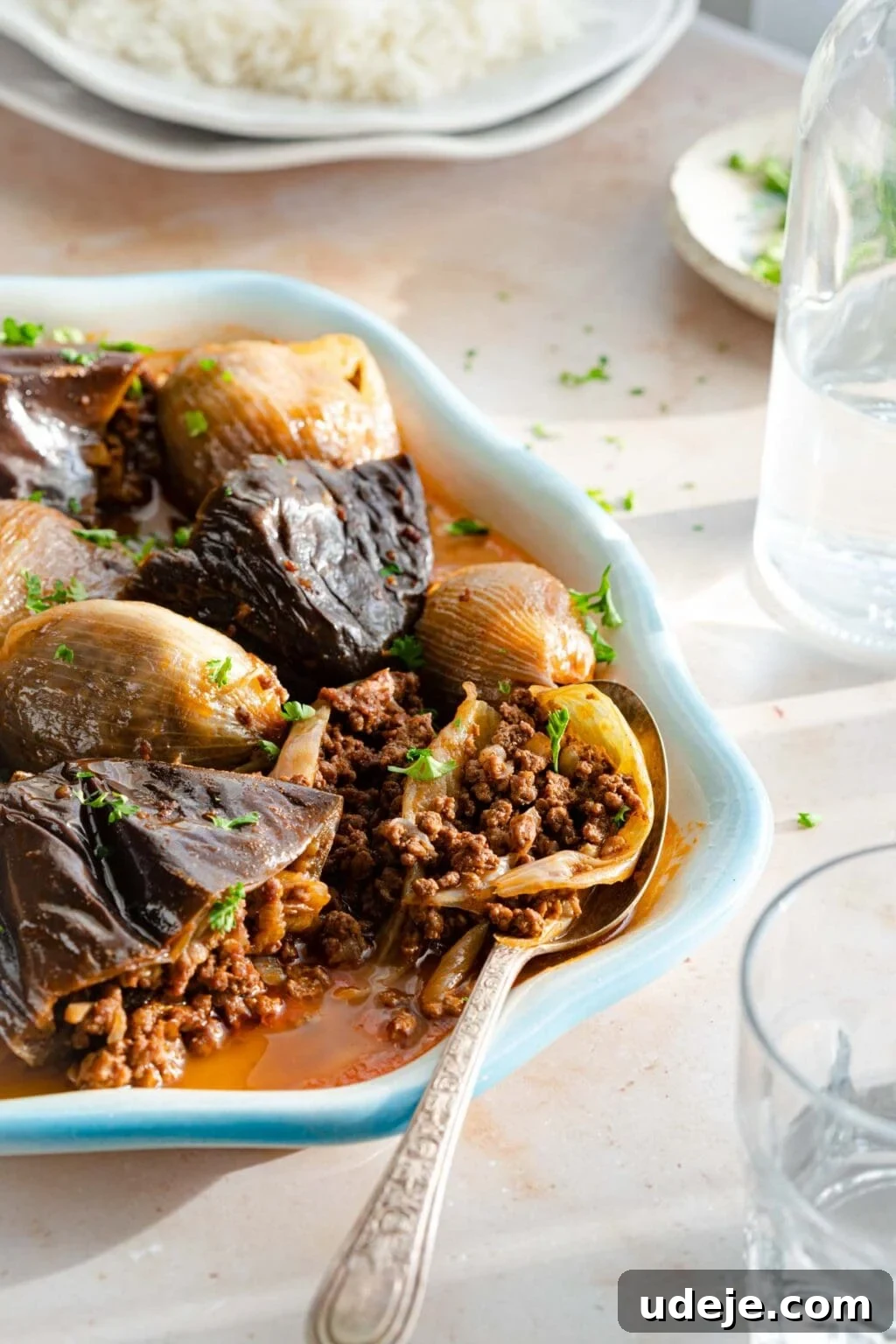
Carefully spoon the tender stuffed vegetables onto a large serving platter with deep sides to hold the accompanying broth. Be gentle, as the cooked vegetables will be delicate; using two spoons can help transfer them intact. It’s completely normal for some of the flavorful meat stuffing to spill out during cooking – don’t worry, you can simply scoop it up and arrange it around the dish, as it contributes to the overall deliciousness!
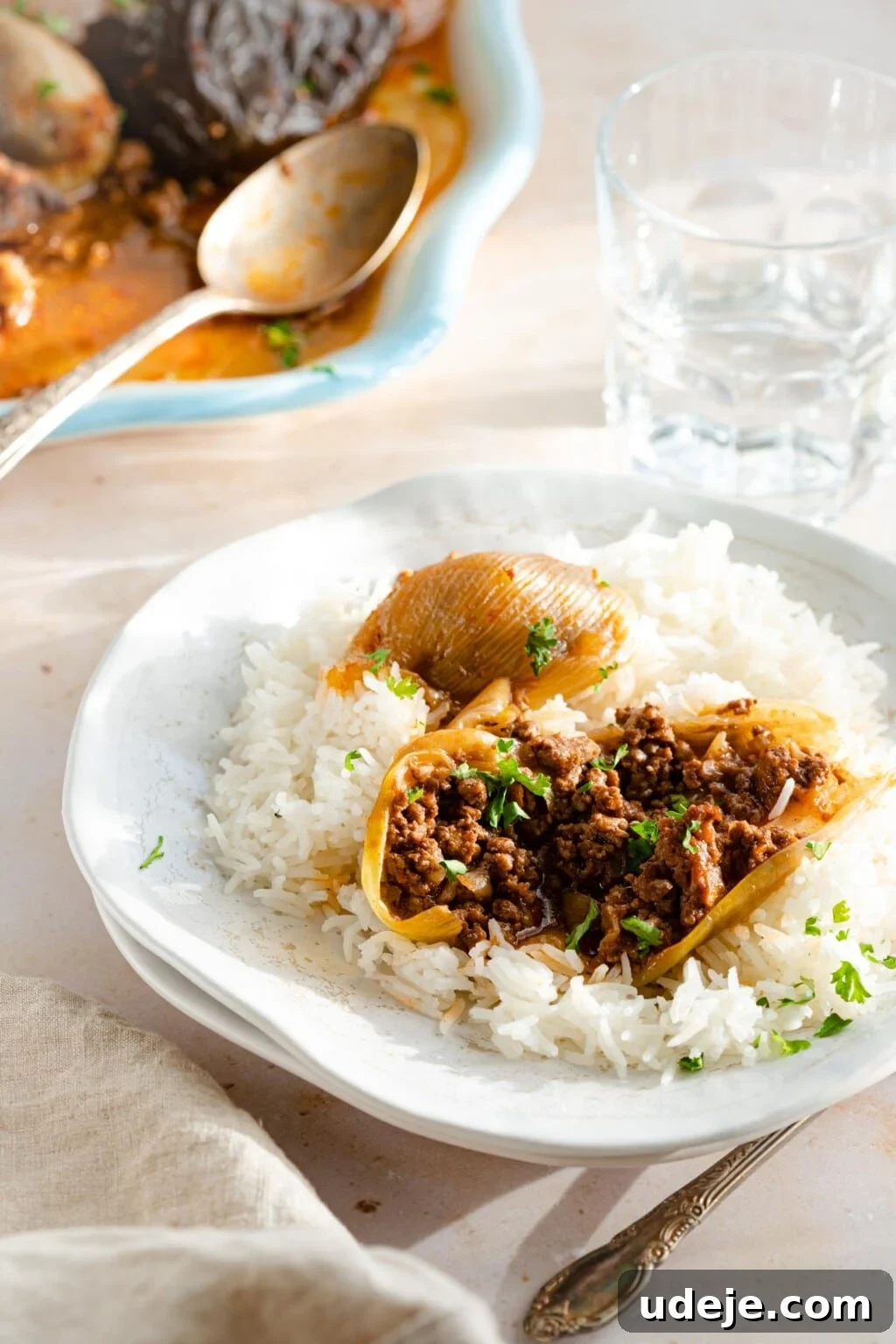
The traditional and most popular accompaniment to Sheikh El Mahshi is fluffy white basmati rice. Serve a generous portion of rice on your plate, then top it with a beautifully stuffed eggplant and an onion. Break them open to reveal the juicy, aromatic meat filling inside, and then lavishly spoon over the deep, rich tomato broth that has absorbed all the wonderful flavors during cooking.
For those who enjoy a different texture, eating Sheikh El Mahshi with fresh bread is also a delightful option, especially for enjoying the leftovers the next day. To complete your meal, consider adding a refreshing side such as a quick Middle Eastern Fattoush salad or a cool and creamy yogurt Jajik (cucumber yogurt salad).
Sheikh El Mahshi is more than just a meal; it’s a celebration. Considered a “fancy” dish, it often takes pride of place on the menu when inviting guests over for dinner. Imagine the gasps of delight as you place this impressive platter, brimming with tender stuffed vegetables and glistening broth, before your appreciative guests. It’s a truly unforgettable dining experience.
More Stuffed Recipes You Will Love
If you tried this incredible Sheikh El Mahshi recipe, please consider sharing your experience by leaving a star ⭐️⭐️⭐️⭐️⭐️ rating and a review in the comments section below – your feedback is highly valued! You can also connect with us on Instagram and say hello!
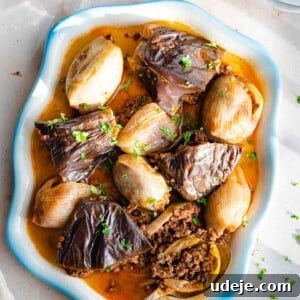
Sheikh El Mahshi
If you want a showstopper recipe to proudly serve to your guests, or to treat your family, this is it! The ultimate stuffed onions and eggplant, cooked in a flavorful tomato broth.
Yield: 6 people
Prep time: 40 mins
Cook time: 1 hr 20 mins
Total time: 2 hrs
Author: Amina Al-Saigh
Leave a Review
Pin Recipe
Ingredients
For the stuffing
- 2 cups onion (roughly 3 small onions), finely chopped
- 1 kg ground beef
- 1.5 teaspoon allspice
- 1 teaspoon salt
- 1 teaspoon cinnamon
- 1/2 teaspoon pepper
- 2 tablespoons vegetable oil
For the vegetables
- 2 eggplants
- 3 onions
For the cooking broth
- 1.5 cups tomato sauce
- 5 cups boiling water
- 1/2 teaspoon salt
- 1 tablespoon pomegranate molasses (substitute with a squeeze of lemon and a pinch of sugar)
- 1/2 teaspoon ground black pepper
Equipment
- Stove
- Large Pot
- Skillet
- Paring Knife
Instructions
To make the stuffing
- Finely chop the onions and soften them on medium heat with the vegetable oil.
- Add the ground beef and break it up into small pieces, then cook for 5-7 minutes until browned, stirring occasionally.
- Add all of the stuffing spices (allspice, salt, cinnamon, pepper) and continue to stir until all the moisture has evaporated. Remove from heat and set aside to cool.
Coring and stuffing the vegetables
- For the onions, cut off the edges using a very small and shallow cut – you want to keep the onion intact. Peel the onion, then dig your knife around the end where the root was and carve it out slightly (this helps separate the layers).
- Make a long cut lengthwise all the way to the centre – do not cut past the centre. Then microwave the onions for 1 minute to soften the layers slightly. Wait for them to cool, then use your fingers to carefully dislodge the layers and pop them out one by one. Be gentle!
- Next, peel the eggplant in a zebra pattern, every other stripe. Peeling it like this will help make it easy to cut and eat later.
- Depending on the size of your eggplant, cut across the width into 2 or 3 even sized pieces. Core each piece using a sharp pairing knife and save the insides.
- Lightly shallow fry each eggplant for 3-4 minutes on each side to get some color (you should not cook them through) and add flavor. Allow them to cool.
- Line a pot with the insides of the eggplant and a drizzle of oil. Stuff the eggplant first and line the pieces up to form a complete eggplant, which will help the filling stay inside.
- Stuff the onions and nestle them in tightly with the eggplant. Ensure the pot is packed in tightly.
Cooking the Sheikh El Mahshi
- Place a plate on top of the stuffed vegetables to help keep them in place.
- Mix together the cooking broth ingredients (tomato sauce, boiling water, salt, pomegranate molasses, pepper) and pour it over the plate to almost submerge all of the vegetables.
- Bring to a boil on high heat, and once boiling, reduce the heat to medium and allow it to boil gently for approximately 1 hour and 20 minutes, until all the vegetables are soft. Taste and adjust the broth for salt.
- Serve by gently spooning out the stuffed vegetables onto a platter with high sides, and spooning the broth on top.
Notes
- When choosing the onions for stuffing, go for narrow onions as they are easier to stuff.
- For eggplant, the best variety to use is Italian eggplant, but the larger ones will work too.
- Lightly frying the eggplant before stuffing will give this dish a lot of flavor. Make sure you don’t fry for too long; you want them to stay intact and not soften too much.
Nutrition (per serving)
Calories: 529 kcal, Carbohydrates: 25g, Protein: 32g, Fat: 34g, Saturated Fat: 13g, Polyunsaturated Fat: 1g, Monounsaturated Fat: 15g, Trans Fat: 2g, Cholesterol: 118mg, Sodium: 1022mg, Potassium: 1172mg, Fiber: 8g, Sugar: 14g, Vitamin A: 308 IU, Vitamin C: 16mg, Calcium: 85mg, Iron: 5mg
Did you make this recipe? Please leave a star rating and review below!