
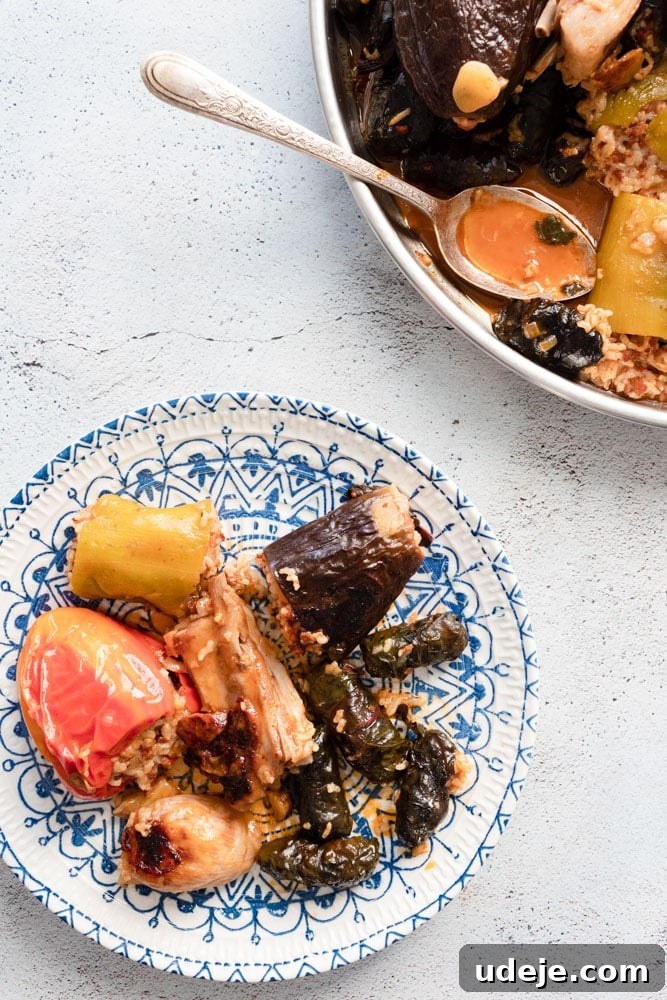
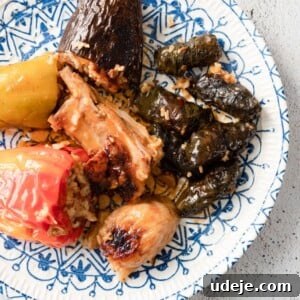
Step into the heart of Middle Eastern culinary tradition with an iconic dish: Iraqi Dolma. This vibrant, intensely flavorful medley of vegetables, meticulously stuffed with a savory rice and meat filling, then slow-simmered in a rich, tangy tomato broth, stands as a testament to the region’s rich gastronomic heritage. While countless dolma variations exist across the vast tapestry of Middle Eastern cuisine, this authentic Iraqi rendition holds a uniquely cherished place, often passed down through generations. My mother’s recipe, in particular, captures the essence of Iraqi hospitality and comfort, making it truly special and a staple at family gatherings.
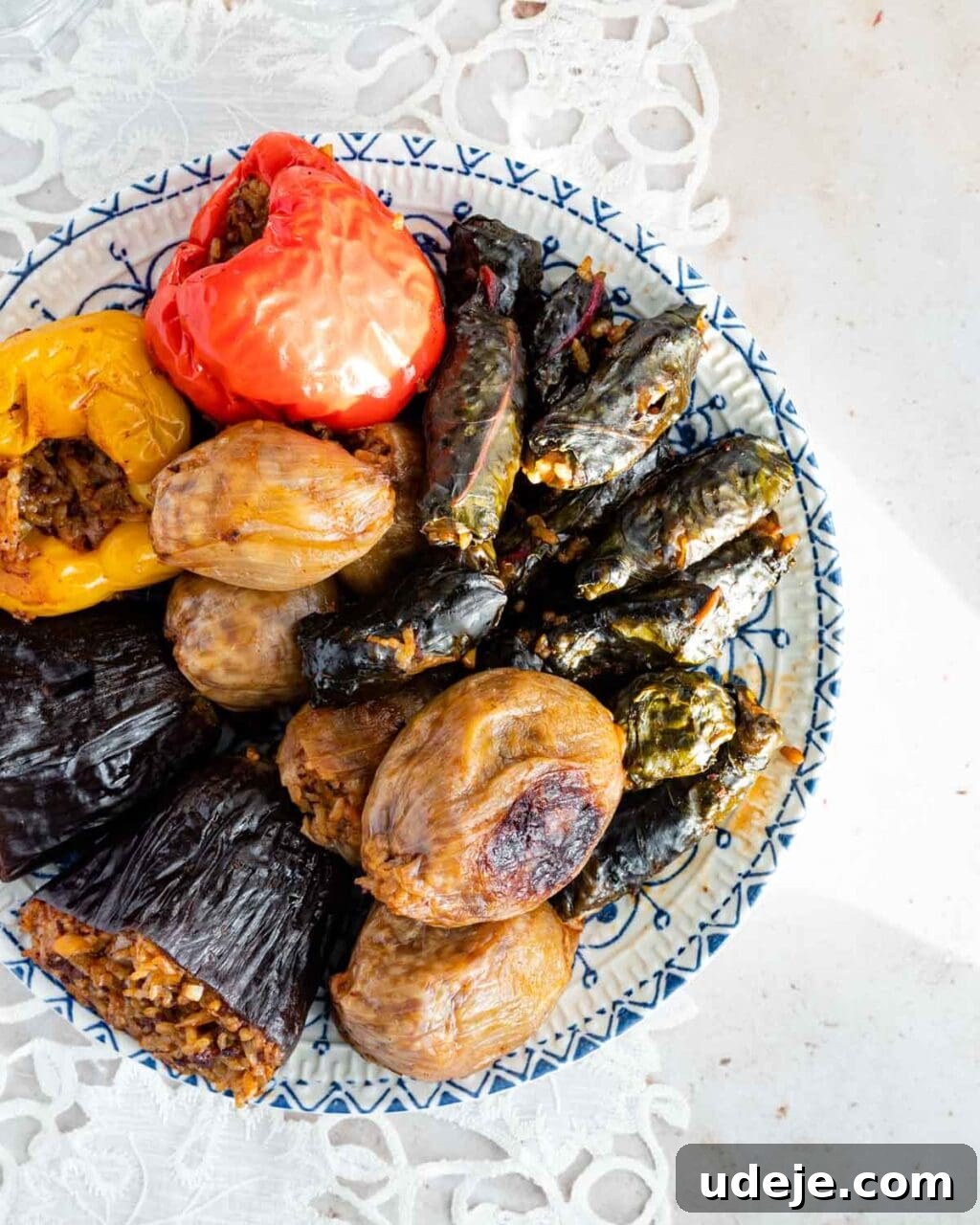
The Enduring Legacy of Iraqi Dolma: A Culinary Masterpiece
In Iraq, few dishes evoke the warmth of family and the joy of celebration quite like a grand platter of Iraqi Dolma. It’s more than just a meal; it’s an event, a culinary centerpiece reserved for momentous occasions and cherished gatherings, much like the revered Iraqi Quzi or the layered marvel that is Maqluba. My childhood memories are steeped in the aroma of my mother’s dolma every weekend, a ritual that brought us all together. My sisters and I would eagerly vie for the coveted crispy, browned pieces caramelized at the bottom of the pot – a true delicacy in Iraqi households.
The beauty of dolma lies in its adaptability. The selection of vegetables can be a delightful reflection of the seasons. In the warmer months, tender grape leaves are abundant, offering a delicate texture and slightly tart flavor. As winter descends, heartier options like Swiss chard or cabbage come to the forefront, providing a comforting and robust base for the savory stuffing. This seasonal flexibility not only ensures freshness but also allows for a diverse culinary experience throughout the year.
For those yet to experience this culinary treasure, describing its taste is a journey in itself. Imagine a symphony of flavors and textures in every melt-in-your-mouth bite: perfectly cooked rice, succulent meat, and tender vegetables, all infused with a complex profile that is at once tart from pomegranate molasses, subtly sweet, deeply tomato-rich, and bursting with a profound umami essence. It’s a harmonious blend that leaves a lasting impression, making it an unforgettable dish.
While the authentic Iraqi Dolma is undeniably a labor of love, its irresistible allure often leads to cravings. Recognizing this, I’ve developed simpler, quicker alternatives that capture a similar flavor profile. My Mediterranean stuffed peppers recipe offers a delightful and faster option, while these oven-baked cabbage rolls provide another equally delicious path to enjoying stuffed vegetables with less preparation time.
Essential Vegetables for Authentic Iraqi Dolma
One of the most appealing aspects of making Iraqi Dolma is the freedom to choose your favorite vegetables. While certain staples are commonly used, there are no strict rules, allowing for creative combinations based on seasonal availability and personal preference. The core principle is to select vegetables that can be cored or layered and hold their shape during the cooking process, becoming tender vessels for the flavorful stuffing.
- Eggplant: Italian eggplants are highly recommended due to their ideal size and firm texture, making them easy to core and stuff. For larger varieties like globe eggplants, consider cutting them into more manageable halves or even quarters. Smaller Indian eggplants can also be used, though you might need more of them to achieve the desired quantity.
- Green Zucchini: Similar to eggplant, green zucchini provides a lovely mild flavor and soft texture when cooked. They are typically cut into two or three pieces before coring to create individual portions.
- Onions: Absolutely indispensable for Iraqi Dolma, onions contribute a distinctive sweetness and depth of flavor that sets this dish apart. Their layers provide perfect pockets for stuffing, releasing their aromatic essence throughout the slow cooking process.
- Bell Peppers: Any color of bell pepper works beautifully, adding a subtle sweetness and a vibrant visual element. Red and orange peppers tend to be sweeter and soften nicely.
- Leafy Greens (Swiss Chard, Grape Leaves, or Cabbage): These are often used interchangeably or in combination. Swiss chard is a personal favorite, offering a slightly earthy flavor and sturdy texture. Grape leaves, frequently preserved in brine, impart a delightful tanginess. In winter, hearty cabbage leaves are an excellent choice, and for those who adore them, a dedicated Malfouf (stuffed cabbage rolls) recipe is also a must-try.
- Tomatoes: While often incorporated into the stuffing mixture, some recipes also include cored tomatoes as part of the stuffed vegetables, adding another layer of juicy, fresh flavor.
This diverse array of vegetables not only makes Iraqi Dolma visually stunning but also ensures a delightful variety of textures and tastes in every bite.
Crafting Your Iraqi Dolma: The Journey Begins
Embarking on the creation of Iraqi Dolma is a culinary adventure, beginning with the heart of the dish: the stuffing and the choice of rice. For optimal results, a short or medium grain rice, such as Calrose, is highly recommended. This type of rice cooks up to a wonderfully sticky consistency, which is crucial for dolma, ensuring the filling remains cohesive and moist within its vegetable casing. Long-grain rice, while popular in other dishes, tends to be too fluffy and separate, making it less suitable for this particular recipe.
The distinctive flavor profile of Iraqi Dolma is also heavily influenced by its aromatic blend of spices and fresh herbs. While this recipe provides a classic foundation, regional variations across Iraq might introduce a broader spectrum. Common additions include warming spices like allspice, cumin, coriander, and a hint of cinnamon, along with vibrant fresh herbs such as finely chopped dill, parsley, and cilantro. These ingredients contribute to the dish’s depth, complexity, and undeniable Middle Eastern character.
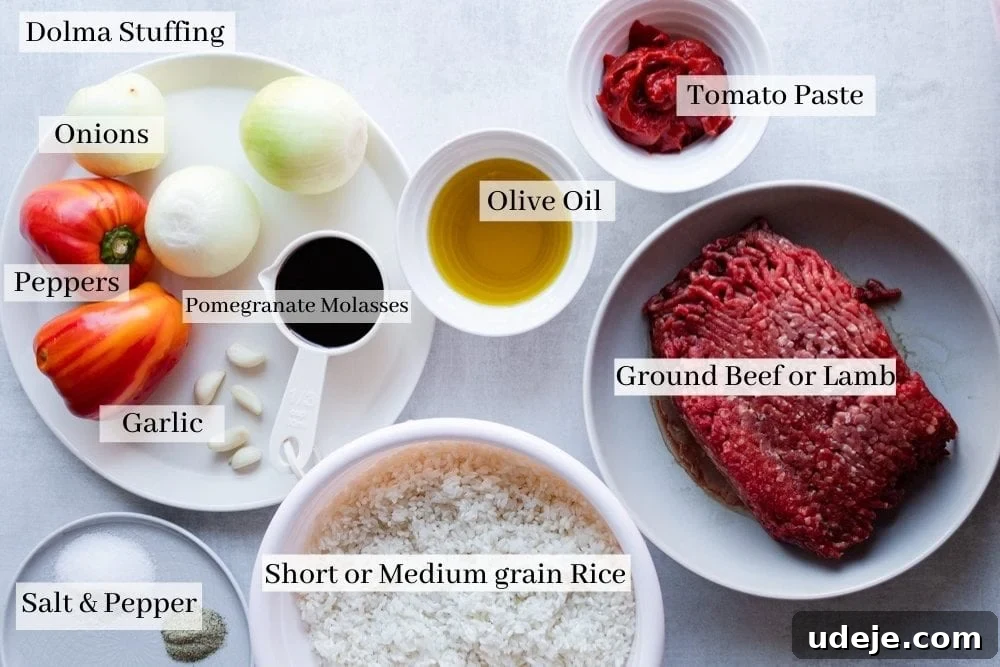
The ingredient quantities provided in this recipe are designed to generously fill a 7-quart pot, perfect for serving approximately 7-8 adults. However, feel free to adjust the amounts of each vegetable based on your personal preferences and the size of your cooking vessel. If you don’t possess a pot large enough for all the vegetables, you can easily divide the recipe and use two smaller pots, perhaps saving one for later enjoyment. Flexibility is key when preparing this versatile dish, and detailed guidance on adjusting the recipe can be found further below.
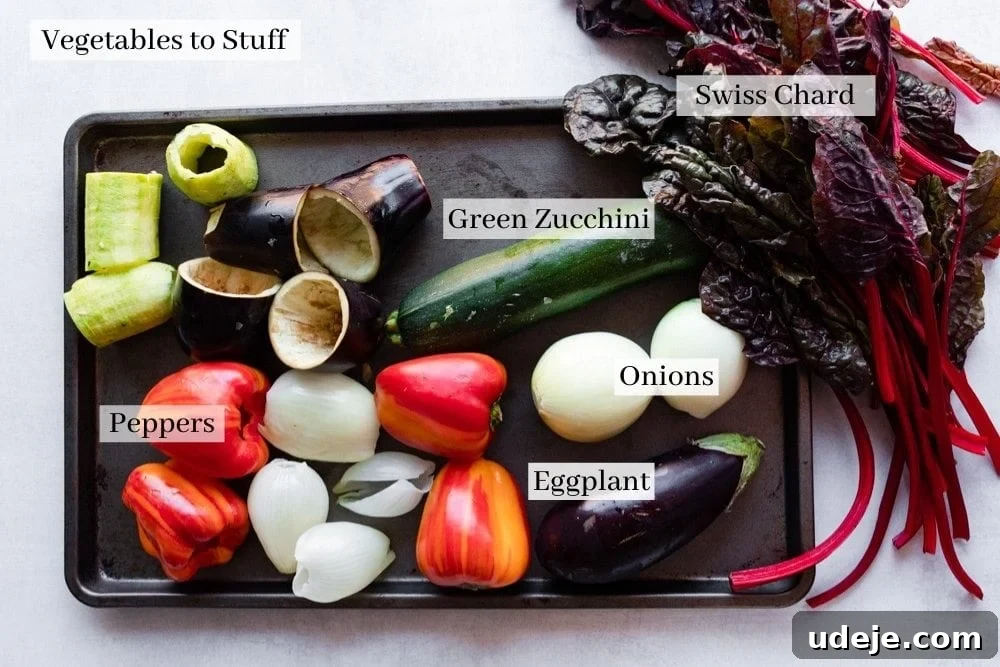
The process of making Iraqi Dolma, though requiring a bit of time and patience, can be broken down into manageable steps:
- Preparing the Stuffing: This initial stage involves finely chopping fresh vegetables and thoroughly mixing them with the seasoned rice, meat, and herbs to create a cohesive and flavorful filling.
- Preparing the Vegetables: This step is critical and often the most time-consuming, involving the careful coring or separation of various vegetables to create hollow cavities or pliable leaves ready for stuffing.
- Stuffing and Stacking: Once prepared, the vegetables are carefully filled with the rice mixture and artfully arranged in layers within a large pot, ensuring they are packed snugly to prevent unraveling during cooking.
- Cooking the Dolma: The final stage involves simmering the stuffed vegetables in a savory, tangy broth until the rice is tender, the meat is cooked through, and the vegetables are exquisitely soft and infused with flavor.
Each step contributes to the ultimate perfection of this beloved Iraqi dish, promising a rewarding culinary experience.
Discover the Dolma Process: A Step-by-Step Video Guide
For a visual walkthrough of the entire Dolma-making process, from preparing the vegetables to expertly stuffing and layering them, be sure to watch the comprehensive video guide above. Seeing these techniques in action can greatly simplify what might otherwise seem like a complex culinary endeavor.
Creating the Flavorful Dolma Stuffing
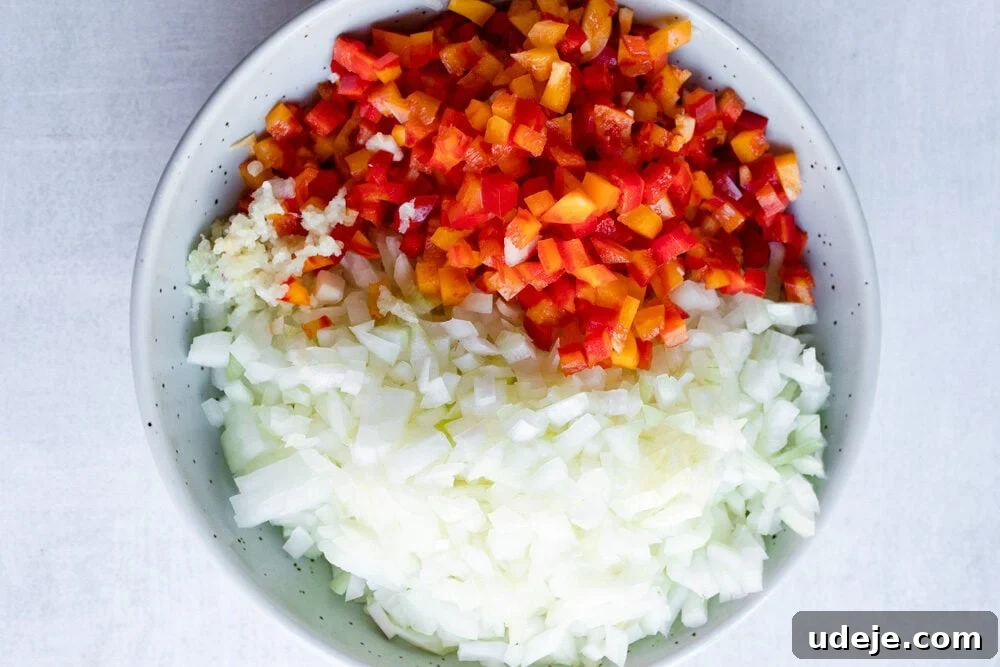
The stuffing for Iraqi Dolma is the heart of its flavor, and fortunately, it’s one of the most straightforward components to prepare. The key to a well-balanced stuffing lies in the meticulous preparation of its core ingredients. Begin by finely dicing the onions and bell peppers. The smaller the dice, the more evenly they will integrate into the rice and meat mixture, contributing to a smoother texture and consistent flavor throughout. Similarly, finely mincing the garlic ensures its pungent aroma is distributed without overwhelming other elements.
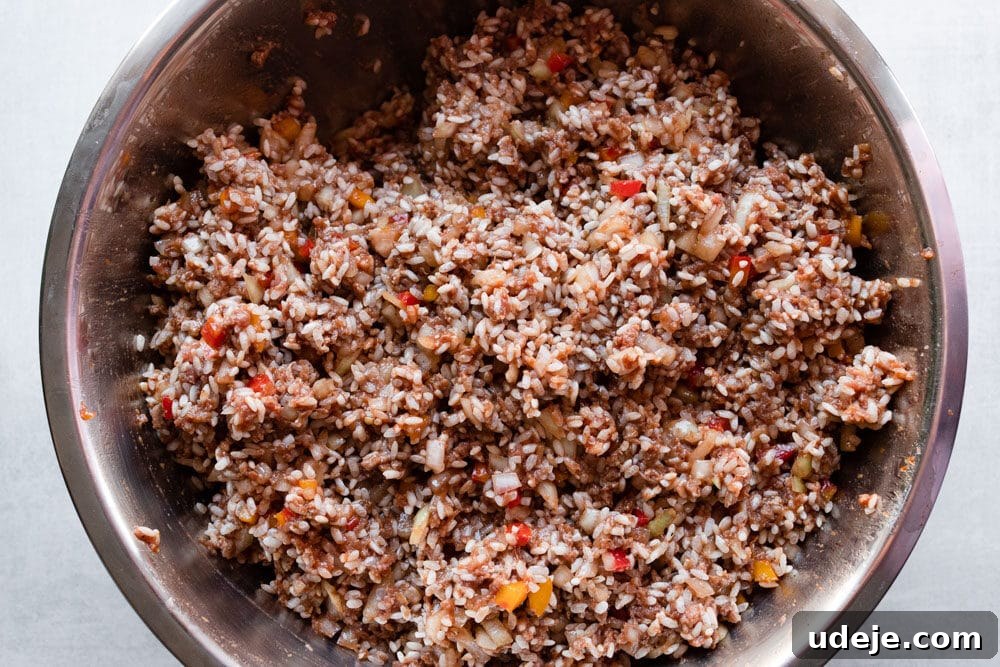
Once your vegetables are prepped, combine all the stuffing ingredients—ground meat, washed rice, chopped aromatics, tomato paste, pomegranate molasses, olive oil, salt, and pepper—in a large mixing bowl. The best tool for this job is your hands. Thoroughly mix everything together, squeezing and kneading gently, until all components are uniformly distributed and the mixture achieves a cohesive texture. This hands-on approach ensures that every grain of rice and every piece of meat is coated in the vibrant seasonings, setting the stage for a truly authentic Iraqi Dolma experience.
Mastering the Art of Coring and Preparing Dolma Vegetables
While making the stuffing is a breeze, preparing the vegetables for dolma, particularly the coring process, is often considered the most intricate and time-consuming part. It requires a bit of practice and precision, but with the right technique, it becomes much more manageable. I’ve experimented with various methods, from using a simple pairing knife, much like my mother taught me, to specialized vegetable coring tools. Surprisingly, I often find the humble pairing knife to be the more effective and versatile option, eliminating the need for extra kitchen gadgets. Ultimately, the best tool is one you feel most comfortable and proficient with.
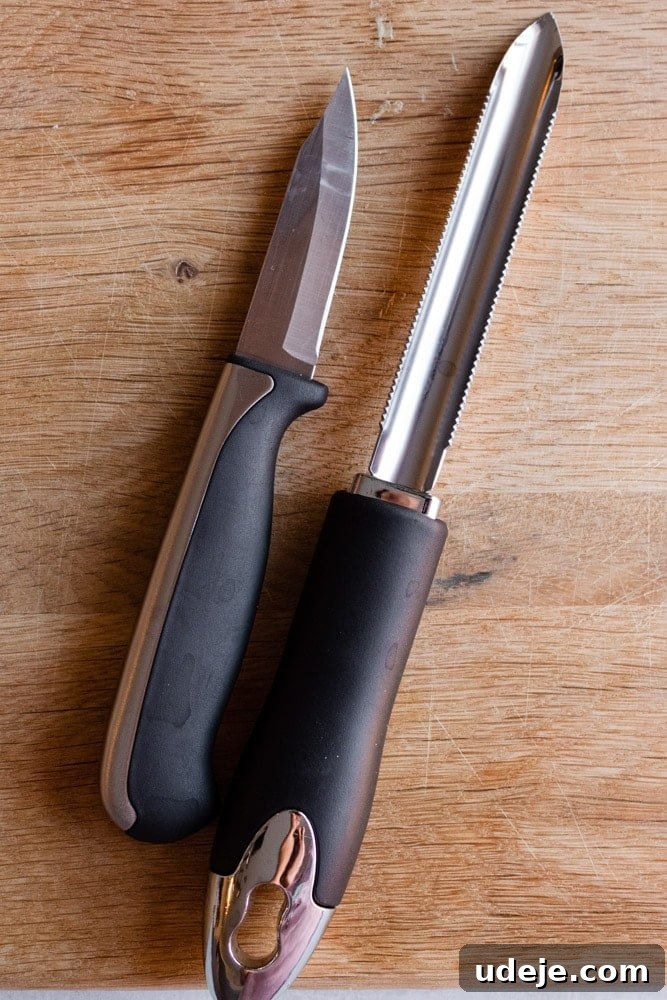
To help visualize these techniques, I highly recommend referring back to the video guide mentioned earlier. Here’s a breakdown of the easiest ways to core and prepare each type of vegetable:
- Eggplant: Begin by cutting medium-sized Italian eggplants into two pieces, as shown in the accompanying photos. Place an eggplant piece sideways on a cutting board, securing it with one hand. With your dominant hand, use a sharp pairing knife to carefully cut around the inside edge of the eggplant, gradually deepening the cut as you rotate the vegetable. Continue this until you either reach the other side or can easily scoop out the inner flesh with your fingers. Don’t worry if some flesh remains; simply use the knife to pare it away. Inserting the knife from the opposite end can also help loosen stubborn bits.
- Zucchini: First, lightly scrape off the zucchini’s outer skin with a sharp knife (avoiding a peeler, which removes too much flesh). Trim the ends, then cut the zucchini into two or three segments. Core these segments using the same precise method as for the eggplant.
- Bell Pepper: This is one of the simpler vegetables to prepare. Carefully cut around the stem of the pepper to remove it. Then, use your fingers to extract all the inner seeds and any white pith, which can be bitter. A small knife can assist in loosening any clinging seeds.
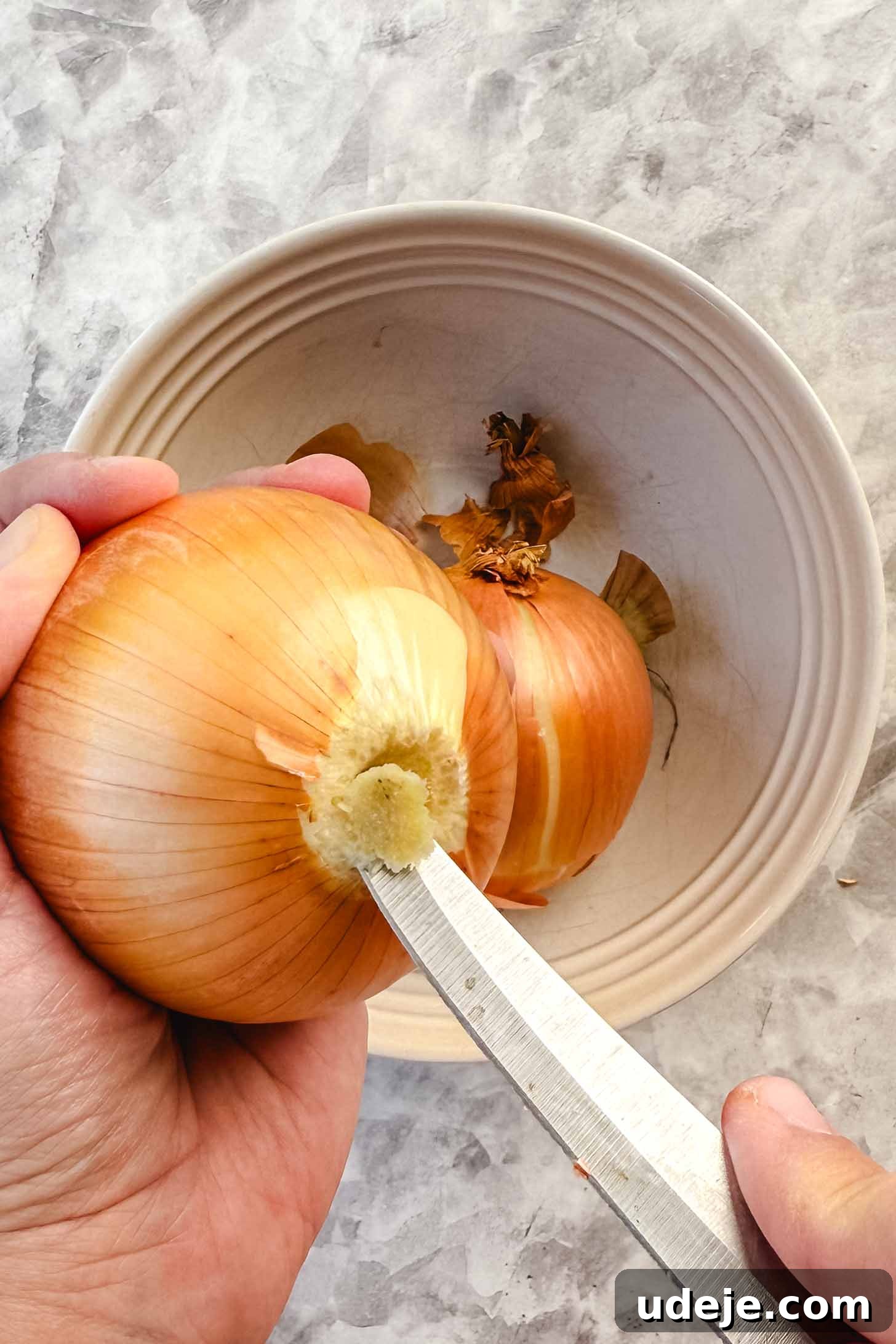
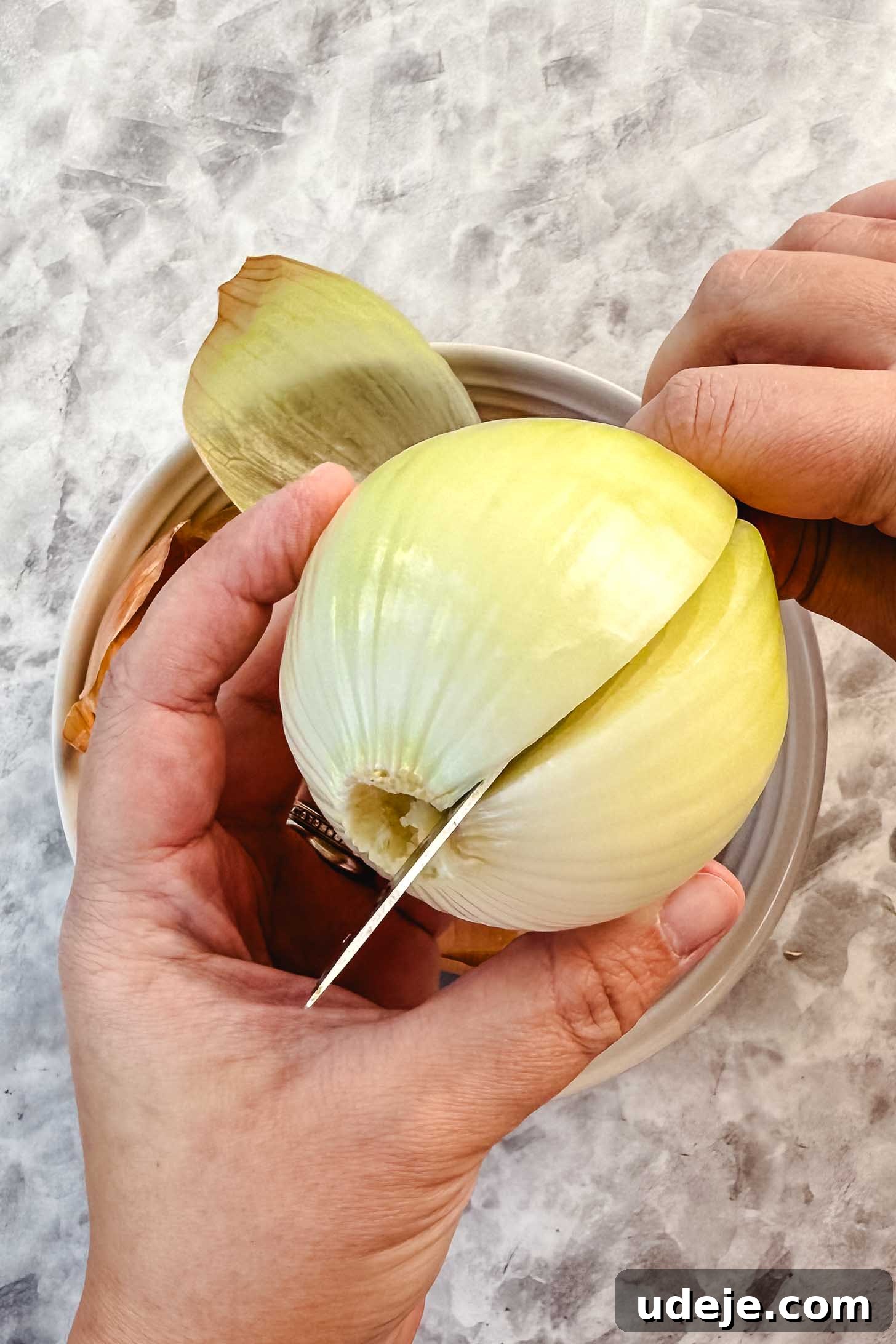
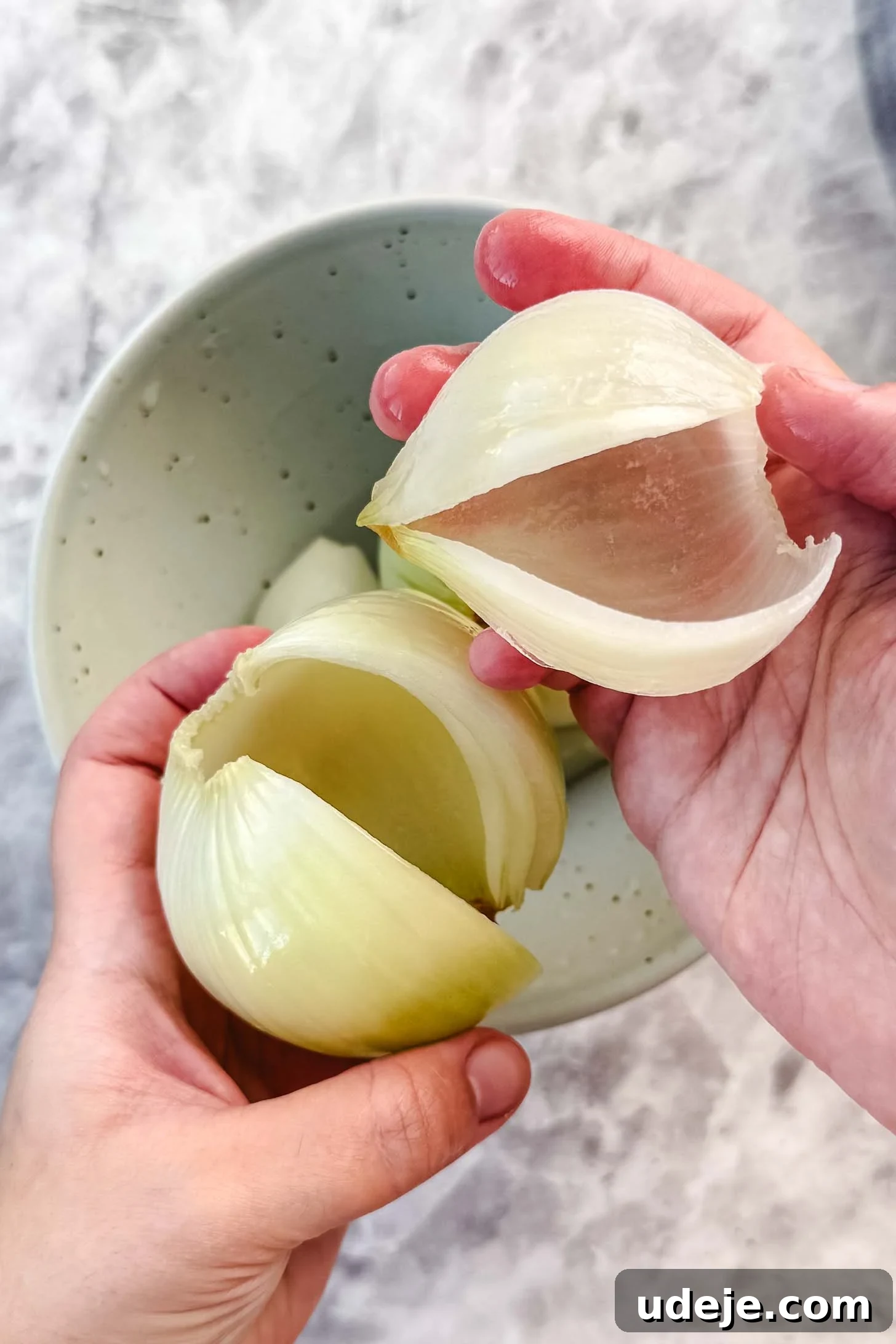
- Onions: Start by peeling the onion, leaving the ends intact. Gently carve out a small circle around the root end; this helps in separating the layers. Make a single lengthwise cut from one end towards the center, being careful not to cut all the way through. To soften the layers, microwave the onions for about 1 minute, or boil them for a similar duration. Once cooled slightly, you can meticulously use your fingers to dislodge and separate the individual layers, creating perfect onion cups for stuffing. Again, watching the video for this step is incredibly beneficial.
- Swiss Chard: Before stuffing, thoroughly wash the Swiss chard leaves. To make them pliable and easier to roll, quickly submerge them in a bowl of boiling water for just 3 seconds, then immediately transfer them to a tray to cool. This blanching step slightly wilts the leaves. Once cooled, carefully cut away the thick, fibrous stems and divide larger leaves into 2 or 3 smaller, manageable pieces.
- Grape Leaves: Jarred grape leaves are typically preserved in a salty brine. Prior to use, it’s essential to wash them extensively under running water to remove excess salt. Then, drain them thoroughly, gently squeezing them to remove any lingering moisture. Avoid using frozen grape leaves as their texture can be compromised.
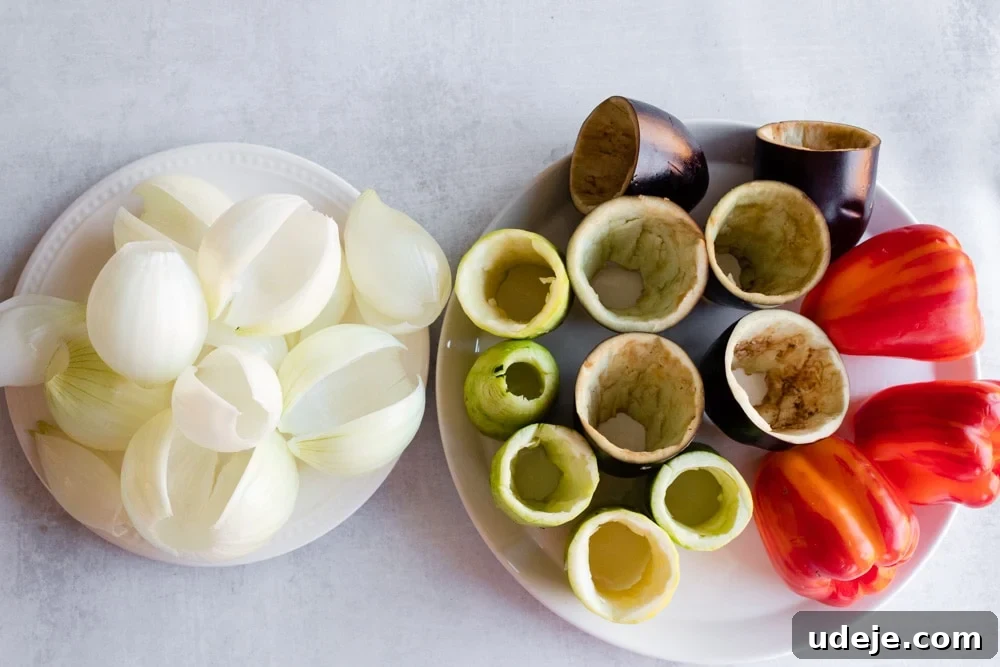
An important tip: do not discard the flesh you’ve cored from the eggplant and zucchini! This precious material can be chopped into medium-sized pieces and used in two valuable ways: first, as a flavorful and protective layer at the bottom of your cooking pot, preventing other vegetables from sticking or burning; and second, it can be finely chopped and incorporated directly into your stuffing mixture, adding extra vegetable goodness and minimizing waste.
Stuffing and Layering for Perfect Dolma
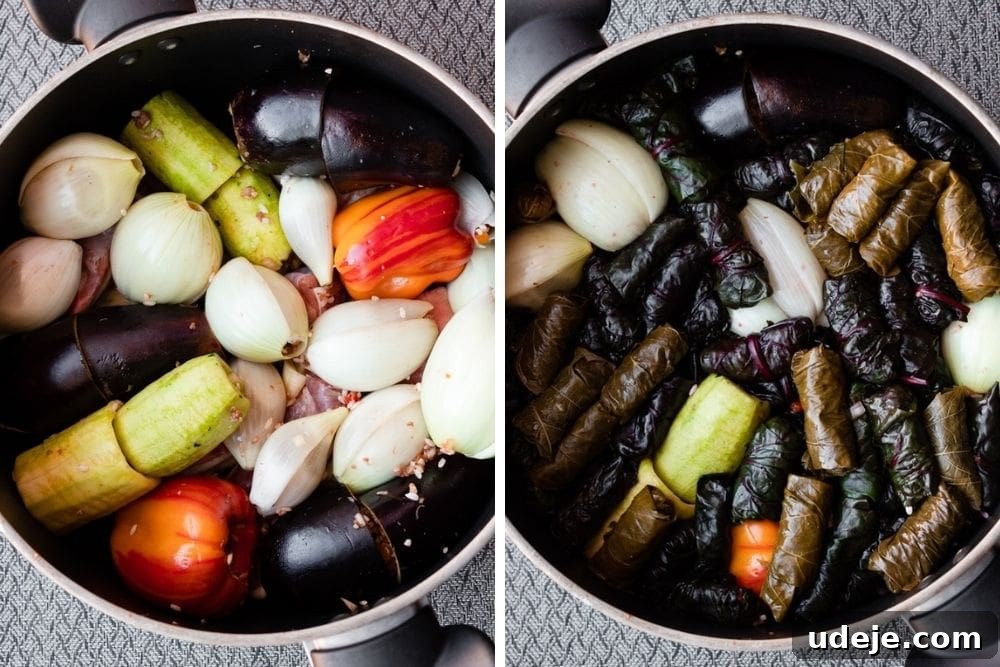
The art of stuffing and layering the dolma pot is crucial for both even cooking and structural integrity, ensuring your masterpiece holds together beautifully. Begin by preparing your pot; a wide, non-stick pot is highly recommended for the best results. Pour a generous glug of vegetable oil into the bottom, about 1/4 cup, to create a flavorful base and prevent sticking. Then, lay down the chopped flesh from the cored eggplant and zucchini. This foundational layer not only adds flavor but also protects the more delicate stuffed vegetables from direct heat. For an even richer, more authentic taste, many Iraqi cooks also add a layer of small lamb ribs at this stage, which infuse the entire dish with incredible depth as it simmers.
Next, begin the stuffing process with the “rigid” vegetables: eggplant, zucchini, and bell peppers. It’s vital to fill these about three-quarters of the way with the rice mixture, as the rice will expand considerably during cooking. Overstuffing can lead to burst vegetables or undercooked rice. Carefully stack these robustly stuffed vegetables, using them to create a stable lower layer in the pot.
Following the rigid vegetables, move on to the prepared onion layers. These are wonderfully pliable and can be gently squeezed and nestled into any empty spaces between the other vegetables. This tight packing is key to preventing the dolma from unraveling and helps maintain the shape of each piece during the long cooking process. Finally, position the stuffed Swiss chard and/or grape leaves at the very top. These leafy wraps are particularly versatile for filling small crevices and acting as a natural “seal,” ensuring all the vegetables remain tightly packed and cook evenly.
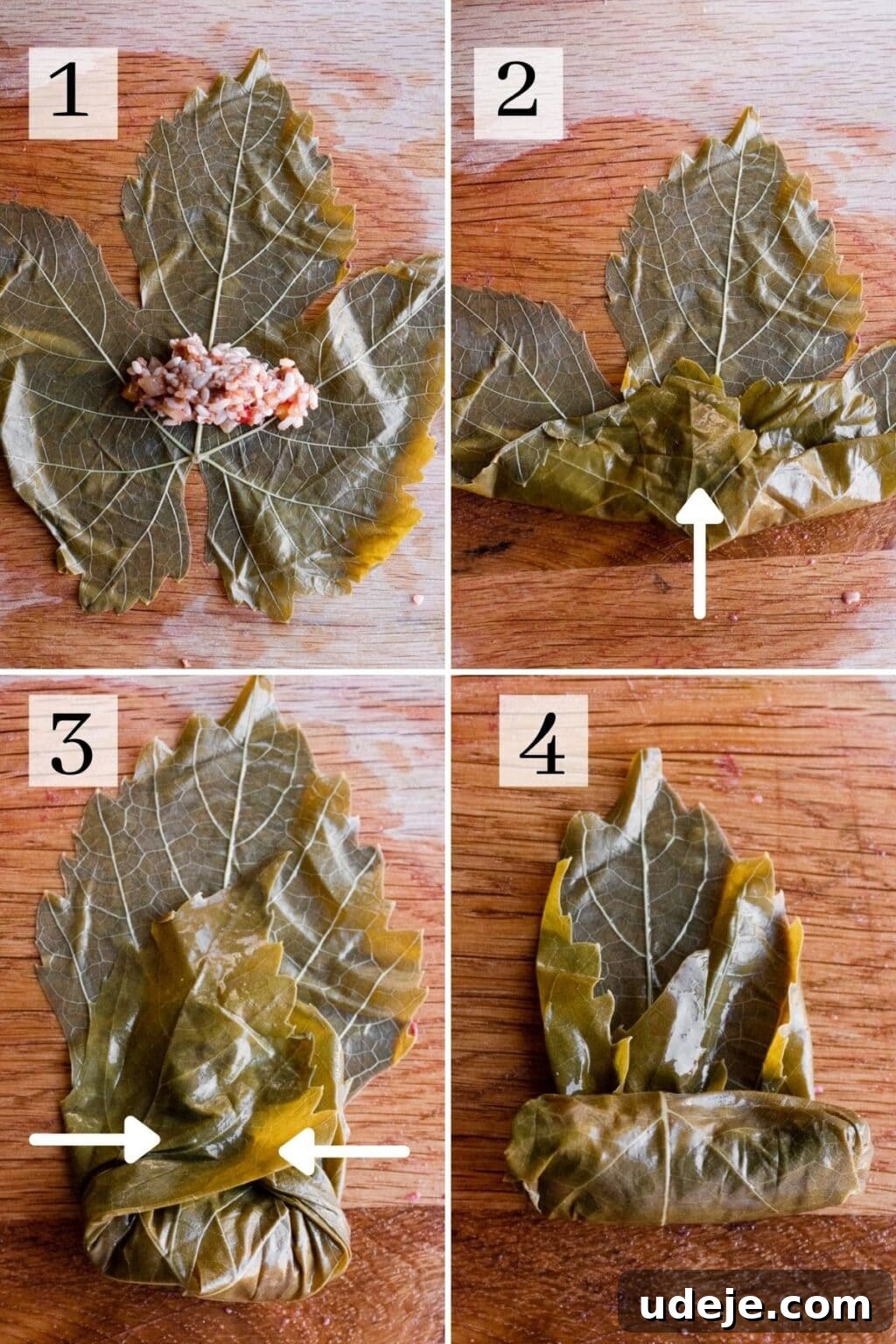
Rolling the delicate leafy greens like Swiss chard and grape leaves is a specific technique that ensures a neat, secure parcel:
- Start by placing a small, measured amount of the rice and meat stuffing in the middle of a single leaf. Avoid overfilling.
- Carefully fold the side edges of the leaf inwards over the stuffing.
- Then, starting from the stem end, begin to roll the leaf upwards, keeping a consistently tight grip. This firmness prevents the roll from loosening and opening up during cooking.
- Once rolled, place each stuffed leaf into the pot with its seam side facing down. This further secures the roll and contributes to the overall stability of the layers.
If you’re pressed for time, opting for slightly larger rolls can significantly speed up the preparation process without compromising flavor. The technique for both Swiss chard and grape leaves is remarkably similar, allowing for efficient assembly once you get the hang of it.
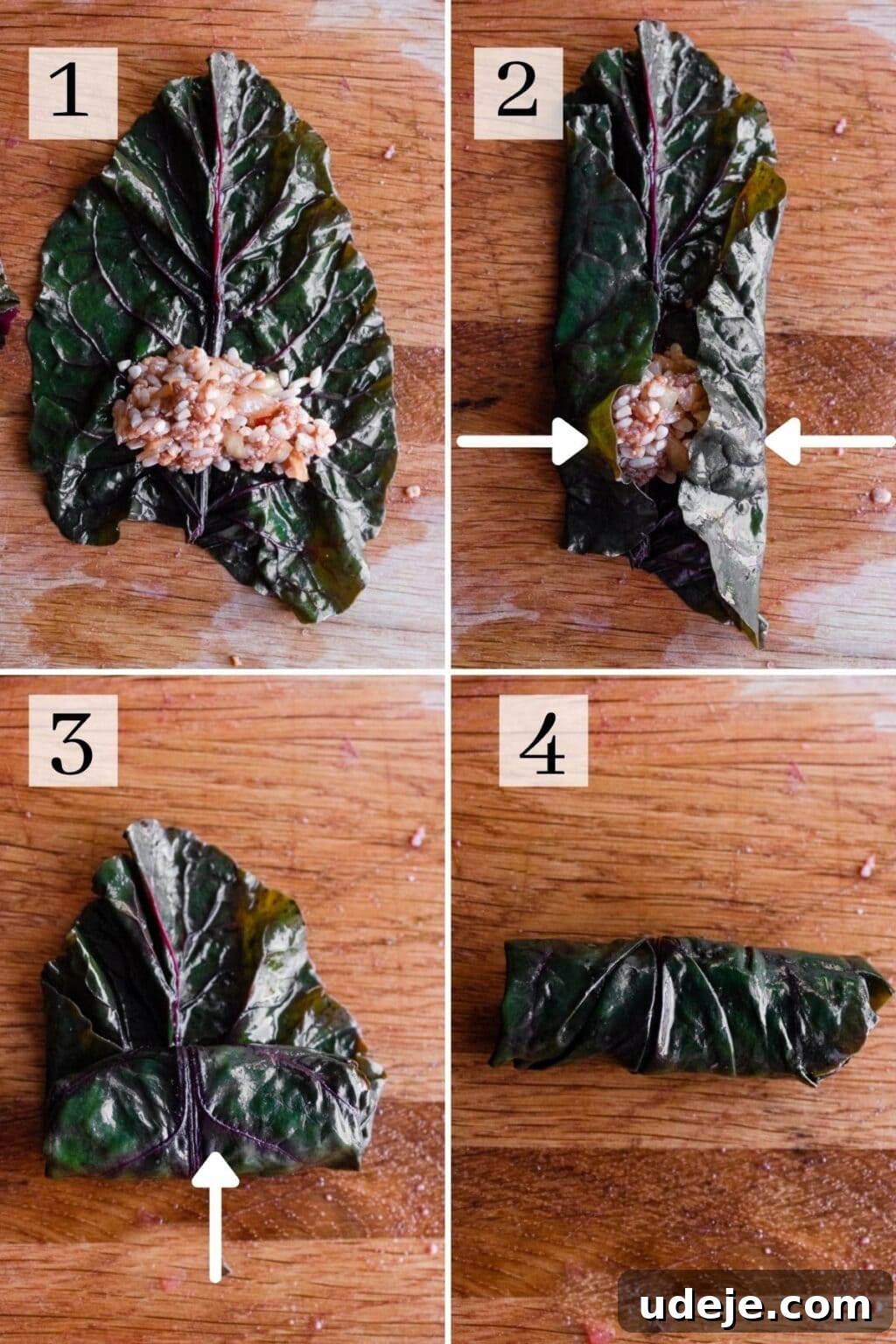
As illustrated, the meticulous process for stuffing and rolling Swiss chard leaves is nearly identical to that for grape leaves, offering consistency in preparation.
Perfecting the Dolma: The Cooking Process
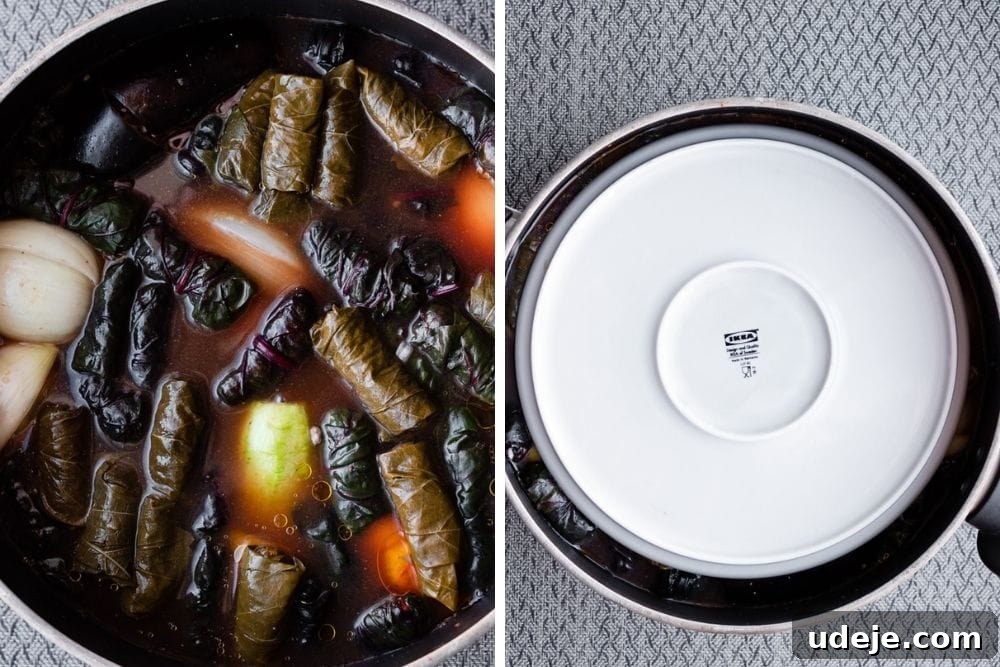
The cooking process is where the stuffed vegetables truly transform, absorbing the rich flavors of the broth and becoming wonderfully tender. To begin, prepare the savory cooking liquid: combine water with tomato paste, pomegranate molasses, salt, and black pepper. Using boiling water can significantly aid in dissolving the tomato paste, ensuring a smooth, evenly flavored broth. An optional but highly recommended addition is a touch of citric acid, which enhances the characteristic tangy profile of Iraqi Dolma. If citric acid isn’t available, an extra squeeze of fresh lemon juice will work beautifully.
Carefully pour this flavorful liquid into the pot, allowing it to permeate all the layers of stuffed vegetables. The crucial balance here is to add enough liquid to reach approximately halfway up the top layer of dolma, but never fully submerge it. Too much liquid can lead to a watery, mushy dolma, while too little might result in dry, undercooked rice. When in doubt, it’s always better to start with less liquid, as you can always add a splash more hot water halfway through cooking if needed. Once the liquid is added, gently place a flat, heat-proof plate directly on top of the stuffed vegetables. This acts as a weight, keeping everything submerged and tightly packed, which prevents the vegetables from floating and ensures they cook evenly.
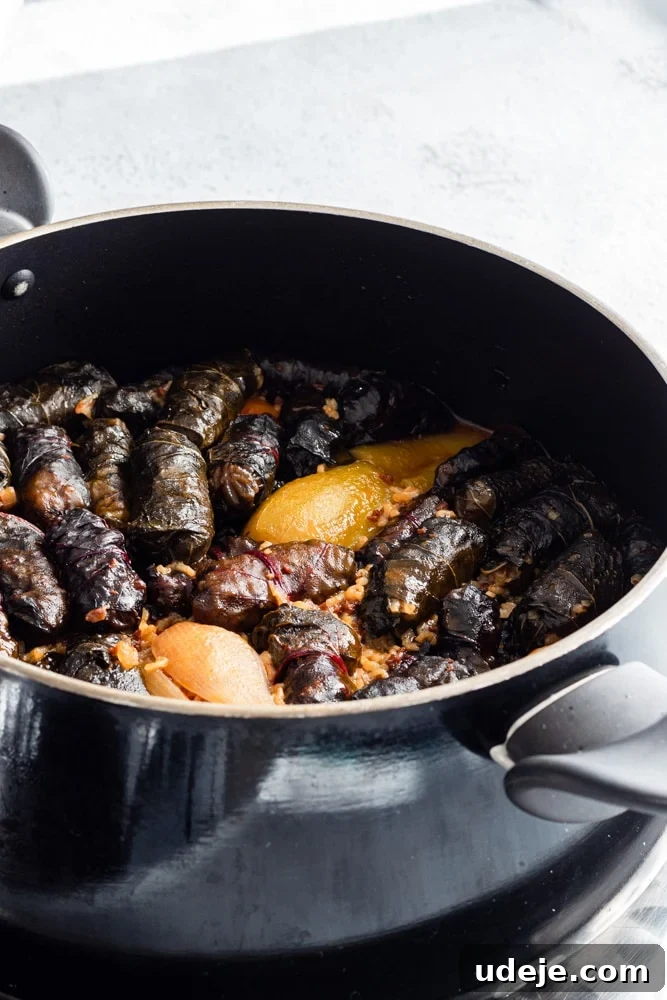
The cooking itself follows a precise sequence to achieve optimal texture and flavor. First, cover the pot tightly and bring the dolma to a vigorous rolling boil over high heat for about 15 minutes. This initial high-heat phase helps to quickly bring the entire pot to temperature and kickstart the cooking process. After 15 minutes, remove the lid briefly to taste the cooking liquid; this is your opportunity to adjust the seasoning, adding more salt, tang from pomegranate molasses or lemon juice, or a touch more spice if desired. Then, reduce the heat to medium. Gently remove the plate and give the pot a slight shake to encourage the liquid to circulate downwards, further promoting even cooking. Recover the pot and continue cooking for another 15 minutes.
Finally, after this second phase, lower the heat to its absolute lowest setting. Replace the lid and allow the dolma to gently simmer for a full hour. This slow, steady cooking is essential for tenderizing the vegetables, ensuring the rice is perfectly cooked, and allowing all the flavors to meld beautifully. After an hour, carefully test a piece to ensure the vegetables are soft and the rice is fully cooked and delicious. Once it reaches this point, your exquisite Iraqi Dolma is ready to be served!
The Grand Finale: Flipping and Serving Iraqi Dolma Authentically
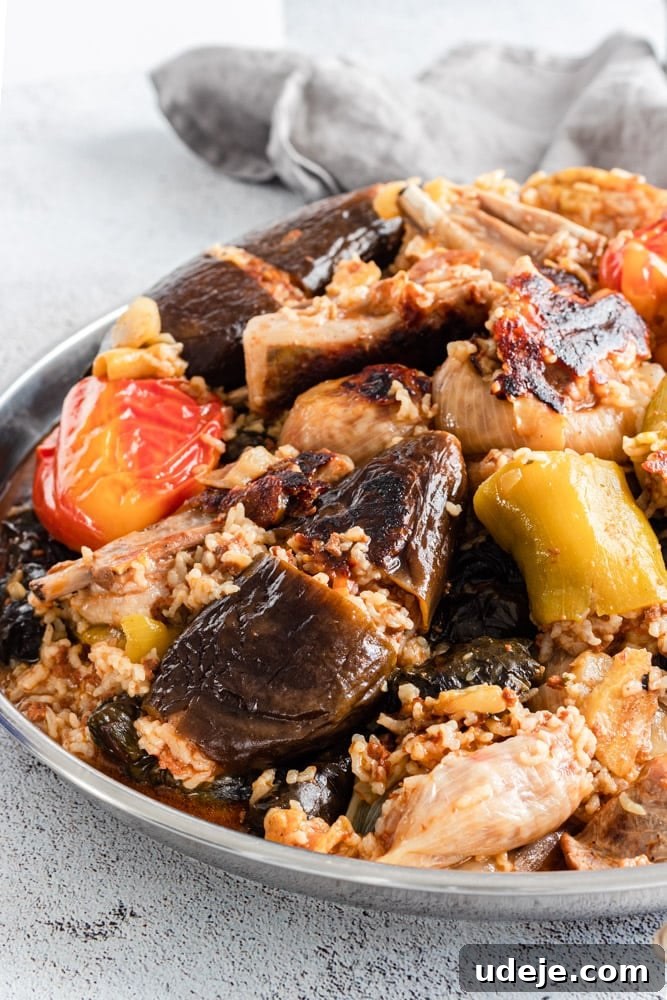
Serving Iraqi Dolma is almost as much a ritual as making it. The traditional presentation involves a dramatic “flip” from the cooking pot directly onto a large serving tray. While the idea of flipping a hot, heavy pot might seem daunting, it’s a technique that, with a little confidence, is surprisingly manageable and incredibly rewarding. For those who prefer a less adventurous approach, carefully spooning the dolma onto a platter is perfectly acceptable, but the flip truly adds to the experience!
Here’s how to perform the authentic dolma flip:
- First, carefully uncover the pot after the dolma has rested for about 10-15 minutes (this allows the layers to settle). Select a large, round metal serving tray with raised sides. If a metal tray isn’t available, any circular platter of sufficient size with a slight edge will work, provided it fits snugly over your pot. If your platter isn’t perfectly round or lacks adequate edges, it’s best to spoon the dolma out to avoid a messy situation.
- Place the chosen serving tray directly on top of the open pot, ensuring it covers the opening completely. Securely grip the tray with one hand and grasp both handles of the pot with your other hand.
- Ideally, have someone nearby to assist you, especially for larger, heavier pots. In one swift, confident motion, flip the pot upside down onto the tray. Your helper can immediately steady the tray and help support the weight, easing the strain on your arms. The quick motion is key to a clean release.
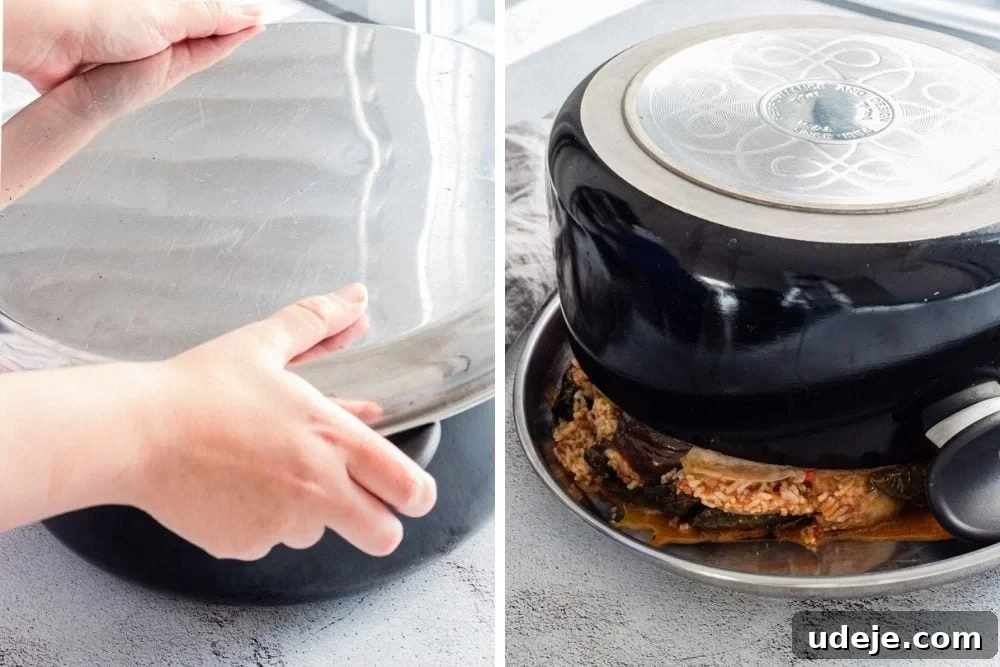
- Allow the inverted pot to rest on the tray for a few minutes. This gives gravity time to work its magic and helps the dolma settle onto the platter. Then, gently tap the bottom of the pot a couple of times.
- Slowly and carefully lift the pot straight up. Watch in delight as the beautifully arranged dolma pieces tumble down onto the tray, forming a perfect mound. Any delectable, caramelized bits that remain stuck to the bottom of the pot are considered a prized delicacy; make sure to scrape these out and add them to the platter, as they are often the most flavorful part!
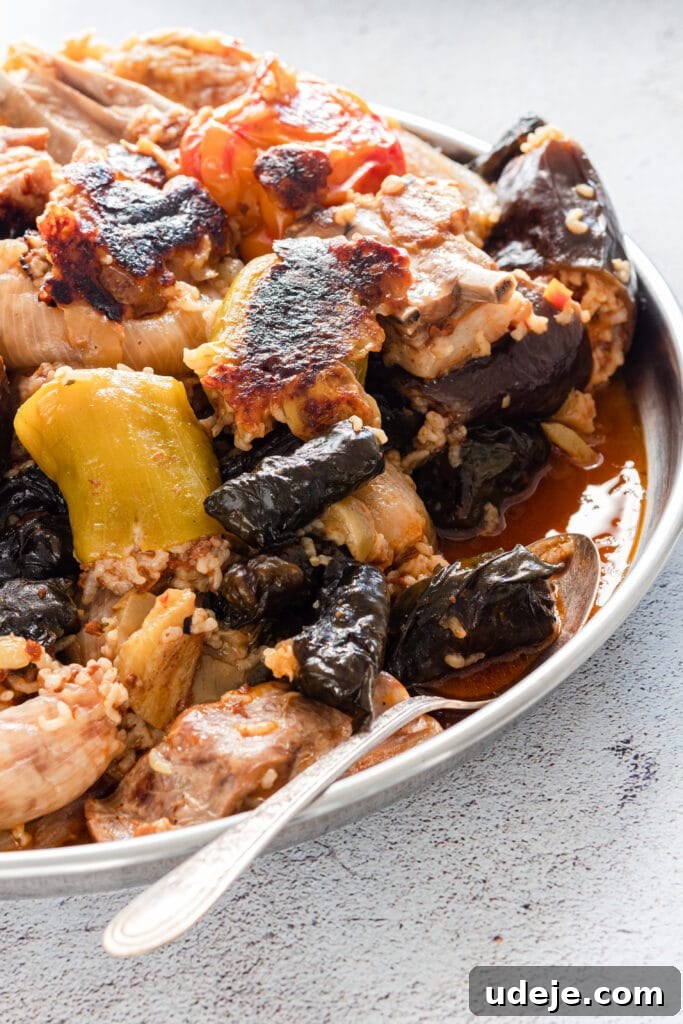
Serve your magnificent Iraqi Dolma immediately, allowing everyone to admire its beauty before diving into this truly authentic and heartwarming Middle Eastern feast. It’s a dish meant to be shared and savored.
Smart Shortcuts: Making Iraqi Dolma More Accessible
Let’s be honest, traditional Iraqi Dolma, with its intricate preparation, is a true labor of love. It’s a dish I typically reserve for special occasions or when I can join my mom in her kitchen. However, for those times when the craving strikes but time is short, there are fantastic ways to enjoy a delicious pot of dolma with significantly less effort:
- Prioritize Quick-Prep Vegetables: Focus on vegetables that are inherently easier and faster to prepare and stuff. Onions and bell peppers, for instance, are excellent choices. They require minimal coring (or simply separating layers for onions) and stuff quickly. In fact, an “onion and pepper dolma” is a wonderfully quick and satisfying option. For an even speedier vegetarian take, my stuffed pepper recipe uses a similar dolma-style filling that comes together rapidly.
- Minimize Leafy Rolls: If stuffing individual grape leaves or Swiss chard is too time-consuming, simply reduce the quantity you use, or even omit them entirely if focusing on hollow vegetables. Alternatively, when working with leaves, make larger rolls. While not traditionally tiny, bigger rolls are quicker to assemble and still provide that incredible flavor and texture.
- Strategic Pre-Preparation: Divide the work over two days. Dedicate the evening before to preparing all your vegetables: coring the eggplants and zucchinis, separating onion layers, and washing and blanching the leafy greens. You can even mix the stuffing ingredients ahead of time and refrigerate it. This breaks down the process into more manageable chunks, making dolma a feasible weekday project.
By implementing these thoughtful shortcuts, you can bring the incredible taste of Iraqi Dolma to your table more frequently, even when your schedule is packed.
Scaling Your Dolma: Adjusting the Recipe for Smaller Portions
The original recipe is designed to fill a substantial 7-quart pot, comfortably serving 7-8 adults with generous portions. If you’re cooking for a smaller group or simply desire a more modest batch of this delightful Middle Eastern dish, halving the recipe is a straightforward process. Simply divide all the filling ingredients and the quantities of vegetables by half. Keep in mind that the exact yield might vary slightly, as the stuffing-to-vegetable ratio can depend on the specific sizes and types of vegetables you choose. For example, a larger eggplant will require more stuffing than a small Swiss chard roll.
Should you find yourself with a bit of leftover stuffing mixture after filling all your vegetables, fret not! There are delicious ways to utilize it. One popular option is to core an additional onion or two and stuff them. Alternatively, you can transform the remaining stuffing into a delectable rice pilaf, a particular favorite among my children. To do this, simply place the leftover stuffing in a small pot. Add enough water to cover the mixture by about 1 inch. Bring it to a boil, then reduce the heat to low, cover the pot, and let it simmer for 20-25 minutes, or until the rice is fully cooked and tender. You can even use a splash of the dolma’s cooking liquid for extra flavor in your pilaf.
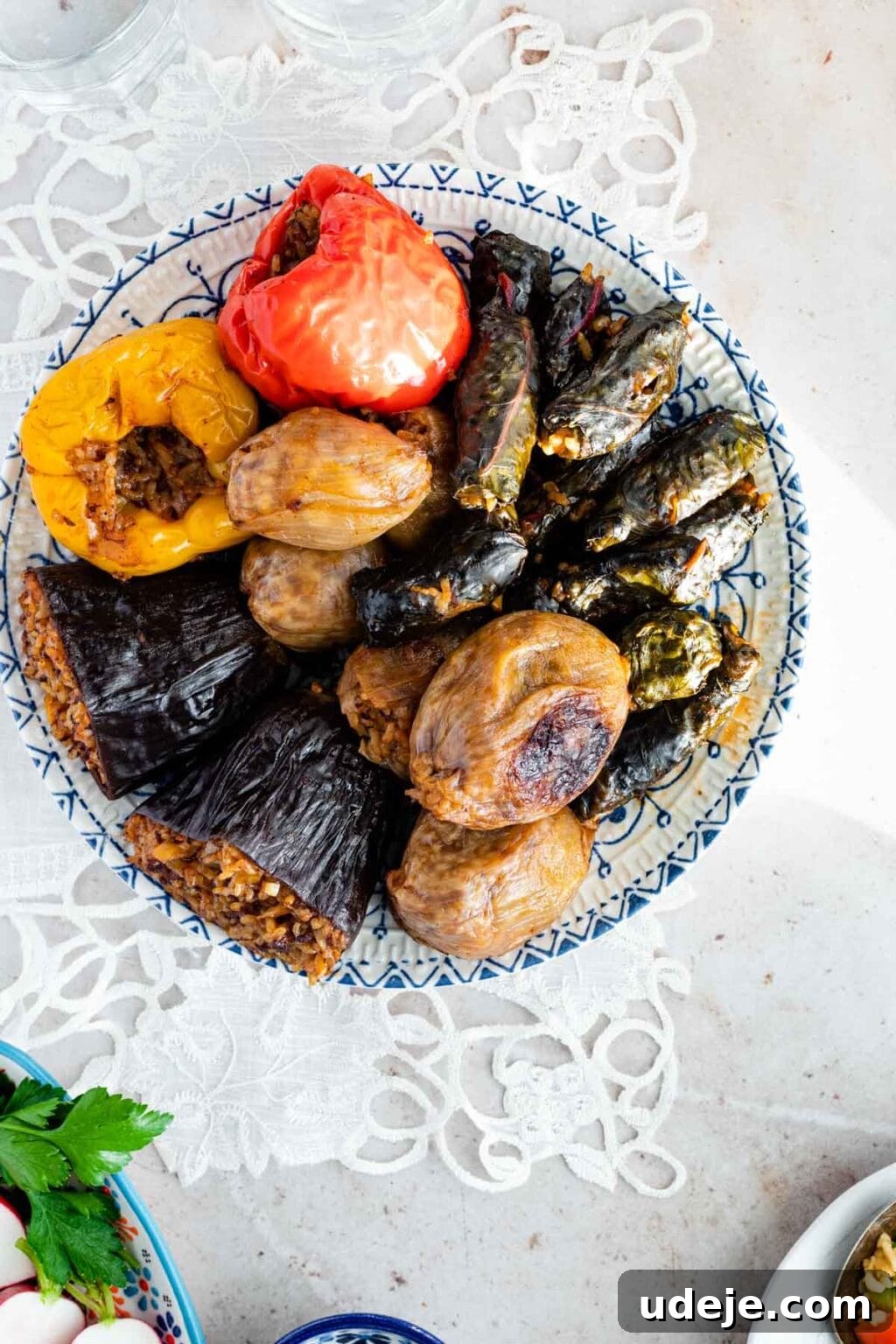
More Authentic Iraqi Recipes to Explore
Average rating: 4.98 from 109 ratings
Average rating: 5 from 22 ratings
Average rating: 4.97 from 33 ratings
Average rating: 5 from 24 ratings
If you tried these recipes, please consider leaving a star ⭐⭐⭐⭐⭐ rating in the recipe card below and/or a review in the comments section further down the page – I’d love to hear from you! You can also hop on over to Instagram and say hello!
Average rating: 5 from 36 ratings
Iraqi Dolma (Middle Eastern Stuffed Vegetables)
Leave a Review
Pin Recipe
Ingredients
For the stuffing mixture:
- 1 1/2 lbs lean ground beef
- 4 cups medium grain rice (I use Calrose)
- 3 teaspoons salt
- 1 1/2 teaspoons black pepper
- 8 tablespoons tomato paste (equivalent to 156 ml)
- 1/3 cup pomegranate molasses (*see notes)
- 3 small onions, finely diced
- 4 cloves garlic, minced
- 2 red or orange bell peppers, finely diced
- 1/2 cup olive oil
For the vegetables:
- 3 Italian eggplants (medium sized – if using Indian use 6 as they’re smaller)
- 2 green zucchini
- 3 onions (use up to 4, narrow in shape, avoid very round ones)
- 4 red peppers (small)
- 2 bunches of Swiss chard
- 20 grape leaves (use up to 30 if desired, or use more grape leaves instead of Swiss chard)
- 1/4 cup oil (for lining the bottom of the pot before layering)
For the cooking liquid:
- 5 cups water
- 4 tablespoons tomato paste
- 1/2 teaspoon salt
- 1 teaspoon black pepper
- 1/4 cup pomegranate molasses (*see notes)
- 1 teaspoon citric acid (*see notes)
Instructions
For the stuffing mixture:
-
Finely dice the onions and red peppers, and mince the garlic.
-
Wash the rice thoroughly under cold water until the water runs clear, then drain well.
-
In a large bowl, combine all the stuffing ingredients: ground beef, washed rice, diced vegetables, minced garlic, tomato paste, pomegranate molasses, olive oil, salt, and pepper. Use your hands to mix everything very well until thoroughly combined and cohesive. Set aside.
Preparing the vegetables:
-
For the eggplant: Cut the eggplant into 2 pieces, similar in size to the photos provided in the main article. Using a sharp pairing knife (a knife with a short blade), place the eggplant sideways on a cutting board with your hand on top for stability. With your dominant hand, start coring around the inside of the eggplant, gradually inserting the knife deeper as you go. Continue until you reach the other side or can scoop out the flesh with your fingers. If not all flesh comes out, continue using your knife. You can also insert your knife from the other side to help loosen the flesh. (Refer to the recipe video for a detailed visual guide).
-
For the zucchini: Lightly scrape away the skin using a sharp knife (do not use a peeler, as it removes too much flesh), then trim the ends. Cut the zucchini into 3 pieces and core using the same method as the eggplant.
-
For the bell pepper: Carefully cut around the stem and remove it. Then, use your fingers to remove the inner seeds and any white pith. A small knife can help loosen stubborn bits.
-
For the onion: First, peel the onion. Dig slightly around the root end to help separate the layers. Make a single long cut lengthwise all the way to the center, but do not cut through the center. Microwave the onions for 1 minute (or boil for 1 minute) to soften the layers. Allow to cool, then carefully use your fingers to dislodge and separate the layers.
-
For the Swiss chard: Wash the leaves thoroughly. Submerge them in a bowl of boiling water for 3 seconds to wilt them, then transfer to a tray. Cut off the thick stems and cut larger leaves into 2 or 3 pieces depending on their size.
-
For the grape leaves: If using jarred grape leaves, soak them in water for at least an hour to remove excess salt, then wash them several times and drain. Gently squeeze to remove excess water. (Avoid frozen grape leaves).
Stuffing the vegetables and stacking:
-
Add 1/4 cup olive oil to the bottom of a wide, non-stick pot. Line the bottom with the chopped flesh of the eggplant and zucchini that you carved out. (Optional: Add small lamb ribs for extra flavor).
-
Begin stuffing the “rigid” vegetables first: eggplant, zucchini, and bell peppers. Fill them approximately 3/4 of the way, as the rice will expand during cooking. Stack the eggplant and zucchini together to keep them in place.
-
Next, stuff the onion layers and tightly squeeze them into all the empty spots in the pot.
-
Finally, stuff the Swiss chard and grape leaves (if using). Use these flexible rolls to fill any remaining cervices and tightly pack everything in, ensuring a compact arrangement.
-
To roll the leaves: Place a small amount of stuffing in the middle of the leaf. Fold the sides inwards, then roll the leaf tightly from the bottom up. Place it in the pot seam side down.
Cooking the dolma:
-
Prepare the cooking liquid by thoroughly mixing all the ingredients (water, tomato paste, salt, pepper, pomegranate molasses, citric acid) until the tomato paste is fully dissolved. Using hot water can aid this process.
-
Pour the prepared liquid into the pot, ensuring it reaches approximately halfway up the top layer of dolma. Do not fully submerge the top layer, as this can lead to mushy results.
-
Place a flat, heat-proof plate directly on top of the stuffed vegetables to keep them submerged and prevent them from floating during cooking.
-
Cover the pot tightly and bring the dolma to a rolling boil over high heat for 15 minutes. After this, taste the cooking liquid and adjust the seasoning (add more salt, acidity, or pepper if needed).
-
After the initial 15 minutes, remove the plate and gently jiggle the pot to help the liquid circulate downwards. Reduce the heat to medium, cover, and continue to cook for another 15 minutes.
-
Finally, reduce the heat to low and cook for 1 hour, keeping the pot covered. After 1 hour, taste a piece of dolma to ensure all the vegetables are tender and the rice is perfectly cooked.
-
Allow the dolma to stand, covered, for 10-15 minutes after cooking. This resting period helps the flavors meld and the layers settle. Then, traditionally, flip it into a large, round metal tray with raised sides. If a suitable platter isn’t available, carefully spoon the dolma onto a serving dish.
-
To flip the dolma: Place the tray on top of the pot. Grasp both handles of the pot and the tray securely, then swiftly flip the entire assembly upside down. It’s helpful to have someone assist by grabbing the tray as soon as you flip, to support the weight.
-
Serve immediately and enjoy your authentic Iraqi Dolma!
Notes
- If pomegranate molasses is unavailable (used in both the stuffing and cooking liquid), you can substitute it with a blend of lemon juice and a touch of sugar. Use the juice of 2 lemons and approximately 2 teaspoons of sugar for every 1/4 cup of pomegranate molasses required.
- Citric acid, commonly found in specialty food stores, adds a distinct tang. If you don’t have it, an additional 2-3 lemons’ worth of juice can be added to the cooking liquid as a substitute.
- Swiss chard and grape leaves are often interchangeable. If one is difficult to find, feel free to use more of the other, or focus on a greater variety of hollow vegetables.
- Should you have leftover stuffing, refer to the main blog post for detailed instructions on how to transform it into a delicious rice pilaf.
- If you notice the dolma becoming too dry during cooking, simply add a splash of hot water or cooking liquid to the pot.
- For the best results, use a wide, non-stick pot to prevent sticking and ensure even cooking and easier flipping.
- For an even richer flavor profile, consider adding small lamb ribs to the bottom of the pot before layering your stuffed vegetables. This is an optional but highly recommended traditional touch.