
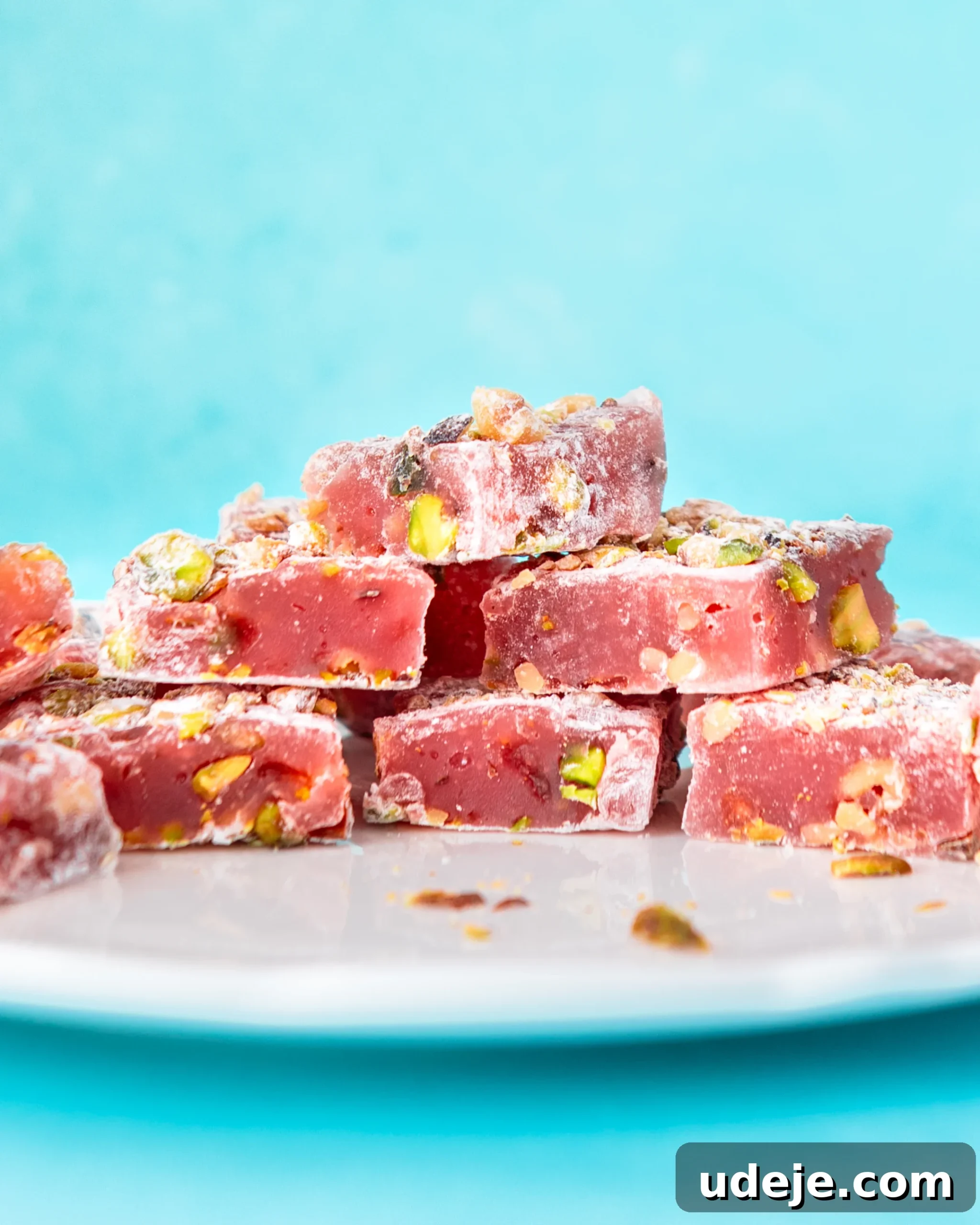
Embark on a culinary journey to the heart of the Ottoman Empire with Turkish Delight, or Lokum. This exquisite, soft jelly candy is more than just a sweet treat; it’s a centuries-old tradition, a symbol of hospitality, and a feast for the senses. Crafted from simple ingredients like sugar, starch, and fragrant flavorings such as rosewater and pistachio, each piece is delicately dusted with powdered sugar, creating a melt-in-your-mouth experience that is surprisingly achievable in your own kitchen. Forget complicated candy-making equipment; this foolproof guide will show you how to recreate this iconic dessert with ease, ensuring a perfect balance of sweetness and a satisfying, chewy texture.
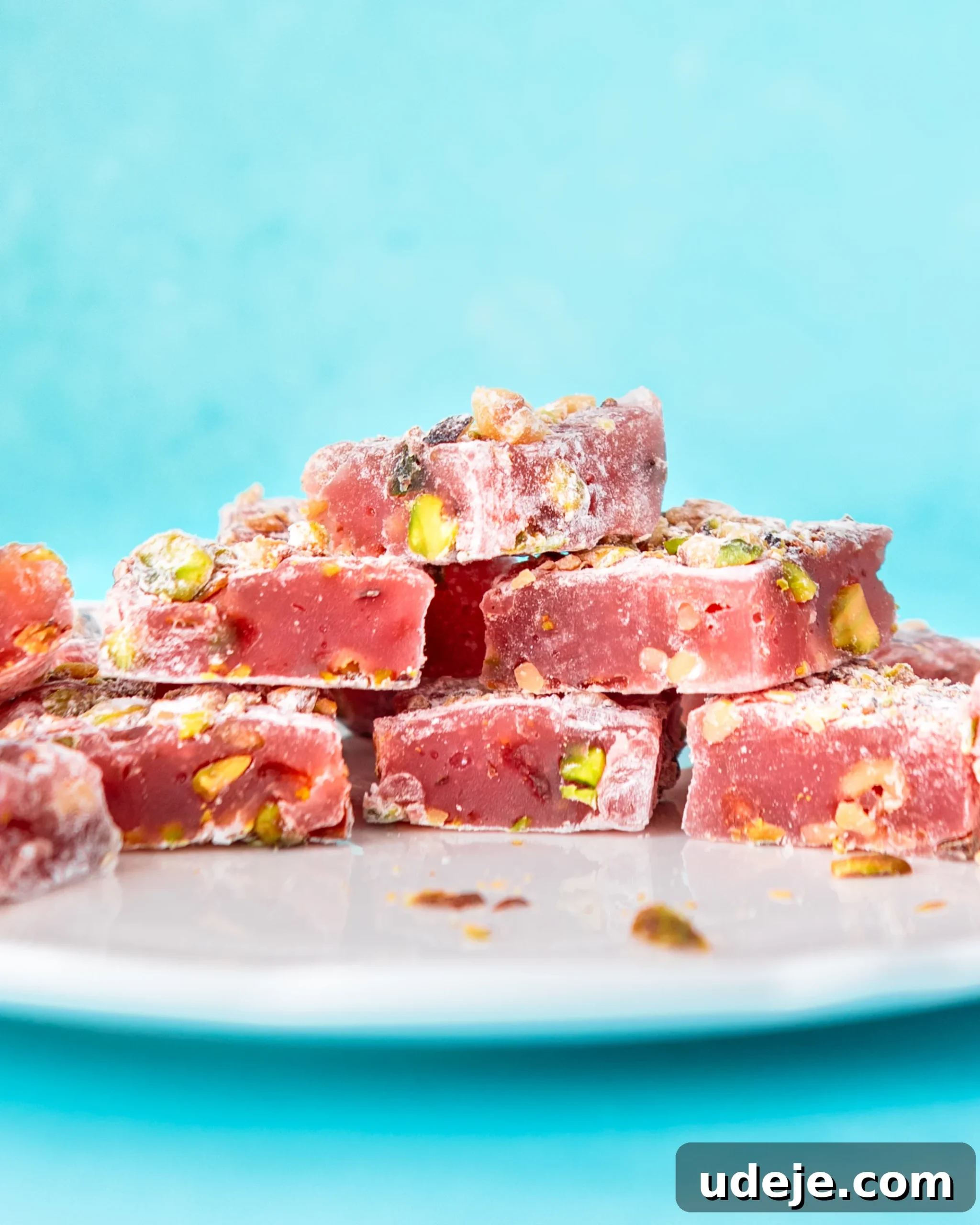
The Allure of Turkish Delight: A Sweet Legacy
Turkish Delight holds a special place in Middle Eastern culture, often serving as a gesture of warmth and welcome. It’s a dessert frequently gifted among Arabs, and for good reason. Its vibrant colors, intricate shapes, and delightful flavors make it an aesthetically pleasing and universally cherished present. Whether visitors arrive from abroad or friends return from a trip to the Middle East, a beautifully packaged box of Lokum is almost always part of their offerings. This tradition is so ingrained that my husband and I often find ourselves doing the same!
While often purchased from renowned confectioneries like Hafiz Mustafa in Istanbul, where you can marvel at towering displays of various flavors, the art of making Turkish Delight at home is a rewarding experience that few undertake. However, with this comprehensive recipe, the mystery and perceived difficulty are stripped away, empowering you to create these exquisite Middle Eastern desserts right in your own kitchen.
The beauty of homemade Lokum lies in its freshness and the ability to customize it to your exact preferences. You can experiment with a myriad of flavorings beyond the traditional rosewater or lemon, such as vanilla, orange blossom, or even mint. Similarly, while pistachios are a classic accompaniment, feel free to incorporate other nuts like walnuts, almonds, or hazelnuts, or even omit them entirely for a nut-free version. For an alternative finish, consider dusting your Lokum with desiccated coconut instead of powdered sugar. The possibilities for personalization are truly endless, inviting you to unleash your creativity.
Unleash Your Creativity: Endless Flavor & Texture Variations! Beyond traditional rosewater and pistachios, imagine vanilla-infused Lokum with crunchy walnuts, or a zesty lemon version coated in shredded coconut. This recipe is your canvas for culinary exploration. Don’t be afraid to experiment with different flavor extracts, a variety of nuts, or alternative coatings to create your signature Turkish Delight!
Essential Ingredients for Authentic Lokum
Crafting perfect Turkish Delight relies on a few key ingredients, most of which you likely already have in your pantry. However, let’s delve deeper into some of the less common components and their crucial roles in achieving that signature Lokum texture.
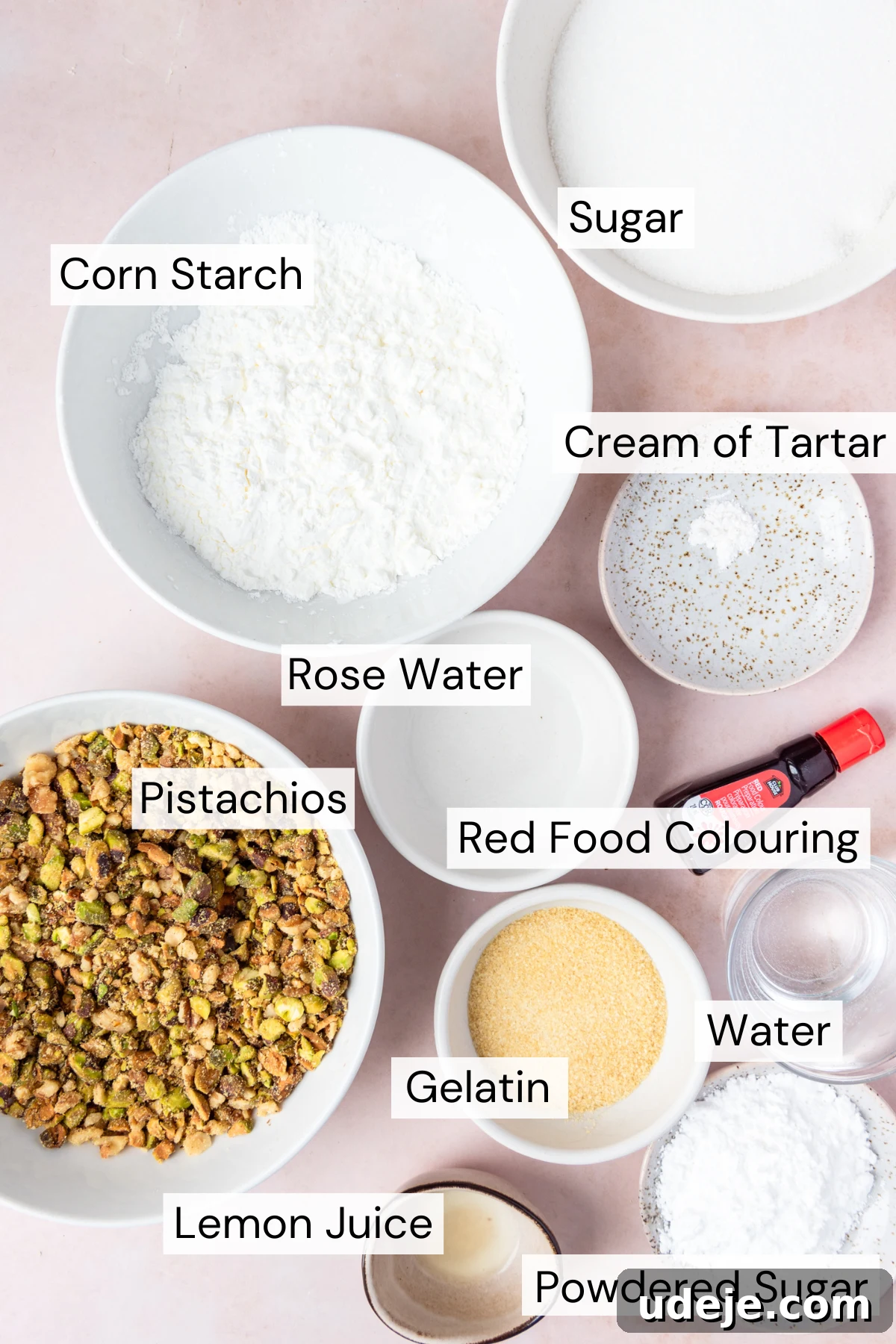
- Cream of Tartar: The Anti-Crystallization Agent
Cream of tartar is a secret weapon in candy making, acting as an acidic stabilizer that plays a vital role in preventing sugar from crystallizing. Without it, your Lokum might turn grainy instead of achieving its desired smooth, jelly-like consistency. While citric acid can serve as a suitable substitute, cream of tartar is often preferred for its subtle flavor profile and reliable results.
- Gelatin: The Modern Shortcut (Optional)
Traditionally, Turkish Delight relies solely on cornstarch for its setting and chewiness, requiring longer cooking times and a delicate touch. However, incorporating gelatin is a modern adaptation that significantly speeds up the setting process and offers a more forgiving recipe, ensuring your Lokum sets easily regardless of humidity or other environmental factors. It eliminates the need for a candy thermometer and adds a lovely bounce to the texture. While not strictly traditional, it’s highly recommended for beginners. If you choose to omit it, be prepared for an extended cooking time and a slightly different, denser texture.
- Food Colouring: A Visual Feast
The vibrant hues of Turkish Delight are part of its charm. While a classic red coloring (often achieved with rosewater flavor) is popular, the palette is entirely up to you. Feel free to experiment with green for pistachio, yellow for lemon, or orange for citrus varieties. Liquid food coloring is commonly used and widely available, but if you opt for more concentrated powdered or gel food colorings, remember to adjust the quantity accordingly, starting with a tiny amount and adding more gradually until you reach your desired shade.
- Pistachios: The Star Nut
My personal obsession with Turkish Delight stems from its generous inclusion of pistachios. Their vibrant green color and distinct, buttery flavor perfectly complement the sweet, soft jelly. However, this is one of the most versatile aspects of the recipe. You can substitute pistachios with any nuts you prefer, such as walnuts, almonds, or hazelnuts. For a nut-free option, simply leave them out or replace them with dried fruit pieces like apricots or figs.
- Rosewater: The Signature Fragrance
Rosewater is the quintessential flavor for classic Turkish Delight, imparting a delicate, floral aroma that is instantly recognizable. Ensure you use high-quality culinary rosewater for the best results. Other popular flavorings include orange blossom water, lemon extract, or vanilla extract, each offering a unique aromatic experience.
Day One: Crafting Your Homemade Turkish Delight
While candy making might seem intimidating, this Turkish Delight recipe is designed to be accessible, requiring no fancy equipment or specialized tools like a candy thermometer. The process is a labor of love that unfolds over two days, allowing the delight to properly set and develop its perfect texture. Let’s walk through the initial cooking and setting stages.
Preparation and Sugar Syrup
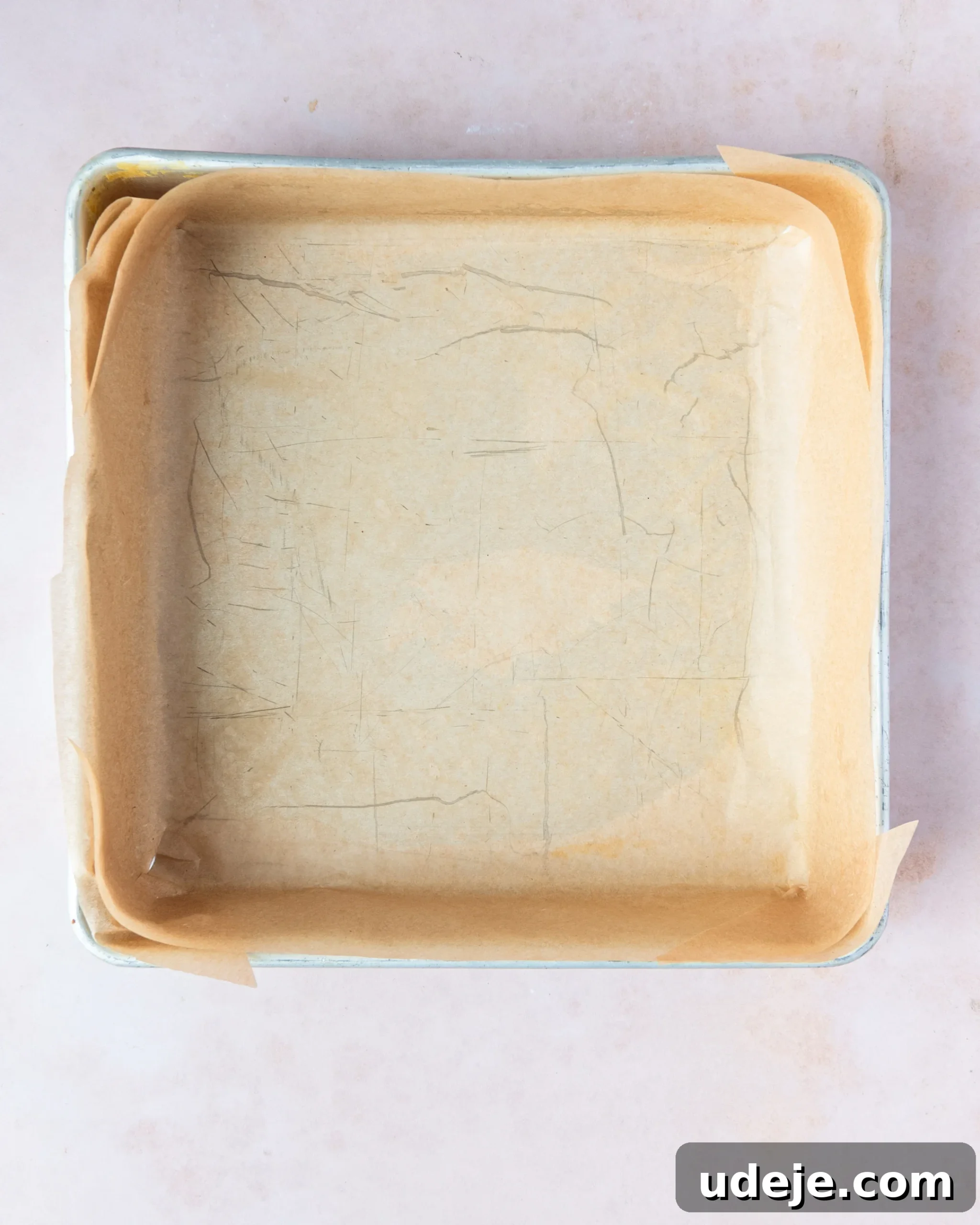
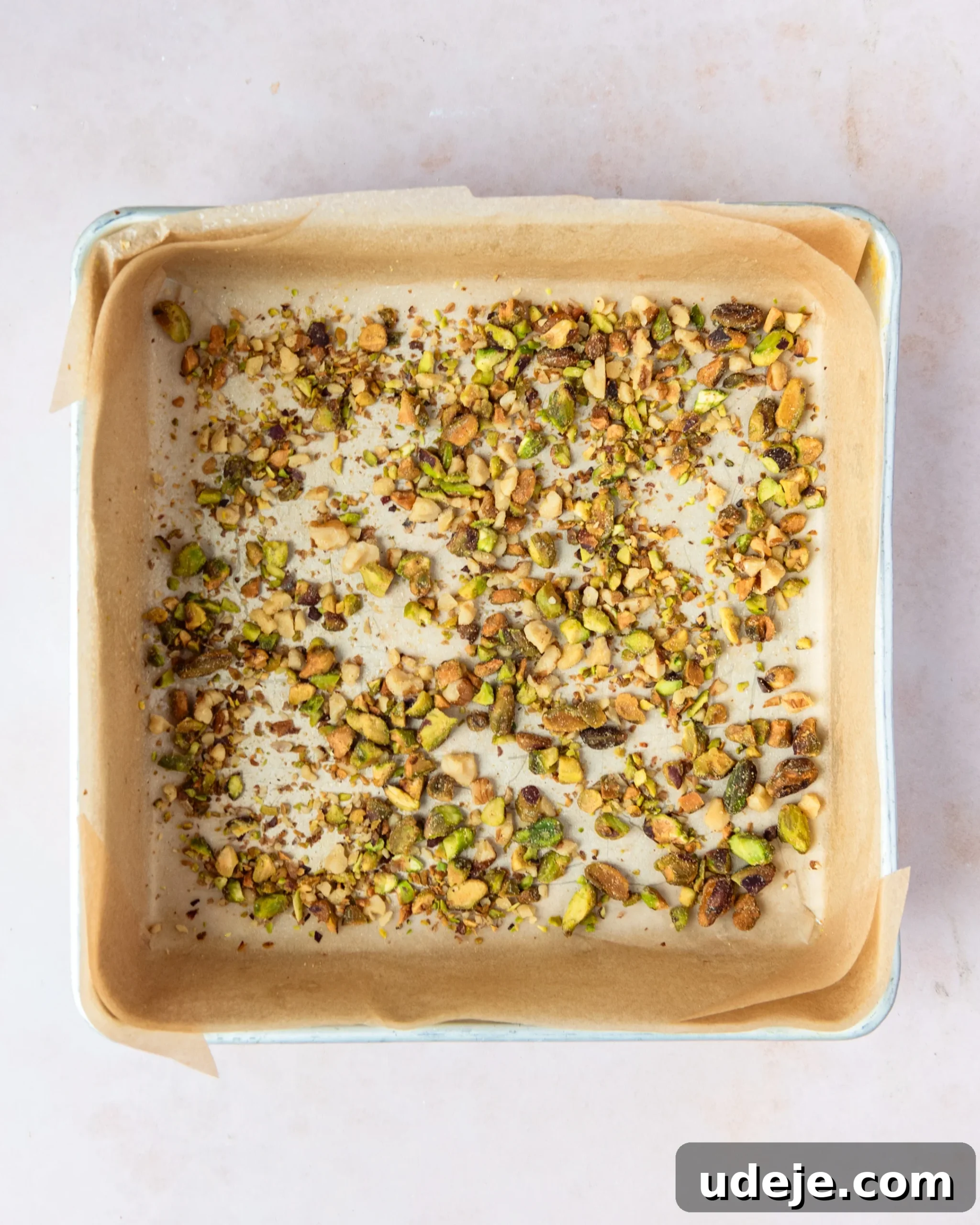
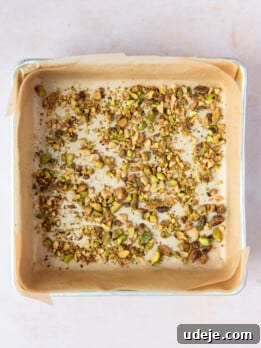
Begin by preparing your setting pan. Line an 8×8 inch square pan with parchment paper or aluminum foil, ensuring enough overhang on the sides to easily lift out the finished Lokum later. Lightly spray the parchment/foil with a neutral-flavored oil spray (like vegetable or canola oil) to guarantee a non-stick surface. Sprinkle approximately 1/2 cup of finely chopped pistachios evenly across the bottom of the prepared pan. This creates a beautiful base and prevents the Lokum from sticking. Set this pan aside for later.
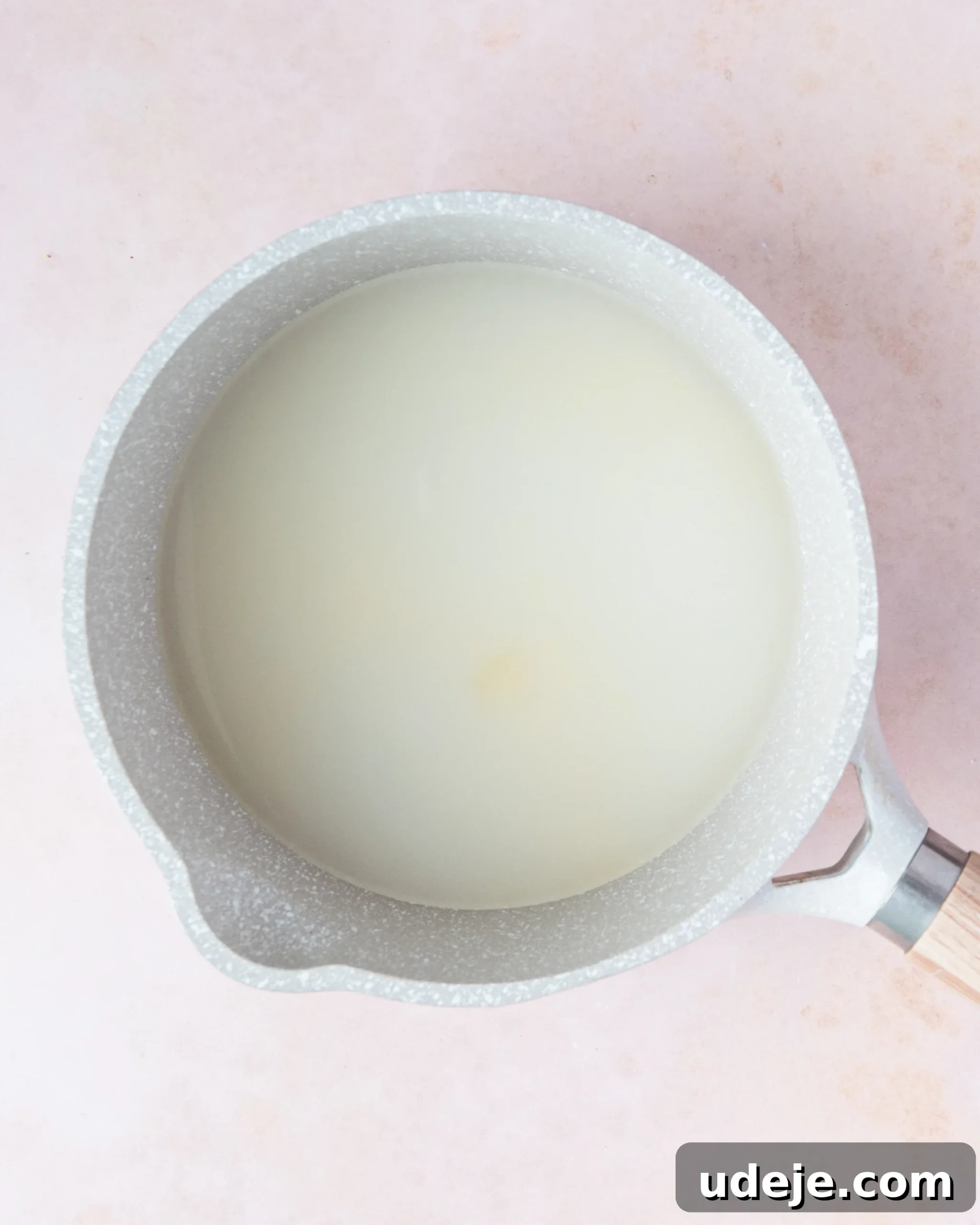
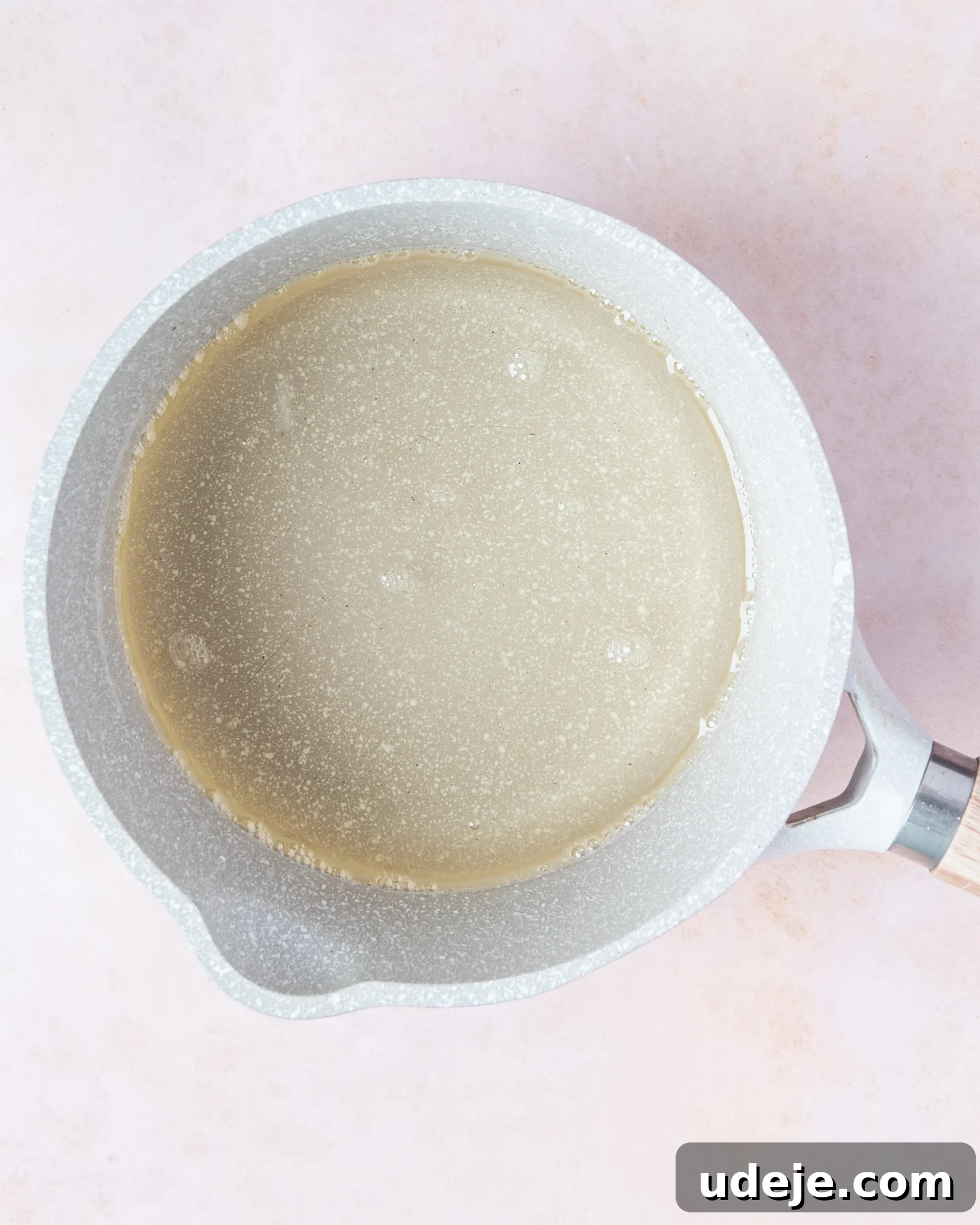
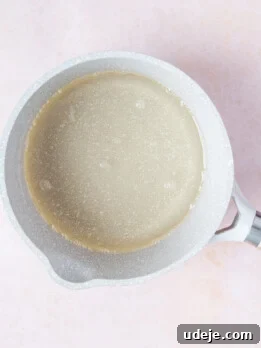
Next, in a medium-sized saucepan, combine the granulated sugar, 2/3 cup of water, and lemon juice. Place the saucepan over medium-low heat. Stir constantly until the sugar completely dissolves, ensuring no crystals remain on the sides of the pan. Once dissolved, reduce the heat to its lowest setting and allow the sugar syrup to gently simmer for approximately 20 minutes. This slow cooking process helps to evaporate excess water, concentrating the sugar and developing a glossy, slightly thickened syrup – the perfect foundation for your Lokum.
The Cornstarch and Gelatin Mixture
While the sugar syrup is simmering, prepare your thickening agent. In a separate bowl, combine 1 cup of water with the cornstarch, cream of tartar, and gelatin powder (if you are using it). Whisk vigorously until all ingredients are thoroughly combined and there are absolutely no lumps. A smooth mixture is key to avoiding a grainy or inconsistent Lokum texture.
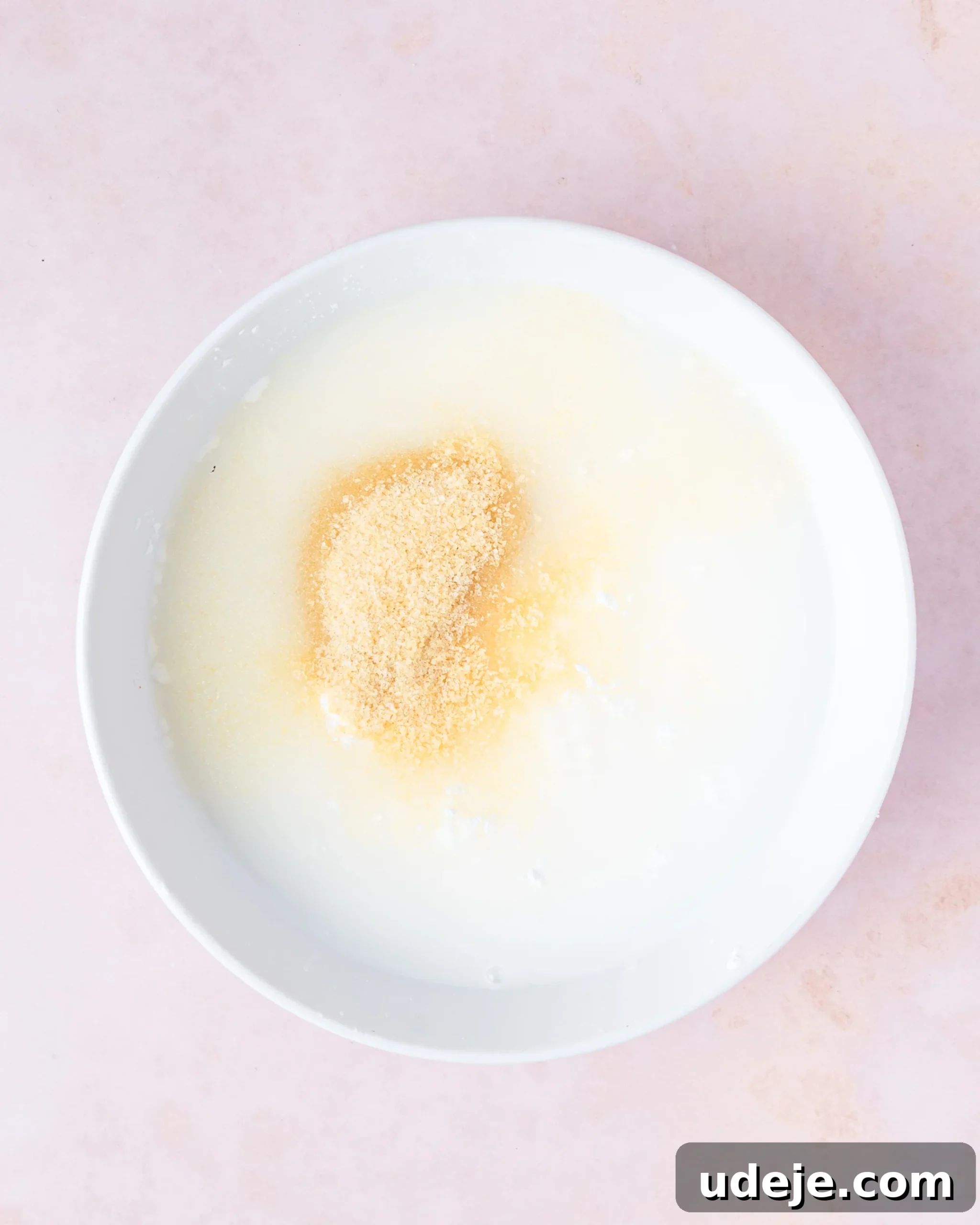
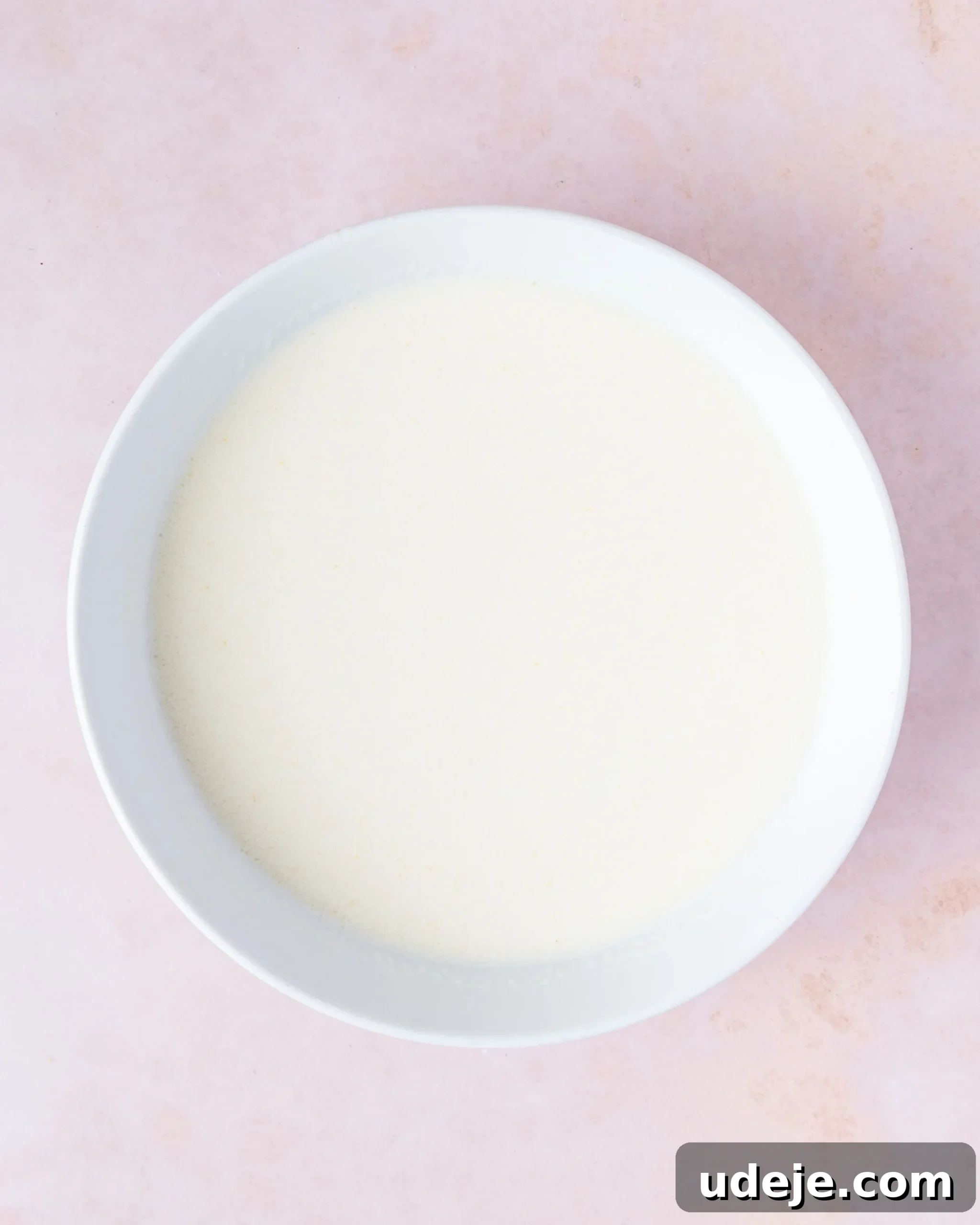
Once the sugar syrup has cooked for its allotted time, gradually pour the cornstarch mixture into the saucepan, whisking continuously to prevent lumps from forming. Be cautious during this step, as the sugar syrup may bubble up. Wearing kitchen gloves is a good precaution against potential splatters. Continue to cook the mixture over low heat, whisking every 5 minutes for a total of 20 minutes. If you have chosen to omit the gelatin, the cooking time will be longer, approximately 30-35 minutes, to allow sufficient water evaporation for proper setting. Consistent whisking is paramount to prevent the mixture from sticking to the bottom and forming unpleasant hard bits.
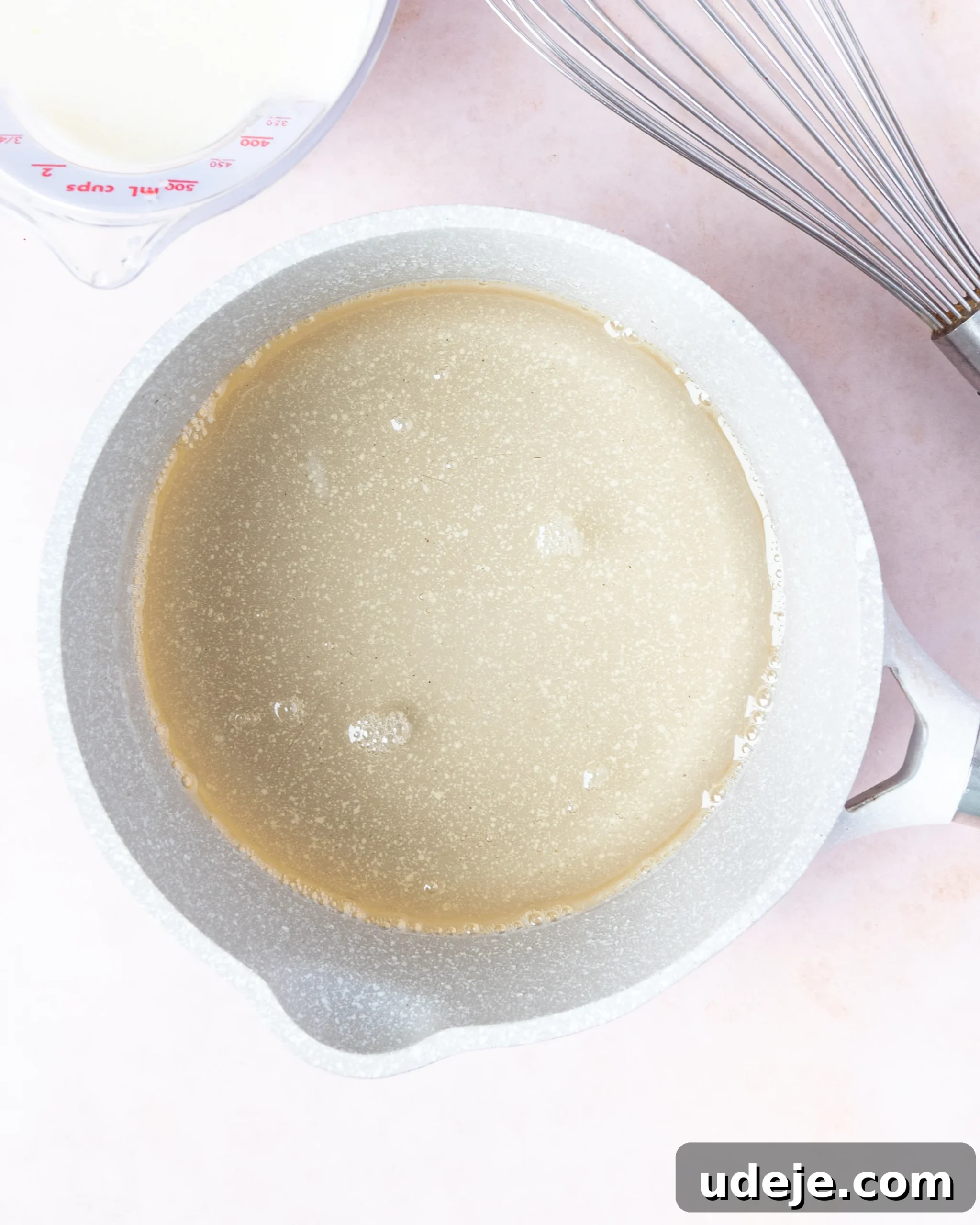
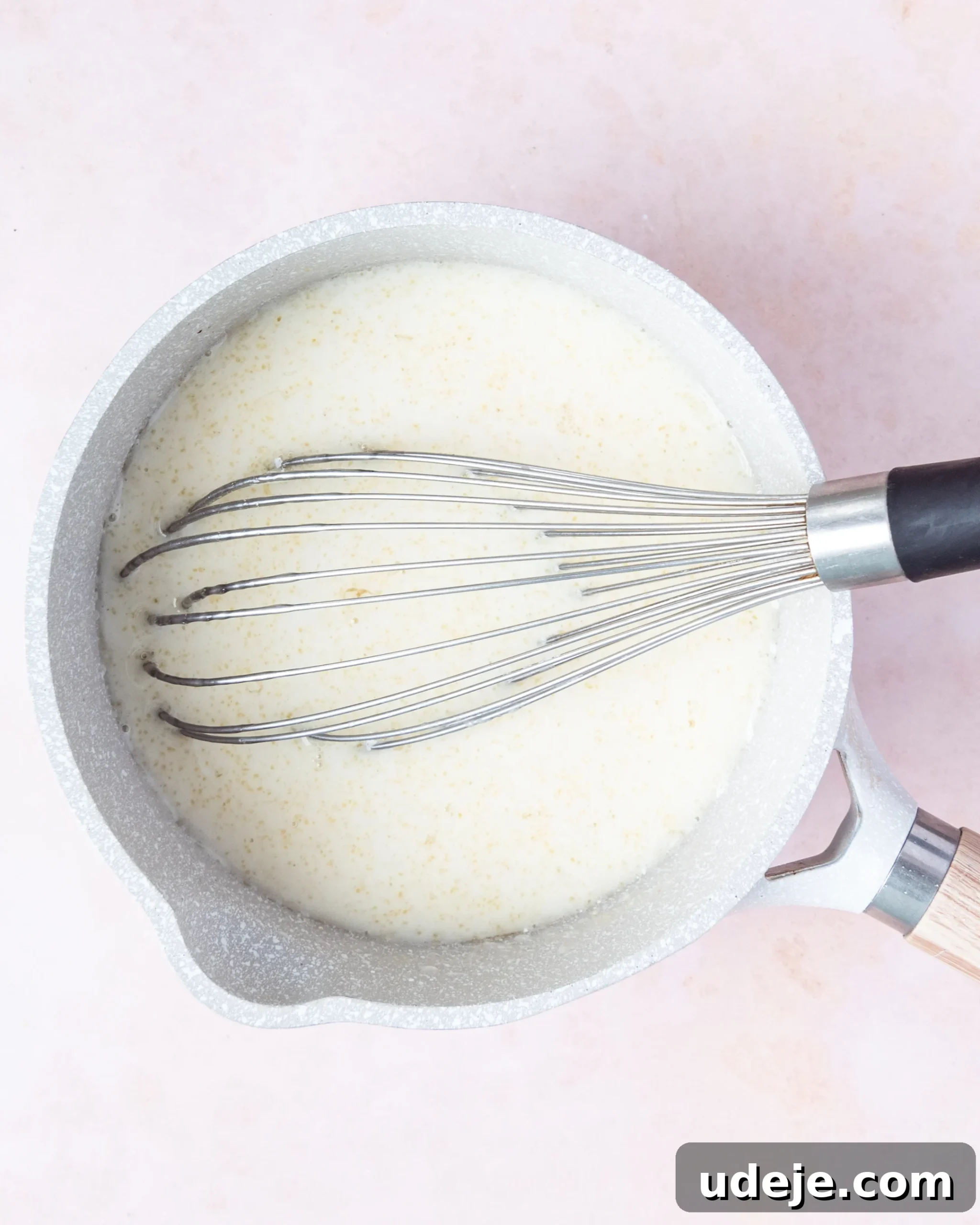
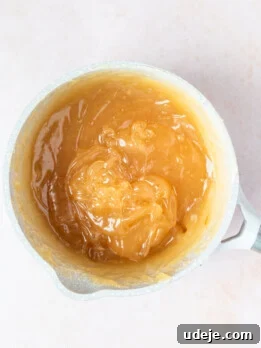
As the mixture cooks, you’ll observe a remarkable transformation. Initially cloudy, it will gradually become more transparent, then transition to a light golden-brown glossy color. Its consistency will change, becoming increasingly stretchy, thick, and gluey. The ideal texture is crucial; it should be firm enough to hold its shape but still pliable. To test the consistency, dip a spoon into the mixture and then into a bowl of cold ice water. The candy should thicken quickly and form a soft, cohesive ball. This is your cue that it’s ready.
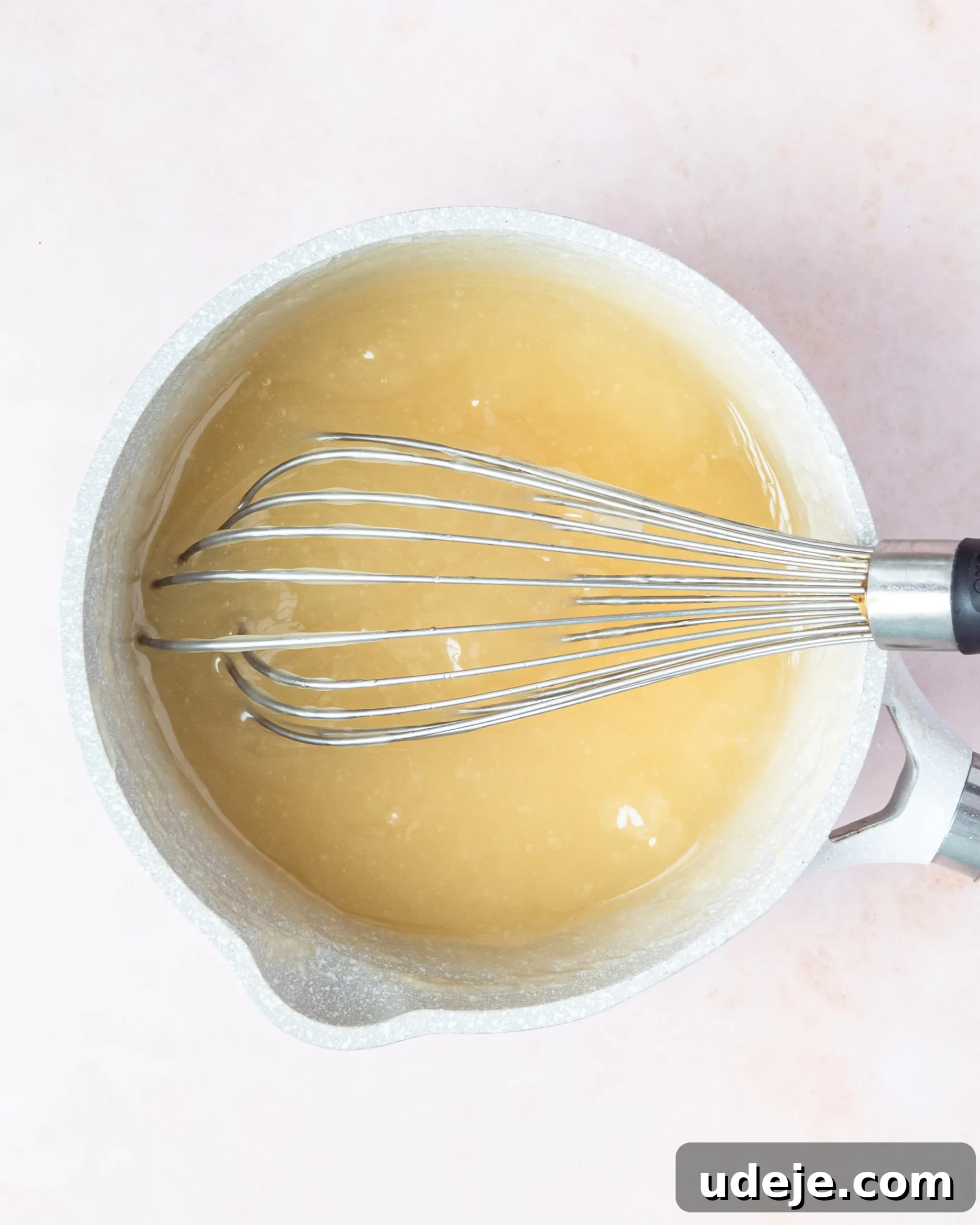
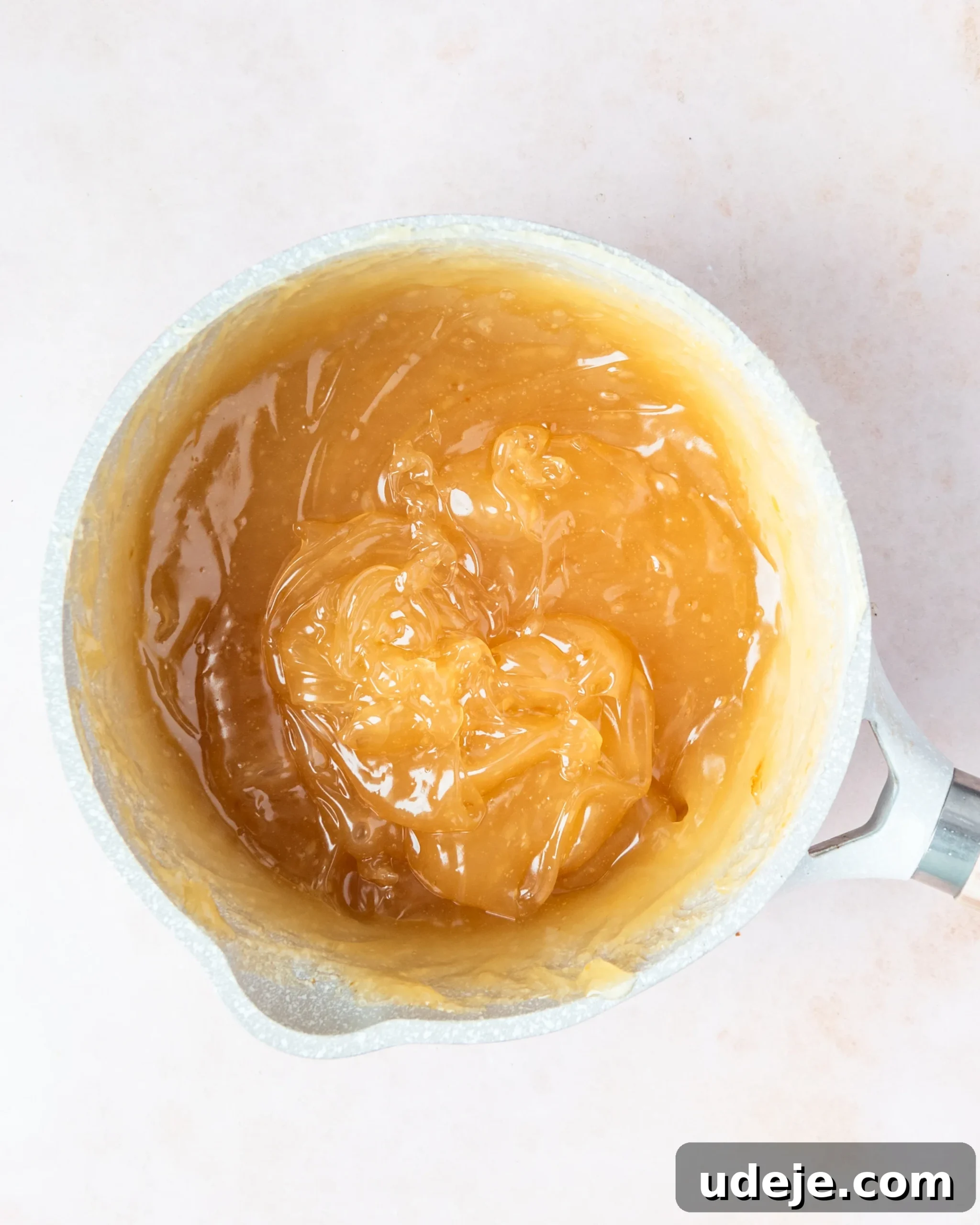
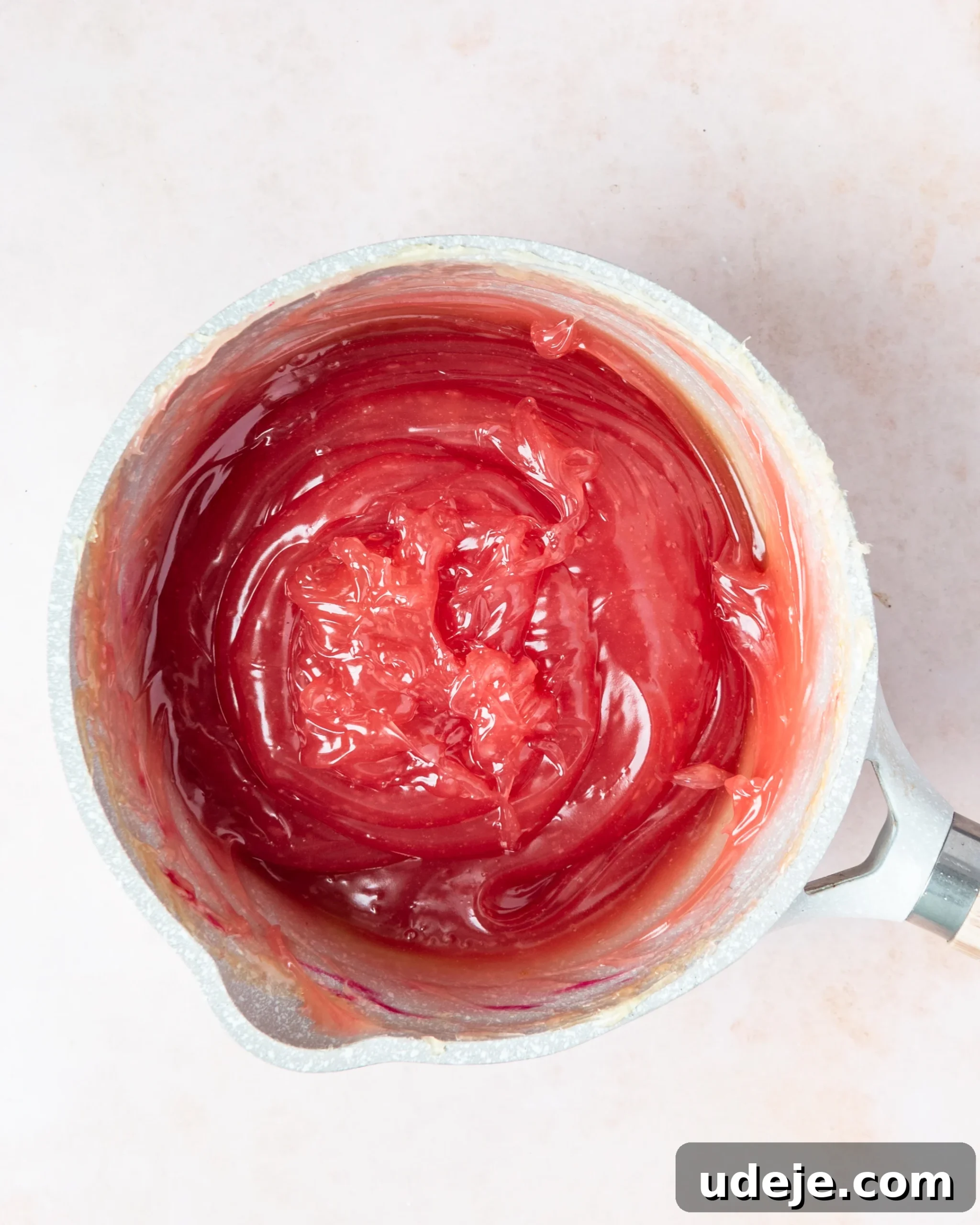
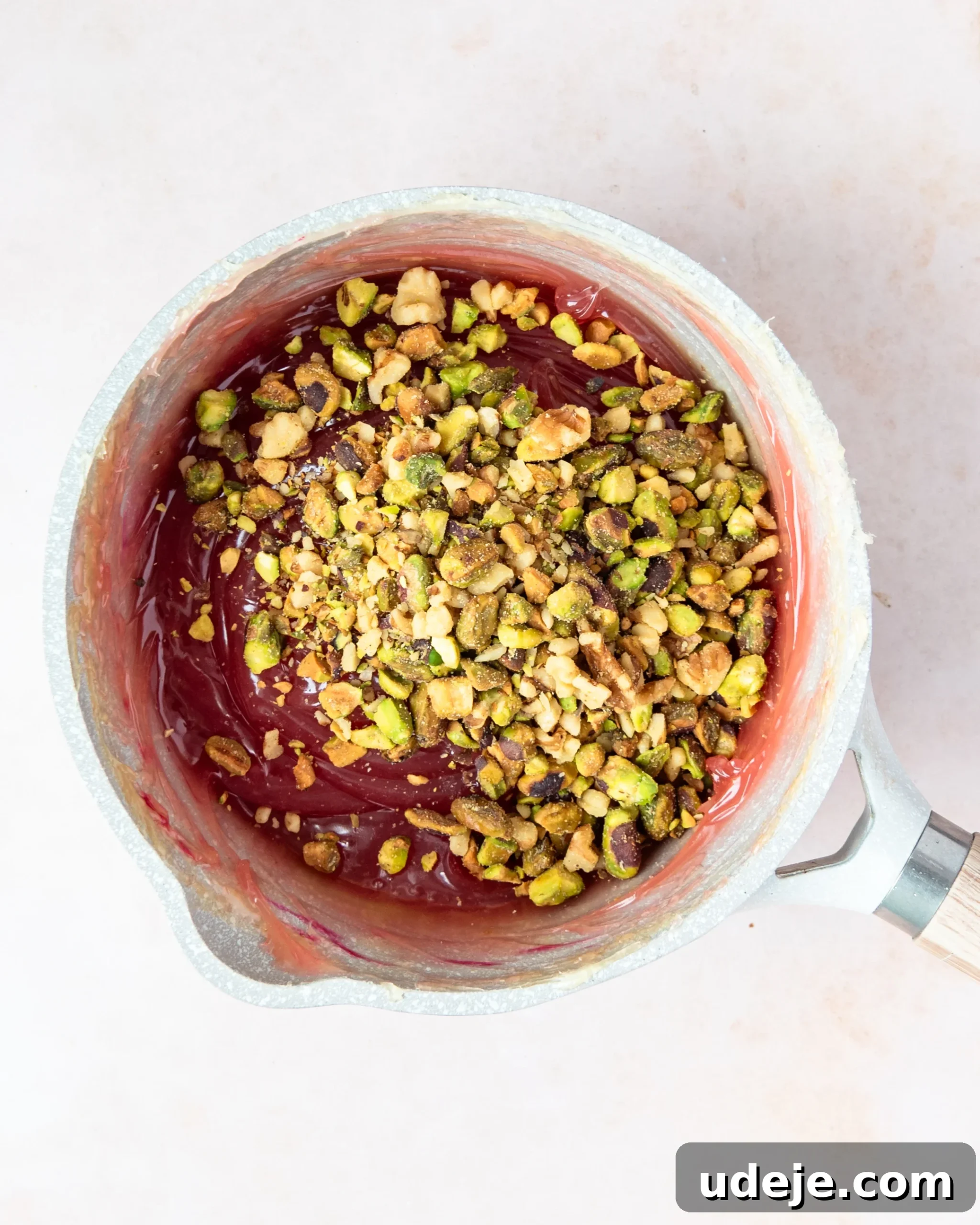
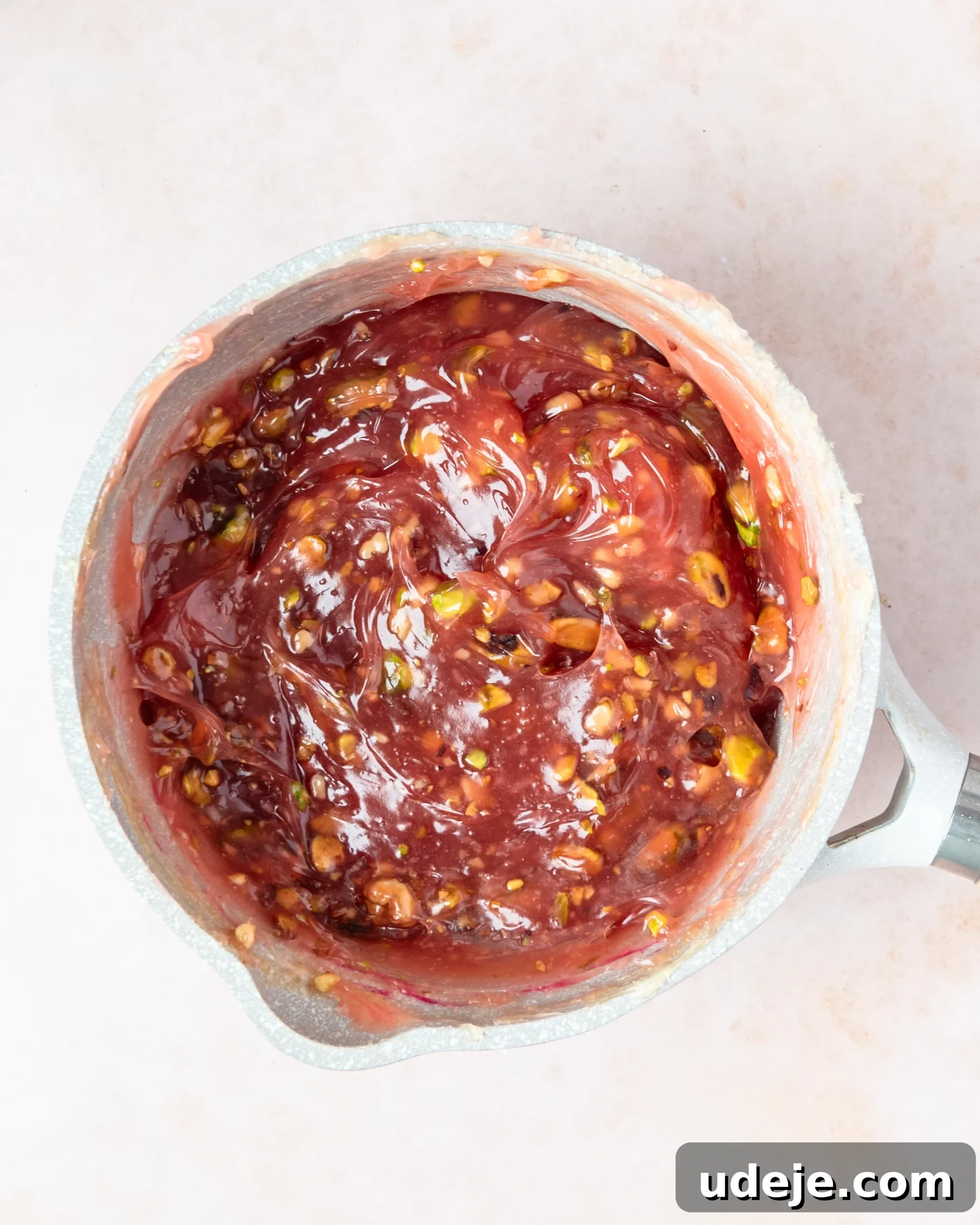
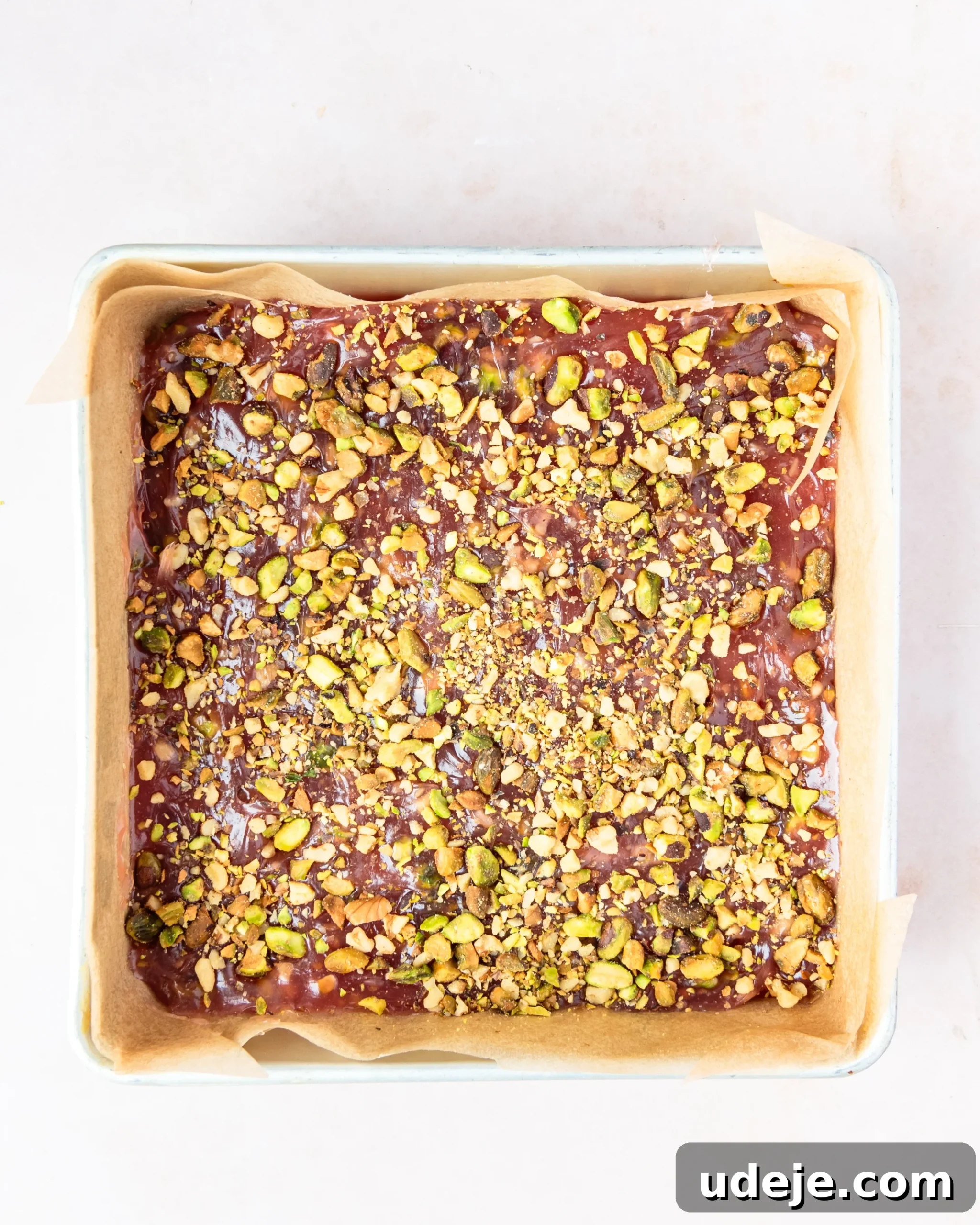
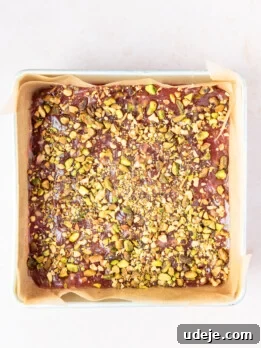
Once the desired consistency is achieved, remove the saucepan from the heat. Now is the time to infuse your Lokum with its signature flavor and color. Stir in the rosewater (or your chosen flavoring) and a few drops of red food coloring. Mix thoroughly to ensure an even distribution of color and fragrance. Then, fold in an additional 1/2 cup of chopped pistachios or any other desired add-ins. Work quickly, as the mixture will start to set. Pour the fragrant, colored mixture into your prepared pan, spreading it out evenly and smoothing the top surface. Sprinkle the remaining 1/2 cup of chopped pistachios over the top and gently press them into the surface to ensure they adhere well. Allow the Turkish Delight to set uncovered on your counter at room temperature for at least 8 hours, or preferably overnight. It’s crucial not to refrigerate it, as this can cause condensation and negatively impact its delicate texture.
Day Two: Cutting and Finishing Your Lokum
After a patient overnight rest, your Turkish Delight will have firmed up and be ready for its final touches. This is where it transforms from a block of jelly into those iconic, perfectly dusted squares.
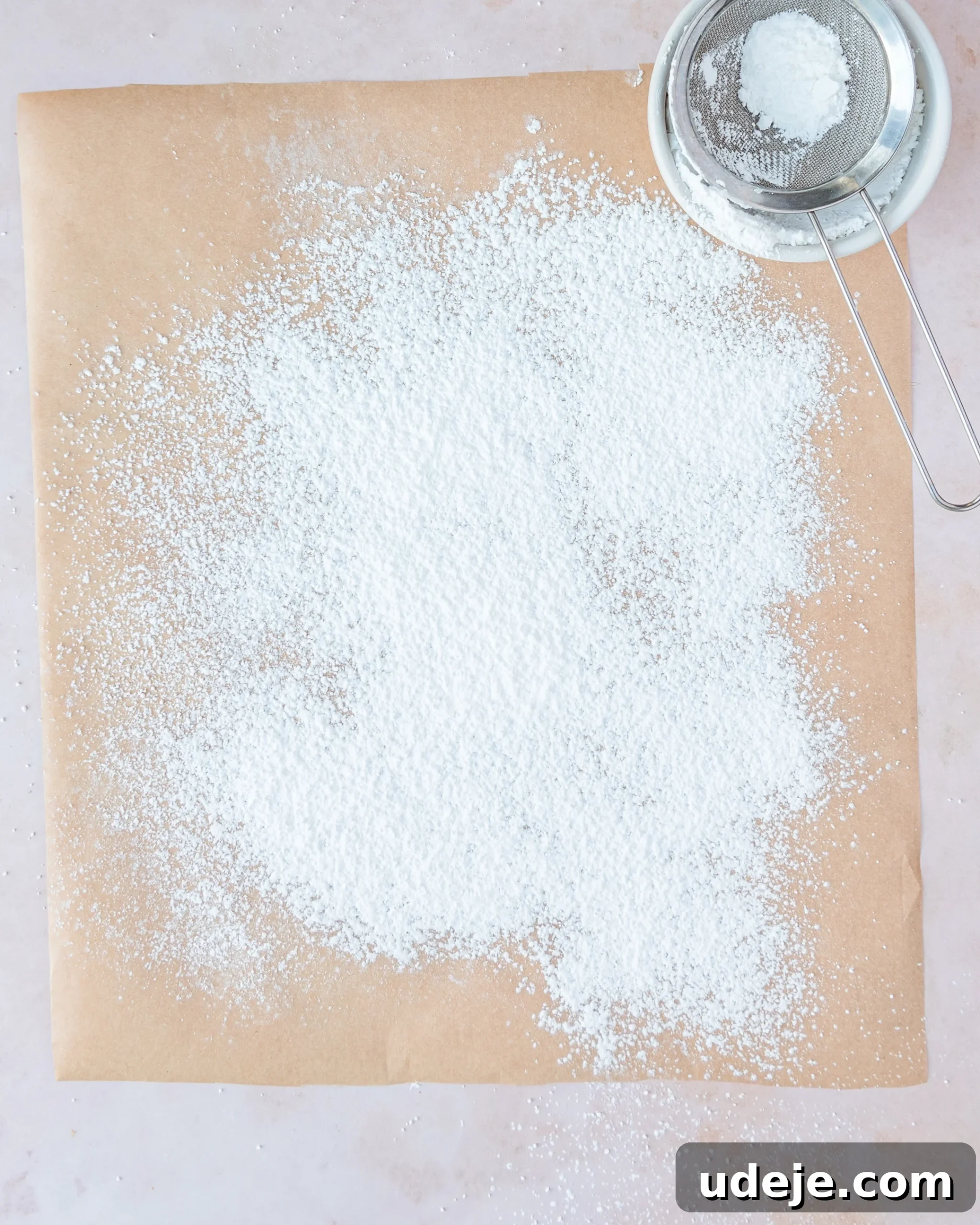
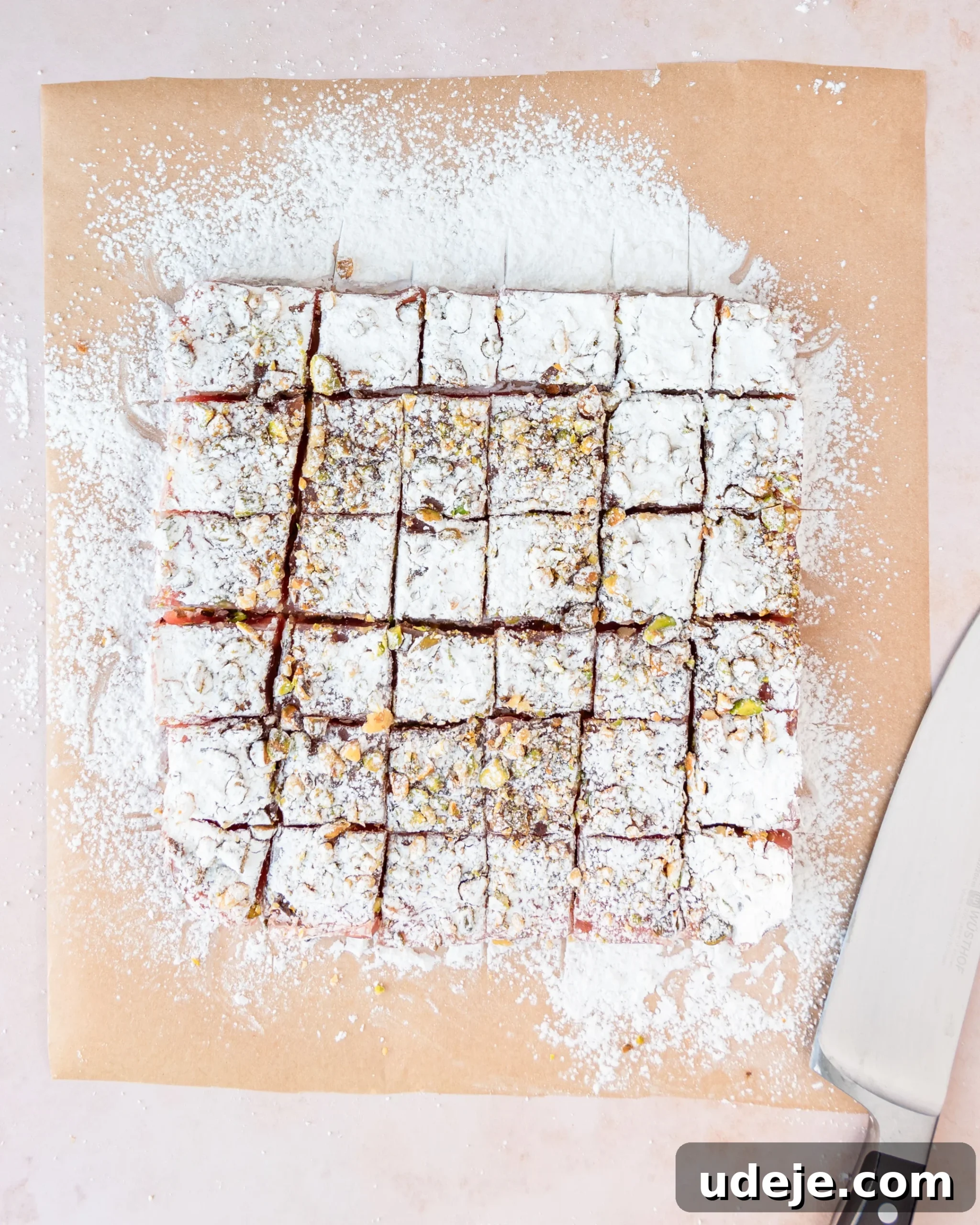
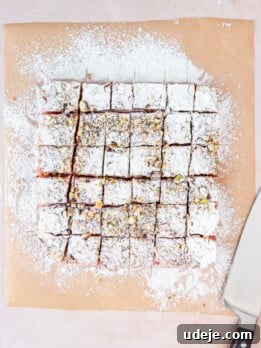
To begin, combine the powdered sugar and cornstarch in a small bowl. This dusting mixture is essential for preventing stickiness and giving the Lokum its characteristic matte finish. Liberally dust a clean work surface (such as a large cutting board or a fresh piece of parchment paper) with about one-third of this mixture. Carefully invert or lay out the block of Turkish Delight onto your prepared work surface, then gently peel away the parchment or foil paper from the top.
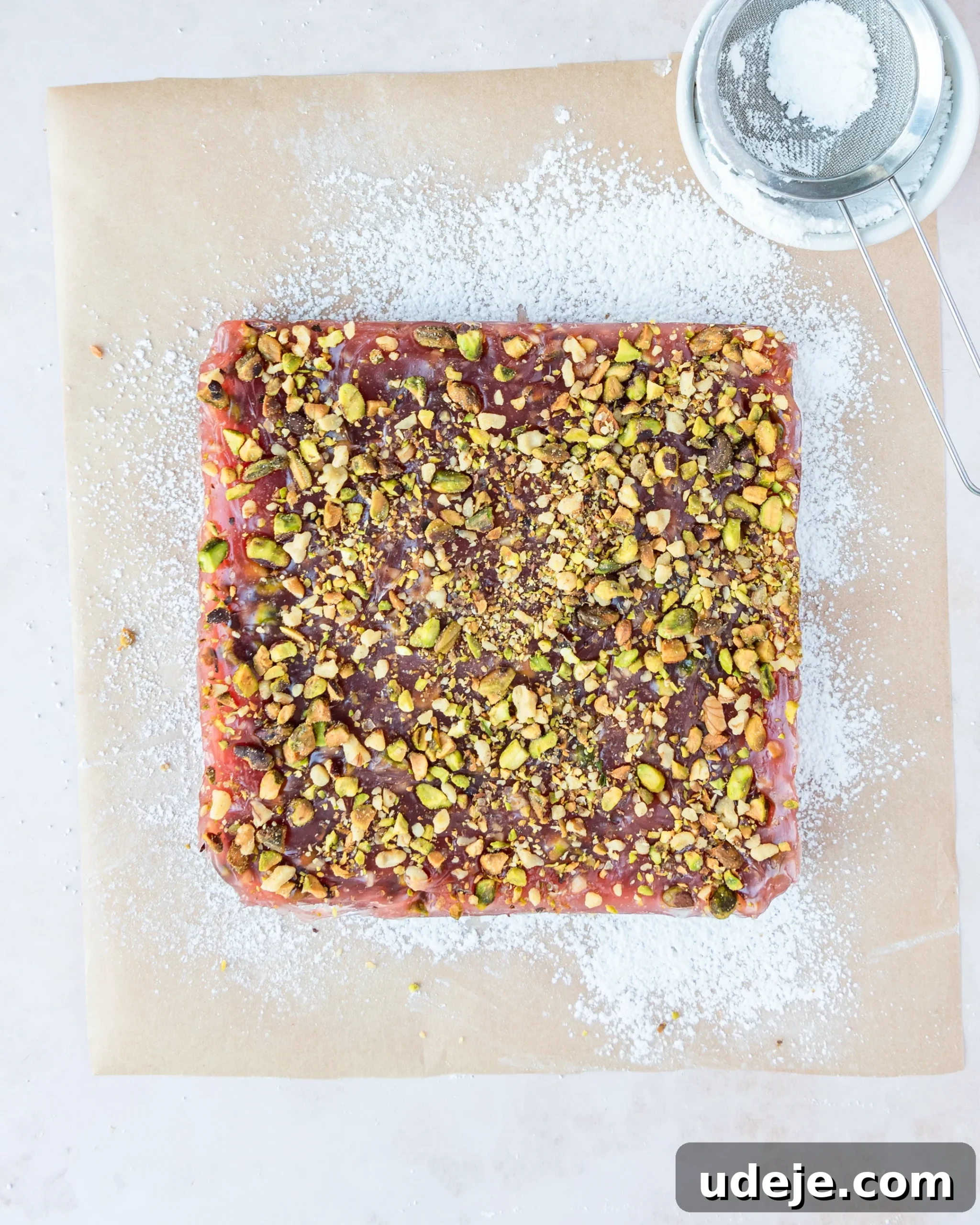
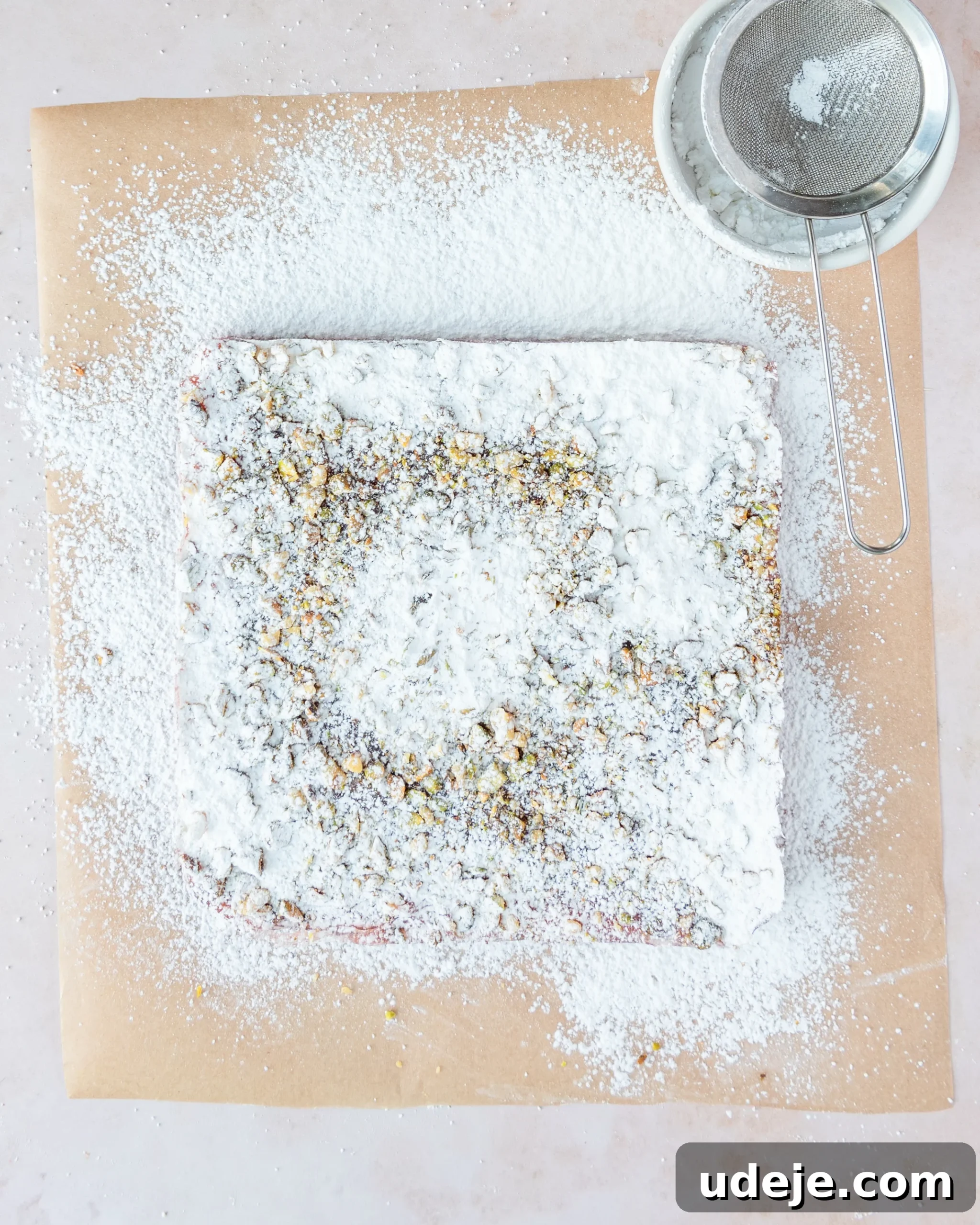
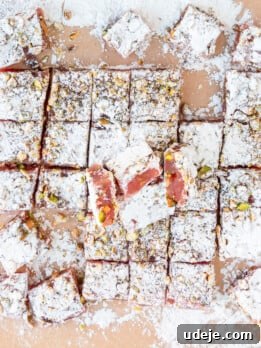
Now, dust the top surface of the Turkish Delight block with another third of your powdered sugar mixture. To cut the Lokum into neat squares, lightly spray a large, sharp knife with neutral oil. This trick helps prevent the sticky candy from adhering to the blade. Carefully cut the block into 36 uniform pieces. For an extra coating and to ensure all sides are thoroughly dusted, you can place the cut pieces into a bowl with the remaining powdered sugar mixture and gently shake to coat them completely. Arrange your freshly cut and dusted Turkish Delight pieces on a platter, ready to be served or stored.
Perfect Storage for Lasting Freshness
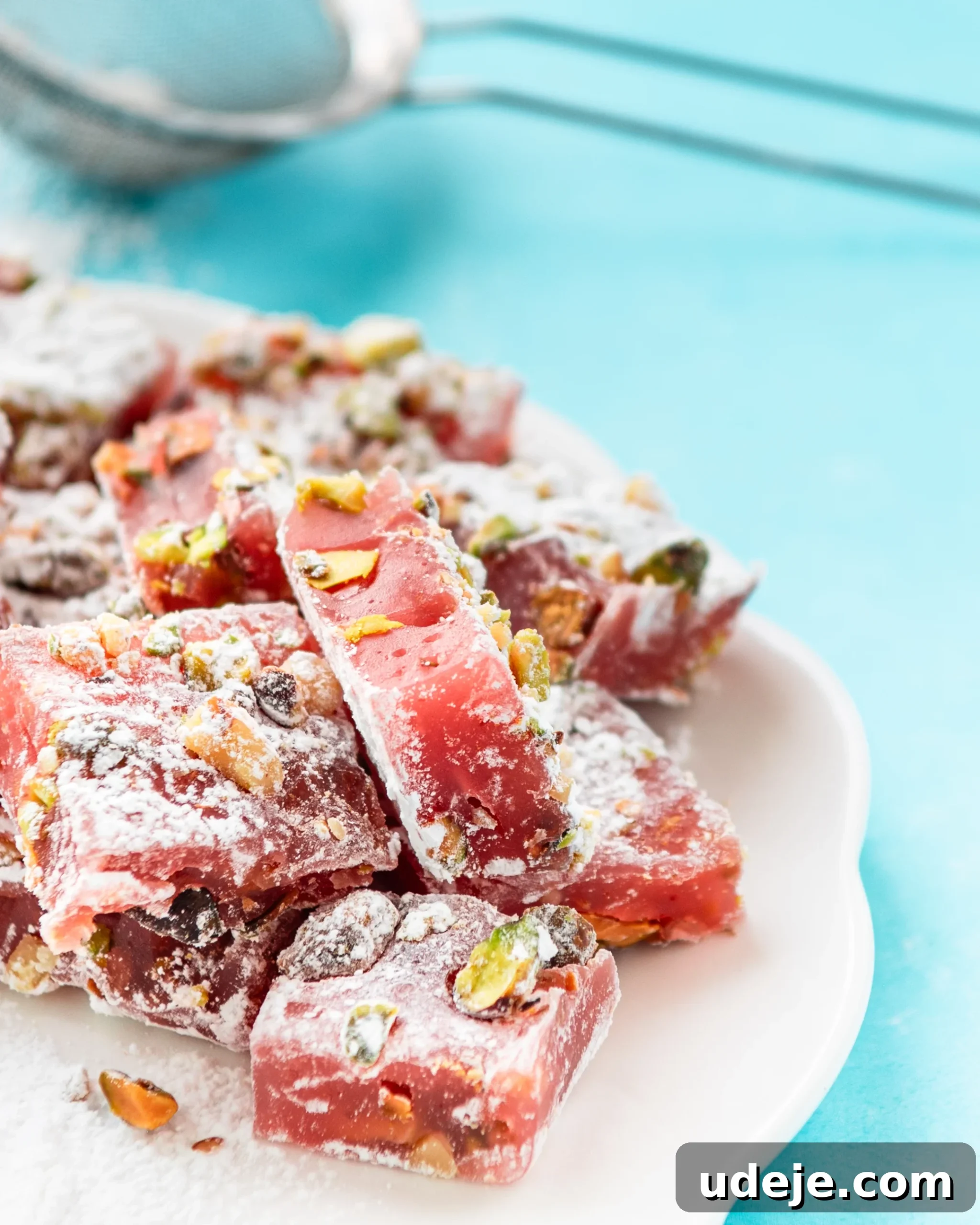
Proper storage is essential to maintain the delicate texture and freshness of your homemade Turkish Delight. Store the pieces in an airtight container at room temperature. To prevent them from sticking together, layer them with sheets of parchment paper between each layer. When stored correctly, your delicious Lokum will remain fresh for up to one month. While Turkish Delight can also be frozen in an airtight container for several months, it’s best to defrost it at room temperature to preserve its optimal texture. Avoid refrigerating Turkish Delight, as the humidity can cause it to become watery and compromise its distinct chewiness.
Frequently Asked Questions (FAQ) About Turkish Delight
Here are some common questions and helpful answers to guide you in your Turkish Delight making adventure:
- Why is my Turkish Delight too sticky?
Stickiness usually indicates that the mixture wasn’t cooked long enough, meaning there’s still too much moisture. If you opted not to use gelatin, you’ll need a longer cooking time (30-35 minutes) to evaporate sufficient water. Ensure your knife is oiled when cutting, and don’t skimp on the cornstarch-powdered sugar dusting.
- Can I make Turkish Delight without gelatin?
Absolutely! Traditional Lokum is made without gelatin. However, it requires a longer cooking time (closer to 30-35 minutes, or even more, until it reaches a very thick, almost gluey consistency that passes the cold water test). Gelatin simply speeds up the setting process and provides a more consistent result for home cooks.
- What can I use instead of cream of tartar?
Citric acid is an excellent substitute for cream of tartar. You can find it in most baking aisles or specialty food stores. It serves the same purpose of preventing sugar crystallization and enhancing the jelly-like texture.
- How can I customize the flavors?
The possibilities are endless! Beyond rosewater, try orange blossom water, lemon zest and juice, vanilla extract, mint extract, or even exotic spices like mastic or cardamom. Add them at the end of the cooking process with the food coloring.
- What nuts are best for Turkish Delight?
Pistachios are classic and highly recommended. However, walnuts, almonds, and hazelnuts are also delicious alternatives. You can toast them lightly before chopping for enhanced flavor.
- My Turkish Delight isn’t holding its shape. What went wrong?
This is likely due to insufficient cooking. The mixture needs to be cooked until it’s very thick and stretchy, allowing enough water to evaporate. If using gelatin, ensure it was fully dissolved and incorporated. Avoid refrigeration during the setting process, as it can introduce unwanted moisture.
Explore More Middle Eastern Sweet Treats
If you’ve enjoyed making this delightful Lokum, you’ll surely love exploring other exquisite Middle Eastern desserts. These recipes perfectly complement Turkish Delight and offer a broader taste of the region’s rich culinary heritage.
Other Recipes You Will Love
If you tried these recipes, please consider leaving a star ⭐️⭐️⭐️⭐️⭐️ rating in the recipe card below and/or a review in the comments section further down the page – I’d love to hear from you! You can also hop on over to Instagram and say hello!
Homemade Turkish Delight (Optional Pistachios)
Leave a Review
Pin Recipe
Ingredients
For the Lokum
- 2 cups granulated sugar, 400g
- 2/3 cup water, 150ml
- 1 teaspoon lemon juice
- 2/3 cup cornstarch, 100g
- 1 cup water, 250ml
- 1/8th teaspoon cream of tartar, or citric acid
- 3 tablespoons gelatin powder (if using), 25g
- 1 tablespoon rose water, or other flavouring
- 2-6 drops liquid red food colouring, adjust based on type of food colouring used
- 1 1/2 cups chopped unsalted pistachios (or other add-ins, omit if not using), 205g, divided
For Dusting
- 1/4 cup powdered sugar, 25g
- 2 tablespoons cornstarch
Instructions
-
 Prepare an 8 by 8 inch square pan by lining it with aluminum foil or parchment paper and spray with a neutral oil. Sprinkle evenly with 1/2 cup of the chopped pistachios. Set aside.
 -
In a small saucepan, pour the sugar, 2/3 cup water and lemon juice. Turn on the heat to medium low and allow the sugar to dissolve. When the sugar has dissolved, reduce the heat to low and cook for 20 minutes until the mixture is glossy and has thickened. Low heat will help to evaporate the liquid without burning the sugar.
-
Meanwhile mix together the cornstarch, 1 cup of water, cream of tartar, and gelatin powder. If you are not using gelatin, leave it out. Whisk to get rid of any lumps and slowly start adding this mixture to the sugar pot while continuously whisking. Wear a kitchen glove at this step to prevent any splatter from getting on you. Continue to whisk occasionally on medium to low heat every 5 minutes for 20 minutes. If you are not using gelatin you will need to cook the mixture for longer, 30 to 35 minutes. Keep whisking consistently to prevent any lumps from forming. The cornstarch will first dissolve, then the mixture will turn almost transparent before turning a light golden brown colour. It will become stretchy, thick and gluey.
-
At this point you can test the consistency of the candy by dipping a spoonful in cold ice water. The candy should thicken and form a ball.
-
Turn off the heat and add the rose water and red food colouring. Stir to combine. Add in 1/2 cup of the chopped pistachios and mix well. Pour the mixture in the prepared pan. Working quickly, spread and smooth out the mixture. Sprinkle on the remaining 1/2 cup of the chopped pistachios and quickly and carefully press them into the base to ensure they stick well. Keep uncovered on the counter at room temperature for 8 hours or overnight.
-
The next day, mix the powdered sugar and the cornstarch together in a small bowl. Sprinkle 1/3 of the mixture evenly over a clean surface. Flip or place the Turkish delight on to it and remove the parchment or foil paper. Dust the top with an additional 1/3 of the powdered sugar mixture. Use an oiled knife to cut the Turkish delight into 36 small squares. Place in a bowl and dust with the remaining 1/3 of the powdered sugar mixture and gently shake to ensure all sides are coated to prevent stickiness.
-
Store in an airtight container at room temperature with parchment paper between every layer. It will keep up to 1 month.
Notes
- You can replace cream of tartar (which is preferable) with citric acid as a stabilizer and to prevent the sugar from crystallizing.
- Feel free to experiment with other add-ins like walnuts, rose petals or almonds. You can also use other flavorings such as orange blossom, vanilla or lemon.
- The amount of food coloring depends on its form and intensity (gels, liquid…). Start with one drop and add more until the color reaches your preference. Experiment with other colors like yellow and orange.
- If you are not using the gelatin and they are melting or losing their shape at room temperature, it is likely that it needs more cooking time for the water to evaporate.
- Gelatin is added to this recipe to cut the cooking time and to ensure they hold their shape.
- If you would like a more cube like shape, double the recipe so that the pieces have more height
- It can be stored for up to 1 month at room temperature.