
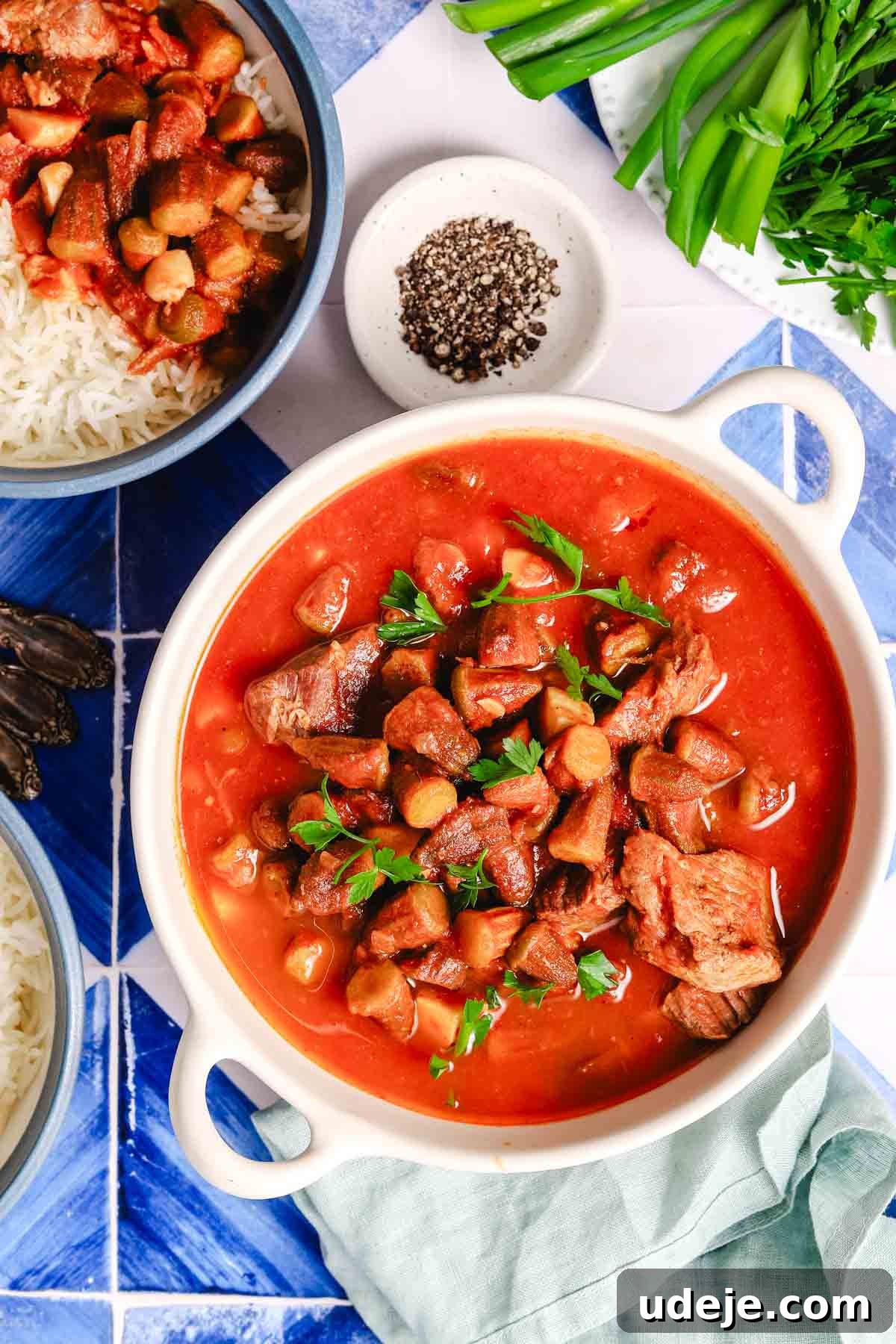
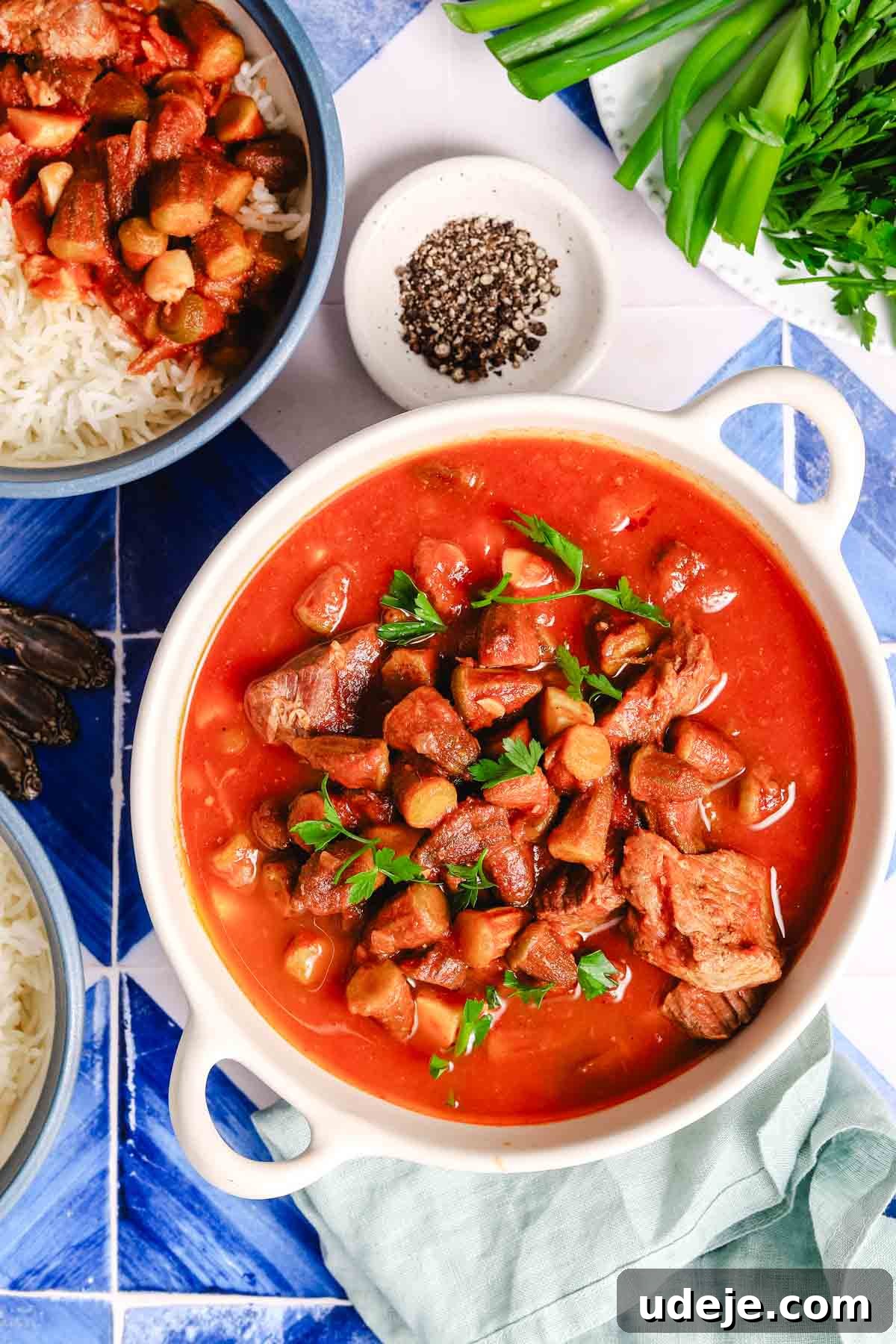
Welcome to the heartwarming world of Okra Stew, a treasured culinary masterpiece known across the Middle East as Bamya. This isn’t just a dish; it’s an embrace in a bowl, a classic comfort food that brings together the tender bite of okra with a luscious, rich tomato and meat-based sauce. Infused with generous amounts of fresh garlic and a unique, tangy-sweet whisper of pomegranate molasses—a secret ingredient that elevates the flavor profile—this robust stew is a staple on dinner tables year-round, traditionally served gloriously over a bed of fluffy rice. Whether you choose to prepare it with succulent beef, tender lamb, or delicate veal, this authentic Bamya recipe promises to deliver the nostalgic, soulful flavors of a truly homemade Middle Eastern delight.
5-Star Review
“Wow, super flavorful! I didn’t know I could make okra taste this delicious! Thanks Amina!”
—Hiba
A Culinary Journey: The Heart of My Childhood
For me, as an Iraqi, the fragrant aroma of Okra Stew simmering gently on the stovetop immediately transports me back to my childhood. It was a weekly ritual, an eagerly anticipated meal always accompanied by a perfectly cooked pot of vermicelli rice. While I may be a little biased, I truly believe that Iraqi-style okra stew stands out. Our secret lies in the generous use of garlic, which infuses the stew with an unparalleled depth of flavor, and the indispensable “magic touch” of pomegranate molasses. This concentrated syrup introduces a distinctive sweet and tangy note, balancing the richness of the tomato and meat beautifully. The foundational flavor often comes from a rich lamb or veal broth, which I highly recommend for its profound depth, though a good quality beef or even chicken broth can also be used.
As the stew patiently simmers, the okra naturally releases its thickening properties, creating a luscious, velvety texture that clings wonderfully to every grain of rice. In our household, Okra Stew wasn’t just a dish; it was part of a cherished culinary rotation, sharing the spotlight with other beloved comfort foods like Fasolia (white bean stew) and Green Bean Stew. Today, I continue this tradition, preparing these wholesome stews frequently, much to the delight of my own children, who savor these traditional tastes as much as I did.
Beyond its incredible taste, Bamya offers nutritional benefits. Okra is a good source of vitamins C and K, and dietary fiber, contributing to a healthy digestive system. When combined with lean meat and a tomato-based sauce, it becomes a well-rounded and nourishing meal that sustains and satisfies. This dish is not only a feast for the palate but also a nourishing choice for the whole family, providing essential nutrients in every comforting spoonful.
Choosing the Right Okra for Your Bamya
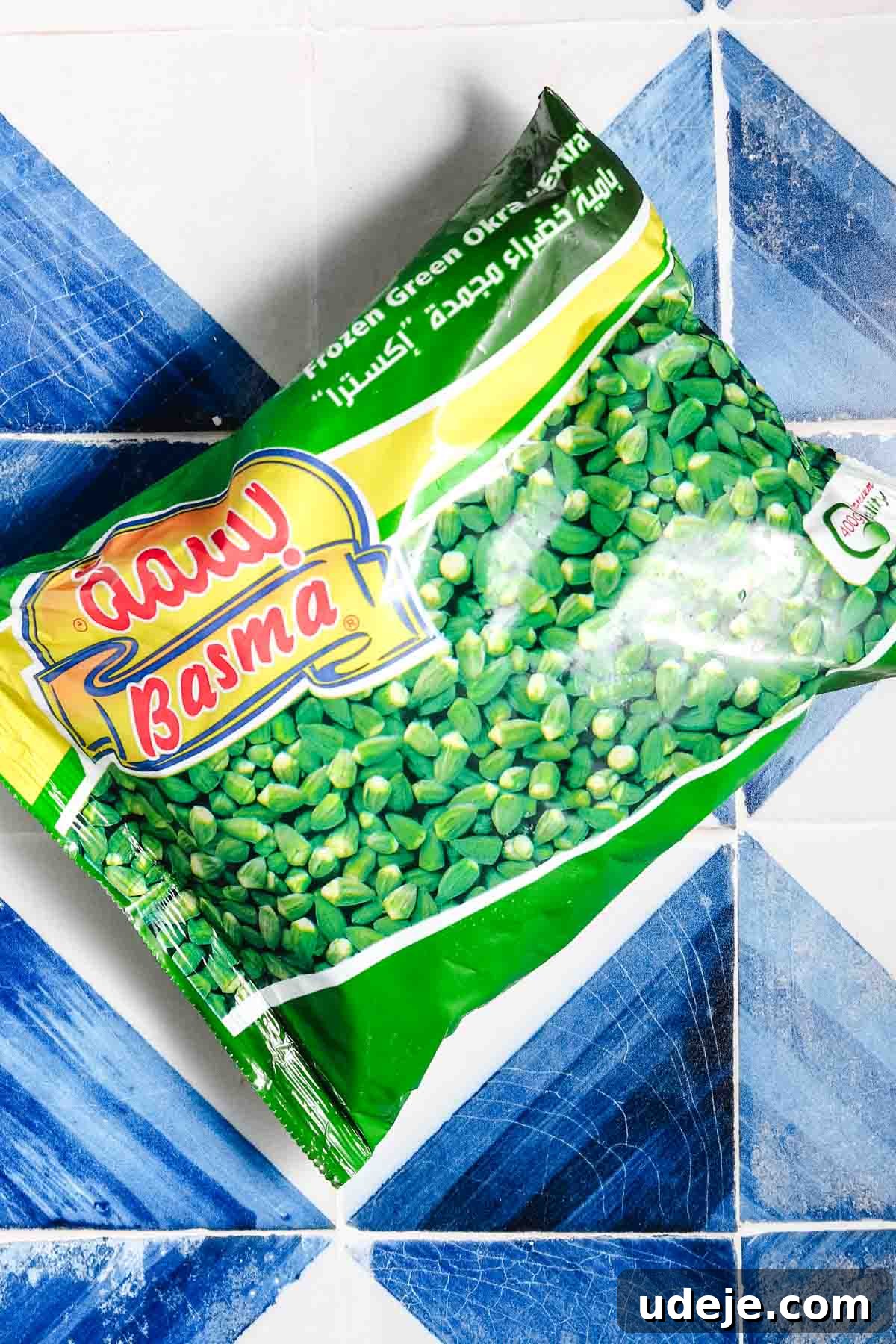
The success of a great Okra Stew begins with selecting the right okra. My absolute favorite type to use is frozen young okra. These miniature pods are remarkably tender and cook through effortlessly, absorbing the flavors of the stew beautifully. Larger, fresh okra can often be quite fibrous and notoriously difficult to tenderize, sometimes remaining firm even after extended cooking times, which is why I typically steer clear of them for this recipe. You can usually find these convenient frozen baby okra packages at most Middle Eastern specialty stores or even in the international freezer aisle of larger supermarkets. If you opt for fresh okra, look for small, firm, brightly colored pods, avoiding any that are discolored, soft, or have blemishes.
Crafting the Perfect Okra Stew with Meat: A Step-by-Step Guide
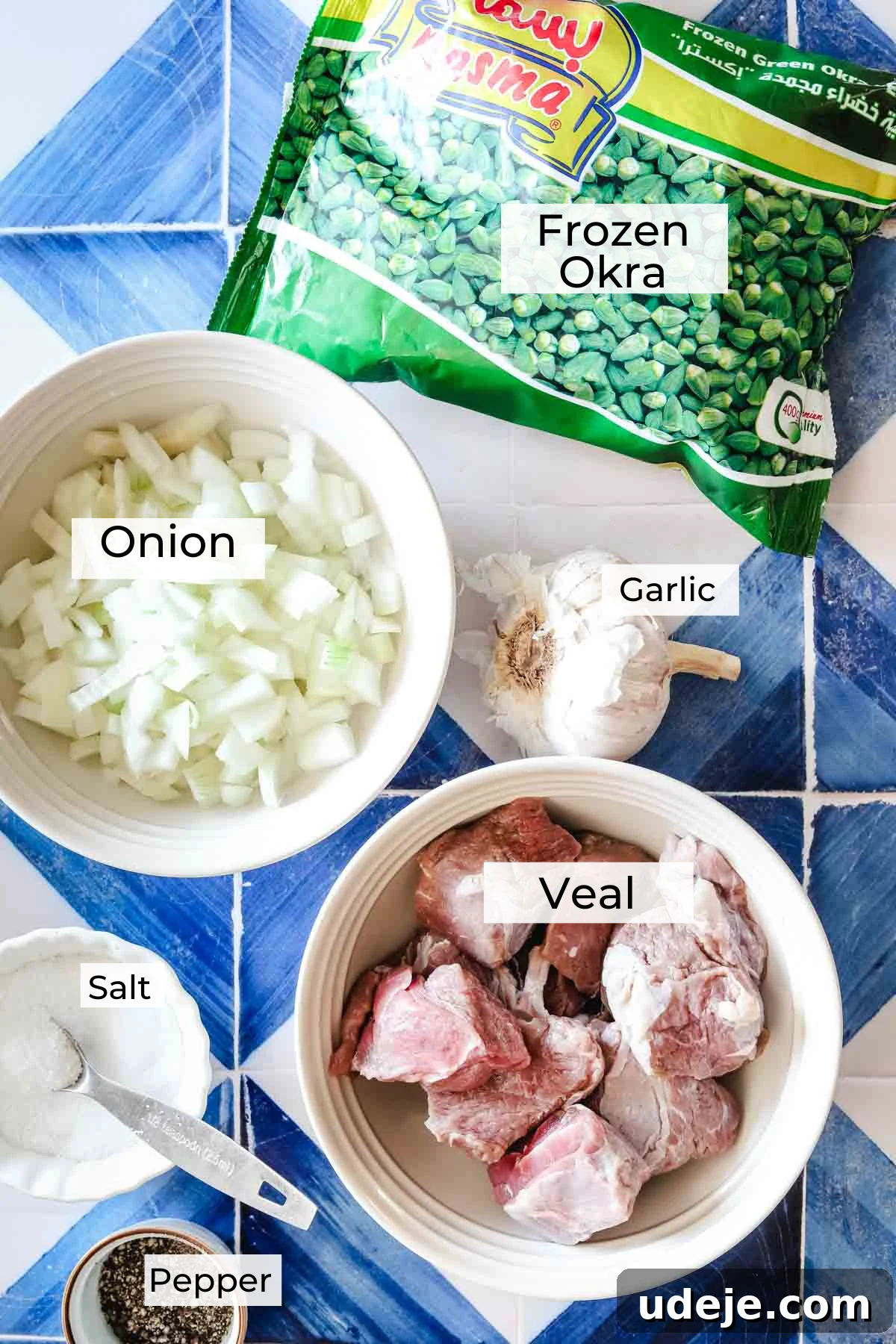
Embarking on the journey to make this delectable Middle Eastern Okra Stew, or Bamya, is a straightforward and rewarding process. First, ensure you have all your ingredients at hand. While not always pictured in initial ingredient shots, remember that robust tomato paste and a good quality pomegranate molasses are absolutely essential for achieving the authentic flavor profile of this dish. For the meat component, I personally adore using bone-in veal, cut into medium-sized chunks. The bone adds incredible richness and depth to the broth as it cooks, resulting in a more complex and satisfying stew.
EXPERT TIP: Opting for bone-in cuts of meat is a culinary secret for stews. The bones release collagen and marrow during the slow cooking process, naturally enriching the broth and infusing it with unparalleled flavor and a velvety mouthfeel that simply cannot be achieved with boneless cuts alone.
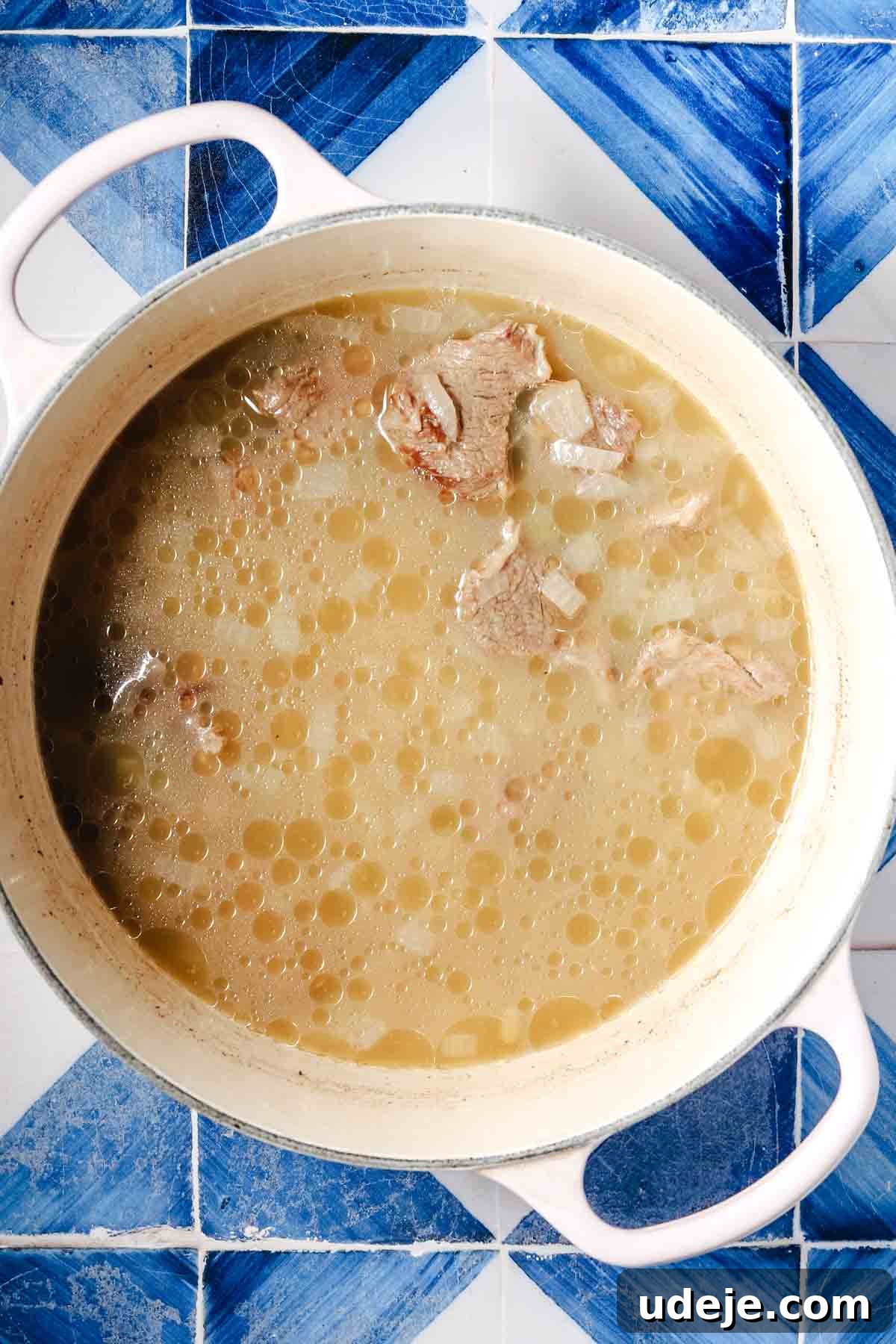
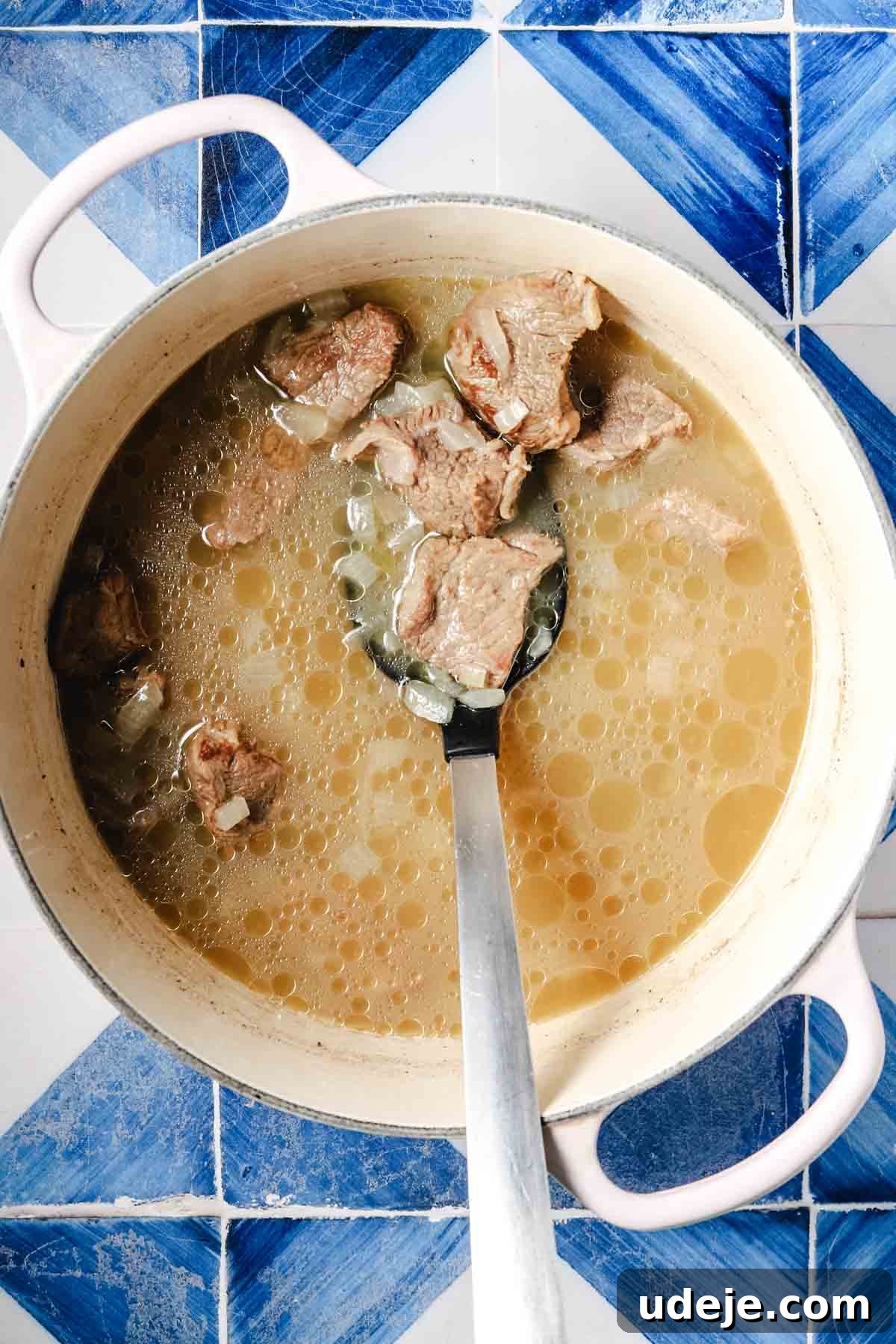
The cooking process begins with a foundational step that builds the base of our stew’s flavor: caramelizing the onions. Sautéing them until soft and translucent sweetens them, setting the stage for the savory elements. Following this, the meat pieces are added to the pot and seared until beautifully browned on all sides. This browning not only adds appealing color but also develops a crucial layer of umami flavor through the Maillard reaction. Once browned, add water to cover the meat and bring it to a gentle boil. Allow it to simmer for approximately 30-45 minutes, or until the meat begins to tenderize. For a quicker alternative, a pressure cooker can tenderize the meat in just about 20 minutes.
CHEF’S NOTE: The cooking time for meat can vary significantly based on the cut and type. While bone-in veal and lamb are generally more forgiving and tenderize relatively quickly, boneless stew beef pieces may require a longer simmering period. Always check for tenderness to ensure your meat is melt-in-your-mouth soft before proceeding to the next steps.
When it comes to the okra itself, convenience is key with frozen small okra – it can be added directly from the bag, no thawing necessary. If you’re working with fresh okra, a little preparation goes a long way. After a thorough wash, delicately trim just the very top of each pod, being careful not to expose the tiny seeds within. This minimal trimming is crucial; over-trimming will cause the okra to lose its structural integrity during cooking and, more importantly, can lead to the release of its natural “sliminess,” which we aim to avoid for a perfectly smooth stew.
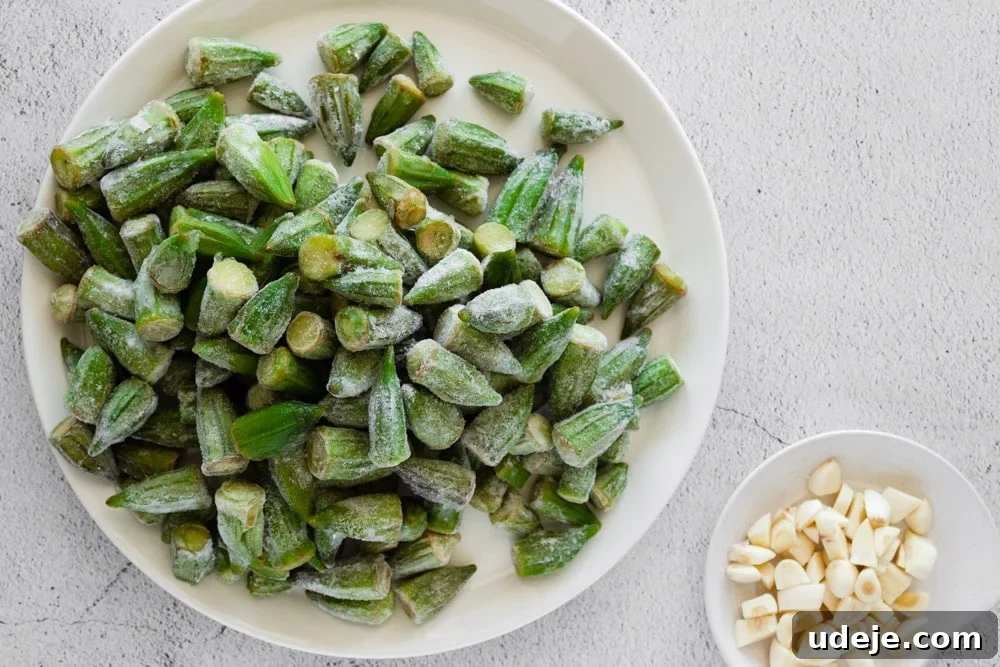
Once your meat has reached a delightful fork-tender stage, it’s time to bring the stew to life. Introduce the frozen okra, the aromatic chopped garlic, and the rich tomato paste to the pot. For a slightly different texture or if tomato paste isn’t on hand, passata or a good quality tomato sauce can be used as effective substitutes. Season generously with salt and black pepper, remembering that you can always adjust to taste later.
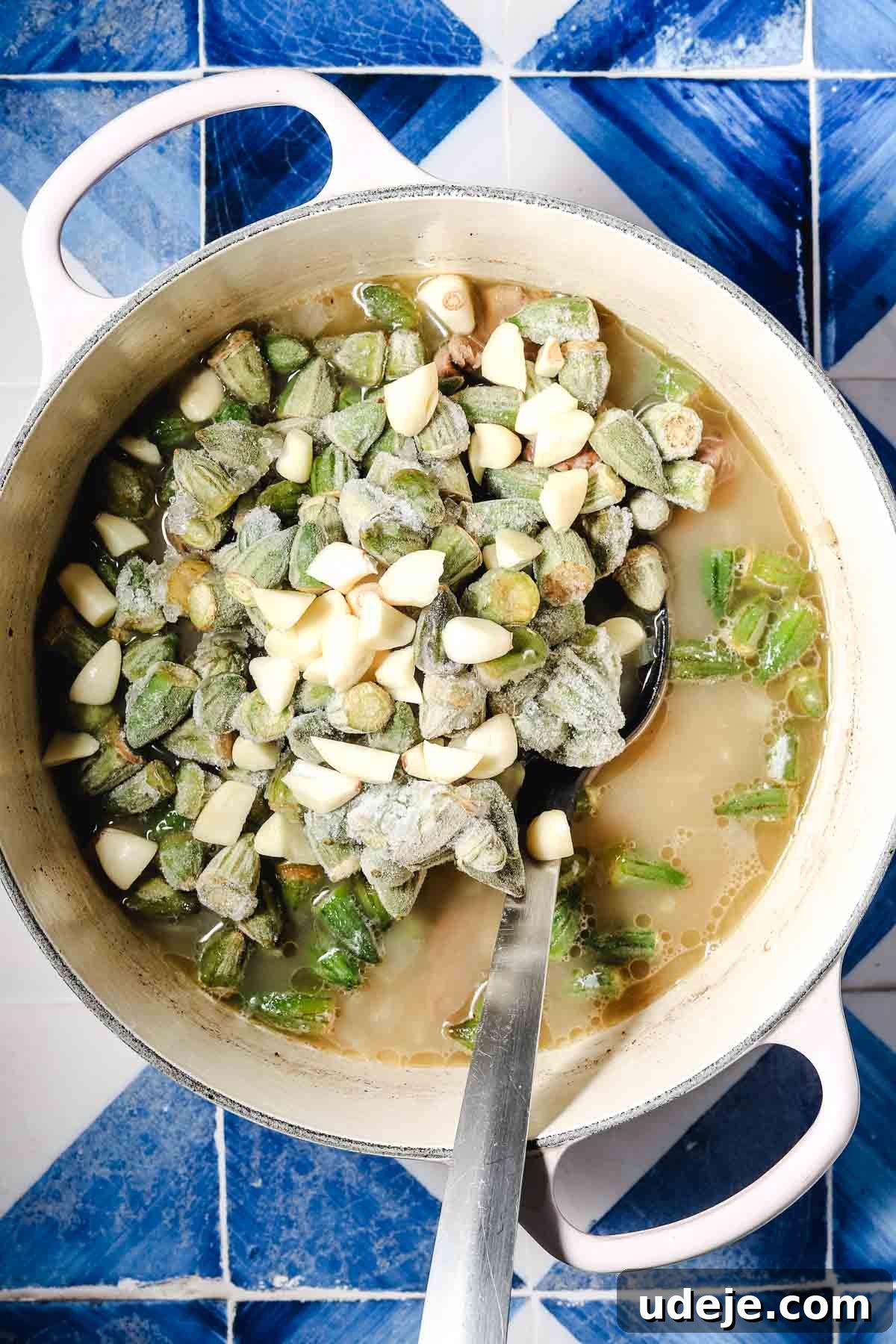
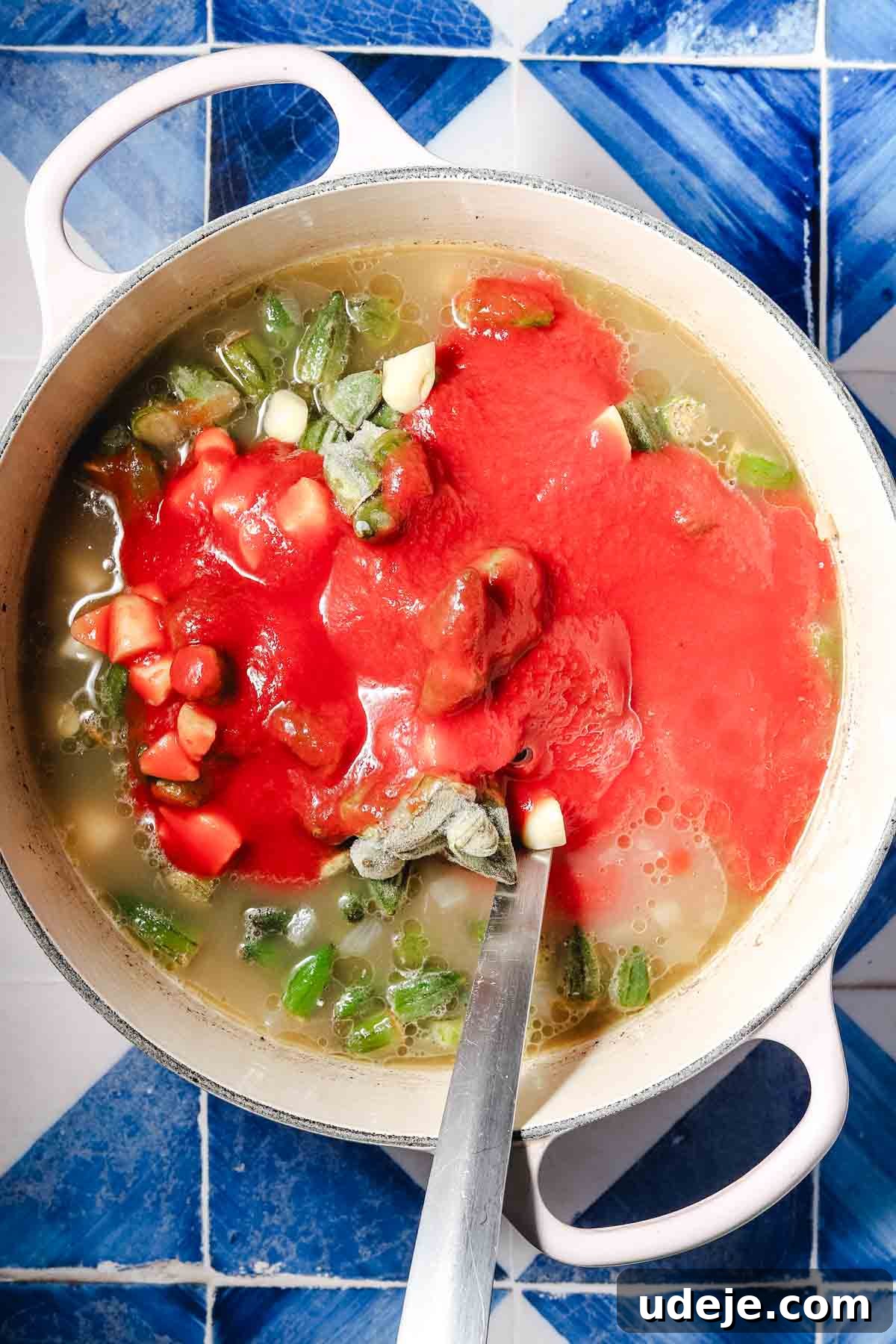
Gently combine all the ingredients in the pot, taking care not to crush the delicate okra pods. Add additional water to achieve your desired stew consistency – typically enough to just cover the ingredients – then cover the pot and allow the stew to simmer peacefully for at least 30 minutes. This period is crucial for the flavors to meld and deepen.
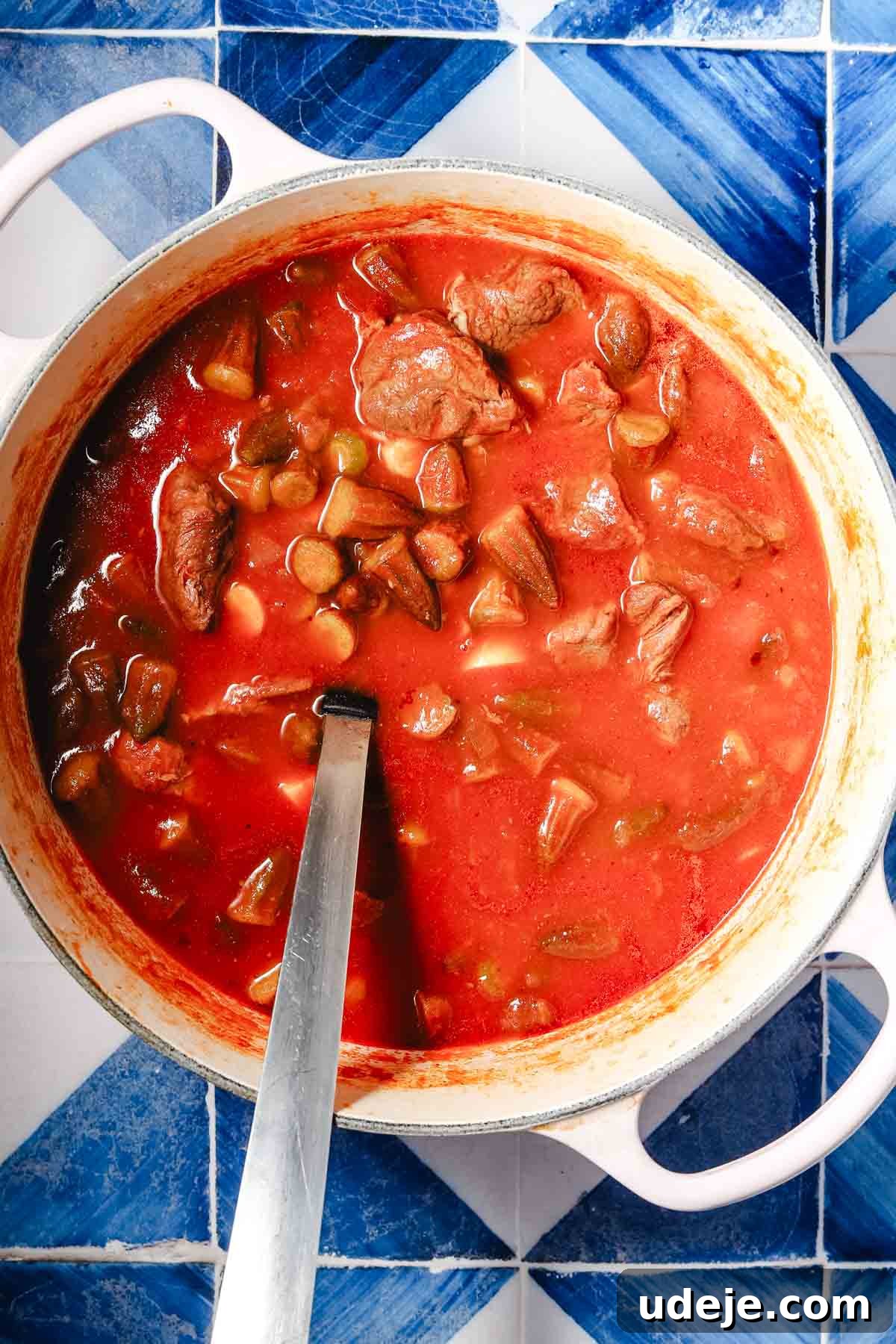
After the initial 30 minutes, it’s time for the crowning glory: the pomegranate molasses. Stir it in and then carefully assess the tenderness of both the okra and the meat. This is also the perfect moment to taste and adjust the seasoning, adding more salt or pepper as needed. Different varieties of okra can have varying cooking times, so don’t hesitate to add more water if the stew becomes too thick, and continue simmering for an additional 10-15 minutes, or until everything is perfectly tender and the flavors are harmoniously developed. A truly exceptional Okra Stew typically requires about 1 hour for all the components to become tender and for the rich, complex flavors to fully bloom, though sometimes it may be ready a little sooner.
Mastering Okra: Tips to Reduce Sliminess
One common concern when cooking with okra is its tendency to become slimy. However, with the right technique, you can easily minimize or entirely avoid this characteristic. The most effective method, and the one we employ in this traditional recipe, is to keep the okra pods intact rather than cutting them into small pieces. Slicing okra extensively breaks open the pods, releasing mucilage (the natural thickening agent) that can contribute to a viscous, slimy texture. When okra is left whole or minimally trimmed, as instructed, and slow-cooked in the stew, it retains its shape and becomes beautifully tender without any undesirable sliminess, instead lending its natural starches to subtly thicken the sauce. This results in a deliciously smooth and enjoyable stew.
Serving Your Middle Eastern Okra Stew (Bamya)
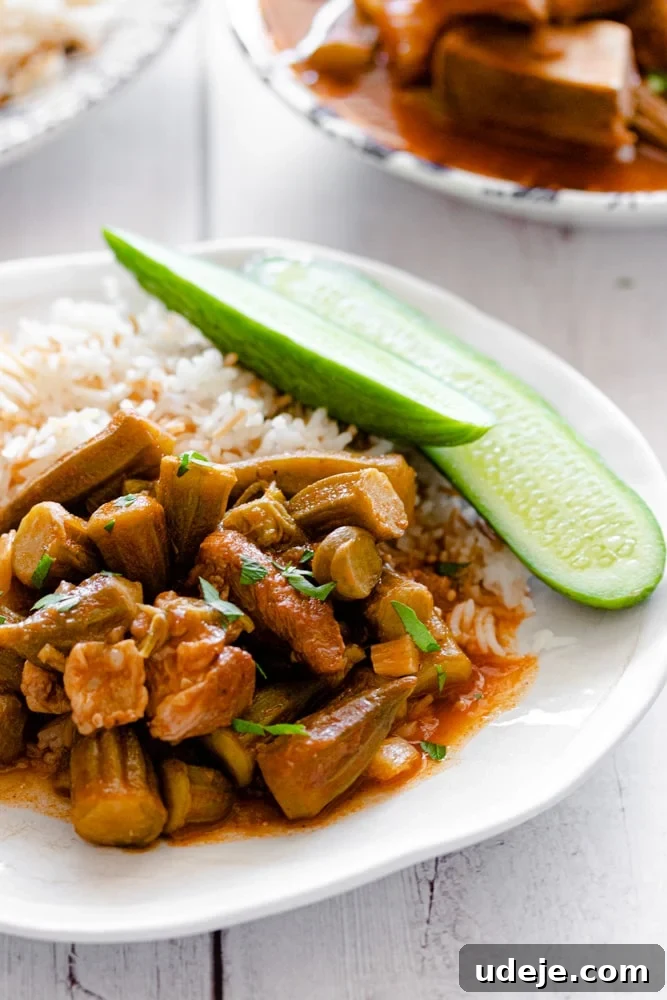
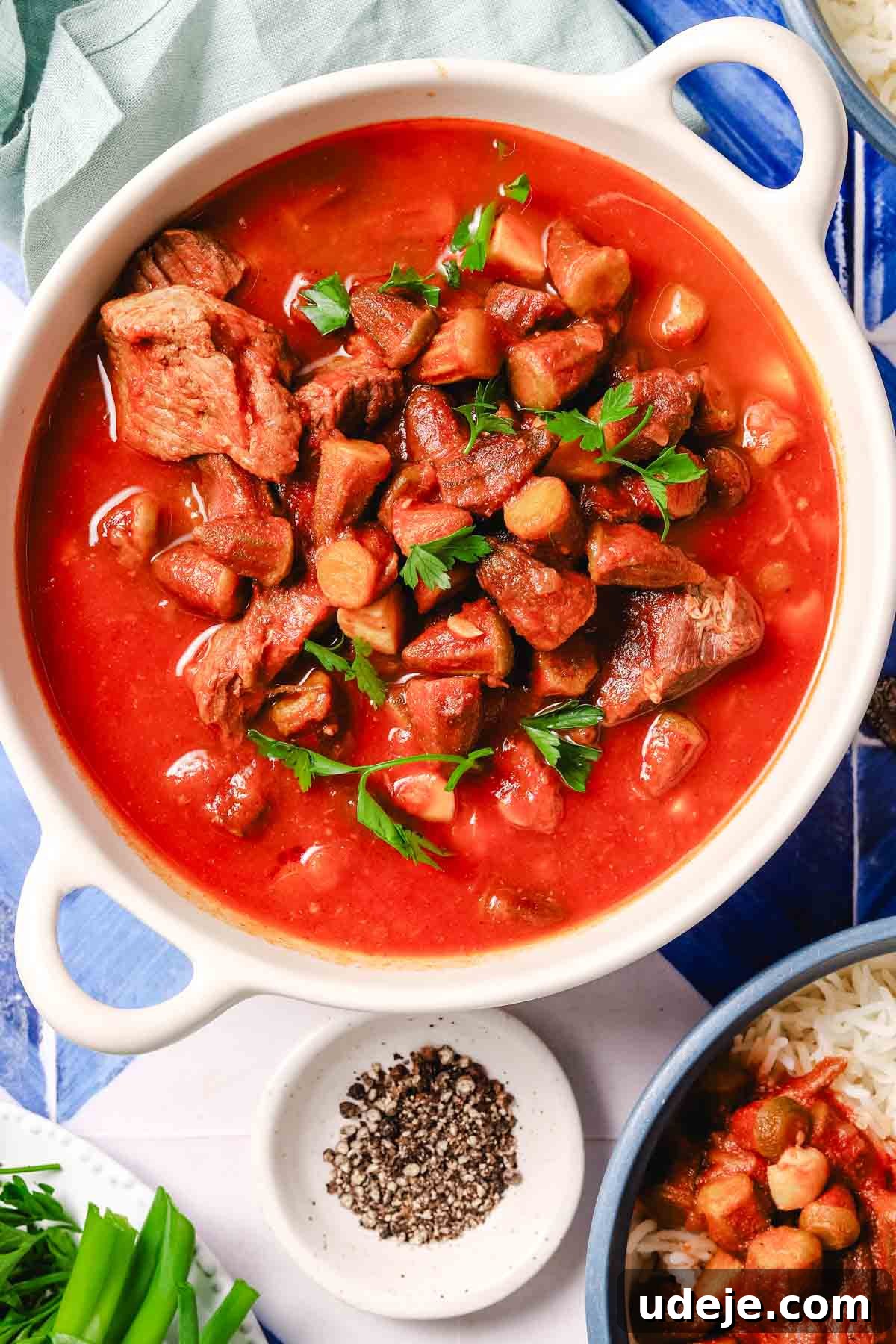
The traditional way to enjoy this magnificent Okra Stew is by serving it generously over a mound of warm, fluffy vermicelli rice. The rice soaks up the rich, flavorful tomato and meat sauce, creating a harmonious and utterly satisfying meal. To elevate the experience, consider garnishing your Bamya with fresh chopped cilantro or parsley for a burst of color and herbaceous freshness. Accompanying sides often include fresh green onions, radishes, or a simple side salad, which provide a refreshing counterpoint to the stew’s richness. Pickles, especially Middle Eastern pickled turnips or cucumbers, are also a fantastic addition, adding a tangy crunch that brightens the palate. A squeeze of fresh lemon juice just before serving can also enhance the stew’s vibrant flavors. This dish is perfect for family gatherings, offering comfort and authentic taste that will impress everyone at the table.
More Middle Eastern Stew Recipes
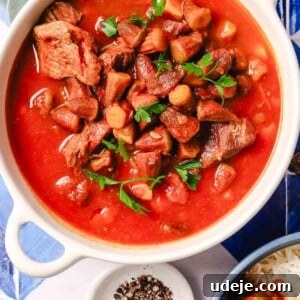
Okra Stew (Middle Eastern Bamya Recipe)
Leave a Review
Pin Recipe
Ingredients
- 500 g veal, cut into medium pieces (you can substitute lamb or stewing beef – see notes)
- 800 g frozen small okra, you can substitute fresh okra – see notes
- 1 onion, finely diced
- 3 tablespoons vegetable oil
- 6 tablespoons tomato paste
- 8 cloves garlic, roughly chopped
- 1.5 tablespoon pomegranate molasses, if unavailable, you can skip this – but highly recommend
- 1.5 teaspoons salt, divided, more per preference
- 1/2 teaspoon black pepper
- About 6-8 cups of water, added in stages
Instructions
-
Begin by finely dicing the onion. Add it to a large stock pot or Dutch oven along with the vegetable oil and 1/2 teaspoon of salt. Sauté the onions over medium heat for 2-3 minutes, stirring occasionally, until they become soft, translucent, and slightly fragrant. This initial step builds a sweet and savory foundation for the stew.
-
While the onions are softening, season your veal pieces with 1/2 teaspoon of salt and 1/2 teaspoon of black pepper, ensuring an even coating on all sides. This pre-seasoning helps infuse flavor into the meat from the start.
-
Increase the heat slightly if necessary, then add the seasoned veal pieces to the pot with the caramelized onions. Sear the meat thoroughly on all sides for about 5 minutes, achieving a golden-brown crust. This browning step, known as the Maillard reaction, is crucial for developing deep, rich flavors in your stew.
-
Pour about 4 cups of water over the veal, ensuring the meat is fully submerged. Bring the liquid to a rolling boil, then reduce the heat to low, cover the pot, and simmer for 30 to 40 minutes. Alternatively, you can pressure cook the veal for 15 minutes for faster tenderizing. This initial cooking phase ensures the meat is nearly tender, as it typically requires more cooking time than the okra. Refer to the notes for tips on checking meat doneness.
-
Once the veal is more than halfway cooked and tender, add the frozen small okra (no need to thaw), the roughly chopped garlic, the tomato paste, and the remaining 1/2 teaspoon of salt to the same pot. Stir in the pomegranate molasses at this stage as well, for its distinctive tangy sweetness.
-
Add another 3-4 cups of water to the pot, or enough to cover the ingredients and achieve your desired stew consistency. Gently mix everything together, being careful not to break apart the okra pods. Bring the stew to a gentle boil over medium heat, then reduce to a simmer, cover, and cook for approximately 30 to 40 minutes, allowing the flavors to meld beautifully.
-
After 30 minutes, check the tenderness of both the okra and the meat. They should be soft but not mushy. If they are still slightly firm, add another 2-3 cups of water if needed to maintain consistency, and continue boiling for an additional 20 minutes. The total simmering time for the okra can vary based on its size and freshness.
-
Once both the meat and okra are perfectly tender, and the sauce has thickened to your liking, taste the stew and adjust the seasoning with more salt and pepper as necessary. Turn off the heat and allow the stew to rest for a few minutes before serving to allow the flavors to settle. Serve hot over rice, garnished with fresh herbs.
Notes
- For an exceptional Okra Stew, I highly recommend using high-quality veal or lamb. These meats are inherently more tender and impart a richer flavor to the stew compared to beef. If beef is your only option, it will still yield a delicious stew, but be aware it might result in a slightly tougher consistency and may require a longer cooking time to reach desired tenderness.
- To ensure your meat is perfectly tender, especially if using a tougher cut or beef, consider pressure cooking it before you begin the stew process. This significantly reduces the cooking time required. For more tender meats like lamb or veal, a pressure cooker may not be essential. Simply give the meat a head start by boiling it for about 30 minutes, as directed in the recipe, before adding the okra. This pre-tenderizing step ensures everything finishes cooking at roughly the same time.
- The type of okra you use greatly impacts the final texture of your stew. Small or “young” okra is always recommended as it is far more tender and less fibrous than larger varieties. I strongly advise against using large okra, as it can take an exceptionally long time to cook and sometimes may not soften adequately, regardless of how long it simmers. If you are using fresh okra, prepare it by trimming just the very top stem, being careful not to cut into the pod and expose the seeds. This technique helps prevent the release of mucilage, minimizing sliminess and helping the okra retain its shape.