
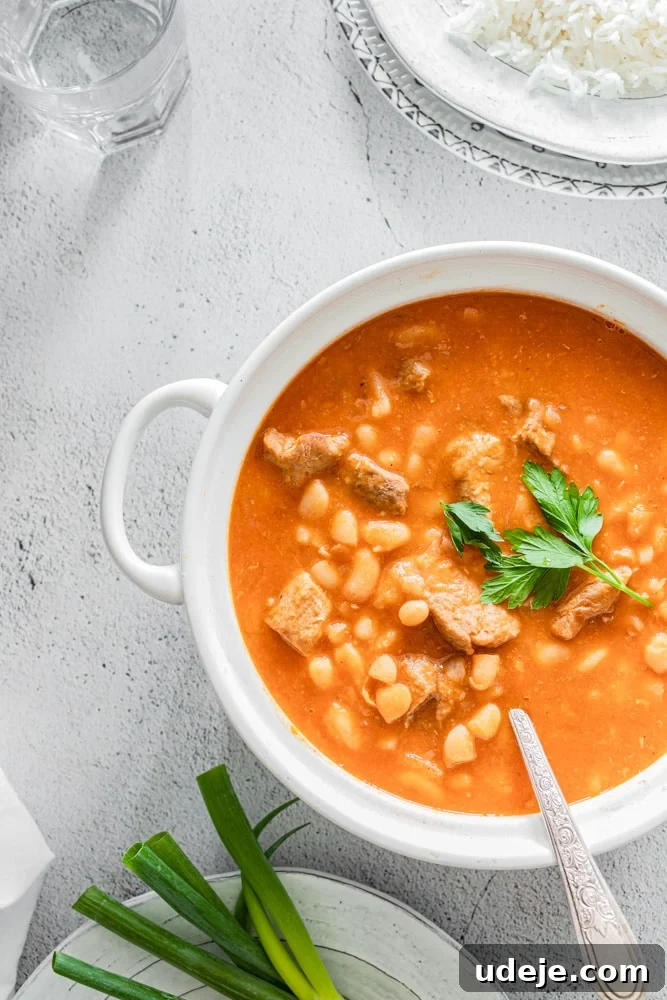
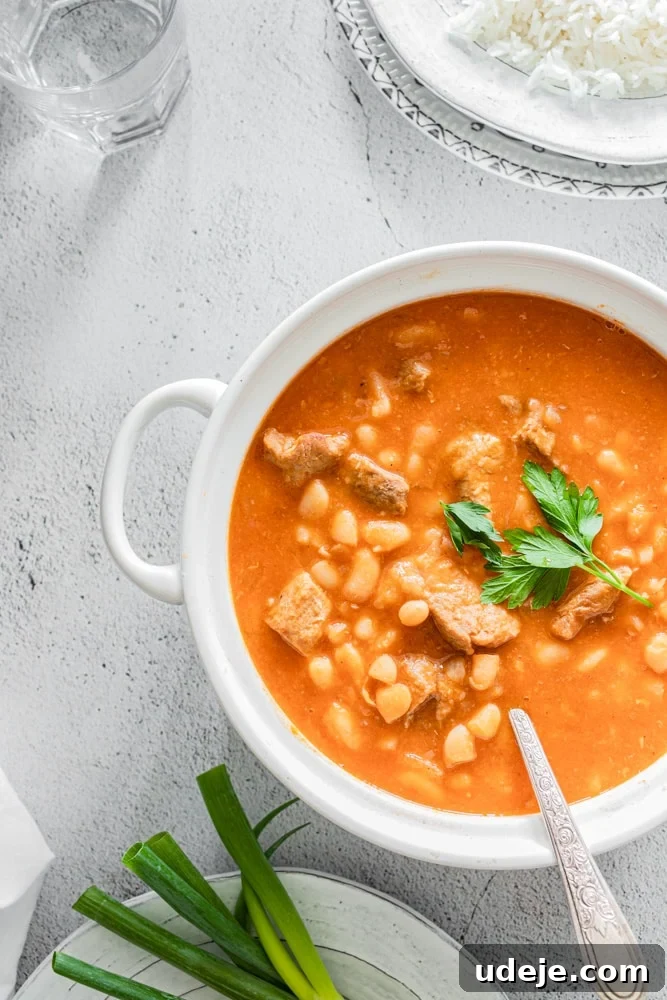
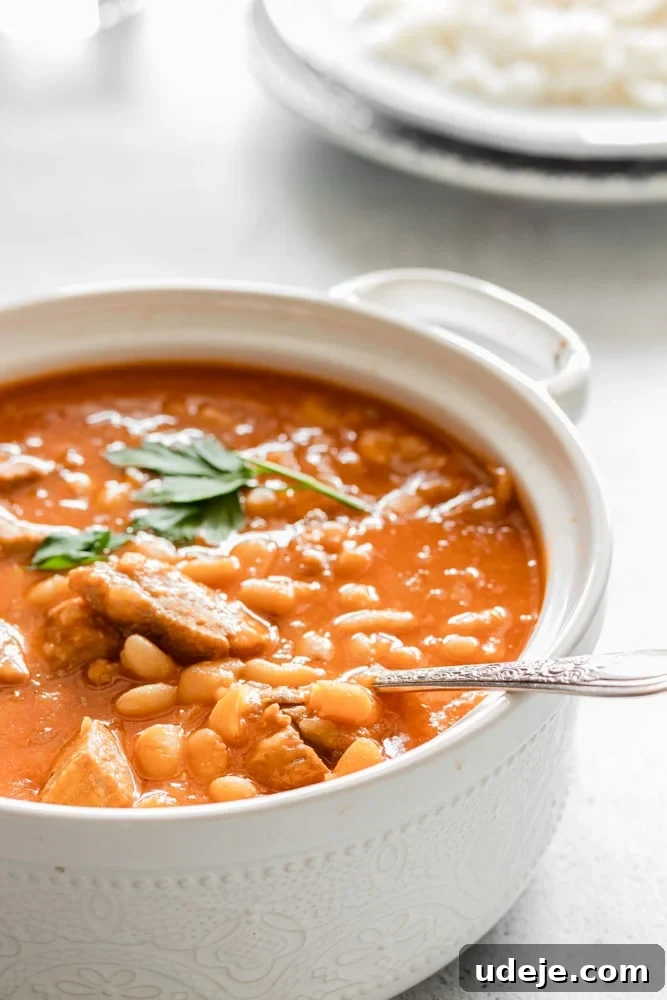
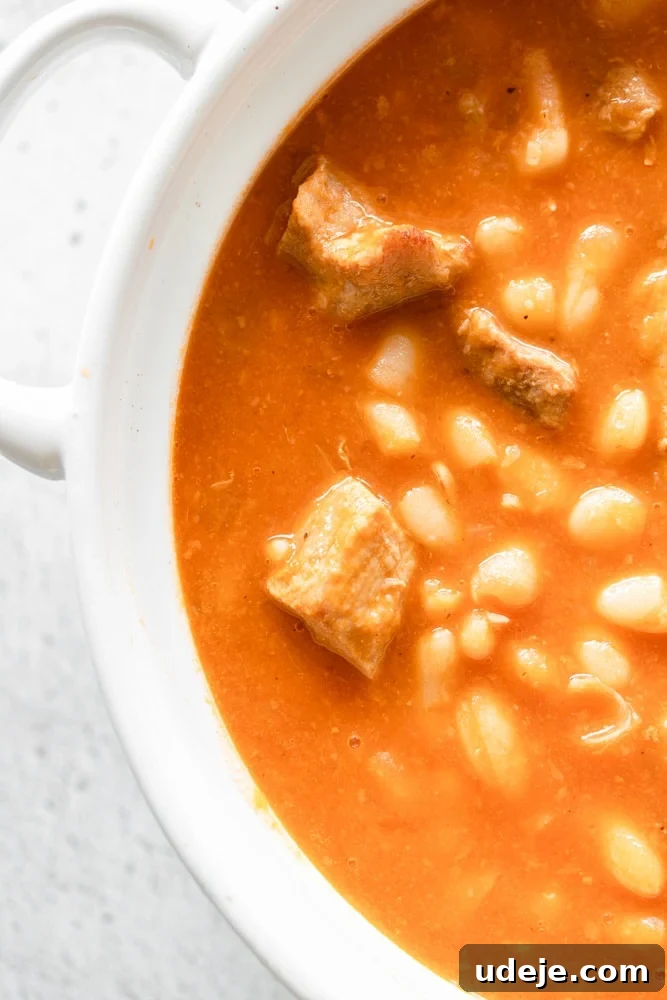
Delve into the comforting embrace of Fasolia Yabsa, a cherished Iraqi white bean stew that resonates deeply with the soul of Middle Eastern cuisine. This hearty and profoundly flavorful dish, often a weekly staple in Iraqi households, combines tender pieces of lamb or veal with creamy cannellini beans (white kidney beans) simmered in a rich, tangy tomato sauce. It’s a testament to how simple ingredients, when brought together with care, can create something truly extraordinary. Served over a bed of fluffy vermicelli rice, Fasolia Yabsa is more than just a meal; it’s a culinary journey back to tradition, offering warmth and satisfaction in every spoonful.
5-Star Reader Review
“This was so good! I’m Lebanese, and it came out just the way my Teta (grandmother) cooks it, but in a fraction of the time! I started it when I came home from work, and it was done in just under an hour. My husband and brother-in-law loved it and ate almost the entire pot!”
—Amy
Fasolia: The Heart of Iraqi Comfort Food
Many who are unfamiliar with Iraqi cuisine might be surprised by the incredible depth of flavor achieved with such a humble list of ingredients in Fasolia Yabsa. Unlike some stews that rely on a complex blend of exotic spices, this dish celebrates the inherent deliciousness of its core components: succulent meat, earthy white beans, and a vibrant tomato base. The secret to its profound taste lies in the careful layering of flavors, allowing the meat broth and the natural umami of the white beans to truly shine through, creating a robust and deeply satisfying profile that needs no masking from excessive seasoning.
Fasolia Yabsa follows a similar cherished tradition to other classic Arabic stews, such as the tangy okra stew (Bamia), the wholesome spinach stew (Sabanegh), and the refreshing green bean stew (Loubia). Each of these stews shares a common serving tradition: a generous ladleful over fragrant vermicelli rice, often accompanied by fresh green onions for a delightful crunch and pungent counterpoint. It’s truly a simple ensemble of ingredients, yet when they are allowed to slowly simmer and meld together, the result is nothing short of magical—a testament to the power of traditional, slow-cooked meals that nourish both body and soul.
Essential Ingredients for Authentic Fasolia Yabsa
Crafting the perfect Fasolia Yabsa begins with selecting high-quality ingredients. While the list is short, each component plays a crucial role in building the stew’s signature flavor and texture. Here’s a closer look at what you’ll need to create this Middle Eastern masterpiece:
- White Kidney Beans (Cannellini Beans): These are the star of the show. Whether you opt for dried or canned, ensure they are fresh and firm. Dried beans offer a superior, earthy flavor and creamy texture when properly cooked, absorbing the rich broth beautifully. Canned beans provide convenience without sacrificing too much quality.
- Stewing Meat (Lamb, Veal, or Beef): The choice of meat significantly influences the stew’s richness. Lamb or veal are traditionally preferred for their tenderness and ability to infuse the broth with a delicate yet robust flavor. Beef, while equally delicious, tends to be chewier, offering a different textural experience. Choose boneless cuts for ease of preparation.
- Onions: The aromatic foundation of the stew. Finely diced onions are sautéed until golden, contributing sweetness and depth, which are essential for a well-rounded flavor profile.
- Tomato Paste: This concentrated tomato flavor is key to the stew’s vibrant color and tangy richness. Caramelizing the tomato paste with the onions and meat deepens its flavor, adding an invaluable umami note to the broth.
- Vegetable Oil: Used for searing the meat and sautéing the onions, a good quality vegetable oil helps build the initial flavors.
- Salt and Black Pepper: Simple seasonings are all that’s needed. The natural flavors of the meat and beans, enhanced by the tomato paste, are allowed to shine without being overshadowed by a complex spice blend.
- Water (or Broth): The liquid base that transforms the ingredients into a luxurious stew. For an even richer flavor, especially in vegetarian versions, consider using vegetable or beef broth instead of plain water.
Choosing Your Beans: Dry vs. Canned
The decision between using dry or canned white beans is primarily one of preference and time commitment, each offering distinct advantages. Traditionally, Fasolia Yabsa is made with dry white beans, and for good reason. Dry beans, when properly soaked and cooked, absorb the flavors of the stew more thoroughly, resulting in a creamier texture and a richer, more profound taste that many consider authentic. The overnight soaking process, while requiring foresight, is minimal in effort—just two minutes of preparation the night before. This prepares the beans for faster cooking and helps to break down complex sugars, making them easier to digest. If using dry beans, a pressure cooker or Instant Pot is a game-changer, significantly cutting down the cooking time from 2-3 hours on the stovetop to a mere fraction. This is a highly recommended method for achieving perfectly tender beans quickly.
However, life often calls for convenience, and canned white beans are a perfectly acceptable alternative. They dramatically reduce preparation time, making Fasolia Yabsa accessible even on busy weeknights. While the texture might be slightly different—less creamy perhaps—the stew will still be incredibly delicious. If you find yourself forgetting to soak dry beans, canned beans are your culinary hero. Just ensure you rinse them thoroughly before adding them to the pot to remove excess sodium and any canning liquid that might affect the flavor. The cooking time will also be shorter with canned beans, as they are already pre-cooked.
Selecting the Perfect Meat for Your Stew
The choice of meat is pivotal in defining the character of your Fasolia Yabsa. While this recipe is versatile, traditionally, Iraqi Fasolia benefits from cuts of meat that become incredibly tender after a long simmer, infusing the broth with their savory essence. My personal favorites are lamb or veal, primarily for their superior tenderness and rich flavor profile. Veal, often leaner than lamb, offers a delicate taste that perfectly complements the creamy beans and tomato sauce. Lamb, on the other hand, provides a more robust, earthy flavor that many traditionalists adore.
If you prefer a more economical or readily available option, stewing beef can certainly be used. However, be mindful that beef generally yields a chewier texture compared to lamb or veal, requiring a slightly longer cooking time to achieve optimal tenderness. Regardless of your choice, ensure the meat is cut into appropriate sizes—small cubes for a quicker cook and easier eating, or larger pieces if you prefer a more substantial bite in your stew. The quantity of meat can also be adjusted based on your preference and the number of servings you aim to prepare, though 500g to 1kg is a good range for a family-sized pot.
Mastering Fasolia Yabsa: A Comprehensive Guide
Creating this iconic Iraqi white bean stew is a rewarding experience. This step-by-step process will guide you through each stage, ensuring a deeply flavorful and perfectly textured Fasolia Yabsa every time.
PRO TIP: For the most authentic flavor and creamy texture, opt for dry white beans. Always soak them overnight to significantly reduce cooking time and improve digestibility. A pressure cooker or Instant Pot is a game-changer for speed, transforming hours of stovetop cooking into minutes!
- Prepare the Beans (if using dry): Begin by placing 2 cups of dry white beans in a large bowl and covering them with at least 5 cups of water. Let them soak overnight at room temperature. By morning, they should have noticeably expanded, roughly doubling in size to yield about 4 cups of plump, ready-to-cook beans. This simple step is crucial for both cooking speed and texture.
- Sear the Meat: Pat your diced meat (500g-1kg boneless lamb, veal, or beef) dry and season generously with 1/2 teaspoon of salt and 1/4 teaspoon of black pepper. In a large soup pot or your pressure cooker, heat 2 tablespoons of vegetable oil over medium-high heat. Add the seasoned meat and sear on all sides for 5-6 minutes until nicely browned. This step locks in flavor and creates a delicious crust.
- Sauté the Onions: While the meat is searing, finely dice 2 medium onions (about 2 cups). Add them to the pot with the browned meat and continue to cook for another 5 minutes, stirring occasionally, until they begin to soften and turn translucent. Adding another 1/2 teaspoon of salt at this stage helps the onions release their moisture and caramelize more effectively.
- Caramelize the Tomato Paste: Stir in 5 tablespoons of tomato paste with the onions and meat. Cook for 2-3 minutes, stirring constantly. This crucial step, known as caramelizing the tomato paste, deepens its flavor, removing any raw acidity and enhancing its sweetness and richness.
- Combine and Cook: Drain the soaked white beans thoroughly and add them to the pot. Pour in 5.5 cups of water (or vegetable/meat broth for extra flavor), along with the remaining 1 1/4 teaspoons of salt and 1/4 teaspoon of black pepper. Stir everything together to ensure all ingredients are well combined and the tomato paste is dissolved.
- Pressure Cook or Simmer:
- Pressure Cooker/Instant Pot: Seal the lid and pressure cook on high for 8 minutes. Allow for natural pressure release for a few minutes, then manually release any remaining pressure.
- Stovetop: Bring the stew to a boil, then reduce the heat to low, cover, and simmer for 1 to 1.5 hours, or until both the meat and beans are fork-tender. Check the water level every 20-30 minutes and replenish with hot water if necessary to maintain desired consistency.
- Final Adjustment and Simmer: Once the cooking time is complete and the pressure has been released (if using a pressure cooker), open the lid. Taste the stew and adjust the seasoning as needed, adding more salt or pepper if desired. Simmer the stew on sauté mode (or low heat on the stovetop) for an additional 10-15 minutes, uncovered. This final simmering period is essential for thickening the broth to a perfect consistency and allowing all the flavors to fully meld and harmonize.
- Serve and Enjoy: Your Fasolia Yabsa is now ready! Serve it hot, spooned generously over a bed of fluffy white rice, preferably Arabic rice with vermicelli. A side of fresh salad, creamy yogurt, or fresh green onions makes for a truly authentic and satisfying meal.
How to Adjust for Canned Beans
While dry beans are often preferred for their deep flavor, canned beans offer incredible convenience without compromising too much on taste. If you’re short on time or simply forgot to soak your beans overnight, canned white beans are an excellent substitute. Here’s how to adapt the recipe:
- Rinse Thoroughly: Before adding canned beans, always rinse them under cold running water in a colander. This removes excess sodium and any starchy liquid, which can sometimes give the stew an undesirable flavor.
- Add Later in the Process: Since canned beans are already cooked, they don’t require the same long simmering time as dry beans. Follow the recipe instructions for searing the meat, sautéing the onions, and caramelizing the tomato paste.
- Simmer for Flavor Infusion: Once the meat is tender (if using meat), or after the tomato paste is caramelized (for a vegetarian version), add the rinsed canned beans along with the water or broth and seasonings. Bring the stew to a gentle simmer and let it cook for about 30 minutes. This duration is sufficient for the beans to absorb the rich flavors of the broth and mingle with the other ingredients, creating a harmonious stew. You won’t need to pressure cook them.
This adjustment makes Fasolia Yabsa a perfect last-minute meal, proving that even traditional dishes can be adapted to fit a modern, busy lifestyle without sacrificing much of their authentic charm.
Crafting a Delicious Vegetarian Fasolia
Fasolia Yabsa is remarkably versatile and can easily be adapted into a delightful vegetarian dish, perfect for those looking to reduce meat consumption or embrace plant-based meals. The core flavors of the white beans, tomato, and onion are robust enough to carry the stew beautifully. To make this hearty dish vegetarian, simply follow these adjustments:
- Omit the Meat: Skip the meat-searing step entirely.
- Boost Onion Flavor: To compensate for the absence of meat, add an extra onion (making it a total of 3 onions). Sautéing more onions until they are deeply golden and caramelized will provide a foundational sweetness and savory depth that mimics the umami typically derived from meat.
- Use Vegetable Broth: Instead of water, use a high-quality vegetable broth. This is crucial for adding layers of flavor and richness to your vegetarian stew. Look for low-sodium options to better control the seasoning.
- Adjust Salt Carefully: Since you won’t have the inherent saltiness from the meat or potentially a salted broth, you will need to adjust the amount of salt used. Start with a lower amount and taste as you go, adding more until it reaches your desired seasoning level. Remember, it’s easier to add more salt than to remove it!
By making these simple modifications, you can enjoy a wholesome and incredibly flavorful vegetarian Fasolia Yabsa that’s just as satisfying as its meat-filled counterpart. It’s a wonderful way to enjoy the classic flavors of Middle Eastern cuisine with a plant-forward approach.
For More Middle Eastern Stews, You’ll Love These:
If you tried this incredible Fasolia Yabsa recipe, please consider leaving a star ⭐⭐⭐⭐⭐ rating in the recipe card below and/or a review in the comments section further down the page – I’d love to hear from you! You can also hop on over to Instagram and say hello!
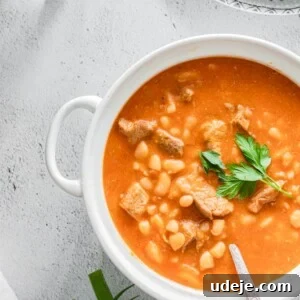
Fasolia Yabsa (Iraqi White Bean Stew)
8
servings
10
mins
40
mins
Amina Al-Saigh
Leave a Review
Pin Recipe
Ingredients
-
2
cups
dry white beans -
500
g
diced boneless stewing veal,
amount per preference, use up to 1 kg, see notes -
2
onions,
roughly 2 cups when diced -
2
tablespoons
vegetable oil -
5
tablespoons
tomato paste -
2 1/4
teaspoons
salt -
1/2
teaspoon
black pepper
Instructions
-
Start by soaking the white beans in a bowl overnight in 5 cups of water. They should roughly double in size the next day and yield close to 4 cups of beans.
-
Season the meat with 1/2 teaspoon of salt and 1/4 teaspoon black pepper.
-
Add the vegetable oil to the Instant Pot (or a regular pot if you’re using stovetop directions) along with the meat and sear for 5-6 minutes on sauté mode (or over medium-high heat), flipping on all sides until browned.
-
Meanwhile, finely dice the onions, then add them to the pot and continue to cook for 5 minutes. Add 1/2 teaspoon of salt to help the onions cook down and become tender.
-
Add 5 tablespoons of tomato paste and stir with the onions and the meat, allowing it to caramelize for 2-3 minutes, which intensifies its flavor.
-
Add the drained beans along with 5.5 cups of water, 1 and 1/4 teaspoon salt, and 1/4 teaspoon pepper. Mix everything together well.
-
If using an Instant Pot or pressure cooker: Pressure cook on high for 8 minutes.
If using the stovetop: Bring everything to a boil, then reduce heat to low and simmer for 1 to 1.5 hours until meat and beans are tender. You may need to replenish the water as the level goes down, so check on it every 20 minutes or so and adjust accordingly. -
Manually release the pressure (if applicable) and open the lid. Check the stew for seasoning and simmer it for 10-15 minutes on sauté mode (or low heat on the stovetop). This step will help thicken the stew broth to the desired consistency and balance all the flavors, allowing them to fully meld.
-
Serve hot with fluffy white rice, a fresh side salad, and a dollop of creamy yogurt for a complete and utterly delicious meal. Enjoy!
Notes
- Veal is my go-to for this stew, but it’s incredibly adaptable! Feel free to use stewing beef, lamb chops, or even chicken pieces for a different flavor profile.
- To easily convert this into a vegetarian dish, simply omit the meat. Boost the flavor by adding an extra onion and using rich vegetable broth instead of water. Remember to significantly reduce the amount of salt, as broths can vary in sodium content. Taste and adjust to your preference.
- For an even deeper umami, try adding a splash of pomegranate molasses during the final simmer. It adds a wonderful tangy sweetness that complements the tomato beautifully.
- Fasolia Yabsa tastes even better the next day as the flavors continue to develop. Store leftovers in an airtight container in the refrigerator for up to 3-4 days.
- This stew freezes exceptionally well. Portion into freezer-safe containers and freeze for up to 3 months. Thaw overnight in the fridge and reheat gently on the stovetop, adding a little water or broth if needed to adjust consistency.
Nutrition Information
Serving:
1
serving
,
Calories:
291
kcal
,
Carbohydrates:
35
g
,
Protein:
26
g
,
Fat:
6
g
,
Saturated Fat:
1
g
,
Polyunsaturated Fat:
2
g
,
Monounsaturated Fat:
2
g
,
Trans Fat:
0.02
g
,
Cholesterol:
49
mg
,
Sodium:
128
mg
,
Potassium:
1279
mg
,
Fiber:
9
g
,
Sugar:
3
g
,
Vitamin A:
154
IU
,
Vitamin C:
4
mg
,
Calcium:
135
mg
,
Iron:
6
mg
Did you make this recipe?
Please leave a star rating and review below!