IBM, Fermilab and NVIDIA Target Modular Quantum-HPC Co-Design, With Slurm Scheduling Support
IBM, Fermilab and NVIDIA plan a modular quantum-classical platform. For HPC admins, the Slurm HRES integration for QPU scheduling matters most.
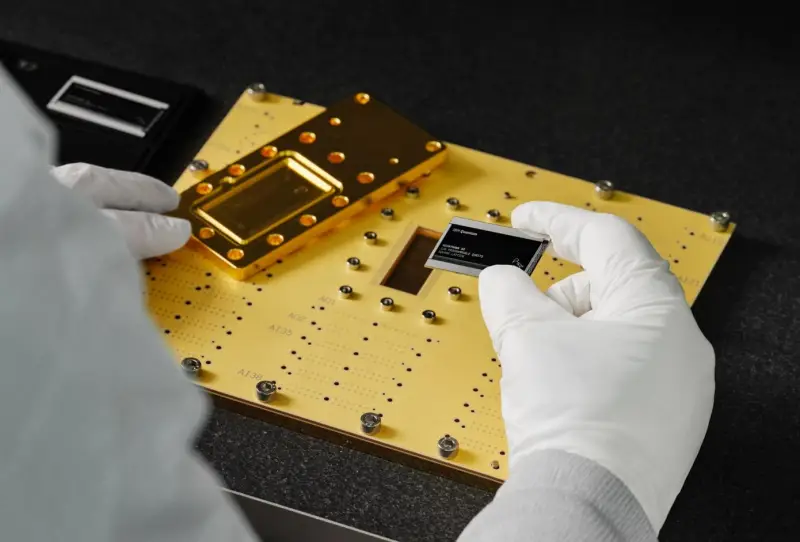
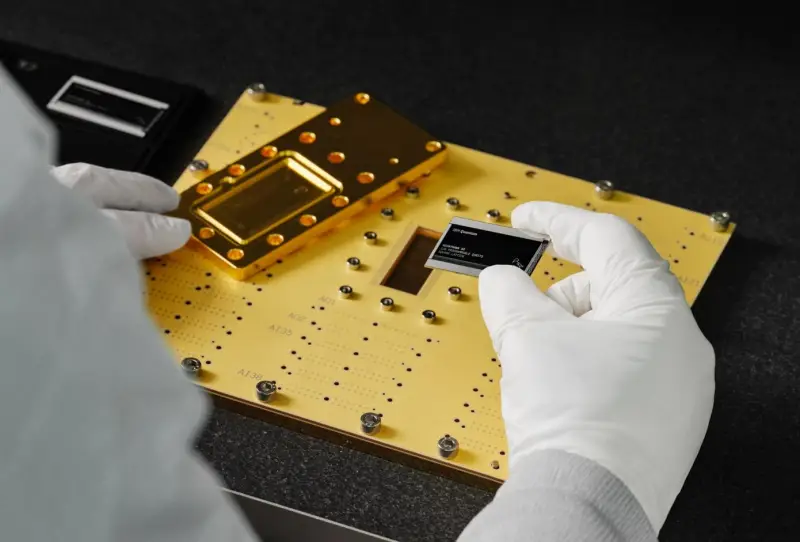
The part of this announcement that matters most to infrastructure teams isn't the qubit count. It's the scheduler work. IBM, Fermilab and NVIDIA plan a modular co-design platform that places NVIDIA DGX B200 systems next to IBM quantum computers, including machines built on the IBM Quantum Nighthawk processor. Separately, IBM describes a Slurm integration for scheduling quantum processors, and it reports a chemistry result with RIKEN that it says is 79 times more accurate than its earlier attempt. Read together, these pieces show how IBM expects quantum hardware to sit inside an HPC estate.
The platform follows the error correction platform IBM set up with Oak Ridge National Laboratory and AMD. This one targets the modular architectures IBM expects fault-tolerant machines to use.
What Fermilab Brings to the Platform
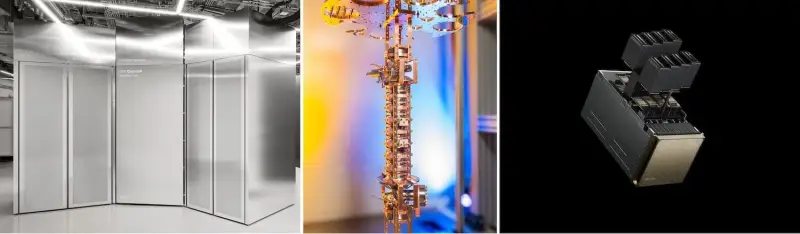
NVIDIA's side of the collaboration, including a new error-correction decoder, is covered in our NVIDIA SC26 roundup. IBM's account adds Fermilab's contribution. That work draws on the lab's Superconducting Quantum Materials and Systems (SQMS) Center, which supplies ultracoherent superconducting cavities, prospective interconnects, quantum memories and bosonic resources. Anna Grassellino, Fermilab chief technology officer and director of the SQMS Center, described the lab's role as "SQMS expertise in ultracoherent quantum hardware."
IBM says researchers will use the platform to test what it takes for several quantum processors to work together, run large sample volumes, and scale classical compute alongside them. Fermilab and IBM also plan to study calculations in high-energy and nuclear physics, including lattice gauge theories, neutrino interactions and nuclear simulations. IBM hasn't disclosed a site, system counts or a launch date. Teams planning around this should treat it as a research platform for now, not a purchasable configuration.
On the hardware side, IBM calls Nighthawk the most powerful processor it has built. It runs circuits of up to 7,500 two-qubit operations on 120 qubits, at up to 100,000 samples per second. IBM puts the current Nighthawk r2 at 25 times the throughput of its Heron processor. Its roadmap targets 10,000 operations on 520 qubits with Nighthawk r3. IBM did not say which revision the platform will use, so don't assume the r3 numbers apply to this build.
Slurm Gets a Native Quantum Resource Model
This is the section I'd bookmark. IBM and NVIDIA, working with Pasqal and the open-source community, have brought quantum computers into supercomputing workflows through the Quantum Resource Management Interface (QRMI). QRMI is an open-source, vendor-agnostic layer, and it now connects directly to Slurm's Hierarchical Resources (HRES) scheduling.
The gap it closes is a real one. Slurm had no native concept of a quantum processor, so sites attached QPUs through plugins. With HRES, a QPU can be shared across multiple nodes, administrators can manage it as a shared resource, and they can set limits for each part of the system. Slurm can then allocate, reserve and account for QPU time using the scheduling policies HPC sites already run, and a researcher can request a QPU in a job script.
IBM didn't name a Slurm release. NVIDIA, which acquired Slurm developer SchedMD, says the quantum interface arrives in Slurm 26.11, with support for QRMI and QDMI. If you run Slurm and have QPU access on the roadmap, that version number is the thing to pin down with your vendor before you plan accounting or fair-share policies around quantum time. Here's the thing: accounting is where most of the operational pain will land, because QPU time is expensive and scarce in a way GPU hours usually aren't.
Fe4S4: The Chemistry Result
IBM, RIKEN and NVIDIA researchers applied sample-based quantum diagonalization (SQD) to Fe4S4, an iron-sulfur cluster whose strongly interacting electrons make it hard to simulate classically. The team began with an intentionally imperfect but more realistic estimate of the molecule's state. That estimate steers the quantum computer toward the electron configurations that matter, rather than sampling blindly.
The classical side ran on NVIDIA GPUs, including RIKEN's ROQUO supercomputer, which IBM says is built on NVIDIA GB200 NVL4 systems. The quantum runs used circuits of up to 4,000 two-qubit operations on 72 qubits, and the team collected 5 million samples. IBM reports a 79-fold improvement in accuracy over the team's earlier runs of the same experiment. The result lands within 4.3 millihartree of the density-matrix renormalization group (DMRG) reference, a classical method used here as the benchmark.
These are IBM's results. We didn't run or audit them, and IBM didn't name the quantum processor used. A 79-fold gain over the team's own earlier attempt is a relative figure, so it tells you about progress on this workflow rather than about absolute capability against classical methods. Treat it as a direction-of-travel signal.
A separate protein-ligand project from IBM, RIKEN and Cleveland Clinic is a finalist for the 2026 ACM Gordon Bell Prize. NVIDIA highlighted it at the show, and it also used ROQUO. The Fe4S4 research is supported by Japan's New Energy and Industrial Technology Development Organization (NEDO) through its project on quantum-supercomputer hybrid platforms.
Decoders and the Cu3C6O6 Model
Among related work IBM is showing at SC26 is Pelagos, an open-source decoder project from IBM and AMD. It's built on the Triton framework and runs on both AMD and NVIDIA GPUs. IBM says its decoder tests ran up to 97 times faster than a single CPU core. GPU decoding scaled 7.5 times across eight AMD Instinct accelerators compared with one, on Oak Ridge National Laboratory's Lux system. Decoding is the classical workload that error-corrected machines depend on, so that scaling data is more useful to HPC planners than the headline speedup.
The University of Illinois Urbana-Champaign, NCSA and IBM also connected NCSA's DeltaAI supercomputer to an IBM quantum computer to model Cu3C6O6, a kagome-lattice metal. It's one more sign that the hybrid pattern here is consistent: the classical machine handles the heavy numerical lifting, and the quantum processor is called in for the part of the problem it's suited to.
What to watch next is the Slurm release that carries the QRMI and HRES support, whether IBM names the Nighthawk revision for the modular platform, and whether Fermilab's SQMS hardware appears in a deployed system rather than a design. Until those answers arrive, the practical step is to find out which scheduler version and accounting model your site would need, and to ask vendors for those details in writing.


