Nvidia's Board Reportedly Weighs Ousting Jensen Huang Over a Second Affair Report
Nvidia's board is reportedly preparing to discuss Jensen Huang's future as CEO. Here's what the reports say and why it matters beyond the headlines.
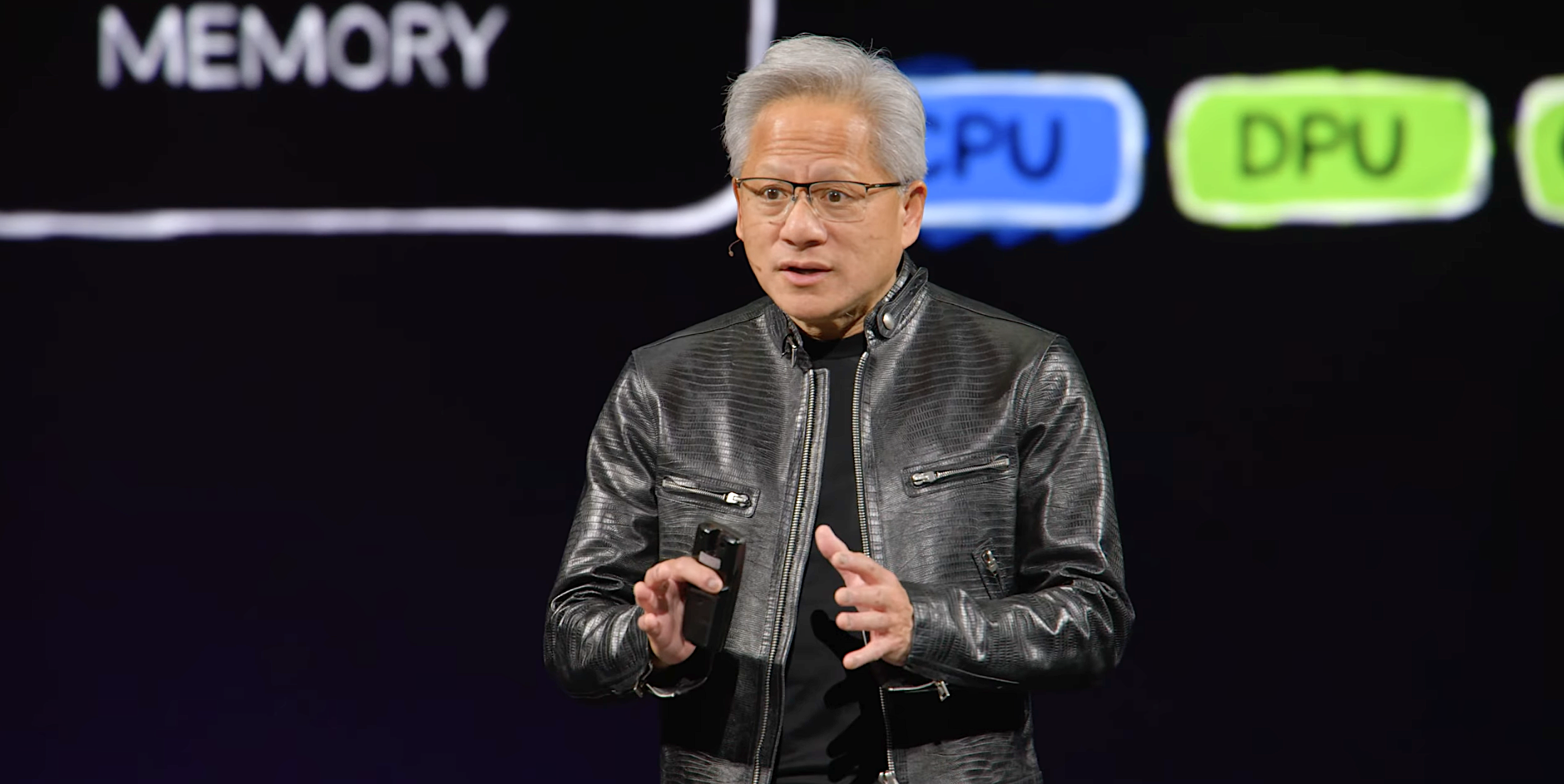
Nvidia's board is reportedly weighing whether to remove its founder and chief executive, Jensen Huang, and that alone would be a jolt for a company sitting at the centre of the AI infrastructure build-out. What makes it more unusual is the reason: a second reported extramarital relationship, surfacing only days after Huang admitted in an internal email to an earlier affair. For administrators and IT managers, the personnel story is secondary to a harder question. What happens to a company whose brand, strategy and executive bench are so closely tied to one person?
What has been reported so far
The New York Times reported that five people at the company suspected Huang of having an affair with Kimberly Powell, Nvidia's vice president of healthcare. According to the Times, Huang and Powell were captured on camera together, being affectionate, at a hotel in San Jose, California, in March. The paper's report is linked to the story here: New York Times coverage.
Hours later, the Wall Street Journal reported that the board is preparing to meet on Thursday to discuss Huang's future at the company, and that all options are on the table, including his possible dismissal. Those are reports about deliberations, not announced decisions. Nothing in the coverage establishes that a vote has been scheduled or that an outcome has been reached.
The earlier admission and the spy investigation
The timeline matters here. Days before the latest reports, Huang acknowledged in an email to employees that he had an extramarital affair with a Chinese woman named Alice Huang. She is not related to the CEO, and she previously ran Megaspeed, a Singapore-based data centre supplier. SiliconANGLE's report on that admission is available here.
Alice Huang is suspected of working for China's Ministry of State Security. Reporting so far does not make clear whether she obtained any of Nvidia's confidential information. That gap is the reason the board reportedly retained the law firm Wachtell, Lipton, Rosen & Katz to investigate both the relationship and whether any secrets leaked. Huang reportedly began the relationship last year, while the rumours about Powell have circulated for years.
For anyone in security, the detail that stands out is less the romance and more the access question. A senior executive with a relationship to someone of interest to a foreign intelligence service is precisely the scenario insider-risk programmes are designed to surface. Whether that happened here is unproven, and the investigation is the only place it will get answered.
Why the Powell reporting drew attention
Powell's public bio says she is responsible for Nvidia's healthcare business, including hardware and software platforms for medical imaging, life sciences, drug discovery and healthcare analytics. She has run the unit since 2017 and spoke at the company's GTC conference in San Jose in March, where she described how AI can speed up drug discovery and improve clinical efficiency.
Part of the scrutiny comes from her background. Reporting noted that she doesn't have a background in health or science, which fuelled speculation about how she reached such a senior role. That's a claim about qualifications, and it doesn't prove anything about the relationship. Still, it explains why the rumours had some traction inside and outside the company.
The healthcare business is also small next to the data centre unit that drives most of Nvidia's multibillion-dollar revenue. Nvidia does not break out sales for healthcare, reporting it within the broader data centre segment. Its chips go into devices such as MRI machines, but that's a footnote to the company's financial profile.
Why a Huang exit would be hard to absorb
Nvidia ranks as the second most valuable company in the world, and it controls around 90% of the global market for AI computer chips, according to the reporting. That concentration makes the leadership question more than a governance matter. Huang is involved in nearly every part of the business, and his family members hold key executive roles. He is also the largest individual shareholder, with a 3.56% stake.
That structure is why the reports say there's no clear successor. Companies built around a founder-CEO often find that the institutional knowledge, customer relationships and decision rights sit in one person. Replacing that is a planning exercise, not a press-release exercise. Teams in this position typically start by mapping which decisions escalate to the top and which relationships depend on a single name.
The politics add another layer. Huang has close ties to U.S. President Donald Trump, who was reportedly told about the relationship with the suspected Chinese intelligence associate and chose to take no action. Trump has publicly defended Huang, calling him an "honorable man" and saying he did not know about the woman's connections to Chinese intelligence. That defence doesn't resolve the board's question, but it does mean any move against Huang will be read in a wider context.
Markets have reacted already. Nvidia's stock fell more than 9% in late trading on Wednesday, and it is likely to extend its decline for a sixth straight week, according to the reports.
What IT teams should take from this
You're unlikely to be asked to act on a CEO's personal life, but this story does point at controls worth reviewing in your own environment. Here's my read:
First, check how executive access is governed. Senior staff often hold broad permissions, sit outside standard access reviews, or use devices and accounts that receive less scrutiny. If your privileged or executive accounts aren't reviewed on the same cycle as everyone else, that's the gap to close.
Second, look at third-party and data-centre relationships. The reporting on Megaspeed is a reminder that vendors and partners can carry risk that doesn't show up in a standard due diligence file. Revisit who has access to infrastructure, what data they can see and how that access is logged.
Third, treat key-person dependency as a risk category. If a single executive is the only person who can approve a change, sign off on a vendor or explain a system, your continuity plan has a hole in it, whatever the cause of a departure.
The board meeting on Thursday is the next checkpoint, and the Wachtell investigation will determine whether any confidential information was exposed. Until both play out, the reports stay unconfirmed. The most useful thing an IT team can do is treat the story as a prompt to test its own assumptions about who holds the keys, and what happens if they leave.


