Irish Boards Hit 41pc Women, but Leadership Teams Lag Behind
Women hold 41pc of ISEQ20 board seats, but leadership teams sit at 27pc and the gap is becoming the next test for Irish firms.

Three-quarters of ISEQ20 boards now have three or more women, and 12 of the 20 companies have reached or passed 40pc female representation. Those numbers come from the ninth annual report by Balance for Better Business, released on 17 November, which tracks gender balance at board and senior leadership level across Irish businesses. Read alongside the survey of industry leaders in the same research, the picture is clear: boardroom progress is real, but it hasn't moved down the org chart yet.

What the boardroom numbers show
Female representation on ISEQ20 boards has climbed from 18pc in 2018 to 41pc in 2026. The 40pc target, first set in 2024, has now been met or exceeded for three successive years. Across all publicly listed companies, women hold 39pc of board seats.

Look a little closer and the trend is less tidy. The share of ISEQ20 boards with three or more women slipped from 80pc in 2024 to 75pc in 2026. For the first time in three years, the index includes an all-male board. Seven companies are at or above 50pc, which shows how wide the spread is between leaders and laggards.

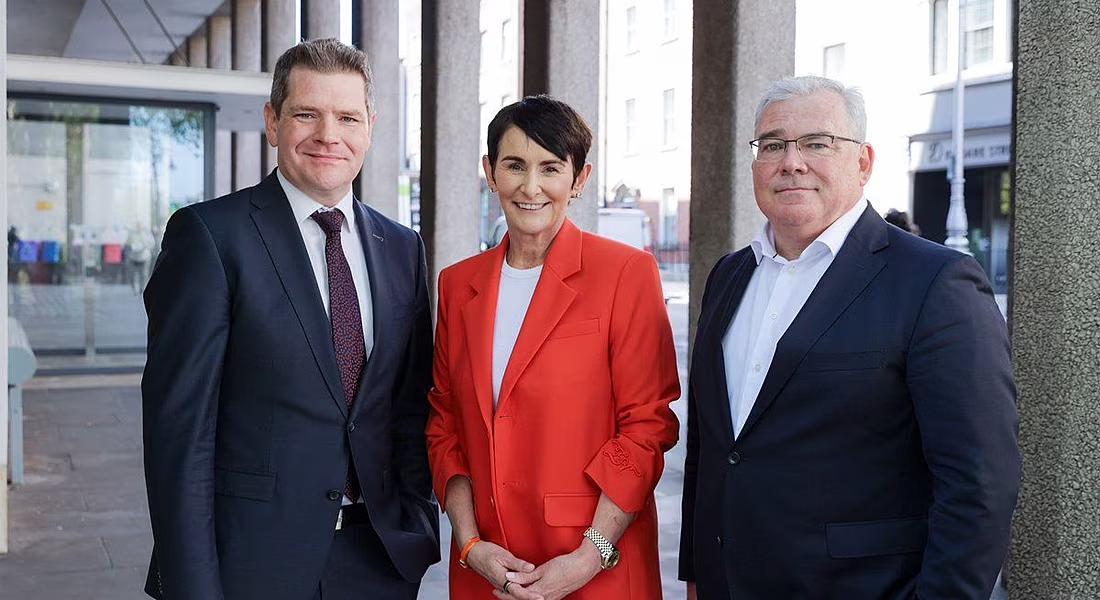
Carolan Lennon, co-chair of Balance for Better Business, framed the shift in plain numbers. "Women have gone from holding fewer than one in five ISEQ20 board seats to more than four in 10, and that level of representation has now been sustained for three consecutive years," she said. "We should recognise that progress and the commitment from businesses that has made it possible."

She was equally direct about what comes next. Her argument is that sustaining change depends on the pipeline beneath the board: more women gaining the experience that leads to CEO, CFO and chair roles, with succession planning starting earlier. That means widening access to commercial and operational jobs, the roles that tend to feed top executive posts.

The leadership team gap
This is where the report's findings get more uneven. Women's representation on ISEQ20 leadership teams reached 27pc, up from 26pc last year and 17pc in 2019. That's still well short of the 40pc target. For the first time, 53pc of ISEQ20 leadership teams have three or more women, yet all-male boards still appear on the index.

In practice, this kind of gap is common when boards move faster than management. Board appointments are often made through a small, visible process, and the change shows up quickly in headline figures. Executive teams depend on longer internal pipelines, so their numbers usually lag. If a company's board is balanced but its operating committee isn't, the next generation of board candidates may be thin.

Bernard Byrne, the other co-chair, put the challenge in terms of execution rather than awareness. "Our findings show that Irish business leaders understand the link between balanced leadership and competitiveness," he said. "The challenge now is turning that recognition into consistent action across the wider business community."
How Ireland compares in Europe
On a European scale, Ireland now ranks joint sixth in the EU for women on the boards of its largest listed companies. When Balance for Better Business was established in 2018, the country was 16th. For women executives in those companies, Ireland has moved from ninth to sixth, with representation above 27pc against an EU average of 24pc.

Those rankings are a useful benchmark, but they also show where the gains have been concentrated. Board-level change has been faster than executive-level change, and the EU comparison looks stronger on boards than on leadership teams.
Competitiveness and the business case
The research's headline finding is that 74pc of the industry leaders who contributed believe balanced leadership has a positive business impact. Almost three in four said that improving gender balance in senior leadership matters to the long-term competitiveness of Irish business.
Minister for Enterprise, Tourism and Employment Peter Burke TD linked that argument to the wider operating environment. "Irish businesses are operating in a volatile environment, shaped by new technologies, evolving skills needs and wider economic pressures," he said. "At a time when businesses need to draw on the widest possible pool of talent, experience and perspectives, more balanced leadership can strengthen how companies compete and drive future growth."
Those are the views of the people quoted in the research, and they reflect a belief many leaders hold rather than a measured return on investment. Still, the report's direction is consistent: businesses that treat leadership balance as a planning input, rather than a reporting requirement, are the ones most likely to see it translate into hiring and succession outcomes.
What to watch and what to do
Byrne's closing point is the most actionable for managers. He argued that many organisations still aren't taking dedicated steps to advance gender balance, and that measurement and accountability are what separate meaningful change from good intentions. His advice was to set a clear plan for leadership pipelines and benchmark against it regularly.
For Irish firms, the next practical question is whether the 75pc of boards with three or more women can hold that level, and whether leadership teams can close a gap of more than 12 points to the 40pc target. Companies that already track pipeline data by role and grade will find that exercise far easier than those starting from scratch. Watch the next annual report for whether the leadership-team figures move as quickly as the boardroom ones did.


