
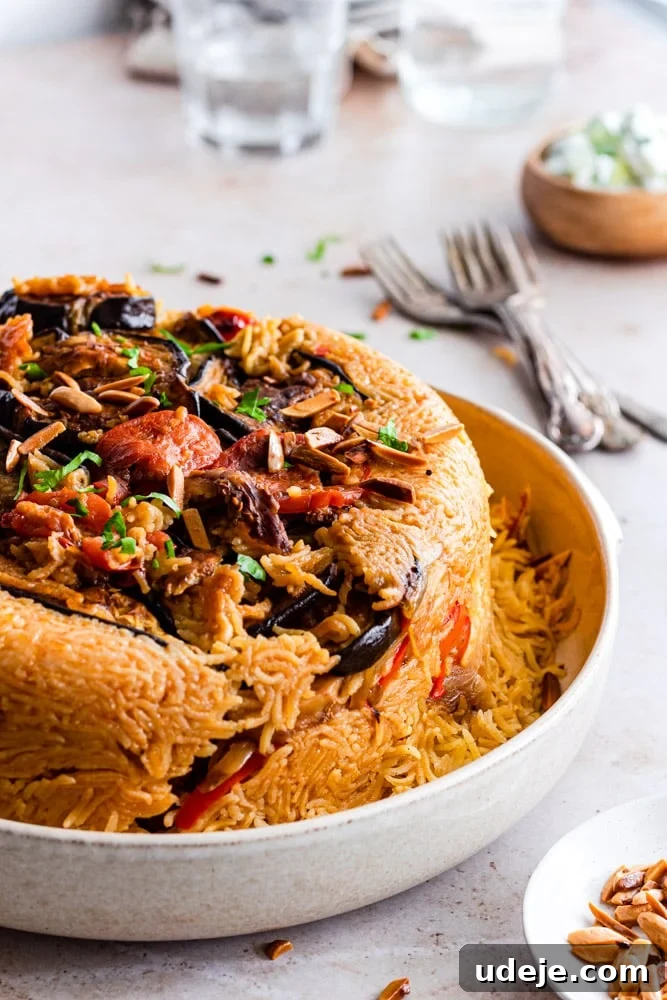
Maqluba, an Arabic term meaning “upside down,” is a celebrated and visually spectacular Middle Eastern rice dish. It features layers of richly spiced meat, tender vegetables, and fragrant rice, all meticulously arranged and then dramatically inverted onto a serving platter before enjoyment. This culinary performance is a feast for both the eyes and the palate, often prompting enthusiastic exclamations from those gathered around the table. While its presentation might suggest a complex undertaking, this comprehensive guide simplifies the process, empowering you to confidently recreate this flavorful and authentic meal in your own kitchen. Beloved by many, this Maqluba recipe consistently earns five-star reviews and is poised to become a cherished favorite in your home.
5-STAR READER REVIEW
“Hands down THE best Makloubeh recipe on the internet! The whole spices (I used bay, allspice, cinnamon, cloves, black pepper and green cardamoms) lend an insane flavor to the dish without needing any additional spices. The warmth of the spices were also great for the aroma they imparted in my kitchen, but best of all was being able to enjoy it with family and loved ones. No leftovers so a repeat for later this week 😊 Shukran! ”
—Antonio
The Legacy of Maqluba: A Culinary Masterpiece
Maqluba is more than just a dish; it’s a culinary experience steeped in tradition and cultural pride. Found across the Levant, with popular variations in Palestine, Jordan, Syria, and Iraq, this iconic “upside-down” rice dish is often reserved for special occasions, family gatherings, and festive celebrations. Its name perfectly encapsulates its dramatic serving method, where a large cooking pot is inverted onto a platter, revealing beautifully layered ingredients. The aroma of fragrant spices, slow-cooked meat, and tender vegetables fills the air, signaling that a truly extraordinary meal awaits. Each region boasts its unique twist, from the choice of meat to the specific blend of vegetables and spices, yet the essence of Maqluba—a comforting, flavorful, and communal dish—remains universal.
In our household, Maqluba holds a special place, a testament to my mother’s incredible skill. Growing up, her Iraqi-style Maqluba was a weekly highlight, creating cherished memories around the dinner table. While widely recognized as an authentic Palestinian dish, our family recipe leans into Iraqi influences, characterized by a vibrant red hue from tomato paste and the deep, rich flavors of bone-in lamb. The secret lies in a carefully selected blend of whole spices that infuse every grain of rice and every piece of meat with an unparalleled depth. When served alongside a refreshing Jajik (cucumber yogurt salad) or a finely chopped Arabic salad, it transforms into an unforgettable meal that consistently earns rave reviews from everyone who tries it. The magic of Maqluba lies in its unique cooking process: layering all the ingredients—vegetables and meat nestled beneath the rice—and allowing them to slow-cook together. This gentle, extended simmering allows all the distinct flavors to meld harmoniously, creating a symphony of tastes and textures while ensuring the rice cooks to tender perfection. Before we delve into the step-by-step instructions, let’s explore some crucial insights that will help you achieve Maqluba mastery.
Essential Components for an Authentic Maqluba
Crafting the perfect Maqluba requires attention to detail, especially when it comes to selecting your main ingredients. From the star vegetables to the ideal cuts of meat and the right type of rice, each choice contributes significantly to the dish’s overall success and authentic flavor profile. Understanding these elements is key to elevating your Maqluba from good to truly exceptional.
The Unsung Heroes: Vegetables in Maqluba
The vegetables are undeniably a star component in Maqluba, offering texture, flavor, and vibrant color to the finished dish. While variations exist, the foundational vegetables typically include eggplant, potato, and cauliflower. However, there’s ample room for customization based on your preference. I wholeheartedly recommend including eggplant; its unique flavor and texture are crucial for an authentic Maqluba experience. For an added layer of sweetness and complexity, I often incorporate sliced onions and bell peppers (preferably red or orange for a sweeter profile). These additions not only amplify the vegetable flavors but also lend a delightful aroma as they cook down. A lesser-known but vital tip is to line the very bottom of your pot with slices of fresh tomato. These not only contribute a subtle tang but, more importantly, act as a natural non-stick barrier, preventing other ingredients from adhering to the pot during the cooking and flipping process.
Selecting the Best Meat and Rice
The choice of meat forms the backbone of Maqluba’s savory depth. For the most tender results and a truly rich, flavorful stock, I highly recommend using bone-in lamb shoulder or veal shoulder. The bones release gelatin and collagen during the slow cooking process, creating a deeply aromatic broth that is absorbed by the rice, enhancing its flavor exponentially. If lamb or veal isn’t your preference, bone-in chicken pieces (any cut will work beautifully) are an excellent alternative, offering a lighter yet equally delicious outcome, albeit with a slightly shorter cooking time. When it comes to rice, long-grain basmati rice is the undisputed champion for Maqluba. Its slender grains cook up fluffy and separate, resisting clumping even through extended cooking. This characteristic is paramount for the dish’s signature layered appearance upon flipping. While other rice types can be used, basmati guarantees the best texture and visual appeal, ensuring each grain remains distinct and perfectly cooked.
The Right Pot Makes All the Difference
One of the most valuable pieces of advice I can offer for a successful Maqluba is to invest in, or at least use, a good quality non-stick pot. This single factor dramatically simplifies the dramatic “flip” and ensures a clean, intact release of your beautifully layered dish. Beyond being non-stick, look for a pot that is wider than it is tall and features straight edges. A wider pot allows for more even heat distribution, ensuring that the steam and heat don’t have to travel excessively far to cook the upper layers of rice. This results in a more uniformly cooked rice throughout the dish. Conversely, a tall and narrow pot can lead to uneven cooking, with the top layer of rice potentially remaining undercooked. If your only option is a narrow pot, consider making a smaller batch to avoid stacking the ingredients too high, thereby promoting a more consistent cook. The ideal pot sets the stage for a perfect presentation.
Ingredients and Flavor Notes
Creating an exceptional Maqluba hinges on quality ingredients and a thoughtful blend of spices. For the meat, I continue to recommend bone-in lamb shoulder or veal shoulder to achieve unparalleled tenderness and a foundational depth of flavor. My preferred vegetable combination includes eggplant, potato, onion, bell pepper, and tomatoes, which I consider indispensable for a well-rounded taste. However, feel free to substitute cauliflower for the potato if you prefer.
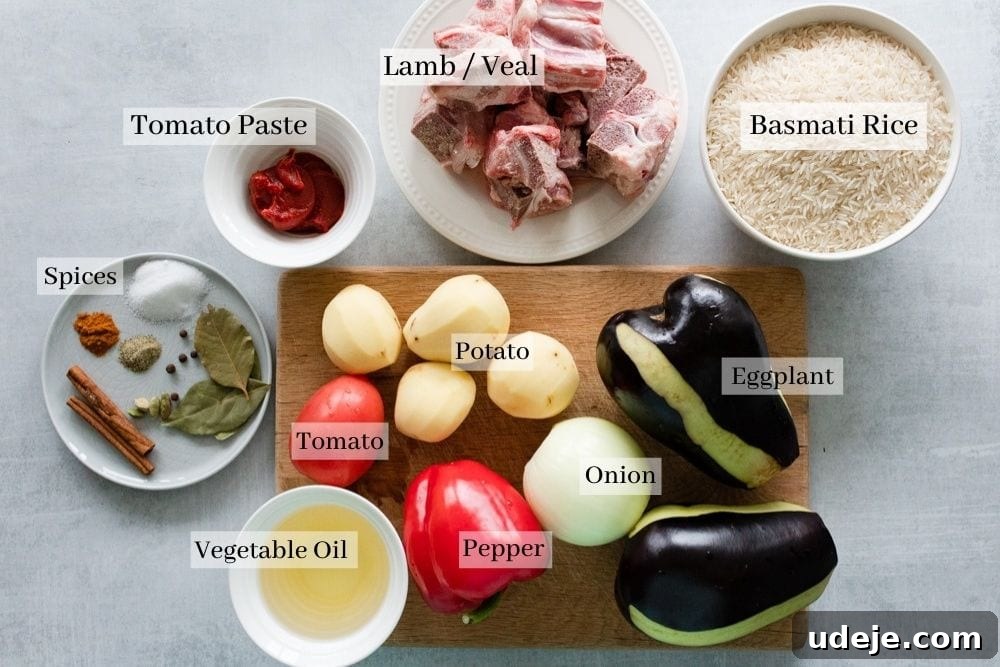
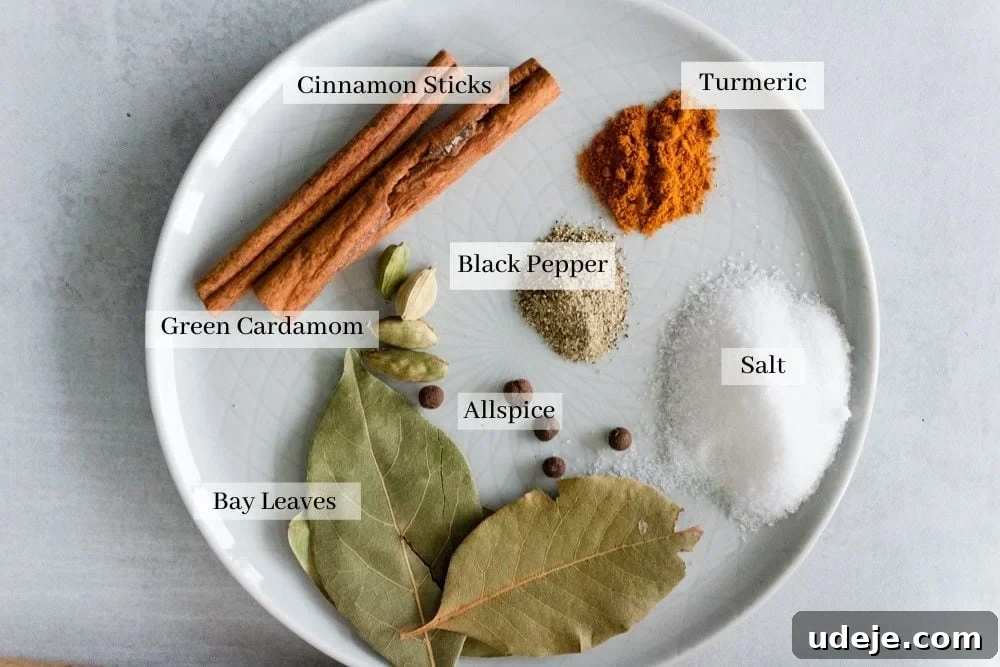
The heart of Maqluba’s aromatic profile lies in its whole spices, used to simmer the meat and create a rich, fragrant stock. While you don’t need every spice listed, I strongly advocate for the inclusion of cinnamon sticks, green cardamom pods, and bay leaves; these impart a warm, earthy, and subtly sweet base. If available, I also love to add whole allspice, black peppercorns, and cloves to further enhance the complexity. Once the initial meat stock is prepared and strained, we fortify its flavor and color with ground turmeric, salt, and black pepper, along with a generous amount of tomato paste, which gives our Iraqi-style Maqluba its distinctive reddish hue. This combination ensures a truly vibrant and deeply flavored broth that permeates every element of the dish.
The Step-by-Step Process to Maqluba Perfection
While Maqluba might appear elaborate, its preparation is a series of straightforward steps that, when followed carefully, yield a truly spectacular result. The key lies in pre-cooking individual components and understanding the layering technique. Traditionally, vegetables are fried to achieve a golden crispness, but my modern approach favors roasting. This method is not only lighter and less messy but also produces equally delicious and beautifully caramelized vegetables. Read these instructions thoroughly to ensure a flawless Maqluba every time.
Preparing Your Ingredients
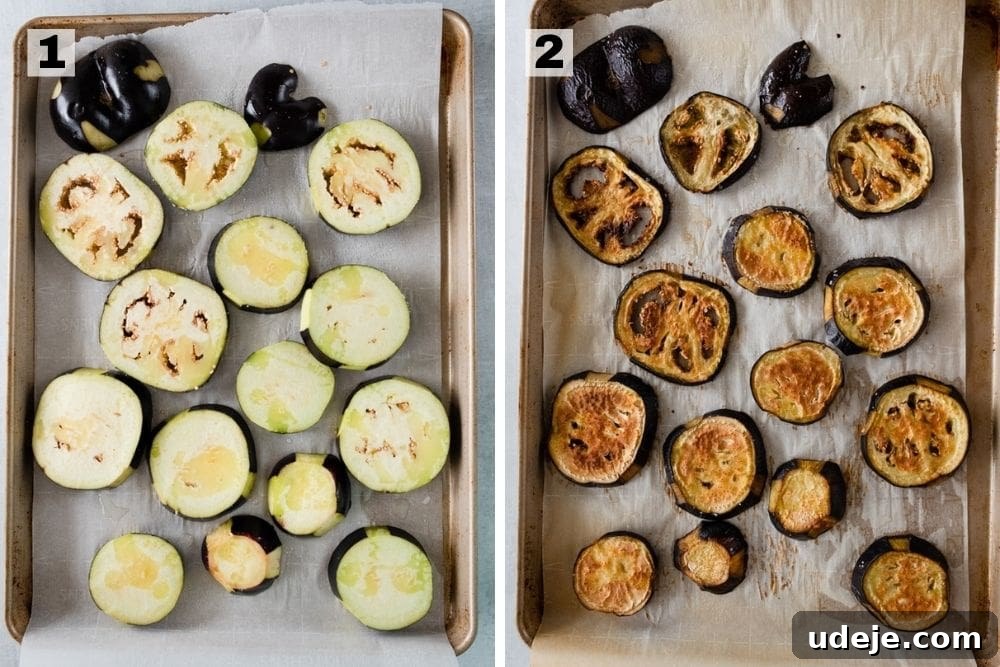
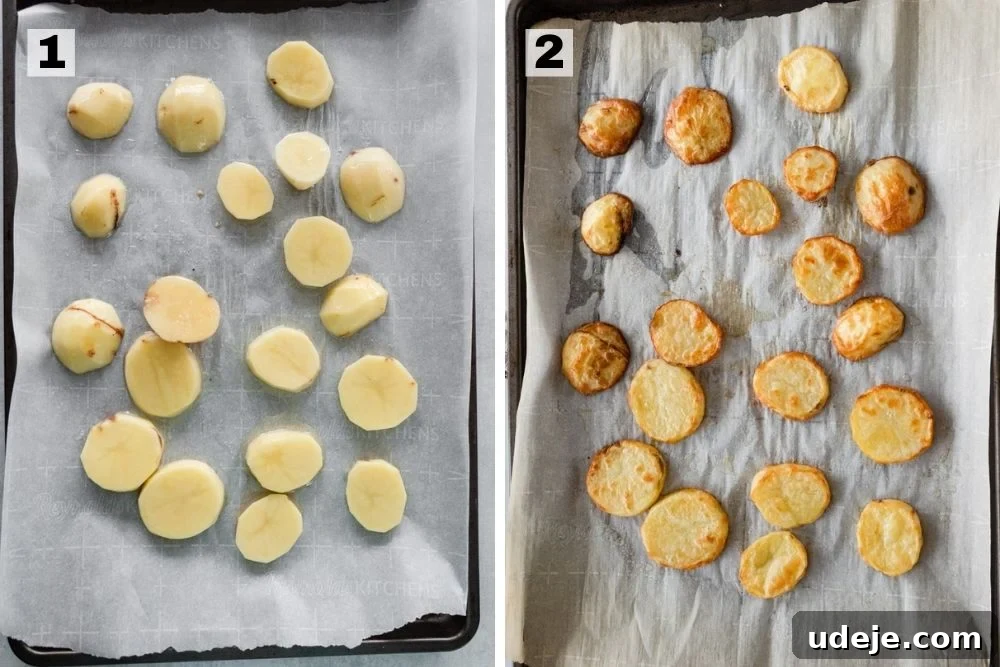
- Prepare the eggplant and potato: Begin by washing and preparing your eggplant. For aesthetic appeal and to reduce bitterness, peel the eggplant in alternating stripes before slicing it into thick, approximately half-inch rounds. Similarly, wash, peel, and slice the potatoes into half-inch thick circles. If you’re incorporating cauliflower, break it into florets of a similar size. Arrange all these prepared vegetables on a lined baking sheet, drizzle generously with olive oil (or vegetable oil), and season with salt. Roast them in a preheated oven at 450°F (230°C) for about 30 minutes, or until tender and lightly golden. This roasting step brings out their natural sweetness and prevents them from becoming overly greasy.
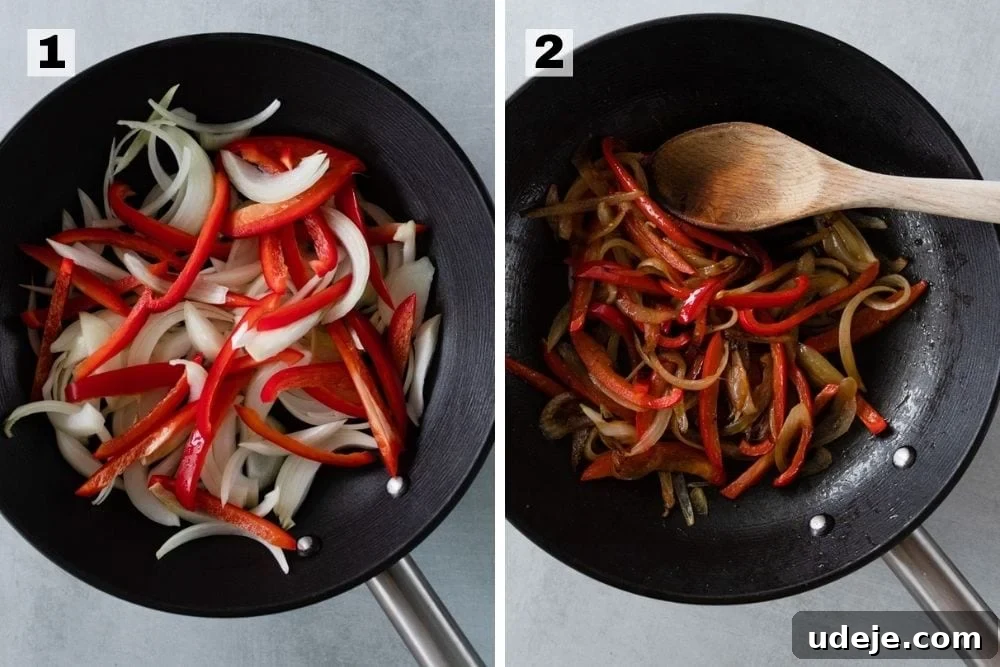
2. Prepare the aromatics (onions and peppers): Slice your large onion and bell pepper into thin “wings” or strips. Heat a couple of tablespoons of vegetable oil in a pan over medium heat, add the sliced onions and peppers along with a pinch of salt, and sauté for about 7 minutes until they are softened and slightly caramelized. Set these aside, as their gentle sweetness will be a wonderful addition to the Maqluba layers.
Building the Flavors: Meat and Broth
3. Cook the meat and create the foundational stock: Wash your chosen meat (lamb, veal, or chicken) thoroughly. In a large pot or Dutch oven, sear the meat in a couple of tablespoons of vegetable oil over medium-high heat until nicely browned on all sides. This step is crucial for developing deep flavor. Add 3 cups of water and all the whole spices (cinnamon sticks, green cardamom, bay leaves, optional allspice, peppercorns, and cloves). If using a pressure cooker, cook for 10 minutes for lamb or veal (less for chicken, typically 5-7 minutes). If you don’t have a pressure cooker, simply cover the pot and simmer the meat on medium heat for 40-60 minutes, or until it is fork-tender. The exact time will depend on the cut and type of meat. This process will create a rich, aromatic stock that is essential for the Maqluba’s flavor.
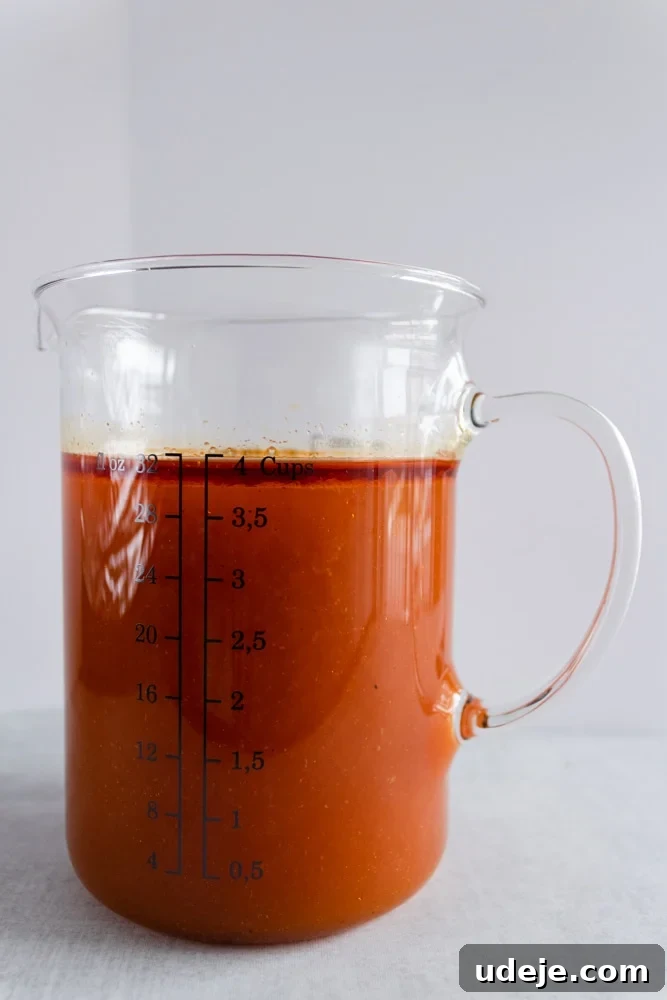
4. Enhance the stock: Once the meat is cooked, carefully remove it from the pot and set it aside. Strain the remaining stock through a fine-mesh sieve to remove all the whole spices, ensuring a smooth broth. Transfer the hot, strained stock to a bowl or back into a clean pot. To this liquid, add the turmeric, the remaining salt, black pepper, and the tomato paste. Whisk everything together thoroughly until the tomato paste is fully dissolved and the stock achieves a deep, inviting orange hue. This is where the characteristic red color of our Iraqi-style Maqluba comes from. At this stage, measure the total volume of your spiced stock. You will need a total of 5.5 cups of liquid for the rice; if your stock is less than this, add enough water to reach the required volume. This precise liquid ratio is critical for perfectly cooked rice.
Layering for Success: The Maqluba Assembly
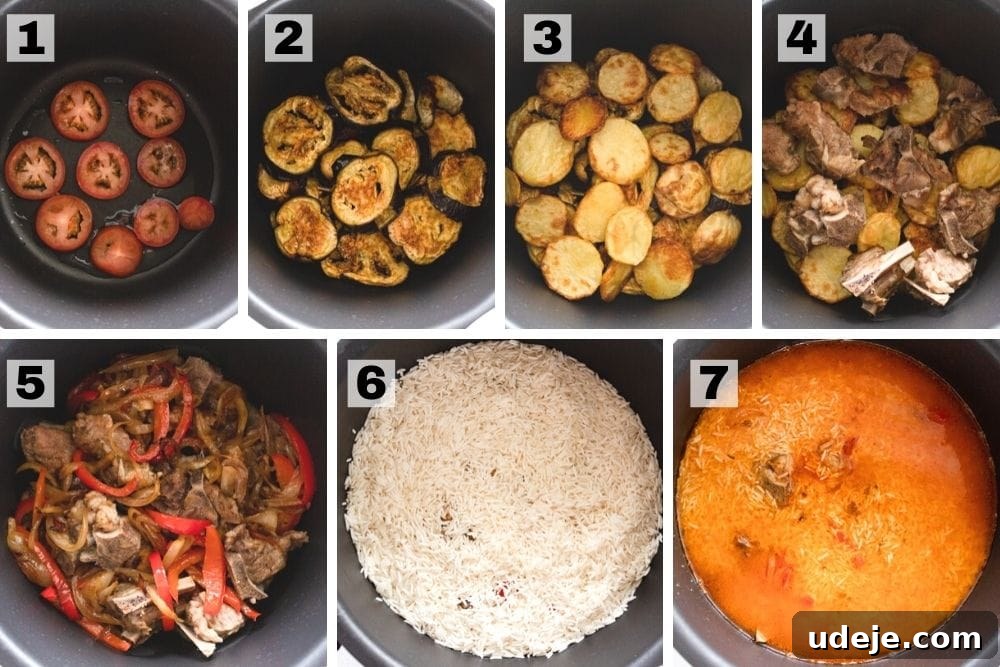
5. Assemble the Maqluba layers: This is where the “upside-down” magic begins. Start by drizzling about 2 tablespoons of vegetable oil evenly across the bottom of your chosen pot (ideally non-stick with straight sides). First, arrange the sliced tomatoes in a single layer at the very bottom; these will prevent sticking and add flavor. Next, carefully place the roasted eggplant slices over the tomatoes, followed by a layer of roasted potatoes. Distribute the cooked meat pieces evenly over the potatoes, then add the sautéed onions and bell peppers. Finally, evenly spread the thoroughly washed and drained basmati rice over all the layered ingredients. Gently pat the rice down firmly to ensure it forms an even layer and minimizes air pockets. Pour the prepared, spiced stock over the rice. The liquid should just barely cover the rice layer. If it doesn’t, add a little extra water until it does. Pat down once more with a wooden spoon to ensure the stock has fully permeated the rice.
The Grand Finale: Cooking, Resting, and Flipping
6. Cook the Maqluba: Place the pot on medium-high heat. Allow it to cook uncovered for about 8-10 minutes, or until you see the liquid vigorously bubbling at the surface. This initial high heat helps to bring the pot to temperature quickly. Once bubbling, immediately reduce the heat to its lowest setting. Crucially, cover the pot tightly. To ensure no steam escapes, you can even place a clean kitchen towel over the pot before securing the lid, especially if your lid doesn’t fit perfectly or has a vent. The Maqluba will then cook gently on low heat for 50 minutes. Do not lift the lid during this time; the steam trapped inside is vital for cooking the rice properly.
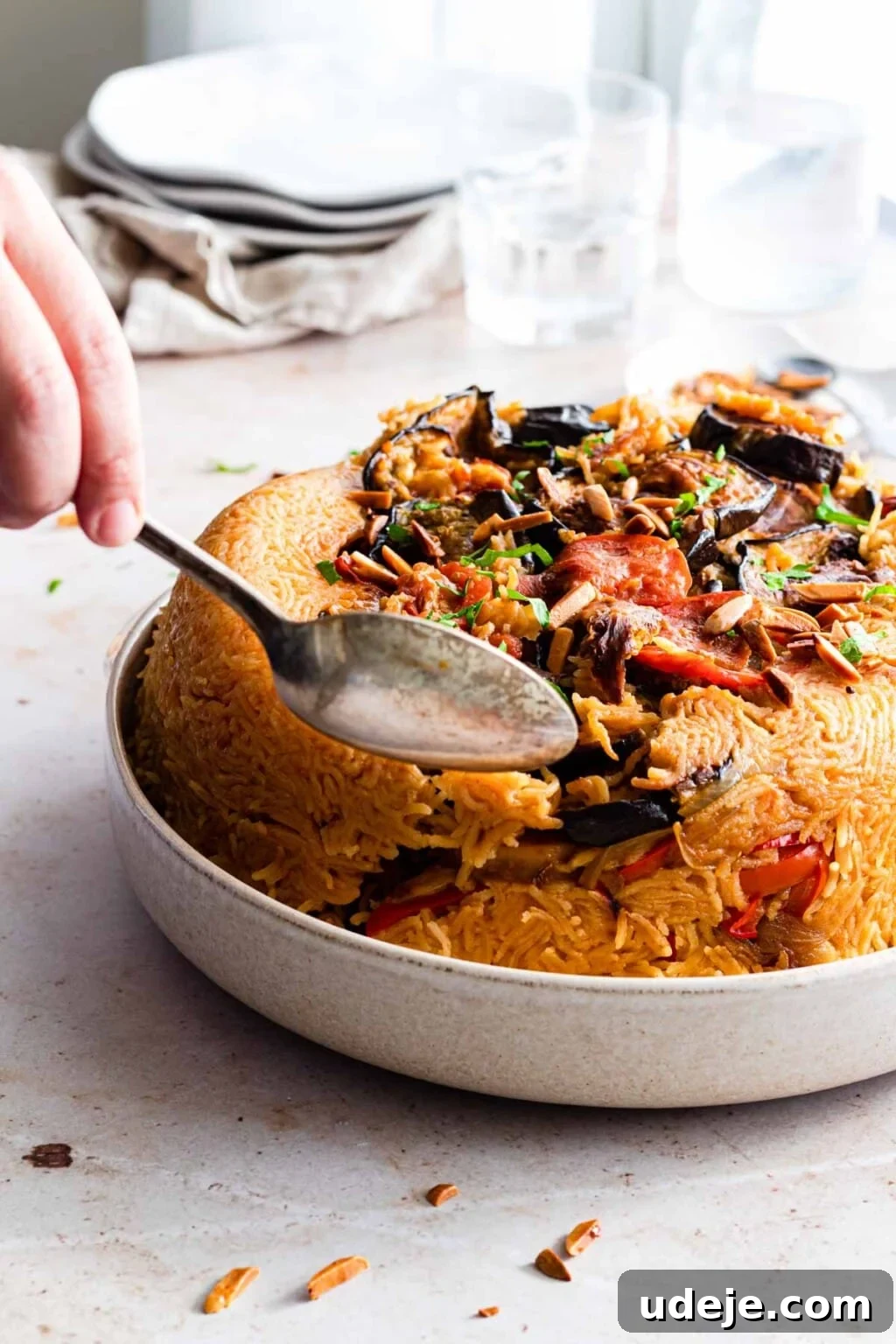
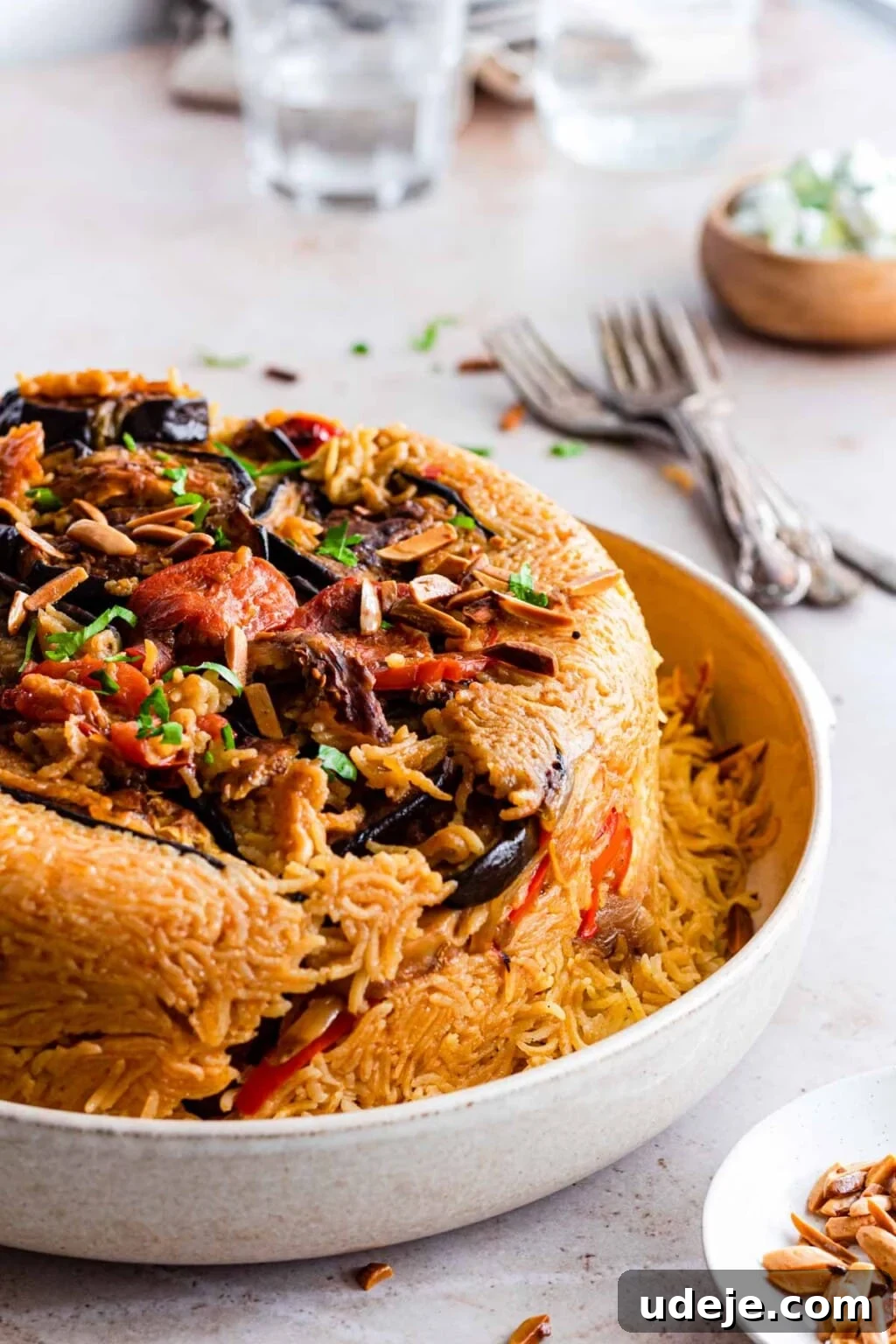
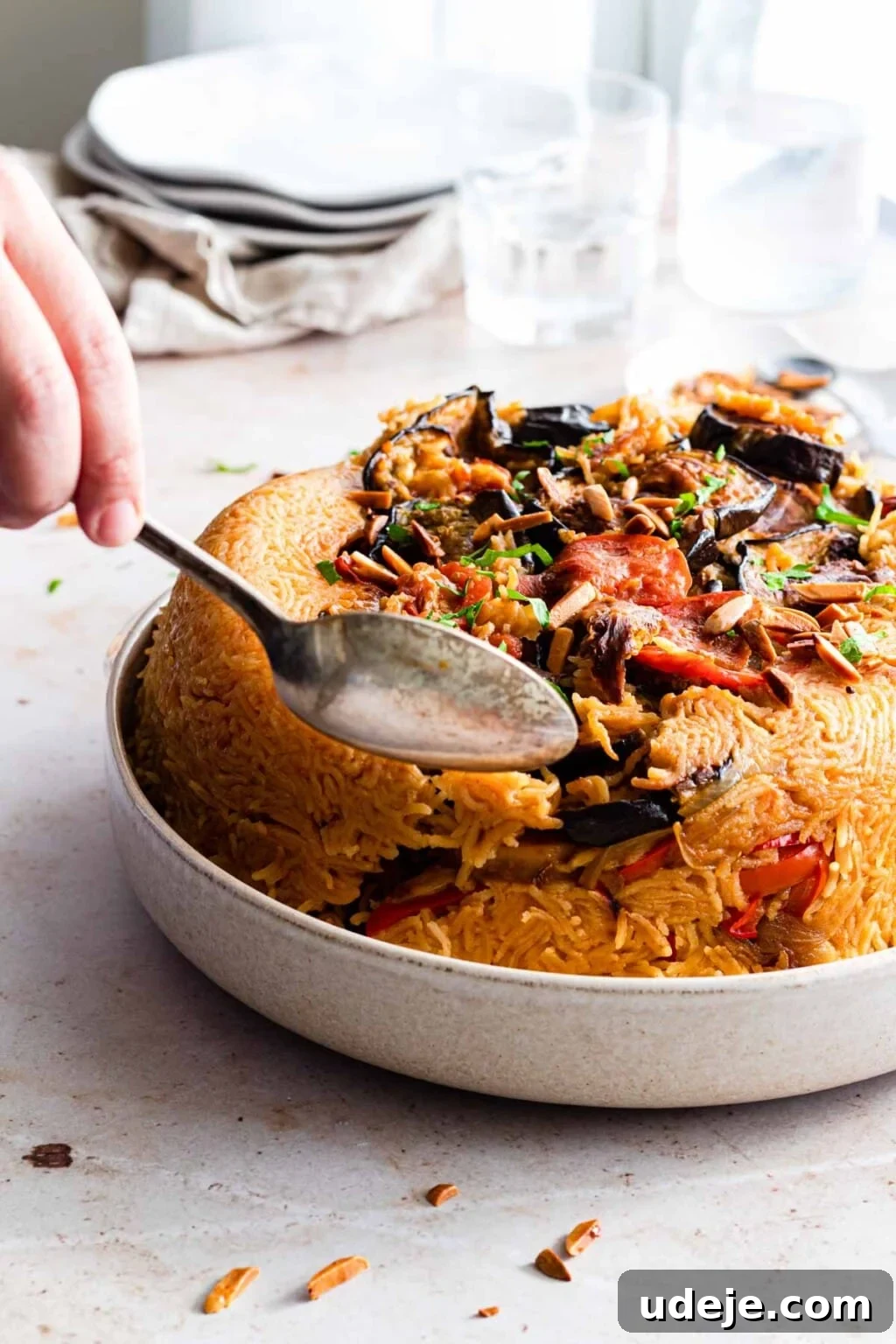
7. Rest and flip: After 50 minutes, turn off the heat but resist the urge to immediately uncover the pot. Allow the Maqluba to rest, covered, for at least 5-10 minutes. This resting period is critical; it allows the steam to redistribute, ensuring the rice finishes cooking and all the layers settle, making for an easier, more successful flip. To serve, find a large, flat serving tray with slightly raised edges. Carefully place the tray firmly on top of the pot. Using both hands, grip the pot handles and simultaneously press down on the tray. With a swift, confident motion, flip the pot entirely upside down onto the tray. (If the pot is heavy, don’t hesitate to ask for help!) Leave the pot inverted on the tray for a few minutes. Gravity will do its work, allowing the Maqluba to slowly release and settle into its magnificent shape. Then, very slowly and gently lift the pot straight up to reveal your perfectly formed, layered Maqluba. Garnish with toasted nuts and fresh parsley, and serve immediately with cooling yogurt or Jajik. You have successfully created a masterpiece!
Troubleshooting Common Maqluba Challenges
Even seasoned cooks might encounter minor hiccups when making Maqluba. Here are solutions to some common issues:
- Undercooked Rice: If you uncover the pot after 50 minutes and find the top layer of rice is still a bit hard or undercooked, don’t panic. Gently sprinkle 1/4 to 1/2 cup of hot water over the rice, re-cover the pot tightly (with the towel trick), and let it steam on the lowest heat for another 10-15 minutes. The added moisture and steam should finish the cooking process.
- Rice Sticking to the Pot: This is often prevented by using a non-stick pot and the initial tomato layer. If you’re using a regular pot, you can try lining the bottom with parchment paper before adding the tomato slices. Also, ensuring enough oil at the bottom helps. Leaving the pot inverted for a few minutes before lifting also aids release.
- Maqluba Doesn’t Hold its Shape: This usually happens if the Maqluba isn’t allowed to rest long enough after cooking, or if the pot is lifted too quickly. The resting period allows the layers to set. Be patient during the flip, and lift the pot very slowly.
- Lack of Flavor: Ensure your stock is well-seasoned with salt, pepper, turmeric, and tomato paste before adding the rice. Taste the stock; it should be robust. The whole spices infused during meat cooking are also key.
Effortless Hosting: Make-Ahead Maqluba Tips
Maqluba is a spectacular dish for entertaining guests and dinner parties, and its layered nature makes it surprisingly adaptable for advance preparation. By front-loading some of the work, you can significantly reduce stress on the day of your event, allowing you to enjoy your company and the culinary show you’re about to present.
- Roast Vegetables in Advance: The eggplant, potato, and cauliflower (if using) can be roasted up to two days ahead of time. Once cooled, store them in separate airtight containers in the refrigerator. This saves significant active cooking time on the day of assembly.
- Prepare Onions and Peppers: You can either slice the onions and bell peppers and store them raw in an airtight container for up to two days, or you can go a step further and sauté them in advance. Cooked and cooled onions and peppers can also be stored in an airtight container in the fridge for up to two days.
- Cook Meat and Broth Ahead: Prepare the meat and create the rich, spiced broth well in advance. Once the meat is cooked and the broth strained, allow both to cool completely. Store the meat and the broth in separate airtight containers in the refrigerator for up to two days.
With these components prepped, all that remains on the day you plan to serve your Maqluba is the exciting part: assembling the layers, a relatively quick process, and then the final cooking stage. This strategy ensures you can enjoy the moment without being tied to the kitchen.
Serving Suggestions and Variations
Maqluba is a complete meal in itself, but it truly shines when accompanied by a few simple, refreshing sides. A classic pairing is Jajik, a cool and creamy cucumber yogurt salad, or a simple finely chopped Arabic salad with lemon and olive oil dressing. These fresh elements cut through the richness of the Maqluba beautifully. For garnish, toasted slivered almonds or pine nuts provide a delightful crunch and nutty flavor, while fresh chopped parsley adds a burst of color and herbaceousness. Don’t be afraid to experiment with variations; some enjoy adding carrots, chickpeas, or even zucchini to their Maqluba layers. For a poultry-focused version, chicken Maqluba is a popular alternative to lamb or veal, offering a lighter flavor profile while maintaining the dish’s comforting essence. The beauty of Maqluba lies in its versatility, allowing you to adapt it to your preferences while honoring its traditional roots.
If you tried this incredible Maqluba recipe, please consider leaving a star ⭐️⭐️⭐️⭐️⭐️ rating in the recipe card below and/or a review in the comments section further down the page – I’d love to hear from you and your experience! You can also hop on over to Instagram and say hello and share your culinary creations!
Maqluba (Makloubeh) with Lamb (Arabic Rice Dish)
Maqluba is a layered dish that is served by flipping upside down to reveal layers of vegetables (commonly eggplant, potato and cauliflower), meat and rice. It’s so flavourful because everything cooks together in one pot. It’s also highly customizable and made across many Middle Eastern countries. If you love Arabic food… this is the dish to try!
Leave a Review
Pin Recipe
Ingredients
For the meat and broth:
- 600 – 900g of lamb or veal pieces, approx. 1.5 lbs to 2 lbs per preference – see note 1
- 2 tablespoons vegetable oil
- 2 cinnamon sticks
- 4 pods green cardamom
- 3 bay leaves
- 4 whole allspice or black peppercorn, optional but recommended
- 4 whole cloves, optional but recommended
- 1/2 teaspoon turmeric
- 4 tablespoons tomato paste
- 3.5 teaspoons salt
- 1.5 teaspoons black pepper
- 3 cups water
For the Eggplant:
- 2 eggplants, approximately 700g
- 1/2 teaspoon salt
- 4 tablespoons vegetable oil
For the potato:
- 2 large potatoes
- 1/4 teaspoon salt
- 1 tablespoon vegetable oil
For the onions and peppers:
- 1 large onion
- 1 large bell pepper, red or orange, not green
- 1/4 teaspoon salt
- 2 tablespoons vegetable oil
For the rice:
- 2.5 cups basmati rice
- 5.5 cups total liquid, combination of the meat broth and additional water
- 1 tomato
For the garnish (optional):
- 1/2 cup slivered or blanched almonds, or pine nuts
- 1/2 cup parsley, chopped
Instructions
- Start by preheating the oven to 450°F (230°C).
- Wash the eggplant and peel it every other stripe as shown in the ingredients photo. Cut into into thick slices, about half an inch thick.
- Wash and peel the potatoes, and cut them into roughly half inch thick circles.
- Place the eggplant and the potato on a lined baking sheet. Sprinkle them with salt and combine them with the oil (the amounts under the ingredients section). Bake for 30 minutes.
- Wash the meat and sear it on medium-high heat using the 2 tablespoons of oil. Add the 3 cups of water and all the whole spices and pressure cook for 10 minutes. If you are not using a pressure cooker, boil on stovetop covered on medium heat for 40-60 minutes until tender.
- Cut the onion and pepper into wings or slices. Cook with the oil in a pan over medium heat for 7 minutes until softened. Set aside.
- Once the meat is cooked, remove it and set aside. Strain the stock from the whole spices.
- To the hot stock (in a bowl or a pot), add the turmeric, salt, black pepper and tomato paste. Mix well to combine and add additional water to reach the 5.5 cups required. Measure the total amount of stock then top it up with water until you reach 5.5 cups.
- Wash the rice several times until the water runs clear. Drain it and set aside.
- Cut the tomato into slices.
- To layer the Maqluba, start by adding 2 tablespoons of oil to the bottom of the pot, then add the tomato slices, followed by eggplant, potato, meat, onions and peppers, then the rice.
- Pat the rice down firmly, then pour the stock on top. Pat down again using a wooden spoon to ensure the stock is fully covering the rice.
- Place the pot on medium-high heat and allow it to start bubbling, which should take 5 minutes or so.
- Once it is bubbling, cover it and decrease the heat to low. Ensure the pot is well covered by also adding a towel on top, especially if your pot has any holes. Cook for 50 minutes.
- After 50 minutes, turn heat off and allow Maqluba to rest for 5-10 minutes. If you open it and realize your top layer of rice is undercooked or under seasoned, refer to the troubleshooting section above.
- When ready to serve, find a large tray with raised edges and place it on top of the pot. Use both hands and place them on each handle while holding the tray down. In a swift motion, flip the pot over (have someone nearby to help you if you need it). Leave the pot flipped over the tray for a few minutes and allow gravity to slowly drop the Maqluba.
- Lift the pot very slowly to help keep it intact. Serve with yogurt or Jajik and enjoy!
Notes
- You can substitute chicken for the lamb or veal. Use the amount you like, but 600g at a minimum to get a good tasting stock.
- You can cook the meat in a pressure cooker or instant pot for faster results. But if you don’t have one, cook it on the stovetop for 40-60 minutes until tender (or less for chicken).
- For the vegetables, you can increase the amounts listed if you prefer more (it will not impact the rice and liquid ratio, so leave those the same).
- Use a non-stick pot with straight sides for best results.
- If you’re using short grain rice, there is a higher risk it will stick together and mush, therefore be sure to adjust the water ratio accordingly.
- This recipe yields 6 generous adult servings. But it will depend on how much your household eats. You can adjust the recipe quantities as needed.
Nutrition Facts
- Serving: 1g
- Calories: 519kcal
- Carbohydrates: 75g
- Protein: 8g
- Fat: 22g
- Saturated Fat: 17g
- Sodium: 1842mg
- Potassium: 579mg
- Fiber: 7g
- Sugar: 7g
- Vitamin A: 207IU
- Vitamin C: 6mg
- Calcium: 64mg
- Iron: 2mg
Did you make this recipe?
Please leave a star rating and review below!