
Authentic Iraqi Kabab: A Culinary Journey to Mesopotamia’s Grills
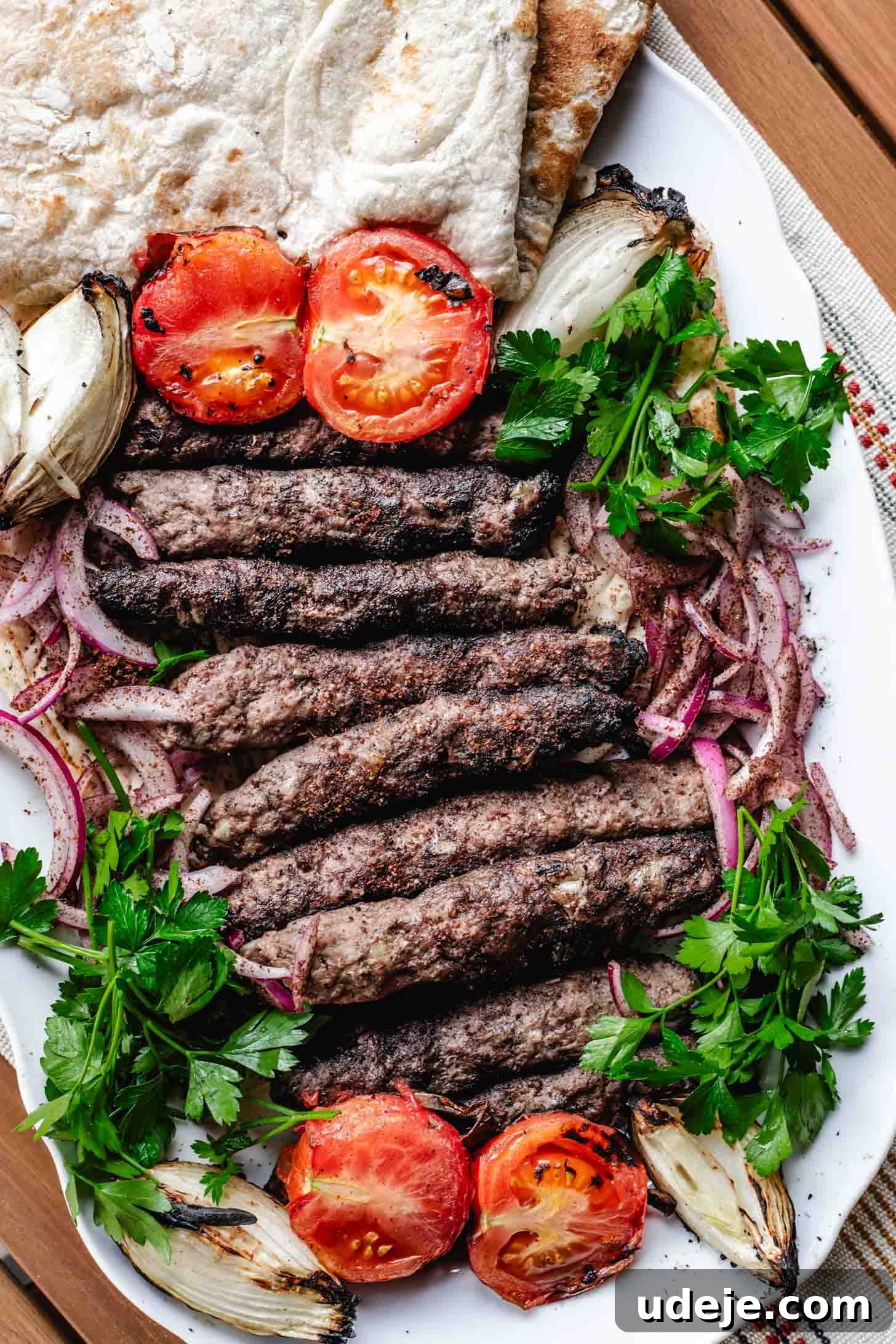
Iraqi Kabab is not just a dish; it’s a testament to ancient culinary traditions, a beloved staple that holds a special place in the heart of Middle Eastern cuisine. Renowned for its unparalleled tenderness, rich meaty flavor, and signature char-grilled aroma, this iconic dish stands out among its regional counterparts. Its distinct character comes from a unique combination of high fat content and an artful minimalism in seasoning, allowing the true essence of the meat to shine through. Imagine succulent, perfectly seasoned ground meat, expertly skewered and kissed by an open flame, resulting in a juicy interior and a beautifully caramelized exterior. This guide will walk you through the authentic preparation of Iraqi Kabab, bringing the vibrant flavors of a Baghdad street grill right into your home kitchen.
The Defining Characteristics of True Iraqi Kabab
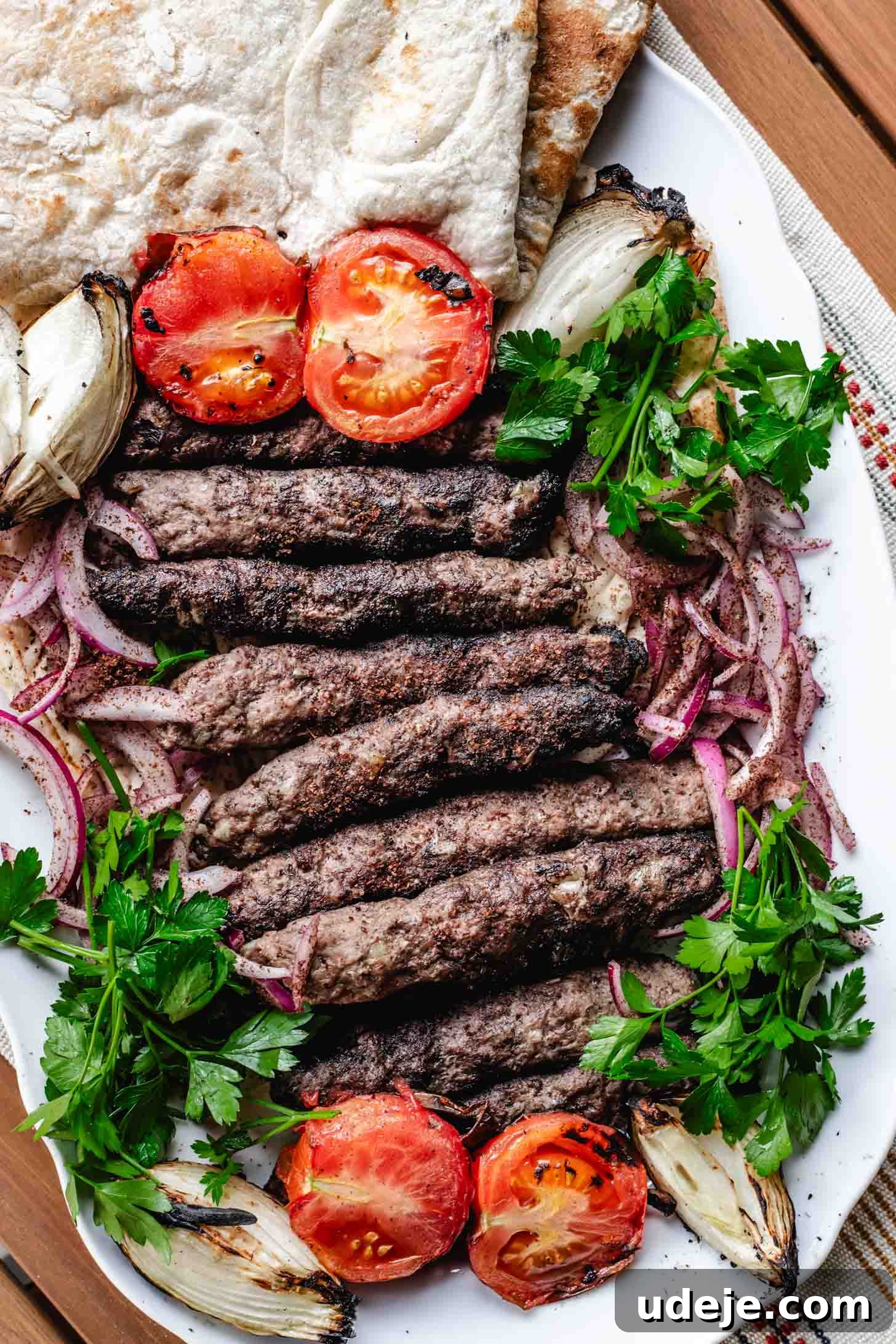
If you’ve ever had the pleasure of dining at an authentic Iraqi restaurant, you’ll understand why Iraqi Kabab enjoys a reputation all its own. While many Middle Eastern countries boast their own versions of grilled skewers, the Iraqi rendition is exceptionally tender, bursting with flavor, and always prepared following a specific set of traditional principles. As an Iraqi myself, I confess a certain bias, but the distinctive qualities of our kabab are truly undeniable and celebrated worldwide.
Authentic Iraqi Kabab is fundamentally characterized by two crucial elements that set it apart:
- A Generous Fat Content: The Secret to Supreme Tenderness. The foundation of Iraqi Kabab’s melt-in-your-mouth texture lies in its high fat ratio. Typically, an authentic mixture consists of at least 20% fat to 80% meat. This substantial fat content is what ensures each skewer remains incredibly juicy and tender as it cooks over intense heat. Without this essential fat, the kabab would lose its signature “fall-apart” quality, becoming drier and less succulent. While many home cooks might opt for leaner meat for health reasons, for a truly traditional experience, adhering to this fat ratio is key. The meat is traditionally made from finely ground lamb, celebrated for its rich flavor, but a blend of lamb and beef is also incredibly popular and often preferred for its balanced taste and texture. This combination offers the best of both worlds – the distinct gaminess of lamb with the familiar richness of beef.
- Minimalist Seasoning: Celebrating the Meat’s Natural Flavor. Unlike many other regional kabab varieties that feature a complex array of spices, Iraqi Kabab takes a remarkably simple approach to seasoning. Beyond salt and black pepper, no other spices are typically added. This deliberate restraint is a hallmark of Iraqi culinary philosophy, which places immense value on savoring the pure, unadulterated flavor of the char-grilled meat itself. The high fat content already contributes significantly to the richness, and the smoky notes from the open flame further enhance this natural deliciousness. This simplicity allows the quality of the meat to be the star, making every bite a celebration of its inherent taste.
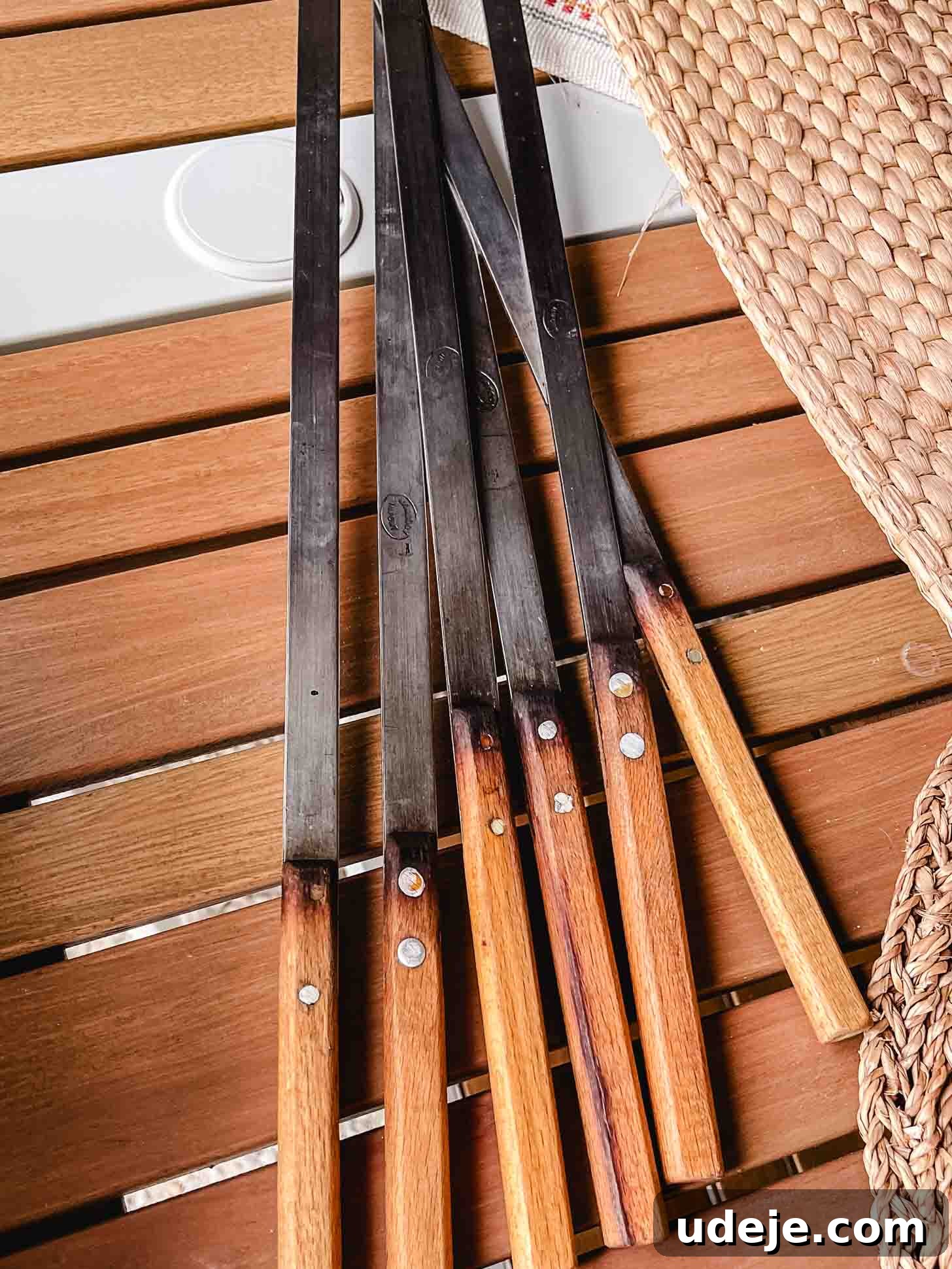
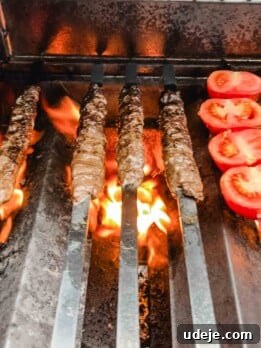
In terms of presentation and preparation, Iraqi Kabab is uniquely shaped. It is grilled on long, flat stainless steel skewers, which are wider than the typical round skewers used for other kebabs. This flat surface allows the meat to maintain its broad, flattened shape and achieve even cooking while creating those distinctive dimples or indentations. These specialized skewers are essential for achieving the traditional look and texture of Iraqi Kabab and can often be found at local Middle Eastern markets or purchased online.
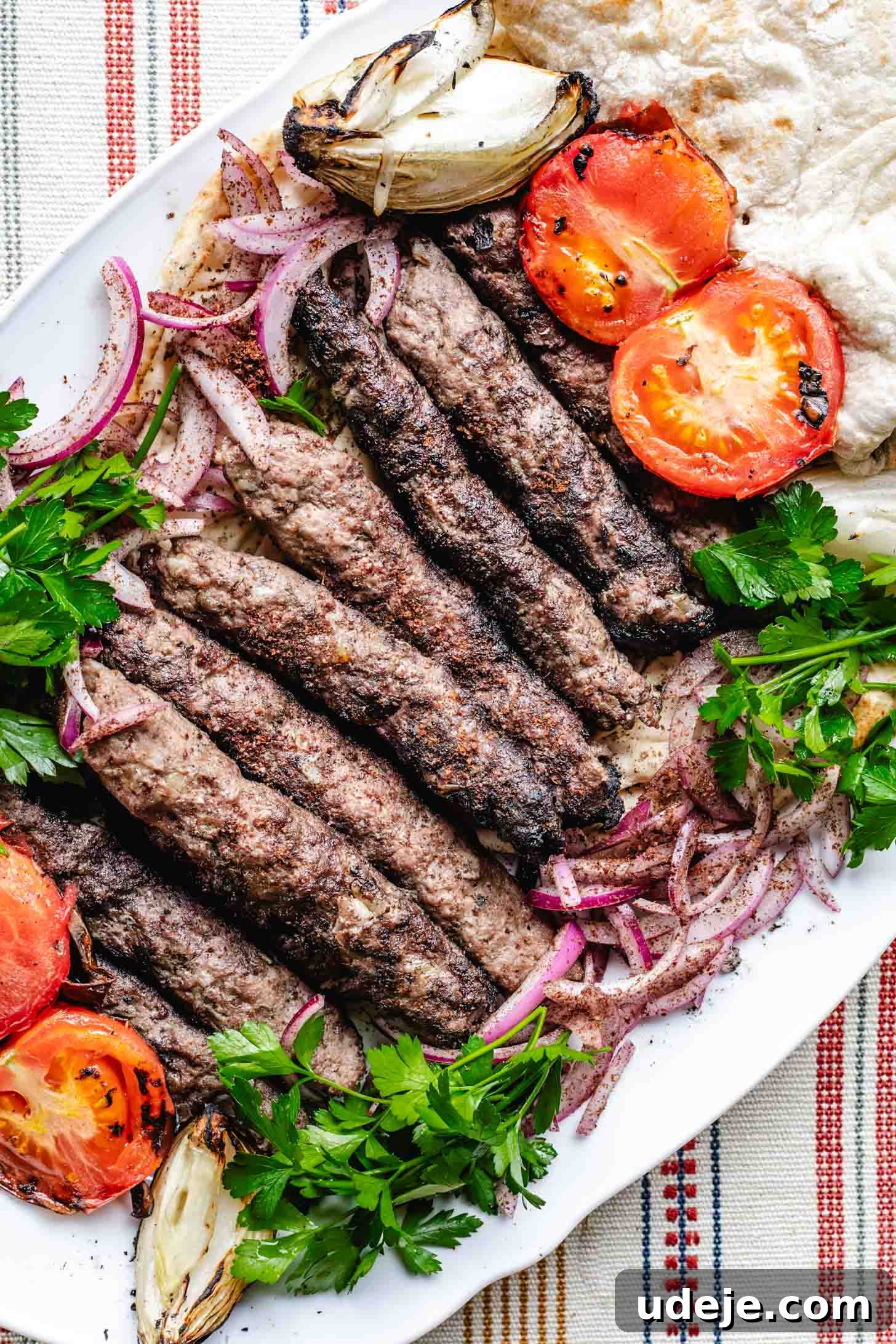
The recipe shared here is the result of years of refinement, bringing you as close as possible to the authentic, restaurant-quality kabab experience. It’s a dish we prepare almost weekly during the summer months, relishing the irresistible flavors and the communal joy of grilling. We typically serve these glorious skewers over warm Iraqi bread, which acts as a delicious sponge, soaking up all the delectable meat juices. Accompaniments like grilled tomatoes, onions, and a sprinkle of tangy sumac complete this magnificent meal.
I highly encourage you to embark on this culinary adventure and try making Iraqi Kabab yourself. Be prepared, however, for a richly flavorful and satisfyingly greasy experience – a few skewers are often enough to leave you pleasantly full! If you’re someone who prefers a more heavily spiced kabab, you might enjoy exploring a Lebanese-style kofta, which offers a similar grilled meat experience but with a broader spice profile. I also have a delightful baked meatballs version of kofta if you’re looking for an alternative preparation method.
Mastering Iraqi Kabab at Home: A Step-by-Step Guide
Creating authentic Iraqi Kabab in your own backyard is a rewarding experience that will transport your taste buds straight to the bustling markets of Baghdad. Success lies in understanding the nuances of ingredient selection and preparation. Follow these steps carefully to achieve perfectly tender and flavorful kababs.
Gathering Your Essential Ingredients
Before you begin, ensure you have all your ingredients ready. The simplicity of this dish means each component plays a vital role in the final flavor and texture. Let’s delve into the few, yet critical, ingredients and some important tips for each:
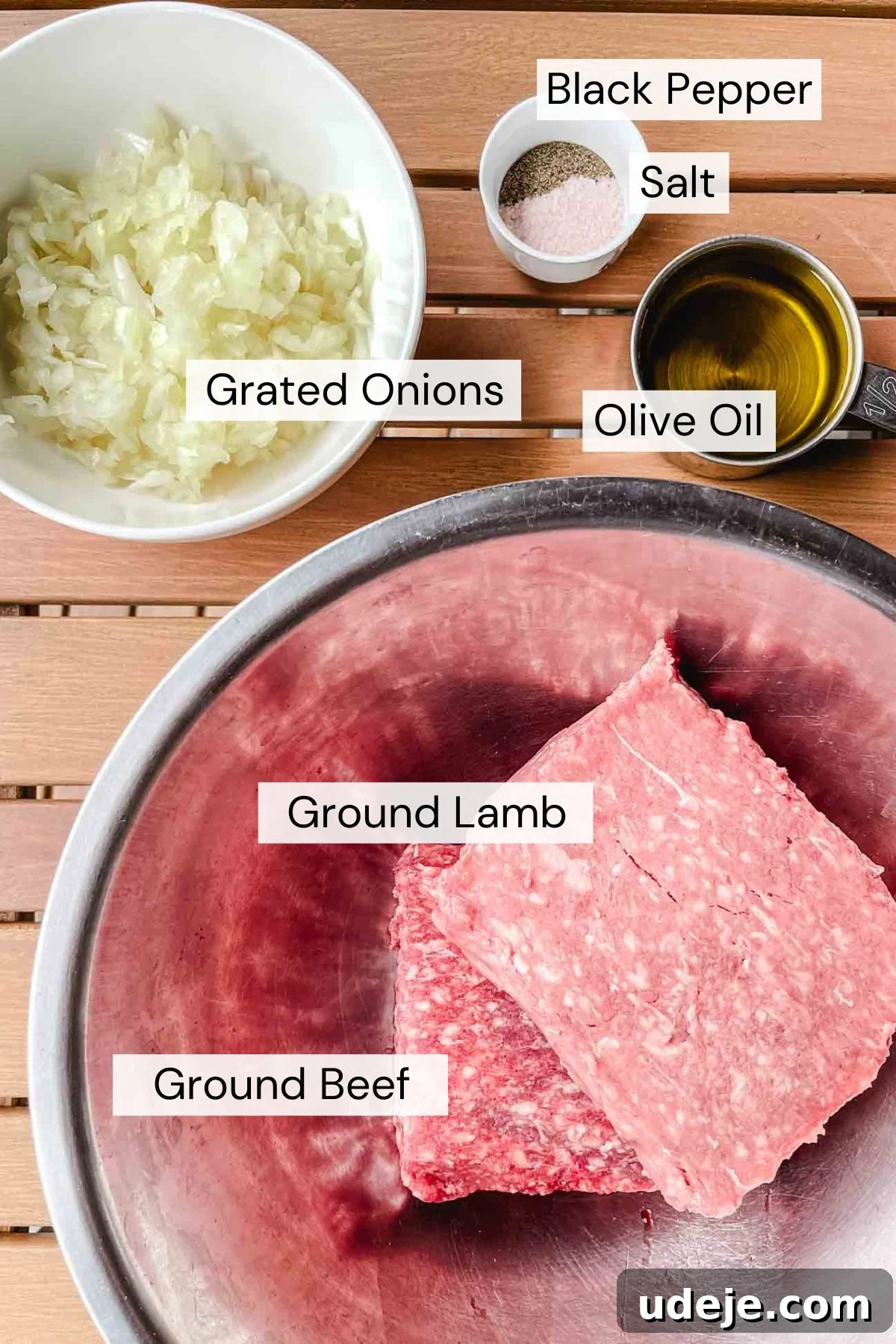
- Ground Lamb and Beef: The Dynamic Duo. My preferred ratio is a 50% ground lamb and 50% medium ground beef blend. This combination offers the optimal balance of flavor and fat content. Ground lamb typically has a fat content ranging from 17% to 20%, while medium ground beef can be anywhere between 20% and 23%. This ensures we meet the minimum 20% fat requirement for authentic Iraqi Kabab. If ground lamb is difficult to find or not to your taste, you can certainly use only medium ground beef, but the lamb adds an invaluable depth of flavor. Look for fresh, high-quality meat from a reputable butcher.
- Salt and Black Pepper: The Soul of Iraqi Seasoning. This is it – the entirety of our seasoning! The beauty of Iraqi Kabab lies in its pure meat flavor, enhanced by the char of the grill. High-quality salt and freshly ground black pepper are all that’s needed to bring out the natural deliciousness of the meat. Avoid the temptation to add extra spices, as this would alter the authentic profile of the dish.
- Grated Onion: Flavor and Tenderness Enhancer. Onion is a non-negotiable ingredient, providing both a crucial aromatic depth and a tenderizing effect on the meat. It also subtly cuts through the richness of the lamb fat, balancing the overall flavor profile. The key is to grate the onion (using a food processor or a box grater) and then meticulously squeeze out as much moisture as possible. Excess moisture will prevent the kababs from binding properly and can cause them to fall apart during grilling.
- Olive Oil: A Modern Touch to Traditional Richness. Traditionally, restaurants might incorporate finely chopped lamb fat (liyeh) into the mixture. However, finding this specific type of fat can be challenging for home cooks, and its strong flavor might be too intense for some. As a fantastic alternative, I love adding olive oil. It contributes additional richness and a lovely nuanced flavor without the gamey intensity of extra lamb fat, helping to achieve that desired juiciness.
- All-Purpose Flour: The Binder’s Secret. Given the high fat content, the meat mixture can be quite loose, making it prone to falling off the skewers. A small amount, typically up to 2-3 tablespoons, of all-purpose flour acts as a binding agent. It helps the meat adhere to the skewers, making the shaping and grilling process much easier and more successful without significantly altering the taste.
- Optional but Highly Recommended: Whole Tomatoes and White Onions. For an authentic serving experience, prepare some whole tomatoes and white onions to skewer and grill alongside your kababs. Their sweet, charred flavors perfectly complement the rich meat.
Preparing the Kabab Mixture and Skewers
Once your ingredients are assembled, the preparation phase is crucial for ensuring the kababs hold their shape and cook beautifully.
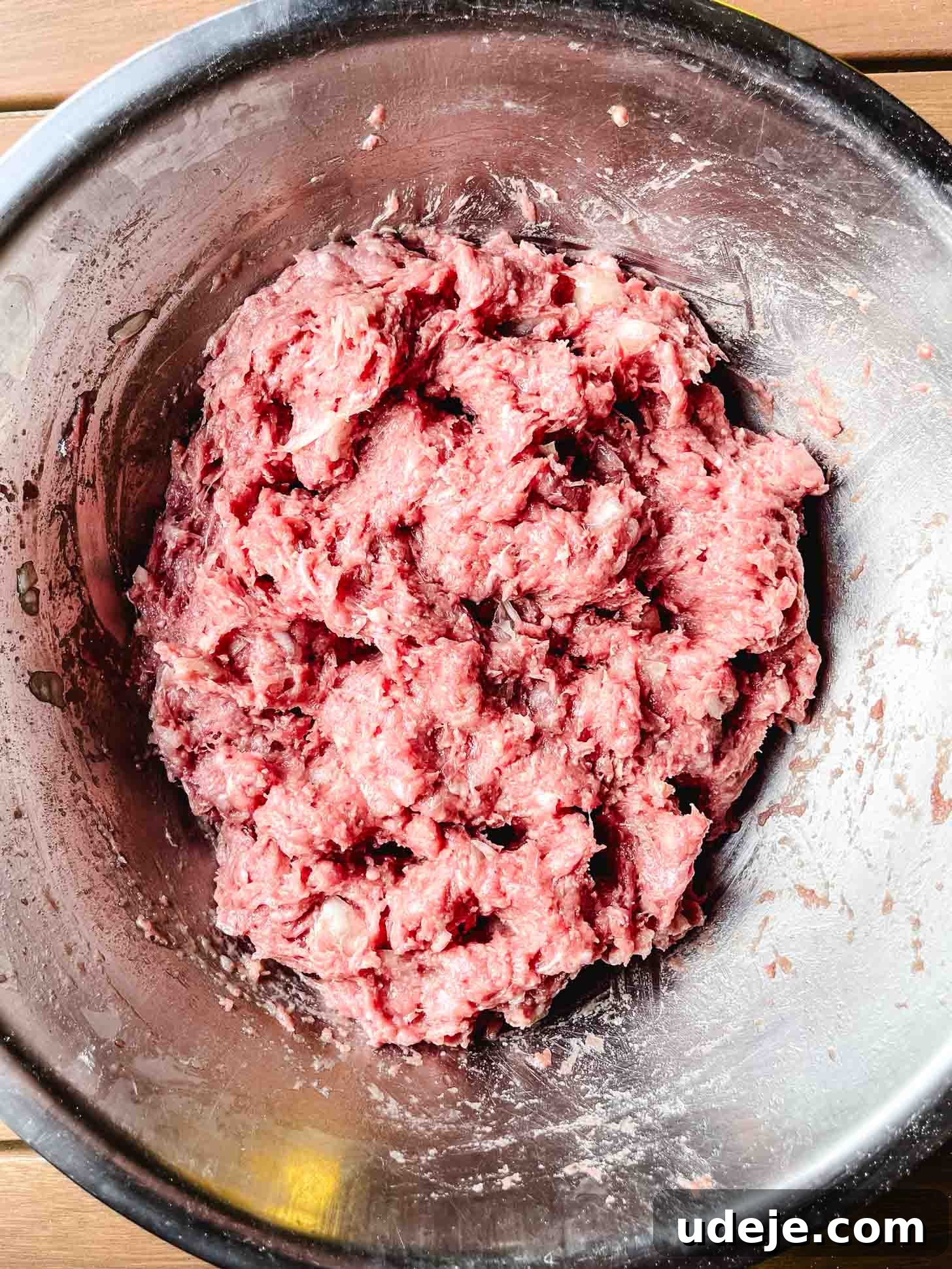
Begin by combining the ground lamb, ground beef, thoroughly squeezed grated onion, salt, black pepper, and olive oil in a large mixing bowl. Donning a pair of food-safe gloves (which keeps your hands clean and helps prevent the meat from getting stuck under your fingernails), mix all the ingredients together until the mixture appears homogenous and well combined. This initial mixing is important, but the next step is vital: knead the meat mixture vigorously for at least 7 minutes. This extended kneading time is critical as it helps to activate and bind the meat proteins, creating a cohesive mixture that will adhere firmly to the skewers and prevent them from crumbling during grilling. After kneading, cover the bowl and allow the meat to rest in the fridge for about 15 minutes. This resting period further aids in binding and allows the flavors to meld.
PRO TIP: The importance of squeezing moisture from the grated onions cannot be overstated. After grating, place the onion pulp in a clean cheesecloth or simply use your hands to firmly press out as much liquid as possible into a separate bowl. Discard this liquid. Any extra moisture from the onions will make your kababs excessively wet and significantly increase the risk of them falling apart on the grill.
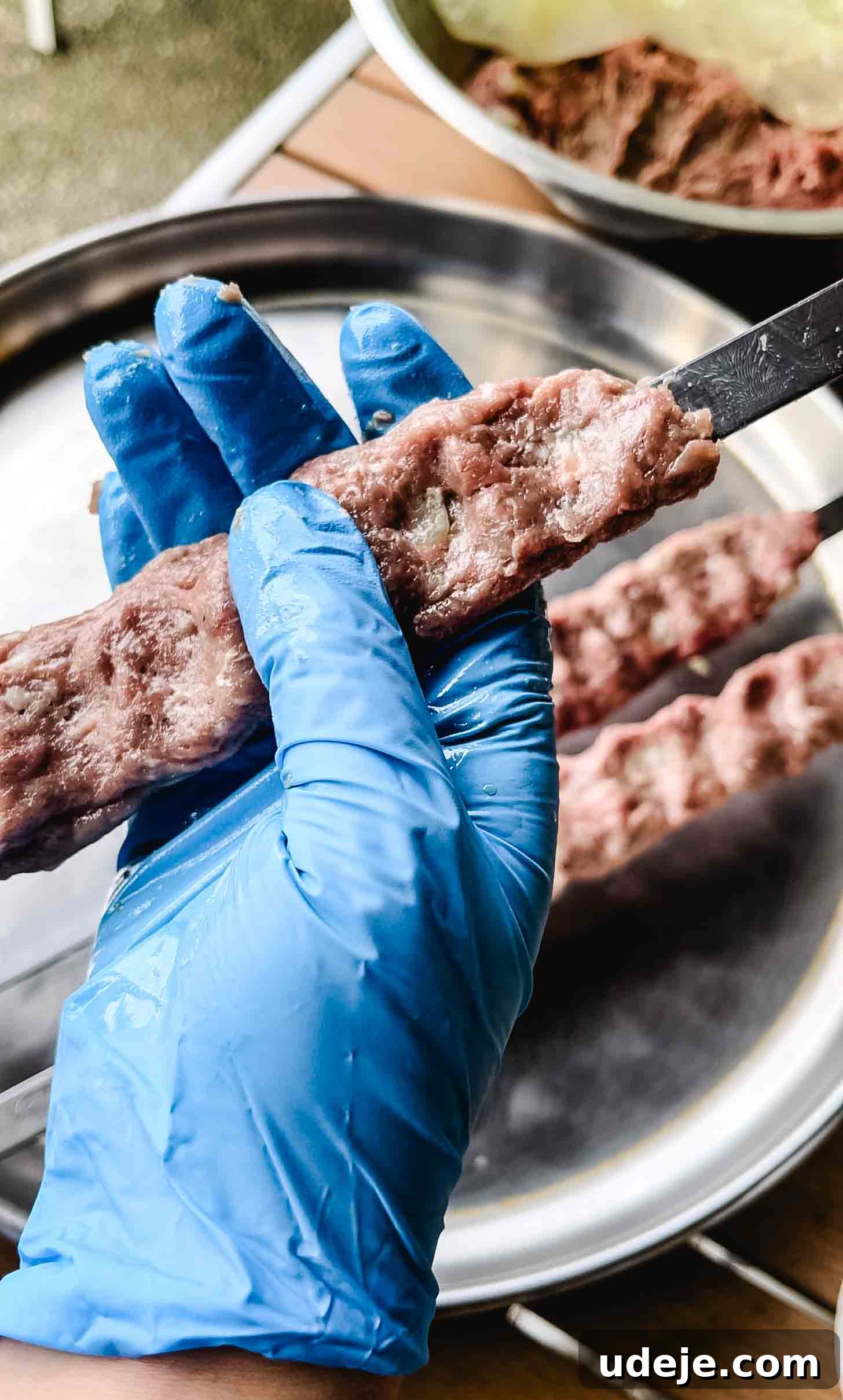
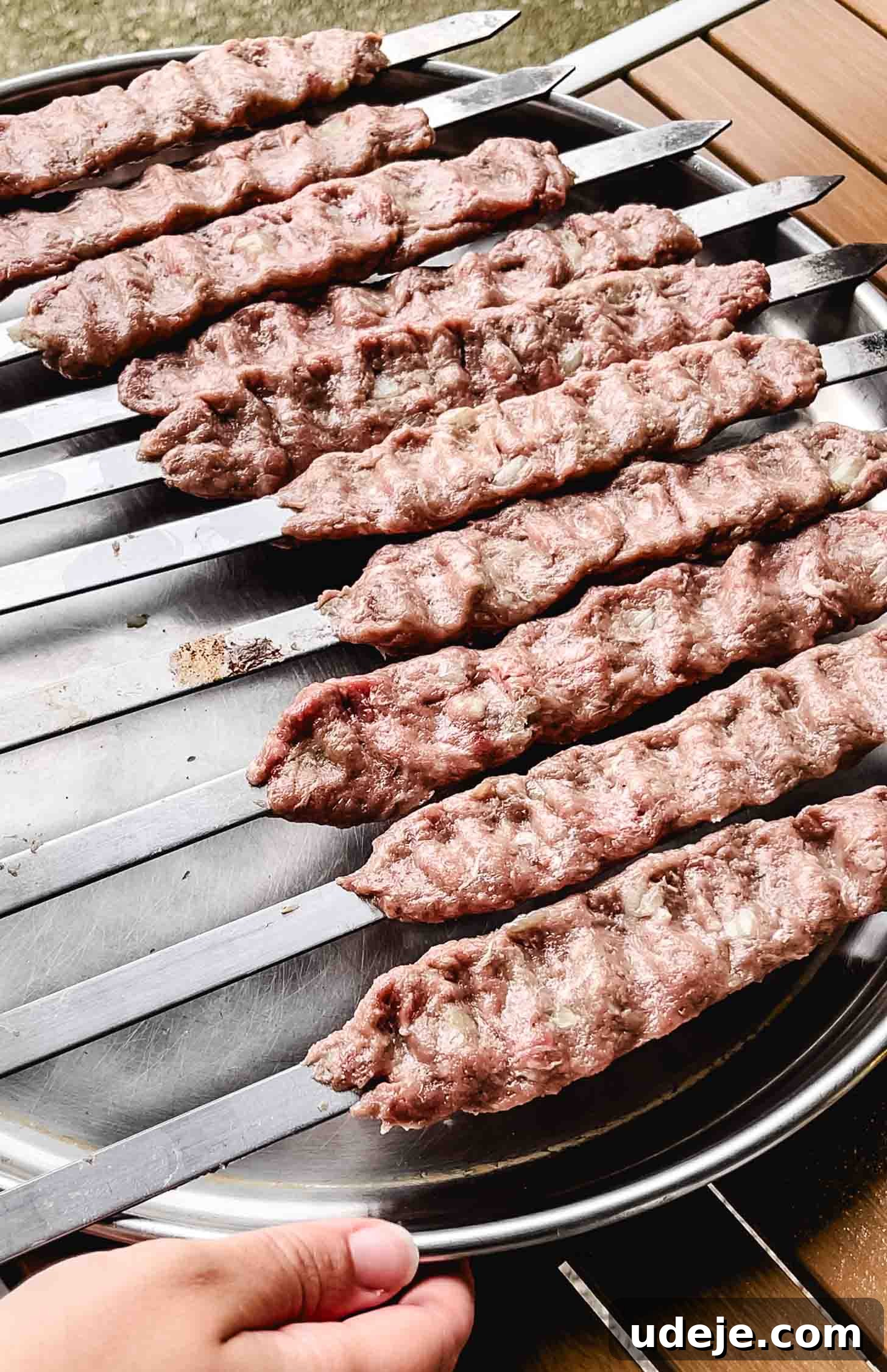
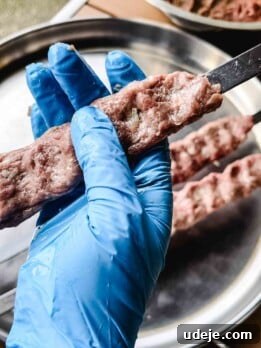
Next, it’s time for the art of skewering. Take a small fistful of the rested meat mixture, roughly the size of a golf ball, and begin to press and shape it onto one of your long, flat metal skewers. Hold the skewer in one hand and use your other hand to firmly squeeze and elongate the meat, gradually molding it along the length of the skewer. The goal is to create a uniform layer of meat, typically around 6 to 7 inches in length and about 1/4 inch in thickness. While the exact length can vary, consistent thickness across the entire skewer is paramount to ensure even cooking. Once the meat is evenly spread, use your thumb to create shallow indentations along the skewer, about an inch apart. These dimples are characteristic of Iraqi Kabab and help to further flatten and shape the meat. Repeat this process with the remaining meat mixture and skewers.
Grilling Your Iraqi Kababs to Perfection
With your kababs skillfully skewered, it’s time for the exciting part: grilling. The direct, open flame cooking method is fundamental to achieving that distinctive charred exterior and succulent interior.
If you’re planning to grill tomatoes and onions alongside your kababs, prepare them now. Simply cut the whole tomatoes and white onions in half, keeping the onion skins on to help them hold their shape. Skewer these halves onto separate metal skewers.
Before placing the kababs on the grill, ensure your BBQ is set up correctly. For authentic Iraqi Kabab, it’s crucial to remove the grill grates. The skewers are traditionally laid directly over the open flame, resting on the two metal edges of the barbecue. This allows for direct exposure to the heat, creating that essential char. Preheat your gas grill to a high temperature, around 450°F (230°C), for at least 15 minutes before you start grilling. If you’re using a charcoal grill, ignite your coals at least 30 minutes in advance, allowing them to turn white-hot and distribute even, intense heat.
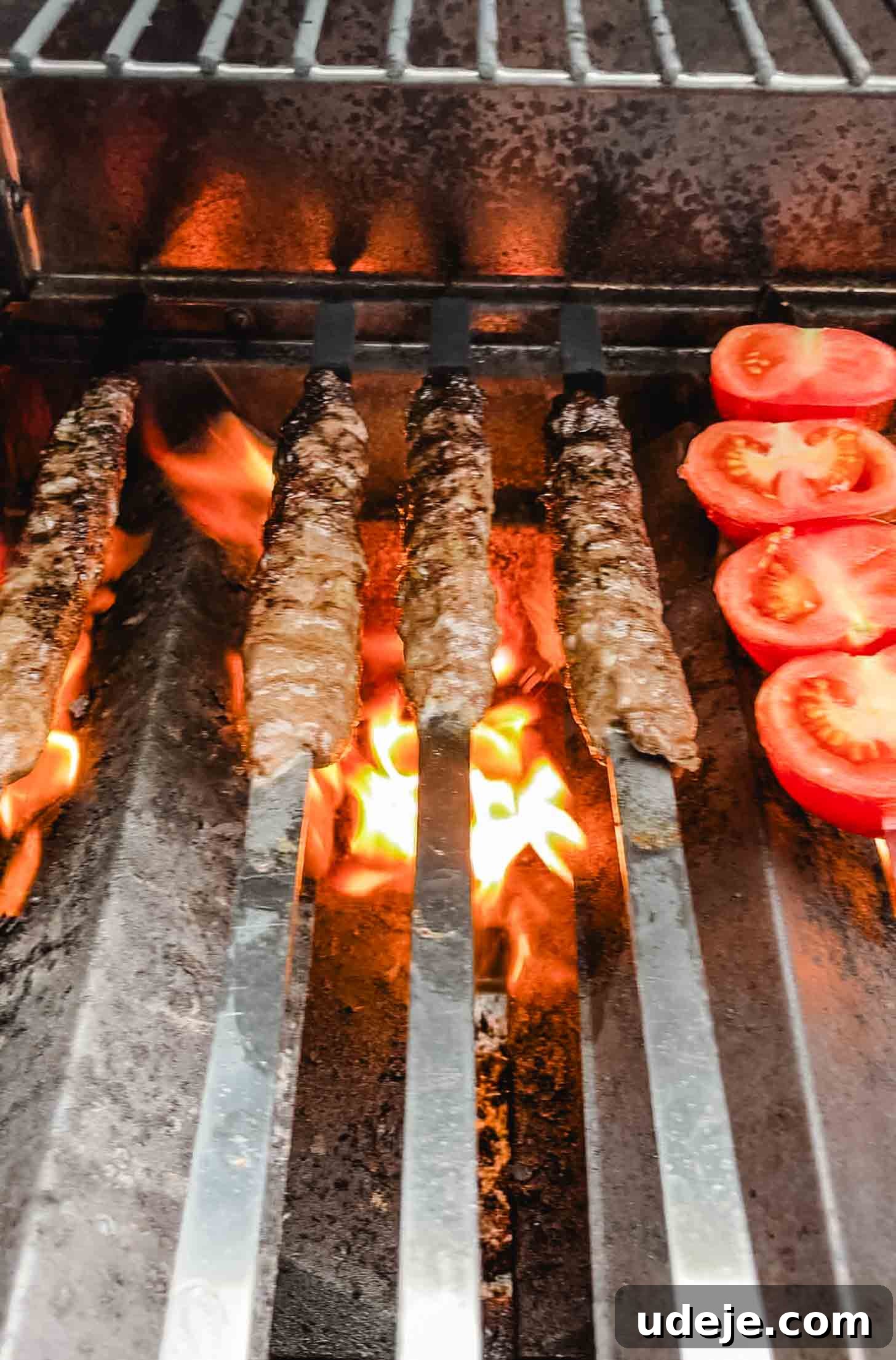
Carefully place your skewered kababs directly over the open flames. The grilling process is relatively quick. It’s crucial to turn the skewers every 30 seconds to ensure even cooking on all sides and prevent any one part from burning while another remains undercooked. Continue grilling for approximately 7 to 8 minutes in total. You’ll observe some of the fat rendering and dripping onto the flames, which is completely normal and contributes to the smoky flavor as the flames “lick” at the kababs. This occasional flare-up is part of the traditional cooking method. Once the exterior of the kababs has achieved a beautiful brown char and they appear visibly cooked, they are ready to be removed from the heat.
To safely un-skewer the hot kabab, a traditional and practical method is used. Place a large piece of warm pita bread or Iraqi bread directly on your serving platter. Then, position the hot skewer in the middle of the bread, fold the bread over the kabab, and gently pull the skewer out. The bread not only protects your hands from the heat but also immediately begins to soak up the irresistible juices from the freshly grilled meat, enriching its flavor.
How to Traditionally Serve Iraqi Kabab for an Authentic Experience
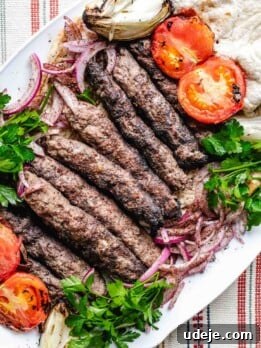
Serving Iraqi Kabab is an integral part of the culinary experience, enhancing the flavors and providing a complete, satisfying meal. Traditionally, Iraqi Kabab is presented generously laid over a large, soft loaf of Iraqi bread (or similar flatbread), which serves as a foundation, absorbing all the delicious, fatty juices from the freshly grilled meat.
Accompanying the kababs are the grilled onions and tomatoes, their sweet and smoky flavors providing a perfect counterpoint to the rich meat. Fresh parsley, with its vibrant green color and clean taste, adds an essential element of freshness. A crucial side is thinly sliced red or white onions, generously seasoned with sumac – a tangy, reddish-purple spice that adds a delightful zing and brightens the entire dish. Diners then create their own wraps, combining pieces of the succulent kabab with the grilled vegetables, fresh parsley, and sumac-infused onions within a piece of the juicy bread. This combination creates a truly delicious and deeply satisfying bite, representative of authentic Iraqi hospitality.
Other Iraqi Recipes You Should Try
If you tried these recipes, please consider leaving a star ★★★★★ rating in the recipe card below and/or a review in the comments section further down the page – I’d love to hear from you! You can also hop on over to Instagram and say hello!
Authentic Iraqi Kabab (BBQ Recipe)
12
Skewers
30
mins
10
mins
15
mins
55
mins
Amina Al-Saigh
Leave a Review
Pin Recipe
Ingredients
- 1 lb ground lamb, 454 g
- 1 lb medium ground beef, 454 g
- 1 large white onion, grated and squeezed dry
- 2 teaspoons salt
- 1/4 teaspoon black pepper
- 1/4 cup olive oil
- 3 tablespoons all-purpose flour
Instructions
-
Start by either grating the onion on a box grater or cut the onion in quarters, place them in a food processor and process until pureed. Once pureed or grated, squeeze the onion over a bowl to remove as much liquid as you can. Discard the liquid.
-
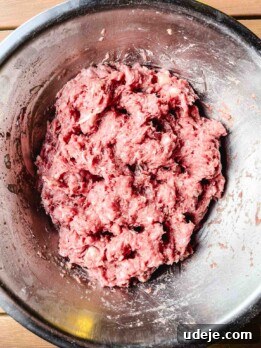
 Combine the ground lamb, ground beef, grated (and squeezed dry) onion, salt, pepper, and olive oil in a large bowl. Using gloved hands, mix everything together until well combined. Then, add the flour and mix it into the meat thoroughly. Knead the meat mixture vigorously for at least 7 minutes. This step ensures the meat proteins bind together, helping the kababs stay on the skewers and not fall apart during grilling. Allow the meat to rest for 15 minutes in the fridge.
 -
Using large 1-inch flat metal skewers, grab a fistful of the meat mixture and start to skewer the meat. Use your hands to squeeze and stretch the meat along the length of the skewer, aiming for roughly 6 to 7 inches in length and a 1/4 inch in thickness. The length is not as important as the uniform thickness; make sure it is consistent so the kabab cooks evenly. Use your thumb and index finger to create indentations in the meat roughly 1-inch apart, which helps to flatten the kabab.
-
Turn on your gas grill at least 15 minutes before grilling, setting it to 450°F (230°C), and remove the grill grates. If using a charcoal grill, make sure to start the coals at least 30 minutes before grilling, allowing them to become white-hot.
-
Suspend the skewers on either edge of the grill so that they are directly over the flames or coals. Flip the kababs every 30 seconds, grilling them for a total of 7 to 8 minutes until visibly cooked and nicely browned on the outside, but still juicy on the inside. It’s normal for fat to drip onto the flames and cause them to flare up, contributing to the smoky flavor.
-
If using, skewer the halved tomatoes and onions (with skin on) and grill alongside the kababs for 10 to 12 minutes until charred and softened.
-
Serve the kabab immediately with grilled onions, grilled tomatoes, fresh parsley, sumac onions, and warm Iraqi bread (or pita bread).
Notes
- Iraqi kabab traditionally uses at least a 20% fat ratio for optimal tenderness and flavor. A mixture of ground lamb and medium ground beef works exceptionally well, but you can use only lamb or only beef based on your preference and availability.
- It’s important to use flat 1-inch wide skewers for these kababs. Thin, round skewers will not provide enough surface area for the meat to adhere properly and will likely cause it to fall off.
- Authentic Iraqi kabab is grilled directly over an open flame or hot coals, not on grill grates. Make sure to remove your grill grates or the kababs may stick.
- Ensure you flip the kababs every 30 seconds to promote even cooking and prevent them from drying out or burning on one side. This constant turning is key to a juicy interior and perfectly charred exterior.
Serving:
-6
g
,
Calories:
254
kcal
,
Carbohydrates:
3
g
,
Protein:
13
g
,
Fat:
21
g
,
Saturated Fat:
7
g
,
Polyunsaturated Fat:
1
g
,
Monounsaturated Fat:
10
g
,
Trans Fat:
0.5
g
,
Cholesterol:
54
mg
,
Sodium:
436
mg
,
Potassium:
207
mg
,
Fiber:
0.3
g
,
Sugar:
1
g
,
Vitamin A:
0.5
IU
,
Vitamin C:
1
mg
,
Calcium:
16
mg
,
Iron:
1
mg
Did you make this recipe?
Please leave a star rating and review below!