
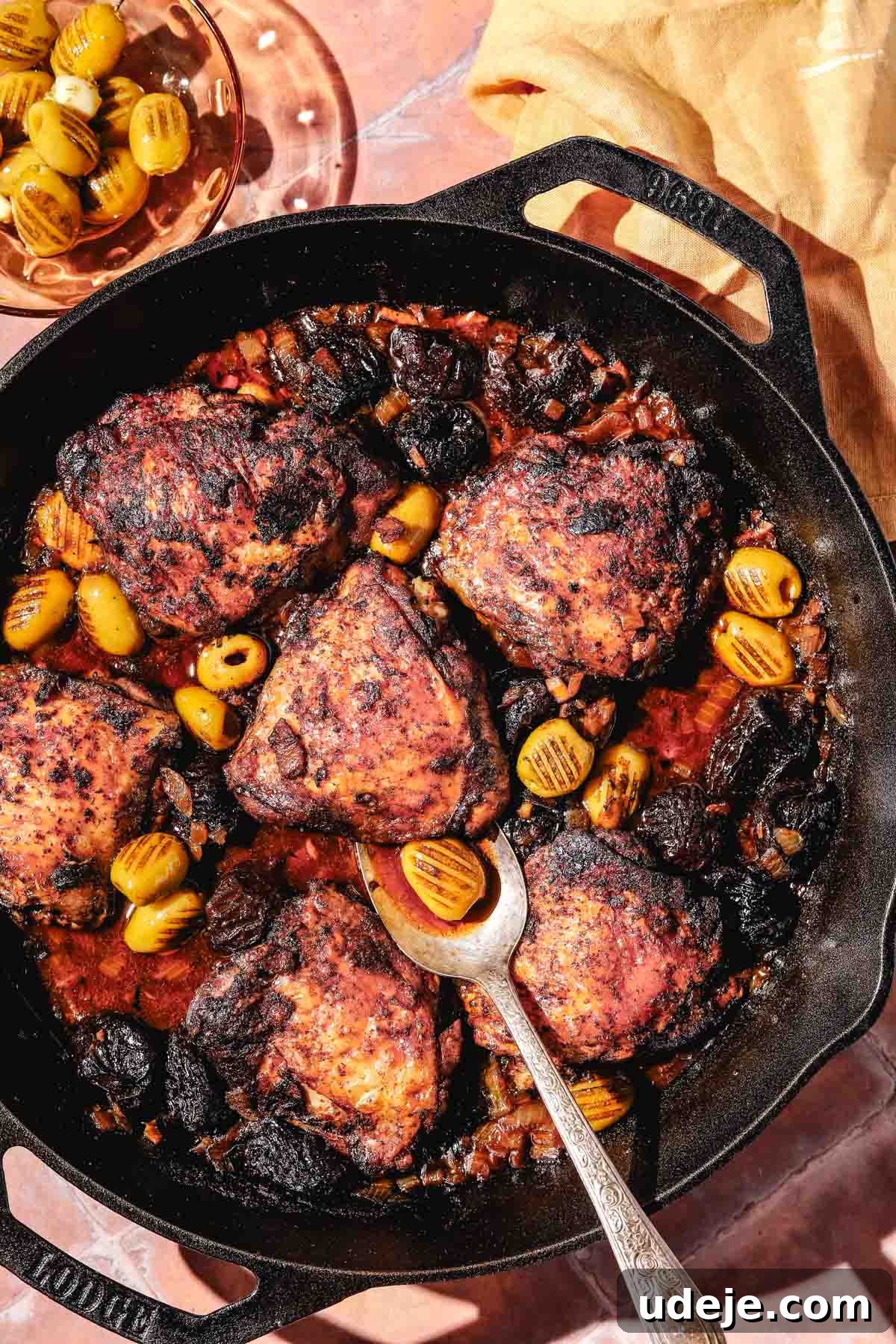
Embark on a culinary journey to North Africa with this exquisite Moroccan Chicken recipe, promising succulent, juicy chicken with an irresistibly crispy skin. Infused with a harmonious blend of bold Moroccan spices, this dish is slow-cooked with briny olives, sweet prunes, and tangy preserved lemons, creating a truly unforgettable flavor profile. As it bakes, the chicken releases its rich juices, forming a delectable sauce that’s perfect for soaking up with warm, crusty bread. What’s more, this show-stopping meal requires only about 15 minutes of active preparation time, making it an ideal choice for both weeknight dinners and special occasions. Don’t be deterred by any specialty ingredients; we’ve included plenty of easy substitutions to ensure everyone can enjoy this comforting and aromatic dish.
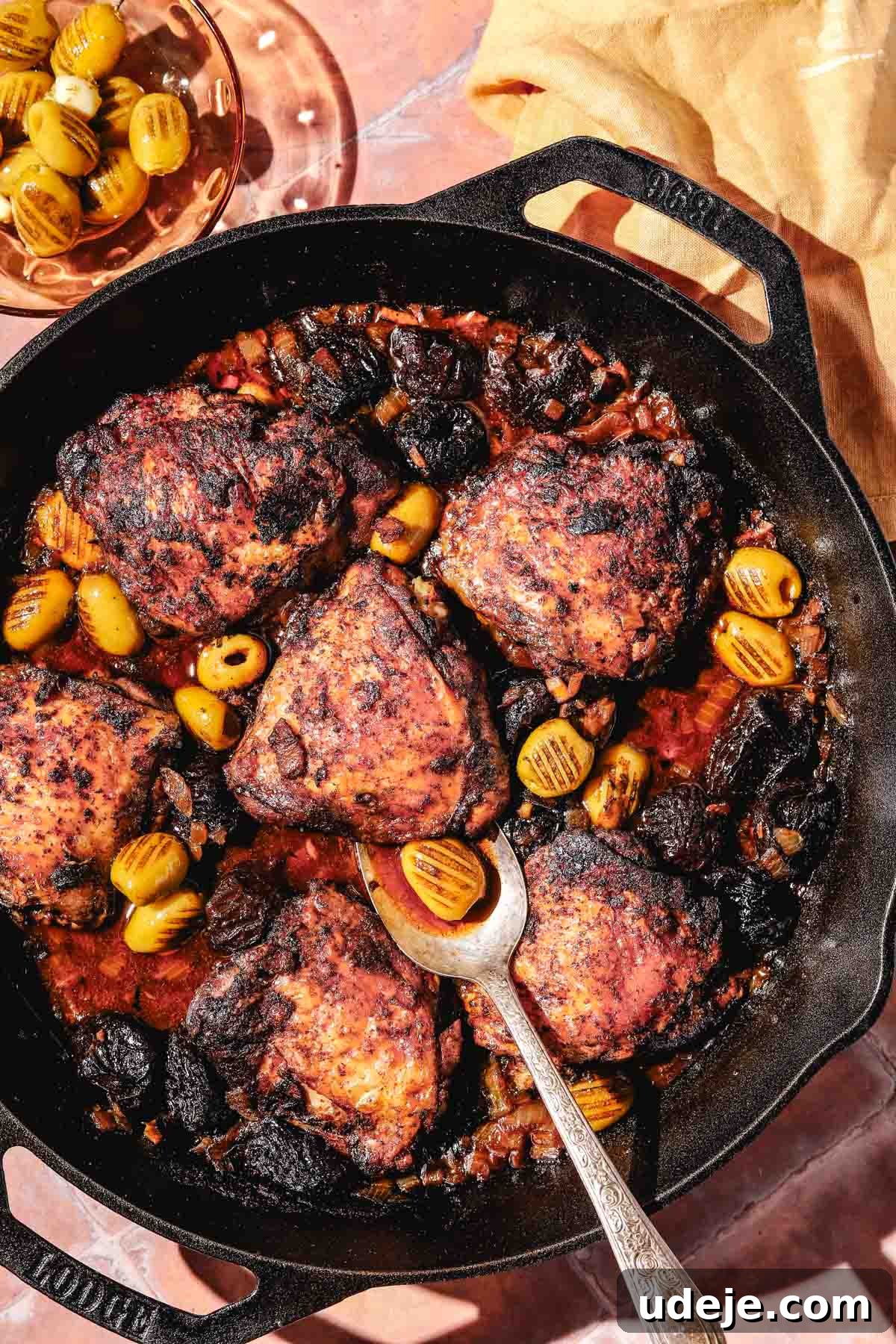
Unveiling the Authentic Flavors of Moroccan Chicken: Spices and Key Ingredients
While this recipe might not follow every strict tradition of a Moroccan tagine, it is profoundly inspired by those timeless flavors, offering a “quick” yet incredibly flavorful rendition of a classic. Moroccan chicken is a staple in many households, and this recipe elevates it to something truly special without demanding hours in the kitchen.
The Soul of Moroccan Cuisine: Aromatic Spices
The foundation of this dish lies in its classic warm Moroccan spices, a blend that resonates deeply within authentic Moroccan cuisine. These spices are commonly found in other beloved Moroccan dishes like Loubia (white bean stew) or the hearty Harira soup, showcasing their versatility and importance. Our carefully selected mix typically includes:
- Cumin: Provides a deep, earthy warmth that is characteristic of North African cooking.
- Cinnamon: Adds a sweet, fragrant note, contributing to the dish’s comforting aroma and balancing the savory elements.
- Ground Ginger: Offers a zesty, slightly spicy kick, enhancing the overall vibrancy of the flavor profile.
- Ground Cloves: Delivers an intense, pungent sweetness that adds a layer of sophisticated complexity.
- Paprika: Contributes a mild, sweet peppery flavor and a beautiful reddish hue to the chicken and sauce.
- Cayenne Pepper: A hint of cayenne provides a subtle warmth and a gentle kick, which can be adjusted to your preference.
These spices are not merely added; they are expertly combined to create a marinade that penetrates the chicken, ensuring every bite is bursting with an intricate tapestry of flavors.
The Zesty Secret: Preserved Lemons
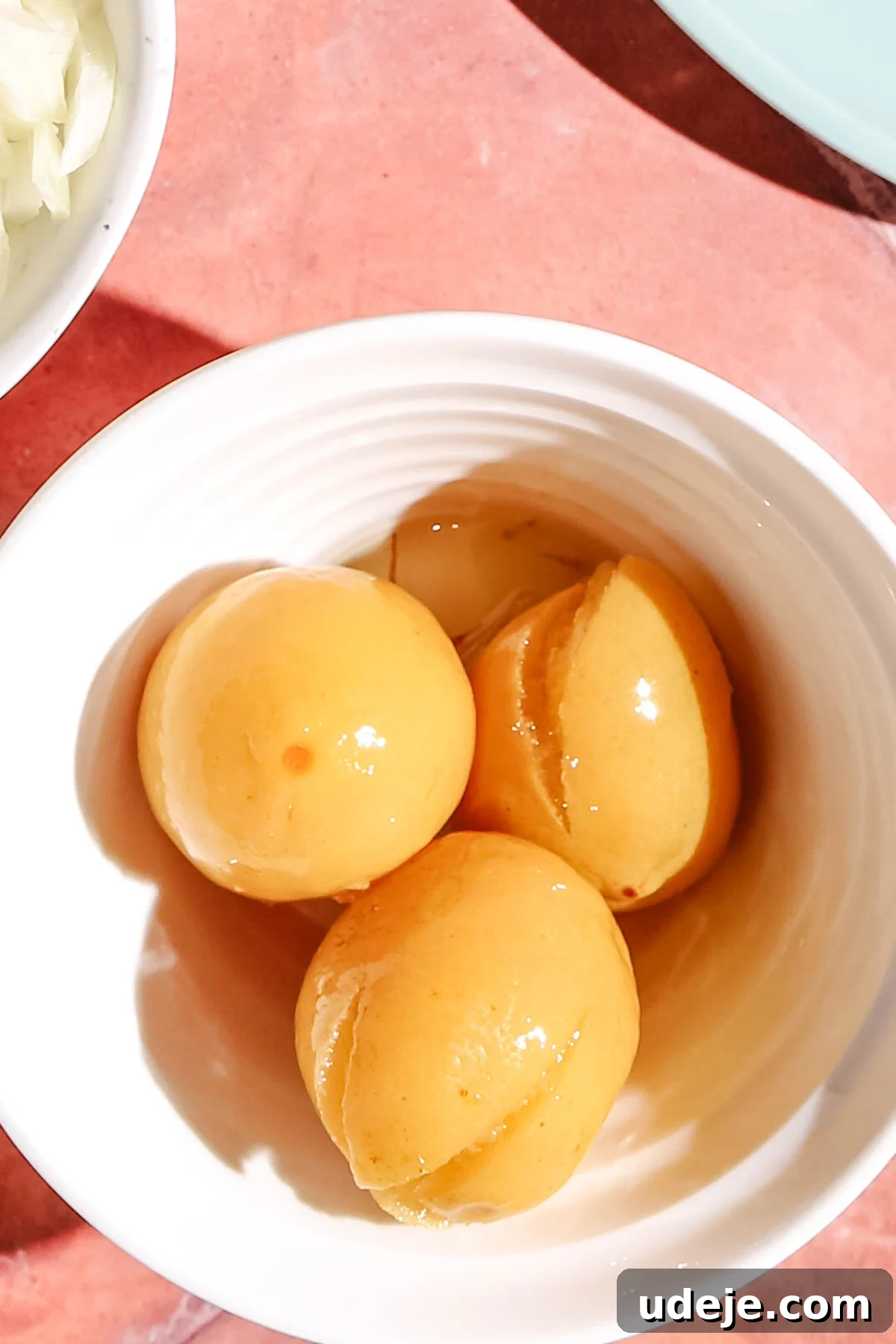
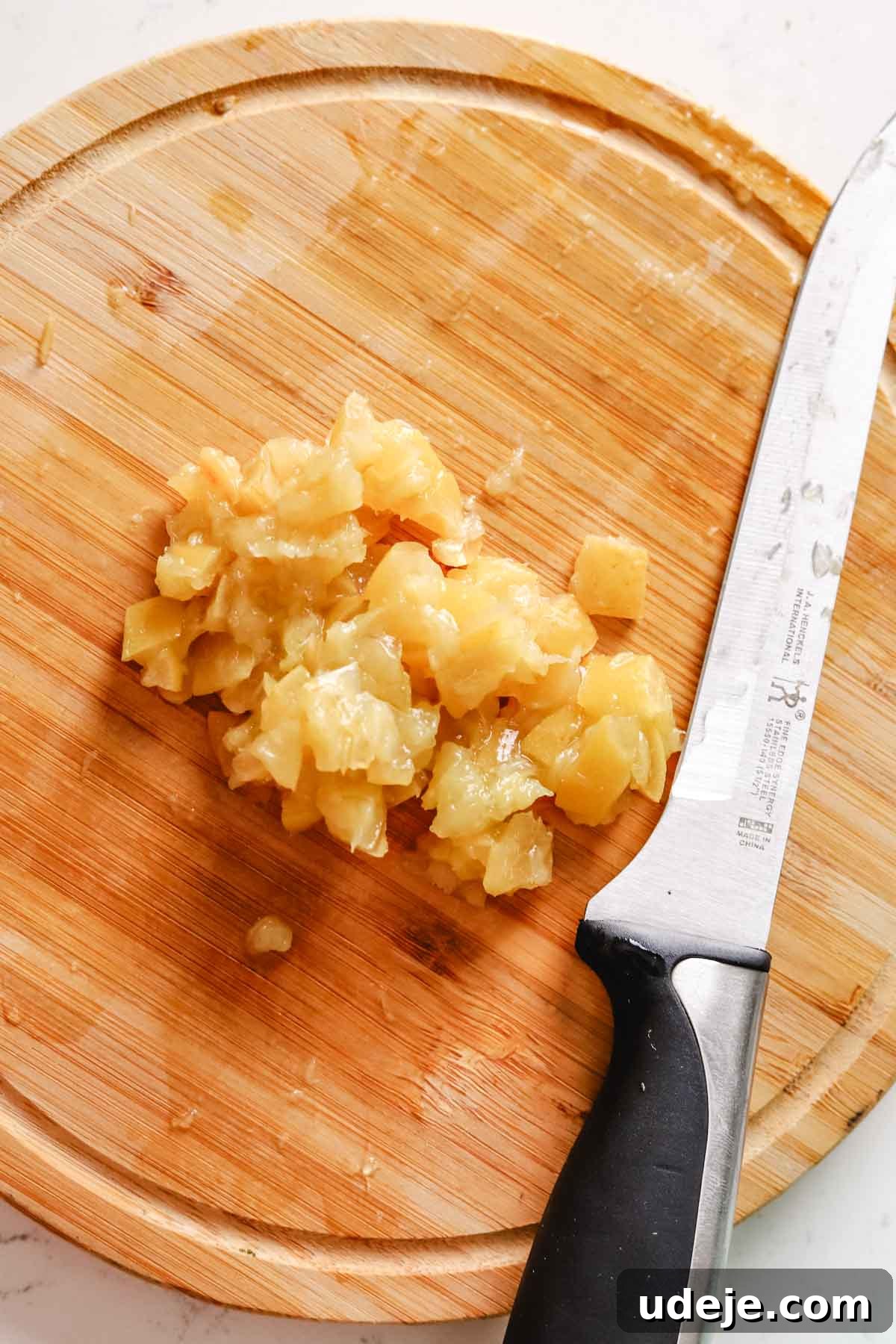
Beyond the warm spices, a cornerstone of this recipe is the use of preserved lemons, an iconic ingredient in North African cooking. These are not your everyday lemons; they are lemons that have undergone a fascinating pickling process using copious amounts of salt and their own natural juices. This preservation takes weeks, transforming fresh lemons into incredibly soft, intensely flavorful ingredients where both the rind and the pulp become entirely edible.
Preserved lemons boast a unique flavor profile: simultaneously lemony and salty, with a subtle bitter undertone and a distinct fermented tang. When incorporated into the marinade, they contribute immense depth and brightness to the chicken, helping to tenderize the meat while infusing it with their vibrant, complex essence. Allowing the chicken to marinate for several hours with preserved lemons truly takes the dish to another level. If this specialty ingredient is hard to find, don’t worry – a clever substitution using fresh lemon zest and juice can mimic its bright, tangy notes (details provided in the substitutions section below).
The Sweet and Savory Balance: Prunes and Green Olives
To truly elevate this Moroccan chicken, we introduce two more classically Moroccan ingredients: sweet prunes and briny green olives. This combination might sound unexpected, but it creates an extraordinary depth of flavor and texture in the final stew. The prunes, as they cook, soften beautifully and caramelize, releasing their natural sugars and contributing a subtle sweetness that perfectly complements the savory chicken and spices. Biting into a tender, sweet prune alongside a piece of chicken is a delightful experience.
The green olives, on the other hand, add a wonderful briny, salty counterpoint. Surprisingly, when cooked slightly in the sauce, their flavor mellows and integrates, adding complexity without being overpowering. This is brilliantly demonstrated in traditional dishes like Tajine Zitoune (chicken with green olives), highlighting how these seemingly disparate ingredients come together in perfect harmony.
Choosing Your Ingredients Wisely & Smart Substitutions
While this Moroccan chicken recipe features some specialty ingredients that are highly recommended for an authentic taste (and often found at local Middle Eastern markets), we understand they might not always be accessible. Rest assured, we’ve provided excellent substitutions for everything you might not find, ensuring you can still achieve a delicious and satisfying result.
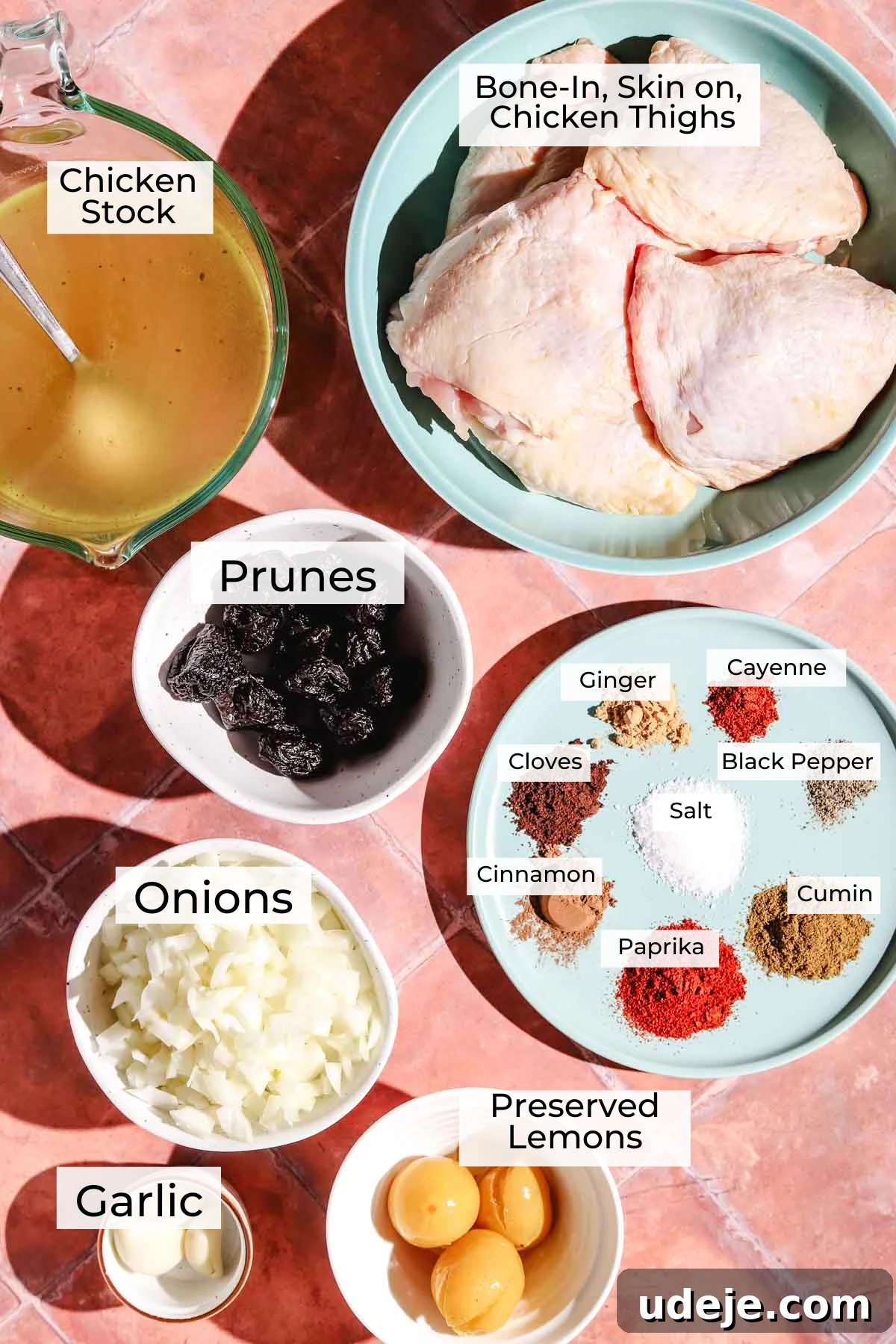
The Perfect Cut: Bone-In, Skin-On Chicken Thighs
For this recipe, the best cut of chicken to use is undoubtedly bone-in, skin-on chicken thighs. There are several reasons for this choice:
- Flavor: The bone releases significant umami flavor into the sauce as it cooks, enriching the overall taste of the dish.
- Moisture: Chicken thighs are naturally fattier and more forgiving than chicken breast, ensuring the meat remains incredibly juicy and tender even after extended cooking times.
- Crispy Skin: The skin, when properly seared and then baked, becomes wonderfully crispy, adding a delightful textural contrast to the tender meat and rich sauce.
While you could substitute chicken drumsticks for a similar effect, we highly recommend against using chicken breast. Chicken breast tends to dry out quickly, especially during the baking process required for the sauce to develop its full flavor, resulting in a less satisfying outcome.
Everyday Pantry Staples
In addition to the star ingredients, you’ll need a few common kitchen staples:
- Olive Oil: Essential for searing the chicken and building the base of the sauce.
- Yellow Onions: Provide a sweet and savory aromatic foundation.
- Garlic: Adds pungent depth and classic flavor.
- Chicken Broth: Forms the luscious sauce, contributing savory liquid and flavor.
The Versatile Spice Blend for the Sauce
The core spice blend used in the marinade is echoed in the sauce, reinforcing those distinctive Moroccan flavors. You’ll need: cumin, paprika, cinnamon, ground ginger, ground cloves, cayenne pepper (to taste), salt, and black pepper. This specific combination offers the ideal balance of warmth, aromatic complexity, and a gentle zing. While it’s best to use all of them for the most authentic taste, feel free to omit one or two if you don’t have them on hand.
Essential Substitutions for Specialty Moroccan Ingredients:
Don’t let missing ingredients deter you from making this incredible dish!
- For Preserved Lemons: If you can’t find preserved lemons, a fantastic alternative is to use the juice and zest of 1 fresh lemon. This will provide a similar bright, tangy, and aromatic quality to your marinade and sauce. Use them in the same way the recipe instructs for preserved lemons.
- For Dried Prunes: To achieve a similar sweet and tender element, you can easily substitute dried apricots (pitted and chopped), finely chopped dates, or even raisins. Use the same quantity as you would prunes.
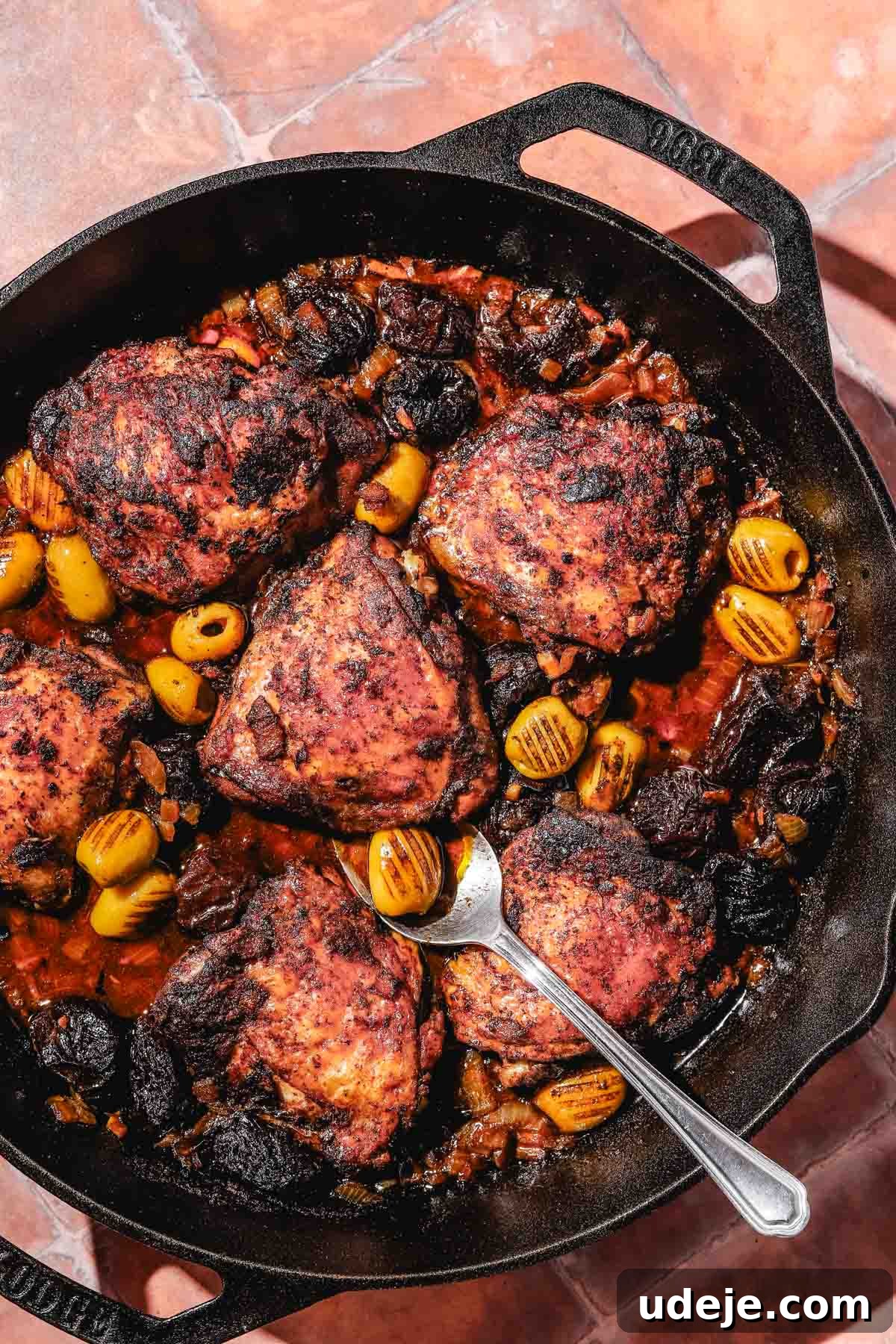
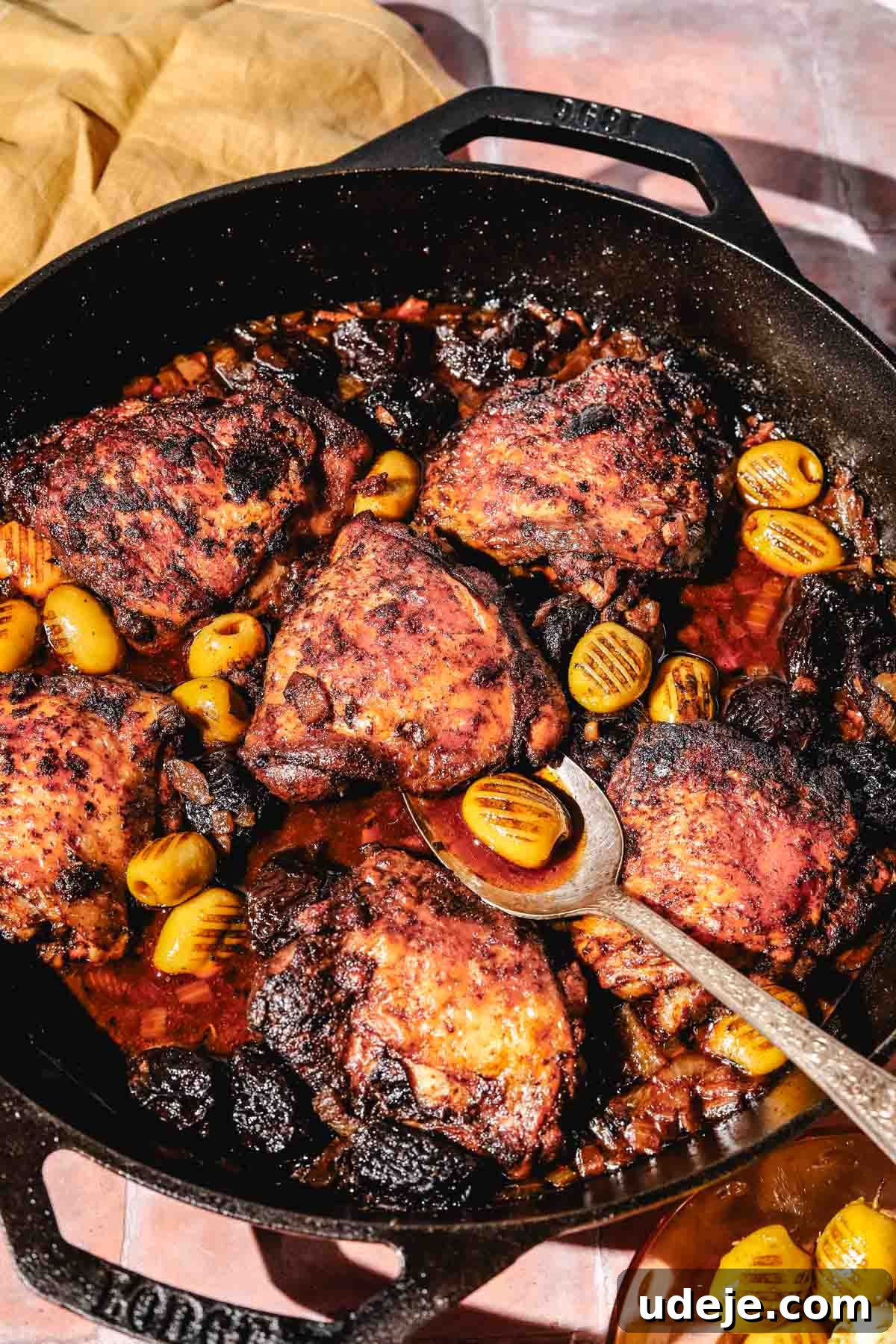
- For Pitted Green Olives: Any other variety of green olives will work perfectly, or you can opt for briny Kalamata olives for a slightly different, yet equally delicious, flavor. The recipe image may show grilled olives, but this is entirely optional and not necessary for the dish’s success.
How to Make This Flavorful Moroccan Chicken: A Step-by-Step Guide
Creating this Moroccan chicken dish is a straightforward and rewarding process. Follow these detailed steps to achieve a tender, flavorful chicken with a rich, aromatic sauce.
Step 1: Marinate the Chicken for Maximum Flavor
The first crucial step is to prepare your chicken marinade. Begin by draining and finely chopping your preserved lemons (or prepare the zest and juice of a fresh lemon if substituting). In a large mixing bowl, combine the chopped preserved lemons with the marinade spices: paprika, cumin, cinnamon, ground ginger, ground cloves, salt, black pepper, and cayenne. Add your chicken thighs to this mixture and thoroughly lather them, ensuring every piece is generously coated. Try to work some of the marinade under the skin for even deeper flavor penetration. Ideally, allow the chicken to marinate for at least an hour in the refrigerator. For the most profound flavors, prepare this step the night before and let it marinate covered in the fridge overnight. If you’re short on time, a minimum of 30 minutes will still yield delicious results, but remember: the longer, the better!
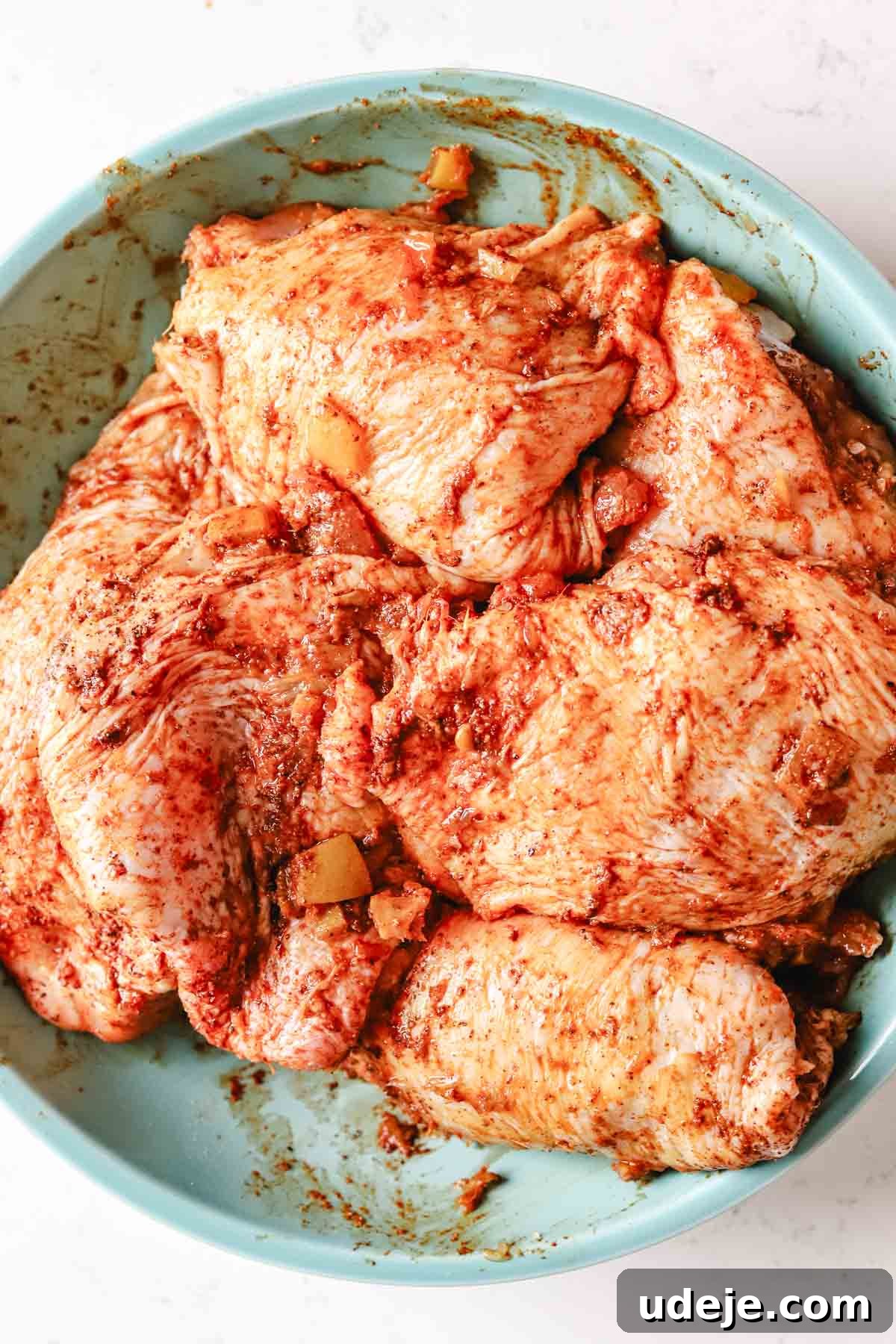
Step 2: Sear for a Crispy Skin and Developed Flavor
Preheat your oven to 400°F (200°C). In a large, oven-safe skillet (a cast iron pan is highly recommended for its excellent heat retention and searing capabilities), heat the olive oil over medium-high heat. Once hot, carefully place the marinated chicken thighs, skin-side down first, into the skillet. Allow each side to sear undisturbed for at least 3 minutes, or until a beautiful golden-brown crust develops. This searing step is vital for locking in juices, developing rich flavor, and achieving that desirable crispy skin. The chicken will not be fully cooked at this stage. Once seared, remove the chicken pieces and set them aside on a clean plate.
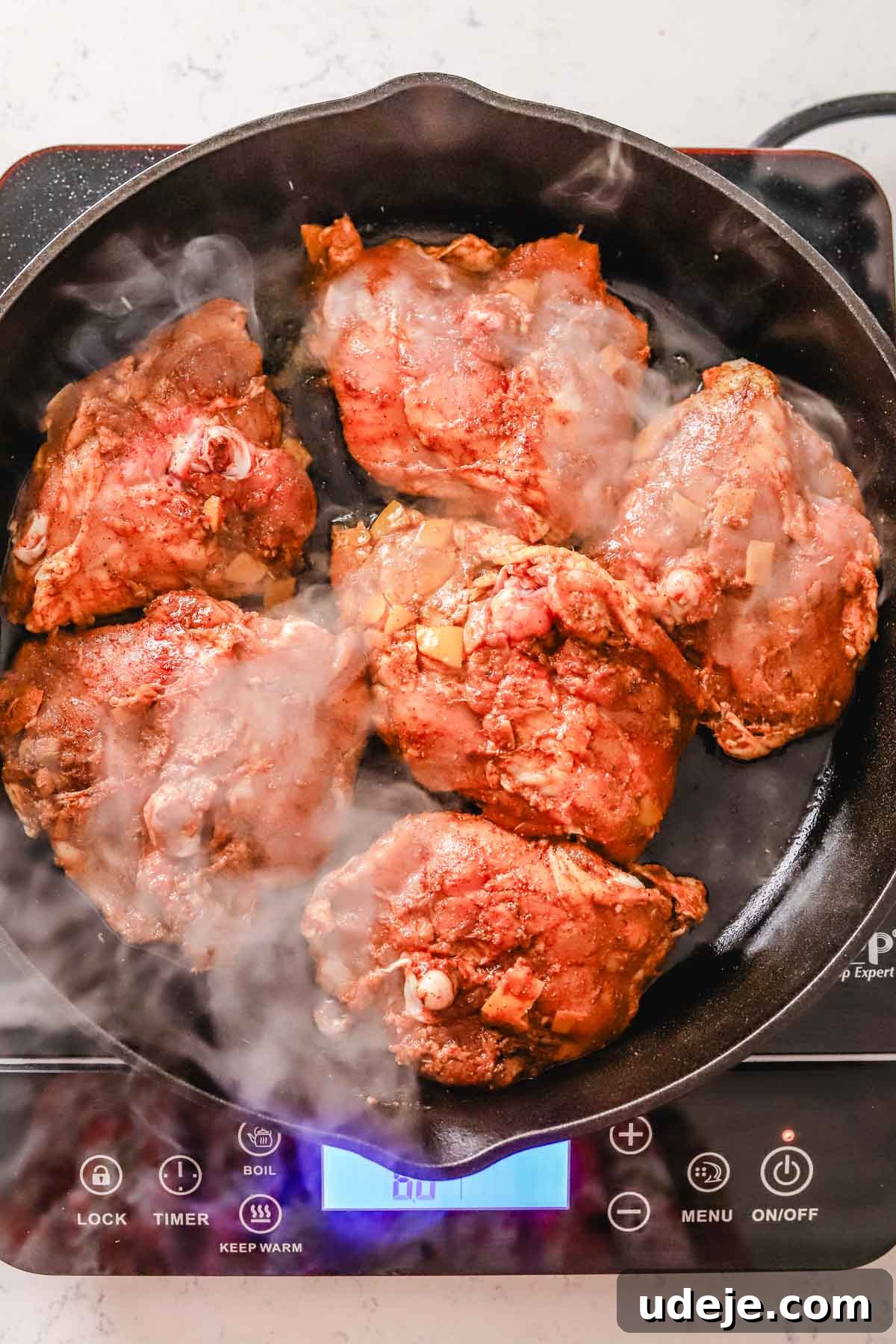
Chef’s Tip: Prevent Steaming, Ensure Searing! It’s crucial to sear the chicken in batches if your pan isn’t large enough to accommodate all pieces without overcrowding. If you overcrowd the pan, the temperature will drop, and the chicken will steam rather than sear, preventing the formation of that delicious charred crust and impacting both the final flavor and texture of the meat.
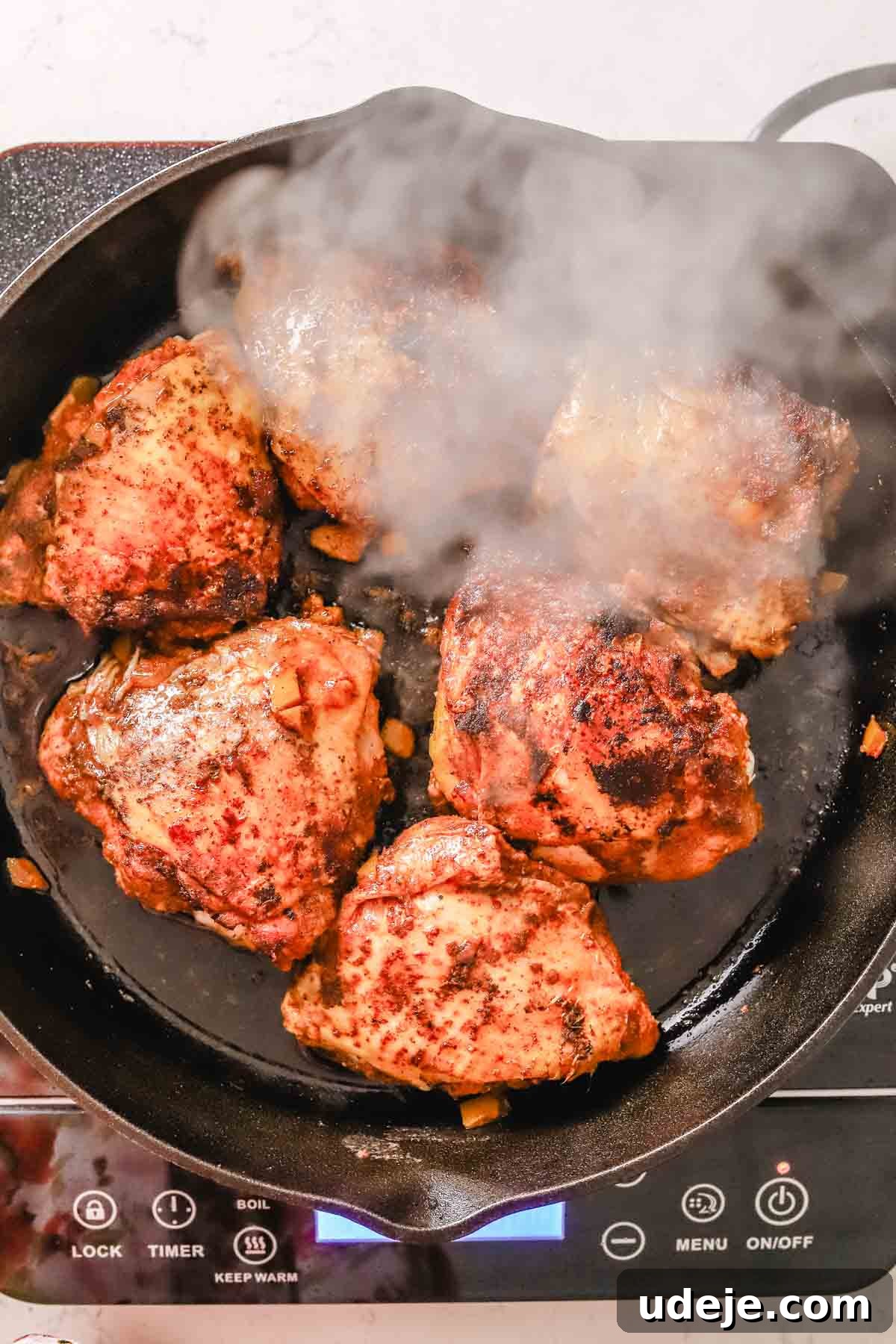
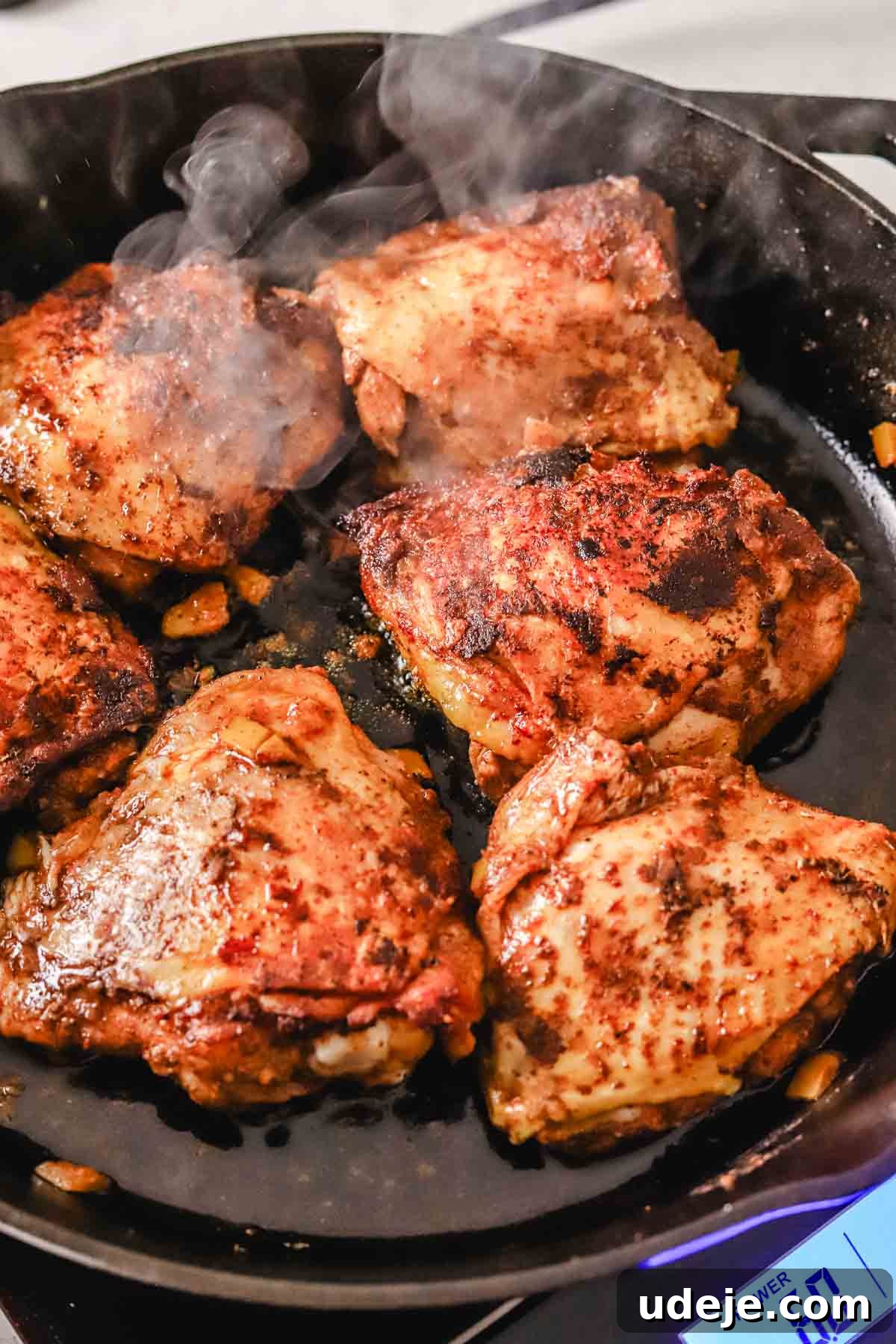
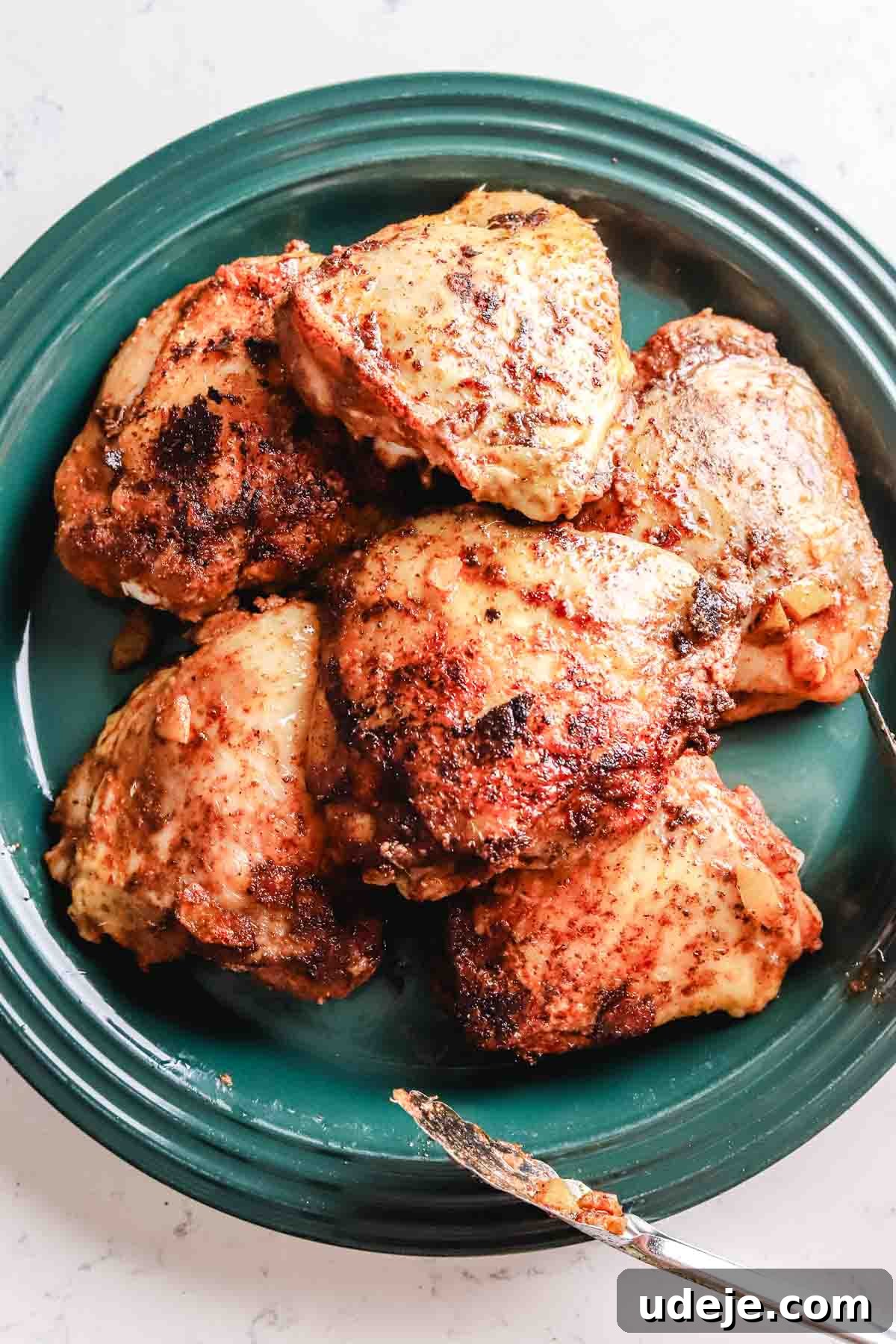
Step 3: Build the Aromatic Sauce Base
Using the same skillet (which now holds all those wonderful browned bits from the chicken), reduce the heat to medium. Add the finely chopped yellow onions and sauté them for 4 to 5 minutes, or until they become soft and translucent. Next, add the finely chopped garlic along with the additional paprika, cumin, cinnamon, and salt. Cook for another 1 to 2 minutes, stirring constantly until the spices become fragrant. Now, stir in the dried prunes, allowing them to heat up and begin to caramelize slightly, for about 1 to 2 minutes, ensuring you stir often to prevent sticking. This process develops a deeply flavorful and aromatic base for your sauce.
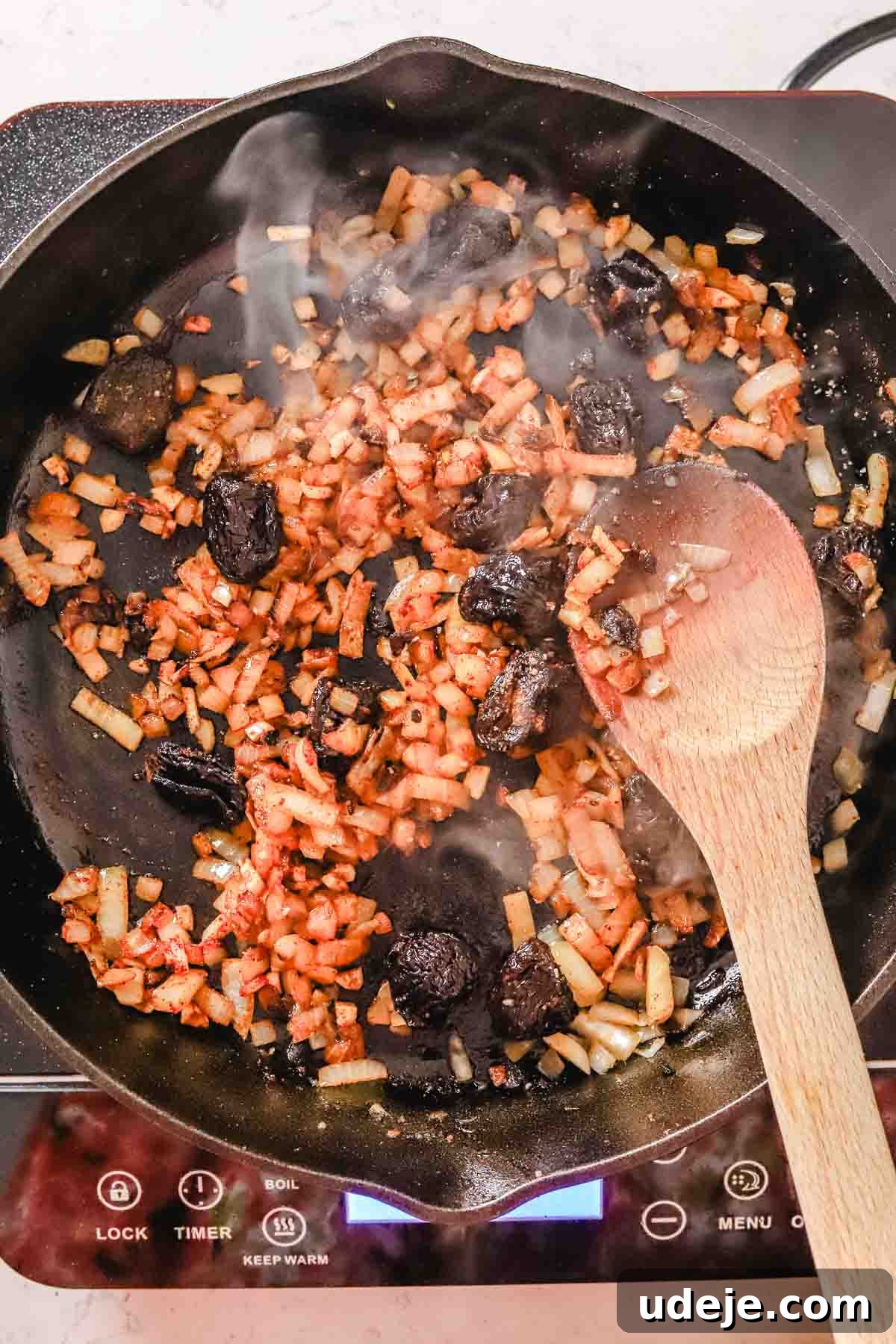
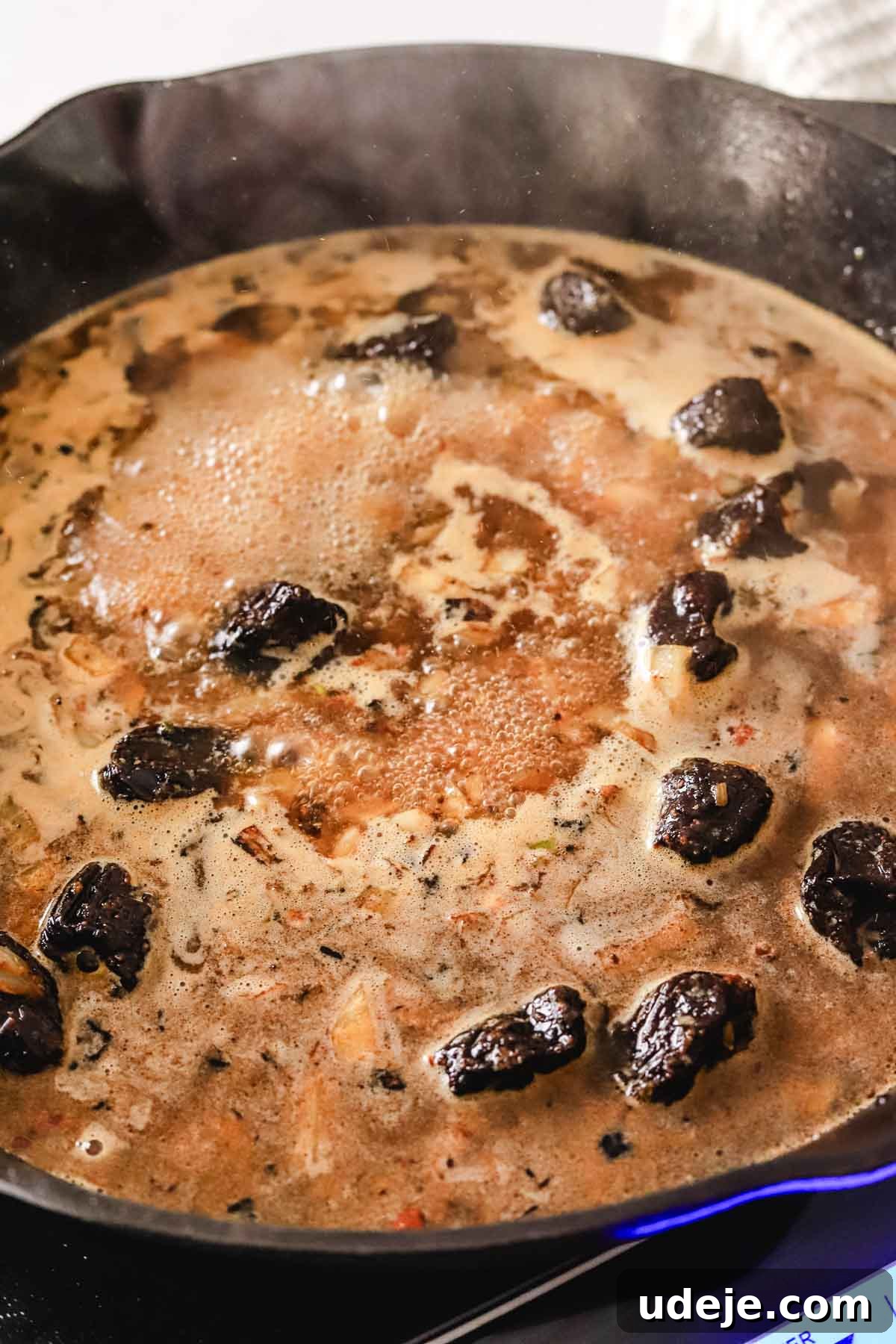
Step 4: Simmer and Bake to Tender Perfection
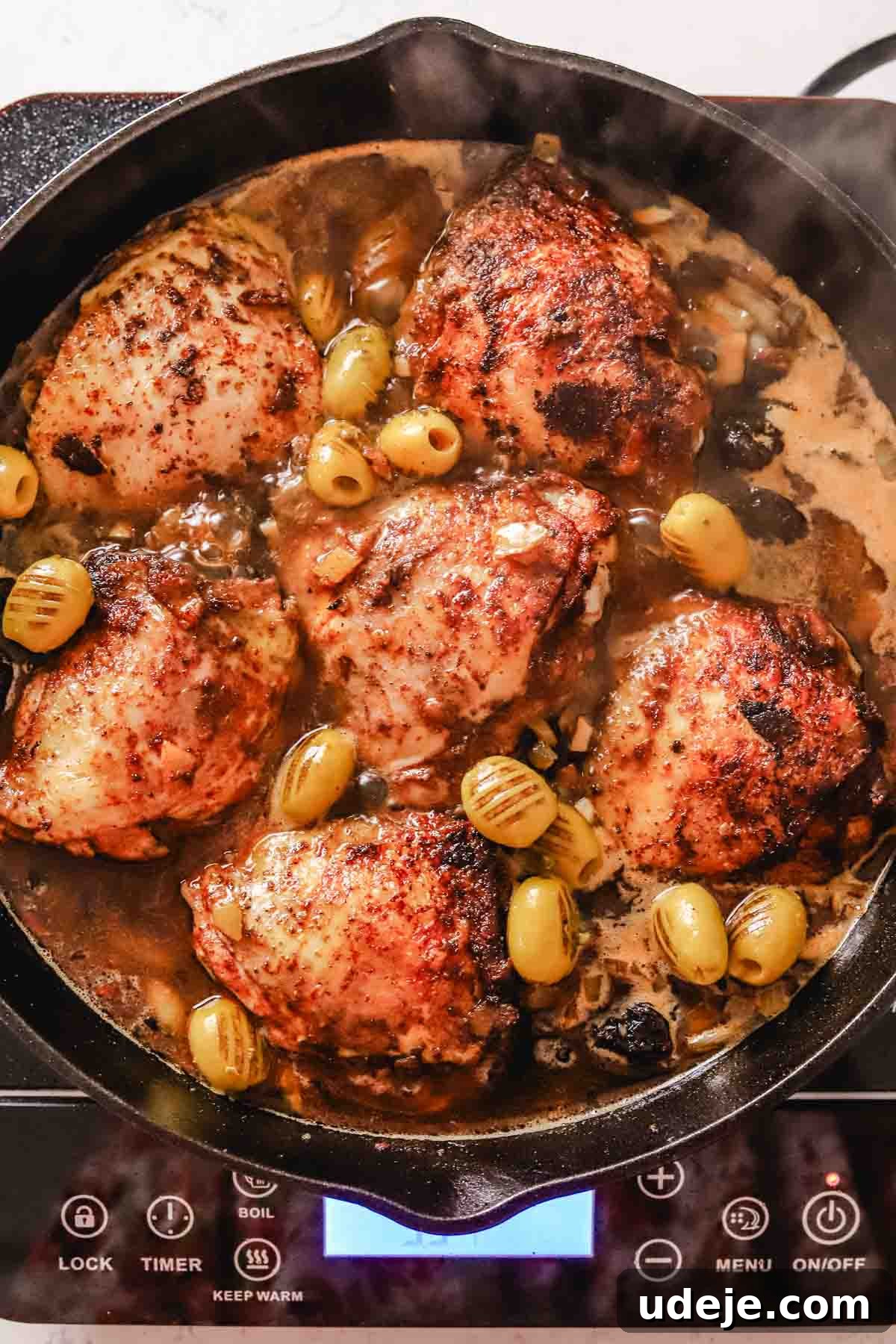
Pour the chicken broth into the skillet with the onion and prune mixture. Bring the liquid to a rapid bubble, allowing it to deglaze the pan and incorporate all the delicious browned bits. Carefully nestle the seared chicken pieces back into the pan, ensuring they are partially submerged in the bubbling sauce. Finally, sprinkle the pitted green olives all around the chicken. Transfer the entire skillet to your preheated oven (400°F / 200°C) and bake for 35 to 40 minutes, or until the chicken is thoroughly cooked through (internal temperature reaches 165°F / 74°C) and the sauce has thickened slightly.
For an extra golden-brown and crispy finish on the chicken tops, you can broil the dish for a few minutes at the very end. Keep a close eye on it to prevent burning. If you prefer a saucier dish, feel free to add an additional 1/4 cup to 1/2 cup of water or chicken broth to the skillet during the last 10 minutes of baking, allowing it to bubble and integrate into the sauce.
Serving Your Delicious Moroccan Chicken
This Moroccan chicken is a complete meal in itself, but its rich flavors and magnificent sauce lend themselves perfectly to a variety of delightful accompaniments:
- Crusty Bread: An absolute must! Moroccan cuisine often features bread as a utensil, and the savory, sweet, and tangy sauce from this dish is simply divine when soaked up with fresh, crusty bread.
- Fresh Salads: A light and refreshing side, such as a simple everyday Arabic salad (salata), offers a wonderful contrast to the richness of the chicken. The crispness and acidity cleanse the palate beautifully.
- Rice or Couscous: For a heartier meal, serve the chicken alongside fluffy basmati vermicelli rice or traditional couscous. The grains are excellent for absorbing the flavorful sauce, along with the tender prunes and olives, ensuring no drop of flavor goes to waste.
- Fresh Herbs: A sprinkle of fresh cilantro or parsley before serving adds a vibrant burst of color and a final fresh note that brightens the entire dish.
No matter how you choose to serve it, this Moroccan chicken is sure to be a comforting and memorable meal, with its succulent chicken and deeply flavored sauce providing a culinary experience you’ll want to revisit often.
Alternative Cooking Methods & Essential Tips
While the recipe above outlines the optimal method for achieving crispy-skinned, juicy Moroccan chicken, there are alternative approaches if you lack specific equipment or prefer a different texture. Knowing these options can make this delicious meal accessible to everyone.
Skipping the Searing Step
The initial step of searing the chicken in an oven-safe skillet is highly recommended as it adds a significant depth of flavor and contributes to the crispy skin. However, if you don’t have a skillet that can go from stovetop to oven, or if you simply want to simplify the process, you can choose to skip the searing step. If you omit searing, simply add the raw marinated chicken directly to the pan with the sauce base before transferring it to the oven. Be aware that the chicken skin won’t be as crispy, and you might need to broil it for a bit longer at the end to get some color on top. While still delicious, the seared version does offer a more robust flavor profile.
Stovetop Cooking Variation
This Moroccan chicken dish can also be cooked entirely on the stovetop, rather than transferring it to the oven. If opting for this method, after building the sauce base and returning the chicken to the pan, ensure you cover the skillet with a tight-fitting lid. This will allow the chicken to cook through gently in the simmering sauce without drying out. You’ll need to monitor the liquid level and stir occasionally. The main difference with stovetop cooking is that the chicken skin will not achieve the same crispy texture as it would in the oven; instead, it will remain tender and moist from simmering in the sauce.
We hope you thoroughly enjoy preparing and savoring this incredible Moroccan chicken recipe. Your feedback is invaluable, so please consider leaving a star rating and a review in the comments section below after you’ve tried it. We’d love to hear about your experience! You can also connect with us on Instagram to share your culinary creations.
Oven Baked Moroccan Chicken (Crispy & Juicy!)
This Moroccan chicken recipe promises succulent, juicy chicken that’s crispy on the outside, flavored with bold Moroccan spices and cooked with olives, prunes, and preserved lemons. The chicken develops a delicious sauce as it bakes, perfect for mopping up with bread.
Yield: 6 servings
Prep time: 20 minutes
Cook time: 40 minutes
Total time: 1 hour
Author: Amina Al-Saigh
Ingredients
For the Marinade:
- 1 teaspoon paprika
- 1 teaspoon cumin
- 1/2 teaspoon cinnamon
- 1/2 teaspoon ground ginger
- 1/2 teaspoon ground cloves
- 1 teaspoon salt
- 1/2 teaspoon black pepper
- 1/4 teaspoon cayenne pepper
- 3 preserved lemons, finely chopped (or zest and juice of 1 fresh lemon)
For the Moroccan Chicken:
- 6 bone-in, skin-on chicken thighs
- 2 tablespoons olive oil
- 1 large yellow onion, finely chopped
- 4 cloves garlic, finely chopped
- 1/2 teaspoon paprika (additional, for the sauce base)
- 1/2 teaspoon cumin (additional, for the sauce base)
- 1/2 teaspoon cinnamon (additional, for the sauce base)
- 1/2 teaspoon salt (additional, for the sauce base)
- 1/2 cup dried prunes (pitted, or substitute dried apricots, chopped dates, or raisins)
- 2 cups chicken broth
- 1/4 cup pitted green olives
Instructions
- Prepare the Marinade: Drain and finely chop the preserved lemons. In a large bowl, combine the chicken thighs with the chopped preserved lemon, 1 tsp paprika, 1 tsp cumin, 1/2 tsp cinnamon, 1/2 tsp ginger, 1/2 tsp cloves, 1 tsp salt, 1/2 tsp pepper, and 1/4 tsp cayenne. Mix thoroughly, ensuring all chicken pieces are well coated. Marinate in the refrigerator for at least 30 minutes, or ideally overnight for best results.
- Preheat Oven & Sear Chicken: Preheat your oven to 400°F (200°C). Heat 2 tablespoons of olive oil in a large, oven-safe skillet (like cast iron) over medium-high heat. Sear the marinated chicken thighs, skin-side down first, for 2-3 minutes per side until golden brown and crispy. Work in batches to avoid overcrowding the pan. Remove the seared chicken to a plate and set aside.
- Build the Sauce Base: Reduce the heat to medium. Add the finely chopped onion to the same skillet and sauté for 3-5 minutes until softened. Stir in the finely chopped garlic, along with the additional 1/2 tsp paprika, 1/2 tsp cumin, 1/2 tsp cinnamon, and 1/2 tsp salt. Cook for another 1-2 minutes until fragrant. Add the dried prunes and continue stirring for 1-2 minutes, allowing them to warm and slightly caramelize.
- Simmer & Bake: Pour in the chicken broth and bring the mixture to a rapid bubble. Carefully nestle the seared chicken pieces back into the pan. Distribute the pitted green olives evenly around the chicken.
- Bake to Perfection: Transfer the skillet to the preheated oven and bake for 35-40 minutes, or until the chicken is thoroughly cooked (internal temperature 165°F / 74°C) and the sauce has thickened slightly. For extra golden-brown chicken tops, broil for 1-2 minutes at the end, watching closely.
- Serve: Serve hot with your favorite sides and enjoy your delicious, aromatic Moroccan chicken!
Notes
- Preserved Lemons Substitution: If unavailable, use the zest and juice of 1 fresh lemon for a similar tangy brightness.
- Prunes Substitution: Dried apricots, chopped dates, or raisins can be used as alternatives for sweetness and texture.
Nutrition Information (Approximate per serving)
- Serving Size: 1g
- Calories: 392kcal
- Carbohydrates: 13g
- Protein: 20g
- Fat: 29g
- Saturated Fat: 7g
- Polyunsaturated Fat: 5g
- Monounsaturated Fat: 15g
- Trans Fat: 0.1g
- Cholesterol: 112mg
- Sodium: 1050mg
- Potassium: 408mg
- Fiber: 2g
- Sugar: 7g
- Vitamin A: 307IU
- Vitamin C: 4mg
- Calcium: 39mg
- Iron: 2mg
For a visual guide, you can watch a video of this recipe here: https://youtu.be/WX0Xe_V9PJY