
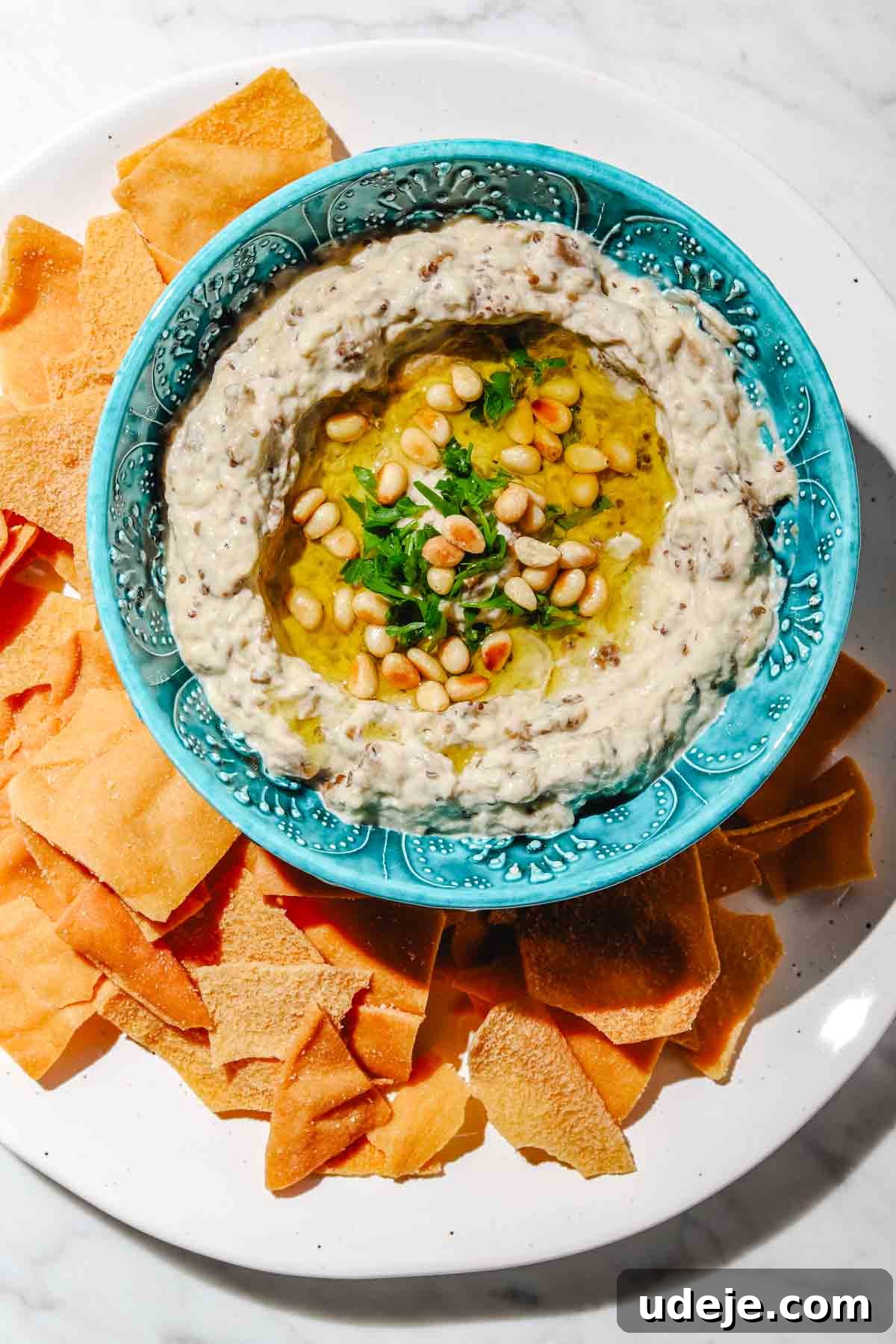
Authentic Creamy and Smoky Mutabal: Your Guide to the Best Middle Eastern Eggplant Dip
Dive into the rich flavors of the Middle East with this irresistible Mutabal recipe. A true culinary gem, this creamy and smoky eggplant dip is a staple in Levantine cuisine, renowned for its luxurious texture and deep, earthy taste. Crafted with minimal ingredients – primarily roasted eggplant, tahini, fresh garlic, and lemon juice, with an optional touch of yogurt – it’s surprisingly simple to prepare. Most of the magic happens hands-off as the eggplant roasts to perfection in your oven. Forget bland, store-bought alternatives; this homemade Mutabal promises an unparalleled freshness and authentic smoky depth that will elevate any meal or snack. Let’s embark on a journey to create a dip that’s not just food, but a celebration of Middle Eastern culinary heritage.
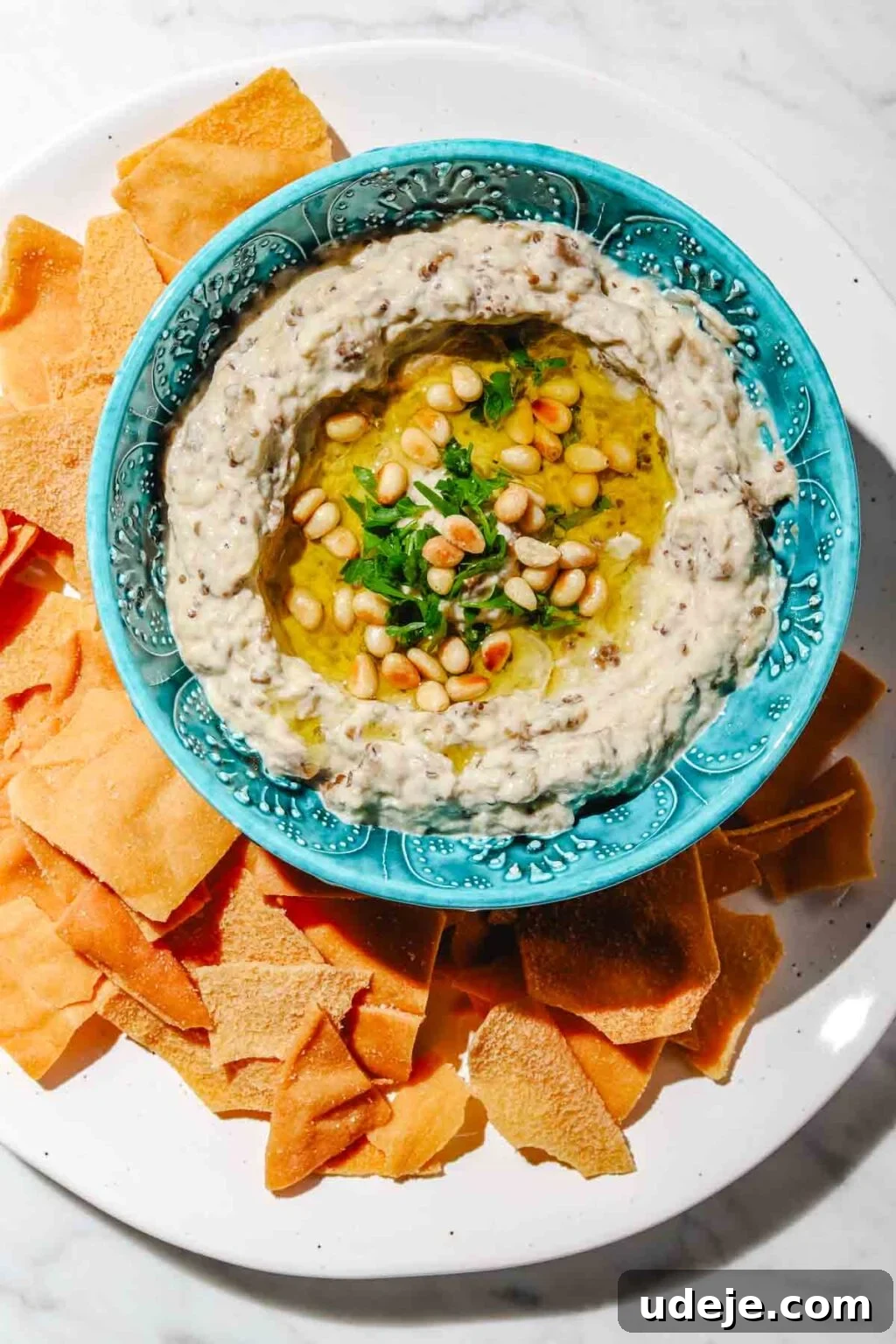
Mutabal vs. Baba Ghanoush: Unraveling the Delicious Confusion
In the Western world, the term “baba ghanoush” is often mistakenly used to refer to many eggplant dips. However, in the heart of the Levant – the birthplace of these incredible dishes – there’s a clear distinction. While both Mutabal and Baba Ghanoush share a foundational ingredient of smoky mashed eggplant, their compositions and flavor profiles are notably different. This regional nuance is crucial for appreciating the authentic character of each dip.
Authentic Baba Ghanoush, as traditionally prepared, leans more towards a vibrant eggplant salad. It typically incorporates fresh, finely chopped vegetables like tomatoes, bell peppers, and parsley, often brightened by the tangy addition of pomegranate molasses. This combination results in a chunkier texture and a fresher, more acidic flavor profile, making it a lively accompaniment to a meal.
In contrast, Mutabal, particularly in countries like Syria, Jordan, Palestine, and Lebanon, is celebrated for its signature creamy consistency and rich, savory depth. Its core ingredients are elegantly simple: roasted or charred eggplant, creamy tahini (sesame paste), pungent fresh garlic, and zesty lemon juice. Some variations also include a dollop of yogurt, which contributes to its velvety texture and a subtle tartness. This harmonious blend creates a smooth, melt-in-your-mouth dip that is less about crunch and more about luxurious creaminess and profound smoky notes. Mutabal is an essential component of any classic Middle Eastern mezze spread, perfectly paired with staples like hummus, muhammara, and labneh, always served with an abundance of warm, fresh pita bread. If you happen to have any leftover roasted eggplant after making this delightful dip, don’t miss out on trying my equally delicious Moroccan Zaalouk.
Mastering the Smoky Flavor: Charring Eggplant for Authentic Mutabal
The hallmark of an exceptional Mutabal or Baba Ghanoush lies in its smoky base. Traditionally, this distinctive flavor is achieved by charring the eggplant over an open flame. If you’re fortunate enough to have a gas stove, you can effortlessly replicate this method: simply hold the eggplant with tongs directly over the flame, rotating it slowly until the skin is thoroughly blackened and blistered, and the flesh within becomes incredibly soft and yielding. This direct heat infusion imparts an unmistakable smoky aroma and taste that is crucial for an authentic Middle Eastern eggplant dip.
However, many home cooks, like myself, rely on electric or induction stovetops, making direct flame charring impossible. Fear not, as there are several effective alternative methods to infuse your eggplant with that coveted smokiness:
Using a Cast-Iron Skillet for Deep Char:
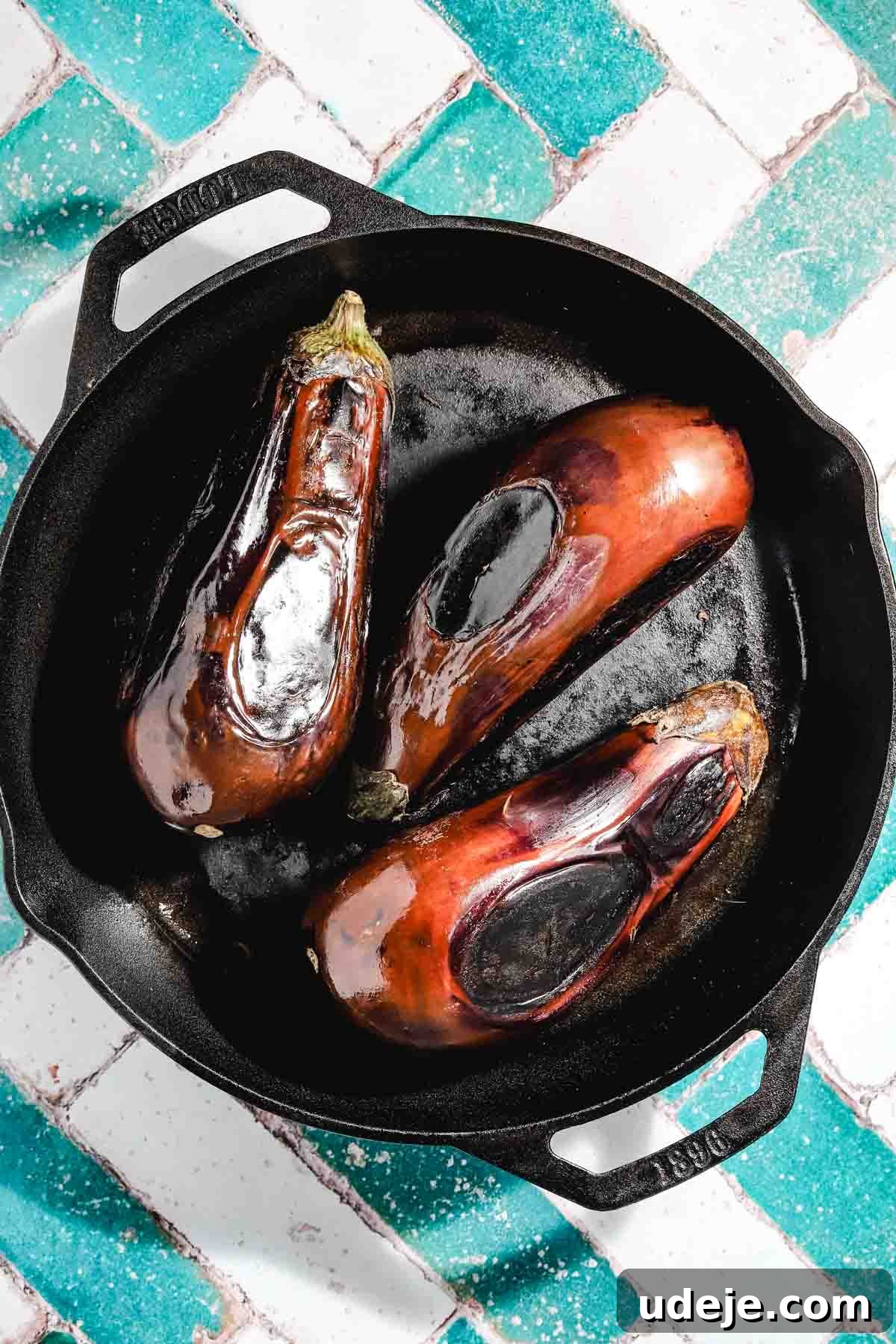
My go-to solution for achieving a robust char without a gas flame is a well-seasoned cast-iron skillet. Heat the skillet over high heat until it’s scorching hot – you should see wisps of smoke. Carefully place the whole eggplants into the hot skillet and char them on all sides, rotating occasionally. Aim for a dark, almost black char on the skin. This initial charring step usually takes about 10-15 minutes, creating a beautiful crust and initiating the smoky transformation. Once charred, transfer the eggplants to the oven to finish roasting until they are completely soft. While the skillet provides the char, the oven ensures even cooking and tenderness throughout the eggplant flesh. This dual-method approach delivers both intense smokiness and a creamy interior.
The Blow Torch Technique for Controlled Smokiness:
For a more targeted char, a kitchen blow torch is an excellent tool. Place the eggplant on a heat-proof surface, such as a foil-lined baking sheet, to protect your countertop. Systematically apply the flame of the blow torch over the entire surface of the eggplant, rotating it as you go, until the skin is visibly charred and blistered. A powerful flame will speed up this process. After achieving the desired char, transfer the eggplant to the oven to complete the roasting process until the flesh is thoroughly softened. This method offers precise control over the level of charring.
Is the smoky flavor absolutely essential for Mutabal? While the smoky essence undoubtedly elevates the Mutabal to its authentic best, it is not strictly mandatory. If you prefer a simpler preparation or are short on time, you can certainly skip the charring step altogether and simply roast the eggplant in the oven until tender. The resulting dip will still be incredibly delicious, offering a rich, earthy flavor profile, though without that signature smoky depth. It will still be a fantastic homemade eggplant dip, just a slightly different rendition.
Crafting Your Creamy Mutabal: A Step-by-Step Guide
Creating this exquisite Middle Eastern eggplant dip is a rewarding experience. Let’s walk through each step to ensure your Mutabal turns out perfectly creamy, smoky, and bursting with flavor.
Choosing the Right Eggplant
The foundation of any great eggplant dip is, naturally, the eggplant itself. For this Mutabal recipe, I highly recommend using Globe eggplant or the common American eggplant. These varieties are widely available, generously sized, and offer a substantial amount of tender flesh, making them ideal for yielding a rich, voluminous dip. Italian eggplants are another excellent choice, providing good flesh-to-skin ratio and a pleasant texture when roasted. Conversely, I would advise against using slender varieties like Chinese or Japanese eggplants, as their narrow shape doesn’t yield enough flesh for a hearty dip, and their texture can sometimes be less suitable for mashing into a creamy consistency.
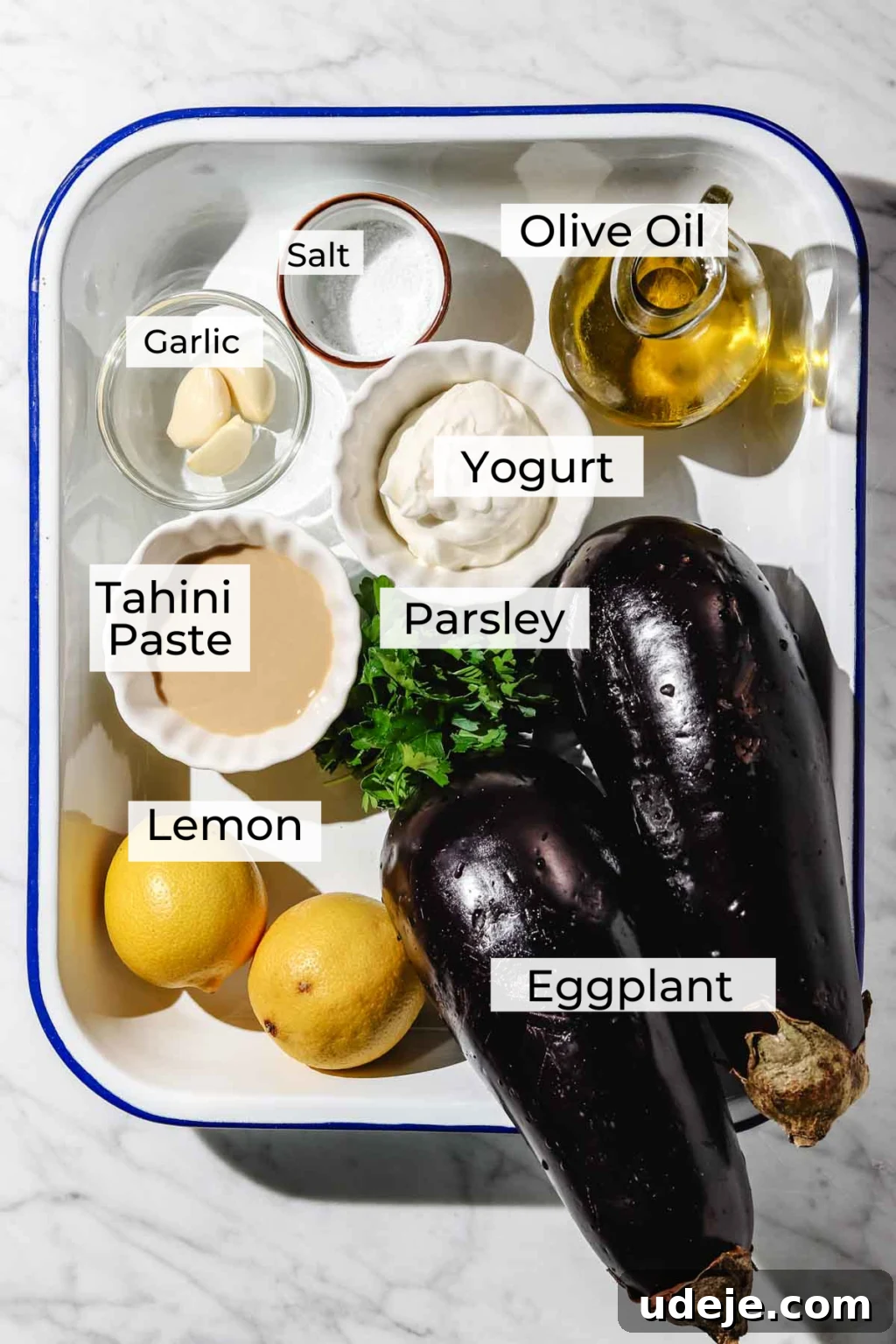
Essential Mutabal Ingredients
Beyond the eggplant, you’ll need a few key ingredients to create the signature flavor and texture of Mutabal:
- Tahini: A rich, creamy sesame paste that is non-negotiable for authentic Mutabal. It provides a distinct nutty flavor and contributes significantly to the dip’s smooth, luscious texture. You can either use a high-quality store-bought tahini or try making your own with my homemade tahini recipe.
- Fresh Lemon Juice: Essential for brightness and balance. Freshly squeezed lemon juice will make a noticeable difference compared to bottled alternatives, cutting through the richness of the tahini and eggplant.
- Garlic: Freshly crushed garlic provides a pungent aromatic kick. Start with one small clove and adjust to your preference, as fresh garlic can be quite potent.
- Salt: Crucial for seasoning and enhancing all the other flavors. Use a good quality fine sea salt.
- Yogurt (Optional): While traditional Mutabal sometimes omits yogurt, I find that a few tablespoons of whole yogurt (or a good quality plant-based alternative for a vegan Mutabal) add a delightful tang and further enhance the dip’s creamy texture. If you prefer to keep your Mutabal strictly vegan or simply don’t have yogurt on hand, it can be omitted without compromising the core flavor profile too much.
Step-by-Step Preparation:
Follow these detailed steps for a perfect batch of creamy, smoky Mutabal:
Step 1: Char the eggplant (Optional, but highly recommended for authentic smokiness).
- Gas Stove Method: If you have a gas stove, ignite a medium flame. Using long tongs, hold each eggplant directly over the flame, rotating it slowly and continuously. Allow the skin to blacken and blister thoroughly on all sides. Continue this process for 10 to 15 minutes per eggplant until it feels very soft to the touch, indicating the flesh inside is cooked.
- Cast Iron Skillet Method: For stovetops without an open flame, heat a heavy cast-iron skillet over high heat until it’s smoking hot. Place the eggplants in the dry skillet and char all sides, rotating them every few minutes. This will take about 10 minutes, creating a dark, smoky crust.
- Oven Only Method: If you choose to skip the charring entirely, make sure to pierce the eggplant skins in several places (about 4-5 slits) with a knife. This allows steam to escape during roasting and prevents the eggplant from bursting.
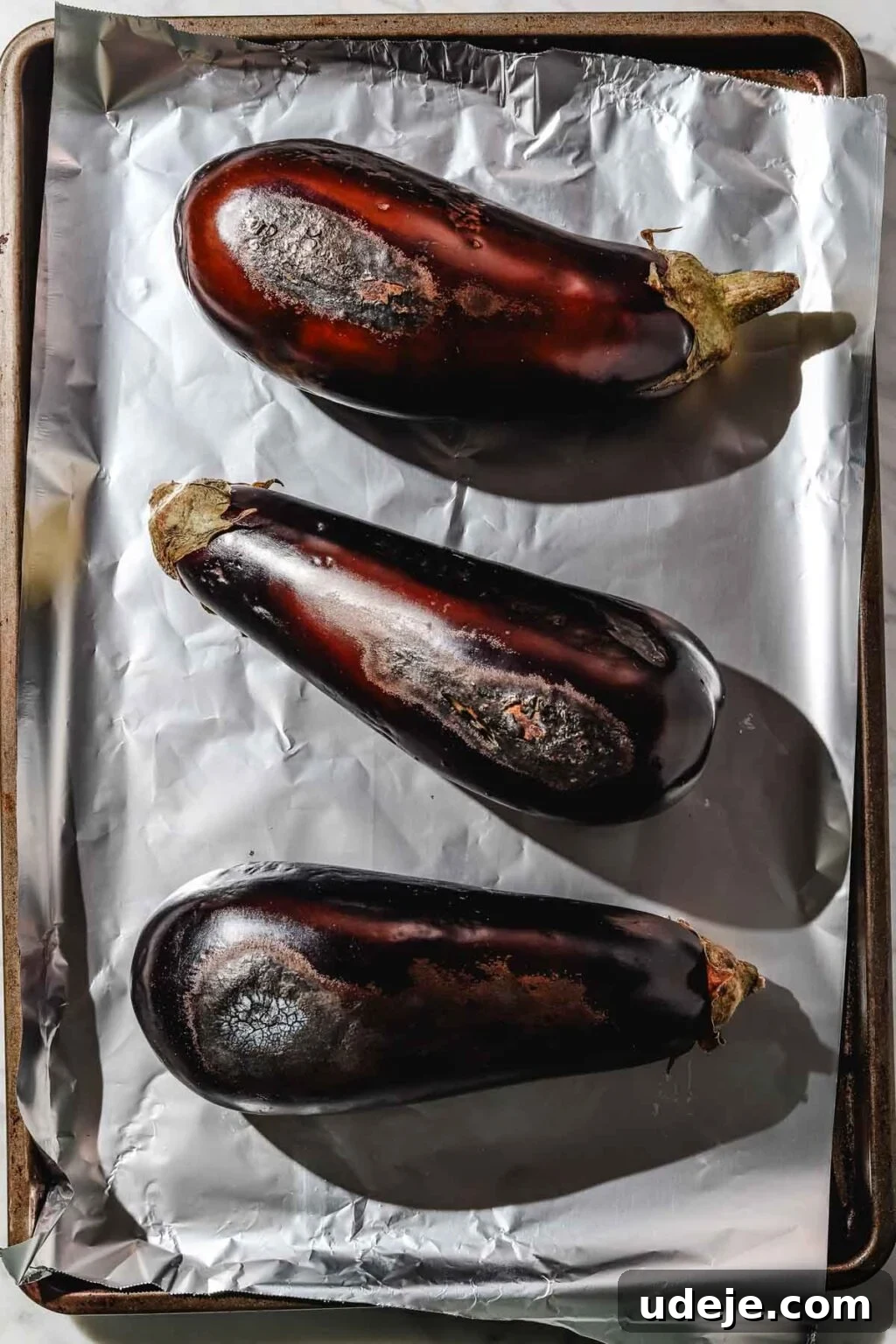
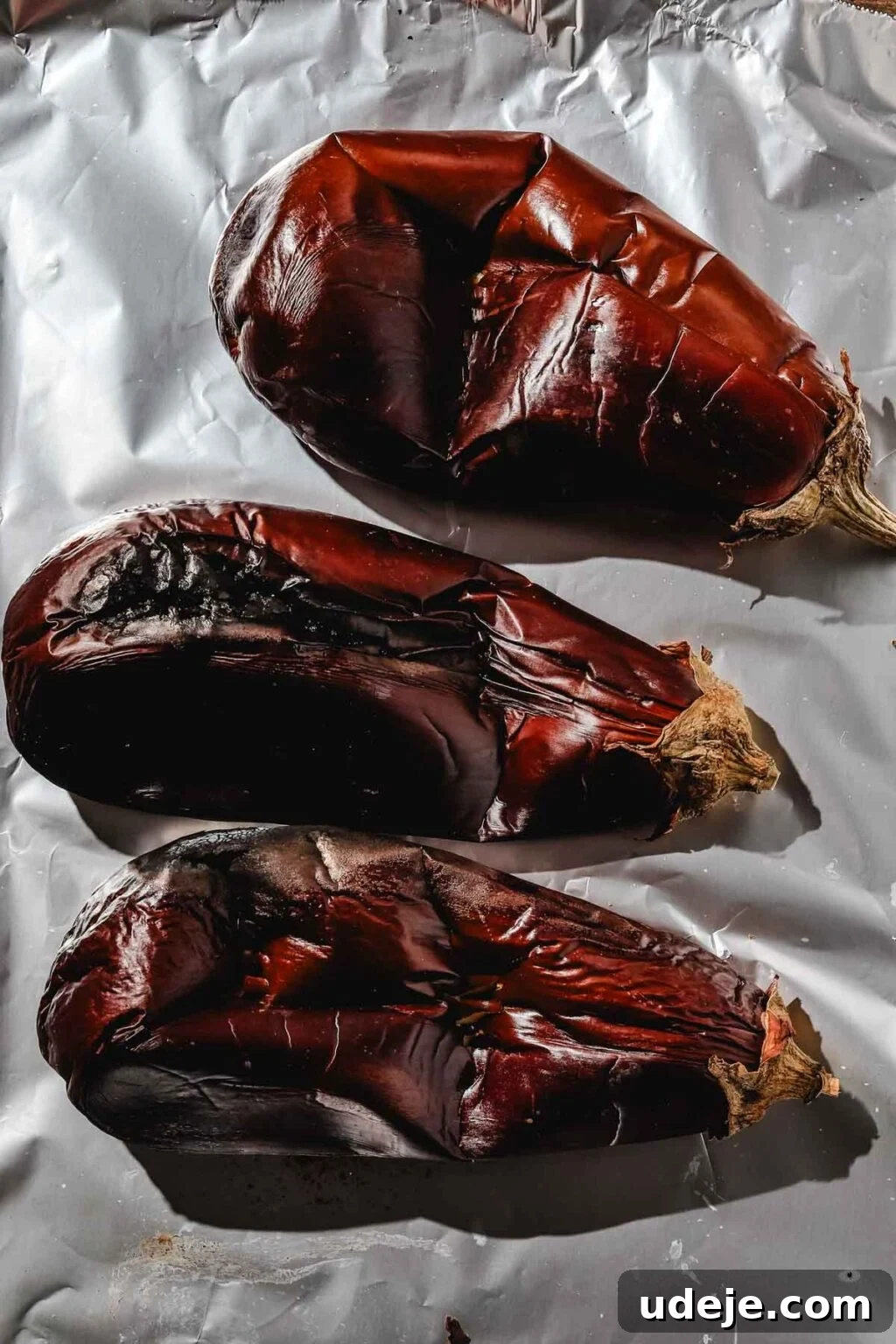
Step 2: Roast the eggplant in the oven until very soft.
- Preheat your oven to 450°F (230°C).
- Place the charred (or pierced, if skipping charring) eggplants on a foil-lined baking sheet. The foil makes cleanup much easier.
- Roast for approximately 45 minutes to 1 hour, or until the eggplants are extremely soft and deflated. You should be able to easily pierce them with a fork with minimal resistance. Larger or denser eggplants may require a bit more time. The goal is a thoroughly tender, almost custardy interior.
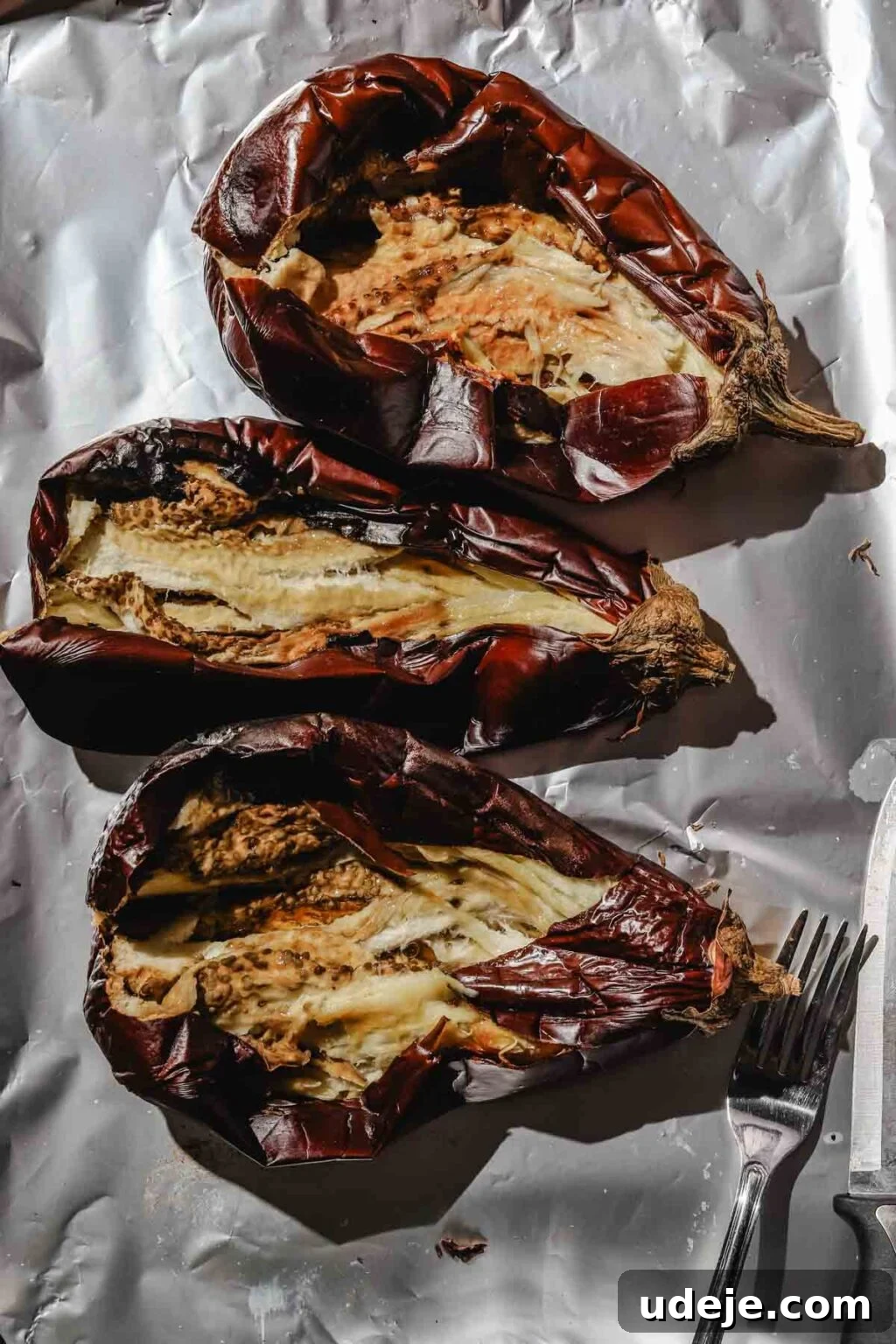
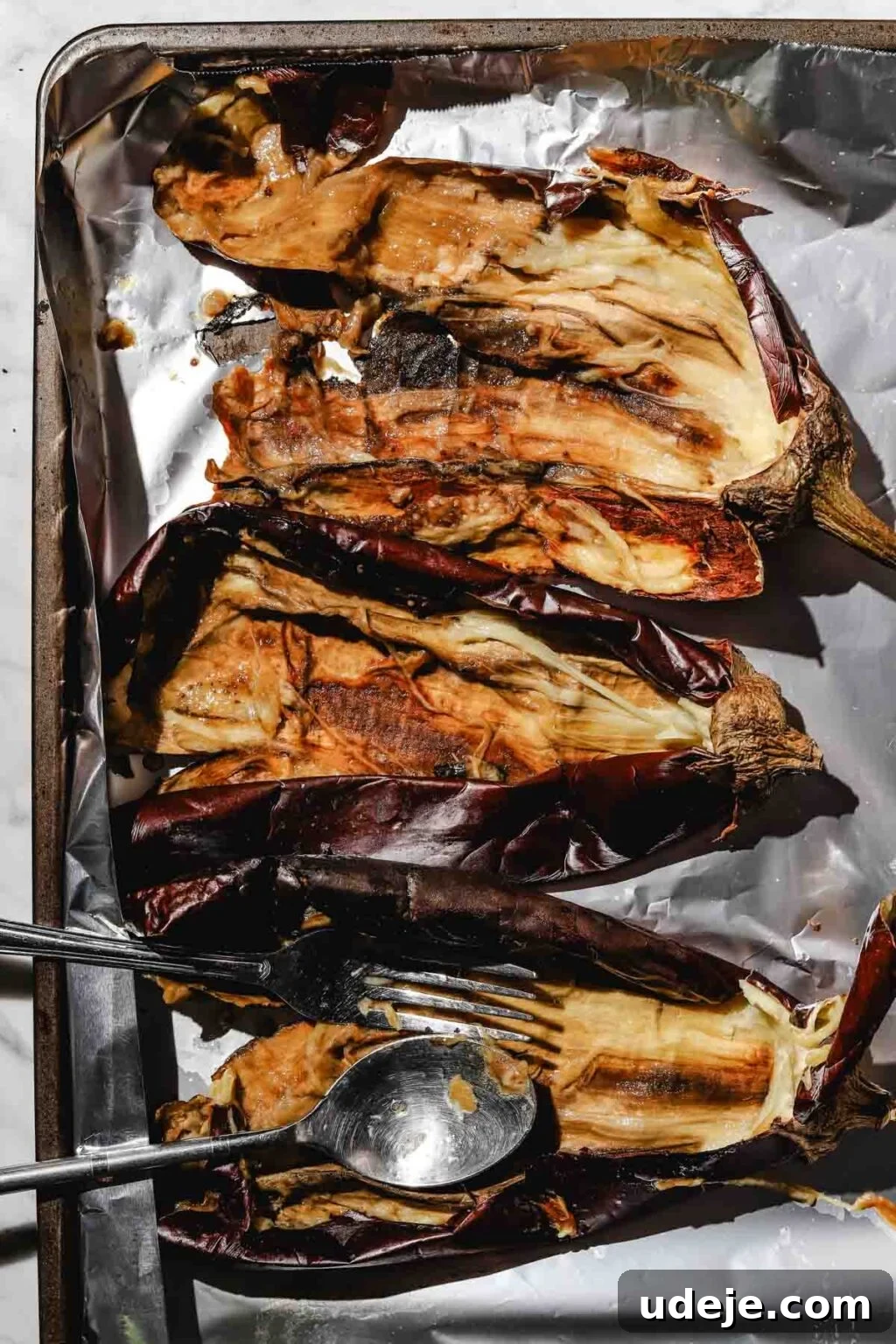
Step 3: Scoop out the eggplant flesh, drain, and mash.
- Once the eggplants are cool enough to handle, carefully cut each one lengthwise down the middle.
- Using a spoon, gently scoop out all the soft, cooked flesh, leaving behind the charred skin. Be sure to scrape the skin well to get every bit of delicious eggplant.
- Place the scooped eggplant flesh into a fine-mesh sieve set over a bowl. Allow it to drain for several minutes to remove any excess liquid. This step is crucial for achieving a thick, creamy Mutabal rather than a watery one. You can gently press down on the eggplant with a spoon to help expel more liquid.
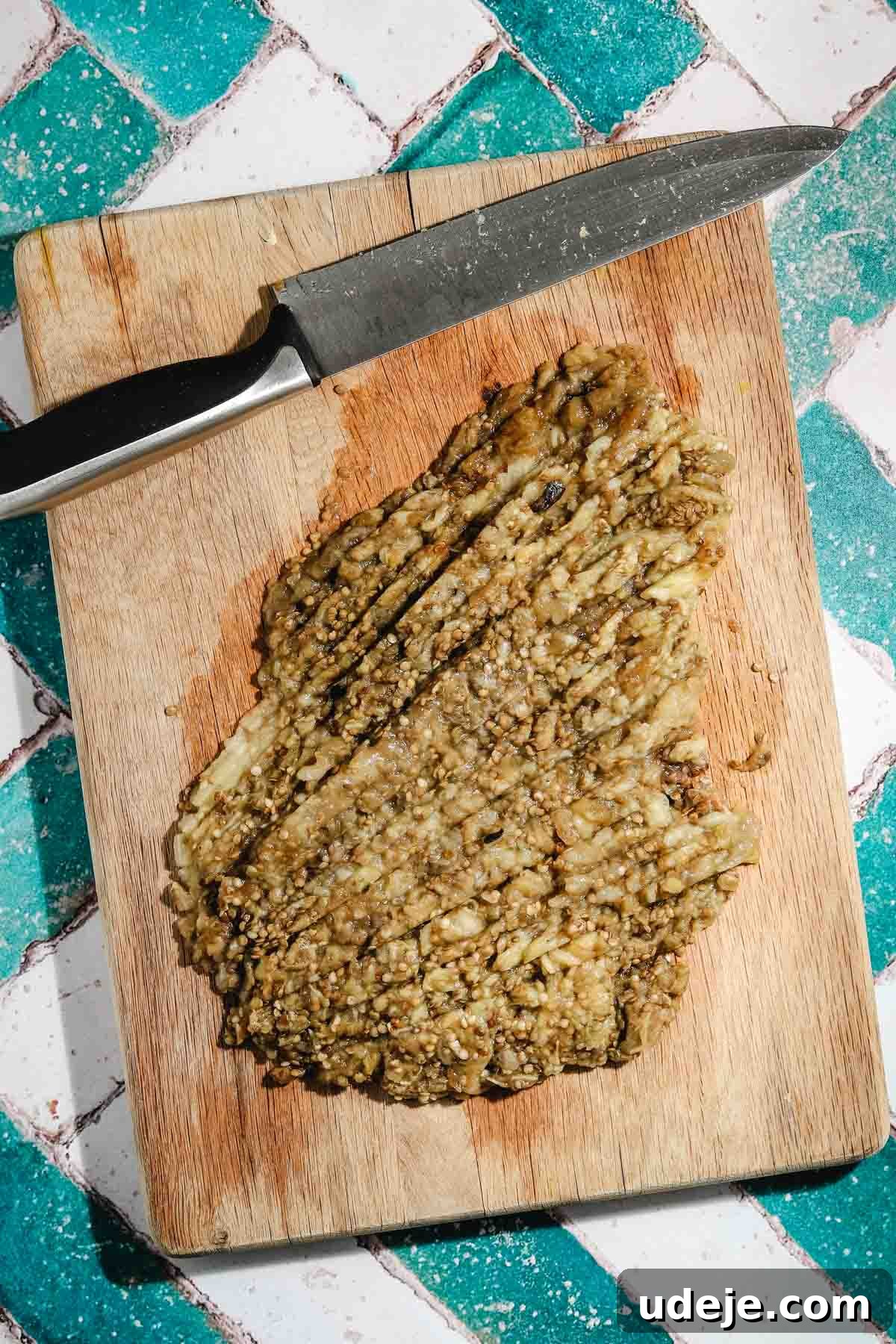
- Transfer the drained eggplant flesh to a cutting board. Using a large knife, finely chop and mash the eggplant until it forms a chunky puree. For a smoother consistency, you can use a fork in a bowl or even a food processor, though traditionally, it’s a bit rustic.
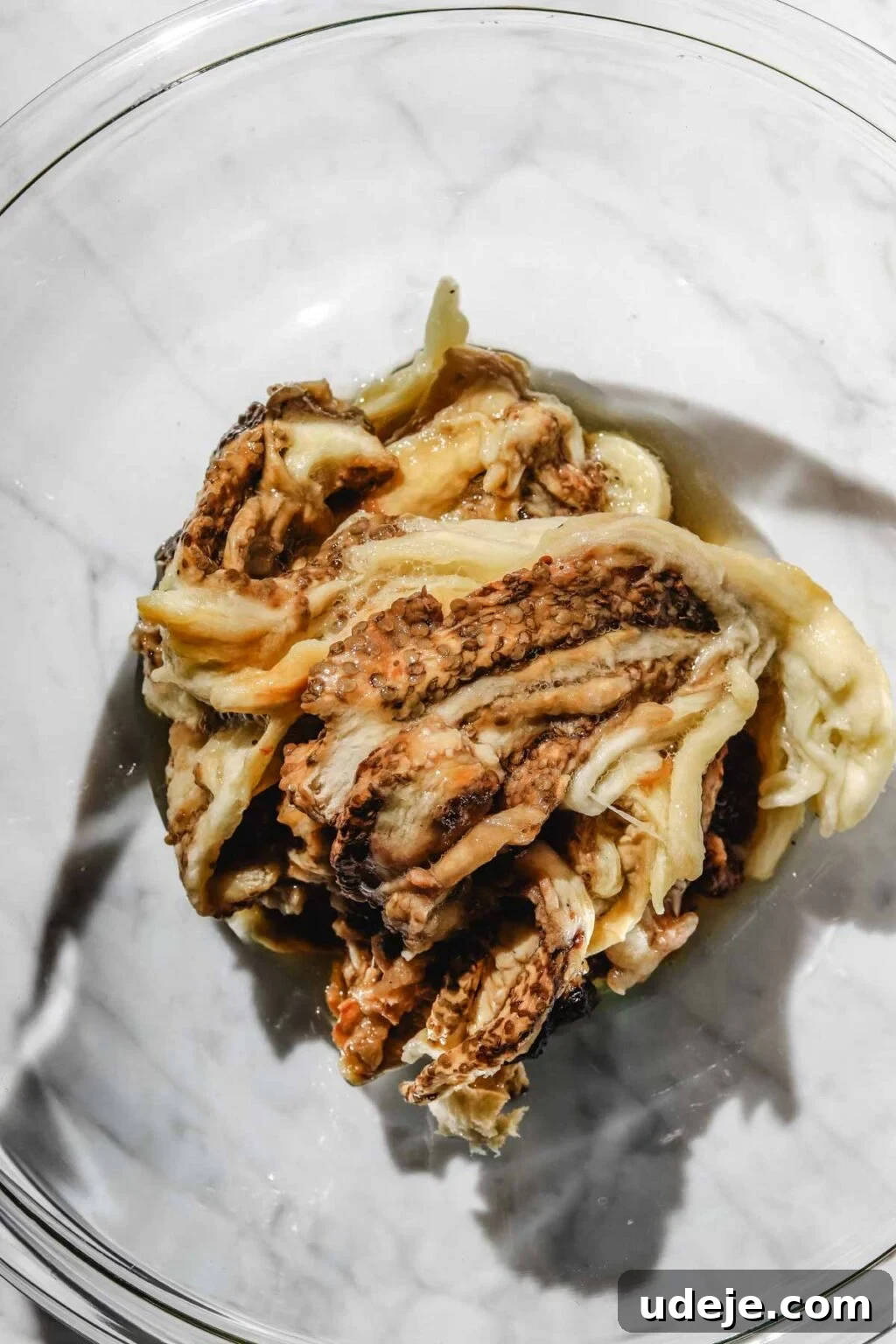
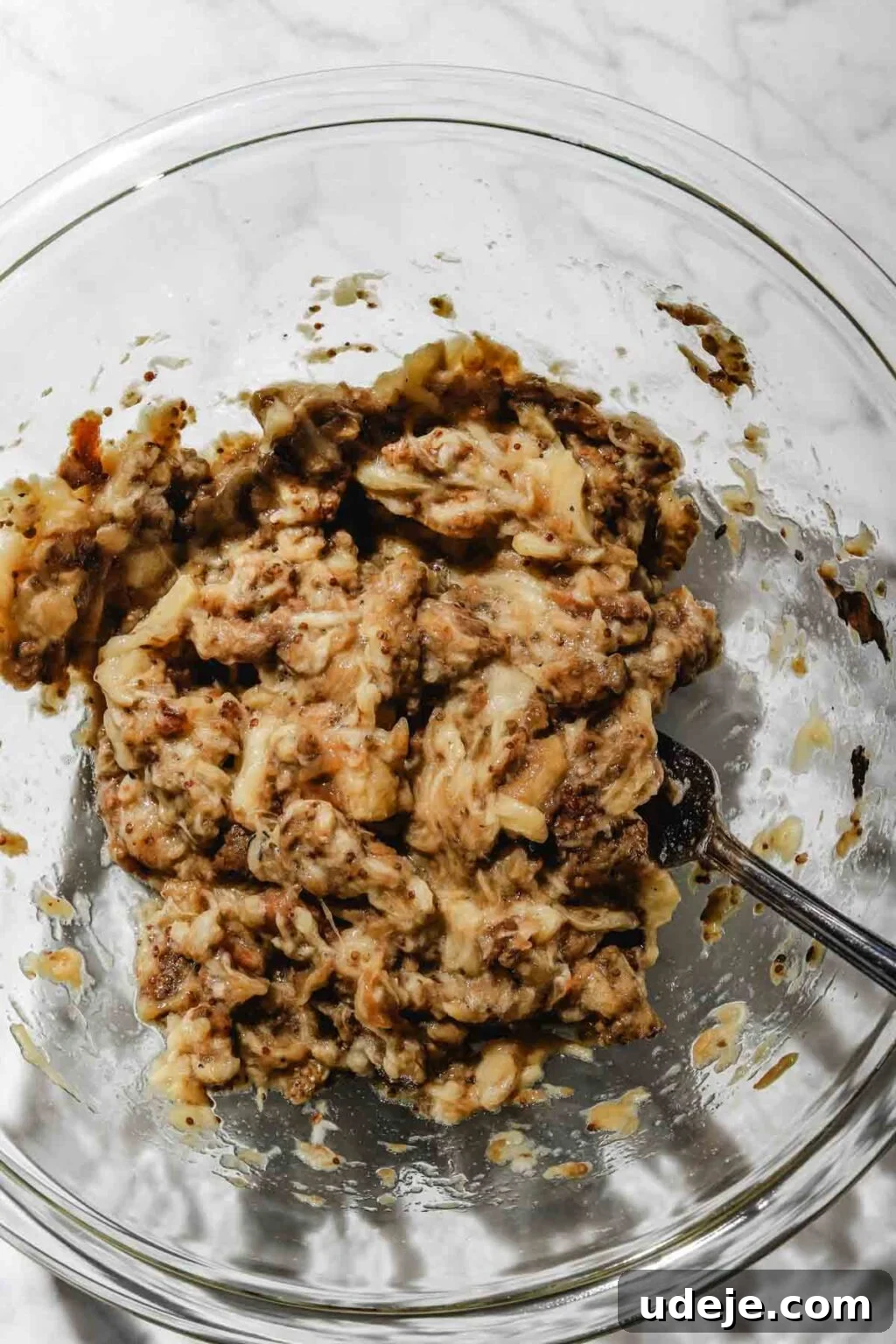
You can also place the flesh on a cutting board and use a knife to cut and mash it.
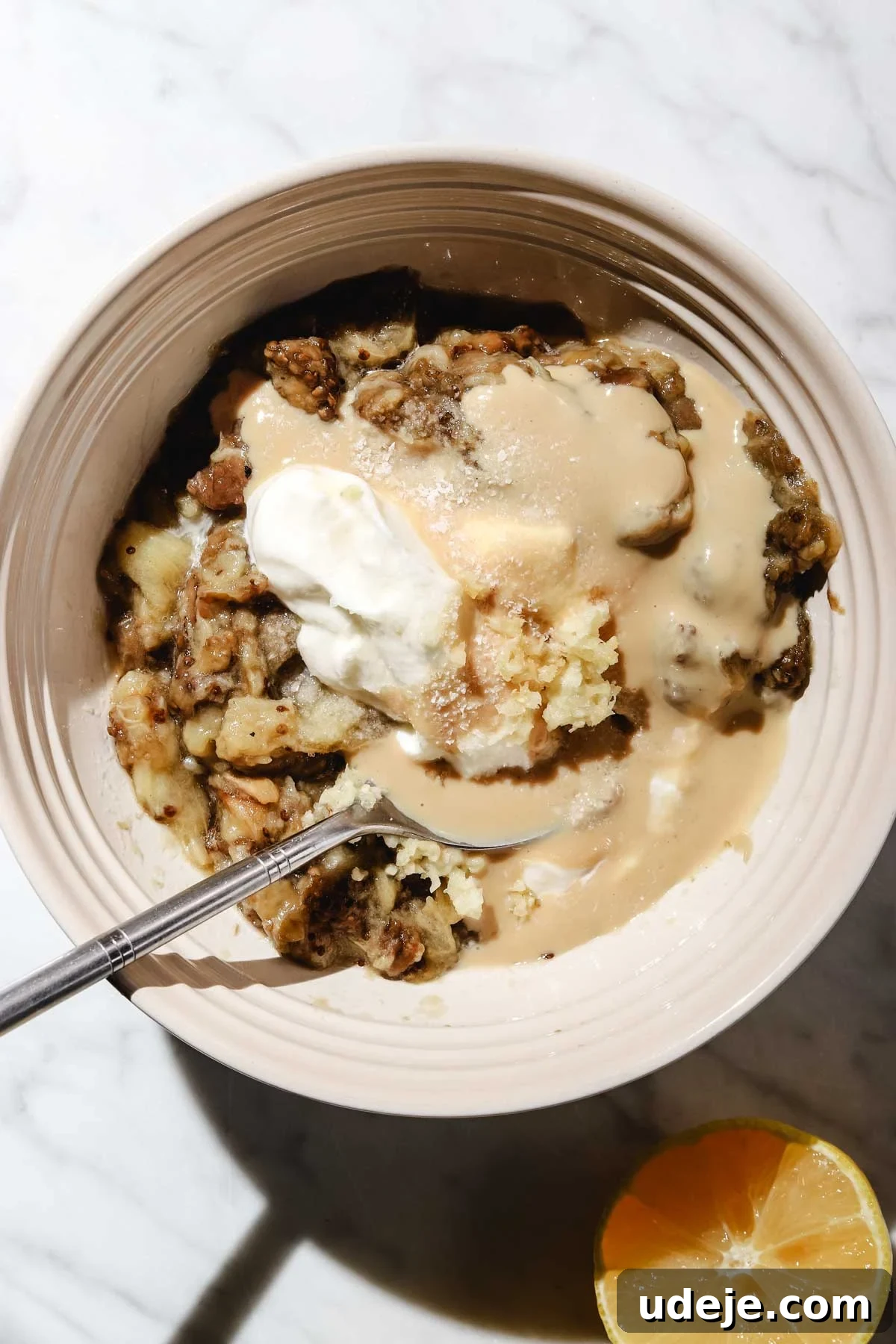
Step 4: Mix all of the ingredients together and adjust seasoning.
- Transfer the mashed eggplant to a large mixing bowl.
- Add the crushed garlic, tahini, yogurt (if using), and salt.
- Mix everything thoroughly with a fork until all ingredients are well combined and the dip is creamy.
- Taste and adjust: This is a crucial step for perfecting your Mutabal. Take a small taste and adjust the lemon juice, salt, and garlic to your preference. Some prefer a tangier dip with more lemon, while others enjoy a stronger garlic presence. Don’t be shy about seasoning until it’s just right for your palate.
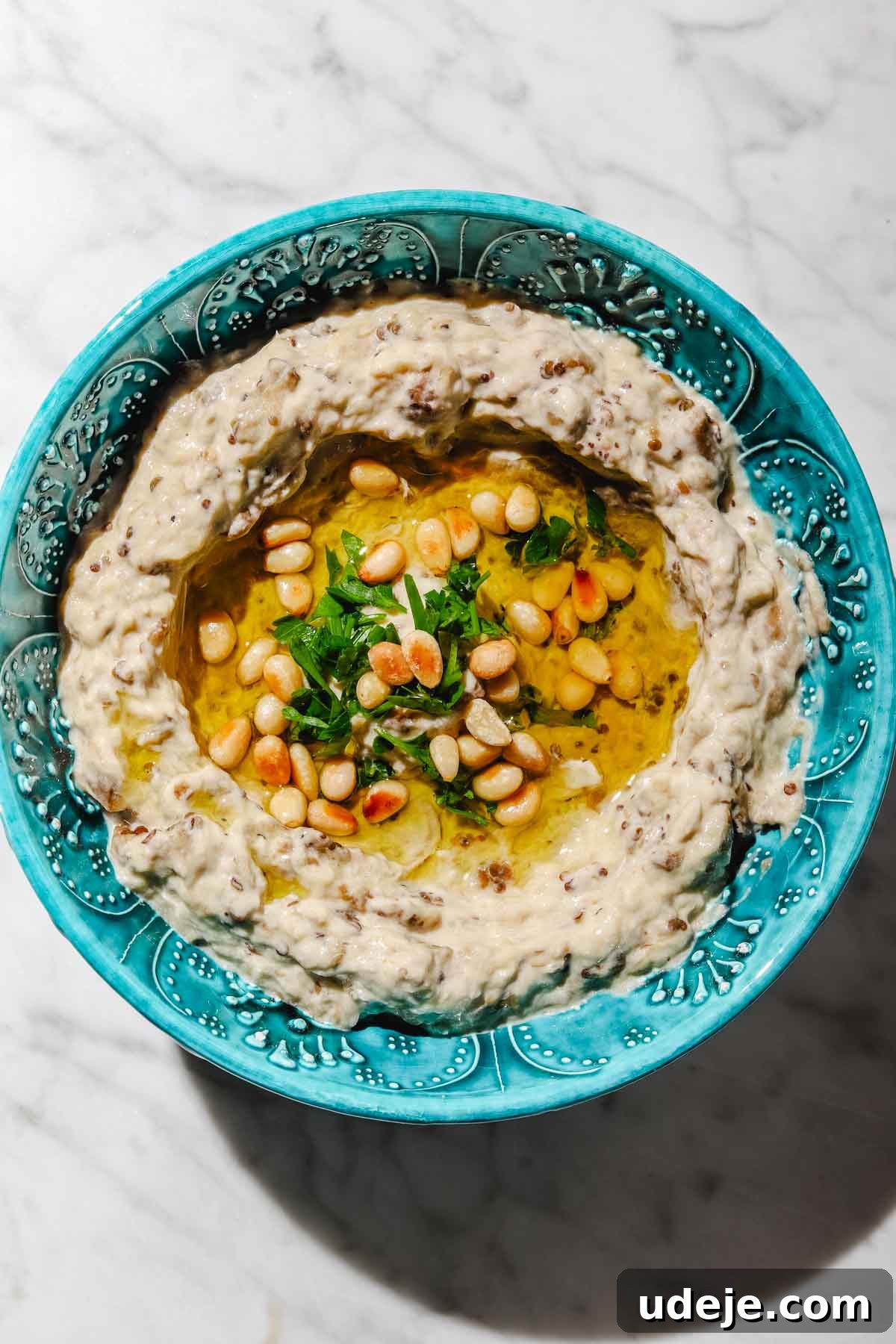
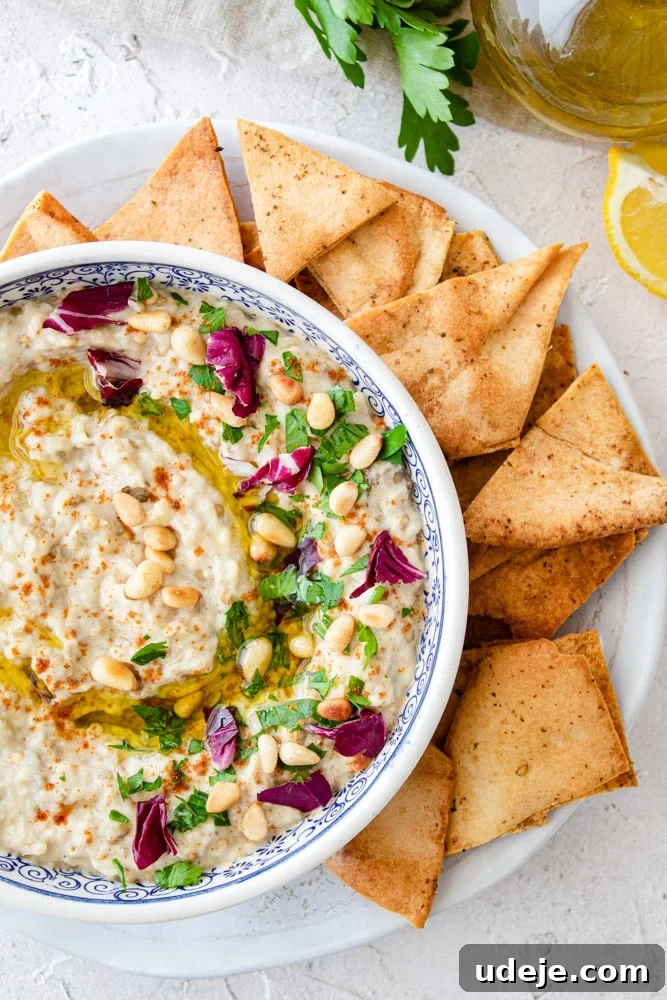
Serve and Garnish: Once seasoned to perfection, transfer the Mutabal to a serving bowl. Create a shallow well in the center of the dip and drizzle generously with high-quality olive oil. For an extra touch of flavor and visual appeal, sprinkle with toasted pine nuts, fresh chopped parsley, or vibrant pomegranate arils. A dusting of paprika or sumac can also add a lovely finish. Serve immediately with warm, fresh pita bread or crispy pita chips. Enjoy this authentic taste of the Middle East!
Storage, Serving Suggestions, and Making Ahead
One of the many charms of Mutabal is that its flavors often deepen and meld beautifully overnight, making it an excellent candidate for meal prep or preparing in advance for gatherings. In fact, many connoisseurs agree that Mutabal tastes even better the day after it’s made, as the garlic, lemon, and tahini have more time to infuse with the smoky eggplant.
Storage Instructions:
- Refrigeration: Store leftover Mutabal in an airtight container in the refrigerator for up to one week. Ensure it’s well-sealed to prevent it from absorbing other odors from the fridge and to maintain its freshness.
- Freezing: I highly advise against freezing Mutabal. The creamy texture, especially if yogurt is included, can become watery and lose its desirable consistency upon thawing, resulting in a soggy and unappetizing dip. It’s best enjoyed fresh or refrigerated.
Serving Suggestions:
Mutabal is incredibly versatile and pairs wonderfully with a variety of foods:
- Classic Pairing: The quintessential accompaniment is warm, fluffy pita bread or crispy pita chips. The slightly chewy texture of fresh pita is unmatched for scooping up this creamy dip.
- Mezze Spread Essential: Mutabal shines as part of a traditional Middle Eastern mezze (small plates) spread. Serve it alongside other classics like muhammara (roasted red pepper and walnut dip), hummus, and creamy labneh (strained yogurt). This creates a vibrant and flavorful appetizer platter that’s perfect for sharing.
- Crudités: While I believe it truly excels with bread, Mutabal can also be served with an assortment of fresh crudités (vegetable sticks) like cucumber, carrots, bell peppers, or celery for a lighter option.
- Beyond Dips: Get creative! Use Mutabal as a spread in sandwiches or wraps, a dollop alongside grilled meats or vegetables, or even as a creamy base for a grain bowl. Its rich flavor profile makes it a fantastic addition to many dishes.
Other Middle Eastern & Mediterranean Dip Recipes You Will Love
If you tried this delicious Mutabal recipe, please consider leaving a star ⭐️⭐️⭐️⭐️⭐️ rating in the recipe card below and/or a review in the comments section further down the page – I’d love to hear from you! You can also hop on over to Instagram and say hello!
Creamy & Smokey Mutabal with Tahini
Leave a Review
Pin Recipe
Ingredients
- 2 large Globe or American eggplants, approximately 400g each (total 800g)
- 1-2 garlic cloves, large, freshly crushed (adjust to taste)
- 4 tablespoons tahini, good quality
- 4 tablespoons whole milk yogurt, plain (optional, for extra creaminess and tang; omit for vegan)
- 1 1/2 teaspoons fine sea salt, or more, to taste
- 1/2 fresh lemon, juice of (more per preference, freshly squeezed recommended)
- For Garnish: Extra virgin olive oil, toasted pine nuts, fresh parsley (chopped), or pomegranate arils
Instructions
-
Prepare your Eggplant & Preheat Oven: Wash and thoroughly dry your eggplants. Preheat your oven to 450°F (230°C). Prepare a foil-lined baking sheet for roasting.
-
Charring (for smoky flavor):
- Gas Stove: If using a gas stove, turn a burner to medium flame. Using long tongs, hold each eggplant directly over the flame, rotating it constantly until the skin is deeply charred, black, and blistered all over. This process typically takes 10-15 minutes per eggplant, and the flesh should start to soften considerably.
- Cast Iron Skillet: If you don’t have a gas stove, heat a cast-iron skillet over high heat until it’s very hot and slightly smoking. Place eggplants in the dry skillet and char all sides, rotating them every few minutes. This should take about 10-15 minutes to get a good char.
- Skip Charring: If you prefer to skip the smoky flavor, pierce the eggplants 4-5 times all around with a knife to allow steam to escape during roasting.
-
Roast until Tender: Place the charred (or pierced) eggplants onto the prepared foil-lined baking sheet. Roast in the preheated oven for 45 minutes to 1 hour, or until the eggplants are extremely soft and collapse when pressed with a fork. Cooking time may vary based on eggplant size.
-
Extract and Drain Flesh: Once roasted, allow the eggplants to cool slightly so they are easier to handle. Cut each eggplant in half lengthwise. Using a spoon, scoop out all the soft flesh, leaving the skin behind. Place the eggplant flesh into a fine-mesh sieve set over a bowl. Press down gently with the back of the spoon to help drain any excess liquid. This step is crucial for preventing a watery dip.
-
Mash the Eggplant: Transfer the drained eggplant flesh to a cutting board. Using a large knife, finely chop and mash the eggplant until it forms a chunky, slightly smooth puree. You can also use a fork in a bowl if preferred, but avoid over-processing if using a food processor to maintain some texture.
-
Combine Ingredients: Place the mashed eggplant in a clean mixing bowl. Add the crushed garlic (start with one clove and add more if desired), tahini, yogurt (if using), and salt. Mix thoroughly with a fork until all ingredients are well incorporated and the mixture is creamy.
-
Taste and Adjust Seasoning: Taste the Mutabal and adjust the salt, lemon juice, and garlic to your personal preference. This dip is highly adaptable, so feel free to make it tangier, saltier, or more garlicky as you like.
-
Serve: Transfer the finished Mutabal to a serving dish. Create a shallow well in the center and drizzle generously with extra virgin olive oil. Garnish with toasted pine nuts, fresh chopped parsley, or vibrant pomegranate arils for a beautiful presentation and added flavor. Serve immediately with fresh pita bread or pita chips. Enjoy!
Notes
- For an authentic smoky flavor, charring the eggplant over a gas stove or in a hot cast-iron skillet is recommended.
- If you don’t have access to charring methods, simply roasting the eggplant after piercing its skin will still yield a delicious, albeit less smoky, dip.
- The cooking time for eggplant can vary significantly based on its size and density. Always roast until it’s extremely soft.
- Adjust garlic and lemon to your taste. Fresh ingredients make a significant difference.
- Yogurt is optional; omit it for a vegan version of Mutabal.