
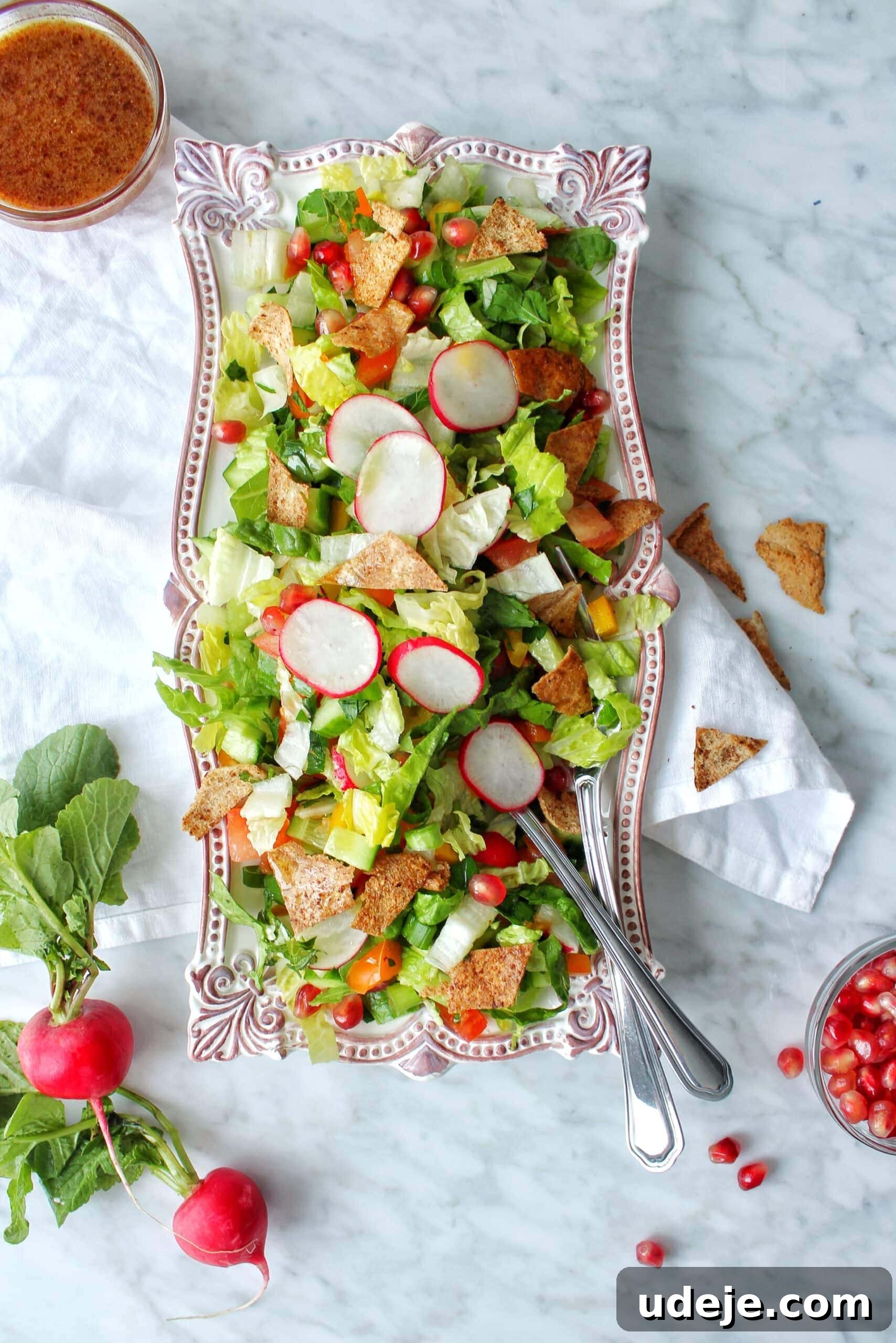
The Ultimate Restaurant-Style Fattoush Salad: Your Guide to Authentic Middle Eastern Flavor
Embark on a culinary journey to the heart of the Middle East with this vibrant and refreshing Fattoush salad recipe. Renowned as one of the region’s most beloved salads, Fattoush is a symphony of fresh vegetables, aromatic herbs, and crunchy fried pita bread, all brought together by a distinctive sweet and tangy dressing. This comprehensive guide will empower you to recreate the best restaurant-quality Fattoush right in your own kitchen, promising a dish that will undoubtedly become a family favorite. The secret lies in its distinguishing features: the perfectly crispy pita chips and a rich, zesty dressing infused with the unmistakable flavor of pomegranate molasses. Prepare to transform your perception of salad and delight in an explosion of textures and tastes.
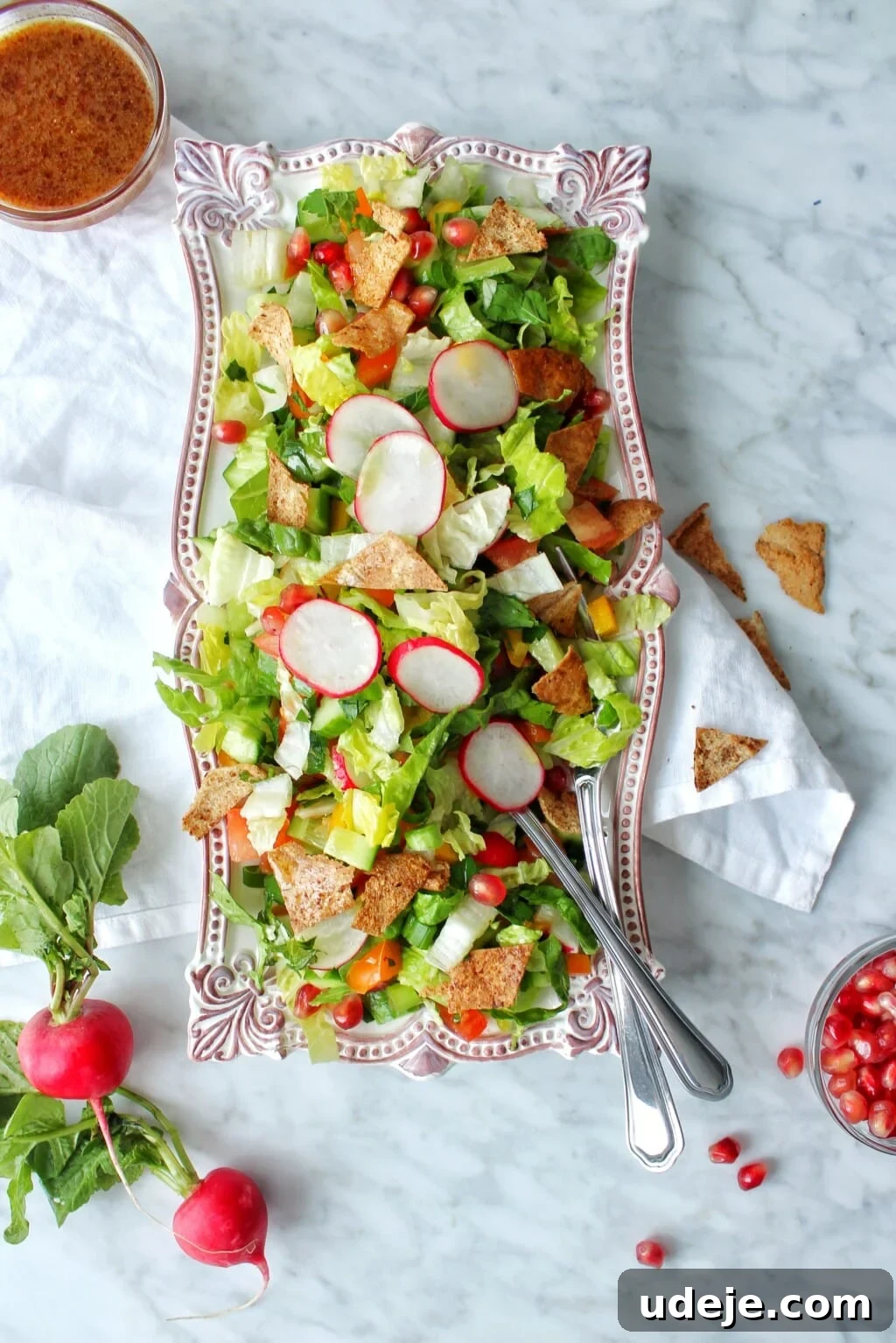
Unveiling the Secrets: What Makes a Fattoush Salad Truly Exceptional?
While Fattoush is a staple on Middle Eastern menus, not all versions are created equal. I’ve savored incredible Fattoush at local eateries, but I’ve also encountered disappointing iterations. The difference between a good and a truly GREAT Fattoush, one that captures the authentic essence of the dish, comes down to three specific, meticulously balanced elements:
The Art of the Dressing: Sweet, Tangy, and Perfectly Balanced
- A superior Fattoush salad dressing is a masterful blend of sweet and tangy, with an invigorating brightness derived from sumac and dried mint. The crucial sweetness and depth come from pomegranate molasses – an absolute non-negotiable ingredient that defines the salad’s character. Without it, the dressing lacks its signature complexity.
- Conversely, a subpar Fattoush often suffers from a dressing that is overly oily, lacking sufficient tang and zest. The aim is a harmonious emulsion, not a heavy coating of olive oil. The lemon juice and pomegranate molasses should sing through, complemented by the subtle pungency of garlic and the earthy notes of sumac and dried mint. Achieving this balance is paramount for a truly vibrant and refreshing salad.
The Irresistible Crunch: Mastering the Pita Chips
- Never compromise on the pita. Soggy pita chips are the nemesis of a great Fattoush. They must be impeccably crispy, offering a delightful textural contrast to the fresh vegetables. The pita should also absorb a good amount of oil during preparation, which contributes significantly to its depth of flavor and satisfying richness.
- To elevate the flavor even further, many chefs season the pita with salt and sumac before frying or baking. This simple step infuses the bread with an extra layer of tangy, savory goodness. While traditional recipes often call for frying, baking offers a fantastic, lighter alternative, as long as the pita is generously drizzled with olive oil to achieve that golden, crisp texture.
Freshness First: The Vibrant Vegetable Medley
- The foundation of any outstanding Fattoush lies in its fresh, high-quality vegetables. An ideal mix incorporates crunchy, herbaceous, and leafy elements, creating a dynamic and engaging bite. Unlike finely chopped salads such as a classic Arabic chopped salad, the vegetables in Fattoush are typically roughly chopped.
- The key here is consistency in size; ensuring all elements are chopped to a similar approximate dimension guarantees a balanced and enjoyable mouthful with every forkful. This allows each ingredient to contribute its unique texture and flavor without overwhelming the others.
★★★★★ 5 Star Reader Review
“Delicious!! my whole family loved it. Thank you.”
—Hanouda
Essential Ingredients & Smart Substitutions for Your Fattoush
Crafting the perfect Fattoush begins with selecting the right ingredients. Here’s a detailed look at what you’ll need and how to make smart substitutions:
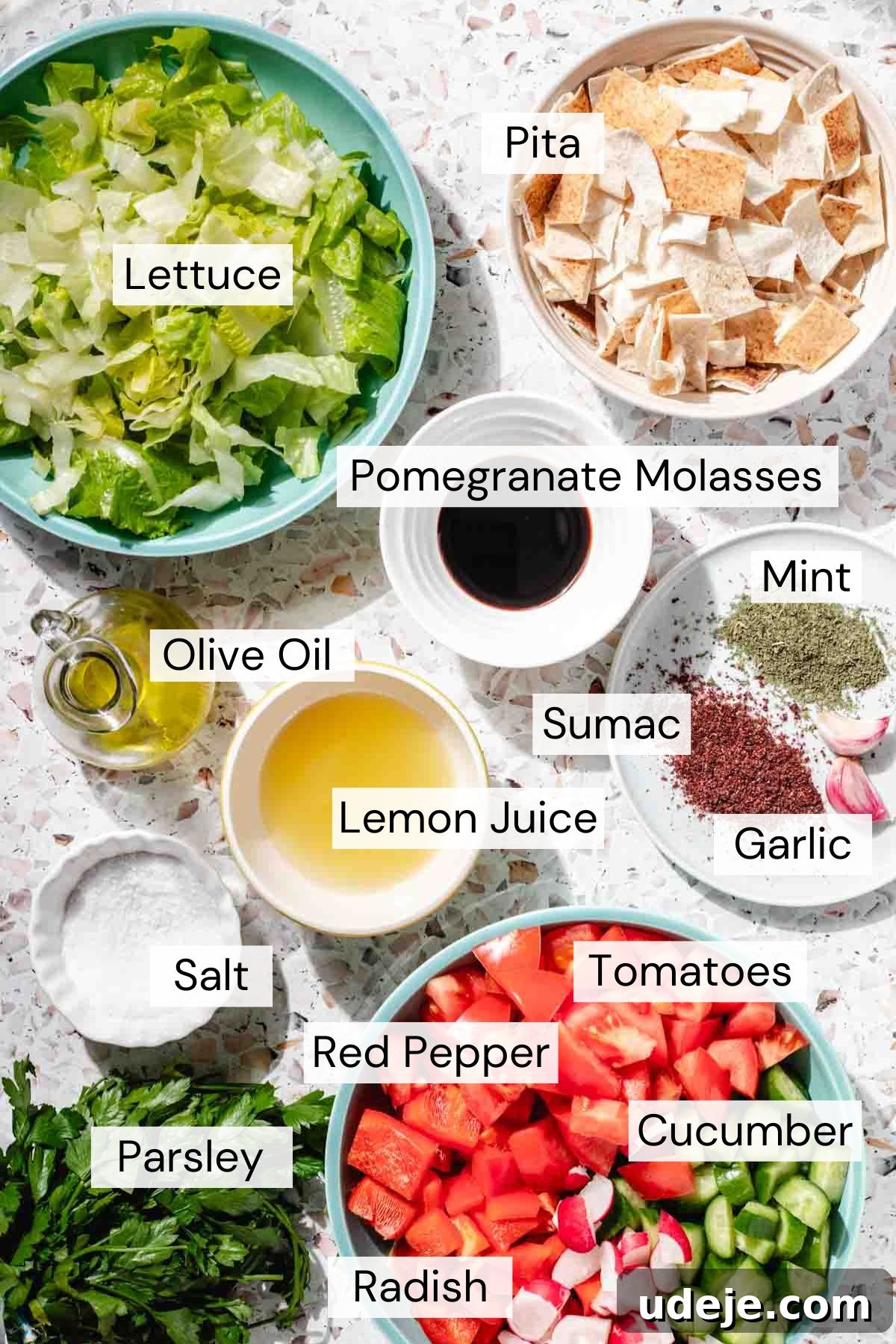
Vegetables: The Heart of the Salad
- Lettuce: The essential leafy base. Romaine lettuce offers a crisp texture and mild flavor, while iceberg lettuce provides an even more pronounced crunch. Both work beautifully.
- Cucumbers: Persian cucumbers are preferred for their thin skin and minimal seeds, offering a delicate crunch. English cucumbers are an excellent substitute if Persian are unavailable.
- Tomatoes: Large vine-ripened tomatoes or Roma tomatoes provide a juicy, slightly sweet counterpoint to the tang of the dressing.
- Bell Peppers: Red peppers add a touch of sweetness and vibrant color. Green or orange peppers can be substituted, each offering a slightly different flavor profile.
- Radish: Small cherry belle radishes are a common and highly recommended addition. Their peppery bite and crisp texture add an exciting dimension to the salad.
- Fresh Herbs: Fresh parsley is a must for its bright, herbaceous flavor. Fresh mint sprigs are an optional but highly recommended addition, imparting a wonderful coolness and aromatic lift.
- Pomegranate Arils: For an extra burst of color and a sweet-tart pop, fresh pomegranate arils make a stunning optional garnish.
Pita Bread: The Crispy Foundation
- The choice of pita bread can influence the final texture of your Fattoush. Traditional Fattoush often uses thinner, 8-inch two-ply round pita bread, which tends to achieve a crisper texture when cooked. However, thicker Greek-style pita can also be used, offering a chewier interior with a crispy exterior.
- Regardless of the type, always season the pita bread before cooking. A generous sprinkle of sumac infuses it with a signature tangy flavor. A pinch of salt is also advisable, especially if your pita bread is unsalted.
The Flavorful Dressing Components
- Extra Virgin Olive Oil: As a significant component of the dressing, the quality of your olive oil matters. Opt for a good quality extra virgin olive oil for the best flavor.
- Lemon Juice: Freshly squeezed lemon juice is crucial for the dressing’s bright and tangy character. Bottled lemon juice simply won’t yield the same vibrant taste.
- Pomegranate Molasses: This is the star ingredient that truly distinguishes Fattoush. Its unique sweet-tart, slightly savory flavor is irreplaceable. If you don’t have access to it, you can actually make it yourself using a step-by-step pomegranate molasses guide.
- Sumac: A staple Middle Eastern spice, sumac provides a beautiful tangy, almost lemony flavor and a deep red hue to the dressing.
- Dried Mint: Adds a wonderful aromatic depth and traditional flavor. While fresh mint is used in the salad, dried mint in the dressing provides a different, concentrated herbal note.
- Crushed Garlic: Two small cloves of crushed garlic lend a pungent, savory kick. However, if you find garlic too strong or prefer a milder dressing, you can certainly reduce the amount or omit it entirely.
- Salt and Black Pepper: Essential for seasoning the dressing and bringing all the flavors into harmony. Adjust to your taste preferences.
Step-by-Step Guide: Crafting Your Perfect Restaurant-Style Fattoush at Home
Follow these simple steps to create a show-stopping Fattoush salad that rivals any restaurant:
Preparing the Crispy Pita Chips
The crispy pita is a cornerstone of Fattoush. You can prepare these a day in advance; simply store them in a bowl, loosely covered with plastic wrap, at room temperature to maintain their crunch.
For the most authentic Fattoush flavor, frying the pita is often preferred as it allows the bread to thoroughly absorb the olive oil, resulting in a richer taste. However, baking offers a lighter alternative and yields excellent results as well. Choose the method that best suits your preference and convenience.
Start by cutting the pita bread into even 1-inch (2.5 cm) squares. Using kitchen shears can make this task easier and more precise.
To Fry:
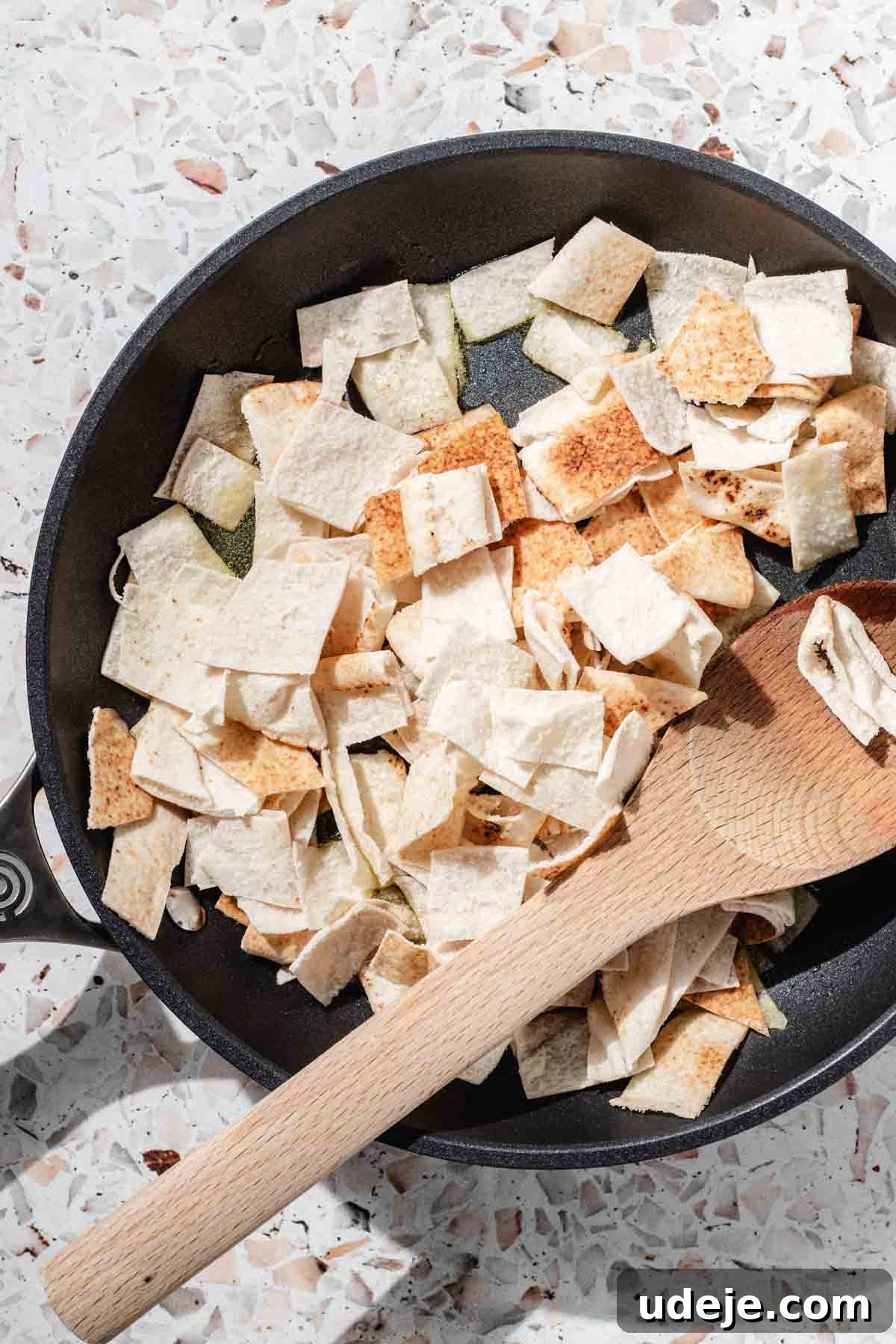
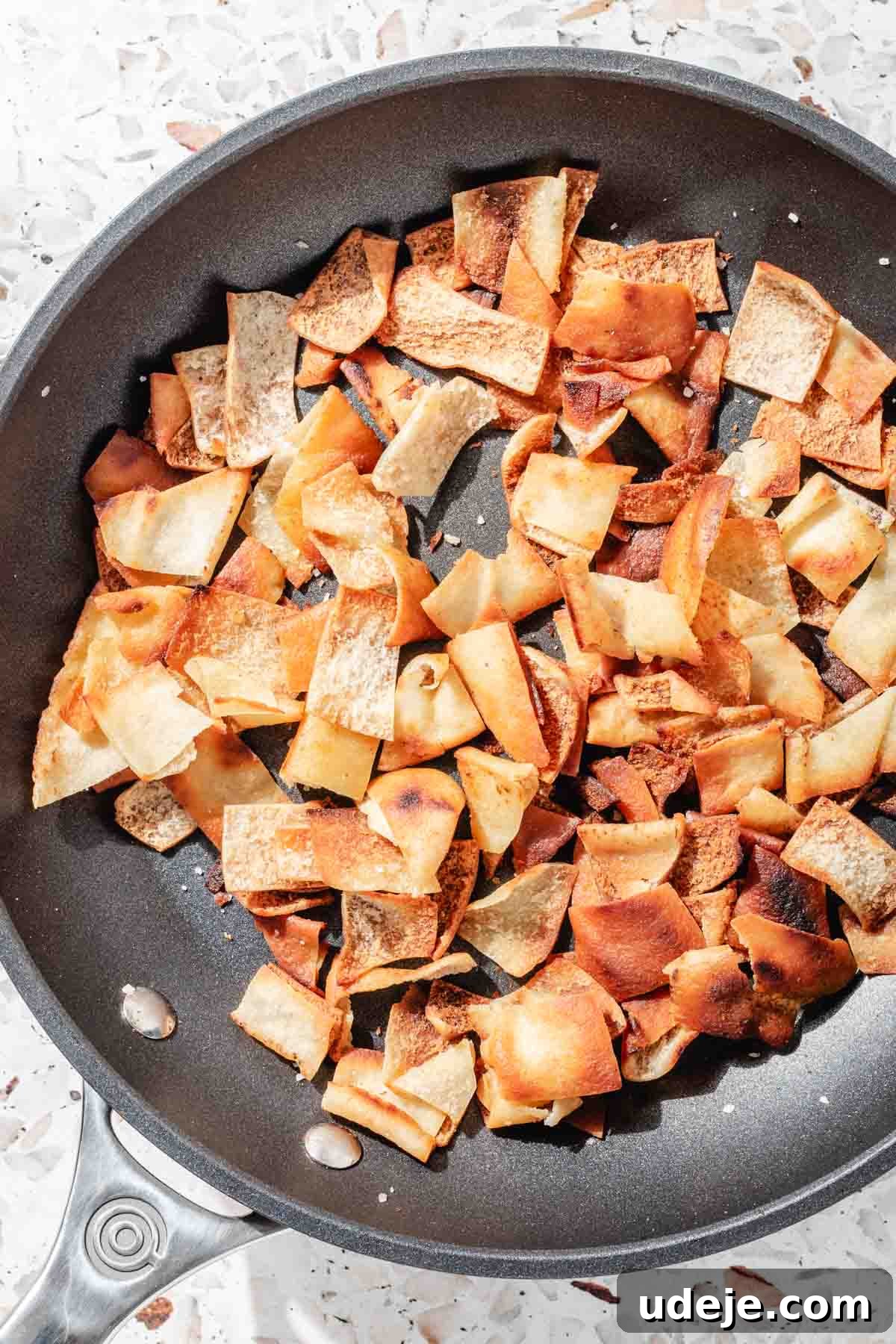
Heat 4 tablespoons of olive oil in a large skillet over medium heat for about 1 minute. Add all the pita squares to the hot oil. Stir and fry continuously for 5 to 6 minutes, until the pita pieces turn a beautiful golden brown and become wonderfully crispy. Keep a close eye on them to prevent burning.
To Bake:
Preheat your oven to 350°F (175°C). Arrange the pita squares in a single layer on a large baking sheet lined with parchment paper. Drizzle generously with olive oil and toss to ensure each piece is lightly coated. Bake for approximately 8 minutes, or until the pita turns golden and crisp. It’s crucial to stay nearby and monitor them closely, as pita bread can burn very quickly.
Assembling the Fresh Vegetable Base
Thoroughly wash and dry all the vegetables: lettuce, cucumbers, tomatoes, peppers, and radishes, along with any fresh herbs like parsley and mint. Proper drying is important to prevent a watery salad.
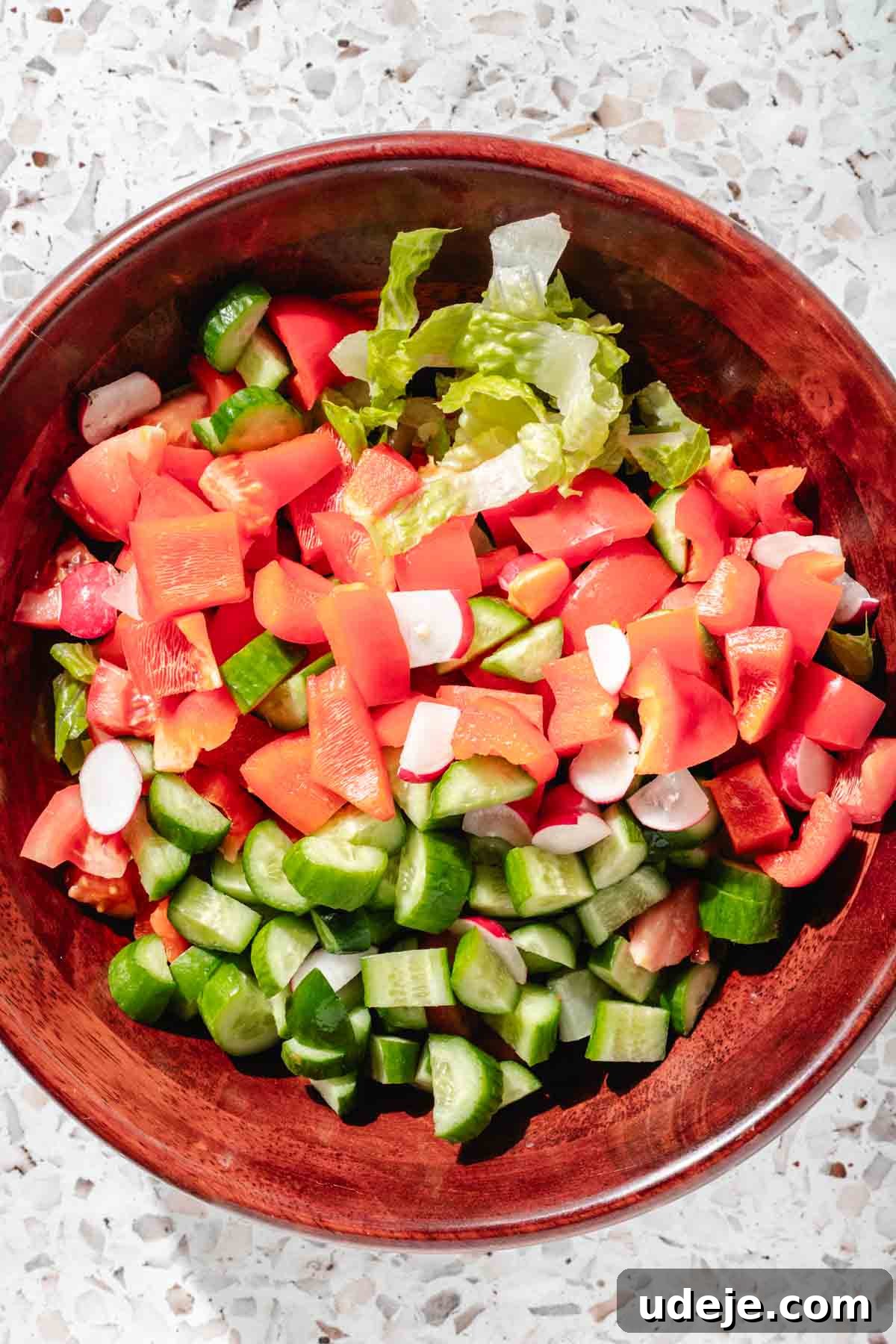
Roughly chop the lettuce, tomatoes, cucumbers, and peppers into similar-sized pieces, aiming for about 1 inch (2.5 cm). Cut the radishes in half, then slice them thinly into half-moons. Finely chop the fresh parsley and mint.
Layer all the prepared vegetables and herbs into your chosen serving bowl, creating a visually appealing base for your salad.
TIP: If you plan to serve the salad much later, loosely cover the chopped vegetables with a paper towel and place the bowl in the refrigerator. This helps keep them fresh and crisp. Only mix in the dressing and top with the pita chips just before serving.
Whisking Up the Tangy Dressing
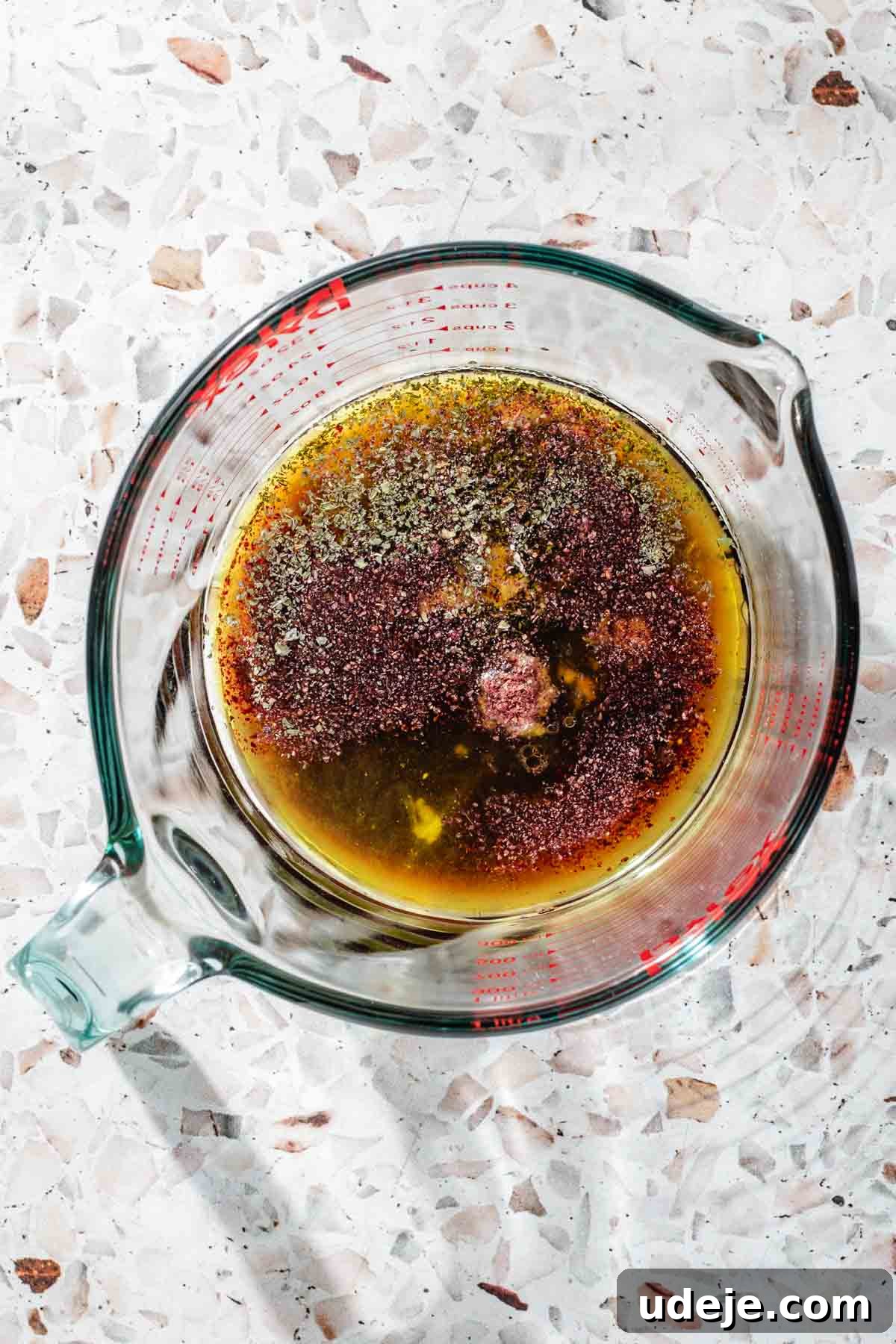
In a small bowl, whisk together all the dressing ingredients: extra virgin olive oil, freshly squeezed lemon juice, pomegranate molasses, sumac, dried mint (if using), crushed garlic, salt, and black pepper. Alternatively, for an even easier method, combine all ingredients in a glass jar with a tight-fitting lid and shake vigorously until well combined and emulsified. If preparing the dressing in advance, store it in the refrigerator until you are ready to assemble and serve the salad.
The Grand Finale: Dressing and Serving
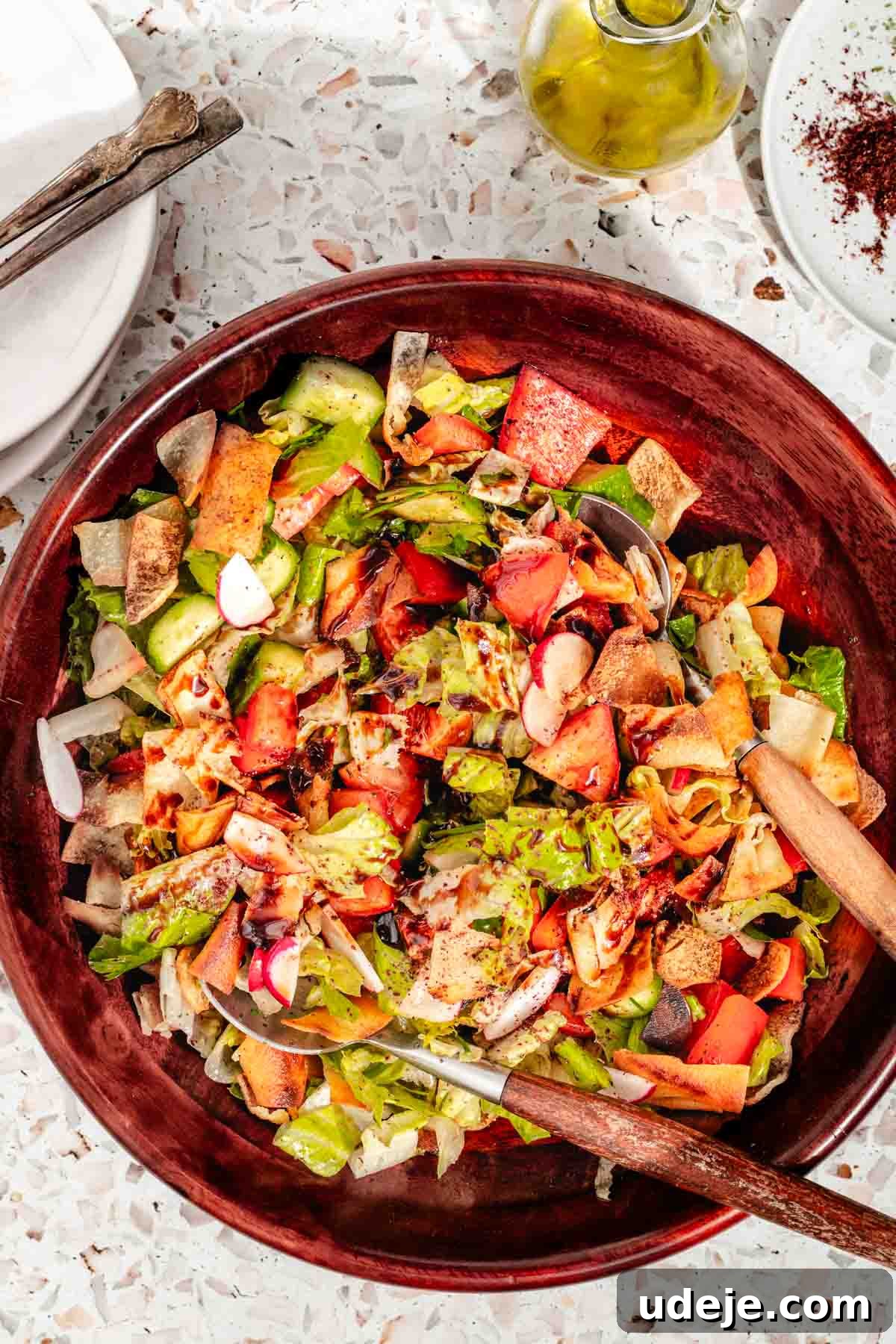
Timing is key for an optimal Fattoush experience. Just before serving, pour the prepared dressing over the chopped vegetables in the serving bowl. Toss everything gently to ensure every piece of vegetable is coated with the flavorful dressing. Next, add the crispy pita chips on top and give the salad another quick, gentle toss.
For that authentic restaurant-style presentation and an extra layer of flavor, drizzle a little more pomegranate molasses over the finished salad. This final touch adds an additional kick of sweetness and tang that truly elevates the dish. Serve your glorious Fattoush immediately to ensure the pita chips remain delightfully crispy.
Popular Middle Eastern Salads to Explore
If you’ve fallen in love with Fattoush, there’s a whole world of delicious Middle Eastern salads waiting to be discovered. Each offers unique flavors and textures, perfect for any meal or occasion.
- Fine Chopped Arabic Salad: A classic, finely diced salad perfect for pairing with grilled meats.
- Lebanese Tabouli: A refreshing parsley and bulgur wheat salad, bursting with fresh herbs and lemon.
- Malfouf Salad (Cabbage Slaw): A simple yet incredibly flavorful cabbage salad, often dressed with lemon and garlic.
- Easy Bulgur Salad: A hearty and healthy salad featuring bulgur wheat and a medley of fresh vegetables.
Reader Reviews & Engagement
We love hearing from you! If you tried this Fattoush recipe, please consider leaving a star rating in the recipe card below and/or a review in the comments section further down the page – your feedback is incredibly valuable! You can also hop on over to Instagram and say hello!
Full Recipe Card: Restaurant-Style Fattoush Salad
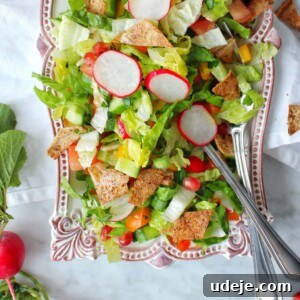
Fattoush Salad (Restaurant-style)
6
servings
20
mins
20
mins
Amina Al-Saigh
Leave a Review
Pin Recipe
Ingredients
For the Vegetables:
- 1/2 head romaine lettuce, or substitute iceberg
- 4 Persian cucumbers, or substitute English cucumber
- 1 large red pepper, or substitute green or orange pepper
- 2 large vine tomatoes, or substitute Roma tomatoes
- 5 small radish (cherry belle)
- 1/2 cup parsley, packed
- 3 sprigs fresh mint, optional
- 1/2 cup pomegranate arils, optional
For the Pita:
- 2 8″ round double ply pita bread
- 2 teaspoons sumac, optional
- 4 tablespoons olive oil
For the Dressing:
- 1/4 cup extra virgin olive oil
- 1/2 cup lemon juice, freshly squeezed
- 2 tablespoons pomegranate molasses, plus more for garnish
- 1 teaspoon sumac
- 1 teaspoon dried mint, optional
- 2 small garlic cloves, crushed
- 1/2 teaspoon salt
- 1/4 teaspoon black pepper, or to taste
Instructions
To Prepare the Vegetables:
-
Wash and dry all of the vegetables (lettuce, tomato, cucumber, pepper, and radish) along with the herbs (parsley and mint if using).
-
Chop the lettuce, tomatoes, cucumbers, and peppers into roughly 3/4 inch to 1 inch pieces, ensuring they are all of similar size.
-
Cut the radish in half, then slice thinly into half moons.
-
Chop the parsley and mint finely. Layer all the vegetables in your salad bowl.
To Make the Dressing:
-
Whisk together the lemon juice, olive oil, pomegranate molasses, sumac, dried mint (if using), crushed garlic, and salt and pepper. You may also place them all in a jar and shake to combine. Place in the fridge until ready to serve.
To Make the Pita Bread:
-
Cut the pita bread into roughly 1-inch squares. I find using scissors to be the easiest method. Place them in a bowl with the sumac, then toss to combine.
-
To fry: In a large skillet, add the olive oil and heat it for 1 minute. Place all of the pita squares in the skillet and fry on medium heat for 5 to 6 minutes, stirring constantly until the pita is golden and crispy.
-
To bake: Place the pita squares on a large parchment-lined baking sheet and drizzle with the olive oil. Toss to combine, then arrange in a single layer. Bake at 350F (175°C) for about 8 minutes or until golden. Stay close by as they will burn very quickly.
-
When ready to serve, pour the dressing all over the vegetables and toss to combine. Add the pita chips on top and toss again. For that restaurant-style touch, drizzle with extra pomegranate molasses. Serve immediately.
Notes
- If you are not serving right away, chop the vegetables, add them to your bowl, and cover them loosely with a paper towel and place in the fridge. Place the dressing in a separate container and in the fridge. Set the fried pita chips in a bowl on the counter. When ready to serve, toss the salad with the dressing, then add the pita chips.
- The pita chips will get soggy after about 2 to 3 hours, so ensure you only add what you need and save the rest if you’re not serving the whole salad right away.
Serving:
1g
,
Calories:
266kcal
,
Carbohydrates:
23g
,
Protein:
3g
,
Fat:
19g
,
Saturated Fat:
3g
,
Polyunsaturated Fat:
2g
,
Monounsaturated Fat:
13g
,
Sodium:
303mg
,
Potassium:
321mg
,
Fiber:
2g
,
Sugar:
7g
,
Vitamin A:
1.658IU
,
Vitamin C:
49mg
,
Calcium:
44mg
,
Iron:
1mg
Did you make this recipe?
Please leave a star rating and review below!
Frequently Asked Questions About Fattoush
What is Fattoush salad?
Fattoush is a vibrant Middle Eastern bread salad, distinguished by its mix of fresh chopped vegetables, herbs, and crispy fried or baked pita bread pieces. It’s typically dressed with a tangy vinaigrette that often includes pomegranate molasses and sumac, giving it a unique sweet-tart flavor profile. It’s a staple dish served across the Levant region.
Can I make Fattoush ahead of time?
While Fattoush is best enjoyed fresh to maintain the crispness of the pita, you can prepare components in advance. Chop and store the vegetables covered in the refrigerator. Prepare the dressing and store it separately in the fridge. Cook the pita chips and keep them at room temperature in an open container. Assemble the salad (dressing and pita) just before serving to prevent the pita from becoming soggy and the vegetables from wilting.
What can I substitute for pomegranate molasses?
Pomegranate molasses is quite unique, but if you’re in a pinch, you can try a mixture of balsamic glaze with a touch of honey or maple syrup to mimic the sweet-tart intensity. Another option is a blend of lemon juice and a small amount of date molasses or a reduction of cranberry juice. However, for the most authentic flavor, sourcing or making pomegranate molasses is highly recommended.
Is Fattoush healthy?
Yes, Fattoush is generally a very healthy salad. It’s packed with fresh vegetables, providing essential vitamins, minerals, and fiber. The dressing primarily uses olive oil, a healthy monounsaturated fat, and lemon juice. The pita bread adds carbohydrates, and while it’s fried in traditional recipes, baking offers a lighter alternative. Overall, it’s a balanced and nutritious dish.
How do I prevent my pita chips from getting soggy?
The key to preventing soggy pita chips is to add them to the salad just before serving. Once the dressing coats the pita, it will quickly lose its crunch. If you anticipate leftovers, only add pita chips to the portion you plan to eat immediately. Store leftover pita separately in an airtight container at room temperature to retain its crispness for a bit longer.
Conclusion: Your Fattoush Journey Begins!
You now possess all the knowledge and tips to create an unforgettable restaurant-style Fattoush salad right in your home. From selecting the freshest ingredients to mastering the perfect pita crunch and whisking up that signature tangy dressing, every step contributes to a culinary masterpiece. This Middle Eastern gem is more than just a salad; it’s a celebration of fresh flavors and delightful textures that will impress your family and friends.
Don’t hesitate to dive in and try this recipe. Share your creations, leave a review, and connect with us on social media. Happy cooking, and enjoy the incredible taste of authentic Fattoush!