
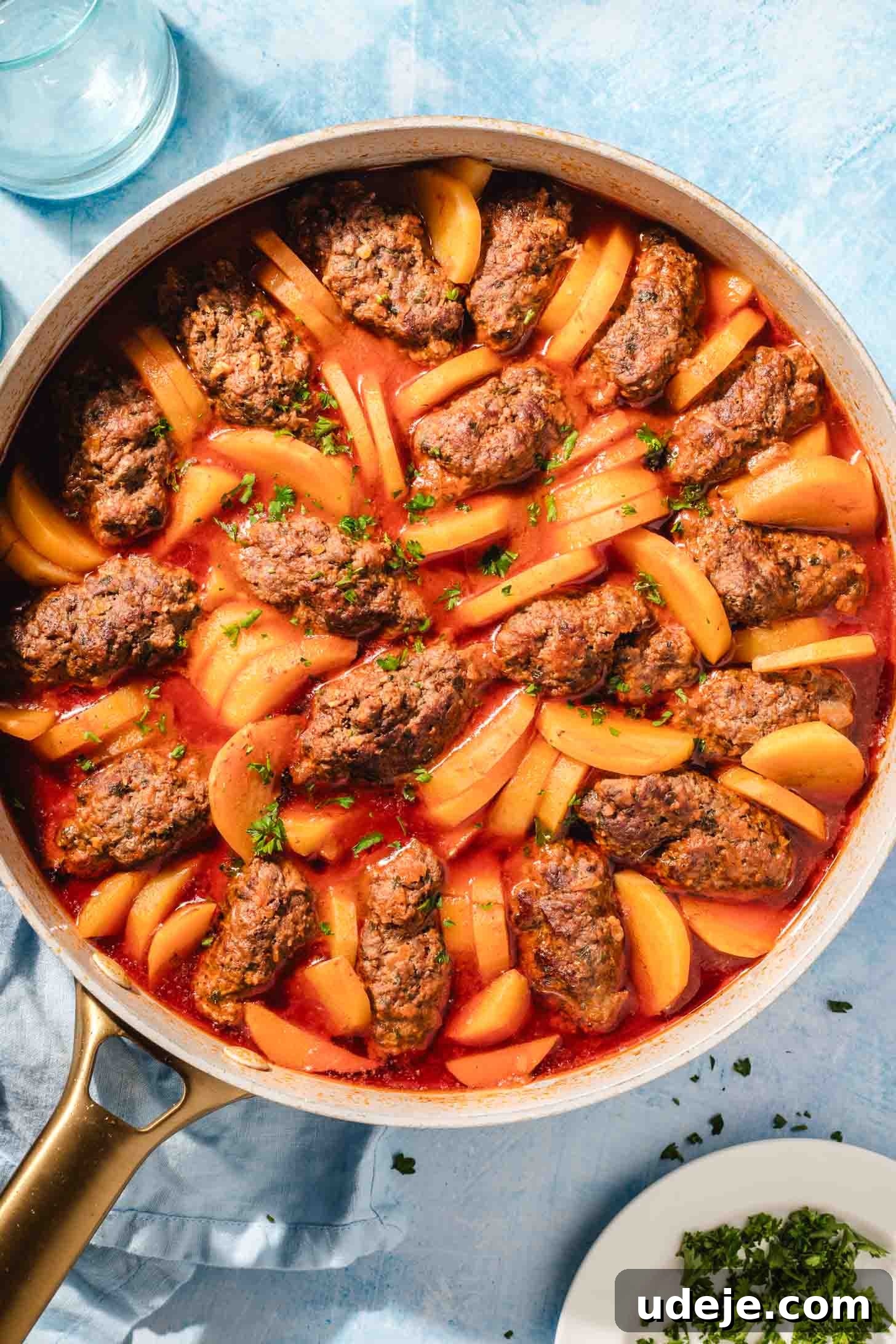
The Ultimate One-Pot Middle Eastern Kofta and Potato Stew: A Hearty & Flavorful Weeknight Meal
Prepare to fall in love with a dish that effortlessly marries comfort, speed, and deep, authentic Middle Eastern flavors: our One-Pot Kofta and Potato Stew. This cherished recipe, a staple in countless homes, simplifies traditional cooking without compromising on taste. Imagine tender, juicy kofta meatballs, perfectly seared to a golden hue, then gently simmered alongside slices of soft potato in a rich, aromatic tomato-based broth. The magic happens all in one pot, making it not only incredibly flavorful but also remarkably convenient for any night of the week. Perfect for spooning generously over fluffy rice, this stew is destined to become a beloved favorite at your family table.
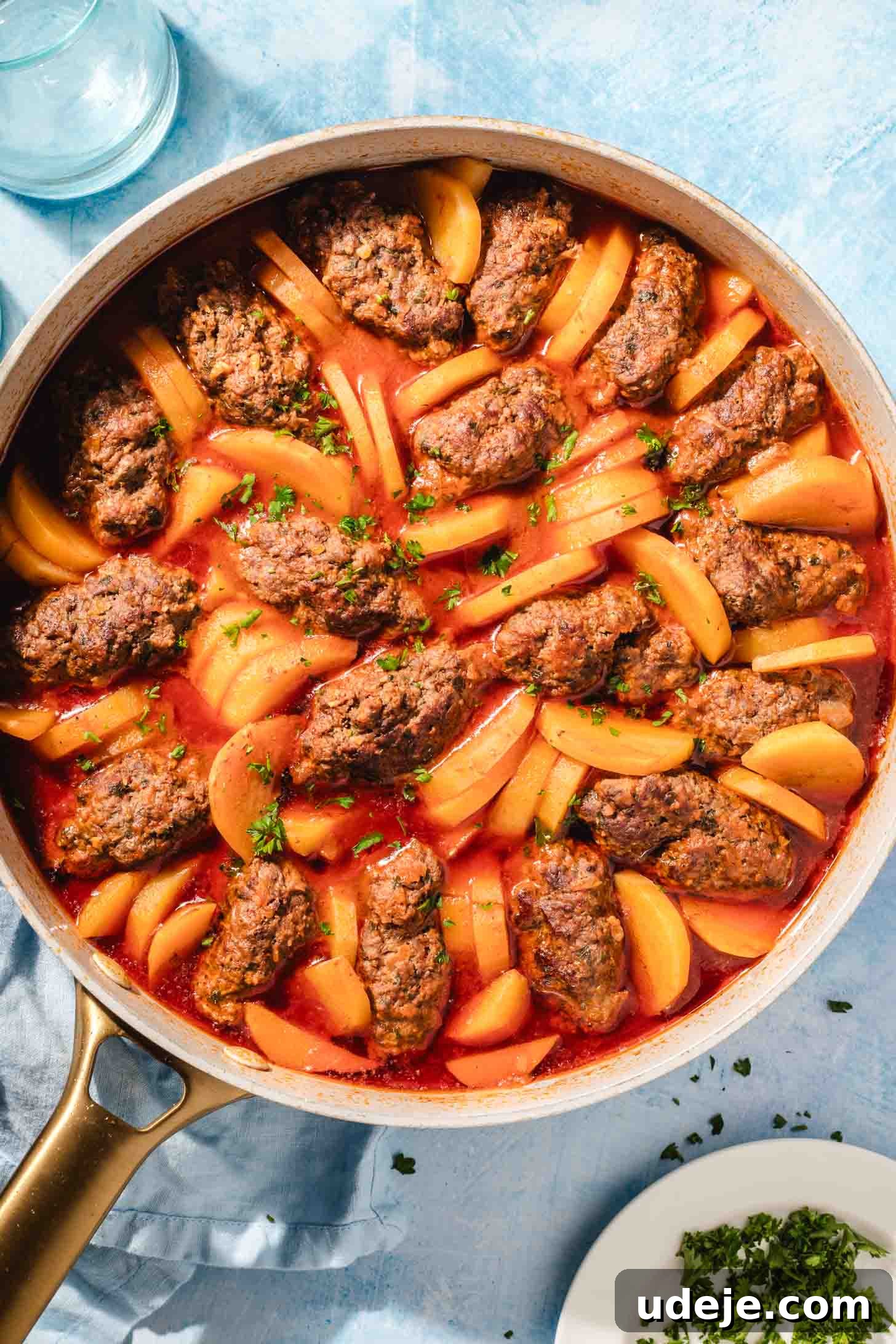
Embracing the One-Pot Wonder: Perfect for Busy Weeknights
While many traditional recipes for kofta and potato stew might call for multiple steps, sometimes even involving oven baking, this streamlined one-pot version is a testament to efficient, delicious cooking. We’ve distilled the essence of this classic Middle Eastern dish down to its core components – succulent kofta, hearty potatoes, and a luscious, savory sauce – all expertly prepared in a single skillet. This method isn’t just about reducing cleanup; it’s about building layers of flavor. As each ingredient cooks together, their essences meld, creating a depth and richness that’s simply unparalleled. You’ll achieve that same comforting, wonderful result as a more complex recipe, but with significantly less fuss.
Through extensive testing, we discovered that the stovetop one-pot approach is superior for its efficiency and ability to produce consistently tender kofta and perfectly cooked potatoes, all submerged in a thick, flavorful sauce. This means you can enjoy a deeply satisfying, home-cooked meal with minimal active cooking time – typically just 15-20 minutes of hands-on prep, followed by a gentle simmer. It’s the ultimate solution for those busy evenings when you crave something truly special, yet need it on the table in under an hour.
For those who love to experiment or seek to add even more complexity, this recipe serves as an excellent foundation. If you enjoy a heartier stew with added vegetables and a broader spice profile, you might explore a similar meatball stew with peas. And for an even faster route to dinner, consider using pre-made or frozen, raw kofta meatballs, which integrate seamlessly into this one-pot process, shaving off precious minutes without sacrificing flavor.
A Culinary Journey: The Origins of Kofta and Middle Eastern Stews
To truly appreciate this Kofta and Potato Stew, it helps to understand its rich heritage. Kofta, a term encompassing various forms of seasoned ground meat, holds a place of honor across the Middle East, Central Asia, and the Indian subcontinent. The word “kofta” itself derives from Persian, meaning “pounded meat,” reflecting the ancient preparation methods. These versatile meat preparations can be grilled, fried, or, as in this beloved dish, simmered in a rich sauce.
Tomato-based stews, particularly those featuring meat and vegetables, are a cornerstone of Middle Eastern cuisine. They represent an age-old tradition of creating nourishing, communal meals that are both economical and incredibly flavorful. The combination of savory meat, starchy potatoes, and tangy tomatoes is a classic pairing, offering a balanced and deeply satisfying experience. This particular stew embodies generations of culinary wisdom, passed down and adapted, culminating in dishes that evoke warmth, hospitality, and the comforting taste of home.
What makes this specific kofta and potato stew so special is its ability to deliver authentic regional flavors through a simple, accessible method. The judicious use of aromatic spices, fresh herbs, and the slow simmering process allows the ingredients to release their full potential, creating a broth that’s both vibrant and deeply savory. It’s more than just a meal; it’s a taste of history and tradition, brought to your modern kitchen.
Unveiling the Key Ingredients for Authentic Flavor
Creating an exceptional Kofta and Potato Stew begins with selecting quality ingredients that contribute to its distinctive taste and texture:
For the Kofta:
- Lean Ground Beef: The foundation of our kofta. Lean ground beef ensures a moist and tender meatball while keeping the stew from being overly greasy. For an authentic flavor, a mix of beef and lamb can also be used.
- Garlic, Yellow Onion, and Fresh Parsley: These aromatic powerhouses are the soul of Middle Eastern kofta. Finely blitzing them in a food processor ensures they integrate seamlessly into the meat, infusing every bite with fresh, pungent flavors without chunks of raw onion or garlic.
- Seven Spice Blend: This iconic Middle Eastern spice mix is non-negotiable for true authenticity. It typically includes black pepper, paprika, cumin, coriander, cloves, nutmeg, and cinnamon, offering a warm, complex, and subtly earthy profile. You can find our easy homemade seven spice blend recipe here.
- Paprika: Adds a sweet, smoky depth and a beautiful reddish hue to the kofta.
- Salt and Black Pepper: Essential for seasoning, enhancing all other flavors. Adjust to your preference.
- Dried Breadcrumbs: Act as a binder, helping the kofta hold its shape and retaining moisture, resulting in incredibly tender meatballs.
- Olive Oil: Used for searing the kofta, creating a delicious crust and adding a foundational layer of flavor to the pan.
For the Sauce and Potatoes:
- Small Yellow Potatoes: Waxy potatoes like Yukon Golds are ideal as they hold their shape well while becoming wonderfully tender. Slicing them into uniform half-moons ensures even cooking and quick softening.
- Tomato Paste: The star of the sauce. Cooking the tomato paste for a few seconds before adding liquids caramelizes its sugars, deepening its flavor and reducing any raw metallic taste, creating a rich, savory base for the stew.
- Chicken Broth: Provides the liquid base for the stew, contributing savory notes. You can use homemade, store-bought, or even a chicken bouillon cube dissolved in water for convenience. Vegetable broth is also a suitable alternative for a lighter flavor profile.
- Salt: Adjust according to the sodium content of your broth and personal taste.
Crafting Your Kofta and Potato Stew: A Step-by-Step Guide
This streamlined process ensures maximum flavor with minimum effort, culminating in a dish that will impress and satisfy.
Detailed Instructions:
- Prepare the Kofta Mixture: Begin by finely processing the yellow onion, fresh parsley, and garlic cloves in a small food processor until very finely chopped. This ensures a smooth consistency and even flavor distribution. Transfer this aromatic mixture to a medium bowl. Add the lean ground beef, two teaspoons of seven spice, two teaspoons of paprika, one and a half teaspoons of salt, half a teaspoon of black pepper, and half a cup of dried breadcrumbs. Using your hands, mix all the ingredients thoroughly until a homogenous mixture forms. Avoid overmixing, as this can make the kofta tough.
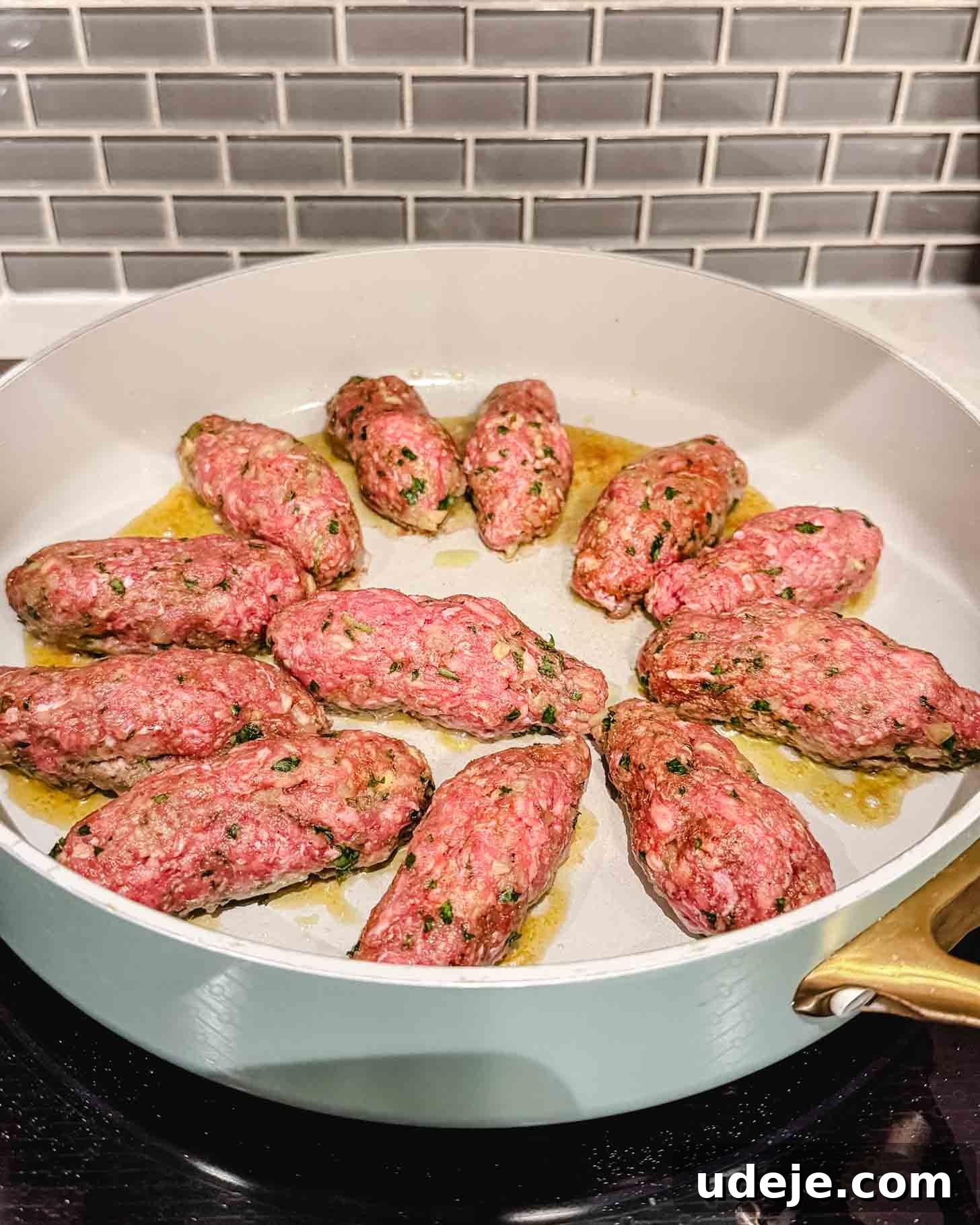
- Shape the Kofta: Take portions of the kofta mixture and shape them into small logs, each roughly two inches long. This size is ideal for even cooking and serving. You should yield approximately 22-24 kofta pieces from this recipe. If preferred, you can also roll them into traditional meatballs.
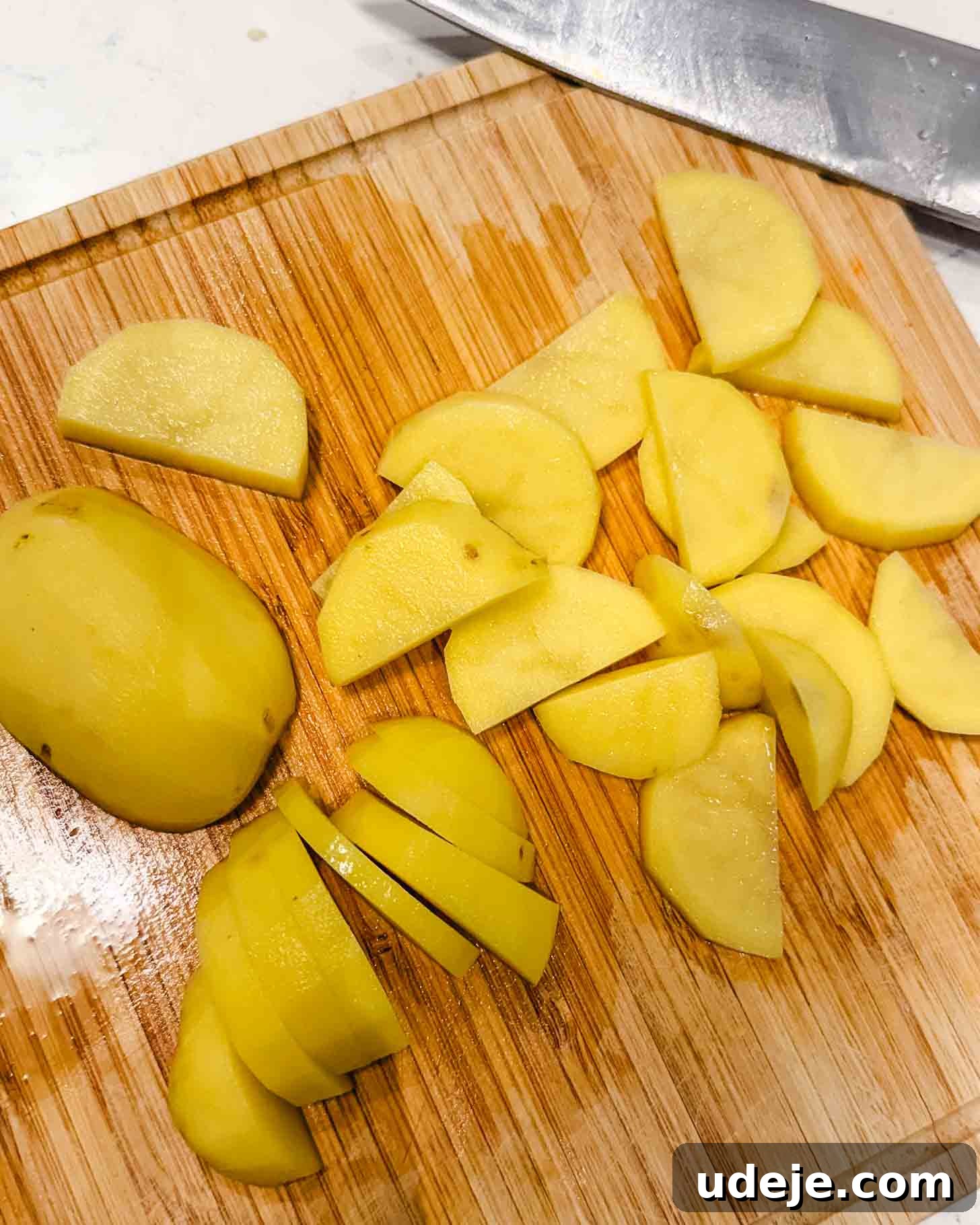
- Prepare the Potatoes: Peel and slice the four small yellow potatoes into quarter-inch thick half-moon shapes. Precision here is key; ensure the slices are not too thick, as this will significantly increase the cooking time needed for them to become tender.
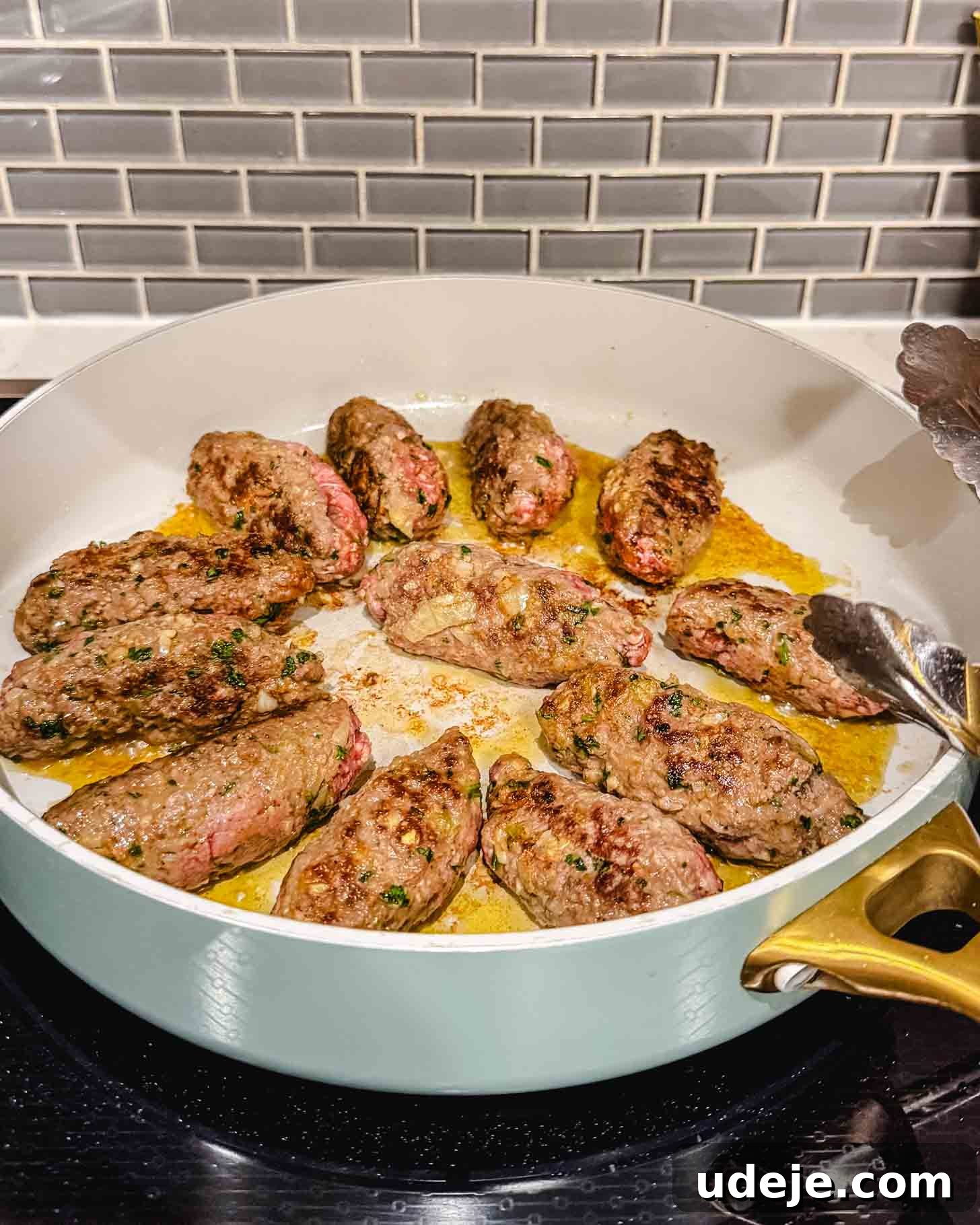
- Sear the Kofta: In a large skillet (at least two inches deep) set over medium heat, add one tablespoon of olive oil and let it heat up. Carefully place the kofta logs into the hot skillet, searing them for one to two minutes on each side until they are beautifully golden brown. This step is crucial for developing a rich, caramelized flavor and firming up the kofta. Work in batches if necessary to avoid overcrowding the pan, which can steam the kofta instead of searing it. Once browned, remove the seared kofta from the skillet and set aside.
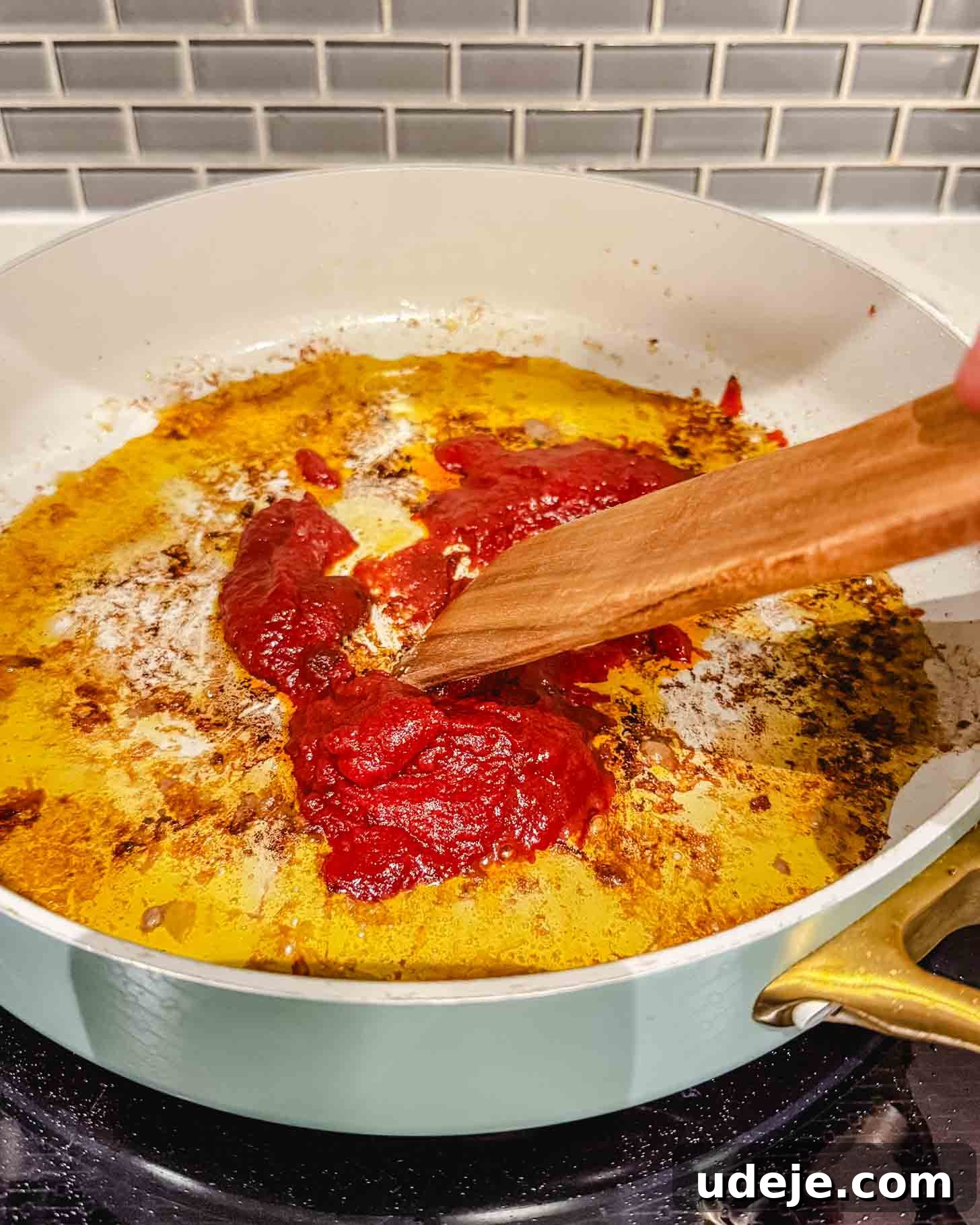
- Build the Sauce Base: With the skillet still on the heat and retaining all those delicious browned bits, add three tablespoons of tomato paste. Cook the tomato paste for a few seconds, stirring constantly. This caramelization process intensifies its flavor and deepens the color of your stew.
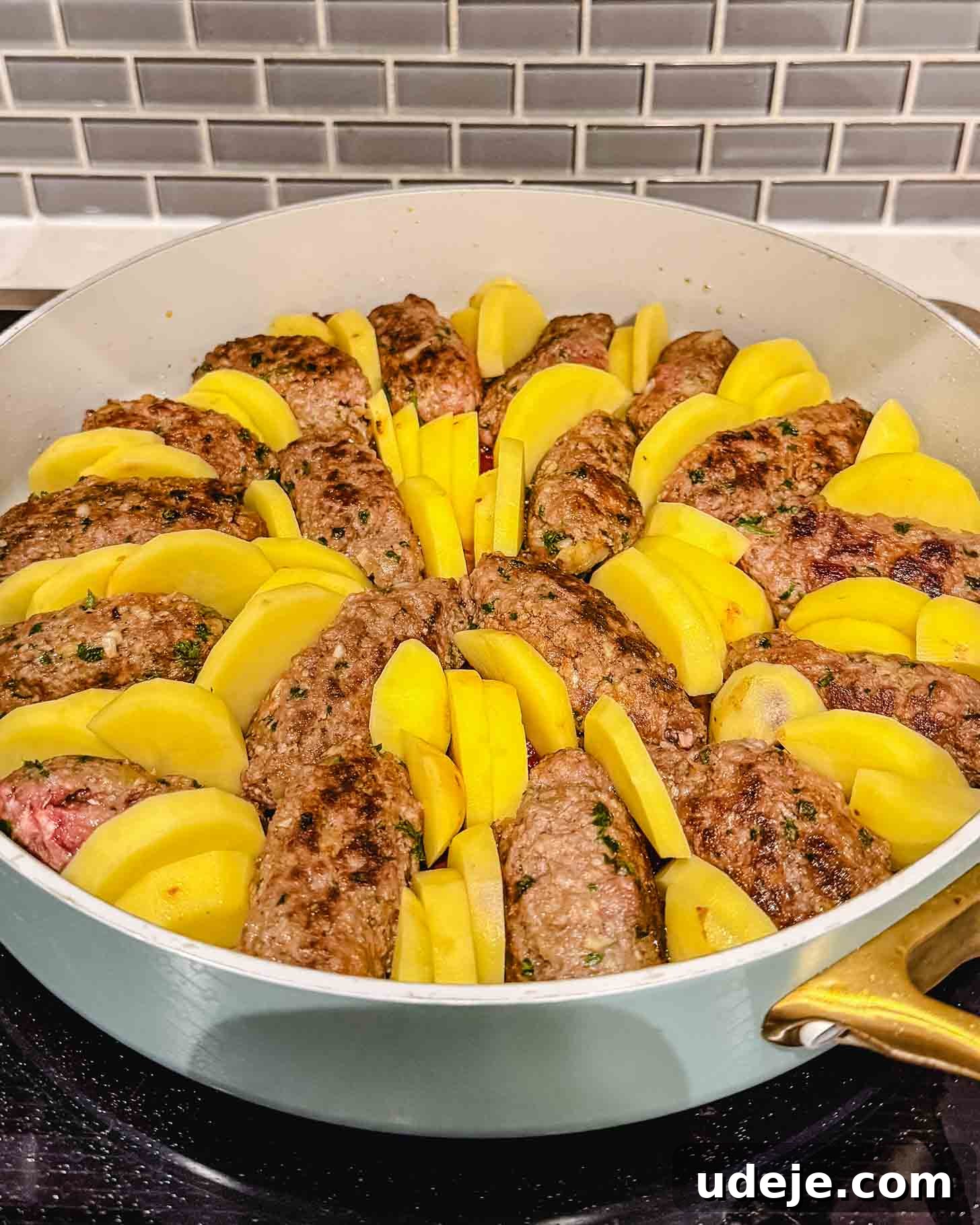
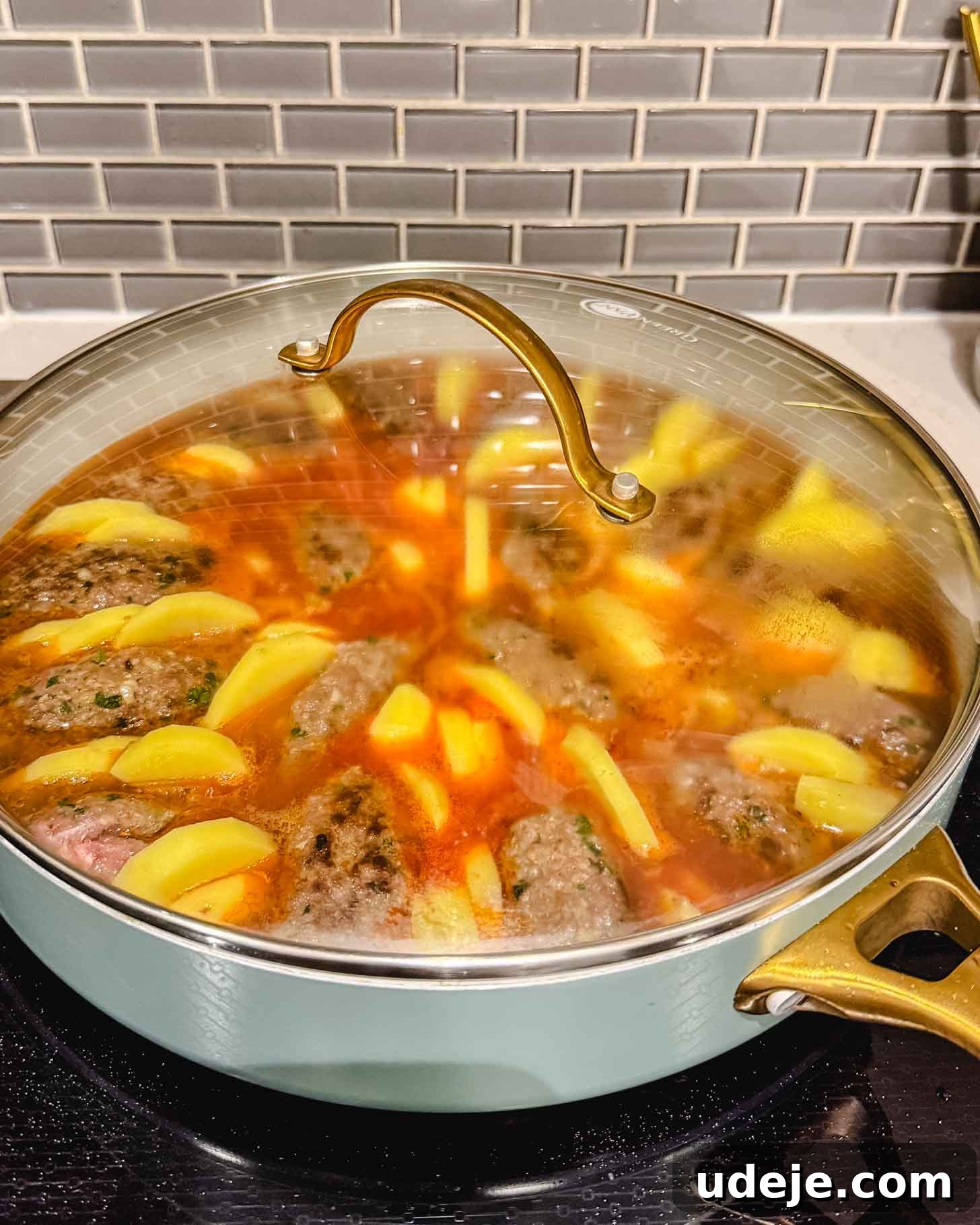
- Assemble and Simmer: Arrange the seared kofta back into the skillet, ideally in an appealing circular pattern around the edges. Carefully nestle the potato slices in between the kofta, trying to get as many as you can comfortably fit. While a neat arrangement is visually pleasing, simply layering the potatoes and kofta works just as well for flavor. Pour in two cups of chicken broth and add half a teaspoon of salt. Bring the liquid to a gentle simmer, then reduce the heat to medium-low, cover the skillet, and let it cook for 20 to 30 minutes. The stew is ready when the potatoes are fork-tender and the sauce has thickened slightly to a rich, luscious consistency.
- Serve: Garnish your delicious Kofta and Potato Stew with a generous sprinkling of fresh parsley for added color and freshness. Serve hot, spooned over steaming vermicelli rice, classic basmati rice, or with your favorite crusty bread for dipping into the exquisite sauce.
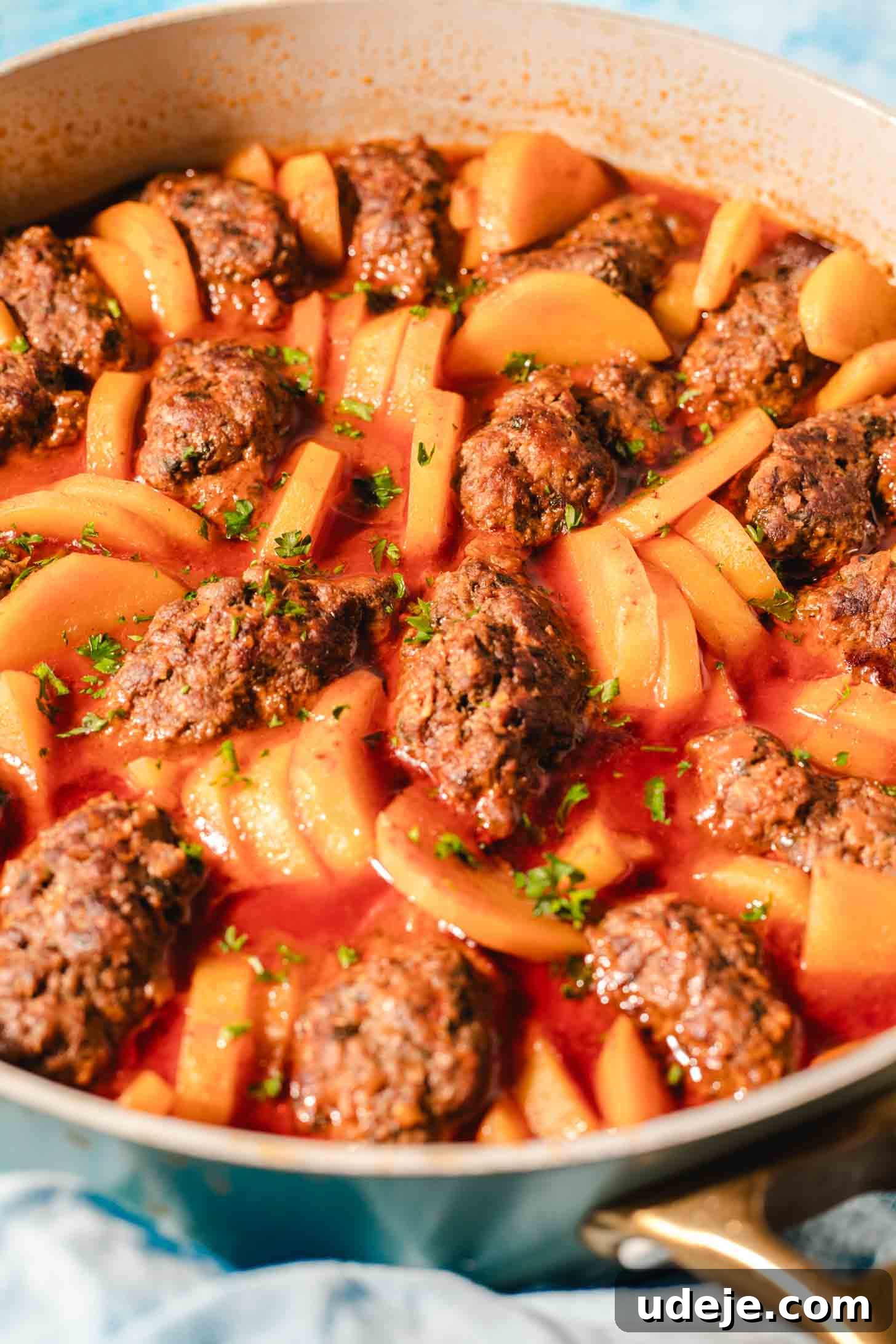
Pro Tips for the Perfect Kofta and Potato Stew
- Uniform Potato Slices: The thinner and more uniform your potato slices (ideally 1/4 inch thick), the quicker and more evenly they will cook. Thick slices will require significantly more simmering time and might lead to overcooked kofta.
- Don’t Overcrowd the Pan: When searing the kofta, work in batches if your skillet isn’t large enough. Overcrowding lowers the pan’s temperature, leading to steamed rather than beautifully browned kofta.
- Season to Taste: Always taste and adjust the seasoning (especially salt) of the sauce before serving. The saltiness of chicken broth can vary greatly, so a final check ensures perfect balance.
- Achieve a Deep Sauce Flavor: Don’t skip caramelizing the tomato paste. This crucial step develops a richer, less acidic flavor in your stew.
- Rest the Kofta Mixture: If time allows, let your kofta mixture rest in the refrigerator for 15-20 minutes before shaping. This helps the flavors meld and the mixture firm up, making it easier to handle.
- Freezing Leftovers: This stew freezes beautifully! Allow it to cool completely, then transfer to airtight containers and freeze for up to 3 months. Thaw in the refrigerator overnight and reheat gently on the stovetop.
Versatile Servings and Delightful Variations
While Kofta and Potato Stew is a star on its own, its versatility allows for many delicious pairings and creative adaptations.
Serving Suggestions:
- Classic with Rice: The traditional way to enjoy this stew is over a bed of fluffy vermicelli rice or fragrant basmati rice, allowing the rich sauce to soak into every grain.
- With Fresh Bread: A warm, crusty loaf of pita bread or any rustic bread is perfect for scooping up the stew and soaking up all the flavorful sauce.
- Couscous or Bulgur: For a lighter carbohydrate option, serve the stew over fluffy couscous or coarse bulgur.
- Green Salad: A simple, crisp green salad dressed with a lemon-tahini dressing provides a refreshing contrast to the hearty stew.
- Yogurt Sauce: A dollop of plain yogurt or a cooling cucumber-mint yogurt sauce (like tzatziki) can add a delightful creamy tang.
Delicious Variations:
- Add More Vegetables: Enhance the nutritional value and texture by incorporating other vegetables. Green peas, diced carrots, bell peppers, or even zucchini slices can be added during the simmering stage.
- Spice It Up: If you prefer more heat, a pinch of cayenne pepper or a small amount of finely chopped fresh chili can be added to the kofta mixture or the sauce.
- Herb Variations: While parsley is classic, a touch of fresh cilantro or dill can also complement the flavors beautifully.
- Ground Lamb: For a richer, more traditional Middle Eastern flavor, substitute half or all of the ground beef with ground lamb in your kofta.
- Vegetarian Option: While not a direct substitute, a similar concept can be created using hearty vegetables like chickpeas, lentils, and mushrooms in a rich tomato sauce.
- Lemon Zest Finish: A squeeze of fresh lemon juice or a sprinkle of lemon zest at the very end can brighten up the flavors and add a zesty finish.
Frequently Asked Questions (FAQs) About Kofta and Potato Stew
Here are some common questions to help you master this delicious Middle Eastern dish:
Q: Can I use ground lamb instead of ground beef for the kofta?
A: Absolutely! Ground lamb is a very traditional choice for kofta in many Middle Eastern cuisines. It will impart a richer, more distinct flavor to the stew. You can use 100% ground lamb or a 50/50 mix of ground beef and lamb, depending on your preference.
Q: Can I prepare the kofta mixture ahead of time?
A: Yes, you can. Preparing the kofta mixture a day in advance and storing it in an airtight container in the refrigerator can be a great time-saver. This also allows the flavors to meld beautifully. When ready to cook, simply shape and proceed with searing.
Q: How should I store leftover Kofta and Potato Stew?
A: Leftovers can be stored in an airtight container in the refrigerator for up to 3-4 days. For longer storage, the stew freezes exceptionally well. Allow it to cool completely, then transfer to freezer-safe containers and freeze for up to 3 months. Thaw overnight in the refrigerator before reheating.
Q: What if my stew sauce is too thin or too thick?
A: If your sauce is too thin after the recommended simmering time, remove the lid and continue to simmer for an additional 5-10 minutes, allowing some of the liquid to evaporate. If it’s too thick, add a splash of extra chicken broth or water until you reach your desired consistency.
Q: What is “Seven Spice” and can I substitute it?
A: Seven Spice (also known as Baharat) is a common Middle Eastern spice blend. While the exact combination can vary by region or family recipe, it typically includes black pepper, cumin, coriander, cinnamon, cloves, nutmeg, and sometimes allspice or cardamom. It provides a warm, aromatic, and complex flavor. If you don’t have it, a mix of equal parts allspice, cinnamon, and a pinch of ground cloves, combined with a bit more paprika and black pepper, can be a decent substitute, though the flavor profile will be slightly different. For the best result, we highly recommend making your own or finding an authentic blend.
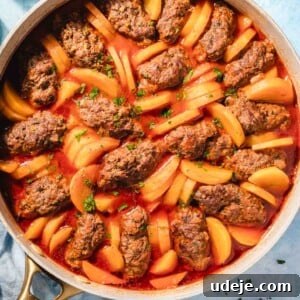
One Pot Kofta and Potato Stew
Cook: 35 mins
Total: 50 mins
This kofta and potato stew is comforting, quick, and comes together in one pot. It’s a classic Middle Eastern dish that is simple yet deeply flavorful and perfect for weeknights. Tender, juicy kofta are seared until golden, then simmered with potatoes in a rich tomato-based broth. The result is a hearty, saucy stew perfect to spoon over rice. It’s a weekly staple for our family!
Leave a Review
Pin Recipe
Ingredients
For the Kofta:
- 900 g lean ground beef
- 4 cloves of garlic
- 1 yellow onion, quartered
- 1 cup parsley
- 2 teaspoons seven spice
- 2 teaspoons paprika
- 1 1/2 teaspoons salt
- 1/2 teaspoon black pepper
- 1/2 cup dried breadcrumbs
- 1 tablespoon olive oil
For the Sauce and Potatoes:
- 4 small yellow potatoes, peeled
- 3 tablespoons tomato paste
- 1/2 teaspoon salt
- 2 cups chicken broth, or 1 chicken cube dissolved in 2 cups water
Instructions
- To make the kofta: In a small food processor, add the 1 yellow onion, 1 cup parsley, and 4 cloves of garlic. Blitz until finely chopped. Add them to a medium sized bowl along with the 900 g lean ground beef, 2 teaspoons seven spice, 2 teaspoons paprika, 1 1/2 teaspoons salt, 1/2 teaspoon black pepper, and 1/2 cup dried breadcrumbs. Mix well using your hands until the mixture is homogenous.
- Shape the kofta into small logs, roughly 2 inches long. The mixture should make about 22-24 koftas.
- Prepare the 4 small yellow potatoes by slicing them into 1/4 inch half moon slices. It’s important you don’t slice them too thick or they will need longer to soften.
- In a large skillet that is at least 2 inches deep, on medium heat, add the 1 tablespoon olive oil and heat it. Sear the kofta for 1-2 minutes on each side until golden and browned. Work in batches if required. Remove and set aside.
- While the skillet is still on the heat, add the 3 tablespoons tomato paste and cook to caramelize it for a few seconds. Then, arrange the kofta in the skillet in a circular pattern. Nestle the potato slices in between the kofta, squeezing them all in as best as you can. If you don’t care much for how it looks, you can just dump the potatoes and kofta in randomly.
- Add the 2 cups chicken broth and 1/2 teaspoon salt. Cover and simmer on medium low heat for 20 to 30 minutes. You’ll know its ready when the potatoes are tender and the sauce has thickened slightly. Serve over rice or with bread.
Notes
- If you want the recipe to cook in the quickest time, make sure the potato slices are not too thick. The kofta actually doesn’t need long to cook (since it was already seared).
- You may need to adjust the salt based on the salt quantity in the chicken broth you are using.
Nutrition Information
Serving: 1 Serving, Calories: 452kcal, Carbohydrates: 38g, Protein: 45g, Fat: 13g, Saturated Fat: 5g, Polyunsaturated Fat: 1g, Monounsaturated Fat: 6g, Trans Fat: 1g, Cholesterol: 113mg, Sodium: 1582mg, Potassium: 1462mg, Fiber: 5g, Sugar: 5g, Vitamin A: 1463IU, Vitamin C: 50mg, Calcium: 90mg, Iron: 7mg
If you tried this recipe, please consider leaving a star ⭐⭐⭐⭐⭐ rating in the recipe card above and/or a review in the comments section further down the page – I’d love to hear from you! You can also hop on over to Instagram and say hello!
Did you make this recipe?
Please leave a star rating and review below!