SEAFOOD pairs Osaka's OCTOPUS supercomputer with Japanese quantum processors
The University of Osaka's SEAFOOD platform links its OCTOPUS supercomputer to superconducting quantum processors, with trial access for 10 research teams first.

The University of Osaka has built a hybrid computing setup that connects its OCTOPUS supercomputer to Japanese-made superconducting quantum processors. The platform, called SEAFOOD (Supercomputing Entangled by Ambitious Fusion of OQTOPUS and OCTOPUS at D3C), is expected to be running by the end of the year. If it delivers, it will be the first time a Japanese-developed quantum computer has been integrated with a supercomputer at a standalone academic institution in the country.

What SEAFOOD actually connects
The name tells you most of the architecture. OCTOPUS is the university's classical system, formally the Osaka University Compute and sTOrage Platform Urging open Science. The quantum side comes from the RIKEN Center for Quantum Computing, which supplied the processors. The university didn't share hardware specifics for the quantum machines, so there's nothing yet to benchmark against. What it did describe is the software-side split: SEAFOOD partitions workloads across three-layer stacks so that each processor handles the calculations that suit its hardware design.
That's the part worth paying attention to. Hybrid quantum-classical work rarely means handing a whole job to a quantum device. In practice, the classical machine typically handles preparation, data handling, and the parts of an algorithm that don't benefit from quantum hardware, while the quantum processor takes the narrow subroutines it's suited to. Getting that division right, and moving data between the two sides without the handoff becoming the bottleneck, is where most of the engineering effort in this category tends to sit. The source doesn't say how the three layers are implemented, so anyone expecting a reference architecture from this announcement will need to wait for more technical documentation.
The OCTOPUS side of the stack
OCTOPUS was developed by NEC. According to NEC, it has a theoretical computational performance of 2.293 petaflops and is built from around 140 computing nodes of the "NEC LX201Ein-1" type. Each node carries two sixth-generation Intel Xeon Scalable processors, alongside large-capacity storage. NEC says the system delivers roughly 1.5 times the performance of the previous system at the D3 Center.

The D3 Center describes itself on its website as providing "large-scale computer systems as a national joint-use facility where scientists and researchers can perform computation and information processing accompanied by academic research and education." The center also operates the MDX II and SQUID clusters and the ONION aggregation platform, so OCTOPUS sits inside a wider set of shared research systems rather than standing alone.
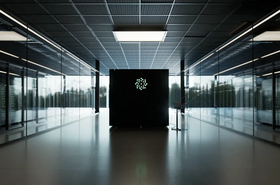

OCTOPUS supercomputer. Image: NEC Corp.

Access timeline and who gets in first
The rollout is staged. Up to 10 research teams at the University of Osaka will get trial access beginning next year, before the platform opens to broader external users through Japan's JHPC-quantum initiative. JHPC-quantum is a research project focused on building a hybrid computing platform that integrates quantum processors with classical high-performance computing infrastructure, so SEAFOOD looks like one of the first working deployments under that umbrella rather than a standalone experiment.
The project draws on several funding and research programmes: Japan's JST Moonshot Goal 6, MEXT's Q-LEAP, JST's COI-NEXT, the CSTI's SIP, and NEDO's Post-5G quantum-supercomputer hybrid platform programme. That mix matters because it signals the work is being pursued across multiple research streams at once, which is typical of national-scale efforts to make quantum hardware usable from conventional HPC environments.
What research computing teams should take from this
For most readers, SEAFOOD won't be something to deploy this year. Still, the direction is worth tracking. Hybrid setups like this one push research computing groups to think about scheduling across unlike resources, where a single job may need a classical allocation and a quantum allocation with different queue behaviour and different failure modes. Teams in this position usually find that the hard questions are about job orchestration, data movement and access control, not raw compute.
My read is that the trial phase will tell us more than the announcement does. The points to watch are whether the university publishes details on the quantum hardware, how the three-layer partitioning is exposed to users, and what access model the wider JHPC-quantum rollout adopts. If you run HPC services in Japan or work with the D3 Center's systems, those are the details to ask about before the external access window opens.


