Iran-linked unit suspected in French supermarket fridge hacks
French officials point to Shahid Kaveh, an Iran-linked cyber unit, over October's supermarket fridge and freezer tampering. Cold-chain IT teams should take note.
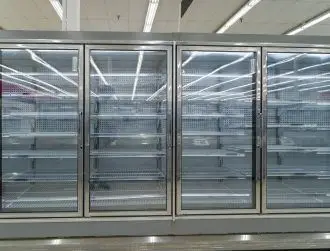
French officials suspect an affiliate of Iran's Islamic Revolutionary Guard Corps, a cyberoffensive unit called Shahid Kaveh, was behind the recent hacks on supermarket refrigeration. If that attribution holds, it moves the story from a retail nuisance to a state-linked sabotage case, and it puts operational technology in commercial kitchens, warehouses and cold stores squarely in the threat model.

What happened in October
In October, hundreds of commercial fridges and freezers in French supermarkets were hacked, and the temperature settings were tampered with. The outcome was significant food waste, fires and financial losses. For an IT team, the important detail is that the attackers didn't need to steal data or lock files to cause damage. They changed physical process parameters, and the business felt it within hours.
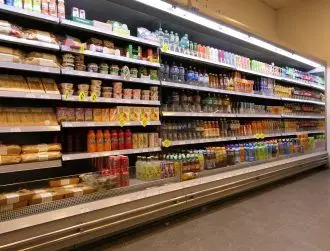
The same pattern of interference appeared in other parts of Europe. Thirteen SuperValu stores across Ireland were hit by a suspected cyberattack on their refrigerators, and the chain's owner said the incident was limited to one specific model of refrigerator. Separately, France's national blood service was temporarily disrupted when hackers reportedly gained access to control systems and raised temperatures at cold storage facilities holding vital blood products.

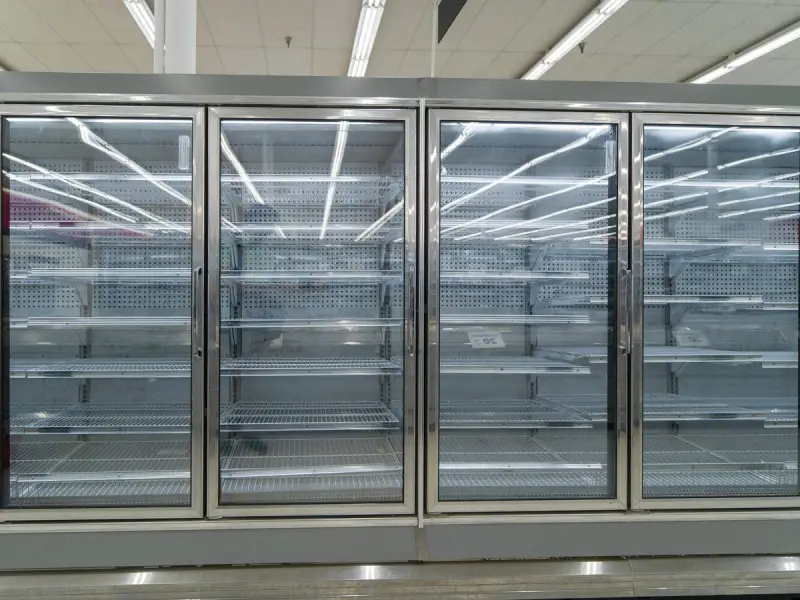
Image: © AncientAftertone/Stock.adobe.com
How the attribution was reached
Shahid Kaveh was named through a report jointly published by French intelligence and cyber agencies, available from the French national cybersecurity agency's CERT-FR. Reporting by Reuters says French authorities linked the group to the incident by matching the pattern of the attack to other hacks the group had carried out. Investigators also reportedly recovered evidence of traces of Farsi in the attack infrastructure.
Attribution in cases like this rarely rests on a single artefact. Investigators typically combine tooling and infrastructure overlaps, operational habits seen in earlier intrusions, and language or configuration traces. That's why the joint report matters: it gives defenders a documented starting point for what to look for, rather than a press line to take at face value.
Political and diplomatic fallout
France's foreign minister, Jean-Noël Barrot, described the attack as "unprecedented in both its scale and its level of aggression," according to the BBC. He said it was the first large-scale cyberattack aimed at sabotage on French national territory and a major threat to the country's interests and security. He also said further sanctions were likely for those responsible, and that France would take "any other necessary and proportionate measures" to deter anyone who might seek to repeat the attacks.

Iranian media outlets have called the accusations baseless, and France has summoned Iran's ambassador to discuss the incident. Attribution disputes like this one tend to play out in public for a while before technical detail is released, so the diplomatic story and the technical story may move at different speeds. For operators, the technical story is the one that changes what they do on Monday morning.
Why cold-chain systems are an attractive target
Refrigeration and cold storage controllers were rarely designed with the same security assumptions as corporate IT. Many are managed remotely for service and monitoring, and they sit on networks that were built for uptime and equipment vendors' access, not for hostile actors. When an attacker can change a setpoint, the failure mode is physical: spoiled stock, fire risk from overheating equipment, and product that has to be destroyed even when nothing was encrypted.
This is why the Europe-wide pattern matters more than any single incident. The same class of device appears in supermarkets, distribution centres, pharmacies, laboratories and hospital blood storage. If one vendor's model or one management platform is involved, the exposure can span many unrelated organisations at once.
What IT and OT teams should check now
Here's the thing: most organisations running cold storage don't have a complete inventory of the controllers that drive it. Start there. Identify every refrigeration, freezer and environmental controller, its firmware version, who manages it, and whether it can be reached from outside the site or from corporate networks.
Next, review remote access. Vendor remote-support channels, cloud dashboards and maintenance accounts are common weak points. Confirm that default credentials have been changed, that remote access is time-limited and logged, and that multi-factor authentication covers any account able to alter setpoints. Segment building and process networks from general office traffic, so a compromised workstation can't reach the controllers directly.
Then look at detection. Temperature alarms that fire on a schedule the business didn't set, unexpected setpoint changes, and controllers appearing in new network paths are all signals worth alerting on. Make sure someone outside the IT team gets those alerts, because a facilities manager is often the first person who notices a freezer running warm. Keep offline copies of approved configuration and setpoints so recovery doesn't depend on the compromised system.
Finally, check vendor guidance. Ask suppliers whether the models in your estate are affected by any of the incidents described here, and what patches or hardening steps they recommend. The reporting so far doesn't give a full technical list of affected models or fixes, so that information has to come from the manufacturer and your own testing.
What to watch next
The sanctions France has signalled, any follow-up from the joint intelligence and cyber agencies, and Iran's response will shape how this story develops. For IT teams the more useful signal is whether the investigators publish more indicators or affected device details. Until then, treat physical process controllers as production systems that need the same attention as your core network: inventoried, segmented, monitored and tested for recovery.


