AI Shifts From Topic to Tool in 2027 Stripe YSTE Student Projects
Over 2,000 Irish secondary students are entering the 2027 Stripe YSTE. AI now appears in 41pc of projects, up from 9pc in 2026.
The most telling number in this year's Stripe Young Scientist & Technology Exhibition entries isn't about a topic. It's about method. Organisers say 41pc of all 2027 entries use AI or digital technologies somewhere in their research design, data analysis or solution development, up from 9pc in 2026. That's a big jump in a single year, and it suggests AI is becoming a standard part of the toolkit rather than a subject students pick on its own.
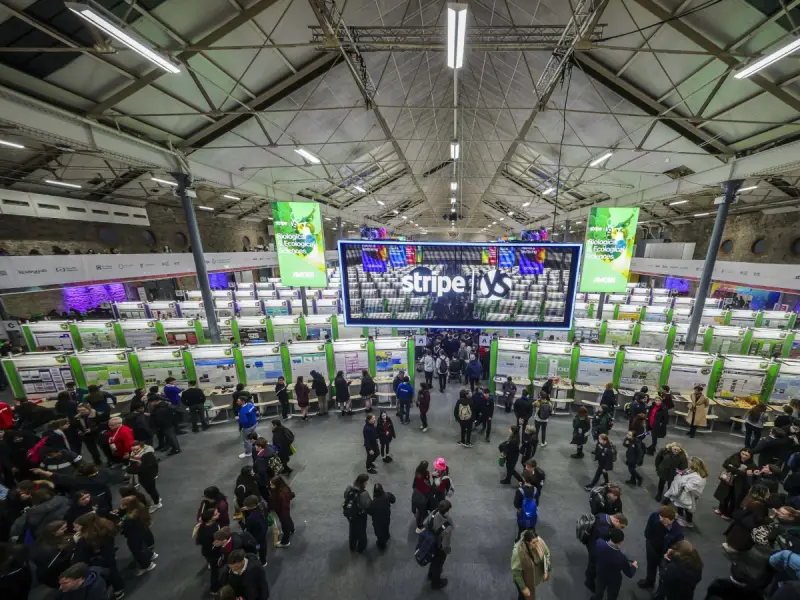
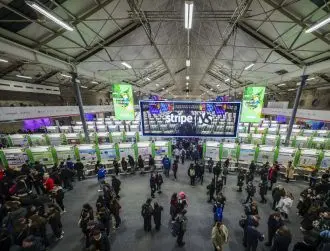
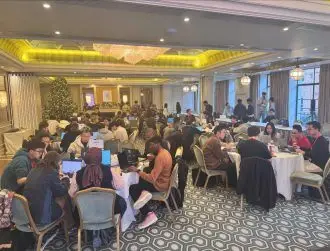
The 2026 Stripe Young Scientist and Technology Exhibition. Image: Chris Bellew/Fennell Photography
AI as a working tool, not a standalone subject
YSTE describes AI as a "defining trend" that has "moved beyond being a standalone topic of investigation" and is now "being applied as a practical tool across a wide range of disciplines." For anyone who manages student or graduate intake, that's a useful signal. Projects are less likely to be about building a chatbot for its own sake and more likely to use machine learning or data tools to answer a biology, environmental or health question.

The organisers also say around one in six entries involves building a practical product, app, device, platform or technology-based solution. They frame that as a focus on "real-world applications that could improve lives, support communities and respond to wider societal issues." Put those two findings together and you get a pattern: students are reaching for digital tools, and they're aiming them at problems people actually have.

Women's health and dementia move up the list
The fastest-growing topic is women's health. Projects in this area are up 140pc on last year. The issues range from endometriosis, polycystic ovary syndrome and menopause to menstrual health, women's heart health, ADHD diagnosis in girls and female sports injuries. Given how often these conditions are under-researched and under-diagnosed, it's encouraging to see teenagers picking them up as project subjects.
Dementia projects have doubled since last year, to 22 entries. The work covers early detection and predictive technologies, Alzheimer's biomarkers, and tools that could support independent living and improve care. Many of these projects sit where data science meets clinical need, which is exactly where AI methods tend to be most useful and most easily misapplied.
Sustainability and climate work keeps growing
Sustainability, climate and environmental projects have more than doubled year on year and now make up 17pc of entries. Subjects include flood prediction, wildfire prevention, drought monitoring, water conservation, biodiversity protection and climate resilience. Forecasting and monitoring projects like these often depend on sensor data and modelling, so they map neatly onto the AI-as-tool trend described above.
The online world under the microscope
Students are also studying their own digital habits. YSTE counts 49 projects that explicitly reference social media, 21 that examine scrolling and doomscrolling, 38 that explore phone or smartphone use and 23 that focus directly on AI. Across the wider set, more than 50 projects explore social media and digital culture, and another 54 look at stress, anxiety and exam-related pressure.
The organisers tie this to "growing interest in the impact of both online environments and educational expectations on young people's wellbeing." For schools and youth organisations, that's a clear hint about what students are worried about, and it may give teachers a useful lens for talking about screen habits in class.
Learning support and accessibility
Learning support and accessibility will feature in 12.5pc of all 2027 entries, a 78pc jump from last year. Projects will cover dyslexia support, ADHD tools, neurodivergent learning aids, revision and memory tools, and classroom accessibility technologies designed for different learning styles and needs. This is one of the areas where a well-built prototype can reach users quickly, and the judges' attention to practical fit will likely matter here.
Event details and the prize
The 2027 exhibition has received 2,018 entries in total from secondary school students across the island of Ireland. It runs from 6-9 January 2027 at Dublin's RDS. The student or team behind the overall winning project will receive €10,000.
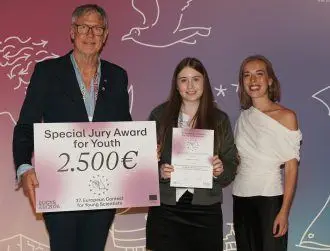
Last year's winner, Aoibheann Daly, went on to win a core prize at the European Union Contest for Young Scientists for her brain cancer diagnosis tool. That's a useful benchmark: the YSTE has become a credible launchpad for projects that move beyond the school hall.
What to watch
Alison Ahern, head of Stripe YSTE, said the standout feature this year is "the ambition and practicality of the projects being developed by young people across Ireland." Students, she added, are "combining scientific rigour with a strong sense of purpose." My read is that the 41pc AI figure will be the one people quote, but the more interesting story is how many of those projects use AI to tackle health, climate and wellbeing questions. If you're in education, research or tech recruitment in Ireland, the January showcase is worth a look. You'll see where the next generation's practical skills are heading, and it's not where most of the headlines are.


