Accenture Ireland’s Anne-Margaret Saunders: Build Business Resilience Before Disruption
Anne-Margaret Saunders says resilience depends on leadership, adaptable operations, skilled people and responsible AI adoption—not a return to the old normal.

Business resilience now means adapting through disruption and emerging better prepared for the next change. For Anne-Margaret Saunders, AI adoption lead for Accenture in Ireland, the old idea of recovering from a crisis and returning to normal no longer fits a world shaped by fast technological change and overlapping pressures.
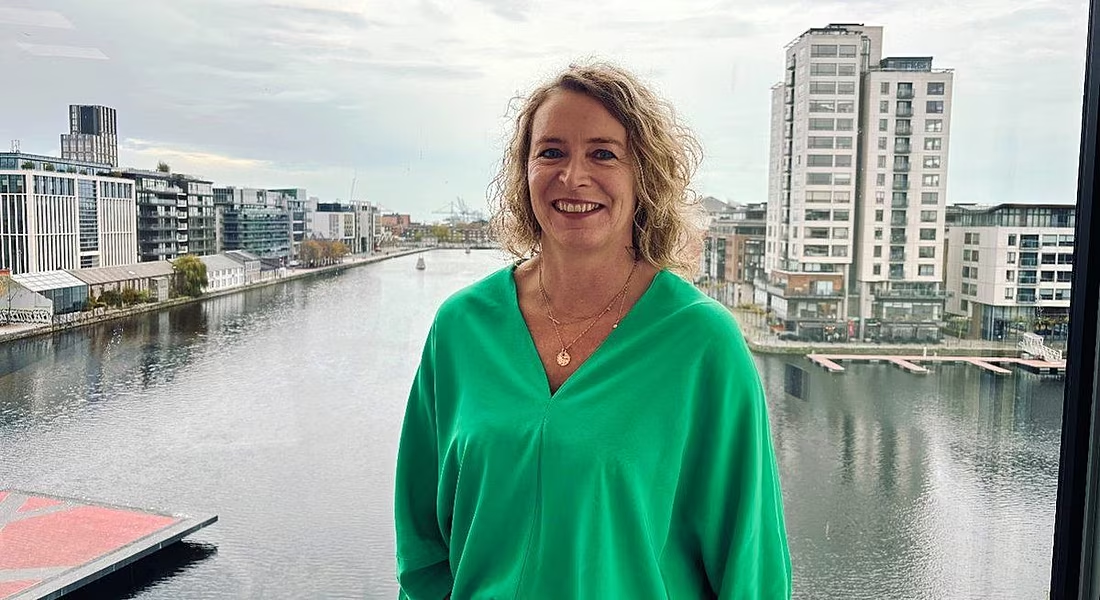
Her practical point for organisations is that resilience takes work before a disruption hits. It depends on how leadership, people, technology and operations function together. Investment in one area can fall short if the others cannot keep pace.
Resilience starts with leadership, then spreads across the organisation
Saunders sees resilience as a shared responsibility, with leaders setting the direction and creating the conditions for people to respond when circumstances shift. Human resources has a role, but the capability cannot be assigned to one department or executive. Leaders across the organisation need to build it into teams, technology and operational processes.
That connection matters when organisations introduce new tools. Technology alone does not improve performance if employees lack the skills to use it, or if the processes around it are inflexible. Saunders says the strongest outcomes come when organisations consider people, working practices and technology together.
Employees also have a part to play: curiosity and willingness to learn help people adjust. But organisations cannot simply instruct staff to become resilient. They need to make room for learning and adaptation by providing time, support and psychological safety. Treating resilience as an individual obligation, without changing the working environment, puts the burden in the wrong place.

Saunders’ own career illustrates what organisational support can change. Earlier in her career, she left the workforce because she could not get the flexibility she needed. A decade later, when she joined Accenture, flexibility, coaching and mentoring supported her return. That environment helped her rebuild confidence, refresh her skills and adjust to a workplace that had changed substantially.

Prepare for risks that collide
External disruption can come from tariffs, geopolitical tensions, supply chain problems and the pace of AI, Saunders says. These pressures increasingly overlap, making it harder to plan for them as separate, one-off events. Organisations may have little control over the shocks themselves; preparation and response are within their influence.

Internally, resilience rests on adaptability. Saunders points to the speed and quality of leadership decisions, flexible processes and operations, secure and dependable technology and data, and employees who have the skills and confidence to act when conditions change.
These capabilities are interdependent. Strong technology can be constrained by rigid processes; efficient operations can be weakened by skills gaps; and experienced staff may struggle to respond if they lack authority to make decisions. For IT and business leaders, that means reviewing the connections between systems, working practices and workforce capability, rather than assessing each in isolation.
Make learning and sustainable performance part of the plan
Trust and psychological safety help people raise concerns, question assumptions, acknowledge what they do not know and ask for help. Saunders says these conditions matter particularly as AI changes how work is done. Staff need to feel trusted to speak up, while leaders need to show that questions and uncertainty are acceptable.
Organisations cannot know precisely which skills will be needed five or ten years from now. Saunders argues that they should give employees the confidence and ability to keep learning, alongside opportunities to develop. A range of backgrounds, experiences and perspectives also helps teams approach problems in different ways.
There is a limit to what commitment can sustain. A workforce that is constantly stretched, exhausted or missing the skills needed for its work is vulnerable. People also need to feel safe asking for support. Resilience depends on performance that can be maintained, not on expecting employees to absorb unlimited pressure.
AI adoption adds new demands
Over the year ahead, Saunders expects AI to keep testing organisations as they move from experiments to embedding generative AI and agentic AI in their work. That shift raises questions about responsible use, cybersecurity, data, trust and governance, as well as the skills employees need to adapt.
Skills are changing quickly, and employee expectations are shifting after sustained disruption. Organisations need to attract and develop the capabilities they require while protecting trust, wellbeing and sustainable performance. Saunders cautions that technology investment can leave resilience exposed when it is not matched by investment in people and operational capability.
The exact shape of the next disruption is uncertain. Saunders’ message is that resilience is built in advance through connected investment in people, technology and operations. Organisations that make that work part of how they operate will be better equipped to adapt when conditions change.